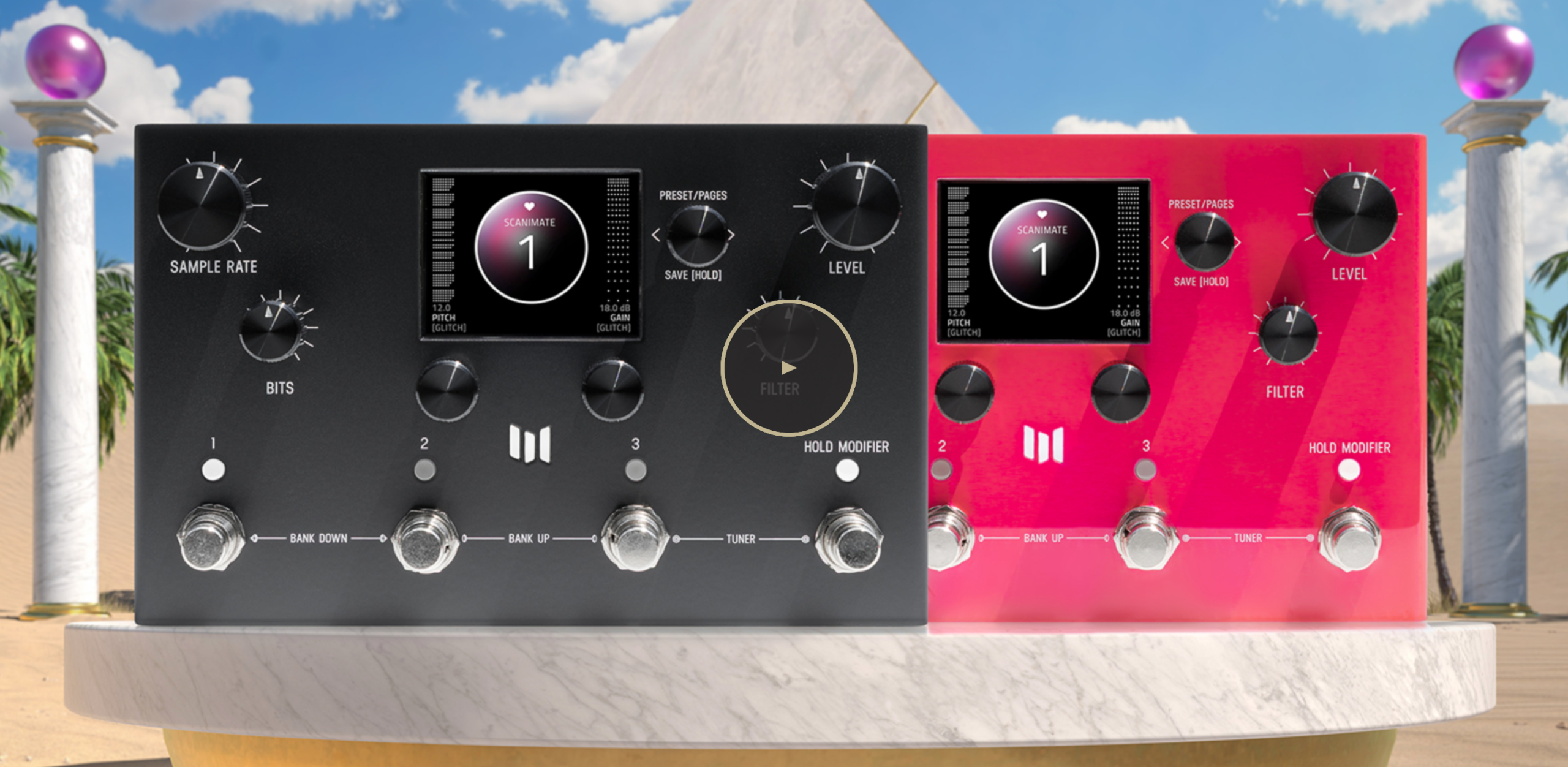
Meris Unveils Ottobit X
Expanding Its Iconic Bitcrusher Into a Full-Fledged Sound Design Platform Meris has officially announced the Ottobit X, the long-awaited evolution of one of the most beloved creative effects pedals in modern bass and guitar rigs. Building on the cult success of the original Ottobit Jr., the new pedal dramatically expands the concept with a deeper processing architecture, advanced sequencing capabilities, new modulation and pitch effects, and the powerful workflow features found throughout the company’s X-Series lineup. For bass players, the announcement is particularly exciting. The original Ottobit Jr. earned a dedicated following thanks to its ability to transform bass into synth-like textures, lo-fi sample-based tones, and rhythmic glitch effects while retaining musicality and low-end presence. Ottobit X appears poised to take those possibilities even further. At its core, Ottobit X retains the signature bit-crushing and sample-rate reduction effects that made the original pedal so distinctive. Users can manipulate both bit depth and sample rate independently, creating everything from subtle vintage digital coloration to extreme lo-fi destruction. Beyond those familiar sounds, Meris has significantly expanded the pedal’s creative capabilities. Ottobit X introduces six dedicated glitch engines, including Grain Freeze, Tape Stop, Stutter, Stutter Step, Push Loop, and the uniquely named Wikki Wikki mode, which delivers real-time vinyl-style scratching and loop manipulation. One of the biggest upgrades comes in the sequencing department. While the original Ottobit Jr. featured a six-step sequencer, Ottobit X increases that to a powerful 16-step sequencer capable of modulating dozens of parameters throughout the pedal. This opens the door to evolving filter patterns, rhythmic bit-depth changes, automated pitch movement, and highly complex animated textures. The new pedal also introduces an expanded collection of filters, pitch processors, modulation effects, preamps, delays, and reverbs. Bassists will find tools such as wavefolding, frequency shifting, micro-tuning, ring modulation, tape-style modulation, and vintage-inspired ambience effects, all designed to interact within the pedal’s flexible routing system. Like other recent Meris releases, Ottobit X features a color display, stereo operation, full MIDI implementation, USB connectivity, expression pedal support, and extensive preset management. Players can store up to 99 presets, making the pedal far more practical for live performance and studio use than its predecessor. While many bitcrushers remain niche specialty effects, Ottobit X positions itself as something much larger: a complete sound-design instrument built around the aesthetic of digital degradation, sequencing, and creative manipulation. For longtime Ottobit users, the new release represents more than just an update. It is the transformation of one of the most unique pedals of the last decade into a fully realized platform capable of generating everything from subtle lo-fi coloration to radical, synth-like sonic experimentation. The Meris Ottobit X is available now for $599.