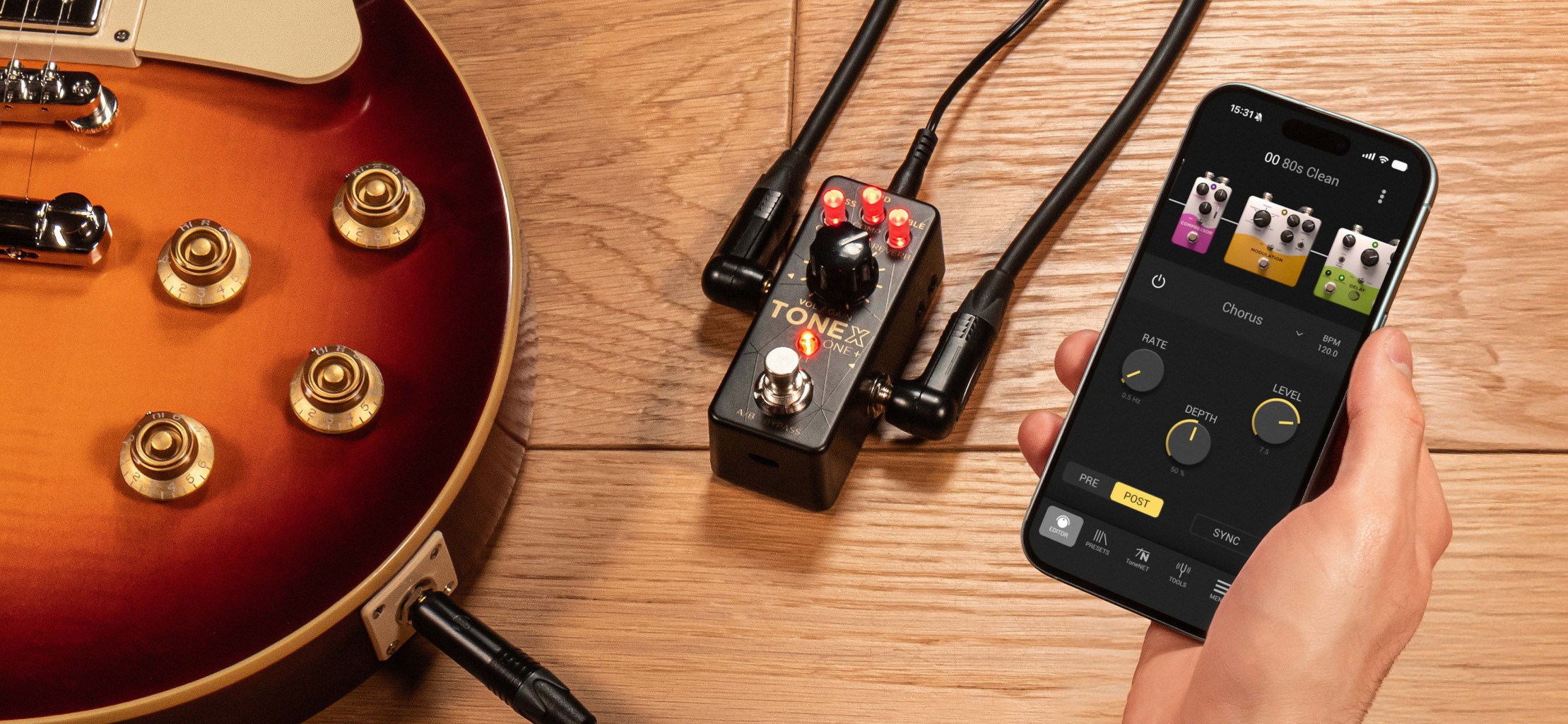
IK Multimedia TONEX ONE+: Pedal Review
The Tiny Bass Rig Finally Grows Up Disclaimer: This pedal was kindly provided by IK Multimedia for the purpose of this review. However, this does not influence our opinions or the content of our reviews. We strive to provide honest, unbiased, and accurate assessments to ensure that our readers receive truthful and helpful information. When IK Multimedia released the original TONEX ONE, it immediately caught the attention of bass players looking for a compact direct rig with realistic amp feel. The concept was simple but compelling: take the company’s increasingly popular TONEX amp capture technology and shrink it into a pedal small enough to fit on virtually any board. The original TONEX ONE already sounded impressive on bass. The real limitations were workflow, connectivity, and usability. Editing presets on the fly could feel cumbersome, deeper control required a computer, and integrating the pedal into modern live rigs sometimes felt more complicated than it should have been. That’s where the new TONEX ONE+ changes the story. The ONE+ is not a radical reinvention of the platform. Instead, it feels like the version the original pedal always wanted to become. With Bluetooth connectivity, mobile editing, expanded MIDI implementation, wireless preset management, and tighter integration into modern pedalboard ecosystems, the TONEX ONE+ transforms from a clever mini amp solution into something much closer to a fully practical professional bass rig. Most importantly, it does this without changing the thing that mattered most in the first place: the tones. Check the Price on Amazon –> A Bass Platform That Finally Feels Complete One reason the TONEX ecosystem translates unusually well to bass is that bass players typically approach rigs differently from guitarists. Most bass players are not switching between enormous effect chains or radically different sounds during a performance. In real-world situations, a strong clean tone, a slightly driven sound, and perhaps one more aggressive preset will cover the majority of gigs. That philosophy aligns perfectly with the TONEX approach. The ONE+ works best when treated less like a traditional multi-effects unit and more like a compact programmable bass amp. In practice, it feels equally comfortable as the centerpiece of an ampless live setup, a direct recording solution, or a lightweight travel rig for rehearsals and fly dates. The pedal’s size still feels slightly ridiculous the first time you hold it. It occupies barely more room than a standard overdrive pedal, yet it can realistically replace an amp head, cabinet simulation, DI box, and recording interface in a single enclosure. For bass players working in silent-stage environments, direct-to-FOH setups, or compact pedalboard configurations, that practicality becomes immediately appealing. What makes the ONE+ especially convincing is that it no longer feels like a compromise made for portability. Earlier compact digital solutions often sounded impressive until you pushed them in a live mix, where low-end response and playing dynamics would reveal their limitations. The TONEX ONE+ avoids much of that problem. The Tones Are Still the Main Attraction The real reason bass players became interested in TONEX was always the realism of the captures. The ONE+ continues using IK Multimedia’s AI Machine Modeling technology while benefiting from the growing TONEX ecosystem of captured amps, cabinets, and bass-specific tone models. The platform now includes a much stronger bass-oriented library than the original release ever had (but not as focused as the bass edition), with captures inspired by classic Ampeg rigs, modern solid-state heads, boutique drive circuits, studio DI tones, and aggressive contemporary bass sounds. Low-end retention is excellent, which is crucial because bass players immediately notice when digital processing starts collapsing the fundamental frequencies of the instrument. Many compact processors struggle once gain, speaker simulation, or heavier coloration enters the signal chain. The lows can become weak, transient attack softens, and note definition disappears under saturation. The TONEX platform generally handles these issues remarkably well. Much of that comes from the Bass Edition developments introduced into the TONEX ecosystem, particularly the improved phase-coherent dry/wet blending designed to preserve clarity and punch even with driven tones. The result is a playing experience that retains note weight, articulation, and dynamic response in a way that feels far closer to a genuine bass amp than many players expect from something this small. There is still a polished quality inherent to capture-based systems, but the response under the fingers feels musical and natural. Clean tones remain warm and authoritative, while driven sounds retain enough articulation to stay usable in a live mix rather than dissolving into unfocused fuzz. The Workflow Finally Matches the Sound Quality Arguably the biggest improvement in the ONE+ is not sonic at all. The original TONEX ONE delivered excellent sounds but often frustrated users once they moved beyond simply loading presets. Managing captures, editing tones, and integrating the pedal into modern live rigs could feel restrictive and unnecessarily dependent on a desktop workflow. The ONE+ addresses those frustrations directly. Bluetooth connectivity and wireless mobile editing dramatically improve daily usability. Instead of relying on a laptop every time adjustments are needed, the pedal now behaves much more like a modern professional device. For bass players running compact direct rigs or MIDI-controlled pedalboards, that change matters more than any new amp model ever could. The expanded MIDI support is equally important. Modern bass rigs increasingly revolve around in-ear monitoring systems, preset-based performances, and streamlined stage setups with minimal footprint. The ONE+ integrates naturally into that environment, allowing bass players to build a highly portable but still deeply professional setup. The addition of MIDI also opens the door to external controllers such as the M-VAVE Chocolate and similar compact MIDI footswitches. This dramatically expands the pedal’s live usability, allowing bass players to switch presets, access additional sounds, and control functions remotely without ever touching the pedal itself. Given the TONEX ONE+’s tiny footprint and limited onboard controls, pairing it with an inexpensive wireless MIDI controller can transform it from a simple mini amp solution into the centerpiece of a surprisingly flexible live rig. More importantly, the improved workflow encourages a