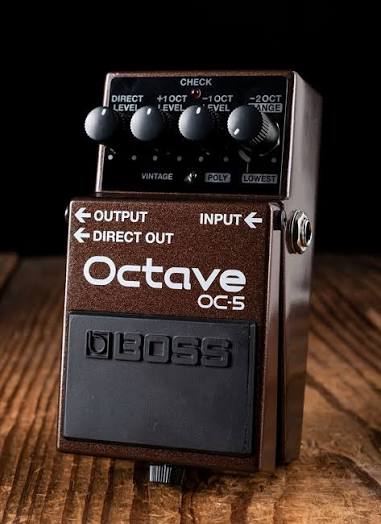
The Boss OC-5 Octave: Pedal Review
The Best of the Old and the New There aren’t many pedals that become genuine classics, but the Boss OC-2 is one of them. Released back in the early ’80s, it became the octave pedal for bass, finding its way onto the pedalboards of everyone from bedroom players to touring professionals. The trouble was, the OC-2 had its quirks. It tracked brilliantly if you played cleanly and knew its limitations, but it wasn’t exactly forgiving. Boss tried to modernise the formula with the OC-3, and while it gained plenty of useful features, many bassists still felt it lacked some of the magic of the original. Then came the OC-5. After spending some time with one recently, it’s easy to see why it’s become such a popular choice. Boss has managed to capture much of what made the OC-2 special while adding the kind of improvements modern players actually wanted. If you’re thinking about adding an OC-5 to your pedalboard, check the latest Amazon price using the link below. Buying through our affiliate link helps support Bass Gear Reviews at no extra cost to you. Built Like Every Boss Pedal You’ve Ever Owned If you’ve owned one Boss pedal, you’ll know exactly what to expect. The familiar compact enclosure is as rugged as ever, the footswitch feels reassuringly solid, and everything gives the impression that it’ll still be working long after you’ve forgotten what you paid for it. It’s exactly the kind of reliability gigging musicians appreciate. The Controls The OC-5 keeps things straightforward: The biggest addition here is the Vintage mode. Rather than simply being another octave setting, Vintage recreates the behaviour and character of the legendary OC-2 surprisingly well. It’s not just about the sound—it even captures some of the way the original responds under your fingers. Then there’s Poly mode, which opens up a whole new set of possibilities. Unlike older analogue octave pedals that really only wanted to see one note at a time, the OC-5 happily deals with chords and more complex playing. Understanding the Octave Voices One of the things that makes the OC-5 so versatile is the range of octave sounds it offers. Rather than being limited to a single sub-octave, you’ve got a few different flavours to experiment with. The -1 octave is the sound most bass players will use. It adds a note one octave below what you’re playing, creating a thicker, fuller tone that’s perfect for funk, synth-inspired bass lines, or simply adding extra weight to a trio or three-piece band. This is also the classic OC-2 sound that so many players know and love. The -2 octave takes things even deeper, adding a note two octaves below your original signal. Used on its own it can be almost overwhelming, especially on larger speaker systems, but blended carefully with your clean signal it creates huge, almost cinematic low-end. It’s great for experimental music, ambient textures, or those moments when you really want to shake the room. Finally, there’s the +1 octave. Instead of adding more low end, it creates a note one octave above what you’re playing. This opens up some really interesting possibilities, from shimmering chord work to pseudo-12-string sounds and even guitar-like textures. While it probably won’t be an everyday sound for most bassists, it’s surprisingly inspiring when you’re writing or experimenting. What I like is that none of these voices feel like gimmicks. They’re all genuinely usable (the -2 less so) —you just need to think of them as different tools for different musical situations. So… How Does It Sound? In a word? Excellent. Vintage mode delivers exactly the sort of thick, warm octave sound that made the OC-2 famous. It has that slightly organic character that sits beautifully underneath your clean bass without sounding overly processed. More importantly, it tracks incredibly well. Older octave pedals often demanded careful technique to get the best from them. The OC-5 is much more forgiving without losing that unmistakable Boss flavour. Switch over to Poly mode and it becomes a very different pedal. Suddenly you’re playing chords, experimenting with textures, or creating huge layered sounds that simply weren’t possible with the original OC-2. Some traditionalists may never leave Vintage mode—and honestly, I wouldn’t blame them—but it’s nice knowing those extra sounds are there when inspiration strikes. What I Like Boss has resisted the temptation to overcomplicate things. The controls are logical, the sounds are immediately usable, and it doesn’t take long to find settings that work. The tracking is excellent, even with faster lines and more dynamic playing. Perhaps my favourite thing, though, is that Boss didn’t try to replace the OC-2—they honoured it. Vintage mode genuinely feels like a respectful update rather than an imitation. Anything I Don’t Like? Very little, if I’m honest. If you’re an absolute OC-2 purist with a prized vintage pedal on your board, you might still notice subtle differences in feel and response. Some players will always prefer the original, and that’s perfectly fair. The only other criticism is that the OC-5 isn’t exactly cheap compared with older second-hand octave pedals. But once you consider that you’re effectively getting two excellent octave pedals in one, along with vastly improved tracking, it’s much easier to justify. Would I Buy One? Without hesitation. If you only want the classic OC-2 sound, the OC-5 delivers it convincingly enough for almost every bassist. If you want modern tracking, polyphonic capability and extra flexibility as well, it becomes an even easier recommendation. It’s one of those rare pedals that manages to appeal to vintage enthusiasts and modern players at the same time. If the Boss OC-5 sounds like the octave pedal you’ve been looking for, you can check today’s Amazon price using our affiliate link below. Every purchase helps support Bass Gear Reviews, and we genuinely appreciate it. Final Thoughts Boss had a difficult job with the OC-5. The OC-2 is one of the most respected bass pedals ever made, and expectations were understandably high. Thankfully, Boss didn’t simply