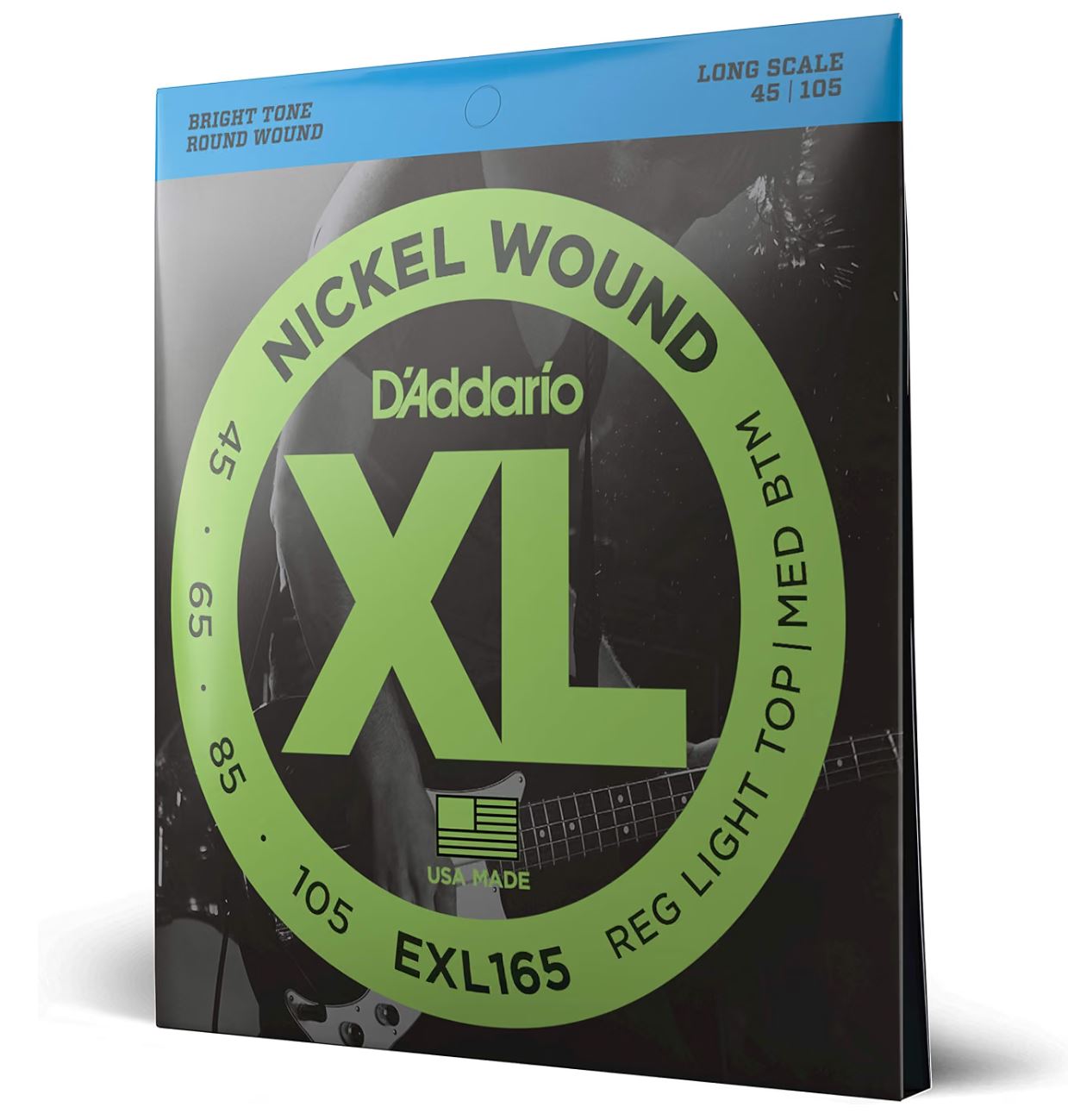
D’Addario XL Nickel Wound Bass Strings Review
The Classic All-Rounder, or Should We Say: The Workhorse? Disclosure: D’Addario kindly sent me these strings for review. As always, all opinions expressed in this article are my own and reflect my personal experience with the product. This is the first of several D’Addario string reviews, so keep an eye on Bass Gear Reviews for more coverage of their bass string catalogue in the coming weeks. There’s something to be said for a product that has been around for decades and continues to earn its place in musicians’ gig bags. The bass string market has changed considerably over the years, with coated strings, extended-life treatments and increasingly specialised designs competing for our attention. Yet, sometimes, the traditional option is still the one to beat. The D’Addario XL Nickel Wound strings are a perfect example. They’re one of the best-known bass string sets on the market, and the EXL165 gauge has become something of a standard for players looking for a balanced, versatile set of nickel roundwounds. They don’t rely on special coatings or elaborate treatments. Instead, they offer a familiar construction, a practical gauge combination and a price that makes them accessible to pretty much everyone. As part of my ongoing series of D’Addario bass string reviews, I wanted to spend some time with the XLs and see how they hold up against the more specialised options in the company’s catalogue. D’Addario supplied the strings for this review, along with the other sets covered in this series. Check the price of the D’Addario EXL165 XL Nickel Wound Bass Strings D’Addario XL Nickel Wound: The Basics The set I’m reviewing is the EXL165, a long-scale, four-string set with gauges of .045, .065, .085 and .105. This is a slightly different combination from the familiar .045–.105 (.045–.135 for five string sets) sets that use a .070 D string. D’Addario combines the lighter top strings from its EXL170 set with the heavier bottom strings from the EXL160, giving the EXL165 a comfortable balance between playability and a solid low end. The XL range uses a high-carbon steel hexagonal core wrapped with nickel-plated steel wire. They’re conventional roundwound strings, with no coating or additional treatment designed to extend their lifespan. D’Addario manufactures them in the USA, and the company describes the range as its best-selling electric bass strings. The construction is straightforward, but there is a reason this formula has remained popular. Nickel-plated steel offers a bright, articulate sound without the more aggressive character that some players associate with stainless steel strings. The hex-core construction also provides a consistent feel and reliable intonation. The EXL165 is available in a long-scale configuration and is suitable for a wide range of basses and playing styles. It’s a practical, familiar setup that doesn’t require much adjustment or adaptation. Testing the XLs on the Washburn Scavenger Reissue For this review, I used my Washburn Scavenger Reissue, a bass that has already featured in this series. It’s a useful instrument for evaluating strings because its passive electronics and split-coil pickup give it a distinct character, with plenty of midrange and a naturally punchy response. I’ve also used the XL Nickel strings on my Hartwood Satellite Bass. That bass has a darker character due to its pickup position, and I found the XLs particularly effective at bringing some clarity to the sound. They help retain definition and articulation without taking away the instrument’s natural character. That versatility is one of the things I appreciate about these strings. They work well on instruments with very different voices, and I don’t feel that they impose an overly distinctive tonal character of their own. Instead, they provide a familiar foundation that lets the bass do its thing. Feel and Playability The first thing I noticed with the EXL165 set was how familiar everything felt. These are traditional nickel roundwounds, and there’s very little to get used to if you’ve spent time playing this type of string. The .045–.065–.085–.105 combination offers a comfortable balance across the set. The lighter G and D strings feel responsive under the fingers, while the heavier A and E provide a little more substance under the right hand. I found the tension distribution comfortable, whether playing fingerstyle or digging in a little harder. The nickel-plated steel winding gives the strings a reasonably smooth feel for roundwounds. They still have the characteristic texture you’d expect, of course, but I didn’t find them unpleasant to play. They’re also responsive to changes in attack, which is something I always appreciate when moving between softer passages and more aggressive playing. I also like that there’s nothing unusual about their construction or feel. These are strings I can put on a bass and get straight to playing. There’s no need to adapt my technique or rethink how I approach the instrument. Tone: Bright, Clear and Balanced The XL Nickel strings deliver the sort of sound I expect from a good set of nickel roundwounds. There’s a clear attack, a solid low end and enough high-frequency detail to keep things articulate without becoming excessively sharp. The low strings have a firm, focused response. The E string has enough weight to support the sound without becoming loose or undefined, while the A string remains punchy and consistent. The middle strings have a balanced character, and the G string provides enough brightness to keep lines and fills clearly defined. What I particularly appreciate is how well these strings preserve the character of the bass. On the Washburn Scavenger Reissue, they complement the instrument’s naturally punchy midrange. On the Hartwood Satellite, they help bring additional clarity to an instrument that can otherwise sound darker because of its pickup position. That makes them a very practical choice. I don’t feel that I need to compensate for the strings when dialling in a sound. They provide a balanced starting point, whether I’m looking for a rounded, supportive bass tone or something with more presence and definition. The response is also consistent across the fretboard. Notes remain clear, and the