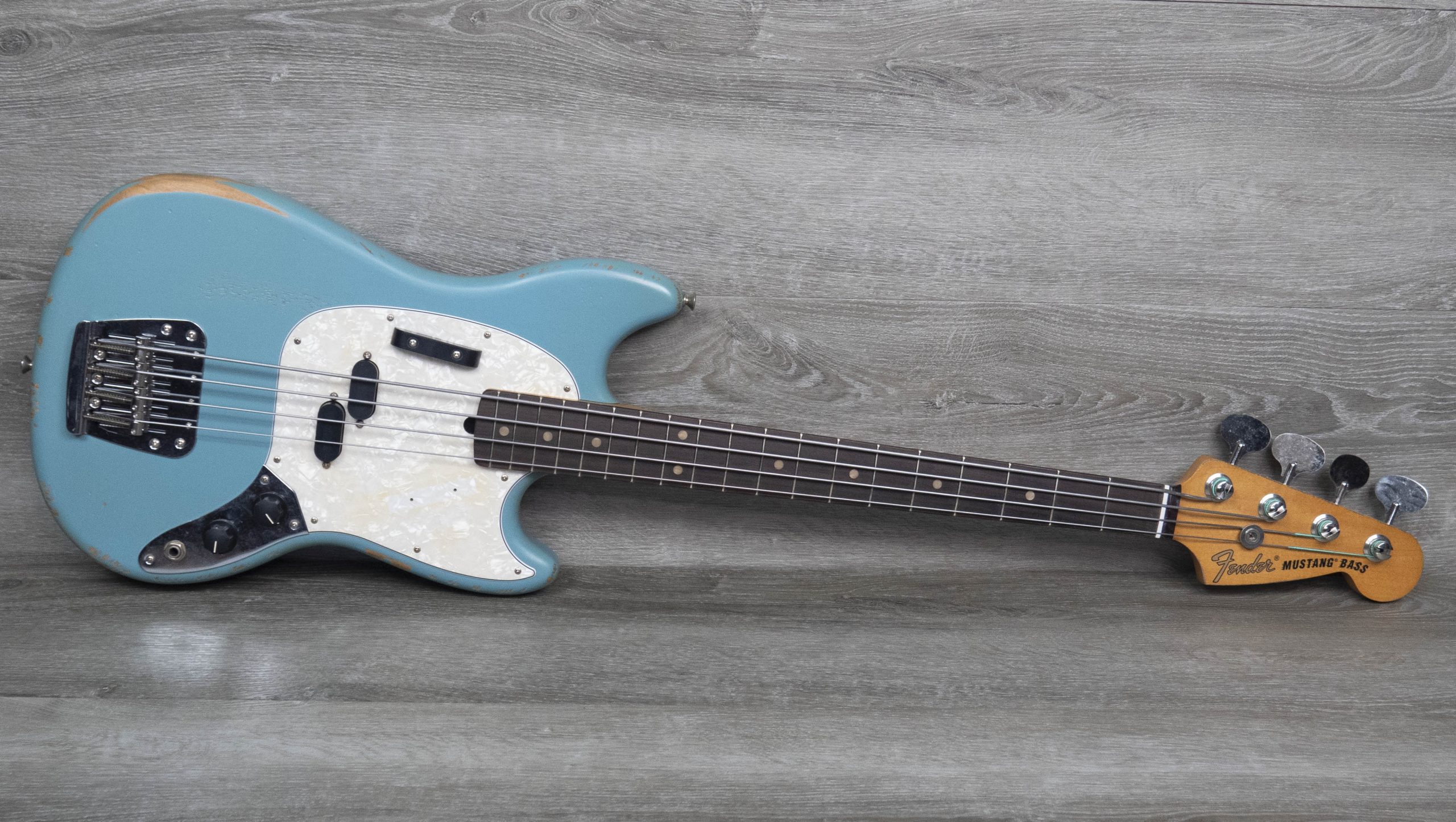
Fender Mustang JMJ Signature: Bass Review
A Bass Player’s Secret weapon The Fender JMJ Mustang is one of those rare instruments that surprises you not with flash, but with feel. When I first picked up my Daphne Blue Justin Meldal-Johnsen Mustang, it didn’t feel like a new bass. It felt like a bass I had already owned for years. The relic wasn’t cosmetic theater — it felt earned. The neck was smooth, the body resonant, the response immediate. It had that elusive “broken-in” quality that most instruments only achieve after years of real playing. And then I noticed it came strung it with flatwounds. Check the Fender JMJ on Amazon Now –> There is something about this instrument with flats that borders on addictive. The tone becomes focused, authoritative, and warm without ever feeling dull. It sits in a mix with a confidence that feels almost disproportionate to its size. In many ways, it behaves like a Precision bass — but lighter, faster, and in my experience, sometimes even more articulate. It’s as if it captures the punch and midrange authority of a P-Bass while shedding the weight and bulk that can make longer sessions physically demanding. To understand why this instrument resonates so deeply with players around the world, you have to look at both its lineage and its intent. The History The Mustang Bass first appeared in 1966 as Fender’s short-scale offering, originally positioned as a more accessible instrument. Yet like many so-called “student” models, it quickly transcended that label. Over decades, the Mustang became a cult favorite for players who valued punch, simplicity, and comfort. Its 30-inch scale length gave it a slightly different string tension and response — tighter and more immediate than many would expect, with a natural midrange focus that allowed it to cut through mixes without overpowering them. Fast forward to 2017, when Fender collaborated with Justin Meldal-Johnsen to create a signature version based on his own 1966 Daphne Blue Mustang. This wasn’t a nostalgic reproduction for collectors. It was an attempt to capture the feel, wear, tone, and spirit of a working musician’s main instrument — a bass that had proven itself on major stages and in countless studio sessions. What makes the JMJ Mustang special is how deliberately restrained it is. It has a single split-coil pickup, simple volume and tone controls, and a short scale neck that immediately feels compact and manageable. There’s no onboard preamp, no tonal complexity for complexity’s sake. Instead, everything is optimized around touch and responsiveness. The 30-inch scale is central to its character. It reduces overall tension slightly, which makes bends smoother and fretting more relaxed. But contrary to the old misconception that short-scale basses lack authority, the JMJ has remarkable low-end solidity. The notes bloom quickly and decay in a controlled way. With flatwounds, the attack softens just enough to create a thick, woody fundamental that feels vintage yet focused. In many contexts, it behaves like a Precision bass that has been distilled down to its most essential qualities. The midrange presence is there. The punch is there. But the physical footprint is smaller, the instrument lighter, and the response quicker. Long rehearsals become easier. Studio sessions feel less fatiguing. The bass almost disappears against your body, leaving only the sound. That is one of the reasons so many players quietly refer to it as a “secret weapon.” It doesn’t scream for attention. It doesn’t dominate visually or sonically. But in a mix — especially with flats — it sits exactly where a bass should sit. It supports without clouding. It anchors without overwhelming. Engineers appreciate how predictably it records. Live sound engineers appreciate how little corrective EQ it demands. Bandmates appreciate how it holds the pocket without stepping on harmonic space. The relic finish plays a psychological role as well. Because it already looks lived-in, you feel less precious with it. You play it. You dig in. You let it resonate. There’s something freeing about not worrying over the first ding or scratch. It feels like an instrument built for music rather than preservation. That said, it is not universally perfect. If you are chasing ultra-modern slap tones with aggressive high-end snap, this may not be your primary choice. If you need extensive tonal sculpting options at your fingertips, the simplicity of its controls could feel limiting. And if you are deeply attached to the full-scale tension and sonic footprint of a traditional Precision, the shorter scale will feel different under your hands. But those are not shortcomings so much as identity markers. The JMJ Mustang knows what it is. It is compact. It is focused. It is responsive. It is built around feel more than spectacle. It favors musicality over versatility for versatility’s sake. For me, it represents an ideal balance between tradition and practicality. It delivers the authority of a classic Fender low end in a body that feels agile and effortless. It rewards nuance. It thrives with flatwounds. It encourages longer playing sessions. And most importantly, it inspires. That is why so many bass players consider it their secret weapon. Not because it is flashy. Not because it is rare. But because when the band starts, it simply works — every time! Check the Mustang JMJ on Amazon!