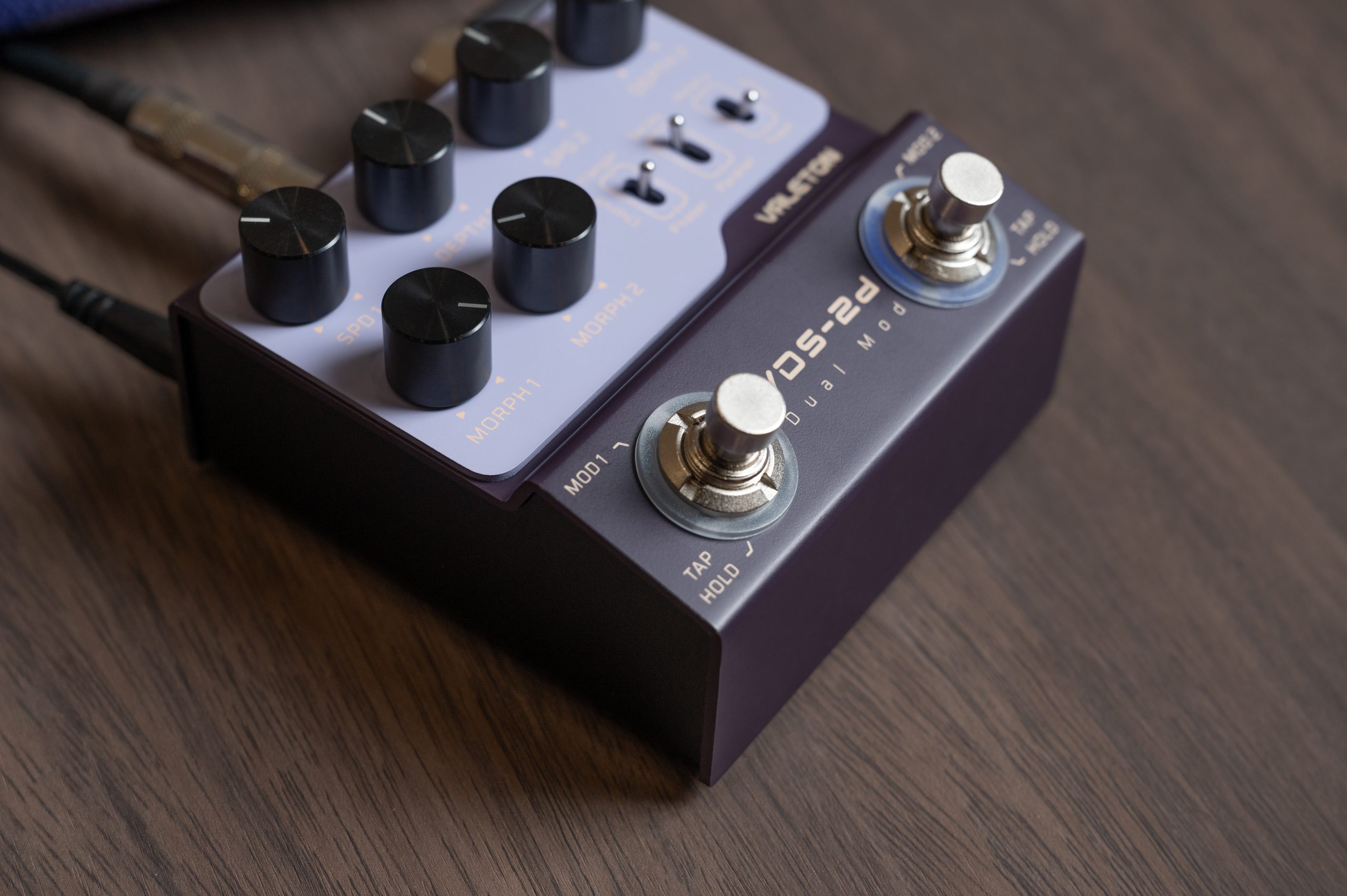
Valeton VDS-2D Dual Modulation: Pedal Review
A versatile dual-modulation pedal Modulation effects are an interesting category for bass players and we’ve reviewed quite a bit of them here on BassGearReviews. While chorus, phaser and flanger pedals have been around for decades, they aren’t necessarily effects that everyone uses regularly. Some players rely on a subtle chorus to add a little movement to their sound, while others use modulation more creatively, particularly when exploring fretless bass, ambient textures or synthesiser-inspired tones. The problem is that building a versatile modulation section can quickly become an expensive exercise. A decent chorus, phaser, flanger and filter can easily occupy a considerable amount of pedalboard space, even before you start thinking about tremolo or rotary effects. Rather than offering six separate effects that you can select individually, the VDS-2D takes a slightly different approach. It features two independent digital modulation engines, each with three effect options, allowing you to combine two different modulation effects simultaneously. You get Chorus, Flanger and Phaser on the first engine, while the second offers Rotary, Filter and Tremolo. You can then run the two engines in series or parallel, giving you quite a bit of flexibility when building more complex sounds. Let’s take a closer look. Two modulation engines, six effects The first thing you’ll notice about the VDS-2D is that Valeton has managed to fit quite a lot of functionality into a relatively compact enclosure. The layout is straightforward. There are six rotary controls, two effect-selection switches and a Series/Parallel switch, with two footswitches at the bottom controlling the individual modulation engines. The first engine offers three familiar modulation effects: The second engine provides: Each engine has independent Speed and Depth controls, allowing you to adjust the modulation rate and intensity without affecting the other effect. There’s also a Morph control for each engine. Morph 1 adjusts the mix of MOD 1 when using Series mode, while in Parallel mode it controls the final blend between the two modulation engines. Morph 2 changes its function depending on the selected MOD 2 effect, controlling the filter frequency or the tremolo waveform, for example. This is a fairly clever approach to the controls. You don’t have to navigate menus or deal with complicated parameter assignments. Everything is accessible directly from the pedal. The only thing worth remembering is that you can combine one effect from each engine, not any two of the six available effects. You can run Chorus and Tremolo together, for example, but you cannot combine Chorus and Phaser. It’s a reasonable limitation, particularly considering how much functionality Valeton has managed to fit into the pedal. Check the price of the Valeton VDS-2 on Amazon –> How does the VDS-2D sound with bass? One of the things I always look for when testing modulation pedals with bass is how much they affect the fundamental frequency. It’s relatively easy to make a chorus sound impressive when playing guitar, but bass introduces a different set of challenges. You want the movement and character of the modulation without losing the weight that makes the instrument work. Fortunately, the VDS-2D handles bass particularly well. The effects retain enough low-frequency information to keep the instrument sounding like a bass rather than a thin, heavily processed version of one. That’s important because modulation effects can sometimes create the impression that you’re losing low end even when the fundamental is still present. Changes in phase relationships, frequency emphasis and the balance between wet and dry signals can all affect how substantial the instrument feels. The VDS-2D manages to keep things under control, making it possible to use the effects more enthusiastically without constantly having to compensate for a disappearing bottom end. It’s also worth mentioning that the pedal offers true and buffered bypass options, so you can choose whichever approach works best with your existing signal chain. Chorus: a familiar effect with plenty of room to experiment Chorus is probably the first effect most bass players will want to try, and for good reason. A good bass chorus can add width and movement without making the instrument sound excessively processed. It’s particularly useful for fretless bass, melodic passages and situations where you want the bass to occupy a little more space in the mix. At lower depth settings, the chorus adds a subtle sense of movement that works particularly well with sustained notes. Increase the depth and the effect becomes considerably more noticeable, opening the door to those more pronounced, almost synthesiser-like textures. I particularly like having independent control over speed and depth. It means you can experiment with slower, deeper modulation without being forced into the more obvious, rapidly moving chorus sounds that some pedals tend to favour. For everyday bass playing, I’d probably spend most of my time with relatively conservative settings. There’s enough character here to make a difference without overwhelming the original instrument. Flanger: for something a little more adventurous Flanger is one of those effects that can sound fantastic in the right context, but it’s not necessarily something you’ll leave switched on throughout an entire performance. The VDS-2D offers the familiar sweeping, metallic character you’d expect from a flanger, making it particularly useful for more experimental passages and moments where you want the bass to stand out. On bass, I tend to prefer flanger settings that retain some of the original instrument’s body. There’s a fine line between adding an interesting movement to a bass line and turning it into a rather hollow, indistinct sound. The VDS-2D gives you enough control to explore both ends of that spectrum. It’s also worth experimenting with the flanger in combination with the second modulation engine. Adding a little tremolo, for example, creates a considerably more animated sound that can work surprisingly well for atmospheric passages and transitions. Phaser: subtle movement or something much more obvious Phaser is another effect that I think deserves more attention from bass players. Unlike chorus, which tends to create a more obvious sense of movement, a phaser can add character without necessarily making the