Blog

Author: Claudio Ribeiro

Meris Ottobit Jr
Reviews

Meris Ottobit Jr: Pedal Review

Bitcrushing the Bass The Meris Ottobit Jr. isn’t a distortion box, a traditional synth emulator, or a one-trick glitch pedal. It’s a high-resolution sound manipulator with digital DNA and modular soul — inspired by vintage gaming systems, early digital processors, and rhythmic control schemes that come from the world of analog synthesis. At its core, it’s a bitcrusher — but to stop there would undersell what the Ottobit Jr. really is. It’s also a sequencer, stutter machine, resonant filter, tremolo engine, and a CV-controllable modulation hub. For bass players, that means access to new textures and performance dynamics that aren’t just novel — they’re musically powerful. More than just a lo-fi gimmick, the Ottobit Jr. can completely transform how your bass occupies a mix, or create entire rhythmic frameworks from a single note. Whether you’re laying down robotic funk, chopped ambient pulses, or crushing 8-bit grime, this pedal speaks bass fluently — but with a heavy digital accent. Why Bitcrushing Matters for Bass Bitcrushing isn’t about overdrive or fuzz in the traditional sense — it’s about reducing resolution. That means cutting down bit depth and sample rate, degrading the signal into crunchy, digital artifacts. On bass, this does a few important things: And unlike most bitcrushers, the Ottobit Jr. allows you to dial in musical control, sequencing, and dynamic performance. This is what sets it apart. Core Controls and Features The pedal uses dual-layered control mapping — knobs and secondary functions — and offers stereo output, MIDI, and expression/CV input, making it surprisingly deep for its compact form. Here’s how it all translates for bassists: Bitcrusher & Sample Rate Reduction Sequencer Stutter Filter Modulation Expression / CV Input Sound Character: Digital but Deep The Ottobit Jr. is unapologetically digital — this isn’t analog warmth or tube-style breakup. Its charm is in its cold, artificial precision, which paradoxically makes it one of the most expressive modern pedals you can put on a bass pedalboard. What stands out: Effect Combinations and Signal Chain Integration The Ottobit Jr. is a centerpiece pedal — it wants to be heard. But it also works well in a chain, especially when paired with fuzz, filter, or time-based effects. With Fuzz/Distortion: With Filter: With Delay/Reverb: With Expression Pedal: Usability and Learning Curve This is not a plug-and-play pedal. The interface is deep, and it rewards experimentation. However, it’s not unwieldy — once you grasp the knob functions (and their alt modes), you’ll start hearing new bass roles emerge: Its studio-grade fidelity and musical envelope mean it’s at home in electronic, jazz, industrial, alt-R&B, and post-rock contexts. It’s also a killer secret weapon in sample-based music or layered loops. Pros and Cons Pros: Cons: Conclusion: Precision Mayhem, Beautifully Controlled The Meris Ottobit Jr. doesn’t just color your bass tone — it shatters it and builds something new in its place. It’s rare to find a pedal this capable of both total chaos and tight rhythmic control. For the experimental bassist, it’s a window into glitch-funk, modular-style sequencing, and textural manipulation rarely accessible outside of full synth setups. But even for groove-based players, it adds digital teeth and motion that transform simple phrases into complex, evolving layers. If you’re willing to invest time in learning its controls and embrace its digital dialect, the Ottobit Jr. may become one of the most musically expressive and compositionally inspiring tools on your board.
Earthquaker Devices Hummingbird
Reviews

EarthQuaker Devices Hummingbird – Pedal Review

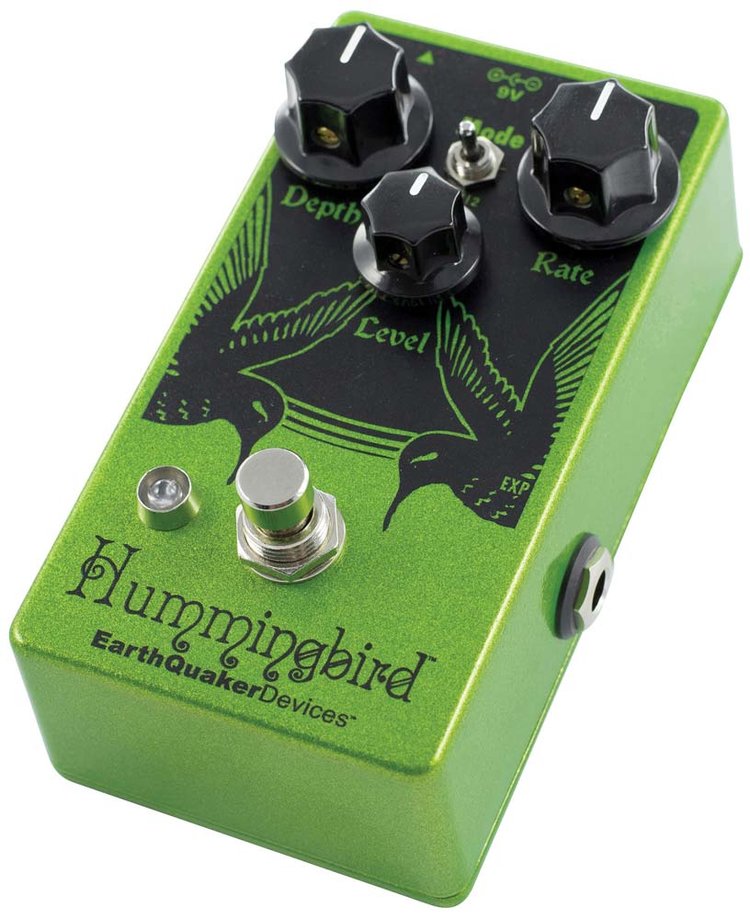
Where Pulse Meets Power in the Low End The Hummingbird is EarthQuaker Devices’ modern take on the vintage “repeat percussion” tremolo circuit — a choppy, percussive style of amplitude modulation that emphasizes square-wave tremolo, delivering a bold, on/off stutter rather than the smooth ebb of traditional sine or triangle-wave tremolos. Originally derived from the Vox Repeat Percussion, the Hummingbird elevates the concept with a wider rate range, greater control over depth and volume, and excellent signal integrity, especially valuable when applied to bass guitar. For bassists, this pedal can be an unexpected gem — providing pulsing rhythmic motion, synth-like textural effects, and a compelling way to modulate dynamics and groove. Why Tremolo Works (and Shines) on Bass Though often associated with guitar and surf rock, tremolo on bass offers unique advantages: Square-wave tremolo in particular is powerful on bass — not just modulating volume, but shaping how a note breathes, disappears, and re-emerges in the mix. Control Layout: Simple but Powerful The Hummingbird features a minimal but interactive control set, letting you dial in everything from slow pulses to near audio-rate flutter. Depth Rate Mode Switch (Three Speed Ranges) Level Tone and Response on Bass The Hummingbird is surprisingly bass-friendly, retaining low-end integrity and punch even at high Depth or fast Rate settings. Its tonal character is raw and unapologetic — this isn’t a mellow, ambient trem. But with careful tweaking, it can be as much felt as heard, especially in subtle settings or when combined with ambient effects. Effect Pairings: Building Sonic Layers The Hummingbird is a team player on pedalboards — its rhythmic modulation interacts dynamically with nearly every effect type. Fuzz & Overdrive (Before or After): Envelope Filter: Delay/Reverb: Modulation Effects: Parallel Signal Paths: Build Quality and Format While not feature-stuffed, it’s reliable and expressive, with just enough tweakability to tailor to your playing without overwhelming the user. Who It’s For Ideal for bass players who: It’s less suited to players seeking gentle, sine-wave tremolo for classic rock ballads — but perfect for those leaning into character and contour. Pros and Cons Pros: Cons: Conclusion: Rhythmic Texture Meets Low-End Strength The EarthQuaker Devices Hummingbird is a masterclass in how a simple concept — on/off tremolo — can become an expressive and musical force when executed with clarity, character, and nuance. For bass players, it’s a secret weapon — adding motion, pulse, and chopped rhythmic tension without compromising fundamental tone. Whether used subtly to animate long notes or aggressively to strobe through fuzz and delay, the Hummingbird elevates tremolo from novelty to creative staple. It’s not a tremolo for everyone — but for those open to rhythmic exploration, it rewards curiosity with an endless pulse that breathes alongside your playing. Let me know if you’d like a few suggested Hummingbird settings tailored to bass-driven genres or multi-effect setups.

EMpress Bass ParaEQ
News

Empress Effects Releases the Bass ParaEQ

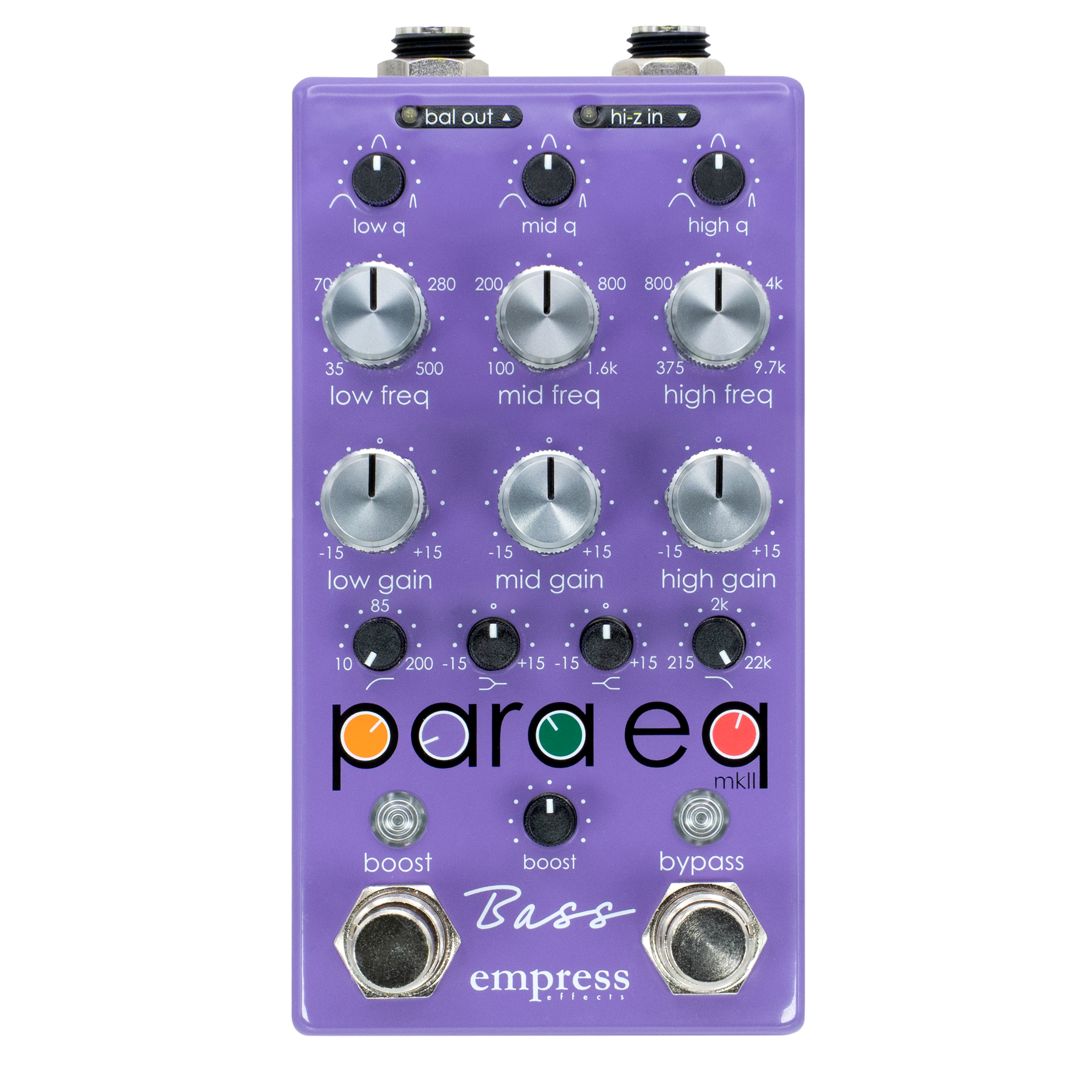
Empress Effects Releases Dedicated EQ Pedal for Bass Instruments Ottawa, ON – May 21, 2025 – Empress Effects is proud to announce the release of the Bass ParaEq, the only bass specific parametric EQ pedal on the market today. Building on the success of their acclaimed ParaEq MKII series, which has already gained popularity with bassists, the Bass ParaEq offers the same studio-grade precision but with features tailored for low-end instruments. The Bass ParaEq follows the success of the Empress Bass Compressor and ParaEq MKII Deluxe, which have become some of the company’s best-reviewed and top-selling products. The Bass Compressor’s popularity confirmed what Empress had long suspected: bassists are eager for tools built with their needs in mind, not just adaptations of guitar gear. The Bass ParaEq retains the line’s powerful 3-band parametric EQ and studio-style features while introducing a bass-optimized frequency layout, a selectable 10MΩ Hi-Z input for piezo- equipped instruments, a dynamically-adjusted low shelf, and automatic balanced output detection—perfect for live and studio use alike. Whether dialing in clarity for a dense mix or compensating for an unfamiliar venue, the Bass ParaEq offers precise tonal control in a compact, road-ready form. With 27V of internal headroom to prevent clipping from even the hottest active pickups, the Bass ParaEq is the ultimate studio-style EQ designed to travel. Key features of the Bass ParaEq include:● Adjustable frequency bands tailored for bass instruments● Selectable 10MΩ Hi-Z input for upright basses and piezo pickups● Auto-detecting balanced output for long cable runs and direct recording● Three sweepable parametric bands with variable Q● High-pass, low-pass, low shelf, and high shelf filters● Transparent analog signal path with 27V of internal headroom The Bass ParaEq is now shipping worldwide. It can be purchased from the Empress Effectswebsite for $374 USD and through authorized Empress dealers globally. About Empress Effects: Founded in 2005 in Ottawa, Canada, Empress Effects designs analogand digital effects for discerning musicians who value tone and creative depth. Known for boththeir studio-grade compressors and EQs, as well as the powerhouse “modular synth in pedal-form” ZOIA, Empress’ unique and vast offerings can be seen in studios and on stages acrossthe world.

Pino Palladino Smothie Flats
News

Ernie Ball Launches the Pino Palladino Smoothie Flats Bass Strings

The Feel of Old String, Straight Out of The Pack! Ernie Ball has officially released the highly anticipated Pino Palladino Smoothie Flats, a new set of flatwound bass strings developed in close collaboration with the legendary session bassist himself. Designed for players chasing a rich, vintage tone with ultra-smooth feel, the Smoothie Flats are crafted using a precision-polished cobalt alloy ribbon. This unique construction gives the strings lower tension and a deep, thumpy low end that flatwound fans—and especially fretless players—will appreciate. Palladino, known for his iconic fretless tone and his work with artists like D’Angelo, John Mayer, and The Who, was deeply involved in the development process. “They feel so good,” he says in Ernie Ball’s demo video. “You don’t get any string noise. They’ve got that real thump and tons of low end. It’s a different approach compared to roundwounds.” String gauge was also key to the final design. The Pino Palladino Smoothie Flats are available in two sets: Whether you’re after classic Motown warmth or a modern, articulate flatwound vibe, these strings are definitely worth a test drive.

Rainbow Machine
Reviews

EarthQuaker Devices Rainbow Machine: Pedal Review

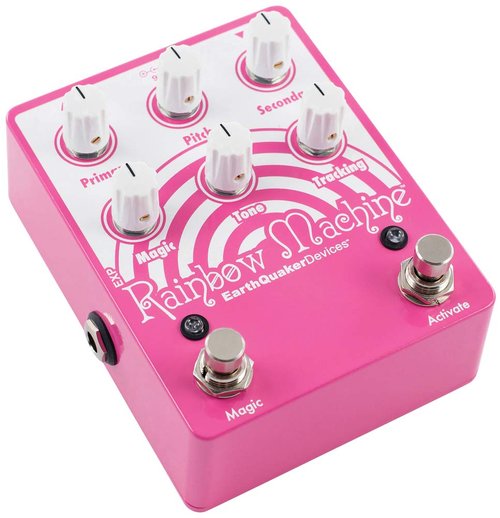
Embracing Chaos, Discovering Beauty The Rainbow Machine is a polyphonic pitch-shifting modulation pedal created by EarthQuaker Devices, a company known for its bold, character-rich stompboxes. Designed by EQD founder Jamie Stillman, this pedal wasn’t built to emulate traditional effects or replicate natural sounds — it was created as an exploration of what pitch, delay, and feedback could become when intentionally bent, stretched, and warped. Released initially in 2011 and later revised in the Rainbow Machine V2, it quickly earned a reputation as a “noise-maker’s dream” and a chaos pedal. But here’s the twist: beneath the strange lies surprising musicality — and when approached with patience and intent, the Rainbow Machine reveals itself as an expressive, sometimes subtle tool, particularly on bass. Why It’s (Surprisingly) Useful for Bass Players While the Rainbow Machine might not be the first pedal that comes to mind for bassists, its lush detuning, shimmering pitch shifts, and dynamic chorus-like movement can add width, movement, and expressive layers to otherwise standard lines. It shines when: In short, it’s not just a “weird pedal” — it’s a textural tool that can range from subtle to surreal. Core Concept: Controlled Unpredictability At its heart, the Rainbow Machine is a pitch-shifter, but not in the clean, sterile sense. It’s grainy, digitally unstable, and proud of it. What makes it different is its approach to pitch: it allows for real-time, continuously modulated pitch shifts, alongside regenerating feedback loops and even self-oscillation. It’s not about precise harmony — it’s about expressive pitch movement, similar to tape warble, circuit-bent toys, or detuned tape echo. For those open to exploration, this pedal becomes less of an effect and more of an instrument. Controls: A Study in Interaction Each knob has a wide range and interacts with the others. Here’s a breakdown: Pitch Primary Secondary Tracking Magic Tone (on V2 only) Activate / Magic Footswitches Using the Rainbow Machine Musically (Not Just for Noise) While the pedal is capable of alien spaceship sounds, with careful settings it offers surprisingly usable tones: 1. Subtle Modulated Harmony 2. Faux Double-Tracking 3. Organ-like Textures 4. Textural Swells 5. Chaos as a Crescendo Where It Sits in a Signal Chain For bass, place it: Build Quality & Power Pros and Cons Pros: Cons: Conclusion: Order in Chaos The Rainbow Machine is a pedal that defies category. It’s not a pitch shifter, a chorus, or a synth — it’s all of those things and none of them, depending on how you use it. For bass players, it offers an unconventional but highly expressive voice: one that can shimmer behind a groove, detune a melody into dreamy dimensions, or explode into tonal hysteria with the stomp of a switch. At its core, the Rainbow Machine is about embracing unpredictability, but with the tools to shape and control it just enough. When balanced correctly, it becomes not a noise generator, but a compositional tool — offering the player a palette of instability, beauty, and tension. It teaches the user to play differently, to listen carefully, and to accept the unexpected. That’s why it continues to inspire, challenge, and reward those bold enough to explore its strange sonic universe.