Blog

Author: Claudio Ribeiro

Neural DSP Nano Cortex
Reviews

A First View into the Nano Cortex

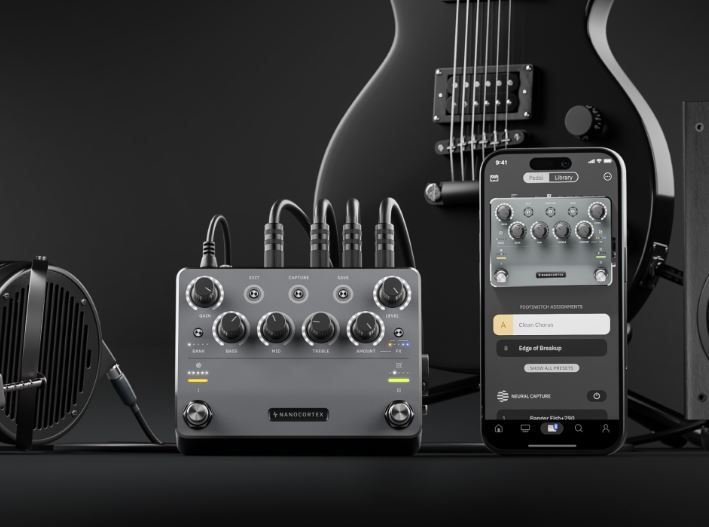
A first look at the Nano Cortex for bass players The Neural DSP Nano Cortex has arrived, offering bass players a compact yet powerful solution for amp modeling, effects processing, and tone capturing. Designed as a more portable alternative to the highly acclaimed Quad Cortex, the Nano Cortex retains much of the power of its predecessor while streamlining its functionality for ease of use. In this first look, we’ll break down its key features, controls, and unique seven-slot signal chain that make it a real weapon any bass player’s setup. Key Features Neural Capture Technology One of the standout features of the Nano Cortex is its ability to replicate the sound of amplifiers, drive pedals, and cabinets with remarkable accuracy. The Neural Capture process takes about five minutes and allows bassists to bring their favorite gear tones anywhere without the need for bulky equipment. Preloaded Content & Built-In Effects The Nano Cortex comes preloaded with 25 high-quality amp models and 300 impulse responses (IRs), ensuring a broad spectrum of tones. Additionally, the device includes essential effects like chorus, delay, and reverb, allowing users to shape their sound without relying on external pedals. Portability & User-Friendly Interface Weighing in at approximately 620 grams, the Nano Cortex is designed for easy integration into pedalboards and live setups. Though it lacks a built-in screen, the companion app provides a seamless interface for tweaking settings, managing captures, and accessing an extensive library of presets. Controls Overview The Nano Cortex features an intuitive set of controls, allowing for quick tone adjustments: Seven-Slot Device Signal Chain The Nano Cortex employs a structured seven-slot signal chain, offering flexibility and a logical approach to processing bass tones. Each slot can be customized and bypassed, ensuring a tailored sound for any musical style. Conclusion For bass players seeking a high-quality, compact solution for amp modeling and effects, the Nano Cortex is an exciting new option. Its advanced Neural Capture technology, easy-to-use controls, and structured signal chain provide both versatility and convenience. Whether for live performances, recording sessions, or home practice, this pedal has the potential to become an essential tool for bass players looking to refine their sound. Stay tuned for a deeper dive into the Nano Cortex as we explore its real-world applications in upcoming reviews!
Walrus Canvas Clock
News

Walrus Introduces the Canvas Clock

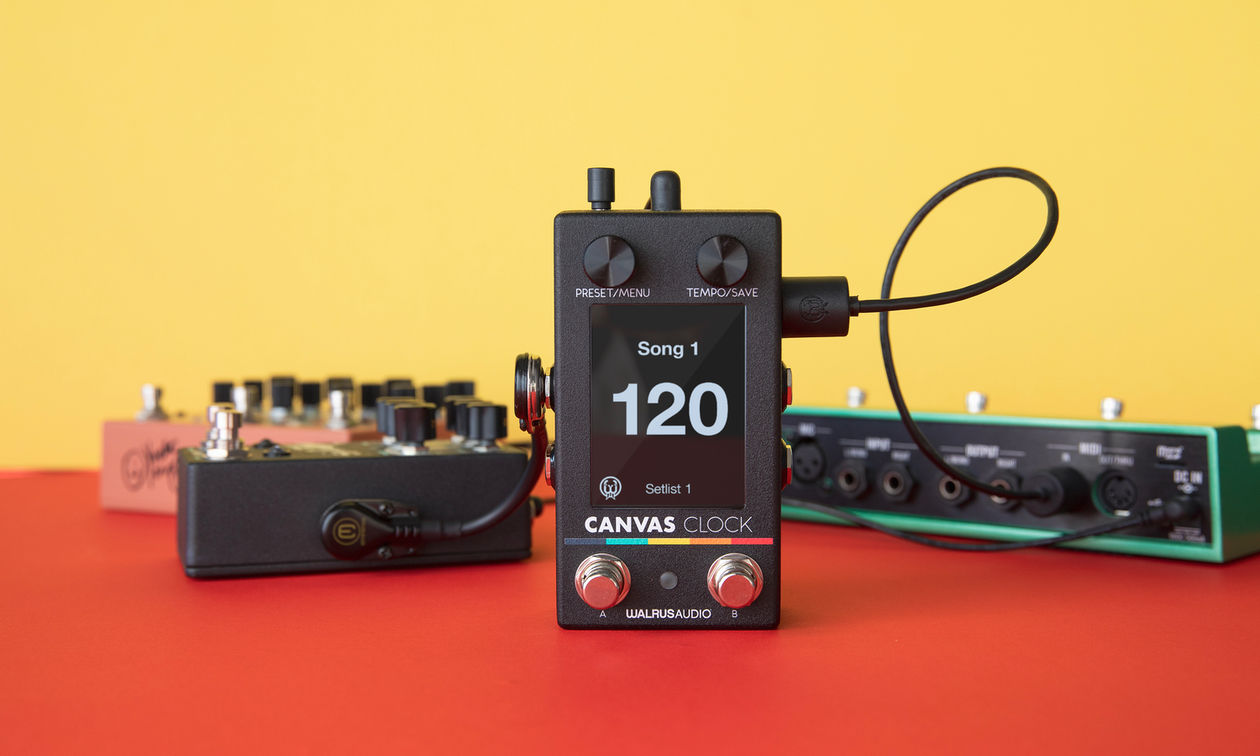
The Ultimate Tempo Solution Sync your entire rig, seamlessly navigate setlists, and simplify tempo matching with the Canvas Clock—a versatile, all-in-one tempo solution. Designed for MIDI and analog setups, it ensures precision timing with deep customization options. Seamless Sync & Control Connect via MIDI (⅛ in or 5-pin) or analog (¼ in) to keep all time-based devices locked in. Adjust tempo on the fly and recall settings instantly via the Canvas Clock Editor at walrusaudio.io. Custom Outputs & Footswitches Advanced Sync & Metronome Features Effortless Song & Setlist Management Canvas Clock Editor Edit settings, organize setlists, and update firmware via USB-C. With unmatched versatility, the Canvas Clock keeps your rig perfectly in sync. Available now at walrusaudio.io.

Darkglass Kaamos
News

The Darkglass Kaamos: Price and Availability

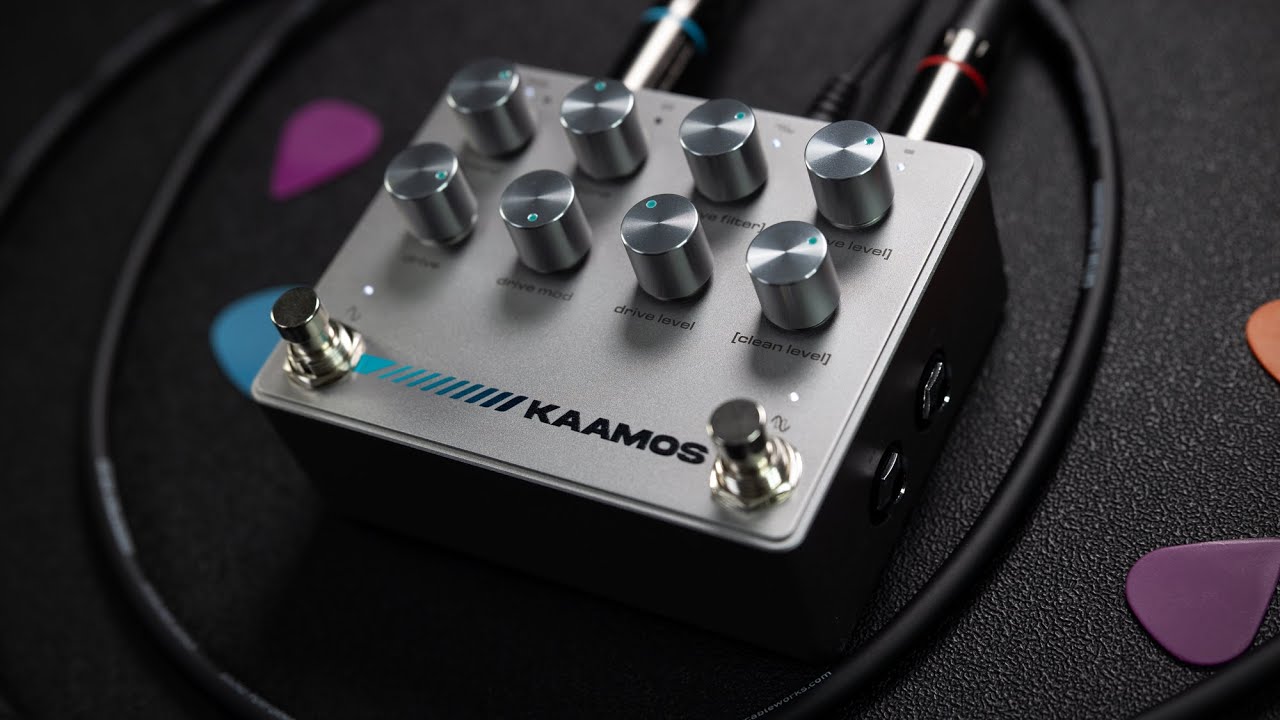
The new “Beast” from Darkglass is coming The Darkglass Kaamos, a collaboration with renowned bassist and producer Amos Heller, is set to make waves in the bass community. This innovative pedal combines aggressive distortion with deep octave-down effects, offering bassists a versatile tool to reshape their sound. Priced between €480 and €525 (approximately $520 to $570), the Kaamos is expected to hit stores by mid-March. Its fusion of rich distortion and seismic octave effects promises to redefine bass tones, making it a highly anticipated addition to any bassist’s arsenal. Stay tuned for its release and be ready to elevate your sound with the Darkglass Kaamos. For more information on the Darkglass Kaamos, check our early impressions article here.

Boss ODB-3
Reviews

Boss ODB-3 Bass Overdrive: Pedal Review

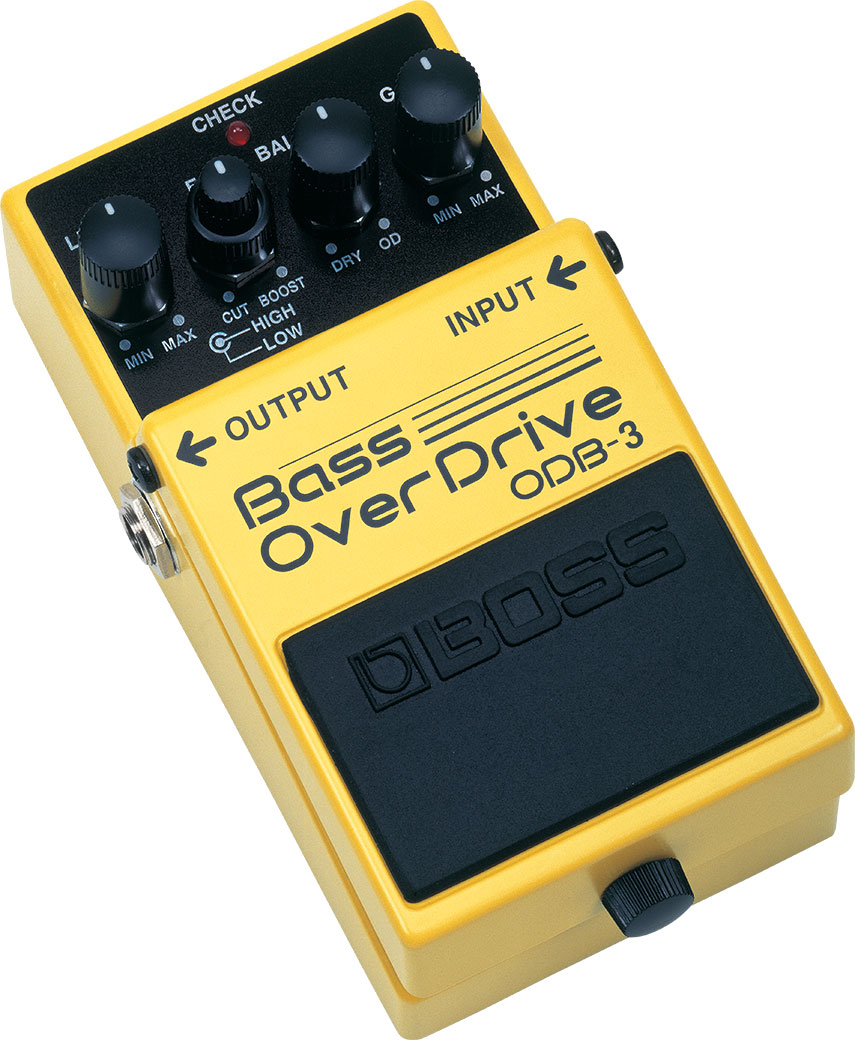
A Hidden Gem in the Boss Roster With the release of our reviews on the Boss VB-2W and Boss TU-3, our community has been asking for more Boss pedal reviews. Boss is a brand that can be found everywhere around the globe—it has saved touring musicians countless times when airlines have lost or broken gear. Knowing your Boss gear can make or break your tours and recording dates. Today, we’re focusing on a hidden gem in the Boss roster. A pedal that everyone knows but many overlook—the ODB-3 Bass Overdrive. The Overdrive That Defined a Generation of Bassists The ODB-3 has been around since 1994, and while it may not have the boutique status of modern drive pedals, it has quietly earned its place as a go-to bass distortion for players across many genres. Unlike typical overdrive pedals that are designed for guitar and later adapted for bass, the ODB-3 was built from the ground up for low frequencies. It offers a full-range overdrive that retains low-end definition, making it an excellent choice for rock, metal, and punk bassists who need aggression without sacrificing clarity. Features & Controls The Boss ODB-3 is housed in the classic Boss compact pedal format, built like a tank—a reliable workhorse that will withstand years of stomping, touring, and studio use. Its control layout is simple yet effective: The Balance control is what separates the ODB-3 from standard distortion pedals—many bass players want distortion but still need the fundamental clarity and punch of their clean signal. This pedal delivers both, making it highly versatile. Tone & Performance The ODB-3 is aggressive—it’s not a subtle overdrive meant for light breakup. Instead, it excels in delivering powerful, driven tones that cut through dense mixes. One of the biggest advantages of the ODB-3 is how well it handles active and passive basses. Thanks to its high-input impedance, it doesn’t clip or overload active bass signals, making it a great option for modern bassists. Another key strength is its ability to retain articulation—even at high-gain settings, the notes remain clear and distinct, something many distortion pedals struggle with when used on bass. How It Stands Against Other Overdrive Pedals While the ODB-3 is an excellent standalone overdrive, it has stiff competition in today’s market. Many modern bass drive pedals offer more sophisticated EQ options or cab simulation, features that the ODB-3 lacks. However, what keeps this pedal relevant is its simplicity, affordability, and reliability. If you’re looking for a no-nonsense, hard-hitting bass overdrive that you can rely on night after night, the Boss ODB-3 is still one of the best choices available. Conclusion: A Workhorse Distortion with Unmatched Reliability The Boss ODB-3 might not be the flashiest or trendiest overdrive pedal, but it works—and it works exceptionally well for bassists looking for a dependable, aggressive drive. Its ability to blend clean and dirty tones, its full-range overdrive, and its built-like-a-tank durability make it a staple on pedalboards worldwide. While boutique distortion pedals may come and go, the ODB-3 remains a reliable choice, proving once again why Boss pedals are found in every corner of the bass-playing world.

Boss TU-3
Reviews

The Boss TU-3: Pedal Review – Are We Really Reviewing This?

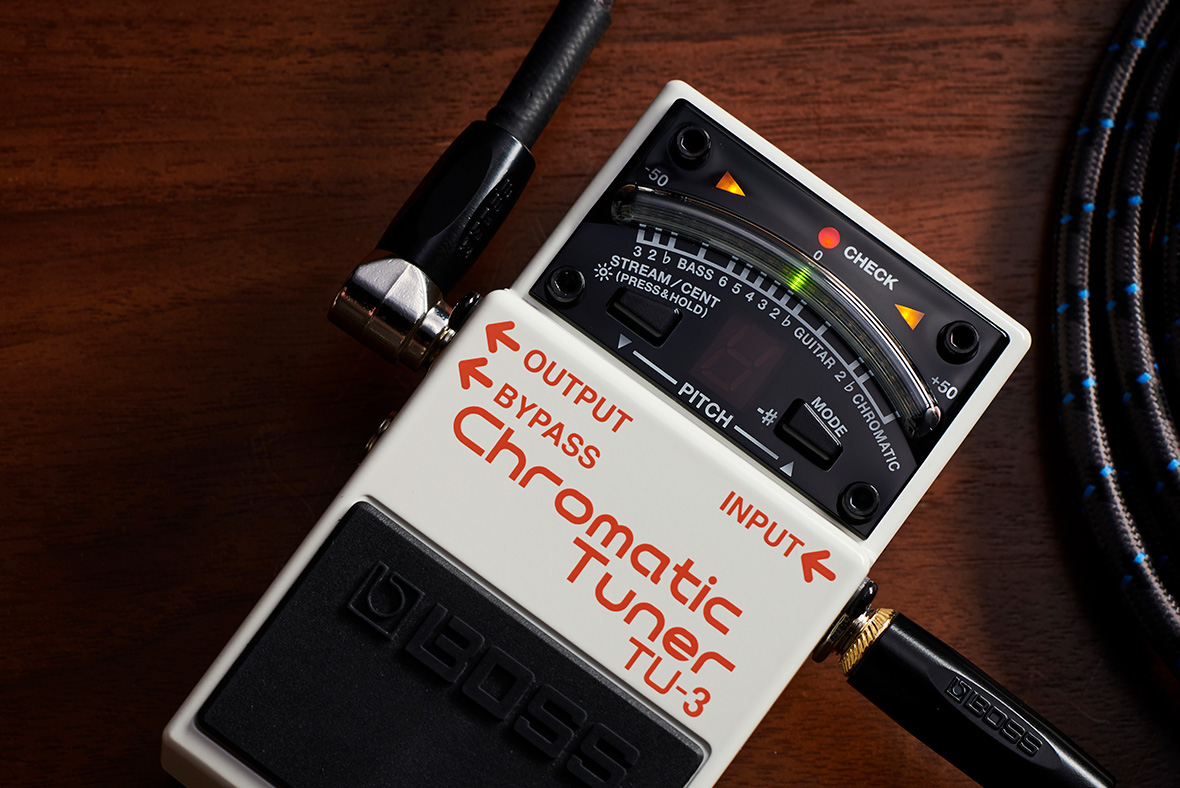
The Most Essential, Yet Overlooked, Pedal on Your Board Let’s be honest—if you’re reading a review about the Boss TU-3, something strange is happening. You probably already own one, have used one, or have at least seen one a thousand times on pedalboards everywhere. This isn’t a boutique overdrive or a rare modulation effect—it’s a tuner. But not just any tuner—THE tuner. The Boss TU-3 is the industry standard, the golden benchmark, the tank that refuses to die. If you’ve ever played a gig and relied on a pedal tuner, chances are high that this little white box was the one keeping your bass (or guitar, we don’t discriminate) in check. Today, we’re diving deep into a review that absolutely no one expected—but one that the Boss TU-3 absolutely deserves. Why Review a Tuner? Because This One is Legendary. Tuners rarely get the spotlight. They sit quietly on your board, never demanding attention, yet they hold your entire performance together. A bad fuzz tone? You can roll with it. An out-of-tune bass? Absolute chaos. The TU-3 takes its job very, very seriously. Here’s what makes it the King of Tuners: TU-3 vs. TU-3S: The Compact Cousin If you thought the TU-3 was too big (first of all, why?), Boss offers an alternative: the TU-3S. It’s essentially the same pedal, minus the footswitch. That’s right—it’s always on, making it perfect for rigs with switchers or players who want constant tuning reference. Key Differences Between the TU-3 and TU-3S: Feature TU-3 TU-3S Footswitch Yes Nope (Always On) Size Standard Boss Pedal Smaller, No Footswitch Ideal For Standard Pedalboards Looper/Switcher-Based Rigs If you love tap-dancing on your pedals, get the TU-3. If you want tuning at all times, the TU-3S is your silent workhorse. Conclusion – The Pedalboard MVP Sure, reviewing a tuner may seem unnecessary, but let’s give credit where credit is due: the Boss TU-3 is the reason your band doesn’t sound like a mess. It’s reliable, indestructible, and does its job flawlessly. If you don’t have one, get one. If you already have one, never let it go. Because at the end of the day, you can’t solo your way out of being out of tune.