Blog

Category: Reviews

Reviews

Sire Marcus Miller V6 5-String – Bass Review

Modern Active Jazz with Vintage Character Disclaimer: This bass was kindly provided by Sire for the purpose of this review. However, this does not influence our opinions or the content of our reviews. We strive to provide honest, unbiased, and accurate assessments to ensure that our readers receive truthful and helpful information. Introduction Sire has built a reputation for delivering professional-level instruments at prices that appeal to working musicians. The Marcus Miller V6 is their new active Jazz Bass model, positioned just above the more traditional passive V5. Sire was cool enough to send us a unit so we could see whether the V6 could combine the vibe of a vintage Jazz with the flexibility of a modern preamp, and if the extended low B string would hold up in live and studio contexts. TL;DR: The V6 is, in every sense, a workhorse bass. Specifications The V6 we tested was the 5-string version, with a hard maple neck and rolled fingerboard edges. It comes with a 34″ scale length, 46 mm nut width, medium frets, and a satin neck finish that feels broken-in straight out of the case. The electronics are really where this model stands apart: the Marcus Super-J Revolution pickups are paired with Sire’s Heritage-3 active preamp. This offers a 3-band EQ, active/passive switching, master volume, pickup blend, and a passive tone control. Hardware includes the Marcus Miller Modern-S Bass Bridge, a classic J-Bass style bridge and the Premium Light Weight Open Gear tuners, both solid, stable and super light. From the factory, the V6 ships with DR roundwound strings, ensuring brightness, clarity, and long life. It also comes with the Sire Official Gig Bag, a padded and durable case designed to keep the instrument protected during transport and storage — far more protective than typical entry-level gig bags. And as part of Sire’s lightweight philosophy, the bass tips the scales at just around 3.7 kg, making it especially gig-friendly. First Impressions Out of the box, the bass feels premium. The fretwork is clean, the rolled edges make the neck extremely comfortable, and the satin finish on the back of the neck encourages fast movement. It feels like a broken-in instrument from day one. One of the first issues we noticed was the balance. This new Sire series is clearly focused on being lightweight, and while that’s great for comfort, the lighter body does create a touch of neck-dive on the 5-string. It’s not a dealbreaker — with a strap it almost disappears — but it is there. Once you get used to it, the V6 is a breeze to play, and I’d happily take it through a 3-hour gig without breaking a sweat. Build Philosophy & Controls The V6 reflects Sire’s design philosophy: lightweight comfort with professional-level flexibility. The body is mahogany with a sandblasted ash top, giving it a boutique wooden look and texture. The C-shape maple neck is bolt-on, smooth, and extremely comfortable. The finish makes it feel like a broken-in neck from day one. Hardware leans vintage-inspired, but sustain and tuning stability are a given. And true to Sire’s style, you get a lot of control options: Master Volume/Tone Control, Pickup Blend, Mid and Treble, Bass control with active/passive push-pull. Tone & Performance In a 5-string, the first thing most players check is how well the low B balances with the other strings. On the V6, the low B is tight and articulate. It can sometimes feel a little hotter than the rest, but the difference is subtle and not disruptive. The active mode is where the V6 really shines. The bass feels super balanced, articulate, and robust. The 3-band EQ seems tailor-made for this bass, enhancing all the natural qualities of a Jazz-style instrument — punchy lows, articulate mids, and crystal-clear highs. In passive mode, the V6 is still very usable but feels more sterile compared to the P6’s passive voice or the V6’s own active character. It won’t disappoint, but it doesn’t reach the same level of personality. Comparisons Compared to the V5, the V6 is more versatile thanks to the preamp, and it’s better suited for players who need a wide tonal range. The V5 has the advantage in simplicity and pure vintage vibe. Against Fender’s Player Plus Jazz 5, the V6 holds its own — offering a sweepable mid EQ and a similarly tight B string, but lighter and at a more approachable price. It’s also a strong alternative to Yamaha’s BB735A, though the V6 captures a more authentic Jazz character. Pros & Cons Pros: super versatile and articulate in active mode; tight, usable low B string; wide tonal palette with Heritage-3 preamp; rolled fretboard edges and satin neck = immediate comfort; great value compared to competitors; ultra-lightweight at just around 3.7 kg. Cons: slight neck-dive due to lightweight body; passive mode feels less inspiring than active; single-coil hum possible in passive. Q&A Q: How does the low B string perform on the V6 compared to other 5-strings in this price range? A: The low B is impressively tight and articulate, with only a slight tendency to be hotter than the other strings. It holds up very well against competitors like the Fender Player Plus Jazz 5 and Yamaha BB735A. Q: Is the V6 too heavy for long gigs? A: Not at all. At just around 3.7 kg, the V6 is ultra-lightweight. There is a bit of neck-dive due to the lighter body, but with a strap it’s barely noticeable. Overall, it’s a very comfortable bass for long sets. Q: How versatile is the preamp and EQ section? A: Extremely versatile. The Heritage-3 preamp offers a 3-band EQ, giving you everything from classic Jazz growl to modern active clarity. Even small tweaks are very audible, making it a flexible tool for live and studio use. Conclusion The Sire Marcus Miller V6 5-String is a versatile and robust instrument that easily adapts to different genres. It truly shines in active mode, offering clarity, articulation, and power, while still maintaining a

Reviews

Flamma FB200 Bass Multi-Effects – Portable & Affordable: Pedal Review

Portable, Affordable & Feature-Packed Multi Effects Processor for Bass Players Disclaimer: This pedal was kindly provided by Flamma Innovation for the purpose of this review. However, this does not influence our opinions or the content of our reviews. We strive to provide honest, unbiased, and accurate assessments to ensure that our readers receive truthful and helpful information. Introduction Bass players increasingly want compact, all-in-one tools that work at home, in the studio and on a small stage. The Flamma FB200 attempts to be exactly that: amp and cab sims, effects, IR support, drum machine, rechargeable battery, Bluetooth streaming — all squeezed into a pocketable pedalboard unit. It’s affordable, portable and surprisingly capable. This review digs into the features, sound and workflow, and corrects earlier confusion about the two operating modes so you can plan exactly how to use the unit in rehearsal and onstage. TL;DR The FB200 packs a lot for the money: 20 amp/cab models, 9 user IR slots, 19 effects, 40 presets, a drum machine, Bluetooth and a rechargeable battery. Great for practice, travel and small gigs; not a substitute for top-tier modelers if you require studio-grade amp fidelity. Check Price on Amazon –> Design & Controls Dimensions: 311 × 67.5 × 49.7 mm. Weight: ~578 g. The FB200 is compact but laid out with 16 dedicated knobs, four multi-purpose footswitches and a three-character display. The chassis feels solid for its class and an ambient LED strip is included (can be muted). Inputs/outputs are straightforward: ¼″ in, headphone out, USB-C for power/data and Bluetooth 5.0 for streaming backing tracks. Core features Working modes This is important for workflow planning: Why this matters: use Live Mode to craft and refine tones (and save them), then switch to Preset Mode for stage reliability and fast preset recall. Sound & performance Amp sims are practical and musical: cleans are articulate, drives are usable and respond well to attack and dynamics. On their own they’re practical rather than hyper-authentic; loading IRs is the quickest way to lift cabinet realism. Effects are solid for the price — compressors and EQ are particularly useful for bass duties; modulation and reverb are competent and tasteful. No problematic latency was heard; changes and saved patches behave predictably. Usability & workflow The 16 knobs mean you can often avoid menus entirely — great for Live Mode tweaking. The small display keeps things simple in Preset Mode (preset number/name) but won’t replace a large editor screen for deep patch management. The combination of Live and Preset modes lets you adopt a studio→stage workflow: design in Live Mode, save, then switch to Preset Mode for the gig. Battery, portability & recording The internal battery makes the FB200 ideal for busking, travel and home practice. USB-C charging and OTG recording make it easy to capture DI takes without extra gear. For extended multi-set nights you’ll want external power as backup. Pros & Cons Pros Cons FAQs Q: Which mode should I use onstage?A: Use Preset Mode for onstage performance — it’s designed for fast, reliable preset switching. Use Live Mode during soundcheck or when you need to tweak parameters and save new presets. Q: Can I create and save a new preset on the fly?A: Yes — switch to Live Mode, tweak parameters, then save the changes as a new preset. After saving, switch back to Preset Mode for recall during performance. Q: How good are the IRs and how many can I store?A: IR support is a major strength; you can store 9 user IRs. Quality depends on the source IRs you load — high-quality third-party IRs significantly improve realism. Q: Is the FB200 suitable for recording DI bass?A: Yes. USB-C OTG allows direct recording to a computer or compatible mobile device, making the FB200 a good DI solution for demos and home recordings. Q: Will the battery change the tone?A: No audible tone change was noted between battery and USB-powered use in routine testing. Keep the battery charged for consistent performance. Conclusion The Flamma FB200 is a practical, well-thought-out multi-effects solution for bassists who need portability, hands-on control and a broad feature set without a pro-level price tag. The corrected mode behavior — Preset Mode for fast switching and Live Mode for full parameter access and saving — gives you both the stage reliability and the creative flexibility many players want. If you’re a student, commuter, gigging musician needing a compact rig, or someone who likes to tweak sounds and store the best ones for performance, the FB200 is an excellent value. For more information: Official product page — Flamma FB200 Product PageFor international availability and shipping details: Flamma Worldwide Shipping Get your Flamma FB200 today on Amazon!

MXR Bass Envelope FIlter
Reviews

MXR Bass Envelope Filter – Classic Funk for Every Bass Player: Pedal Review (2025)

A Classic Funk Pedal for Every Bass Player Introduction The MXR Bass Envelope Filter (M82) has earned its reputation as one of the most reliable and expressive filter pedals on the market. It’s compact, intuitive, and versatile enough for players of every style. More importantly, it has already cemented itself as a classic—used worldwide by both professional bassists on major stages and amateur players in rehearsal rooms. If you’re looking for that unmistakable funky sweep, this is the pedal that delivers. TL;DR The MXR Bass Envelope Filter is a pedalboard staple that offers dynamic, responsive funk tones without sacrificing low-end clarity. Its blend of simplicity and depth makes it a go-to for beginners and pros alike. Check Price on Amazon –> Brief History MXR has long been a trusted name in the world of effects, particularly with its no-nonsense designs and rugged builds. When they turned their attention to bass-specific filtering, they delivered the M82—a pedal designed to capture the character of vintage envelope filters while providing modern control and reliability. Over the years, the M82 has become a standard choice for bassists across genres, from funk and R&B to rock and fusion. Controls The M82 features five intuitive knobs that let you shape your sound with precision: This straightforward control scheme makes it easy to dial in everything from subtle textures to exaggerated, vocal-like sweeps. Build and Design True to MXR’s legacy, the Bass Envelope Filter is built like a tank. The compact, sturdy enclosure fits neatly on any pedalboard, while the straightforward layout ensures no confusion on stage or in the studio. True bypass switching preserves your tone when disengaged, and the pedal can be powered either by a 9V battery or standard adapter. It’s designed for bassists who need reliability without fuss. Sounds This pedal is all about funk—but it doesn’t stop there. It responds dynamically to your touch, opening and closing in response to how hard or soft you play. Fingerstyle, slapping, or picking all trigger unique tonal flavors. The combination of Dry and FX controls ensures that even the wildest sweeps don’t overpower your low-end foundation. The result is expressive, vocal-like tones that cut through a mix without ever sacrificing bass presence. Uses The MXR Bass Envelope Filter is versatile enough to find a home in many styles: Whether you’re chasing Bootsy-style funk or just looking to add a touch of movement to your lines, this pedal adapts. Pros and Cons Pros: Cons: FAQs Q: Can I use the M82 with guitar?Yes, though it was designed for bass, it works well with guitar too. Q: Does it suck tone when off?No—the true bypass design keeps your signal clean when disengaged. Q: Is it good for slap bass?Absolutely. The pedal excels at highlighting slap and pop techniques. Conclusion The MXR Bass Envelope Filter has rightfully earned its status as a classic. It’s a pedal that marries funk heritage with modern reliability, making it indispensable for bassists everywhere. From bedroom practice to world tours, its balance of playability, durability, and tone ensures it remains a favorite among both professionals and amateurs. If you’re looking to bring motion, character, and pure funk to your bass sound, the M82 is a must-have. Ready to add classic funk to your sound? Order the MXR Bass Envelope Filter on Amazon. Other MXR Jim Dunlop Gear You Might Like If you enjoyed checking out this MXR pedal, here are more MXR products worth exploring — all tested and reviewed here on BassGearReviews: – MXR Bass Synth MB301 – Game Changer Synth Pedal for Bass – MXR M87 Bass Compressor – No Non-sense Compression for Bass

IK Multimedia Tonex Pedal
Reviews

IK Multimedia TONEX Pedal Review (2025): The Best Amp & Pedal Modeler for Bass Players

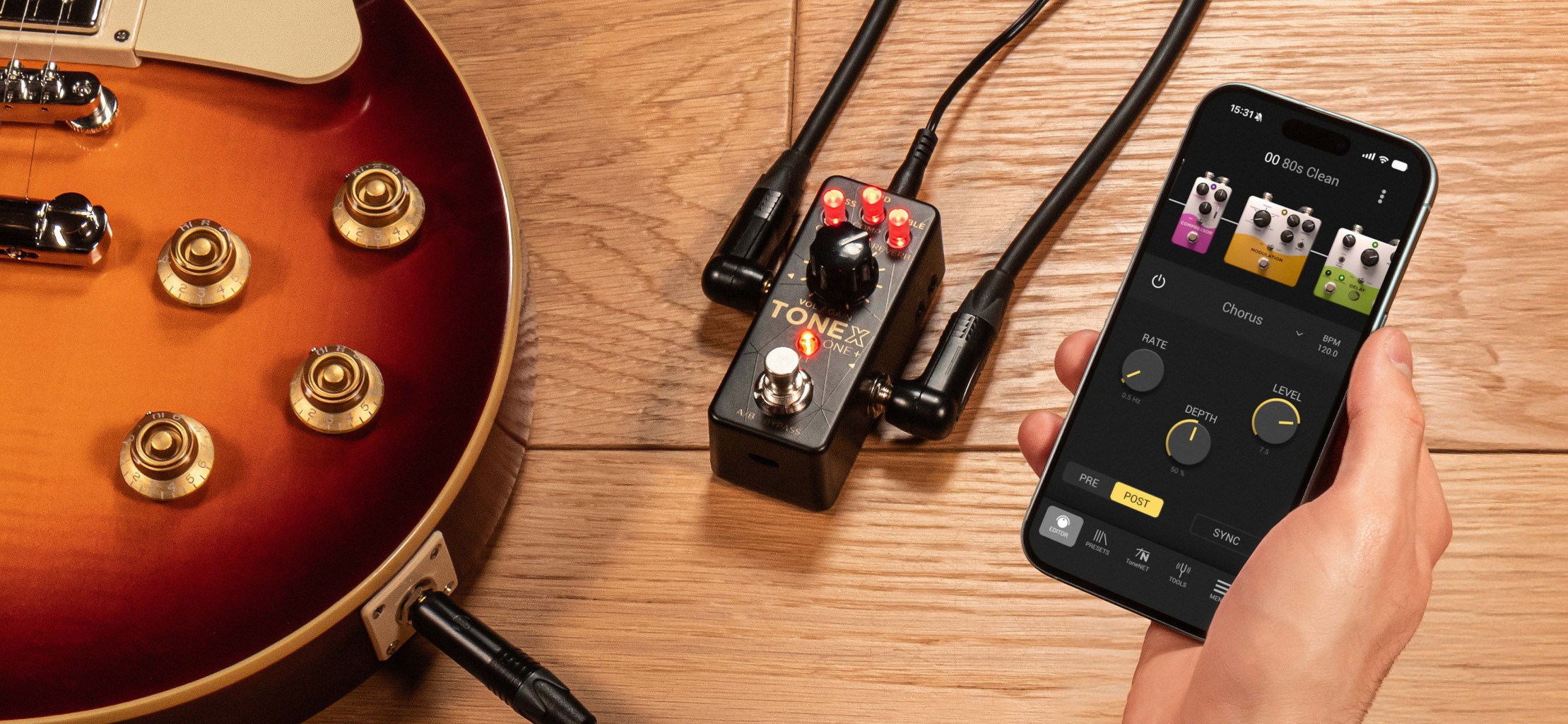
The Best Amp & Pedal Modeler for Bass Players Disclaimer: This pedal was kindly provided by IK Multimedia for the purpose of this review. However, this does not influence our opinions or the content of our reviews. We strive to provide honest, unbiased, and accurate assessments to ensure that our readers receive truthful and helpful information. Every so often, a piece of gear comes along that genuinely shifts how bassists think about tone. The IK Multimedia TONEX Pedal is one of those rare tools. For years, players have debated whether digital modelers could ever capture the feel of a real amp pushing air. But with IK’s AI Machine Modeling™ technology, that debate has changed. Instead of relying on generic algorithms, TONEX actually “learns” the sound of amps, cabs, and pedals—including the quirks and imperfections that make them unique. For a bassist, that means you can show up to a gig with an Ampeg B-15 in one preset, a Darkglass drive in the next, and an Aguilar DB750 waiting just a footswitch away—all without hauling a fridge cab or a rack of pedals. Compact, rugged, and packed with options, the TONEX Pedal is a rare case of something that feels equally at home on a pedalboard, in a studio rack, or on a desktop next to your audio interface. TL’ DR – IK Multimedia TONEX Pedal Pros: Hyper-realistic amp & pedal captures (Ampeg, Aguilar, Darkglass, etc.); compact, rugged build; doubles as USB audio interface; 150 preset slots; access to ToneNET library.Cons: Learning curve with multi-function knobs; best editing requires software; no dedicated blend control for parallel bass tones.Best for: Bass players who want authentic studio and stage-ready tones in a portable, all-in-one pedal.Price Range: ~$399–$450 Check Price on Amazon –> Background: Where the TONEX Pedal Came From IK Multimedia has been pushing digital modeling for years, most famously with its AmpliTube software. But the TONEX series marked a big leap forward. Introduced in 2022, the TONEX software allowed musicians to “capture” their own amps and pedals with stunning realism. The pedal came soon after—designed as a stage-friendly way to bring those captures out of the computer and onto the gig. It sits in an interesting place in the market. On one side, you’ve got full-on digital floorboards like the Line 6 Helix, Headrush, and Quad Cortex. On the other, there are smaller IR loaders and preamp pedals. The TONEX Pedal slots right in the middle: it’s compact, but still powerful enough to be a bassist’s entire rig. For bass players specifically, this is important. Many modelers are geared toward guitarists, and bass tones often feel like an afterthought. IK didn’t make that mistake. Out of the box, the TONEX Pedal comes loaded with serious bass amps and stomps that cover vintage warmth, modern punch, and everything in between. How It Works: Tone Models and Presets At the heart of the pedal are Tone Models—digital captures of amps, cabs, and stomps. These models live inside presets, which are fully tweakable signal chains. Each preset can include: Presets are organized into 50 banks with 3 slots each (A, B, C), giving you a total of 150 preset slots. For live bassists, that’s more than enough to cover every possible gig scenario—from a Motown set on Bank 1 to a modern prog-metal show on Bank 2. The clever part is how amps and cabs are separated. A Tone Model is always divided into two parts: AMP and CAB. This means you can mix and match—want an Ampeg SVT head through an Orange OBC810 cab? Just swap the cab. Want an Aguilar head with a Marshall bass cab? Go for it. It feels modular in a way that bassists will love. Stomps and Bass-Ready Models A Stomp in the TONEX world is a captured pedal. When combined with an amp, you get Stomp + Amp or Stomp + Amp + Cab models. One detail to note: stomps are “tied” to amps, so if you swap the amp in a model, the stomp comes along. The factory stomp list for bass is impressive: Add those to the preloaded bass amps and cabs—Ampeg B-15, Aguilar DB750, Ampeg SVT2-Pro, Marshall JCM800 Bass, Gallien-Krueger 800RB, Orange AD200, Ampeg SVT VR—and you’ve got a factory library that covers nearly every classic and modern bass tone. Controls and User Experience The pedal’s interface is simple at first glance, but it hides a lot of depth. Once you dive into the Parameter knob, you unlock more advanced control—gate, comp, VIR (cabinet mic placement), modulation settings, delay times, and reverb types. This dual-layered control scheme means it’s compact but still powerful. It can take a bit of getting used to, but once you’ve programmed your core presets, the day-to-day use is smooth. Connectivity: Built for Stage and Studio On the back panel, you’ll find: The USB functionality deserves extra mention: the pedal doubles as a 24-bit/44.1 kHz audio interface. For bassists who record at home, this is a game-changer—you don’t need an extra interface to lay down pro-level tracks. Software and Ecosystem Here’s where the pedal ties into IK’s broader ecosystem: For bassists, this means you’re not limited to the factory tones. You can explore community captures of rare gear—or upload your own studio rig and carry it to the stage. Pros and Cons Pros Cons FAQs 1. What’s the difference between the TONEX Pedal and the TONEX ONE?The TONEX ONE is like the “baby brother.” It’s much smaller, with fewer preset slots and limited I/O—perfect if you just want a grab-and-go pedal for one or two tones. The full-sized TONEX Pedal, however, has 150 presets, stereo outs, MIDI, and deep editing. 2. Can I capture my own bass rig?Yes. Using the TONEX software, you can capture your own amp, cab, or pedal. For example, if you love your studio’s vintage Ampeg head, you can record its tone and carry it with you inside the pedal. 3. How does it compare to other modelers like Line 6 Helix or Quad Cortex?The Helix and

Reviews

DOD Gonkulator – Ring Mod Madness: Pedal Review

Distortion Meets Ring Modulation Madness The DOD Gonkulator Ring Modulator Reissue isn’t your everyday fuzz, distortion, or modulation pedal. Originally launched in the late ‘90s as part of DOD’s eccentric “Lamb Series,” it quickly became infamous for its bizarre, metallic, and downright alien tones. The reissue brings this cult classic back with modern refinements, true bypass, and a tweakable carrier frequency. If you’ve ever wanted your bass or guitar to sound like broken machinery, a robot in distress, or a sci-fi laser fight, the Gonkulator is your ticket. TL’DR – DOD Gonkulator Pros: Unique distortion + ring modulation combo; tweakable carrier frequency; inspiring for experimental tones; solid modern build.Cons: Very niche appeal; can thin out lows on bass at higher settings; chaotic and unpredictable.Best for: Bass players who want wild, metallic textures and Lefebvre-style synthy sub madness.Price Range: ~$130–$150 Check Price on Amazon –> A Brief History: The Weird Side of Effects When DOD first launched the Gonkulator, it stood apart with controls labeled things like Suck, Smear, Gunk, and Heave. It wasn’t designed for subtle tone-shaping — it was an unapologetically weird box meant for experimental players. Bands like Incubus used it on tracks such as Glass, cementing its reputation as a tool for adventurous musicians. Ring modulation itself has roots in early electronic music and sound design, often used to create bell-like clangs or metallic dissonance. When combined with distortion, it becomes unpredictable, chaotic, and wonderfully unique — which is exactly why the Gonkulator has remained a cult favorite. And here’s where it resonates with me: I’ve always loved ring modulation on bass. I come from the Tim Lefebvre school of thought — adding ring mod to a sub tone to create devastating synth sounds. That combination of sub-bass weight with metallic chaos is pure magic, and the Gonkulator gives me that in a compact stompbox. Controls The modern Gonkulator simplifies its layout while keeping all the madness intact: This combination lets you blend anything from subtle harmonic coloring to full-on sci-fi meltdown. Build & Design The reissue comes in a rugged metal enclosure, with a purple-and-green retro-inspired look that hints at the weirdness inside. It’s pedalboard-friendly, runs on standard 9V power, and features true bypass — a big upgrade over the original. Uses On bass, the Gonkulator can be an absolute weapon. At lower frequency settings, it retains enough low end to stay useful in a mix, while higher settings plunge you into industrial territory. For guitar, it delivers broken-speaker fuzz, metallic clangs, and everything in between. In the studio, it’s an incredible tool for sound design — I could see producers and composers using it for cinematic textures, alien drones, or just to wreck a clean signal in all the right ways. Pros & Cons Pros: Cons: FAQs Q: Is the Gonkulator usable on bass?A: Yes, and in the right hands, it’s devastating. Keep the frequency lower if you want to preserve low end, or push it higher for industrial chaos. Q: How is it different from a regular distortion pedal?A: The Gonkulator adds ring modulation into the mix, introducing metallic overtones and non-harmonic frequencies. Think of it as distortion pushed into sci-fi territory. Q: Is it beginner-friendly?A: Not really. This is a pedal for players who want weirdness, unpredictability, and experimental textures. Conclusion The DOD Gonkulator Reissue is not about subtlety — it’s about attitude and pushing your sound into uncharted territory. As someone who has always loved using ring modulation on bass, this pedal feels like home to me. It lets me blend Lefebvre-style sub madness with robotic, metallic chaos, all in a simple stompbox. It won’t be for everyone, but if you’re brave enough to embrace the weird, the Gonkulator rewards you with a sound unlike anything else on your board. Get the DOD Gonkulator on Amazon and unlock chaotic ring-mod distortion. Other DOD Gear You Might Like If you enjoyed checking out this DOD pedal, here are more DOD products worth exploring — all tested and reviewed here on BassGearReviews: – DOD FX-10 Bi-Fet Preamp – A Hidden Gem Among Pedals – DOD Meatbox Reissue – Subharmonic Synth Madness – DOD Carcosa Fuzz – Powerful, Multifaceted Fuzz Box.