Blog

News

Harley Benton Introduces the Aged Series

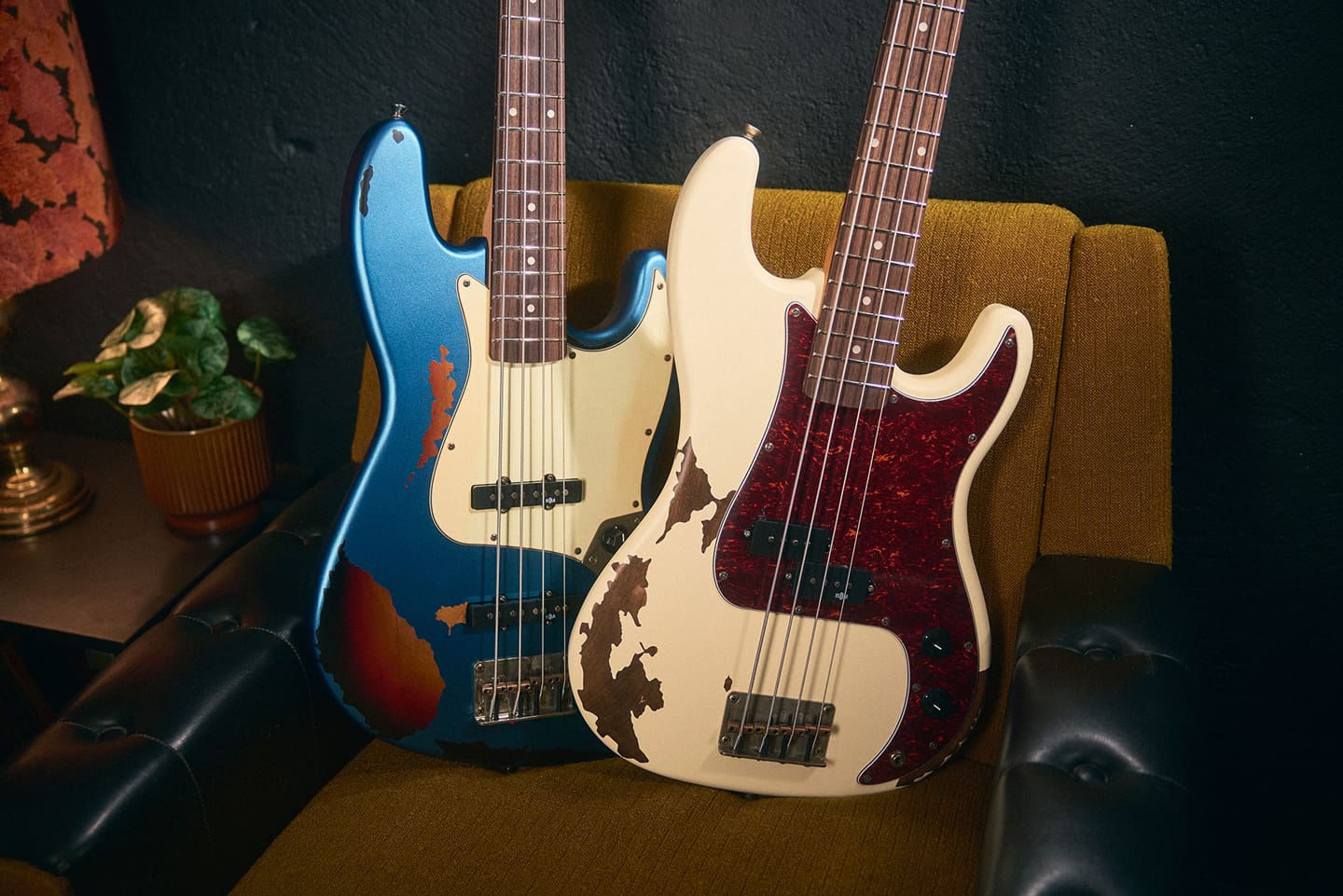
Harley Benton Introduces the Aged Series Basses with Hand-Finished Vintage Looks Love them or hate them, relic basses always get people talking. Harley Benton has officially unveiled its new Aged Series, bringing roadworn aesthetics to some of its most popular bass models without venturing into boutique pricing. If you’ve ever wanted the look of a decades-old workhorse but weren’t ready to spend custom-shop money, these might be worth a closer look. The bass lineup consists of two familiar designs: the PB-62 and the JB-62. The PB-62 delivers the classic Precision-style formula and is available in Black or Ocean White, while the JB-62 takes the Jazz Bass route with finishes including 3-Tone Sunburst and the particularly eye-catching Lake Placid Blue over Sunburst. Buyers can also choose between Light Aged and Heavy Aged versions, depending on just how much vintage character they want their instrument to wear. What makes this launch particularly interesting is that Harley Benton says every instrument is aged by hand, meaning no two basses should look exactly alike. From worn lacquer and finish checking to aged hardware, the company is aiming to recreate the feel and appearance of an instrument that’s spent decades on stages and in studios. Relic finishes remain one of the most divisive trends in the guitar world. Some players love the idea of an instrument that already feels broken in, while others would rather earn every scratch themselves. Either way, there’s no denying the appeal of a bass that looks like it has a story before you’ve even plugged it in. For Harley Benton, this feels like another step in raising expectations for what can be found in the affordable market. The brand has steadily improved its reputation over the past few years, and the Aged Series looks like an attempt to bring premium-inspired styling to a much wider audience. Of course, appearances are only half the story. The real question is whether these basses deliver the playability, tone, and overall quality that Harley Benton has become increasingly known for. That’s something we’ll have to find out once we get our hands on one. Given the amount of interest these basses are already generating online, don’t be surprised if the PB-62 and JB-62 become some of Harley Benton’s most talked-about bass releases this year.

News

Origin Effects Unveils EQDELUXE

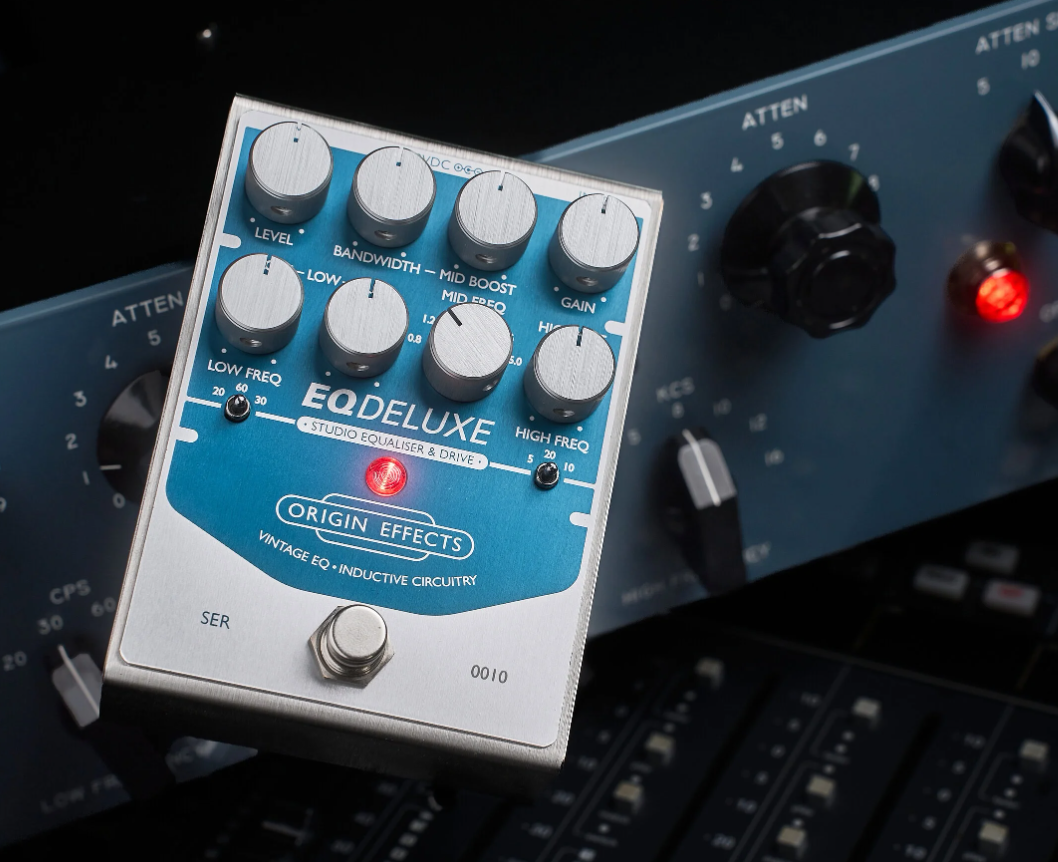
A Pultec-Inspired Analog EQ for Bass and Guitar Origin Effects has introduced the EQDELUXE, a compact all-analog equalizer inspired by the legendary 1950s Pultec EQP-1A studio EQ. Designed for both bass and guitar, the pedal aims to bring the musical EQ curves, subtle saturation, and renowned low-end enhancement of the classic studio unit to modern pedalboards. At the heart of the EQDELUXE is an inductive analog EQ circuit that recreates the character of the original Pultec design. One of its standout features is the famous “Pultec Low-End Trick,” allowing players to simultaneously boost and cut bass frequencies for a fuller low end while improving midrange clarity – a technique long favored in professional recording studios. Beyond its EQ capabilities, the pedal also incorporates a carefully designed solid-state output stage that emulates the harmonic richness and gentle saturation of the original valve-based Pultec circuitry, adding warmth and depth even with subtle settings. The EQDELUXE features frequency points specifically selected for bass and guitar, combining a dedicated low-frequency section, musical midrange boost controls, and smooth high-frequency attenuation. Despite its vintage inspiration, the pedal offers modern practicality with a high-headroom design suitable for instrument and line-level signals, buffered bypass, and premium construction throughout. Key Features The Origin Effects EQDELUXE is positioned as more than a conventional EQ pedal, offering players a way to shape their tone while adding the warmth and musical character that has made vintage Pultec equalizers legendary in recording studios for decades. Origin Effects has built a reputation for producing some of the finest boutique pedals on the market, consistently blending studio-grade sound quality with exceptional engineering and craftsmanship. Over the years, we’ve had the opportunity to review several of the company’s standout products here on Bass Gear Reviews, including the Cali76 Bass Compressor, Cali76 Compact Bass, and, more recently, the BASSRIG Fifteen. If you’d like to learn more about what makes Origin Effects one of the industry’s most respected manufacturers, be sure to check out our in-depth reviews on BassGearReviews.com.

Reviews

Jad Freer SARTO: Pedal Review

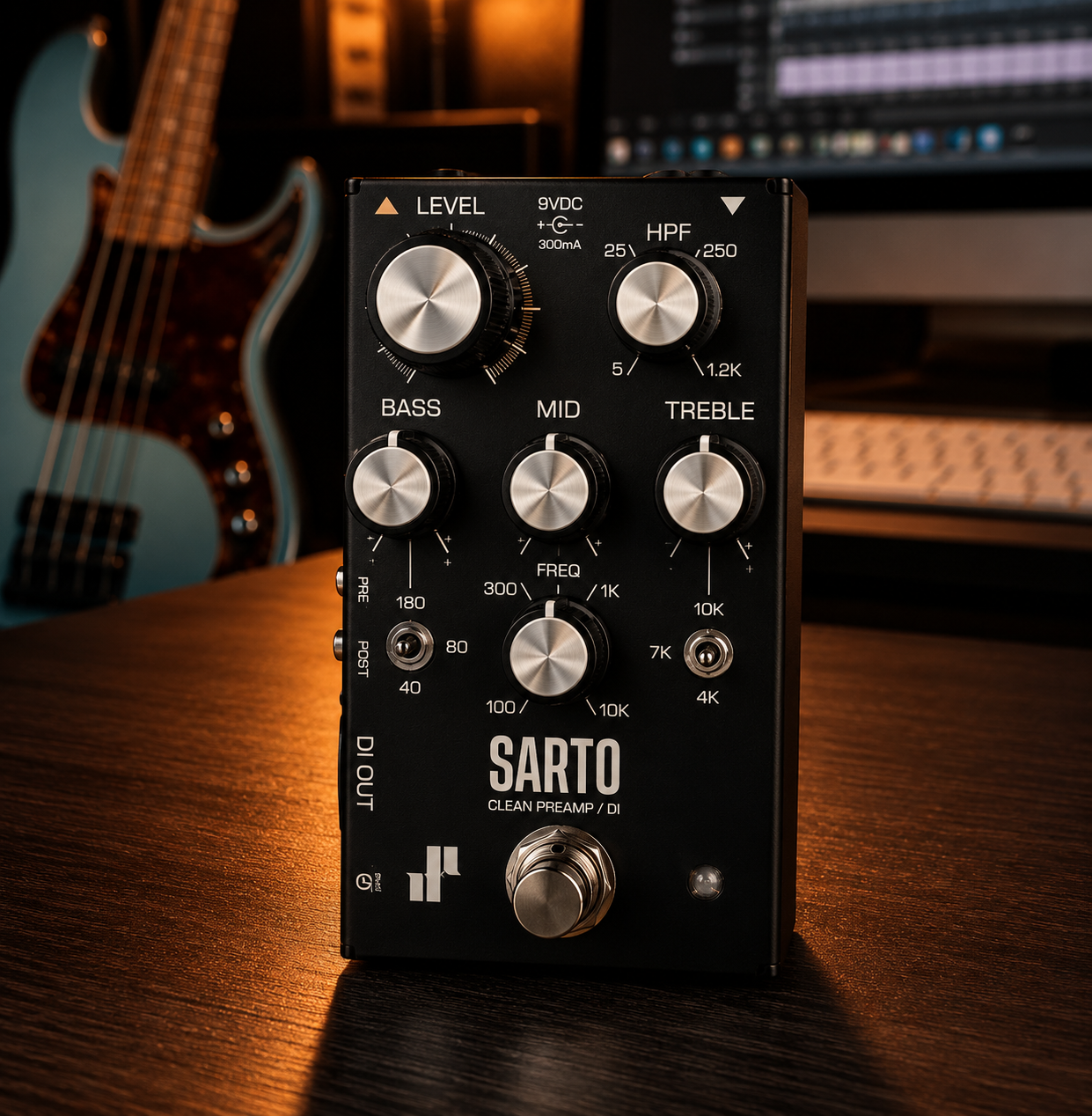
The Art of Getting Out of the Way Disclaimer: This pedal was kindly provided by Jad Freer for the purpose of this review. However, this does not influence our opinions or the content of our reviews. We strive to provide honest, unbiased, and accurate assessments to ensure that our readers receive truthful and helpful information. There are two schools of thought when it comes to bass preamps. The first says a preamp should be part of your sound. Give me tubes. Give me transformers. Give me harmonic saturation, vintage mojo and just enough grit to convince me my Class D amp secretly wishes it were a 300-pound fridge from 1972. The second school says a preamp should simply make your bass sound like your bass! For years, and probably still to this day, I’ve mostly gravitated toward the first camp. I love pedals with personality. I love plugging into something and immediately thinking, “That’s cool!” Whether it’s an Origin BassRig, a tube preamp, or an overdrive that’s always on, I’ve never been shy about adding colour to my sound. So when Jad Freer reached out and asked if I’d like to review the new SARTO, I’ll admit my first reaction was curiosity more than excitement. Not because I doubted the quality—quite the opposite. I’d already spent plenty of time looking at the CAPO and the LUCE and knew Jad Freer had built a reputation for making incredibly well-engineered gear. But the SARTO isn’t selling you “warmth” or “vintage tone.” In fact, it’s barely selling you a tone at all. It’s selling transparency. Does that sound boring to you? I can guarantee you it isn’t. After spending the last few weeks with the SARTO on my pedalboard, I’ve come to appreciate something that most bass players—including myself—don’t spend enough time thinking about. Sometimes the best piece of gear is the one you stop noticing after five minutes. It’s not trying to impress you We’ve all played pedals that impress you in the first thirty seconds. The lows get bigger. The highs get shinier. Everything suddenly sounds more “produced.” It’s exciting, and sometimes that’s exactly what you’re looking for. The SARTO doesn’t do that. Instead, the first thing I noticed was that… nothing really happened. And that’s not criticism, that’s actually the highest compliment I can give it. I plugged in my passive P Bass, set everything flat, adjusted the output to unity and started playing. There wasn’t a dramatic change in EQ. No extra compression. No obvious thickening of the mids. If someone had walked into the room, they probably wouldn’t have known I’d switched anything on. What I did notice after playing for a while was that everything felt slightly more effortless. Notes seemed to speak a little easier. The attack stayed intact. Dynamics remained exactly where my fingers put them. It reminded me less of plugging into a bass pedal and more of plugging into an exceptionally good studio console. Why that matters more than most players realise We spend thousands chasing the perfect instrument. We agonise over pickup height, string gauges, cabinet choices and amplifier voicings. Then we happily run everything through the first buffered pedal we happen to own. That’s not necessarily a problem—modern buffers are generally excellent—but every stage in your signal chain changes something, even if it’s only a little. The challenge for a designer isn’t making a circuit that sounds exciting. It’s making one that disappears. That’s a much harder job. The SARTO starts with a ridiculously high 10 MΩ input impedance, and while that’s a headline feature for upright bassists and anyone using piezo pickups, it’s easy to dismiss if you’re a dyed-in-the-wool electric bassist. I almost did. Then I started swapping instruments. With my passive P Bass, the difference wasn’t dramatic, nor should it be. A good bass into a good amplifier already sounds good. But there was a sense of openness that became more obvious the longer I played. It wasn’t brighter. It wasn’t louder. It simply felt like less of the instrument was being left behind. That’s the thing about transparency. It’s hard to notice. It quietly removes little compromises you didn’t realise you’d accepted. If you’re playing upright, an acoustic bass or anything with a piezo system, the benefits are likely to be far more obvious. Piezos absolutely hate being loaded down by low-impedance inputs, and the SARTO gives them exactly the kind of environment they want to see. That’s clearly one of the reasons Jad Freer designed it this way. But even if you never touch a piezo in your life, the philosophy still makes sense. Start with the cleanest possible foundation, then decide what colour you want to add later. The EQ is smarter than it first appears At first glance, the SARTO’s EQ doesn’t look particularly revolutionary. We’ve all seen that before. The shelving bass control lets you choose whether you’re shaping the extreme lows around 40 Hz, the more familiar punch around 80 Hz or the warmth that lives closer to 160 Hz. The treble section follows the same philosophy, letting you decide whether you’re adjusting presence, string noise or true top-end air. That flexibility means the controls behave differently depending on the bass you’re playing. I found myself reaching for different shelf frequencies with a passive four-string than I did with my five-string, not because one sounded better, but because the pedal lets you decide what you’re actually trying to influence instead of forcing every bass through the same fixed EQ points. Then there’s the midrange. The sweepable mids cover an enormous range, from 100 Hz all the way to 10 kHz, but the clever bit isn’t just the frequency range. It’s the way the filter behaves. The variable-Q design feels remarkably musical. At lower frequencies it lets you make focused corrections without upsetting everything around them, while higher up it becomes broader and more natural. Some parametric EQs feel like surgical instruments. The SARTO was definitely voiced by someone who actually plays and
News

BOSS Expands Its Premium Gig Bag Lineup

BOSS Expands Its Premium Gig Bag Lineup with the New CB-EB15 Bass Gig Bag BOSS has expanded its premium instrument protection range with the introduction of the CB-EB15, the company’s first deluxe gig bag designed specifically for electric bass guitars. Joining the refreshed BOSS gig bag family, the CB-EB15 delivers the same rugged construction, practical storage, and premium protection found in the acclaimed guitar models, now tailored to accommodate a wide variety of popular basses. Designed for bassists who need dependable protection without the bulk of a hard case, the CB-EB15 features a durable 600D polyester exterior, thick internal padding, and a soft interior lining that helps shield instruments from knocks and scratches during transport. An adjustable neck rest with securing strap keeps the bass firmly in place, while an adjustable end guard offers additional support for different body shapes and sizes. Storage has also been given considerable attention. A redesigned front pocket provides ample room for essential accessories, including cables, straps, tuners, sheet music, and even compact BOSS pedals. Comfortable padded handles and backpack-style shoulder straps make carrying the bag to rehearsals, gigs, or studio sessions easy and comfortable, whether travelling by car or public transport. The CB-EB15 forms part of BOSS’s updated gig bag collection, which includes refreshed electric and acoustic guitar models featuring improved padding, enhanced protection, and more versatile storage solutions throughout the range. The addition of a dedicated bass model ensures bass players can now enjoy the same level of premium protection that guitarists have come to expect from BOSS. Key Features With the CB-EB15, BOSS continues to demonstrate that a quality gig bag can offer an excellent balance of portability, durability, and instrument protection, making it an ideal companion for bassists on the move.

Reviews

Valeton VPS-6 Fully Isolated Power Supply: Gear Review

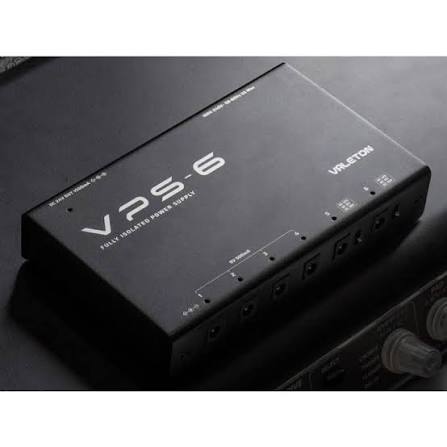
Why the isolation actually matters! Disclaimer: This equipment was kindly provided by Valeton for the purpose of this review. However, this does not influence our opinions or the content of our reviews. We strive to provide honest, unbiased, and accurate assessments to ensure that our readers receive truthful and helpful information.  The Valeton VPS-6 is a fully isolated multi-output power supply designed for pedalboards that combine both analog and digital effects. For bass players in particular, it sits in a category of gear that doesn’t directly shape tone, but instead determines whether your entire rig behaves with stability or slowly turns into a troubleshooting exercise. For bass players in particular, where low frequencies expose noise, grounding issues, and power inconsistencies far more clearly than guitar setups, the VPS-6 is less of an accessory and more of a foundation. Upgrade your bass pedalboard with reliable isolated power—see customer reviews and today’s deals for the Valeton VPS-6 on Amazon. First impressions: “Finally, a clean foundation” For bass players, isolation is not a luxury—it’s survival. Low frequencies expose noise in a way that guitars can sometimes hide. A slight ground loop? You’ll hear it as a constant low hiss under your tone. A bad daisy chain? Suddenly your compressor pumps in a way it absolutely shouldn’t. Plugging into the VPS-6, the immediate takeaway is simple: the board stops arguing with itself. No shared ground weirdness. No “why does my octave pedal freak out when I turn on the preamp?” moments. Just clean, independent power per output. Real-world pedalboard use (bass context) This is where the VPS-6 actually earns its keep. A typical bass board today might include: Mixing analog dirt + digital processing is exactly where cheap or semi-isolated supplies fall apart. That’s also where Valeton’s own ecosystem starts to become relevant. Running something like: …is exactly the kind of setup that exposes weak power immediately. With the VPS-6, everything just behaves. The multi effects units don’t whine. The analog pedals don’t pick up digital clock noise. And importantly for bass: the low end stays stable, not “wobbly because the power is dirty.” Why the isolation actually matters (especially for bass) A lot of cheaper “isolated” supplies are… let’s just say optimistically labeled. What you get there is often partial separation, shared transformer sections, or inconsistent grounding. That’s where you get: The VPS-6 avoids that by giving each output its own isolated path, meaning pedals don’t share electrical “conversation lines.” For bass players running DI into FOH, this matters even more. Engineers don’t love mystery noise, and nothing kills a good groove faster than someone saying “can you fix your hum?” Living with it on a real pedalboard A few practical, non-spec-sheet observations: And yes, it feels like one of those “buy once, cry once” pieces of gear. The Valeton ecosystem effect This is where things get interesting. Valeton’s newer ecosystem feels like it’s aimed at players building modular boards instead of single-purpose chains. The VPS-6 fits into that mindset perfectly. It’s the kind of unit you buy when you’re not just powering pedals—you’re building a system. And that leads to the obvious thought many players end up having: “I want a pedalboard to totally space out, power a couple of pedals, run a Valeton GP series unit, and still keep my analog chain dead silent.” That’s exactly the use case where the VPS-6 stops being “a power supply” and becomes the foundation of the whole rig. Bass player verdict The Valeton VPS-6 doesn’t try to be flashy. It doesn’t add tone, it doesn’t inspire creativity directly, and nobody in the crowd will ever ask what power supply you’re using. But if you’re a bass player running anything more complex than a tuner + compressor, it does something arguably more important: It removes uncertainty. No noise guessing games. No “is it the pedal or the power?” debugging mid-rehearsal. Just consistent, isolated current delivery so your tone chain behaves like a single instrument instead of a collection of arguments. Final take The VPS-6 sits in that sweet spot where it’s affordable enough not to feel boutique-ridiculous, but solid enough to trust on a gigging board, and flexible enough to handle modern hybrid bass rigs. Because at the end of the day, the goal isn’t just power. It’s silence where silence should be—and punch where punch matters! Ready to eliminate pedalboard noise? Check the latest price and availability of the Valeton VPS-6 on Amazon.