Blog

Reviews

Swiff Audio C20 Tuner: Pedal Review

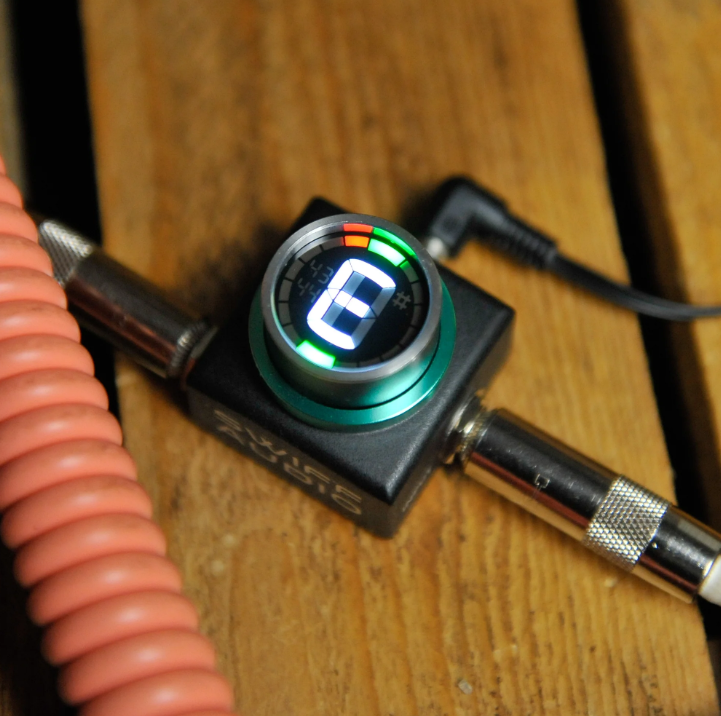
Ultra-Compact Tuner Built for Gigging Bassists  I’ve used enough tuner pedals over the years to know that perfect tuning is only the starting point. What really separates a great tuner from an average one is how quickly it responds, how easy it is to read on stage, how dependable it is under pressure, and whether it’s worth the space it occupies on your pedalboard. The Swiff Audio C20 is one of those rare utility pedals that immediately makes sense once you actually use it in a live setup. First thing that stands out — even before you actually see it — is the packaging. Swiff Audio really nails this across their range, and the C20 is no exception. It comes in a presentation that feels unusually thoughtful for a utility pedal: clean design, well-organized layout, and a kind of “premium gift-like” feel that you don’t expect from something this small and functional. It’s not just thrown in a box — it feels considered, almost boutique in its presentation. Check the price on Amazon –> Then you actually see the pedal and realize just how extreme the size is. At 41 mm x 41 mm, it’s genuinely tiny — almost comically so until you remember this is going on a pedalboard where space is always at a premium. For bass rigs especially, where you’re often balancing compressor, drive, preamp, DI, and maybe modulation, the C20 basically disappears. That’s a huge win for practical gigging setups. On stage usability Despite the size, it’s perfectly usable in real gig conditions. The display is bright and readable, even under awkward stage lighting, and it reacts quickly enough for live bass tuning. Whether you’re dealing with standard tuning, a low B, or dropped setups, it locks on fast and doesn’t wander around once the note stabilizes. The footswitch also doubles as a mute function, which is absolutely essential for musicians in live situations. Silent tuning between songs or quick mid-set checks becomes effortless, and it behaves reliably every time you step on it. Tracking and feel Tracking is solid where it matters most: low frequencies. It doesn’t struggle with bass fundamentals, and it doesn’t feel “confused” by sustain or heavier attack. It’s not a high-end studio strobe tuner, but on stage that level of precision is usually overkill anyway. What matters is speed and stability, and the C20 delivers both. Build and durability For something so small, it feels surprisingly solid. The metal housing gives it real confidence underfoot, and while the footswitch is a bit firm due to the compact design, that stiffness actually helps avoid accidental activation — something gigging players will appreciate more than they expect. The trade-offs You obviously accept a few compromises with a pedal this size: Gigging bass player verdict The Swiff Audio C20 is the definition of a no-nonsense gig tool. The combination of ultra-compact 41 mm square footprint, fast response, and reliable muting makes it incredibly easy to integrate into a working bass rig. It doesn’t try to be fancy — it tries to be invisible, and that’s exactly what a good tuner should be. Add in Swiff Audio’s genuinely well-thought-out packaging and presentation, and it feels like a product that respects both the gear and the player. For bass players with tight boards or anyone trying to reclaim pedalboard space without sacrificing reliability, it’s an easy win. Get yours on Amazon Today! If you enjoyed this review, check the articles below! – Swiff Audio WT09a Wireless System: Get your wireless on bass! – Boss TU3 Tuner Pedal Review: The Ultimate Desert Island Pedal!

Reviews

Walrus Audio Julia: Pedal Review

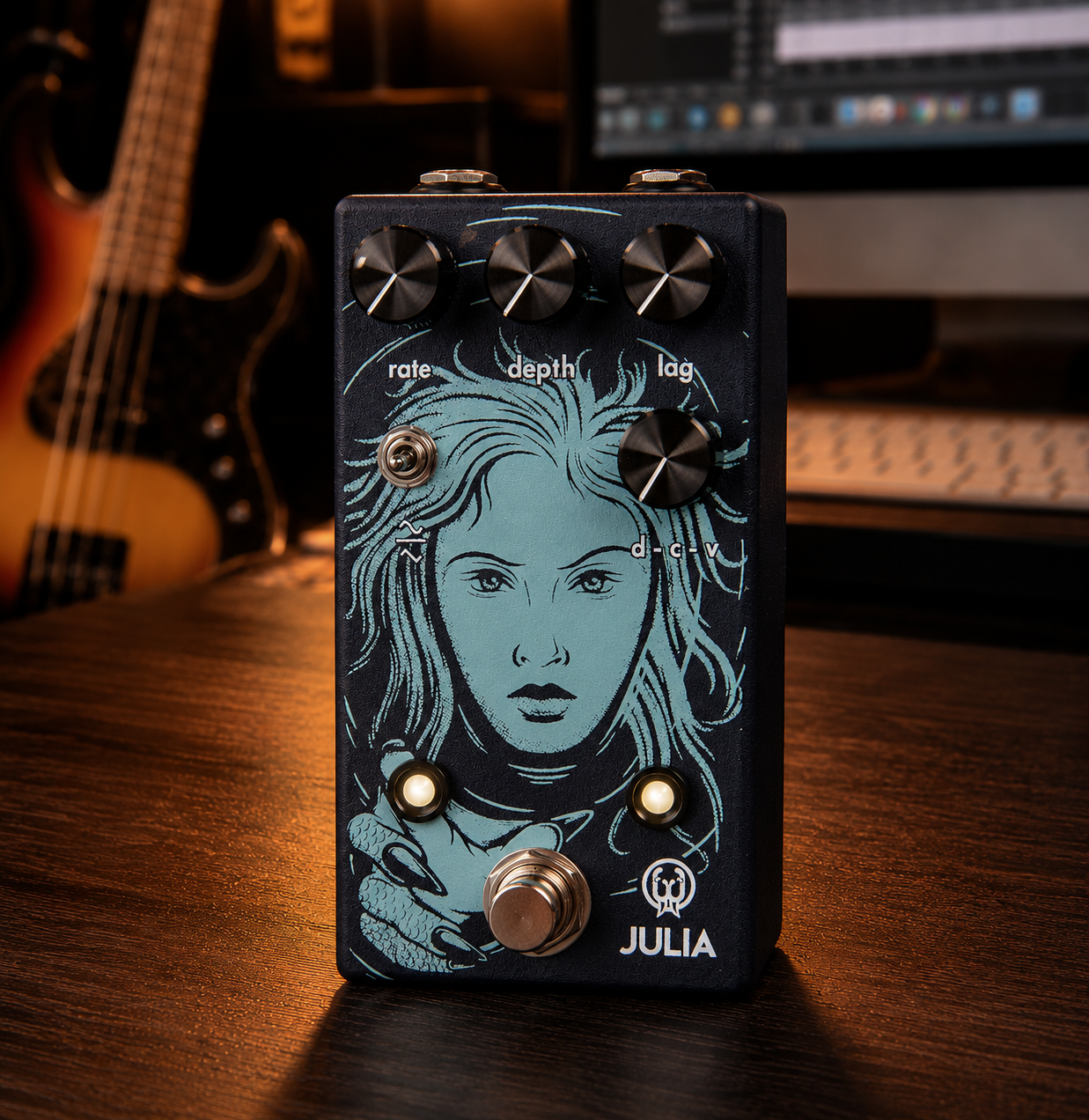
An Inspiring Chorus and Vibrato Pedal for Bass Disclaimer: This pedal was kindly provided by Walrus Audio for the purpose of this review. However, this does not influence our opinions or the content of our reviews. We strive to provide honest, unbiased, and accurate assessments to ensure that our readers receive truthful and helpful information.   Chorus and vibrato pedals can be a mixed bag for bass players. Many sound fantastic on guitar but quickly become unusable once low frequencies enter the picture, either thinning out the fundamental, smearing note definition, or creating a wash of modulation that gets lost in a band mix. My interest in vibrato on bass goes back years. As a huge fan of bassist Juan Alderete, I was exposed early on to the creative possibilities of vibrato effects, particularly when paired with fretless bass. There’s something about subtle pitch movement on a fretless that can add an almost vocal quality to a bass line, transforming a simple phrase into something far more expressive. Since then, I’ve always had a soft spot for pedals that explore that territory. That’s what immediately caught my attention about the Walrus Audio Julia. On paper, it offers two of my favorite modulation effects in a single enclosure: chorus and vibrato. Having two sounds for the price of one is always appealing, but what really intrigued me was the ability to blend seamlessly between them rather than treating them as separate modes. For bass players looking to add movement, texture, and atmosphere without sacrificing musicality, that flexibility makes Julia a particularly interesting proposition. Check the price on Amazon –> Overview At its core, the Julia is an analog chorus and vibrato pedal built around a bucket brigade delay (BBD) circuit. Rather than locking players into a single chorus voice, Julia allows continuous blending between dry and modulated signals through its D-C-V control. This control is the heart of the pedal. Fully counterclockwise, the signal remains dry. As the knob moves clockwise, increasing amounts of modulation are introduced, progressing from subtle chorus to fully wet vibrato. For bass players, this flexibility is especially useful. Traditional chorus pedals often provide a fixed blend that can overwhelm the low end, but Julia allows the effect to be dialed in with precision. Design and Aesthetics Let’s be honest: most effects pedals are designed with function as the primary objective and aesthetics as an afterthought. There’s nothing wrong with that, but it often results in pedalboards filled with little more than colored metal boxes distinguished only by their logos and knob layouts. The Julia takes a different approach. Like many of Walrus Audio’s pedals, the Julia features distinctive artwork that gives it a personality of its own. The illustration has become almost as recognizable as the pedal’s sound, helping it stand out in an increasingly crowded effects market. More importantly, the design isn’t just decorative—it makes the pedal instantly identifiable on a busy pedalboard or stage. Even from a distance, it’s difficult to mistake a Julia for anything else. While visual design won’t make a pedal sound better, there’s something to be said for gear that inspires you every time you look down at your board. The Julia manages to combine practical usability with a unique artistic identity, adding a touch of character to a pedalboard without feeling gimmicky. In a world where many pedals blend together visually, the Julia stands out for all the right reasons. Controls and Features D-C-V Blend Control The D-C-V control is what separates Julia from many other modulation pedals. Instead of forcing players to choose between chorus and vibrato, it offers a continuous spectrum between the two. For bassists, this means you can dial in just enough modulation to add movement while preserving note definition and low-end presence. Subtle settings create width and dimension, while more aggressive settings move into lush chorus territory before eventually reaching pure vibrato. Rate and Depth The Rate and Depth controls shape the character of the modulation. Lower Rate settings create slow, spacious movement that complements sustained notes and melodic playing. Increasing the Rate introduces more obvious modulation that can range from classic chorus textures to experimental sounds. The Depth control determines how dramatic the pitch movement becomes. Low settings provide a gentle shimmer, while higher settings produce deep, swirling modulation capable of transforming the character of your bass entirely. Lag Control One of Julia’s most unique features is the Lag control. Rather than functioning as a traditional tone control, Lag alters the shape and feel of the modulation waveform. Lower settings provide smoother and more rounded movement, while higher settings create a more pronounced and textured modulation response. For bass players, this control becomes a powerful tool for tailoring the pedal to different instruments, playing styles, and musical situations. Waveform Selector Another subtle but useful feature is the two-position Wave switch, which lets you choose between sine and triangle LFO waveforms. While it may seem like a minor addition, changing the waveform noticeably alters the feel of the modulation. The triangle wave produces a more defined and articulate modulation, making it particularly well suited to chorus sounds. On bass, it helps create a lush, animated texture while maintaining note separation, making it a great choice for players looking to add width without losing clarity. Switching to the sine wave smooths out the modulation considerably. The rounder waveform creates a more fluid and natural pitch movement that complements vibrato especially well. On fretless bass, this can produce an expressive, almost vocal quality that feels organic rather than exaggerated. It’s the kind of control that’s easy to overlook, but after spending time with the pedal it becomes clear how useful it is. Instead of simply making the effect faster or deeper, the Wave switch changes the character of the modulation itself. Combined with the D-C-V, Rate, Depth, and Lag controls, it gives Julia an impressive amount of flexibility, allowing bass players to fine-tune not just how much modulation they hear, but how that modulation feels under

News

La Bella Expands Ian Martin Allison Signature Strings

La Bella Expands Ian Martin Allison Signature Super Polished Strings with Short Scale Sets Following the success of the original Ian Martin Allison Signature Super Polished strings, La Bella Strings has expanded the lineup with a new short scale option. Available in both four- and five-string sets, the new release delivers the same feel and custom gauges that made the original signature set a favorite among bass players. When developing his signature strings, Allison wanted to capture the punch and articulation of stainless steel roundwounds while retaining the smooth, comfortable feel of flatwounds. The result was La Bella’s Super Polished formula, featuring polished stainless steel round wound wrap wire over a hex core for a unique balance of clarity, warmth, and playability. “When Ian Martin Allison approached us about doing a signature set of Super Polished strings, he loved the original recipe: the punch of stainless rounds but the smooth feel of flats,” La Bella explains. “But he wanted a couple of tweaks to the formula to suit his broad needs as a session and touring bassist.” The new short scale sets carry over the same custom gauges as the original release. The four-string set includes .045, .063, .083, and .103 gauges, while the five-string version adds a .125 B string. With the addition of a short scale option, players with compact-scale basses can now experience the same signature feel and balanced response that helped make Allison’s original Super Polished set such a hit.

News

ZVEX Introduces the DB-1

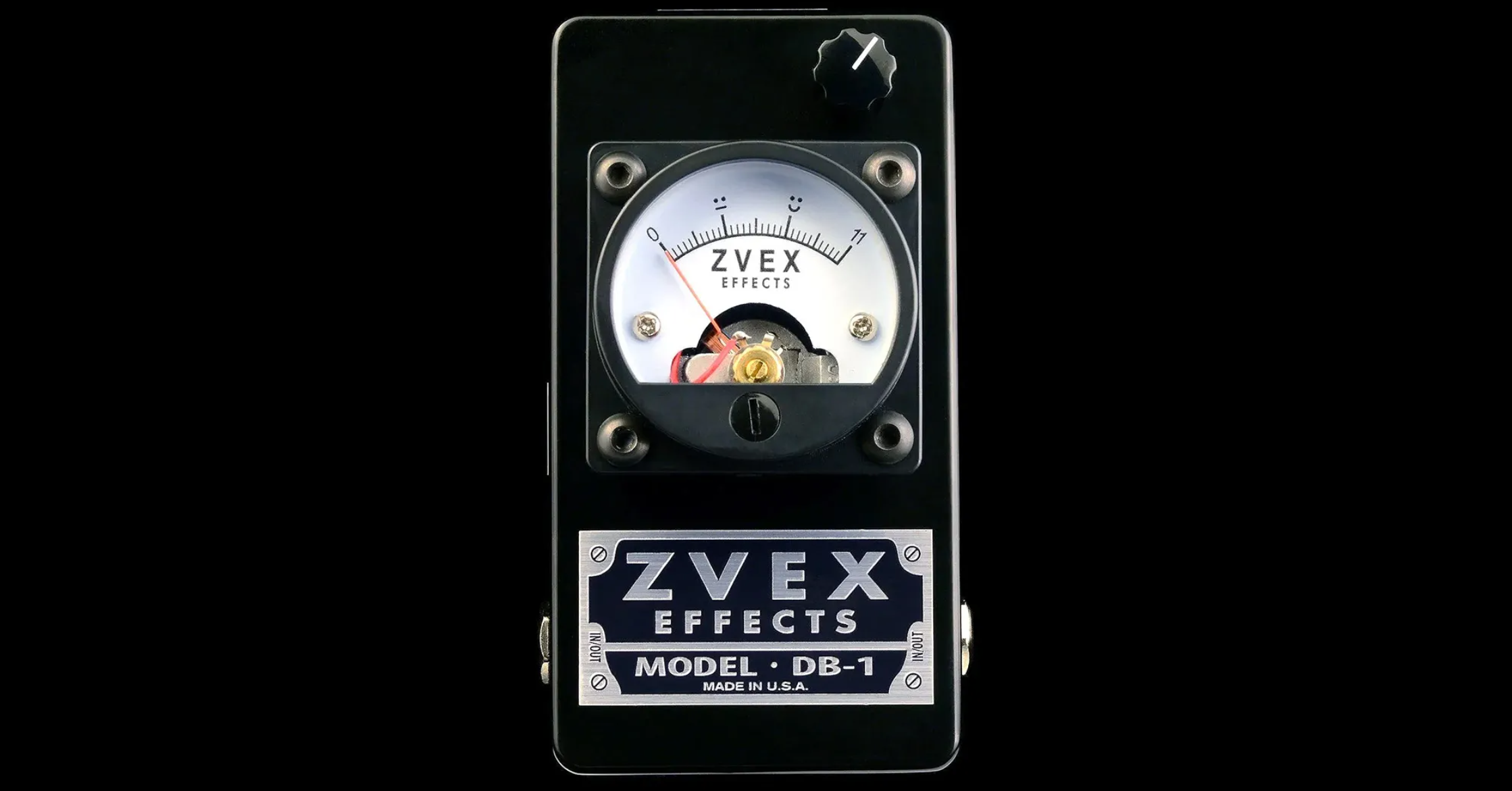
A Meter Pedal Bass Players Didn’t Know They Needed ZVEX has unveiled one of the more unusual pedal releases we’ve seen in a while: the DB-1, an ultra-high impedance analog signal meter designed to visually monitor your instrument signal without affecting your tone. At first glance, a pedal that doesn’t actually process audio might seem like an odd addition to a bassist’s pedalboard. But once you start looking at how modern bass rigs are built—with multiple gain stages, compressors, preamps, modelers, wireless systems, and switchers—the DB-1 begins to make a lot more sense. The headline feature is its massive 10 MΩ input impedance. According to ZVEX, the pedal is designed to be completely transparent, allowing it to monitor signal levels without loading passive pickups or introducing any tonal coloration. For bassists who obsess over preserving the natural response of vintage passive instruments, that’s a noteworthy specification. Why Should Bass Players Care? One of the most common challenges in modern bass rigs is gain staging. Whether you’re running a simple pedalboard or a complex setup feeding front-of-house, in-ear monitors, and an amp simultaneously, understanding what’s happening to your signal level can be surprisingly difficult. The DB-1 offers a visual reference point. Placed at strategic points in your signal chain, the meter can help identify level differences between clean and overdriven sounds, compare output levels from different basses, or verify that preset changes aren’t producing unexpected volume jumps. For players using multiple instruments during a live set, the pedal could provide instant visual confirmation of output differences between active and passive basses before those changes become a problem on stage. A Useful Tool for Silent Rigs The rise of direct bass systems, amp modeling, and silent stages has changed the way many bassists monitor their rigs. In these environments, visual feedback becomes increasingly valuable. ZVEX notes that the DB-1 can be used while an amplifier is turned off, allowing players to check signal flow, troubleshoot pedalboard issues, or verify preset levels without producing sound through the PA or stage rig. For touring bassists and session players, that could make setup and troubleshooting significantly faster. The ZVEX High-Impedance Philosophy The DB-1 also continues a long-standing ZVEX design approach. The company has historically favored exceptionally high input impedances in products such as the Super Hard On and Super Duper preamps, which use 5 MΩ inputs to maximize pickup response and preserve high-frequency detail. With the DB-1 doubling that figure to 10 MΩ, ZVEX appears focused on making the device as invisible as possible to the signal path. For bass players using passive instruments, particularly vintage-style single-coil designs, that’s likely to be a key selling point. Not an Effect—A Utility The DB-1 won’t replace your favorite compressor, preamp, or drive pedal. In fact, it doesn’t appear intended to alter your sound at all. Instead, it joins a growing category of utility-focused devices that help players better understand and manage increasingly sophisticated pedalboard ecosystems. Will every bassist need one? Probably not. But for players running complex live rigs, switching between multiple instruments, or simply wanting a visual window into what’s happening on their signal path, the DB-1 could become one of those surprisingly useful tools that earns a permanent place on the board. Sometimes the most interesting pedal releases aren’t the ones that make the biggest sound—they’re the ones that help you better understand the sound you already have.

Reviews

IK Multimedia TONEX ONE+: Pedal Review

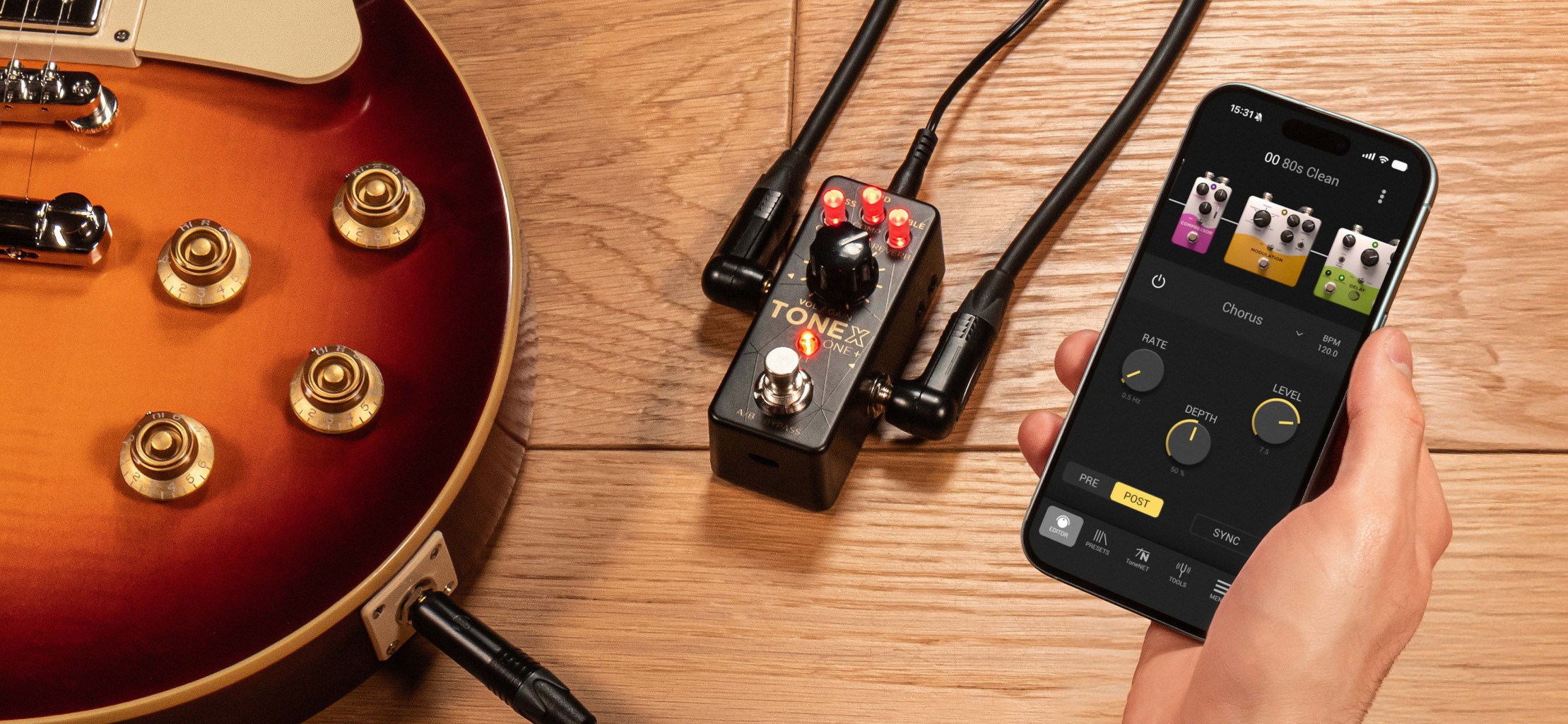
The Tiny Bass Rig Finally Grows Up Disclaimer: This pedal was kindly provided by IK Multimedia for the purpose of this review. However, this does not influence our opinions or the content of our reviews. We strive to provide honest, unbiased, and accurate assessments to ensure that our readers receive truthful and helpful information.  When IK Multimedia released the original TONEX ONE, it immediately caught the attention of bass players looking for a compact direct rig with realistic amp feel. The concept was simple but compelling: take the company’s increasingly popular TONEX amp capture technology and shrink it into a pedal small enough to fit on virtually any board. The original TONEX ONE already sounded impressive on bass. The real limitations were workflow, connectivity, and usability. Editing presets on the fly could feel cumbersome, deeper control required a computer, and integrating the pedal into modern live rigs sometimes felt more complicated than it should have been. That’s where the new TONEX ONE+ changes the story. The ONE+ is not a radical reinvention of the platform. Instead, it feels like the version the original pedal always wanted to become. With Bluetooth connectivity, mobile editing, expanded MIDI implementation, wireless preset management, and tighter integration into modern pedalboard ecosystems, the TONEX ONE+ transforms from a clever mini amp solution into something much closer to a fully practical professional bass rig. Most importantly, it does this without changing the thing that mattered most in the first place: the tones. Check the Price on Amazon –> A Bass Platform That Finally Feels Complete One reason the TONEX ecosystem translates unusually well to bass is that bass players typically approach rigs differently from guitarists. Most bass players are not switching between enormous effect chains or radically different sounds during a performance. In real-world situations, a strong clean tone, a slightly driven sound, and perhaps one more aggressive preset will cover the majority of gigs. That philosophy aligns perfectly with the TONEX approach. The ONE+ works best when treated less like a traditional multi-effects unit and more like a compact programmable bass amp. In practice, it feels equally comfortable as the centerpiece of an ampless live setup, a direct recording solution, or a lightweight travel rig for rehearsals and fly dates. The pedal’s size still feels slightly ridiculous the first time you hold it. It occupies barely more room than a standard overdrive pedal, yet it can realistically replace an amp head, cabinet simulation, DI box, and recording interface in a single enclosure. For bass players working in silent-stage environments, direct-to-FOH setups, or compact pedalboard configurations, that practicality becomes immediately appealing. What makes the ONE+ especially convincing is that it no longer feels like a compromise made for portability. Earlier compact digital solutions often sounded impressive until you pushed them in a live mix, where low-end response and playing dynamics would reveal their limitations. The TONEX ONE+ avoids much of that problem. The Tones Are Still the Main Attraction The real reason bass players became interested in TONEX was always the realism of the captures. The ONE+ continues using IK Multimedia’s AI Machine Modeling technology while benefiting from the growing TONEX ecosystem of captured amps, cabinets, and bass-specific tone models. The platform now includes a much stronger bass-oriented library than the original release ever had (but not as focused as the bass edition), with captures inspired by classic Ampeg rigs, modern solid-state heads, boutique drive circuits, studio DI tones, and aggressive contemporary bass sounds. Low-end retention is excellent, which is crucial because bass players immediately notice when digital processing starts collapsing the fundamental frequencies of the instrument. Many compact processors struggle once gain, speaker simulation, or heavier coloration enters the signal chain. The lows can become weak, transient attack softens, and note definition disappears under saturation. The TONEX platform generally handles these issues remarkably well. Much of that comes from the Bass Edition developments introduced into the TONEX ecosystem, particularly the improved phase-coherent dry/wet blending designed to preserve clarity and punch even with driven tones. The result is a playing experience that retains note weight, articulation, and dynamic response in a way that feels far closer to a genuine bass amp than many players expect from something this small. There is still a polished quality inherent to capture-based systems, but the response under the fingers feels musical and natural. Clean tones remain warm and authoritative, while driven sounds retain enough articulation to stay usable in a live mix rather than dissolving into unfocused fuzz. The Workflow Finally Matches the Sound Quality Arguably the biggest improvement in the ONE+ is not sonic at all. The original TONEX ONE delivered excellent sounds but often frustrated users once they moved beyond simply loading presets. Managing captures, editing tones, and integrating the pedal into modern live rigs could feel restrictive and unnecessarily dependent on a desktop workflow. The ONE+ addresses those frustrations directly. Bluetooth connectivity and wireless mobile editing dramatically improve daily usability. Instead of relying on a laptop every time adjustments are needed, the pedal now behaves much more like a modern professional device. For bass players running compact direct rigs or MIDI-controlled pedalboards, that change matters more than any new amp model ever could. The expanded MIDI support is equally important. Modern bass rigs increasingly revolve around in-ear monitoring systems, preset-based performances, and streamlined stage setups with minimal footprint. The ONE+ integrates naturally into that environment, allowing bass players to build a highly portable but still deeply professional setup. The addition of MIDI also opens the door to external controllers such as the M-VAVE Chocolate and similar compact MIDI footswitches. This dramatically expands the pedal’s live usability, allowing bass players to switch presets, access additional sounds, and control functions remotely without ever touching the pedal itself. Given the TONEX ONE+’s tiny footprint and limited onboard controls, pairing it with an inexpensive wireless MIDI controller can transform it from a simple mini amp solution into the centerpiece of a surprisingly flexible live rig.  More importantly, the improved workflow encourages a