Blog

Author: Claudio Ribeiro

News

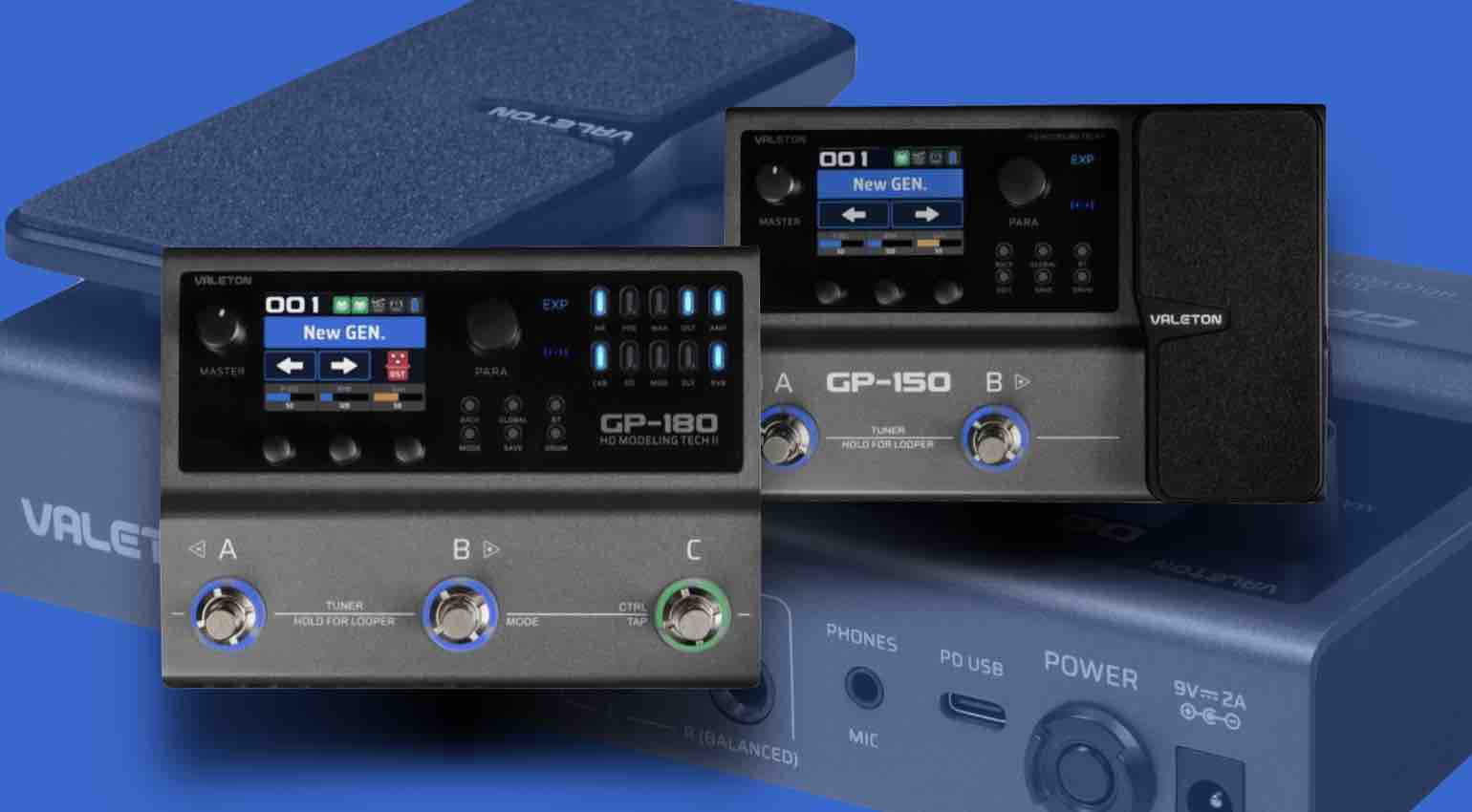
Valeton Releases the New GP-150 and GP-180

Valeton Expands the GP Series with the New GP-150 and GP-180 Valeton has announced two new additions to its GP multi-effects lineup: the GP-150 and GP-180. Designed as next-generation tone workstations, both units combine advanced HD modeling, flexible routing, and modern connectivity in performance-ready floorboard formats. At the core of both processors is Valeton’s updated second-generation HD digital modeling engine, delivering 24-bit/48kHz audio performance and a broad range of detailed amp and effects models. Players can run up to 12 simultaneous effect modules with freely adjustable signal chains, drawing from a library of more than 200 built-in effects covering amp simulations, drives, modulation, delays, reverbs, pitch effects, filters, and more. A major highlight is the integration of SnapTone technology, which supports NAM (Neural Amp Modeler) files. This allows users to import highly detailed amp and pedal captures for ultra-realistic tones. Each unit comes loaded with 50 SnapTone presets and supports up to 100 in total, giving players access to boutique-style sounds and custom profiles within a compact processor. Both models support third-party cabinet impulse responses, with space for up to 20 user IRs, alongside a 200-patch memory system that includes 100 factory presets. Built-in practice and creative tools include a drum machine with over 100 rhythm patterns and a looper offering up to 180 seconds of recording time, making the units equally suited for songwriting, rehearsal, and live use. Connectivity is comprehensive. The GP-150 and GP-180 function as 6-in/4-out USB-C audio interfaces compatible with Windows, macOS, iOS, and Android devices for direct recording and streaming. Bluetooth capability enables wireless editing and preset management, while multiple outputs, headphone connectivity, and expression/footswitch inputs allow flexible routing for stage or studio environments. GP-150: Portable Power The GP-150 delivers the full feature set in a streamlined chassis equipped with two footswitches and an onboard expression pedal. A 2.4-inch color LCD provides clear navigation, and a built-in 3,000mAh rechargeable battery offers over six hours of operation per charge, making it ideal for mobile setups, rehearsals, and on-the-go sessions. GP-180: Expanded Performance Control The GP-180 builds on the same core platform but adds an extra footswitch and expanded front-panel controls for greater real-time command during live performance. Dual TRS jacks allow connection of additional expression pedals or external footswitches, and MIDI compatibility ensures seamless integration into more complex rigs. With the GP-150 and GP-180, Valeton continues to push accessible modeling technology forward, delivering deep customization, modern features, and stage-ready reliability in two versatile formats. Make sure to check out other Valeton releases here on BassGearReview.com
Big Muff Pi 2
News

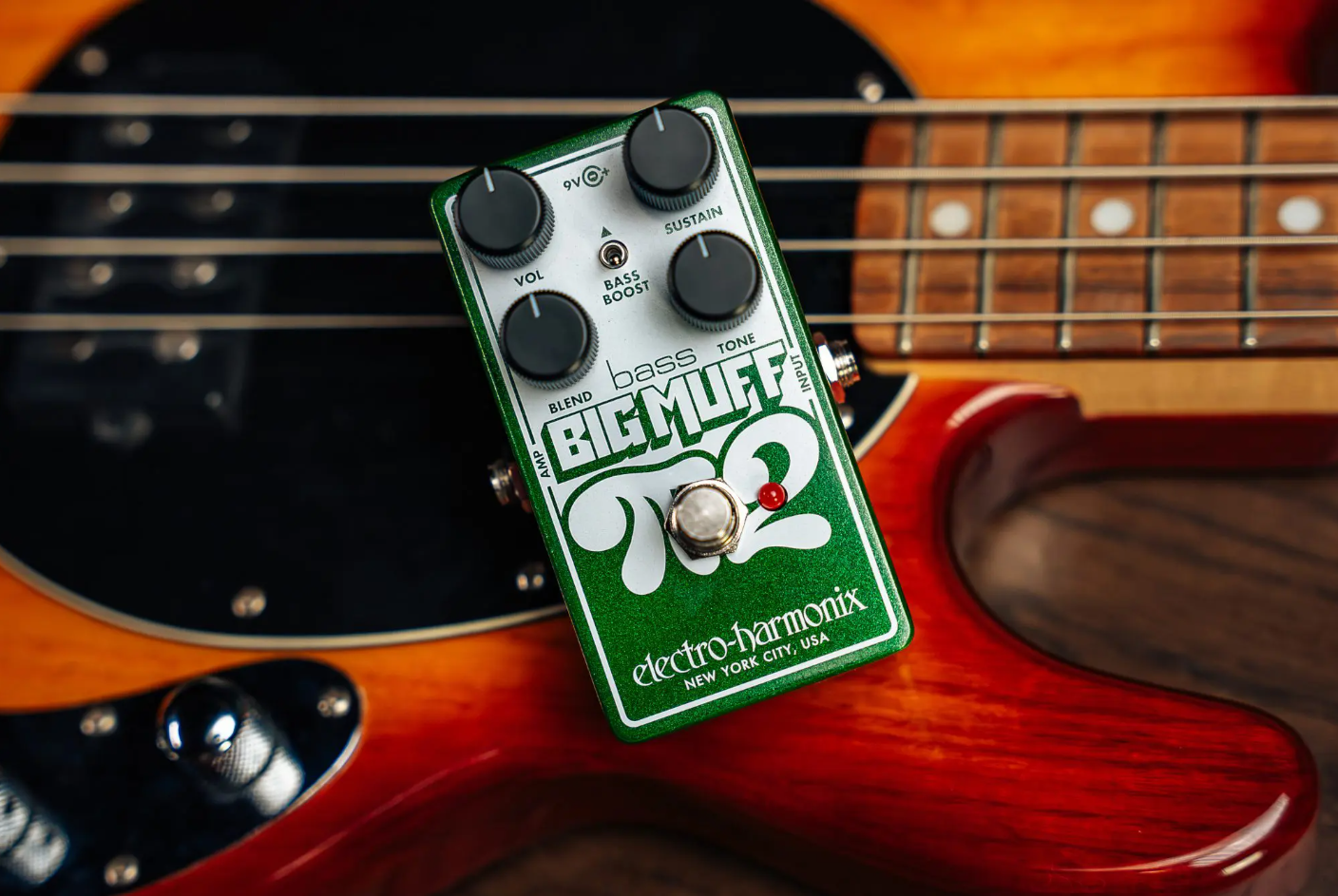
Electro-Harmonix Launches the Bass Big Muff Pi 2

Electro-Harmonix has unveiled the Bass Big Muff Pi 2, a new low-end-focused evolution of one of the most recognizable fuzz circuits ever created. Built on the legacy of the classic Big Muff while drawing inspiration from the elusive Op-Amp variant of the 1970s, this latest release delivers a fresh voice tailored specifically for bass players. The Big Muff has long held a place on pedalboards across genres, prized for its singing sustain and aggressive midrange character. The Bass Big Muff Pi 2 expands on that heritage with a circuit design built around dual op-amps, offering a distinct tonal profile that blends vintage grind with modern clarity. The result is a fuzz that cuts through dense mixes while preserving the depth and authority bassists rely on. Designed to maintain low-end integrity, the pedal introduces two key features aimed squarely at bass performance: a BLEND control and a BASS BOOST switch. The BLEND knob allows players to mix their dry signal with the fuzz effect, keeping articulation and punch intact even under heavy saturation. Engaging the BASS BOOST switch reinforces the fundamental frequencies, delivering added weight — especially useful when dialing in brighter tones via the TONE control. The familiar VOL, TONE, and SUSTAIN controls remain at the core of the layout, providing the wide tonal sweep and near-endless sustain synonymous with the Big Muff name. Whether set for subtle grit or full fuzz assault, the Bass Big Muff Pi 2 offers a versatile range of textures suited for rock, alternative, doom, punk, and experimental styles. Performance flexibility extends to the footswitch, which features true bypass operation with both latching and momentary functionality. A standard click engages the effect in traditional on/off fashion, while pressing and holding the switch unleashes a temporary burst of fuzz — ideal for accents, transitions, and dynamic live moments. The pedal uses a mechanical relay true bypass system housed beneath a soft-touch footswitch for reliable operation. Power options include an included 9V battery, with compatibility for an optional 9V adapter. With the Bass Big Muff Pi 2, Electro-Harmonix refines a legendary fuzz platform into a bass-optimized powerhouse — delivering massive sustain, crushing grind, and uncompromised low-frequency impact in a compact, performance-ready design.

Washburn Scavenger
News

Washburn Reintroduces the Scavenger ’78 Bass

Reviving a Wing Series Original Washburn has officially brought the Wing Series back into the spotlight with the return of the Scavenger ’78 Bass — a bold design that first emerged in the late 1970s and quickly established itself as one of the brand’s most distinctive instruments. When it first appeared, the Scavenger stood apart from the sea of traditional bass shapes dominating the market. Its offset body design and assertive tonal character offered players something visually striking and sonically different. Decades later, original models have become highly desirable among collectors, and now Washburn is channeling that same spirit into a modern reissue built for today’s stage and studio demands. The new Scavenger ’78 stays true to its roots with a mahogany body and mahogany set neck construction, delivering warmth, sustain, and a focused low-end response. The 34-inch scale length provides familiar feel and tension, while the rosewood fingerboard features 22 frets and pearloid dot inlays for a classic look and smooth playability. A comfortable neck profile and balanced body design make it equally suited for long rehearsals and live performance sets. Electronics are built around a powerful P-style pickup configuration, designed to produce punchy mids, solid fundamental lows, and enough articulation to cut through dense mixes. A straightforward Volume and Tone control layout keeps dialing in your sound intuitive and performance-ready. Vintage-inspired hardware complements the aesthetic while ensuring dependable tuning stability and sustain. Visually, the Scavenger ’78 retains the rebellious identity that defined the original Wing Series era. Its distinctive silhouette remains unmistakable, offering players an alternative to more conventional bass designs without sacrificing comfort or versatility. With the Scavenger ’78, Washburn bridges past and present — honoring a cult classic while delivering the reliability and tone modern bassists expect. For players seeking vintage attitude, unmistakable styling, and foundational low-end power, the Wing Series has officially taken flight once again.

MXR Bass Chorus Deluxe
Reviews

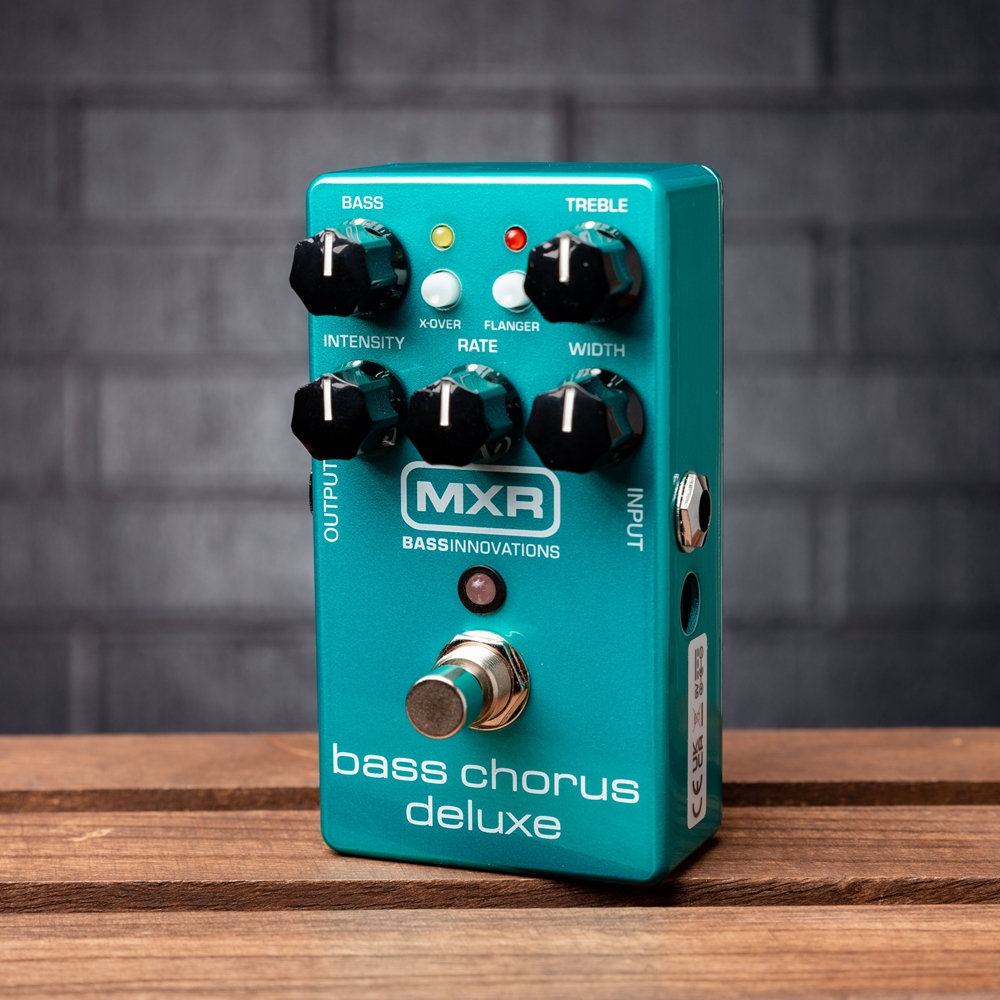
MXR Bass Chorus Deluxe: Pedal Review (2026)

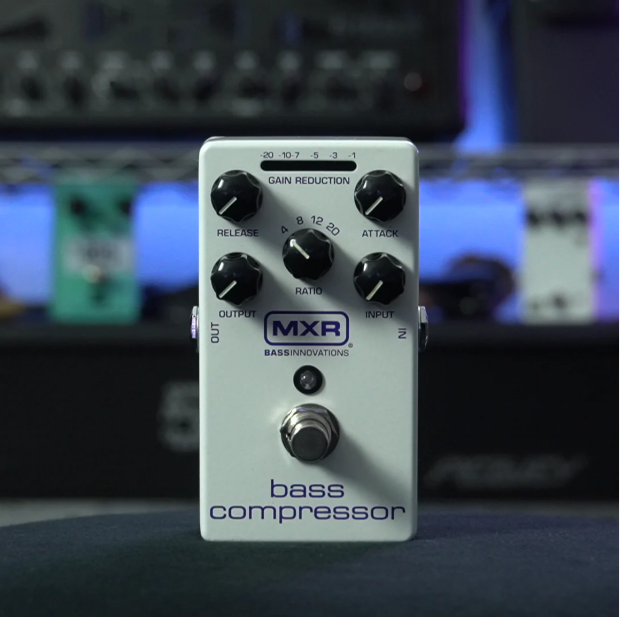
Lush Modulation, Low-End Clarity, and Stereo Depth in One Compact Pedal For many bass players like myself, chorus isn’t just an effect — it’s a necessity! From shimmering ’80s fretless tones to subtle modern width in ambient and worship settings, chorus has long been a way to add motion without sacrificing groove and sound consisteny. The MXR Bass Chorus Deluxe was built specifically to solve a common problem: traditional chorus pedals often thin out the low end. MXR addressed that head-on by designing a bass-focused analog modulation pedal that preserves fundamental frequencies while adding dimension, shimmer, and even flanger textures. While some modulation pedals feel like guitar units repurposed for bass, the Bass Chorus Deluxe feels purpose-built. It delivers everything from subtle widening to dramatic swirl — all while keeping the bottom end intact. Whether you’re after classic fretless warmth, synth-like movement, or stereo depth for modern rigs, it offers a wide palette in a rugged, pedalboard-friendly format. TL;DR The MXR Bass Chorus Deluxe is an analog chorus/flanger pedal designed specifically for bass. It delivers lush, musical modulation without sacrificing low-end punch thanks to its crossover function. It can function as a subtle thickener, a stereo width enhancer, or a dramatic flanger. Players looking for transparent modulation with strong fundamental retention will love it; those wanting hyper-digital shimmer or extreme detune textures may want something more modern and hi-fi. Check the price on Amazon –> Build & Controls The control layout is intuitive and stage-friendly: Two additional switches expand functionality: The enclosure follows MXR’s standard compact housing — durable, road-ready, and pedalboard efficient. Performance Subtle Thickening With conservative Width and Intensity settings, the pedal acts almost like a dimensional enhancer. Notes feel wider and more present without obvious “swirl.” This works especially well in trio settings where bass must occupy more sonic space. Passive basses benefit from the organic analog warmth, while active basses retain clarity thanks to the onboard Bass and Treble shaping. Classic Chorus Character Increasing Width and Intensity produces the lush, liquid chorus tones associated with fretless bass and ’80s pop/rock. The modulation is smooth and musical — not sterile or overly bright. Unlike many guitar chorus pedals, your low B (if you play five-string) remains tight rather than warbly. The X-Over function is key here. By reducing modulation on the deepest frequencies, your fundamental stays anchored while upper harmonics shimmer above it. Flanger Engaging Flanger introduces a more pronounced, swooping character. It’s tighter and more controlled than many standalone flangers, making it usable for bass riffs without overwhelming the mix. With careful Rate settings, it can add movement without sounding gimmicky. Stereo Potential Using the stereo output (via TRS configuration) opens up a surprisingly immersive field. In studio or dual-amp rigs, the modulation spreads beautifully across left and right channels, adding dimension without mud. EQ Functionality The Bass control adjusts how much low-frequency content is present in the modulated signal. This is crucial — it prevents the chorus from hollowing out your tone. The Treble knob allows you to tame brightness or restore clarity depending on your amp and string type. Roundwounds can shimmer; flatwounds can stay warm and controlled. Together, these controls make the pedal far more adaptable than traditional two-knob chorus units. The Bass Chorus Deluxe excels as: It won’t replace high-end digital modulation units for ultra-modern shimmer or pitch-detune textures. Instead, it shines in analog warmth and musical movement. Pros & Cons Pros Cons Q&A Q: Does it thin out the low end like guitar chorus pedals?A: No — the X-Over switch specifically protects low frequencies from heavy modulation. Q: Can it handle five-string basses?A: Yes. The crossover function keeps low B notes defined and tight. Q: Is it subtle or dramatic?A: Both. It ranges from gentle widening to pronounced swirl, depending on settings. Q: Does it work with active basses?A: Absolutely. The EQ controls help tailor brightness and depth to higher-output instruments. Q: Is it good for recording?A: Yes. Especially in stereo — it adds width and movement without cluttering the mix. Conclusion The MXR Bass Chorus Deluxe isn’t about flashy, exaggerated modulation — it’s about musical movement that respects the role of the bass. Its analog circuitry delivers warmth and depth, while the crossover and EQ controls ensure your foundation remains solid. If you’re chasing vintage fretless shimmer, subtle spatial widening, or tasteful flanger motion without sacrificing low-end authority, this pedal delivers in a focused and practical way. It may not be the most experimental chorus on the market, but for bass players who value tone integrity and analog character, it’s a standout choice. Get Your MXR Bass Chorus Deluxe on Amazon Now! Other MXR Gear You Might Like If you enjoyed checking out this MXR pedal, here are more MXR products worth exploring — all tested and reviewed here on BassGearReviews: – MXR Bass Synth: Powerfull Bass Synth Pedal – MXR M87 Bass Compressor: Transparent and Versatile Compression for Bass

Fender Mustang JMJ
Reviews

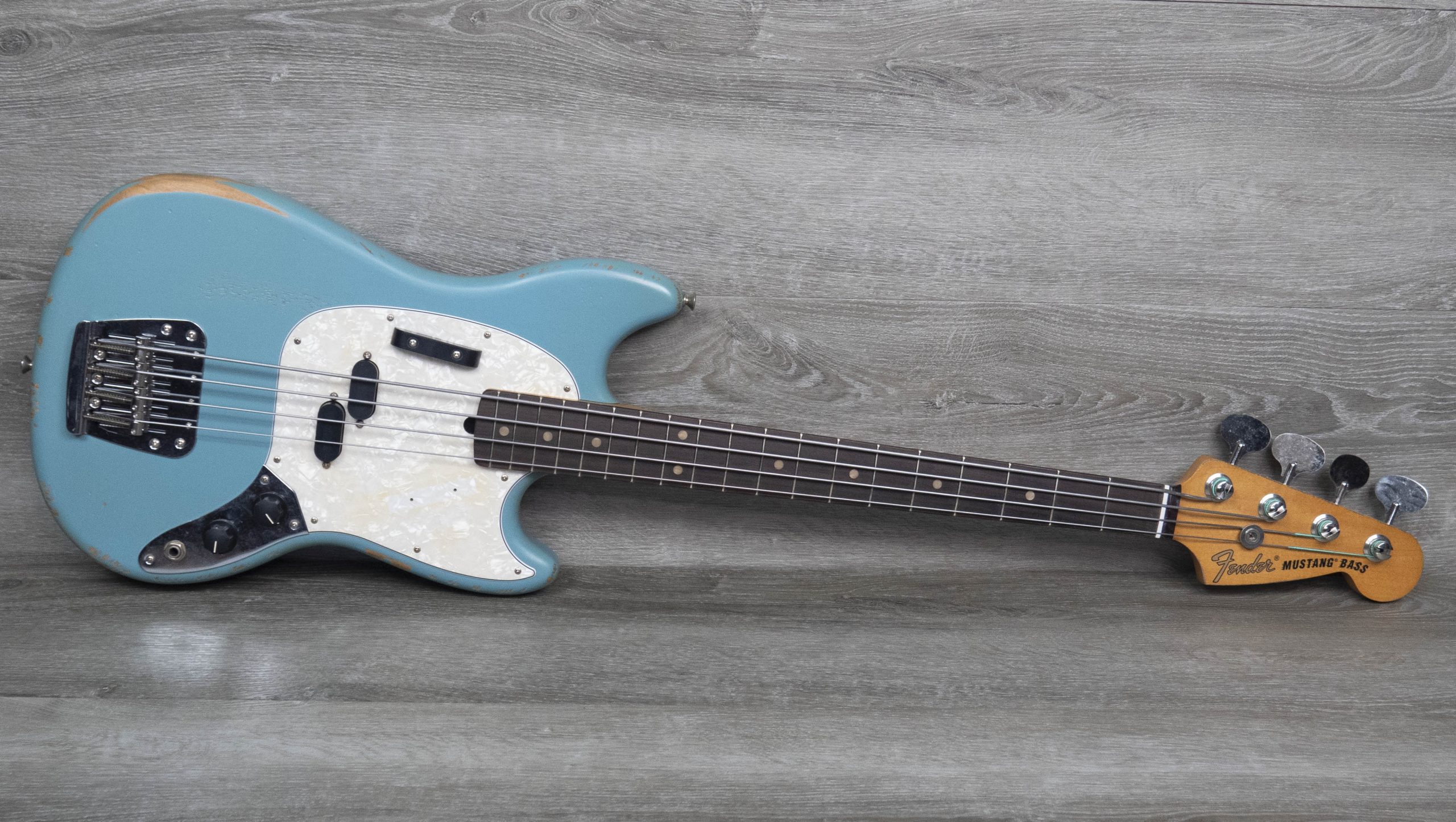
Fender Mustang JMJ Signature: Bass Review

A Bass Player’s Secret weapon The Fender JMJ Mustang is one of those rare instruments that surprises you not with flash, but with feel. When I first picked up my Daphne Blue Justin Meldal-Johnsen Mustang, it didn’t feel like a new bass. It felt like a bass I had already owned for years. The relic wasn’t cosmetic theater — it felt earned. The neck was smooth, the body resonant, the response immediate. It had that elusive “broken-in” quality that most instruments only achieve after years of real playing. And then I noticed it came strung it with flatwounds. Check the Fender JMJ on Amazon Now –> There is something about this instrument with flats that borders on addictive. The tone becomes focused, authoritative, and warm without ever feeling dull. It sits in a mix with a confidence that feels almost disproportionate to its size. In many ways, it behaves like a Precision bass — but lighter, faster, and in my experience, sometimes even more articulate. It’s as if it captures the punch and midrange authority of a P-Bass while shedding the weight and bulk that can make longer sessions physically demanding. To understand why this instrument resonates so deeply with players around the world, you have to look at both its lineage and its intent. The History The Mustang Bass first appeared in 1966 as Fender’s short-scale offering, originally positioned as a more accessible instrument. Yet like many so-called “student” models, it quickly transcended that label. Over decades, the Mustang became a cult favorite for players who valued punch, simplicity, and comfort. Its 30-inch scale length gave it a slightly different string tension and response — tighter and more immediate than many would expect, with a natural midrange focus that allowed it to cut through mixes without overpowering them. Fast forward to 2017, when Fender collaborated with Justin Meldal-Johnsen to create a signature version based on his own 1966 Daphne Blue Mustang. This wasn’t a nostalgic reproduction for collectors. It was an attempt to capture the feel, wear, tone, and spirit of a working musician’s main instrument — a bass that had proven itself on major stages and in countless studio sessions. What makes the JMJ Mustang special is how deliberately restrained it is. It has a single split-coil pickup, simple volume and tone controls, and a short scale neck that immediately feels compact and manageable. There’s no onboard preamp, no tonal complexity for complexity’s sake. Instead, everything is optimized around touch and responsiveness. The 30-inch scale is central to its character. It reduces overall tension slightly, which makes bends smoother and fretting more relaxed. But contrary to the old misconception that short-scale basses lack authority, the JMJ has remarkable low-end solidity. The notes bloom quickly and decay in a controlled way. With flatwounds, the attack softens just enough to create a thick, woody fundamental that feels vintage yet focused. In many contexts, it behaves like a Precision bass that has been distilled down to its most essential qualities. The midrange presence is there. The punch is there. But the physical footprint is smaller, the instrument lighter, and the response quicker. Long rehearsals become easier. Studio sessions feel less fatiguing. The bass almost disappears against your body, leaving only the sound. That is one of the reasons so many players quietly refer to it as a “secret weapon.” It doesn’t scream for attention. It doesn’t dominate visually or sonically. But in a mix — especially with flats — it sits exactly where a bass should sit. It supports without clouding. It anchors without overwhelming. Engineers appreciate how predictably it records. Live sound engineers appreciate how little corrective EQ it demands. Bandmates appreciate how it holds the pocket without stepping on harmonic space. The relic finish plays a psychological role as well. Because it already looks lived-in, you feel less precious with it. You play it. You dig in. You let it resonate. There’s something freeing about not worrying over the first ding or scratch. It feels like an instrument built for music rather than preservation. That said, it is not universally perfect. If you are chasing ultra-modern slap tones with aggressive high-end snap, this may not be your primary choice. If you need extensive tonal sculpting options at your fingertips, the simplicity of its controls could feel limiting. And if you are deeply attached to the full-scale tension and sonic footprint of a traditional Precision, the shorter scale will feel different under your hands. But those are not shortcomings so much as identity markers. The JMJ Mustang knows what it is. It is compact. It is focused. It is responsive. It is built around feel more than spectacle. It favors musicality over versatility for versatility’s sake. For me, it represents an ideal balance between tradition and practicality. It delivers the authority of a classic Fender low end in a body that feels agile and effortless. It rewards nuance. It thrives with flatwounds. It encourages longer playing sessions. And most importantly, it inspires. That is why so many bass players consider it their secret weapon. Not because it is flashy. Not because it is rare. But because when the band starts, it simply works — every time! Check the Mustang JMJ on Amazon!

Ibanez GWB205
Reviews

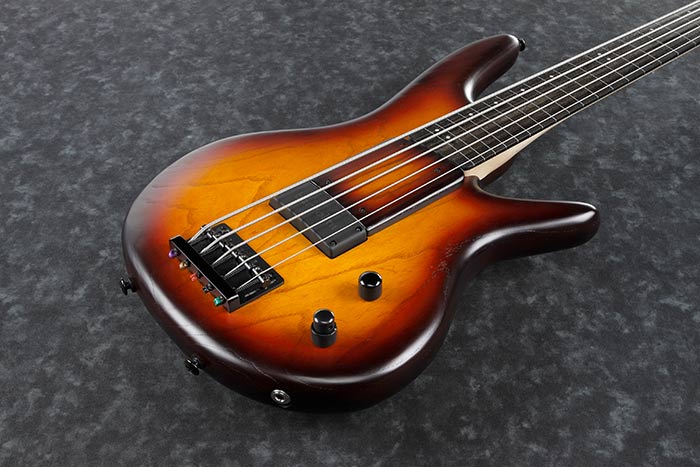
The Ibanez GWB Series: Bass Review

An Instrument of Discipline, Not Decoration There are basses we admire. There are basses we enjoy. And then there are basses that quietly rewire the way we think about playing. For me, the Ibanez GWB is in that last category. Those who know me know that Gary Willis has been my reference and mentor for a long time — not only musically, but conceptually. His approach to articulation, right-hand economy, and tonal intention reshaped how I understand the instrument. So writing about the GWB is not simply writing about a signature model. It is writing about a philosophy made tangible. But admiration should never cloud clarity. The GWB deserves a deep look — not as a fan piece, but as an honest examination of one of the most coherent signature instruments ever produced. The Origin: A Bass Built from the Inside Out When Ibanez introduced the original GWB1 in 1999, it wasn’t responding to a trend. It was responding to a system. Gary Willis had already refined his floating thumb technique and right-hand mechanics over decades. He didn’t want a bass that simply sounded good. He wanted an instrument that reinforced the discipline of his touch. The GWB1 — built in Japan — established the template: That first generation wasn’t flashy. It was deliberate. And what’s remarkable is how little the core philosophy has changed since. Evolution After the original Japanese-built models (GWB1 and later GWB1005), Ibanez expanded the line to make the concept more accessible. The GWB35, introduced in the early 2000s, became the long-running production model that brought the ramp-and-fretless philosophy to a broader audience. Later, the GWB205 refined the formula further, sitting between affordability and premium build quality, maintaining the ebony board, Bartolini pickup, and ramp system while modernizing aesthetics and construction. Anniversary editions — the GWB20th (2019) and GWB25th (2024) — didn’t reinvent the instrument. They honored it. Upgraded electronics, special finishes, subtle refinements — but always preserving the essential idea: this bass exists to serve a disciplined right hand and an expressive fretless voice. Across more than two decades, the silhouette, the ramp, the fretless identity — all remained intact. That consistency is not accidental. It reflects a rare clarity of design. First Thing First: The Ramp The ramp is still the most controversial feature — and the most honest. It limits finger depth, reduces wasted motion, and forces efficiency. It rewards light touch. It punishes heavy-handed playing. When I first spent serious time with a ramp-equipped bass, it revealed every inefficiency in my right hand. It became clear how much excess movement I had normalized. The GWB does not let you hide behind aggression. It asks for control. And that’s the central theme of the entire instrument. Fretless as Commitment The GWB is not a “versatile” instrument in the commercial sense. It commits to fretless. The ebony fingerboard, subtle position markers, and smooth articulation invite nuance rather than theatrics. This is not a bass built for exaggerated “mwah” or fretless gimmicks. It is built for micro-adjustments of pitch, subtle vibrato, vocal phrasing. But this commitment defines its audience. If you are not willing to invest in intonation discipline, the GWB will not flatter you. Electronics The Bartolini pickup and active EQ system across most generations reflect the same tonal philosophy as the ramp: control over spectacle. The low B integrates naturally. The midrange stays articulate. Fast passages remain defined. In a fusion or jazz context, this balance is invaluable. In a high-gain rock mix, it may feel restrained. Where the GWB Excels More than anything, it excels at consistency. Where It Falls Short These are not design failures. They are boundaries. My Personal Take Because this instrument is tied to someone who has shaped my musical path, it would be easy to romanticize it. But what I respect most about the GWB is that it does not romanticize anything. It is disciplined. It is focused. It does not try to win everyone. Playing it feels less like borrowing Gary Willis’s voice and more like stepping into the framework that shaped it. And that framework demands honesty. It shows you exactly how controlled — or uncontrolled — your touch truly is. In that sense, it functions almost like a teacher. Which feels appropriate! Final Reflection Over more than twenty-five years — from the original GWB1 to the modern GWB205 and the 25th Anniversary edition — the Ibanez GWB has remained conceptually intact. Few signature instruments can say that. It is not driven by nostalgia.It is not driven by market trends.It is driven by a system. For those aligned with that system, it can feel like home. For those who aren’t, it may feel foreign. But perhaps that is the greatest compliment one can give an instrument: It knows exactly what it is. And it refuses to be anything else! If this instrument speaks to your approach as much as it has shaped mine, you can explore the current Ibanez GWB models here.

Aguilar TLC
Uncategorized

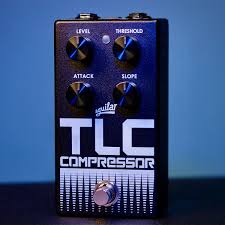
Aguilar TLC Compressor – Pedal Review

Transparent Compression Built for Bass Aguilar’s TLC Compressor has earned a strong reputation among bass players for delivering clean, musical compression without compromising low-end integrity. Designed to provide practical dynamic control rather than heavy coloration, the TLC focuses on consistency, clarity, and reliability in real-world playing situations. It remains a popular choice for bassists who want straightforward, professional compression with enough control to fine-tune their response. With the recent release of the Aguilar TLC DLX, we take a look at the classic TLC design, that’s been a staple for bass players all around the world. Check the Aguilar TLC Compressor on Amazon! Design & Build Quality The TLC Compressor is housed in Aguilar’s familiar compact metal enclosure and built to handle regular gigging and pedalboard use. The layout is clean and intuitive, with a single footswitch and clearly labeled controls that make adjustments easy both on stage and in the studio. True bypass switching preserves the instrument’s signal when the pedal is disengaged, and overall construction reflects Aguilar’s emphasis on durability. Controls & Functionality The TLC features a streamlined but effective control set tailored specifically for bass. Threshold determines the level at which compression begins, allowing players to set how aggressively the pedal responds to their playing dynamics. Slope controls the compression ratio, shaping how strongly the signal is compressed once it crosses the threshold. This makes it possible to dial in anything from subtle leveling to more assertive dynamic control. The Attack control adjusts how quickly the compressor reacts to incoming notes, influencing how much initial transient is preserved. Finally, the Level control sets the output volume, allowing for precise gain matching or a slight clean boost. While the TLC does not include a release control, its fixed release time is well chosen and works musically across a wide range of playing styles. Compression Character & Performance The defining characteristic of the TLC Compressor is transparency. When set for moderate compression, it smooths out peaks while preserving the natural tone and feel of the instrument. Low frequencies remain solid and full, even under heavier compression settings. The pedal responds consistently across different playing techniques, maintaining clarity and punch whether using fingers, pick, or slap. Tone & Musical Application The TLC excels as an always-on compressor for bassists who want even dynamics without noticeable coloration. It works well in funk, rock, pop, jazz, and worship settings, adapting easily to different instruments and rigs. Because it does not impose a strong tonal character, the TLC integrates seamlessly with other pedals, particularly drives, octave pedals, and envelope filters. Live & Studio Use In live environments, the TLC delivers predictable, repeatable results and requires minimal adjustment once dialed in. Its straightforward control layout makes it easy to tweak quickly if needed. In the studio, the pedal provides clean, controlled compression that tightens performances without sounding processed. Its low noise floor further enhances its suitability for recording. Final Thoughts The Aguilar TLC Compressor remains a strong option for bass players seeking transparent, reliable dynamic control. Its simple but effective control set, musical response, and durable construction have helped it remain relevant despite the crowded compressor market. For bassists who value clarity, consistency, and hands-on control over added features or coloration, the Aguilar TLC Compressor continues to be a dependable choice. Get your Aguilar TLC Compressor on Amazon now! If you enjoyed this product from Aguilar, you’ll like other articles on Aguilar: – Aguilar Plugin Suite: All the classic Aguilar sounds, now on your DAW. – Aguilar Octamizer: Organic Bass Octave

Aguilar Octamizer
Uncategorized

Aguilar Octamizer – Organic Octave: Pedal Review

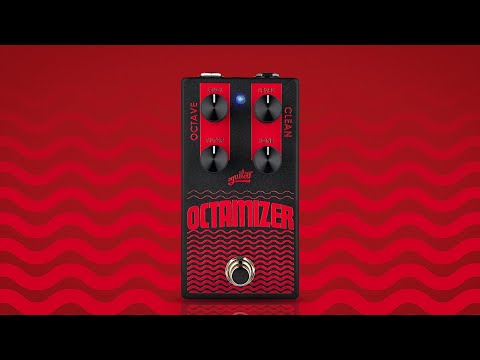
A Modern Classic in Analog Bass Octave Aguilar has long been associated with high-quality bass gear that prioritizes musicality, reliability, and real-world usability. Among its pedal lineup, the original Octamizer has earned a reputation as one of the most dependable analog octave pedals available for bass. Rather than chasing extreme synth textures or overly processed sounds, the Octamizer focuses on delivering a solid, musical octave-down voice that integrates naturally into a bass rig. Years after its release—and now alongside the new Octamizer DLX—the original Octamizer remains a relevant and highly effective tool for bass players. Check the Aguilar Octamizer On Amazon –> Design & Build Quality The Octamizer is housed in Aguilar’s familiar compact enclosure, built to withstand consistent gigging and pedalboard use. The layout is clean and intuitive, with clearly labeled controls and a single footswitch that makes operation straightforward in live situations. True bypass switching preserves signal integrity, and overall construction reflects Aguilar’s emphasis on durability and long-term reliability. Controls & Functionality The Octamizer features a focused but highly musical control set designed specifically for bass. Clean Level and Octave Level controls allow precise blending of the dry and effected signals, making it easy to reinforce the low end or push the octave voice forward as needed. Crucially, the pedal provides separate tone shaping for each signal path. The Clean Tone control adjusts the brightness of the dry signal, allowing players to preserve clarity or roll off highs to better match the octave voice. The Octave Filter shapes only the octave-down signal, moving from deep, smooth sub tones to brighter, more defined textures that cut through a mix. This separation gives the Octamizer more flexibility than many analog octave pedals while keeping the interface simple and intuitive. Tracking & Performance Tracking is one of the Octamizer’s strongest attributes. Across most of the bass register, the pedal responds quickly and predictably, with stable performance on lower notes and clean articulation in the mid range. When played with solid technique, the octave-down voice feels tightly connected to the original note rather than detached or synthetic. As expected from an analog design, clean input and controlled playing yield the best results, but the Octamizer consistently rewards players with reliable, musical tracking. Tone & Musical Application Tonally, the Octamizer leans organic and supportive rather than overtly synth-like. The octave-down sound is thick and authoritative, making it well suited for funk, rock, soul, worship, and pop contexts where low-end reinforcement is essential. The interaction between the Clean Tone and Octave Filter controls allows the pedal to sit naturally in a variety of mixes. Darker octave settings provide classic sub weight, while brighter filter settings add definition for more complex lines or denser arrangements. While the Octamizer does not include octave-up voices or multiple modes, its focused design is also its strength—it delivers a high-quality octave-down sound without unnecessary complexity. Live & Studio Use In live situations, the Octamizer is easy to integrate and dependable under foot. The single-switch operation makes it ideal for players who need immediate access without menu diving or preset management. In the studio, its consistent tracking and natural voicing make it an excellent choice for reinforcing bass lines without overpowering the original tone. The pedal also stacks well with compressors, filters, and drive pedals, expanding its usefulness across different signal chains. Final Thoughts The original Aguilar Octamizer remains one of the most musically satisfying analog octave pedals available for bass. Its strong tracking, organic tone, and intelligently separated tone controls have helped it stand the test of time, even as newer and more complex octave pedals enter the market. With the release of the Octamizer DLX, Aguilar has expanded the platform’s capabilities—but the original Octamizer still holds its place as a straightforward, professional-grade octave pedal that delivers exactly what many bass players need. For those seeking a reliable, great-sounding octave-down effect with no excess complexity, the Aguilar Octamizer continues to be a benchmark in its category. Get your Aguilar Octamizer on Amazon Now! If you enjoyed this product from Aguilar, you’ll like other articles on Aguilar: – Aguilar Plugin Suite: All the classic Aguilar sounds, now on your DAW.

JHS Plugin Suite Review
Reviews

JHS Loud Is More Good Collection: Plugin review

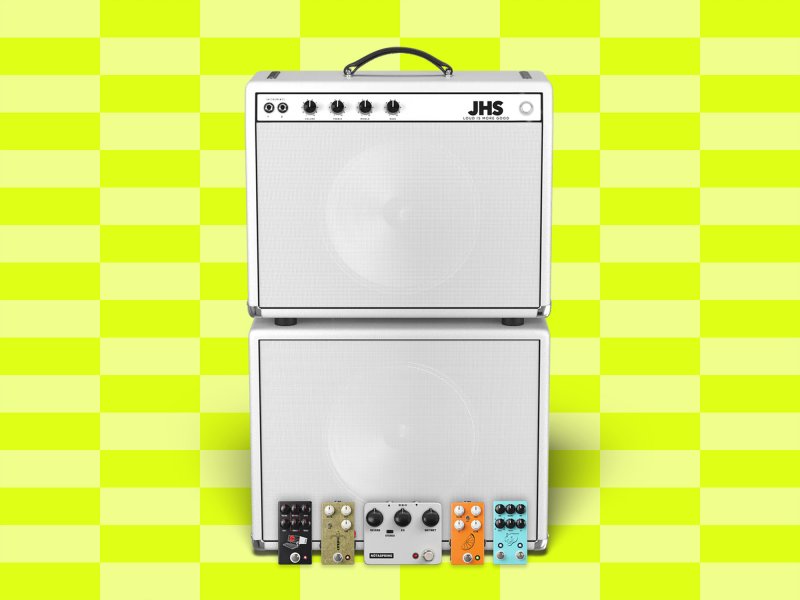
JHS Plugin Suite on Bass: A Practical Review The JHS Loud Is More Good Collection brings some of JHS’s most recognizable pedal designs, along with an amplifier model, into the digital realm for use in DAWs or standalone environments. The suite includes overdrive, distortion, compression, delay, reverb, and amp simulation, all modeled to capture the behavior and character of their analog counterparts. As a bass player who regularly tracks and shapes bass tones in the box, I spent time using these plugins with real bass performances in practical recording and production scenarios. This review reflects hands-on use with direct-in bass tracks, parallel processing, and creative sound design, with a focus on how well these tools translate to bass despite their guitar-centric origins. TL;DR The JHS Plugin Suite offers musical, character-driven effects that can work very well on bass when used thoughtfully. It excels at adding grit, compression, depth, and ambience, but it is not a bass-specific plugin collection. Preserving low-end fundamentals often requires careful gain staging, EQ, or parallel blending. As a creative tone-shaping toolkit rather than a complete bass solution, it performs admirably. The Review: A Bass Player’s Perspective What’s Included The Loud Is More Good Collection includes the following plugins: Together, these plugins represent a full signal chain that mirrors a traditional pedalboard plus amplifier setup, now adapted for modern production workflows. Bass Compatibility and Signal Shaping None of the plugins are marketed as bass-specific, and there are no dedicated low-frequency compensation controls. Because of this, successful bass use depends on intentional signal routing and, in many cases, parallel processing. When approached this way, the plugins can complement bass tracks rather than compromise them. Compression and Clean Tone Shaping The Pulp ’N’ Peel compressor stands out as one of the most immediately useful tools for bass. In practice, it provides smooth dynamic control and a subtle sense of glue that works well on DI tracks. It adds presence without flattening the instrument’s natural dynamics and responds musically to variations in playing style. Used either directly on a track or blended in parallel, it helps bass parts sit more confidently in a mix. Overdrive and Distortion The Morning Glory and Hard Drive plugins offer two very different flavors of drive. Morning Glory is more transparent, adding harmonic richness and edge while largely preserving the core bass tone. It works well for subtle grit, especially in rock, indie, and pop contexts. Hard Drive is more aggressive and better suited to heavier tones. It can generate dense harmonic content that helps bass cut through a mix, but it requires more careful dialing to avoid masking low-end fundamentals. In my experience, blending it in parallel with a clean signal yields the most usable results. Delay and Time-Based Effects: Panther Cub The Panther Cub delay brings analog-style bucket brigade delay into the suite, complete with tempo sync, modulation, and tone shaping controls. On bass, subtle delay settings add depth and rhythmic interest without cluttering the low end. Used sparingly or on an auxiliary track, Panther Cub creates movement and space behind the fundamental rather than competing with it. More extreme settings open the door to creative and ambient bass textures, particularly useful in experimental, ambient, or post-rock contexts. The modulation controls help the repeats feel organic rather than static, which suits bass particularly well when used for texture rather than clarity. Reverb and Space: NÖTASPRING The NÖTASPRING reverb emulates classic spring reverb behavior while offering modern control over tone and mix. For bass, it is best used with restraint. Low wet/dry settings or parallel routing allow the bass to retain definition while gaining a sense of depth and space. NÖTASPRING works especially well for atmospheric passages, dub-inspired lines, or sparse arrangements where bass occupies more sonic real estate. It is less about subtle room ambience and more about character and texture. Amp and Cabinet Modeling The Loud Is More Good Amp provides amp and cabinet modeling with mic placement options. While clearly modeled after a guitar amplifier, it can still be used creatively on bass. Gentle settings add color and midrange presence, while heavier drive settings function better as effect tones than as primary bass amp replacements. As with the drive pedals, using this amp model in parallel with a clean DI track helps retain low-end solidity while benefiting from the amp’s character. Workflow and Integration The suite integrates smoothly into standard DAW workflows and can also be used in standalone mode. Signal chain order is flexible, tempo-based effects sync easily to sessions, and the interface design encourages experimentation. For bass players working primarily in the box, the plugins feel responsive and musically engaging rather than clinical. Pros Cons FAQs Can the JHS Plugin Suite be used effectively on bass?Yes. While not bass-specific, the plugins can be very effective when used intentionally, particularly with parallel processing. Which plugins are most useful for bass?Pulp ’N’ Peel is immediately useful for compression and tone shaping, while Morning Glory, Panther Cub, and NÖTASPRING excel at adding character and space. Do these plugins replace dedicated bass amp sims?Not entirely. They work best as creative tools alongside clean DI tracks or bass-focused amp simulations. Are these plugins suitable for modern production styles?Yes. They lend themselves well to rock, indie, experimental, ambient, and pop bass tones, especially where character is valued over pristine cleanliness. Conclusion The JHS Plugin Suite is not a purpose-built bass toolkit, but it doesn’t need to be to earn a place in a bassist’s plugin arsenal. When approached with intention, it offers rich character, musical response, and creative flexibility that translate well to bass recording and production. With careful routing and a respect for low-end fundamentals, these plugins can add personality and depth that goes beyond clean DI tones, making them a valuable complement to more bass-focused tools. If you enjoyed checking out this JHS product, here are more JHS products worth exploring — all tested and reviewed here on BassGearReviews: – JHS Colour Box V2 – Neve Style Preamp Pedal – JHS 424 Gain Stage – preamp/fuzz pedal

Fodera X Trickfish Preamp/Practice Amp
News

Best Of NAMM 2026: Fodera x Trickfish Preamp

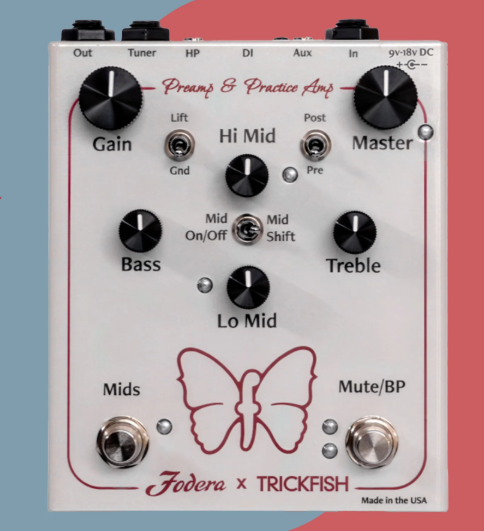
Best of NAMM 2026: Bass Pedals That Defined the Show Every January, the NAMM Show brings together manufacturers, artists, retailers, and media from around the world for the largest and most influential music industry trade event. For gear companies, NAMM is the ideal stage to unveil new products, gather real-time feedback from players, and set the tone for the year ahead. New releases debuting at NAMM often reflect where technology, design, and player demand are heading, making the show a reliable snapshot of the future of music gear. Our Best of NAMM 2026 series highlights the most noteworthy bass pedals launched at this year’s event—tools that stood out for innovation, tone, and real-world usefulness for working bassists. One of the most significant bass pedal releases at NAMM 2026 came from an unexpected but highly complementary collaboration: Fodera and Trickfish. Known respectively for boutique bass craftsmanship and high-fidelity amplification, the two brands joined forces to create a Preamp / Practice Amp pedal that bridges premium tone shaping with practical, everyday usability. At its core, the Fodera x Trickfish pedal is designed to deliver true Trickfish amp voicing in a compact, pedalboard-ready format, while preserving the articulate, full-range response Fodera instruments are known for. The preamp section offers a clean, modern bass tone with ample headroom, fast transient response, and a focused low end that remains tight even at higher output levels. The EQ is voiced for musical, intuitive shaping rather than extreme coloration, making it easy to dial in everything from pristine studio tones to authoritative live sounds. What truly sets this unit apart is its integrated practice amp functionality. A built-in headphone amplifier allows bassists to practice silently without sacrificing tone quality, while auxiliary input support makes it easy to play along with tracks, loops, or backing material. Unlike many practice-focused devices, this pedal maintains professional audio quality, ensuring that the sound heard through headphones closely mirrors what would be sent to a PA or recording interface. With balanced DI output, headphone monitoring, and a compact footprint, the Fodera x Trickfish Preamp / Practice Amp is clearly aimed at modern bassists who need one solution that works at home, in the studio, and on stage. It stands out at NAMM 2026 not just as a convenience tool, but as a serious tone platform that reflects the shared design philosophy of two respected bass brands focused on clarity, precision, and real-world performance.

Tech21 Bass Driver Elite
News

Best Of NAMM 2026: Tech 21 SansAmp Bass Driver DI Elite

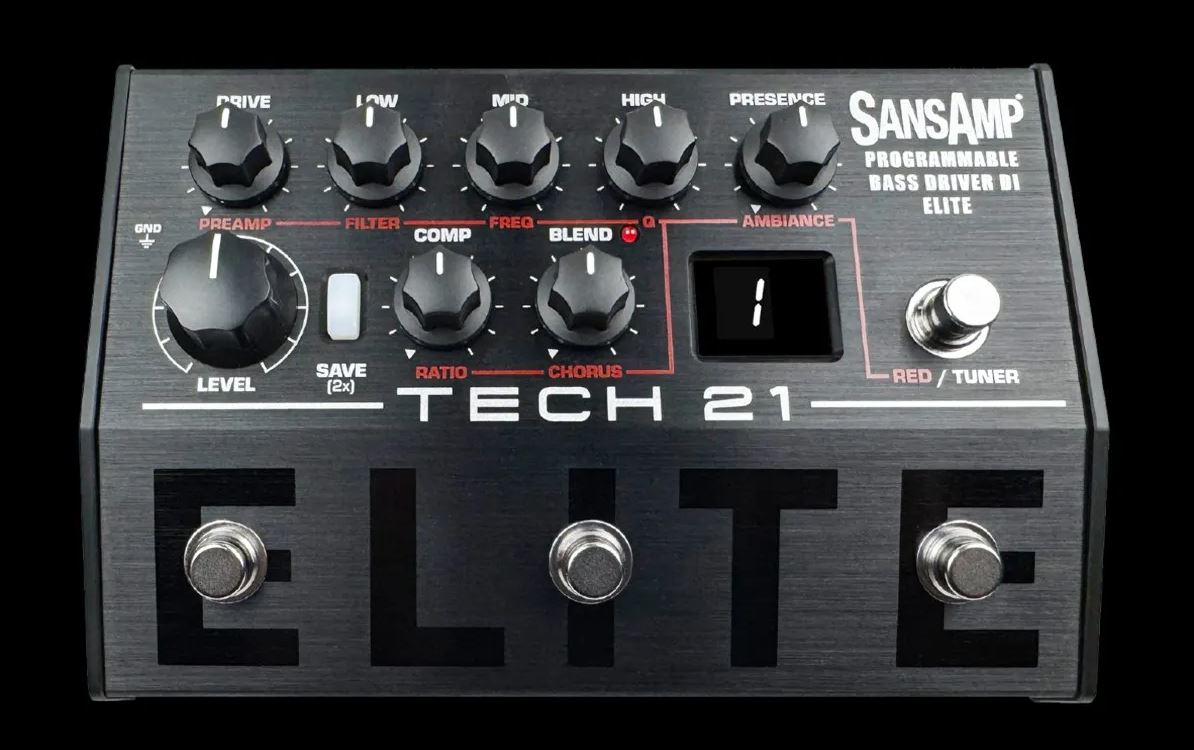
Best of NAMM 2026: Bass Pedals That Defined the Show Every January, the NAMM Show brings together manufacturers, artists, retailers, and media from around the world for the largest and most influential music industry trade event. For gear companies, NAMM is the ideal stage to unveil new products, gather real-time feedback from players, and set the tone for the year ahead. New releases debuting at NAMM often reflect where technology, design, and player demand are heading, making the show a reliable snapshot of the future of music gear. Our Best of NAMM 2026 series highlights the most noteworthy bass pedals launched at this year’s event—tools that stood out for innovation, tone, and real-world usefulness for working bassists. Tech 21 raised the bar for bass preamp and DI pedals with the SansAmp Bass Driver DI Elite, a fully programmable evolution of one of the most iconic bass tools ever made. The Elite version expands the familiar SansAmp sound into a modern, flexible platform suited for both live performance and studio work. The pedal features multiple operating modes, including a performance-oriented preset layout and a deeper studio mode capable of storing a large number of custom presets. Familiar controls such as drive, blend, EQ, presence, and compression remain central to the experience, preserving the touch sensitivity and character that define the SansAmp sound. Advanced editing options unlock additional parameters such as parametric mids, compression behavior, ambience, and modulation, while MIDI support and comprehensive connectivity make the Elite a powerful centerpiece for complex rigs. For bassists who rely on direct sound and consistent tone, the Bass Driver DI Elite stands out as one of the most capable and forward-thinking releases of NAMM 2026.

Aguilar TCL DLX
News

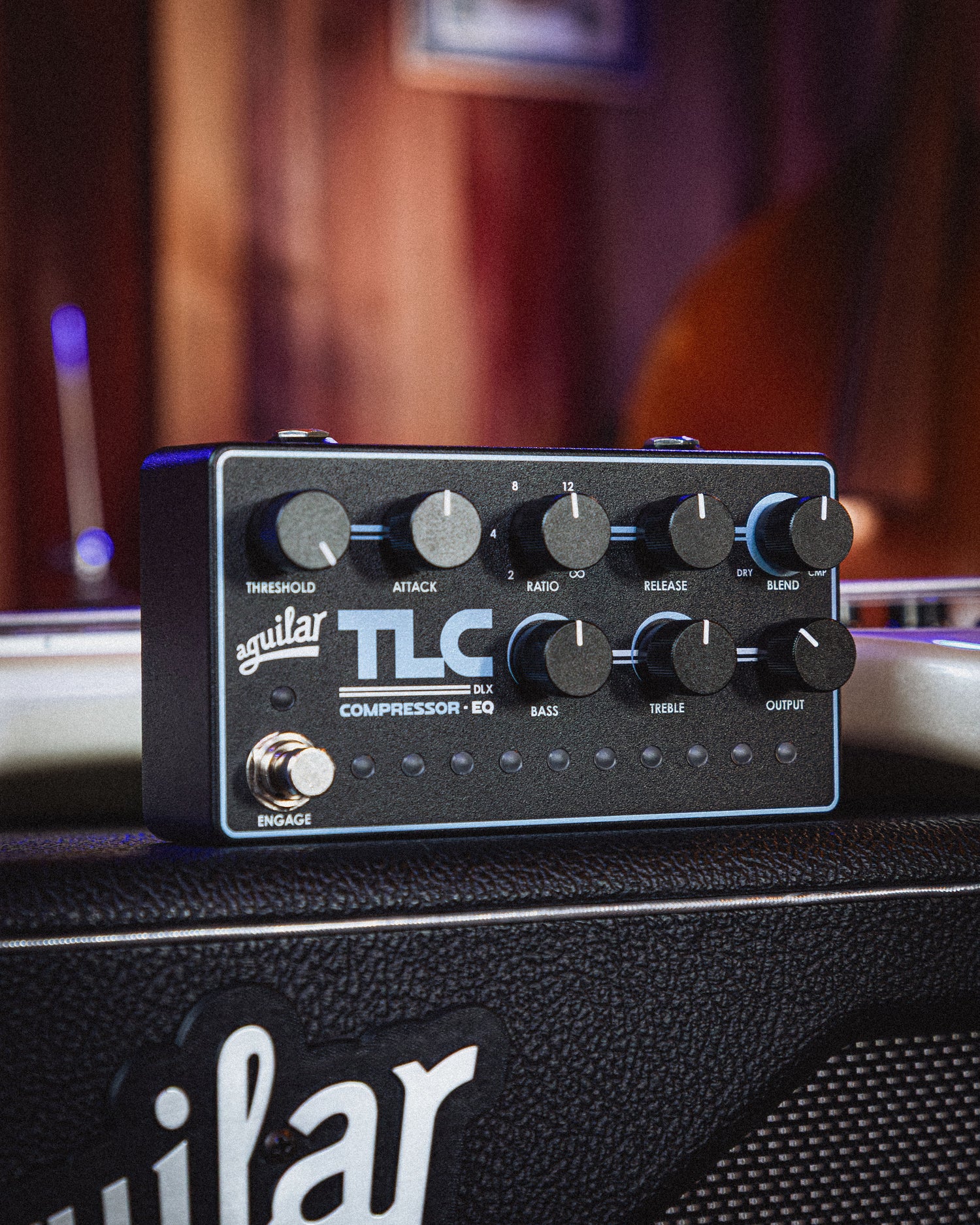
Best Of NAMM 2026: Aguilar TLC DLX Compressor EQ

Best of NAMM 2026: Bass Pedals That Defined the Show Every January, the NAMM Show brings together manufacturers, artists, retailers, and media from around the world for the largest and most influential music industry trade event. For gear companies, NAMM is the ideal stage to unveil new products, gather real-time feedback from players, and set the tone for the year ahead. New releases debuting at NAMM often reflect where technology, design, and player demand are heading, making the show a reliable snapshot of the future of music gear. Our Best of NAMM 2026 series highlights the most noteworthy bass pedals launched at this year’s event—tools that stood out for innovation, tone, and real-world usefulness for working bassists. The Aguilar TLC DLX takes the company’s well-regarded compressor pedal and transforms it into a full-featured dynamics and tone tool for bassists. Designed with studio-style control in mind, the TLC DLX offers adjustable threshold, ratio, attack, release, output, and blend controls, giving players precise command over their dynamics. An integrated gain-reduction meter provides clear visual feedback, making it easy to dial in subtle compression or more assertive limiting. Parallel compression via the blend control helps retain natural feel and punch, even with heavier settings. In addition to compression, the TLC DLX includes bass and treble tone controls inspired by Aguilar’s classic preamp circuits. This allows players to shape their sound after compression, effectively turning the pedal into a compact channel strip that works equally well on stage or in the studio.

Aguilar Octamizer DLX
News

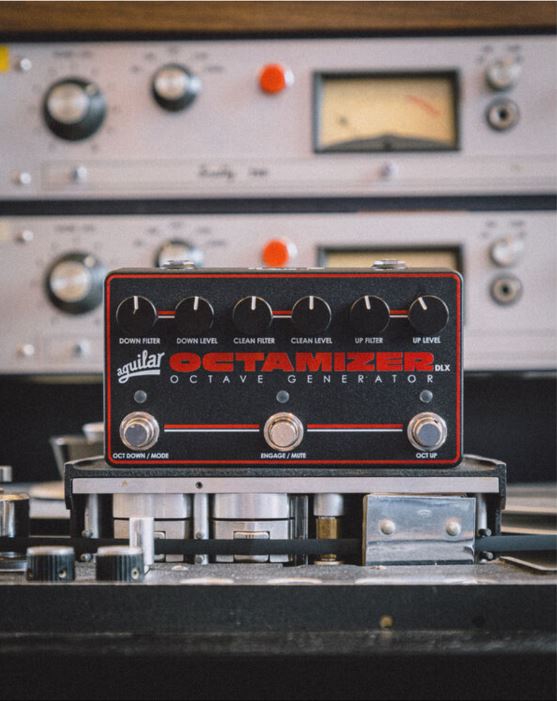
Best Of NAMM 2026: Aguilar Octamizer DLX

Best of NAMM 2026: Bass Pedals That Defined the Show Every January, the NAMM Show brings together manufacturers, artists, retailers, and media from around the world for the largest and most influential music industry trade event. For gear companies, NAMM is the ideal stage to unveil new products, gather real-time feedback from players, and set the tone for the year ahead. New releases debuting at NAMM often reflect where technology, design, and player demand are heading, making the show a reliable snapshot of the future of music gear. Our Best of NAMM 2026 series highlights the most noteworthy bass pedals launched at this year’s event—tools that stood out for innovation, tone, and real-world usefulness for working bassists. Aguilar expanded one of its most popular pedals with the introduction of the Octamizer DLX, a deluxe octave effect built specifically for bass performance. Known for its tight tracking and organic sound, the Octamizer platform now adds increased flexibility and expanded voicing options. The DLX version introduces both octave-down and octave-up voices, allowing players to blend massive sub-octave foundation with harmonic content for more complex textures. Independent footswitches provide immediate access to each voice, making it easy to stack or isolate sounds during live performance. With improved filtering options and refined tracking across the full range of the instrument, the Octamizer DLX is designed to handle everything from classic funk lines to modern synth-inspired bass tones. It is a clear evolution of a trusted design, offering bassists more control without added complexity.

Valeton GP-50
Reviews

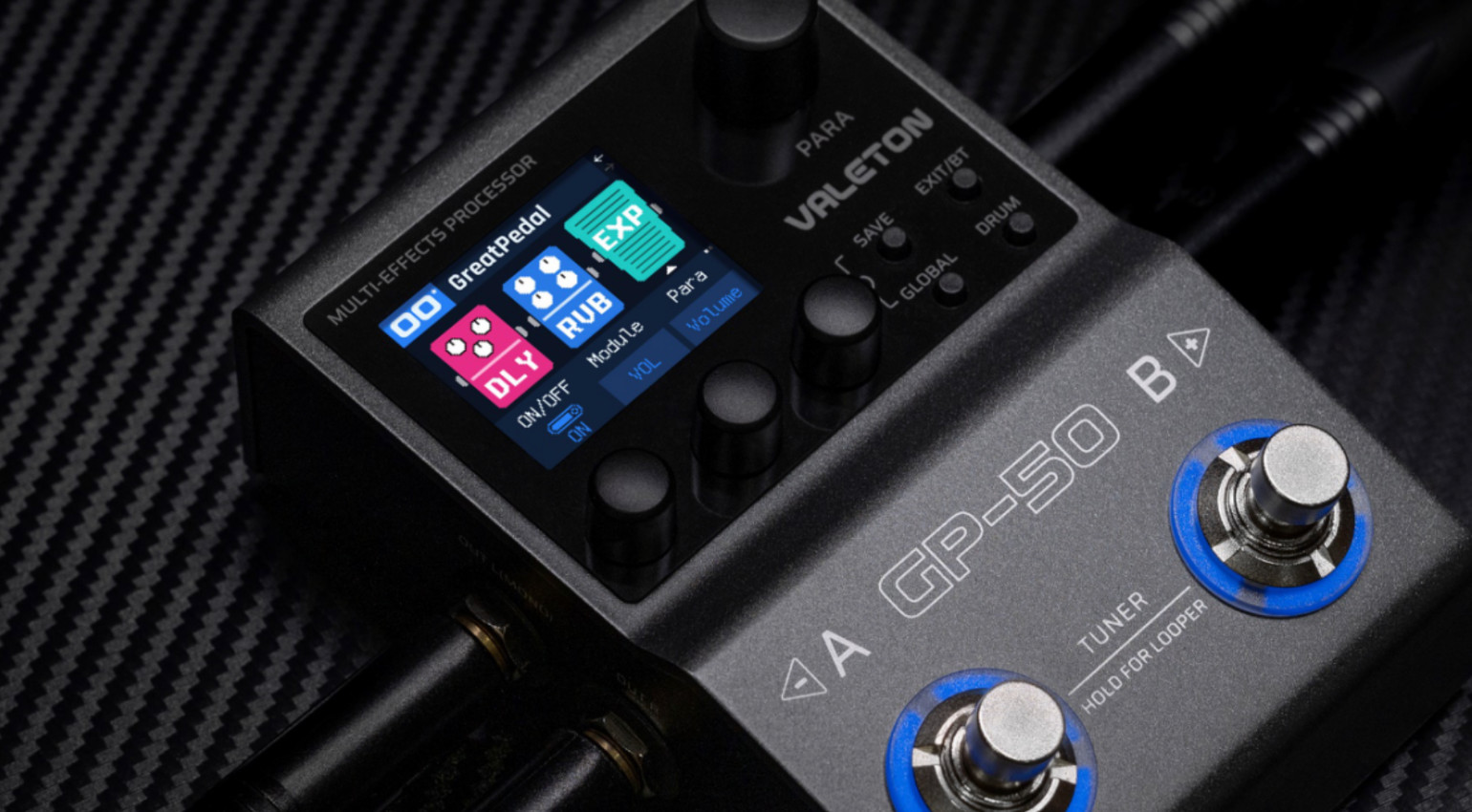
Valeton GP-50 Multi-Effects: Pedal Review

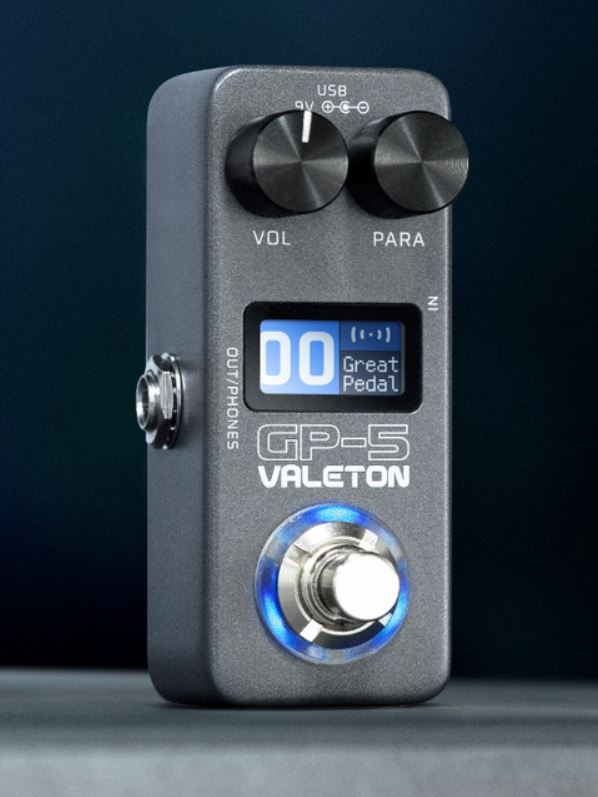
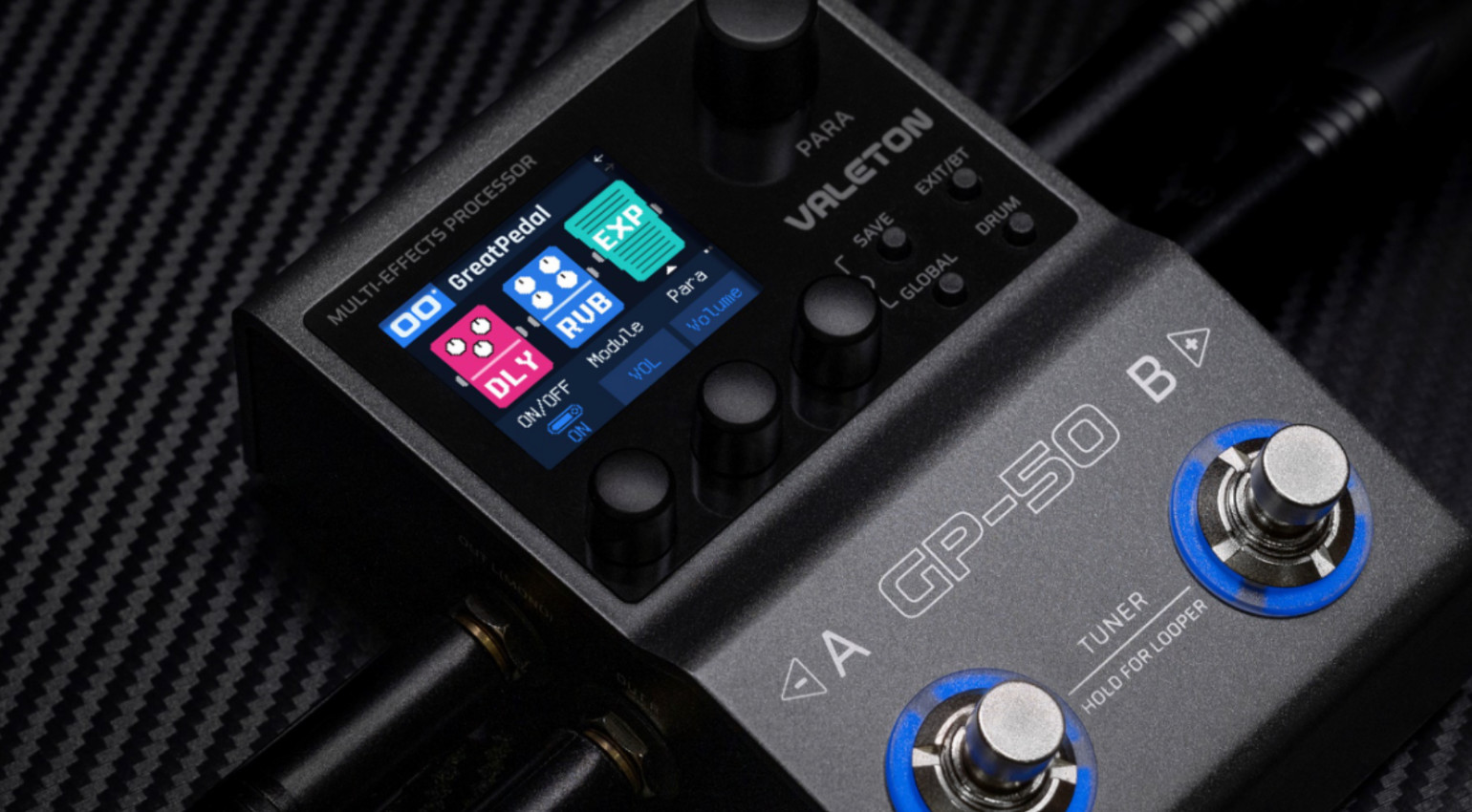
A Compact Multi-FX That Finally Breaks Free Disclaimer: This pedal was kindly provided by Valeton for the purpose of this review. However, this does not influence our opinions or the content of our reviews. We strive to provide honest, unbiased, and accurate assessments to ensure that our readers receive truthful and helpful information. Valeton has steadily refined its compact multi-effects lineup, and the GP-50 represents the most mature expression of that philosophy so far. Where the GP-5 proved that serious tone could live in an ultra-small, app-driven pedal, the GP-50 takes that foundation and removes many of the practical limitations that came with extreme minimalism. Rather than reinventing the platform, Valeton focused on expanding control, connectivity, and independence from external devices. The result is a pedal that still feels portable and modern, but far more capable as a standalone unit—especially for players who want flexibility without committing to a full-sized floorboard. TL;DR The Valeton GP-50 is a refined evolution of the GP-5, offering onboard editing, dual footswitch control, expanded I/O, and a rechargeable internal battery. It maintains the strong modeling and IR support Valeton is known for, while dramatically improving usability for rehearsal and live performance. While still compact, it feels far less constrained than its predecessor and works equally well with or without the companion app. For players who liked the GP-5’s sound but wanted more hands-on control, the GP-50 delivers exactly that. Check Price on Amazon –> Design & Portability The GP-50 retains Valeton’s compact design language but feels noticeably more “stage-ready” than the GP-5. The metal chassis is solid and confidence-inspiring, and despite the added controls and connections, the pedal remains lightweight and easy to transport. One of the biggest upgrades is the internal rechargeable battery, which preserves the grab-and-go appeal of the GP-5 while supporting longer sessions and more demanding use cases. Whether you’re practicing, rehearsing, or running a small fly-rig, the GP-50 can operate completely untethered from external power if needed. It still slips easily into a gig bag—but now it feels like something you could rely on as your primary rig, not just a backup or practice tool. Interface & Editing This is where the GP-50 most clearly separates itself from the GP-5. Unlike its predecessor, the GP-50 allows full onboard editing directly from the pedal. Amp parameters, effects, signal chain adjustments, and general patch tweaks can all be handled without reaching for a phone or tablet. The screen and control layout make navigation intuitive, and the editing experience feels fast and practical rather than compromised. The Valeton app is still available and remains useful for deeper organization and visual editing, but it’s no longer mandatory. This change alone dramatically improves the GP-50’s usability for live settings, rehearsals, and quick adjustments on the fly. In short: the GP-50 finally feels self-contained. Tone & Effects Sonically, the GP-50 builds on the same strengths established by the GP-5. Amp models are responsive and musical, drives feel natural, and modulation, delay, and reverb effects all perform at a high level for a compact multi-FX unit. IR loading is once again a standout feature, allowing players to fine-tune cabinet response and tailor the pedal for both guitar and bass applications. With good IRs, the GP-50 delivers polished, mix-ready tones that easily exceed expectations for its size. Overall, the sound quality remains consistent with Valeton’s recent offerings—impressive, flexible, and entirely usable in real-world scenarios. Dual Footswitch Control The addition of a second footswitch fundamentally changes how the GP-50 feels underfoot. Where the GP-5 often required MIDI expansion to unlock its full potential, the GP-50 is far more capable on its own. The dual switches allow for preset navigation, effect toggling, tap tempo, and other assignable functions directly from the pedal. This makes it significantly more practical for live use without any external controllers. MIDI support is still present for players who want even more control, but crucially, it’s no longer a necessity. The GP-50 feels complete right out of the box. Input / Output Options Another major leap forward is connectivity. The GP-50 offers expanded input and output options, making it far more adaptable to different rigs and recording setups. Whether you’re running into an amp, an audio interface, FRFR speakers, or directly to a PA, the GP-50 integrates cleanly and easily. USB audio functionality allows it to double as a recording interface, and combined with IR support, it works well for silent practice and direct recording without additional gear. This flexibility makes the GP-50 suitable for bedroom players, gigging musicians, and content creators alike. Built-In Tools The GP-50 includes a reliable tuner, USB audio interface capabilities, IR loading, and practice-friendly features that round out the package nicely. The internal battery further enhances its usefulness as a self-contained practice and travel solution. While it doesn’t try to replace a full workstation-style processor, the GP-50 strikes a strong balance between compact design and practical feature depth. Q&A Is the GP-50 viable for live use?Yes. The dual footswitches, onboard editing, and expanded I/O make it far more stage-friendly than the GP-5, even without external MIDI controllers. Do I still need the app?No. The app is optional. All essential sound creation and editing can be done directly on the pedal. How does it compare to the GP-5?The GP-50 keeps the GP-5’s tone quality but removes many of its limitations. It offers better control, more connectivity, and greater independence, making it a clear step forward. Conclusion The Valeton GP-50 feels like the pedal the GP-5 was always leading toward. By adding onboard editing, dual footswitches, expanded I/O, and a rechargeable battery, Valeton transformed an excellent compact multi-FX into a genuinely versatile performance tool. It maintains the portability and strong tones that made the GP-5 appealing, while significantly improving usability for rehearsals and live gigs. For players who loved the GP-5 but wanted more control—and for anyone seeking a compact yet capable all-in-one solution—the GP-50 stands out as a smart, well-executed evolution. Get Yours On Amazon Now!!! If you liked this gear, make

Jad Freer Luce
News

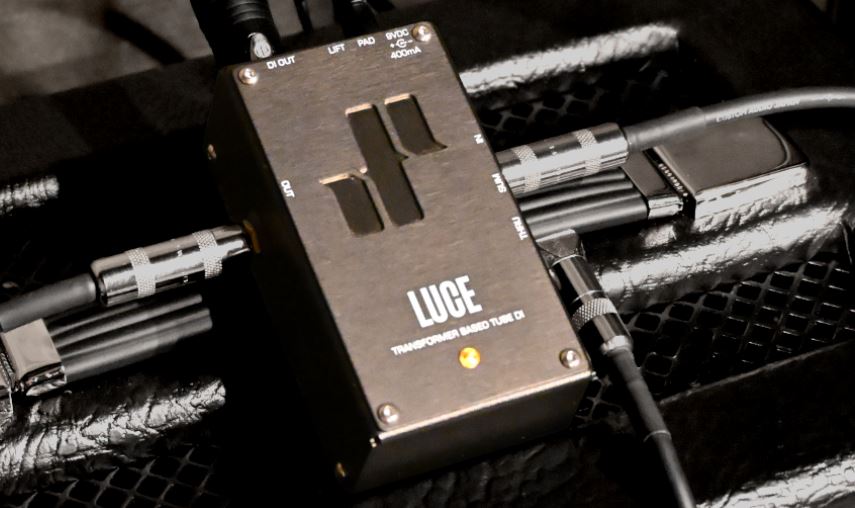
Best Of NAMM 2026: Jad Freer Audio LUCE DI

Best of NAMM 2026: Bass Pedals That Defined the Show Every January, the NAMM Show brings together manufacturers, artists, retailers, and media from around the world for the largest and most influential music industry trade event. For gear companies, NAMM is the ideal stage to unveil new products, gather real-time feedback from players, and set the tone for the year ahead. New releases debuting at NAMM often reflect where technology, design, and player demand are heading, making the show a reliable snapshot of the future of music gear. Our Best of NAMM 2026 series highlights the most noteworthy bass pedals launched at this year’s event—tools that stood out for innovation, tone, and real-world usefulness for working bassists. The Jad Freer Audio LUCE brings true tube character to the bass DI world with a compact yet uncompromising design. Built around a single ECC88/6922 tube and a high-quality audio transformer, the LUCE delivers warm harmonic content and natural compression while maintaining exceptional clarity and low noise. Unlike many tube-based devices that emphasize coloration, the LUCE is designed for unity gain operation, enhancing the instrument’s tone rather than reshaping it. The result is a DI that adds depth and dimensionality without obscuring articulation or transient response. Additional features such as active summing allow two instruments to be connected simultaneously, making it a practical choice for studio sessions as well as live performance. For bassists seeking authentic tube feel and transformer richness in a pedalboard format, the LUCE stands out as a refined and musical option at NAMM 2026.

Walrus Mantle
News

Best Of NAMM 2026: Walrus Mantle Analog Preamp DI

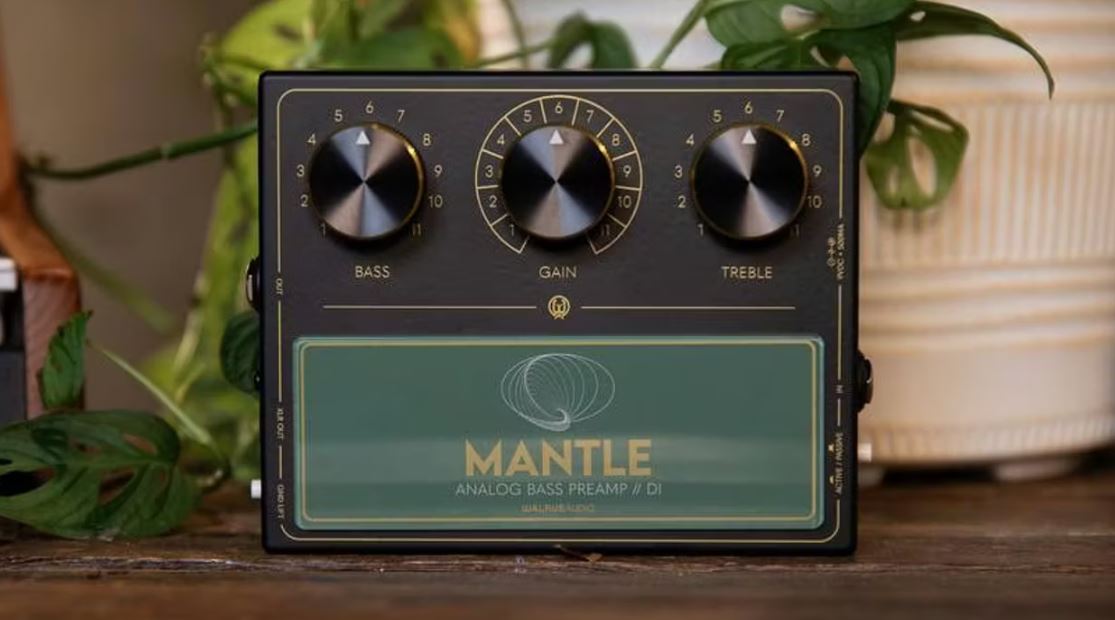
Best of NAMM 2026: Bass Pedals That Defined the Show Every January, the NAMM Show brings together manufacturers, artists, retailers, and media from around the world for the largest and most influential music industry trade event. For gear companies, NAMM is the ideal stage to unveil new products, gather real-time feedback from players, and set the tone for the year ahead. New releases debuting at NAMM often reflect where technology, design, and player demand are heading, making the show a reliable snapshot of the future of music gear. Our Best of NAMM 2026 series highlights the most noteworthy bass pedals launched at this year’s event—tools that stood out for innovation, tone, and real-world usefulness for working bassists. Walrus Audio made a strong statement at NAMM 2026 with the Mantle, a premium analog bass preamp and DI designed to deliver studio-quality tone in a pedalboard-friendly format. Developed in collaboration with bassist and educator Ian Martin Allison, the Mantle is built around custom-wound Sapphire transformers that deliver a bold low end, articulate mids, and a refined high end without sacrificing feel or dynamics. A high-impedance JFET input ensures clarity and touch sensitivity, while an internal high-voltage design provides substantial headroom for active basses and modern signal chains. The Bass and Treble controls feature dual-function behavior, allowing players to move from broad shelving to more focused filtering, making the Mantle equally useful as a subtle tone enhancer or a more deliberate tone-shaping tool. With a transformer-balanced XLR output and a clean, musical voicing, the Mantle positions itself as a high-end solution for bassists looking for consistency, depth, and polish in both live and studio environments.

Reviews

MXR Bass Synth: Pedal Review

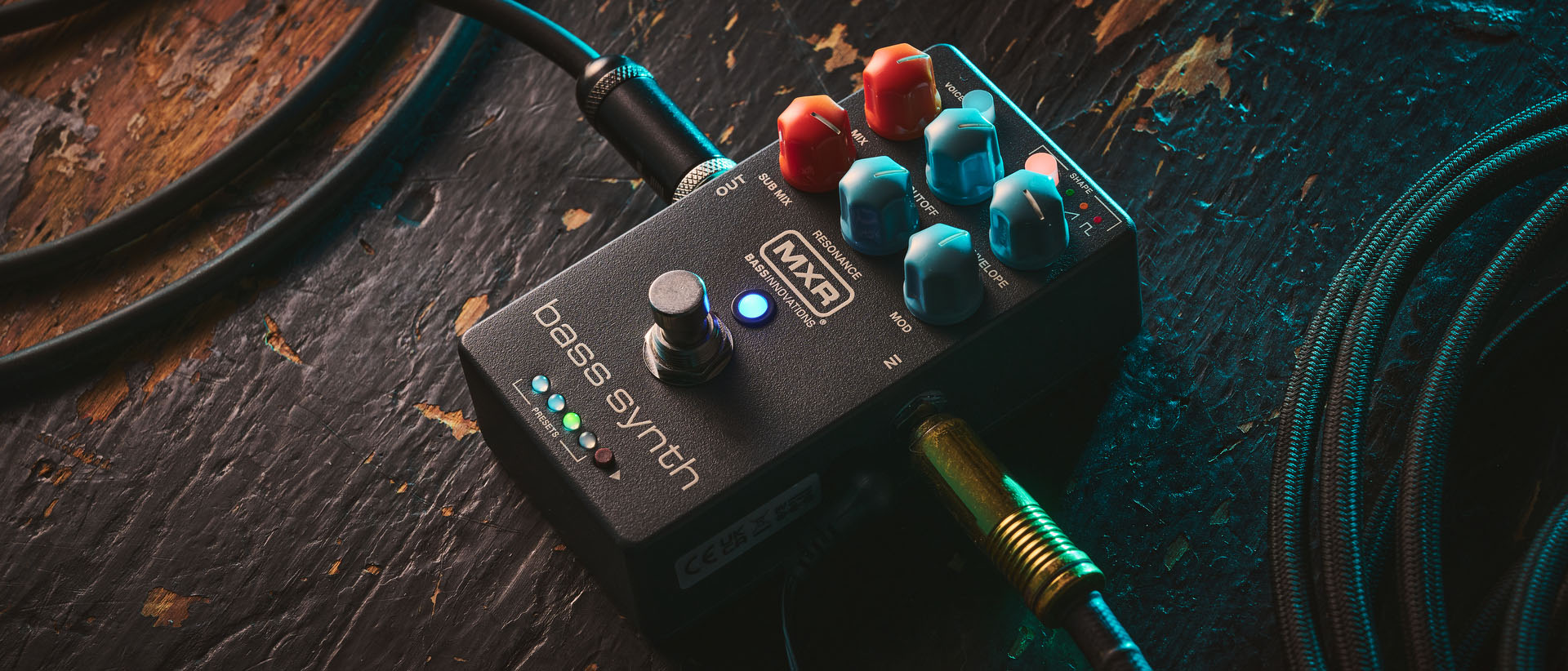
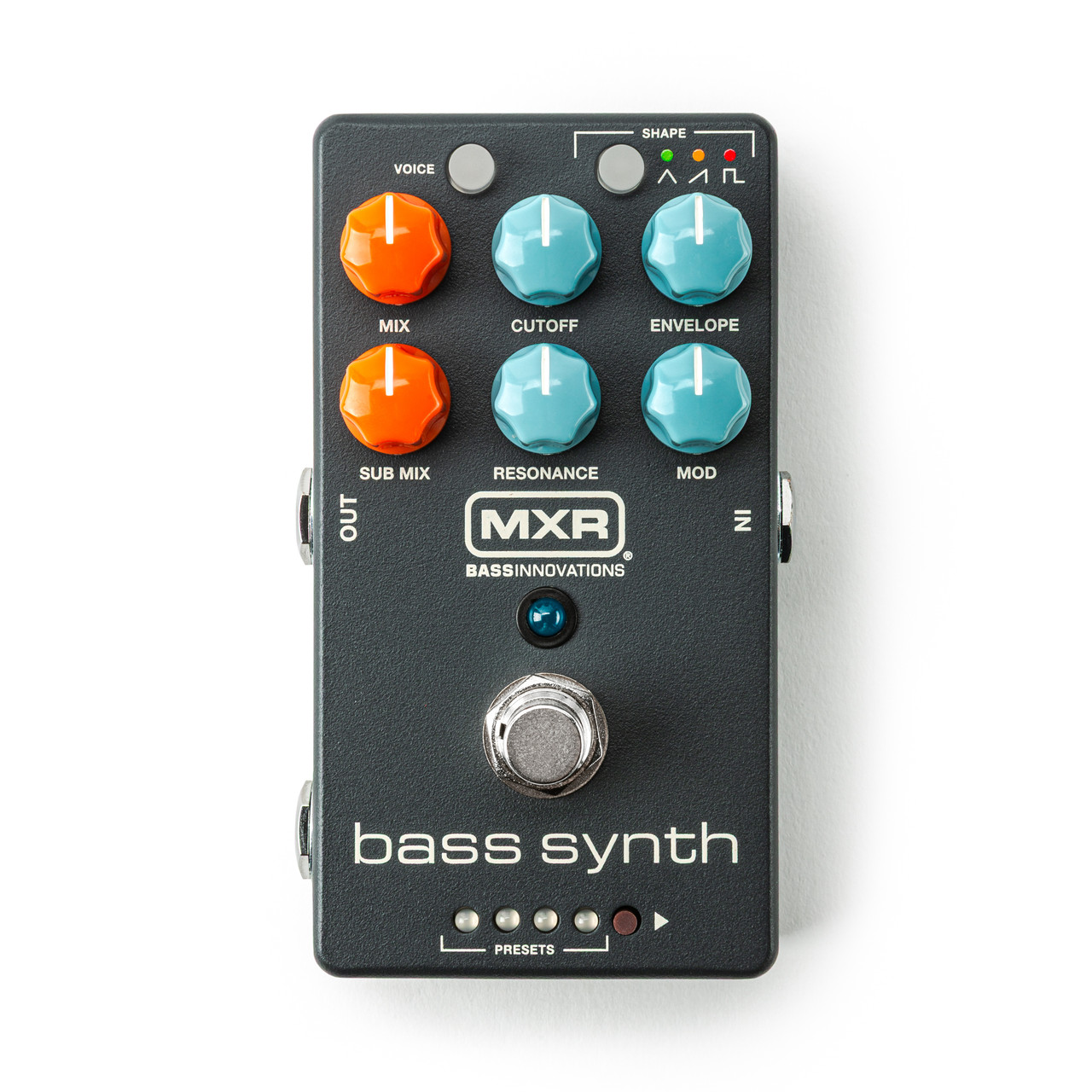
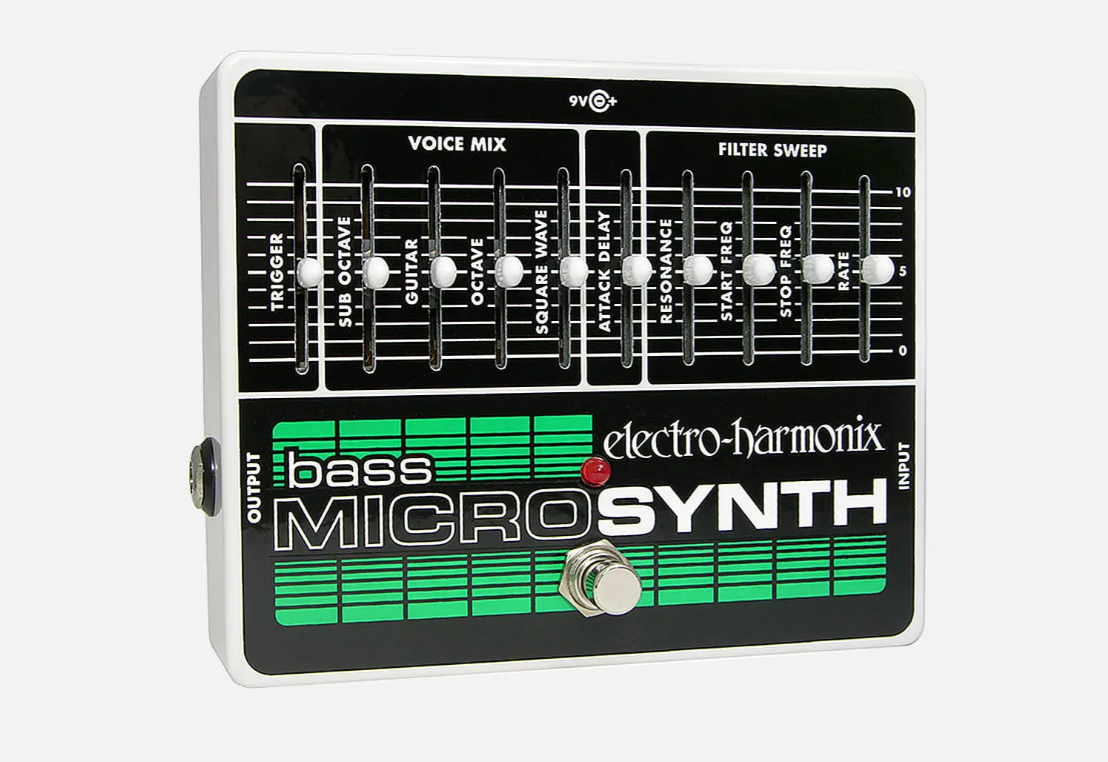
A Deep Dive from the Perspective of a Bass Player Bass synth pedals sit in an awkward space between effects and instruments. Too shallow, and they sound like novelty filters strapped onto a bass signal. Too complex, and they demand a keyboardist’s mindset that many bass players don’t want to adopt mid-set. The MXR Bass Synth lives squarely in the middle of that tension. It is not a “synth-flavored” bass pedal, nor is it a full replacement for a dedicated synthesizer. Instead, it is a compact, monophonic synth engine designed to be controlled entirely by a bassist’s hands, dynamics, and note choice. This pedal rewards curiosity and punishes impatience. A quick glance at the control layout might suggest familiar territory—mix knobs, filters, modulation—but the MXR Bass Synth behaves more like a traditional subtractive synthesizer than a typical stompbox. Understanding how its controls interact is essential if you want to move beyond presets and into sounds that feel intentional, musical, and reliable in real-world playing situations. Check the Price on Amazon –> What follows is a true deep dive: not just what each control does in isolation, but how the pedal behaves as a system, how it reacts to bass technique, and how to program it so it serves the role of a bass player rather than fighting against it. Understanding the Signal Flow At its core, the MXR Bass Synth converts your bass into a control signal. Your note is analyzed for pitch and dynamics, which then drives internal oscillators. Those oscillators pass through a filter section, are shaped by envelope and modulation controls, and are finally blended with your clean bass signal before reaching the output. This is important because it explains why the pedal feels sensitive. Your bass is not merely being processed; it is actively controlling a synthesizer. Clean playing, consistent dynamics, and good muting are not optional—they directly affect how the synth behaves. Oscillator Architecture: Voice and Shape The Voice control determines the internal oscillator configuration. Each voice changes how many oscillators are active, which octaves they occupy, and how harmonically dense the sound is. Some voices are lean and focused, ideal for classic synth bass lines. Others layer multiple oscillators or emphasize sub-octave content for massive, modern low-end. From a bassist’s perspective, Voice selection is the first and most important decision. If the pedal feels unstable, too thick, or hard to control, the problem is often the voice choice rather than the knob settings that follow. The Shape control defines the oscillator waveform. Triangle waves are smooth and rounded, emphasizing fundamental and low frequencies. Sawtooth waves are aggressive and harmonically rich, cutting through dense mixes. Square waves offer a hollow, vintage character associated with classic funk and early synth bass lines. Waveform choice dramatically affects how the filter behaves later. Brighter waveforms exaggerate filter sweeps and resonance peaks, while smoother waves produce subtler movement. Mixing the Synth with Your Bass The Dry control blends your unaffected bass signal back in after the synth engine. This is not an afterthought; it is a crucial part of making the pedal usable in a band context. Leaving some dry signal preserves attack, note definition, and low-frequency consistency. The Synth control sets the level of the main oscillator output. It determines how dominant the synth voice is relative to your clean bass, but it does not increase distortion or saturation. The Sub control adds a dedicated synthesized sub-octave voice. This is not a standard octave pedal—it is a low-frequency oscillator designed to reinforce the fundamental. Used sparingly, it adds authority and weight. Used carelessly, it can overwhelm a mix or cause low-end chaos, especially in live settings. For most practical applications, the sweet spot is a balanced relationship between Dry, Synth, and Sub, rather than maxing out any one of them. Filter Section: Cutoff, Resonance, and Envelope The filter is where the MXR Bass Synth truly earns its name. Cutoff sets the frequency threshold for the low-pass filter. Lower settings produce dark, muted tones; higher settings allow brightness and harmonic content through. On its own, Cutoff feels static. Its musical value comes from how it interacts with Envelope and Resonance. Resonance emphasizes frequencies around the cutoff point. Low resonance produces smooth, understated movement. Higher resonance introduces vocal-like peaks and classic acid-style squelch. While tempting, high resonance can make levels unpredictable and can be difficult to manage in a full mix. The Envelope control determines how strongly your playing dynamics affect the filter sweep. This is not an attack or decay time control; it defines the depth of the dynamic response. Harder playing opens the filter more, softer playing keeps it closed. Envelope response is influenced by your technique, your bass’s output, compression before the pedal, waveform choice, and resonance settings. This interconnectedness is why the pedal can feel inconsistent until it is dialed in around the player. Modulation and Movement The Mod control introduces low-frequency modulation to the synth, adding motion to pitch or filter behavior depending on the selected voice. At low settings, modulation adds subtle animation that keeps the sound from feeling static. At higher settings, it ventures into vibrato, pulsing, and sci-fi territory. Most bassists will use modulation sparingly, but it becomes invaluable for electronic, ambient, or experimental styles. Expression Pedal Integration The MXR Bass Synth includes an expression pedal input, and this is one of its most powerful yet overlooked features. Depending on the mode and internal assignment, expression can be used to control parameters such as filter cutoff or modulation depth. In practice, filter cutoff is the most musically useful assignment. With an expression pedal, the Bass Synth becomes a foot-controlled filter instrument, enabling manual sweeps, build-ups, drops, and dub-style movements that feel intentional rather than automated. This transforms the pedal from a set-and-forget effect into a performance tool. Tracking, Technique, and Limitations The pedal is strictly monophonic. It tracks one note at a time and expects clean note separation. Sloppy muting, chords, double stops, and inconsistent attack can confuse the pitch detection.

Reviews

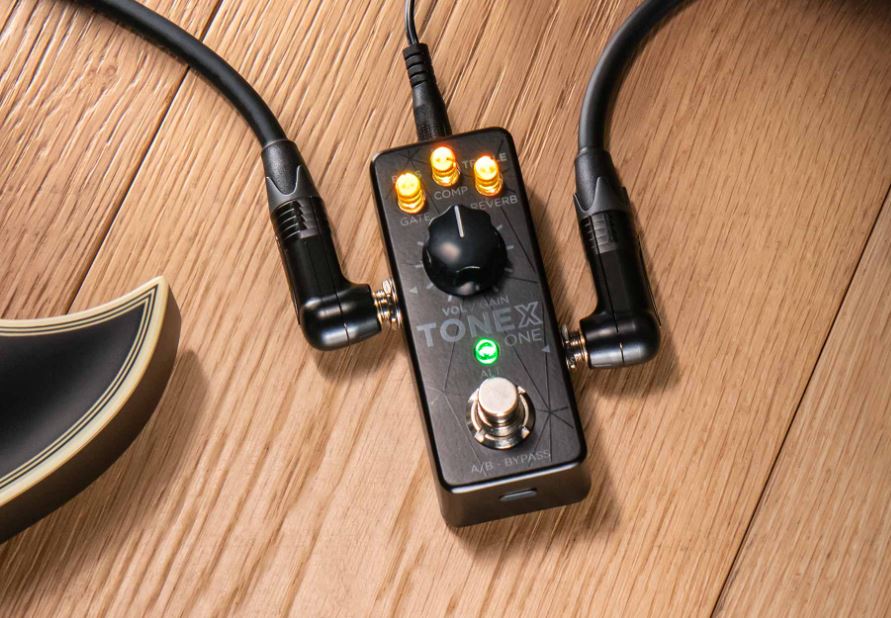
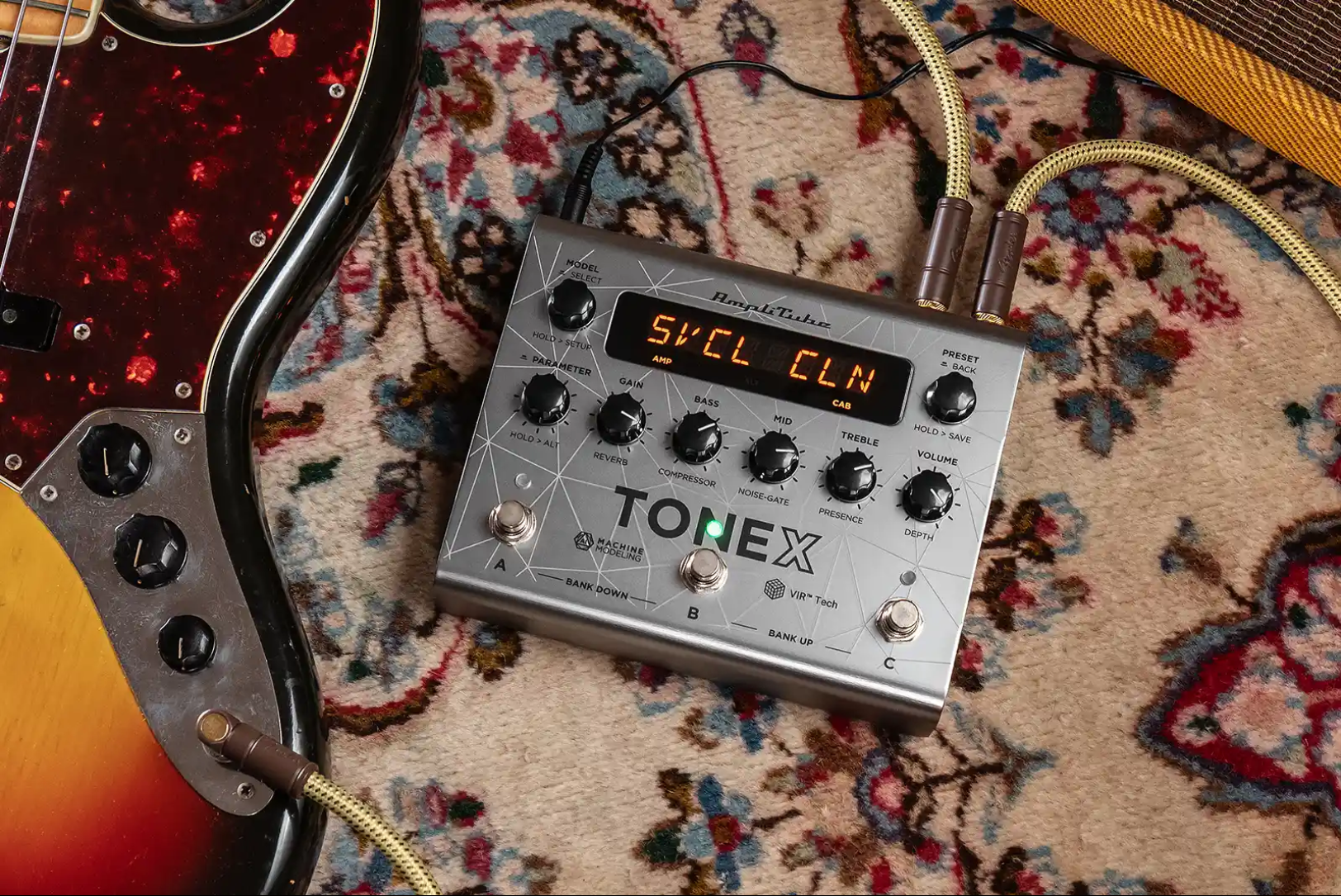
TONEX Plug Review: Can a Headphone Plug Handle Bass?

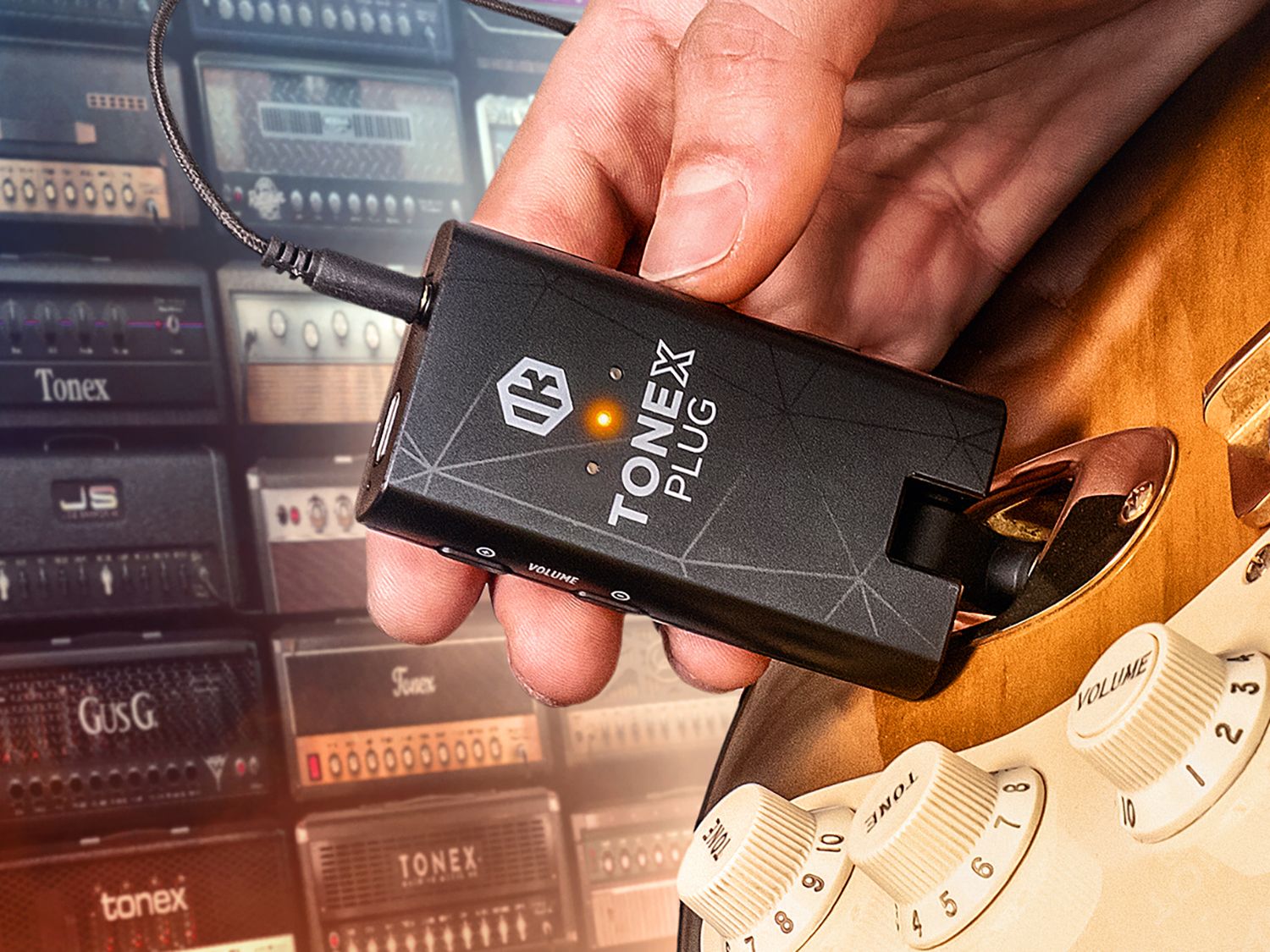
A Bass Player’s Take on IK Multimedia’s Pocket-Sized AI Rig Disclaimer: This equipment was kindly provided by IK Multimedia for the purpose of this review. However, this does not influence our opinions or the content of our reviews. We strive to provide honest, unbiased, and accurate assessments to ensure that our readers receive truthful and helpful information. Introduction The TONEX Plug is a compact, headphone-based tone device from IK Multimedia that brings AI Machine Modeling technology into a highly portable hardware format. Designed for both guitar and bass, it offers access to a massive library of amp, cabinet, and pedal tone models, all playable through headphones or recordable directly into a DAW via USB-C. Rather than replacing a traditional rig, the TONEX Plug is clearly aimed at silent practice, mobile playing, and quick recording scenarios. As a bass player, the appeal lies in whether such a small device can deliver convincing low-end response, dynamic feel, and tonal depth without sounding thin or overly processed. This review reflects hands-on use with the TONEX Plug in practice, writing, and recording contexts, focusing on how well it translates to bass. Check the Price on Amazon –> TL;DR The TONEX Plug is an impressive, ultra-portable tone solution that works well for bass, particularly for practice and mobile recording. It delivers realistic amp and rig tones with solid low-end response and offers deep flexibility through its app-based editing and large tone library. While it is not designed to replace a live bass rig, it excels as a personal practice tool and creative companion. The Review: A Bass Player’s Perspective What the TONEX Plug Is At its core, the TONEX Plug is a personal headphone amplifier powered by AI Machine Modeling. It allows you to load and play back detailed digital captures of real amp, cabinet, and pedal rigs, known as Tone Models. These models are managed through a companion app, where you can browse a large online library, edit presets, and store your favorites on the device itself. In addition to headphone use, the unit functions as a USB-C audio interface, making it easy to record bass directly into a computer or mobile device. Bass Tone Quality and Low-End Response Low-end reproduction is the first real test for any bass device, especially one this small. In use, the TONEX Plug delivers surprisingly full and convincing bass tones. The low frequencies feel present and solid rather than thin or brittle, and the dynamic response translates well to touch and playing intensity. Clean tones retain depth and clarity, while driven tones exhibit realistic harmonic content without collapsing the fundamental. The quality of the tone models themselves matters greatly. Well-captured bass-oriented models sound rich and believable, while poorly suited or guitar-focused models can require additional EQ or filtering. That said, the underlying engine is more than capable of handling bass frequencies convincingly. Onboard Processing and Tone Shaping The TONEX Plug includes onboard EQ, compression, noise gating, modulation, delay, and reverb, all adjustable through the companion app. For bass players, the compressor and EQ are particularly useful, allowing for quick tone shaping without external gear. These tools make it easy to dial in a focused practice sound or polish a tone before recording. A built-in tuner and metronome further reinforce the device’s role as an all-in-one practice solution. These features reduce the need for additional apps or hardware and help keep the workflow simple. Presets and Tone Library One of the strongest aspects of the TONEX Plug is its access to a vast online library of Tone Models. Bass players can explore a wide range of amp and rig captures, from classic tube sounds to more modern, aggressive tones. Presets can be wirelessly loaded and swapped via the app, making experimentation fast and intuitive. Because the library is so large, finding bass-specific models that suit your instrument and playing style takes some curation. Once a personal set of presets is established, however, the device becomes much more immediate and enjoyable to use. Practice, Writing, and Recording Use The TONEX Plug shines in silent practice scenarios. Bluetooth audio streaming allows you to play along with backing tracks, lessons, or recorded music while hearing your bass tone through headphones. Latency is low enough that playing feels natural, and the overall experience is engaging rather than sterile. For recording, the USB-C interface makes capturing ideas quick and straightforward. While it is not intended as a full studio interface, it works well for bass tracking, songwriting, and demo production, especially in mobile or space-limited setups. Design and Usability Physically, the TONEX Plug is extremely compact and lightweight. This makes it easy to carry, but also means that most detailed editing is done through the app rather than on the device itself. Hardware controls are minimal, which is a reasonable trade-off given the size and intended use. Battery life is sufficient for extended practice sessions, though it does require periodic charging. In practical terms, this is rarely an issue for its intended role. Pros Cons FAQs Is the TONEX Plug suitable for bass players? Yes. It supports bass instruments well and delivers realistic low-end response when paired with appropriate tone models. Can it be used without a phone or tablet? Yes. Once presets are loaded, the device can be used standalone with headphones, though editing is much easier with the app. Can I record bass directly with it? Yes. The TONEX Plug functions as a USB-C audio interface, allowing direct recording into a DAW. Is it good for live performance? It is best suited for practice, writing, and recording rather than live performance, as it is primarily a headphone-based device. Conclusion From a bass player’s perspective, the TONEX Plug is a powerful and inspiring portable tone tool. It delivers realistic amp and rig tones, preserves low-end fundamentals, and offers enough flexibility to support a wide range of practice and recording needs. While it is not intended to replace a traditional bass rig, it excels in the contexts it was designed for. For bassists

News

BOSS Introduces GX-1B: Ultra-Portable Multi-Effects Powerhouse for Bass

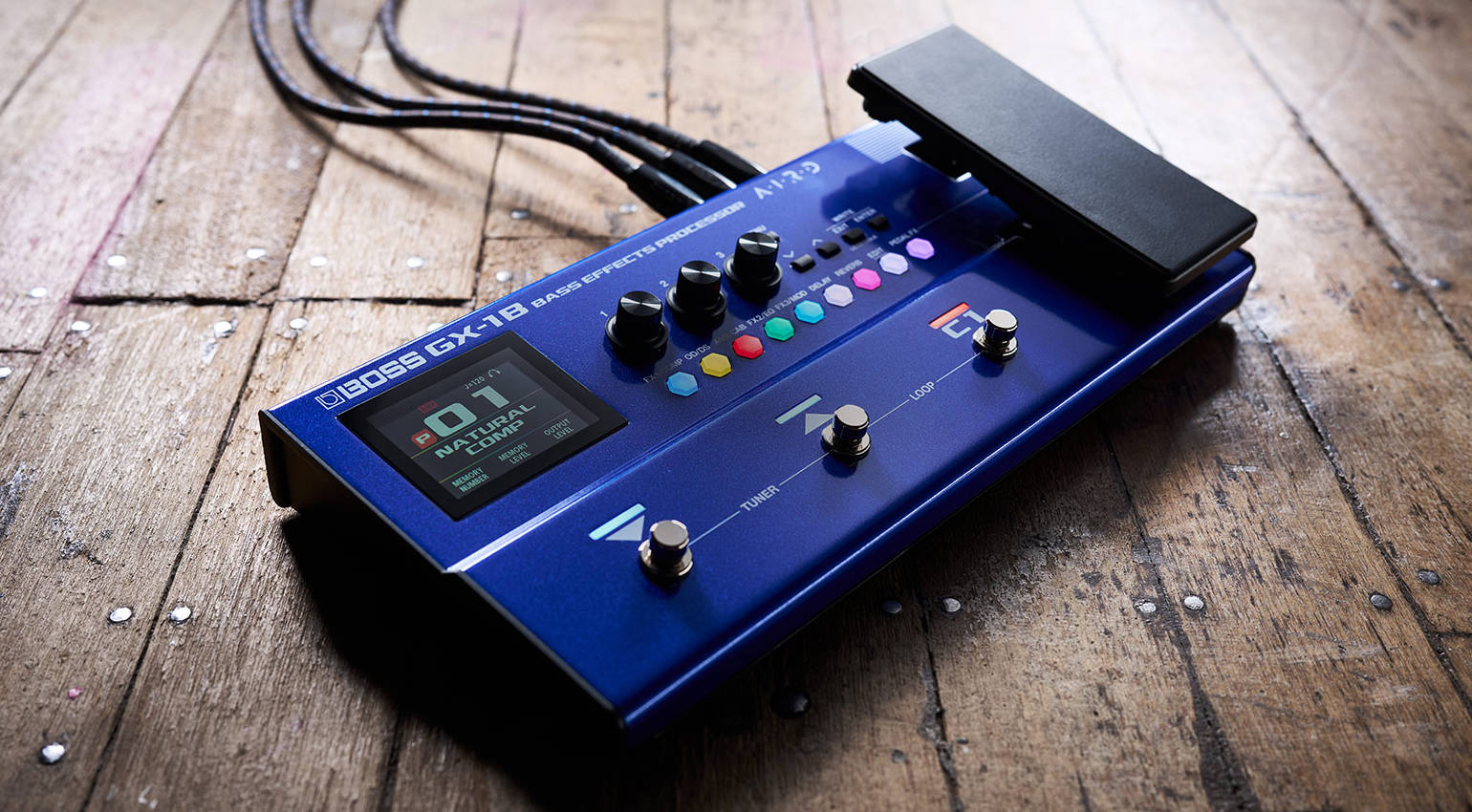
BOSS has announced the GX-1B, a new ultra-portable multi-effects processor designed specifically for bass players who want premium sound quality and deep functionality in a compact format. Drawing on BOSS’s long-standing expertise in bass amplification and effects, the GX-1B combines modern processing power with a streamlined, gig-ready design. At the core of the GX-1B is BOSS’s AIRD (Augmented Impulse Response Dynamics) technology, delivering authentic valve-style amp tone and feel optimized for bass. The unit features 16 bass amplifier types and over 130 BOSS effects, covering everything from foundational clean tones to drive, modulation, ambience, and more experimental textures. Despite its small footprint, the GX-1B allows for serious signal-chain flexibility. Players can run up to eight simultaneous effect blocks, in addition to a dedicated volume pedal and noise suppression, making it possible to build complex, professional-grade patches without compromise. The unit ships with 99 ready-to-play presets, alongside 99 user memory slots for custom sounds. Operation is designed to be fast and intuitive. A full-color display and category-based controls simplify navigation, while the Gear Suite function allows players to quickly configure amp and effect combinations with the press of a button. Three onboard footswitches and an expression pedal with toe switch are fully assignable, offering hands-free control in live situations. Audio quality is a clear priority, with 24-bit AD conversion, 32-bit DA conversion, 32-bit floating-point processing, and a 48 kHz sample rate ensuring clarity and headroom across all playing styles. The GX-1B also supports WAV cabinet IR loading, giving players additional flexibility when shaping their output for stage or studio use. Connectivity is another strong point. Built-in Bluetooth® allows wireless playback from a mobile device for practice or jamming, while USB-C® audio and MIDI support enables direct recording and playback with computers and mobile devices. The GX-1B integrates with BOSS Tone Studio on macOS, Windows, iOS, and Android, providing deep editing tools, practice features, and access to the BOSS Tone Exchange for sharing and downloading Livesets. For expanded control, the GX-1B includes a jack for up to two external footswitches or an additional expression pedal and supports wireless control via the FS-1-WL footswitch and EV-1-WL wireless expression pedal. Power options are equally flexible, with support for three AA batteries, AC adapter, or USB bus power, making the GX-1B suitable for everything from desktop practice to fly dates. Its compact, lightweight design allows it to fit easily into a gig bag or instrument case pocket. With the GX-1B, BOSS continues to refine its bass-specific digital platform, offering a highly portable solution that doesn’t sacrifice tone, control, or professional features. BassGearReviews.com will be following up with hands-on testing and a full review once the GX-1B becomes available.
Reviews

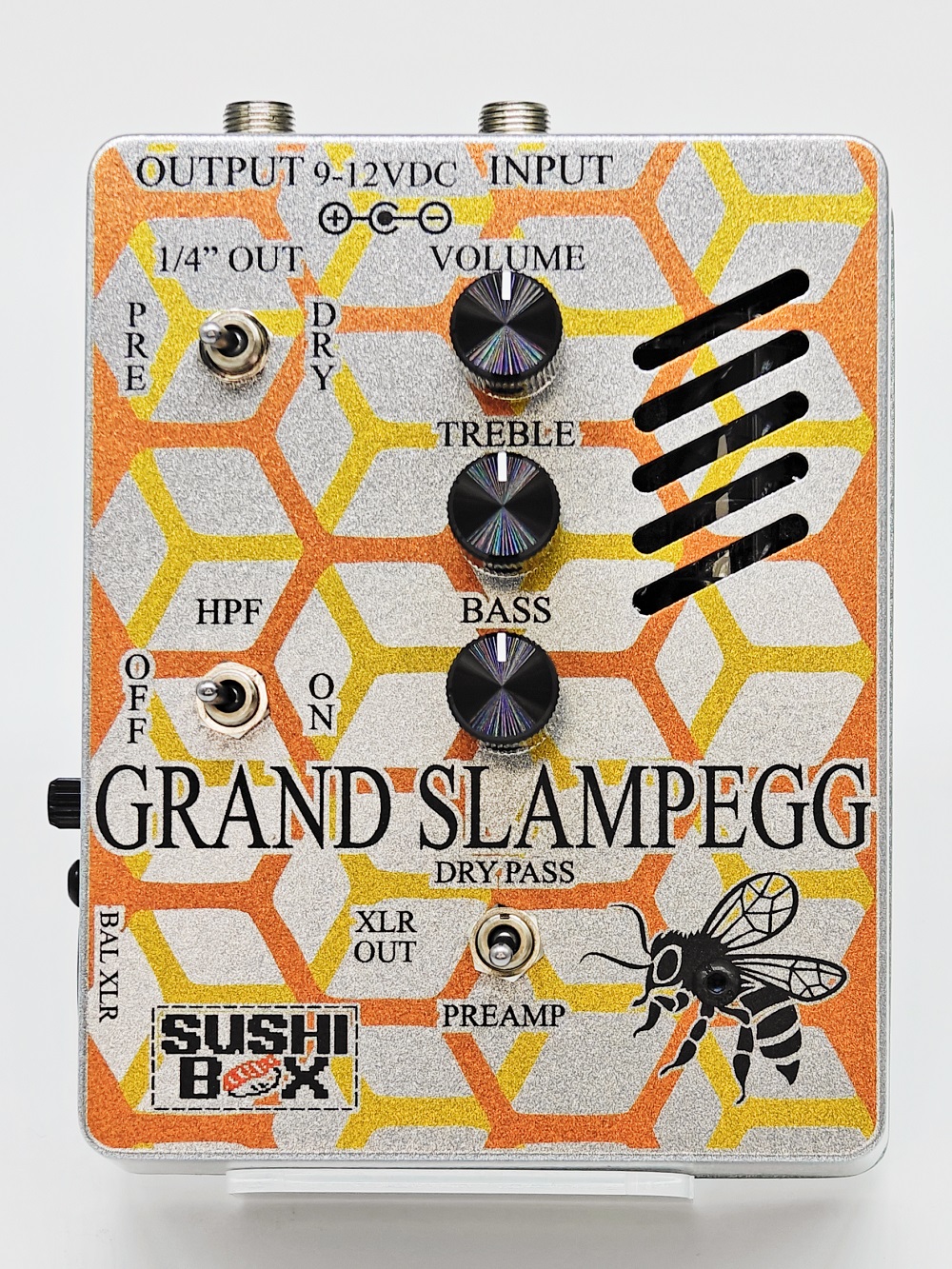
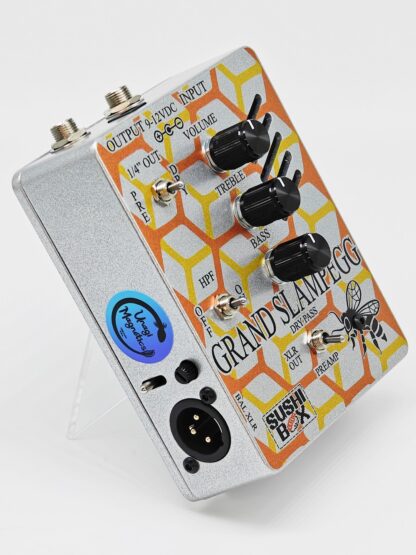
Sushi Box FX Grand Slampegg: Pedal Review (2026)

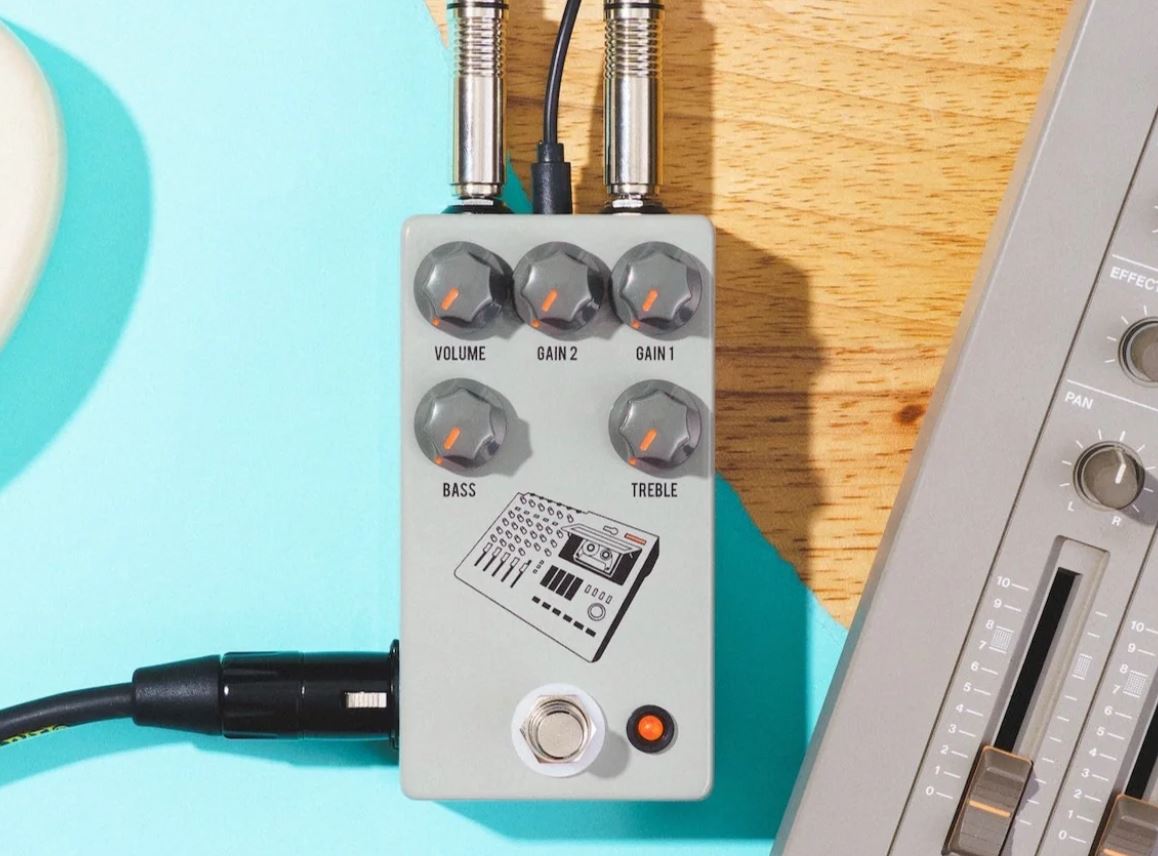
A Deep Dive into Modern B-15 Tone Disclaimer: This pedal was kindly provided by Sushi Box for the purpose of this review. However, this does not influence our opinions or the content of our reviews. We strive to provide honest, unbiased, and accurate assessments to ensure that our readers receive truthful and helpful information. Why B-15 Tone Is Everywhere Again Interest in B-15–style bass tone has surged once more, driven by players looking for warmth, authority, and a sound that sits effortlessly in a mix. From high-end analog pedals to increasingly accurate digital models, the appeal is clear: the B-15 represents a foundational bass sound rather than a stylistic extreme. Within this landscape, the Sushi Box FX Grand Slampegg stands out not by offering the most features, but by committing fully to the circuit philosophy that made early Ampeg designs special. After being sent the pedal directly by Sushi Box FX founder Nathan Slade, I had the chance to test it extensively and use it on gigs. What became immediately clear is that this is not a nostalgic novelty — it’s a carefully thought-out, modern implementation of classic tube design. If you want to check our first impressions of the Grand Slampegg, check the article we wrote last year about it. TL;DR Circuit Philosophy: Old Ideas, Applied Properly At the core of the Grand Slampegg is a 6SL7 tube, a key component of early Ampeg preamp designs and an important departure from the more common 12AX7 found in many modern tube pedals. The 6SL7 offers a softer, rounder response with a different gain structure, contributing heavily to the pedal’s smooth dynamics and natural compression. The tube operates at proper high voltage, allowing it to behave like a real amplifier preamp rather than a tube-flavored effect. This is paired with a Baxandall EQ, which provides broad, symmetrical bass and treble shaping. Instead of carving frequencies aggressively, the EQ gently reshapes the overall balance, maintaining phase coherence and musicality. This design approach explains why the Grand Slampegg feels more like an amp front end than a typical pedal. Controls and Signal Routing The Grand Slampegg’s control set is minimal but deliberately chosen: On the output side, the pedal offers professional-grade flexibility: This independent level control allows players to send a strong, consistent signal to front of house while independently managing stage volume — a small detail that makes a big difference in real-world use. Notably absent is a footswitch. This reinforces the Grand Slampegg’s role as an always-on preamp rather than an effect designed for on-the-fly engagement. Tone: Weight, Space, and Authority The Grand Slampegg’s tonal character is defined by density rather than brightness. Low frequencies are full and supportive, yet controlled — especially with the HPF engaged when needed. The midrange sits naturally in a mix, and the highs are smooth and unforced, retaining clarity without edge. The 6SL7 tube imparts a subtle, musical compression that responds directly to playing dynamics. Digging in adds harmonic richness and thickness rather than sharp attack, while lighter touch remains even and present. When pushed, breakup is soft and rounded, more reminiscent of a driven studio preamp than a distortion device. Integration in Real Rigs In live use, the Grand Slampegg excels as a set-and-forget foundation. Into a clean amp or power section, it provides a convincing vintage-flavored front end. Using the XLR DI straight to FOH yields a finished, mix-ready bass sound that requires minimal corrective EQ. In the studio, it functions as a high-quality DI preamp. The combination of the 6SL7 tube, Baxandall EQ, and controlled low end produces tracks that already feel shaped, reducing reliance on plug-ins or corrective processing. The pre/dry switching and buffered output also make it easy to integrate into complex pedalboards or parallel signal paths. Q&A: Common Questions Answered Is this a B-15 clone?No. The Grand Slampegg isn’t a component-for-component clone, but it clearly draws from early Ampeg design choices — particularly the 6SL7 tube and Baxandall EQ — to recreate the behavior and feel of a B-15-style preamp. Why use a 6SL7 instead of a 12AX7?The 6SL7 has lower gain and a rounder response, contributing to smoother compression and a more relaxed dynamic feel — closer to early Ampeg circuits. Can I use it as my main DI?Yes. The XLR DI is designed for professional use and includes its own volume control, making it easy to feed FOH or an interface directly. What does the HPF switch actually do?It filters out excessive sub-bass content, tightening the low end. This is especially useful on boomy stages, with modern cabinets, or when running direct. Is the lack of a footswitch a downside?Only if you expect it to function like an effect. The pedal is designed to stay on as your core tone — similar to leaving an amp dialed in all night. Does it do overdrive?It can be pushed into soft, vintage-style saturation, but it’s not intended for aggressive distortion or modern grit. Strengths and Limitations Strengths Limitations Final Thoughts The Sushi Box FX Grand Slampegg succeeds because it understands what made the B-15 special — not just its frequency response, but its behavior. By using a 6SL7 tube, a Baxandall EQ, and a thoughtfully designed output section, Sushi Box has created a pedal that behaves like a real amplifier front end in a modern, practical format. For bassists seeking an always-on preamp that delivers warmth, weight, and musical authority without unnecessary complexity, the Grand Slampegg is a compelling and convincing option. If you enjoyed checking out this SushiBox Effects pedal, here are more products worth exploring — all tested and reviewed here on BassGearReviews: – JHS Colour Box V2 – Neve Style Preamp Pedal – JHS 424 Gain Stage – A Tascam PortaStudio on your pedalboard.

News

Ibanez Introduces the Mode Series

A Modern Take on the Jazz-Inspired Bass Ibanez has officially unveiled the Mode Series, a new line of bass guitars that reimagines one of the most enduring designs in electric bass history. Drawing inspiration from the classic Jazz-style bass, the Mode Series blends familiar tonal foundations with Ibanez’s modern design philosophy and player-focused refinements. Rather than recreating a vintage instrument, Ibanez approaches the Jazz-inspired platform as a starting point. The Mode Series is designed for today’s bassists—players who value versatility, comfort, and clarity across a wide range of musical settings, from studio sessions to live stages. At its core, the Mode Series stays true to what made the Jazz-style bass a staple for decades: articulate note definition, balanced frequency response, and a responsive feel that suits both fingerstyle and pick players. Ibanez builds on that legacy with contemporary ergonomics, refined electronics, and construction choices intended to meet the demands of modern performance. Visually, the Mode Series reflects a restrained but confident aesthetic. Clean lines and thoughtful finishes give the instruments a timeless look, while subtle modern details signal that these basses are built for the present—not nostalgia alone. The result is an instrument that feels equally at home in traditional genres and more progressive musical environments. Ibanez has positioned the Mode Series as a flexible platform rather than a one-sound instrument. Whether players are chasing classic jazz-bass punch, modern clarity, or something in between, the Mode Series is intended to adapt without forcing a specific musical identity. With this release, Ibanez continues its long tradition of refining familiar designs instead of simply replicating them. The Mode Series stands as a reminder that even the most iconic instruments can evolve—offering new possibilities while respecting the sounds and shapes that made them essential in the first place. The Ibanez Mode Series basses are now entering the market, giving players a fresh option that bridges classic inspiration and modern performance.

Reviews

Flamma FF20 Looper & Drum Machine: Pedal Review

A Bass-Friendly Looper & Drum Machine for Practice and Songwriting Disclaimer: This pedal was kindly provided by Flamma Innovation for the purpose of this review. However, this does not influence our opinions or the content of our reviews. We strive to provide honest, unbiased, and accurate assessments to ensure that our readers receive truthful and helpful information. The Flamma FF20 is a compact pedal that combines a stereo looper and a built-in drum machine in a single unit. With extensive loop recording time, multiple memory slots, and a selection of drum grooves across various styles, it aims to be a practical tool for practice, songwriting, and idea development. For bass players in particular, loopers with rhythmic backing can be invaluable for working on time, feel, and groove without needing additional gear. This review is based on hands-on use of the FF20 in bass-focused practice and looping scenarios, with attention paid to how it handles low-frequency instruments and how intuitive it is to integrate into a bassist’s workflow. TL;DR The Flamma FF20 is an affordable, feature-rich looper and drum machine that works very well for bass practice and songwriting. It offers generous recording time, usable drum grooves, and a straightforward interface. While it is not designed to replace high-end loopers in live performance situations, it excels as a practice companion and creative sketchpad for bass players. Check the Price On Amazon –> Core Features The FF20 provides a stereo looper with extensive total recording time spread across multiple memory slots, allowing bass players to store and revisit a large number of loops. It supports overdubbing, time stretch, speed control, and auto-record functionality. The built-in drum machine includes multiple groove styles with tap tempo, and the pedal also offers USB connectivity for importing and exporting audio, as well as a dedicated headphone output for silent practice. Looping Performance on Bass From a bass standpoint, the looper captures low-end content cleanly and accurately. Recorded bass lines retain their weight and clarity, without obvious compression artifacts or loss of fundamental. Long loops are easy to manage, which is especially useful for building layered practice sections or full song sketches. Overdubbing feels smooth and predictable, making it easy to stack harmonic or rhythmic ideas without losing timing. The ability to slow down or speed up loops without drastically altering pitch is particularly helpful for practice, allowing bassists to work on difficult passages at reduced tempos and then bring them back up to speed. Drum Machine for Groove and Timing The built-in drum machine is one of the FF20’s most useful features for bass players. The grooves are simple but musically effective, providing enough variety to support different practice styles without becoming distracting. They work well for locking in timing, developing pocket, and practicing transitions. While the drum sounds are not deeply editable and won’t replace a dedicated rhythm machine in performance scenarios, they are more than adequate for practice and songwriting. The presence of rhythmic backing alone makes practice sessions feel more engaging and productive. Workflow and Controls The FF20’s interface is intuitive and relatively easy to learn. Basic looping and drum functions are quickly accessible, and the LED display helps keep track of tempo and settings. Timing the start and stop of loops in sync with drum patterns requires some practice, but once the workflow is understood, operation becomes second nature. The option to control looping and drums separately adds flexibility, especially for players who want to focus on groove rather than footswitch choreography. Practice, Writing, and Connectivity For bassists who practice at home or in shared spaces, the headphone output is a major advantage. It allows for silent practice without sacrificing tone quality. USB connectivity makes it easy to move loops to and from a computer, enabling further development of ideas in a DAW or archiving practice sessions. The FF20 is particularly well suited to writing and arrangement work. Being able to quickly build bass parts over a drum groove encourages experimentation and helps bass lines evolve organically. Pros Cons FAQs Is the Flamma FF20 suitable for bass players? Yes. It handles low-frequency instruments well and provides useful tools for bass practice, looping, and songwriting. Can it record long bass loops? Yes. The available recording time is more than enough for extended loops and multi-part practice sections. Are the drum patterns usable? They are well suited for practice and idea development, though they are not intended to replace advanced drum machines. Can loops be exported? Yes. Loops can be transferred via USB for editing, sharing, or archiving. Is it good for live performance? It can be used live in simple setups, but it is best viewed as a practice and creative tool rather than a full performance looper. Conclusion From a bass player’s perspective, the Flamma FF20 is a practical and well-designed looper and drum machine that offers excellent value. Its generous loop capacity, useful drum grooves, and bass-friendly sound quality make it a strong choice for practice and songwriting. While it doesn’t aim to compete with high-end loop stations for complex live use, it succeeds in what it sets out to do: provide bassists with an accessible, flexible tool that encourages creativity, improves timing, and makes practice more enjoyable. Get Your Flamma FF20 On Amazon Right Now! If you liked this gear, make sure to also check:

News

Darkglass Delivers the Final Gift of 2025 for Anagram Users

As 2025 draws to a close, Darkglass is wrapping up the year with one final gift for Anagram players: a fresh pair of Blocks that bring both raw power and iconic character to the platform. This last release of the year introduces one amplifier and one fuzz pedal, each inspired by beloved staples of the bass world. Fruity Horror Bass 500 – Amplifier Block The Fruity Horror Bass 500 is a new amplifier Block inspired by the unmistakable attitude of the Orange Terror series. Known for its aggressive midrange, thick low end, and unmistakably bold voicing, this amp brings a snarling, vintage-meets-modern character to Anagram. From punchy driven tones to full-on gritty saturation, the Fruity Horror Bass 500 excels at cutting through dense mixes while retaining weight and clarity—making it a perfect choice for rock, metal, and beyond. Mood 2 Fuzz – Fuzz Pedal Block Completing the release is the Mood 2 Fuzz, a faithful recreation of the legendary 3Leaf Audio Doom 2 fuzz pedal. A modern classic, the Doom 2 is revered for its massive, synth-like fuzz tones that stay articulate and responsive even at extreme settings. The Mood 2 Fuzz Block captures that signature sound, delivering thick saturation, rich harmonics, and expressive dynamics that integrate seamlessly into the Anagram signal chain. With the addition of the Fruity Horror Bass 500 and Mood 2 Fuzz, Darkglass closes out 2025 by giving Anagram users both a distinctive new amp voice and a cult-favorite fuzz pedal. It’s a fitting final release—one that celebrates tone, inspiration, and the continuing evolution of the Anagram platform.

News

🎅 Christmas Gift Guide for Bass Players (Best Presents of the Year)

Looking for the perfect Christmas present for your favourite bass player? This year brought a fantastic mix of compact digital tools, boutique pedals, wireless solutions, and great-value instruments — many of which we’ve already reviewed here on BassGearReviews. Below is a curated gift guide covering multiple price points, different types of bass gear, and standout releases from this year, with direct links to our in-depth reviews so you can dig deeper before buying. 🎄 Valeton GP-5 — Ultra‑Compact Multi‑FX & Practice Rig The Valeton GP-5 is one of the most impressive value releases of the year. This tiny multi‑effects unit packs amp modeling, IR loading, modulation, delay, reverb, a drum machine, USB audio interface functionality, and a rechargeable battery — all in a pedal that fits easily in a gig bag. It works brilliantly as a practice tool, travel rig, or even a backup DI solution for gigs. For live use, we strongly recommend pairing it with an external MIDI controller like the M‑Vave Chocolate, which unlocks proper preset switching, tap tempo, and hands‑free control. 🔗 Read the full review here Price range: Budget / excellent value 🎄 JHS 424 Gain Stage — Characterful Preamp & Saturation Pedal Inspired by the iconic Tascam Portastudio 424, the JHS 424 Gain Stage delivers lo‑fi warmth, tape‑style saturation, and flexible gain staging that works surprisingly well on bass. Whether used as a subtle tone thickener, a gritty preamp, or a full‑on fuzz‑adjacent texture tool, this pedal shines for players who want character over cleanliness. It’s especially effective in recording setups and creative pedalboards. 🔗 Read the full review here Price range: Mid 🕯️ Xvive P58 — Wireless System with Pedal Receiver & Tuner The Xvive P58 combines a rock‑solid 5.8 GHz wireless system with a pedal‑format receiver that includes a built‑in tuner — making it an excellent choice for gigging bass players who want to ditch cables without cluttering their board. If you’re already familiar with Xvive’s popular A58 transmitters, the P58 system feels like a natural evolution, offering low latency, reliable connection, and stage‑friendly ergonomics. Price range: Mid 🎄 Sire Marcus Miller V6 & P6 — Pro‑Level Basses at Accessible Prices Sire continues to set the benchmark for value‑for‑money bass guitars, and this year’s V6 and P6 models are no exception. Either instrument makes a fantastic “big” Christmas gift — suitable for beginners upgrading their first bass or seasoned players looking for a reliable main instrument. 🔗 Read the reviews:V6 Review HereP6 Review Here Price range: Instrument / premium value ❄️ Origin Effects BASSRIG Fifteen — Classic B‑15 Tone in a Pedal The Origin Effects BASSRIG Fifteen is a lovingly crafted, all‑analogue tribute to the legendary Ampeg B‑15. Designed to capture the feel, response, and tonal depth of the classic studio bass amp, it excels as a recording preamp, DI solution, or centerpiece of a minimalist rig. This is a dream gift for bassists who chase vintage tone and appreciate premium build quality. 🔗 Read more Here Price range: Mid to premium 🎅 Sushi Box Effects Grand Slampegg — Boutique Tube Preamp Pedal For players who want real tube tone under their feet, the Sushi Box Effects Grand Slampegg delivers. Featuring a genuine 12AX7 tube, this pedal provides authentic warmth, natural compression, and touch‑responsive dynamics reminiscent of classic Ampeg‑style circuits. Hand‑built and unapologetically boutique, this is the kind of pedal bassists keep for life. 🔗 Read the full feature here. A full deep dive on this pedal is coming really soon, stay tuned! Price range: Premium / boutique 🎄 Quick Gift Guide by Budget 🎅 Final Thoughts Whether you’re shopping for a beginner, a gigging pro, or a studio tone obsessive, these bass‑focused releases from this year offer something genuinely special. Every product on this list stood out enough to earn coverage here at BassGearReviews, making them safe bets for Christmas morning smiles. Happy holidays — and happy low‑end!

Valeton GP5
Reviews

Valeton GP-5 Review For Bass (2025)

A Surprisingly Powerful Mini Multi-FX Disclaimer: This pedal was kindly provided by Valeton for the purpose of this review. However, this does not influence our opinions or the content of our reviews. We strive to provide honest, unbiased, and accurate assessments to ensure that our readers receive truthful and helpful information. Valeton has spent the last few years refining its approach to compact effects and modeling units, focusing on usability, modern workflows, and accessible pricing. As their lineup has evolved, bass players have increasingly found value in these designs—especially when portability and flexibility are priorities. Today we tackle the GP-5, a pedal that fits squarely within that direction. The GP-5 is one of those rare compact pedals that feels immediately useful. Its size, weight, and battery-powered design make it a perfect companion for musicians who need portability without sacrificing tone quality. It may not have the onboard editing depth of larger units, but it compensates with clever design choices that keep the workflow accessible and the sound quality impressive. TL;DR The Valeton GP-5 is an excellent ultra-portable multi-effects pedal with strong amp modeling, IR support, great tones, and a rechargeable internal battery. It does, however, require the Valeton app for creating and editing sounds, and its single footswitch benefits greatly from MIDI expansion with a controller like the M-Vave Chocolate. Most effects sound very good, though the octave leaves something to be desired for bassists. Overall, it’s a highly capable mini-rig with a few manageable limitations. Check the GP-5 Price on Amazon Now! Design & Portability Portability is the GP-5’s strongest feature. Built into a sturdy metal chassis and weighing almost nothing, it’s ideal for players who are constantly moving. The internal rechargeable battery makes it even more practical; you can practice, rehearse, or record without searching for outlets or carrying extra power supplies. This is a pedal you can toss into a gig bag and trust to be ready whenever you need it. Interface & Editing The GP-5 keeps its physical controls minimal. This keeps the pedal compact and simple but also means that deep editing is not available on the unit itself. Valeton intentionally designed the GP-5 to rely on the official app for tone creation and detailed patch management. Through the app, the GP-5 becomes significantly more powerful. You can reorganize the signal chain, adjust all amp and cabinet settings, load IRs, fine-tune effects, and access the built-in drum machine. Editing is fast, visual, and intuitive, and once your patches are set up, the GP-5 is extremely easy to use day-to-day. Tone & Effects The GP-5’s sound engine is the biggest surprise. Its amp models feel lively and responsive, its drives are musical, and its modulation, delay, and reverb options are all solid. The addition of IR loading brings another level of realism and makes the unit capable of producing very polished tones. There is one clear weak point: the octave effect. For bass players especially, the tracking can feel unstable, and the low-end response isn’t as full as you’d want for precise or rhythmic playing. Most of the other effects, however, perform well above what you typically expect from a unit this size. MIDI Expansion The GP-5 comes with a single footswitch, which keeps the hardware clean but limits flexibility. Fortunately, Bluetooth MIDI changes everything. Pairing the unit with a controller like the M-Vave Chocolate unlocks multiple foot-controlled functions such as preset navigation, effect toggling, tap tempo, and drum machine control. This effectively turns the GP-5 into a much more capable performance unit without compromising its ultra-portable design. It’s a worthwhile addition for anyone planning to use the GP-5 beyond bedroom practice. Built-In Tools The pedal includes a stable tuner, reliable USB audio interface functionality, and IR loading for cabinet simulation. The drum machine is available through the app and works well for practice sessions. While there’s no onboard looper, the available features still make the GP-5 a well-rounded compact system. Q&A Is the GP-5 viable for live use?Yes, especially when paired with a MIDI controller. The core tones and IR support are good enough for real-world performance, and MIDI solves the footswitch limitations. Do I need the app to create sounds?Yes. The GP-5 cannot build patches on its own. All custom tones require the Valeton app, which provides full control and editing capability. How good is it for bass players?Overall, it performs well, especially with good IRs. The only notable limitation is the octave effect, which doesn’t track as cleanly or as strongly as many bassists would prefer. Conclusion The Valeton GP-5 stands out as a genuinely impressive mini multi-effects pedal. It combines strong modeling, IR support, practical features, and excellent portability into a compact, reliable package. While it does rely heavily on the app for editing and the octave effect isn’t ideal for bassists, the overall experience is overwhelmingly positive. Paired with the app and a Bluetooth MIDI controller, the GP-5 transforms into a capable, great-sounding, highly flexible mini-rig. For musicians seeking a lightweight, travel-ready solution with real tonal quality, the GP-5 remains one of the strongest options available in its category. Get your Valeton GP-5 On Amazon! If you liked this gear, make sure to also check:

Valeton GP-50
News

Valeton Unveils the GP-50

A Compact Powerhouse for Modern Players Finding the perfect balance between tone, portability, and real-world flexibility has always been a challenge for gigging and recording musicians. With the launch of the new Valeton GP-50, Valeton steps confidently into that space, expanding on everything players loved about the acclaimed GP-5 while pushing the boundaries of what a compact multi-effects unit can do. Bigger Potential, Still Pocket-Ready The GP-5 proved that small can be mighty — and the GP-50 takes that philosophy even further. Valeton has embraced a slightly larger footprint to unlock a significant boost in capability. Even so, the unit remains extremely lightweight at just 430 grams, housed in a rugged metal chassis, and still compact enough to fit in the palm of your hand. Whether you’re heading to a studio session, rehearsal space, or live gig, the 1450 mAh internal rechargeable battery and multi-power options (DC, USB, or battery) make the GP-50 a true go-anywhere device. Check Price on Amazon Now! A Refined Interface With Hands-On Control One of the first things returning GP-series users will notice is the redesigned layout. The GP-50 features: This thoughtful redesign dramatically increases the level of hands-on control. Players can switch up to six effect modules on and off, tap tempos, sync parameters, and even record loops—all right from the unit. Additional footswitch and expression pedal inputs extend its flexibility even further, making it ready for pedalboards or standalone use. Full Signal Chain Power in a Stompbox-Sized Unit Don’t let the compact form factor fool you. The GP-50 is a full-featured multi-effects processor capable of handling nearly any playing scenario. It boasts: This means players can either jump right in with pro-level tones or carve out their own unique soundscapes. A Creative Tool Beyond Effects Valeton has also equipped the GP-50 with a suite of modern musician essentials: For players who love shaping their tone with third-party tools, the GP-50 doubles as an IR loader that stores up to 20 cabinet IRs. SnapTone: Next-Generation Amp Modeling One of the standout upgrades is support for Valeton’s new SnapTone technology. With SnapTone, players can convert and load up to 80 Neural Amp Models, giving the GP-50 a massive library of realistic amp tones. To help users hit the ground running, the unit ships with 50 SnapTone files preloaded. Built for Today’s Musicians Whether used as an all-in-one travel rig, pedalboard expansion tool, practice companion, or recording interface, the GP-50 is built for players who demand versatility without sacrificing portability. The upgrades all reflect Valeton’s commitment to listening closely to musicians’ needs and delivering solutions that inspire creativity.

Reviews

JHS 424 Gain Stage – Bringing Classic 424 Analog Mojo: Pedal Review

Saturation, Fuzz, Warmth, and Retro Vibe in One Compact Pedal Disclaimer: This pedal was kindly provided by JHS Pedals for the purpose of this review. However, this does not influence our opinions or the content of our reviews. We strive to provide honest, unbiased, and accurate assessments to ensure that our readers receive truthful and helpful information. For many players, the Tascam PortaStudio 424 was the gateway into home recording—a tactile, imperfect, and undeniably musical piece of gear that shaped countless demos and early projects. Its charm wasn’t just the ability to layer tracks; it was the sound. The hiss, the saturation, the preamp grit, the way it made bass and drums feel bigger than the room they were recorded in. JHS clearly identified this emotional attachment when designing the 424 Gain Stage, a pedal built to capture the entire signal path of a 424 MKI channel and repurpose it as a compact, bass-friendly tone tool. While a tape-inspired pedal might sound like a novelty at first glance, the 424 Gain Stage is far from a gimmick. Modern bass rigs often demand clarity and power, but they also benefit from personality—and this pedal offers both. Whether used live, in the studio, or on pedal-heavy synth-bass setups, the 424 blends warmth, saturation, and controlled distortion in a way that feels classic without being outdated. It behaves like a piece of analog gear, because in many ways, it is one—just without the tape. TL;DR The JHS 424 Gain Stage is a multi-stage gain pedal based on the Tascam PortaStudio 424 MKI channel strip. On bass, it functions as a warm preamp, subtle saturator, synth-friendly sub enhancer, vintage fuzz, and gated distortion unit. Its retro character won’t suit players seeking modern high-gain voices, but for those craving analog warmth and unique texture, it’s extremely versatile and surprisingly practical. Check Price on Amazon –> Build & Layout The control scheme mirrors the 424’s original workflow: It’s a straightforward layout that makes dialing tones fast, even in a live setting. Performance Used as a clean gain stage, the pedal adds noticeable harmonic enrichment without forcing distortion. Notes feel rounder and more present, similar to subtle tape saturation. With vintage basses—especially passive instruments—it brings out warmth and touch sensitivity that can easily enhance a mix. Increasing Gain 1 introduces the distinctive preamp coloration of the PortaStudio. It thickens the midrange, adds weight to transients, and creates a musical, old-school breakup character. This mode pairs remarkably well with octave and synth pedals because of the pedal’s warm but controlled distortion behavior. Pushing Gain 2 into the upper ranges produces a gated, aggressive fuzz. It’s tight and focused, making it suitable for riff-heavy rock or applications where a pronounced attack is desirable. EQ Functionality The Treble control works effectively to counteract the inherent warmth and density introduced by the gain stages. This makes the 424 easier to integrate into complex pedal chains, as it can restore clarity for downstream effects. The Bass knob provides enough range to adapt to different rooms or rigs without overwhelming the low end. Use Cases The 424 Gain Stage serves well as: It won’t replace modern distortion units centered on mid-forward aggression, but that’s not its role. Instead, it excels at providing a unique tonal signature inspired by the PortaStudio’s analog imperfections. Pros & Cons Pros Cons Q&A Section Q: Is the JHS 424 a “lo-fi only” pedal? A: Not at all. It can do lo-fi extremely well, but it’s also a warm preamp, subtle saturator, and legitimate fuzz pedal. Q: Does it work with active basses? A: Yes, though the gain stages react more dramatically. Active basses may hit the saturation earlier, which some players will enjoy. Q: How does it compare to the JHS Colour Box? A: The Colour Box offers far more tone-shaping options and flexibility, but at a higher cost and complexity. The 424 delivers similar vibe with fewer controls and a smaller footprint. Q: Can it handle modern metal or aggressive high-gain distortion? A: That’s not its strength. The 424 leans vintage, warm, and character-driven rather than sharp or mid-forward. Q: Is it good for recording? A: Yes—its subtle saturation modes make it a great tracking tool for adding analog feel to DI bass. Conclusion The JHS 424 Gain Stage is more than a nostalgia piece—it’s a practical and expressive tool for bass players who value analog warmth and musical imperfection. While its roots lie in the PortaStudio 424’s channel strip, the pedal feels entirely at home on a modern bass board. Its ability to move seamlessly from gentle tape-like saturation to thick overdrive and into gated fuzz gives it a unique versatility that’s hard to find in a single unit. It won’t satisfy players hunting for ultra-modern distortion, but that’s precisely the point: the 424 isn’t trying to be everything for everyone. Instead, it offers a focused palette of tones with a strong identity. Whether used as a primary preamp, a character enhancer, or a creative fuzz tool, the 424 Gain Stage brings something special—and unmistakably analog—to the table. If you want a compact, affordable pedal that captures the soul of retro recording gear while still delivering practical, gig-ready bass tones, the JHS 424 Gain Stage is absolutely worth your attention. Grab the JHS 424 Gain Stage here –> If you enjoyed checking out this JHS pedal, here are more JHS products worth exploring — all tested and reviewed here on BassGearReviews: – JHS Colour Box V2 – Neve Style Preamp Pedal

Reviews

An OC2 for Every Bass Player

A Bass Player’s Guide to the Iconic Octave Sound The Origin of the Octave Icon In the early 1980s, Roland’s BOSS division released what would become one of the most beloved and unmistakable bass pedals ever made: the BOSS OC-2 Octave. Originally designed as a general-purpose octave pedal for guitar and bass, it quickly found its true home at the feet of bass players. With its warm, rubbery low-end and unmistakably synthy response, the OC-2 didn’t just track your notes—it transformed them into something bigger, fatter, and more musical. While modern digital pedals can produce cleaner, polyphonic octave effects, part of the OC-2’s charm lies in its imperfection. The analog circuitry gives a slightly gritty, blooming tone, with subtle tracking quirks that make the sound feel alive. From Pino Palladino’s fretless lines with Paul Young and John Mayer, to Tim Lefebvre’s subby textures, to countless bedroom bassists chasing that vintage squelch—the OC-2 has become the reference point for octave-down tones. So iconic, in fact, that nearly every pedal maker since has tried to bottle that sound in some way. Whether you’re after the authentic brown-box original, a modern clone, or a digital model that nails it with extra versatility—there’s an “OC-2” for every kind of bass player. The Obvious Successors: OC-3 and OC-5 When BOSS discontinued the OC-2, its follow-ups naturally drew attention. BOSS OC-3 Super Octave brought polyphonic tracking and a Drive mode. While useful for guitarists, the OC-3’s tone is cleaner and more modern, and it doesn’t quite deliver the chewy OC-2 growl that bass purists love. BOSS OC-5 changed everything. With its analog-style Vintage mode inspired directly by the OC-2 and improved tracking, the OC-5 is arguably the most faithful modern recreation of the classic sound. Add the clean poly mode and bass range switch, and it becomes the easiest way to get an OC-2 vibe today without hunting for vintage units. Get your Boss OC-5 right now on Amazon!!! Digital Powerhouses and Modern Clones Source Audio C4 Synth The C4 is a modular synth engine in pedal form, and among its hundreds of downloadable presets, you’ll find spot-on OC-2 emulations. By dialing in a single octave-down voice, softening the envelope, and trimming the highs, the C4 delivers that warm OC-2 throb—plus a world of extra possibilities for players who want more than just the classic sound. –> Get your C4 on Amazon! Bananana Matryoshka Small, strange, and beloved by experimental bassists, the Matryoshka is a micro-sized bass synth pedal capable of OC-2-style tones. With the filter low and sensitivity down, you’ll get convincing analog-like subs. Push beyond that and the Matryoshka veers into glitchy, quirky synth textures for bassists who like their octave sounds with personality. –> Check the Best Price for the Bananana Matrioshka on Amazon! MXR Vintage Bass Octave (M280) MXR’s M280 is one of the strongest straightforward alternatives to the OC-2. With Growl and Girth controls that shape the mid and low end, the M280 echoes the OC-2’s blendable voice while adding refinement. Its analog circuit, musical tracking, and warm tone make it a top choice for plug-and-play players seeking OC-2 character without fuss. –> Get your MXR Vintage Bass Octave on Amazon! 3Leaf Audio Octabvre Spencer Doren’s Octabvre is widely considered the boutique successor to the OC-2. It captures the original’s voice with uncanny accuracy while offering improved tracking and fuller low end. The “Tim” mode—created with Tim Lefebvre—delivers that rounded, blooming OC-2 feel many bassists crave. If you want vintage character in a boutique package, this is the gold standard. Line 6 HX Stomp / Helix The HX platform includes a digital recreation of the OC-2 simply labeled “Bass Octaver.” In mono mode, with only the one-octave-down voice engaged and the sub level dialed to taste, the HX Stomp gets remarkably close to the real thing. It’s quiet, consistent, easily saved to presets, and perfect for players who need an OC-2 along with dozens of other effects. –> Check the best price for the HX Stomp on Amazon! Conclusion: The Spirit of the OC-2 Lives On More than four decades after its release, the BOSS OC-2 still defines what a bass octave should sound like. Its warm analog imperfections, its synth-like bloom, and its unmistakable growl have cemented it as a foundational sound in bass history. Whether you hunt down an original unit, grab the modern and reliable OC-5, or recreate the magic through a digital platform like the C4 or HX Stomp, the heart of the OC-2 remains the same: a bigger, fatter, more expressive low end. In the end, there truly is an OC-2 for every bass player—and every one of them carries a bit of that iconic spirit forward.

News

Origin Effects Unveils the BASSRIG Fifteen

A Faithful All-Analogue Homage to the Legendary Ampeg® B-15 November 2025 — Origin Effects has expanded its acclaimed BASSRIG series with the launch of the BASSRIG Fifteen, an all-analogue preamp & DI designed to deliver the definitive studio bass tone of the iconic Ampeg® B-15 Portaflex®. With its unmistakable warmth and vintage character, the B-15 has been the foundation of countless classic soul, R&B, and Motown recordings. Now, Origin Effects brings that unmistakable sound to modern players in a compact, studio-ready pedal. A Legacy of Studio-Ready Tone: The BASSRIG Series When Origin Effects introduced the BASSRIG lineup, the company’s mission was clear: recreate the world’s most influential bass amps in studio-grade, all-analogue form. The first releases—the BASSRIG ’64 Black Panel and the BASSRIG Super Vintage—set a new benchmark in the bass community. The ’64 Black Panel captured the clean punch, clarity, and mid-scooped American tones of classic Fender® amps, while the Super Vintage delivered the woolly growl and authoritative low-mid presence of the Ampeg® SVT—another titan of bass history. Praised for their authenticity, low noise floor, cabinet simulation, and mix-ready DI output, the original BASSRIG pedals quickly became essential tools for bassists on stage and in the studio. Now, Origin Effects completes the trio with a preamp inspired not by arena bass rigs, but by the small, soulful combo that helped define recorded bass tone as we know it. Introducing the BASSRIG Fifteen With the BASSRIG Fifteen, Origin Effects turns its attention to the Ampeg® B-15, the world’s first purpose-built bass combo amp and perhaps the most recorded bass amplifier of all time. Loved for its warm cleans, smooth breakup, and uniquely musical compression, the B-15 became the secret weapon of countless session players throughout the 1960s and beyond. Its low-powered tube architecture and distinctive folded-horn cabinet made it a natural studio favorite—and a timeless piece of gear that still commands reverence today. All-Analogue B-15 Feel The BASSRIG Fifteen recreates the feel, tone, and responsiveness of the Portaflex with all-analogue circuitry—no impulse responses, no digital processing, just pure electrical artistry. Players can expect: Modern Tools for Modern Players While it captures vintage tone, the BASSRIG Fifteen is engineered for contemporary workflows: A Modern Classic in the Making The BASSRIG Fifteen bridges the golden age of recorded bass tone with the demands of modern players. Whether you’re chasing the warm thump of classic soul, vintage rock roundness, or simply a beautifully musical bass foundation for any genre, the BASSRIG Fifteen brings the B-15 magic into a rugged, pedalboard-friendly enclosure. With the release of the BASSRIG Fifteen, Origin Effects now offers a complete analogue toolkit for bassists seeking the world’s most iconic amplifier voices—each captured with uncompromising detail, studio-grade polish, and road-ready reliability. The BASSRIG Fifteen is available now from Origin Effects and authorized dealers worldwide.

News

JHS Black Friday Sale is Here!

25% Off All Pedals and Merch Bass players, get ready — JHS Pedals is kicking off its Black Friday sale with 25% off all pedals and merch from November 14th to December 7th at JHSpedals.com. Why It Matters for Bassists JHS is one of the most respected names in effects, known for creative, high-quality pedals that deliver real tone versatility. From the clean boost and drive options that keep your low end tight, to experimental sounds for modern players, JHS pedals hold up beautifully on bass as well as guitar. The Deal Whether you’ve been eyeing a 3 Series Fuzz, a Colour Box, or just want to stock up on JHS gear, now’s the time. Sales like this don’t come around often — grab your tone upgrade before it’s gone!

News

IK Multimedia Launches TONEX Plug

Studio-Quality Tone in Your Pocket Modena, Italy – November 2025 – IK Multimedia has unveiled the TONEX Plug, a new portable headphone amplifier designed for guitar and bass players seeking premium tone anywhere, anytime. Powered by IK’s award-winning AI Machine Modeling™ technology, TONEX Plug delivers the same studio-grade sound found in the acclaimed TONEX Pedal and TONEX ONE—now in an ultra-compact, travel-ready format. With over 40,000 free Tone Models available via ToneNET, plus access to premium and signature collections, players can explore an ever-expanding sonic universe. The device stores 30 user presets across 10 color-coded banks, letting musicians switch tones instantly. Built-in Bluetooth connectivity and the TONEX Control app (iOS/Android) enable wireless preset browsing, editing, and audio playback from any device. TONEX Plug also doubles as a high-quality USB-C audio interface, ideal for recording or practice. Additional onboard features include EQ, gate, compressor, delay, modulation, reverb, and a chromatic tuner with LED indication. Compact yet powerful, the rechargeable unit provides up to six hours of continuous playtime, making it perfect for late-night sessions, rehearsals, or travel. Each unit ships with TONEX SE and AmpliTube 5 SE software for capturing, recording, and performing. Available now from IK Multimedia and authorized dealers worldwide. For more information, visit www.ikmultimedia.com/tonexplug.

News

Seymour Duncan Introduces the Duff McKagan Signature PJ Pickup Set

Punch, clarity, and stage-ready tone! Seymour Duncan has announced the launch of the Duff McKagan Signature PJ Pickup Set, designed to deliver a versatile and reliable bass tone suited for a wide range of high-energy playing environments. Developed in collaboration with McKagan, the set focuses on clarity, punch, and consistency—whether on stage or in the studio. The new signature set pairs a Quarter Pound P-style pickup in the neck position with a Hot Stack J-style pickup in the bridge. The Quarter Pound model features large Alnico 5 magnets for increased presence and strong midrange projection, while the Hot Stack Jazz pickup provides articulate response with full hum-canceling performance. Together, the two pickups create a balanced tonal foundation that remains defined even in dense mixes. Each pickup is hand-built at Seymour Duncan’s facility in Santa Barbara, California and includes McKagan’s distinctive skull-and-crossbones logo. The set is designed to fit standard PJ-style routing, allowing for straightforward installation and compatibility with both passive and active bass configurations. The Duff McKagan Signature PJ Pickup Set is positioned for players working in rock, punk, metal, and other high-intensity styles, but offers enough flexibility to adapt to varied musical settings and tonal shaping approaches. The pickup set is now available through authorized Seymour Duncan dealers and directly at SeymourDuncan.com.

Reviews

Flamma FS23 Octave: Pedal Review

A Versatile Stereo Octave Pedal for Modern Bassists Disclaimer: This pedal was kindly provided by Flamma Innovation for the purpose of this review. However, this does not influence our opinion or the content of our review. We strive to provide honest, unbiased, and accurate assessments to ensure that our readers receive truthful and helpful information. Introduction Octave pedals have always been part of the bass player’s secret sauce—whether to thicken a groove, add sub-bass heft, or create soaring solo textures. The Flamma FS23 steps into a crowded field with a promise: stereo operation, octave-up and octave-down blending, plus onboard reverb and modulation. At first glance, it might look like another multi-function box trying to do too much—but after a few sessions, it becomes clear this little green pedal has more depth (literally) than expected. TL;DR A surprisingly powerful and versatile octave pedal with stereo capabilities, solid tracking, and ambient-friendly extras. The lower octave is clean, full, and modern—more EBS than OC-2—while the upper octave, though thin on its own, comes alive when blended with reverb and modulation. Add solid build quality and presets, and the FS23 punches far above its price point. Check Price on Amazon → Sound & Performance Low Octave Let’s start where most bassists live—the lower octave. The FS23 delivers a deep, smooth, and clean low octave that avoids the synthetic “electronic” vibe of a Boss OC-2 or vintage-style analog unit. Instead, it’s closer to the EBS Octabass territory: round, full, and modern. There’s no sub-rumble mushiness, just a tight, defined low end that tracks well even on the lower strings. Tracking, in fact, is excellent for the price. Like any octave pedal, it benefits from clean technique and a strong input signal—so running a compressor before it helps tremendously. When played cleanly, the FS23 keeps up without glitching or wobbling. High Octave The upper octave is thinner and more digital-sounding—nothing surprising there—but it becomes genuinely useful when blended with the dry signal or the sub-octave. This mix brings out some surprisingly expressive tones perfect for solos or ambient layering. The key is balance: too much upper octave alone sounds brittle, but mix it right, and it opens up new textures. Reverb & Modulation: The Unexpected Stars Initially, the reverb and modulation controls seemed like gimmicks—nice to have, but unnecessary on an octave pedal. Turns out, they’re not gimmicks at all. The reverb is especially bold—huge, cinematic, and capable of going completely over the top if you let it. Paired with the upper octave, it creates shimmering ambient soundscapes that push the FS23 beyond the typical “octaver” role. Add a touch of modulation, and you’re in synth pad territory. For players who enjoy textural, atmospheric sounds, this is where the pedal really earns its stereo badge. Tone Controls & Presets Each octave has a tone knob, though their range is subtle. They shape the sound slightly darker or thinner rather than dramatically changing the character. The presets, on the other hand, are a game-changer. Being able to store and recall settings makes it easy to jump from a straightforward sub-octave groove to a massive ambient wash in seconds. For live players, that’s a big deal. Build Quality Physically, the FS23 feels solid. The metal chassis is rugged and road-ready, while the knobs—though plastic—have a nice tactile resistance and don’t feel cheap. It’s compact, lightweight, and the layout is intuitive. In short, it’s gig-proof. Pros & Cons Pros Cons FAQs Q: How does it compare to the Boss OC-5 or EBS Octabass? A: The FS23 leans closer to the EBS sound—clean, tight, and modern—rather than the vintage warmth of the OC-5. It’s also more versatile thanks to the reverb/mod section and stereo operation. Q: Can it track low B on a 5-string? A: With a clean input and steady playing, yes—it holds its own surprisingly well even below the E string. Q: Is it good for synth-style bass sounds? A: Absolutely. Pair the sub-octave with reverb and modulation, and it delivers lush synth-like textures. Q: Does it handle guitar or synth inputs? A: Yes, though it’s clearly voiced with bass in mind. Guitarists may find the high octave more appealing than bassists do. Conclusion The Flamma FS23 is a pleasant surprise. It’s not just another budget octave pedal—it’s a creative platform for bassists who want both reliable octave tones and ambient possibilities in one box. The clean low end is solid enough for everyday use, and the lush reverb/mod combo turns it into an unexpected source of inspiration. While it won’t replace a boutique analog octaver for vintage tones, it offers far more versatility and a unique sonic identity. For the price, the FS23 is an easy recommendation for bassists looking to explore beyond the usual octave territory. Get the Flamma FS23 on Amazon right now! If you liked this gear, make sure to also check:

Reviews

TONEX One Bass Edition Review

Compact Power for the Bass Player on the Move Disclaimer: This pedal was kindly provided by IK Multimedia for the purpose of this review. However, this does not influence our opinion or the content of our review. We strive to provide honest, unbiased, and accurate assessments to ensure that our readers receive truthful and helpful information. Introduction The original TONEX One proved that great tone modeling doesn’t have to take up half your pedalboard. Its ultra-compact form factor and straightforward workflow made it a favorite among guitarists seeking portability without compromise. Now, with the release of the TONEX One Bass Edition, IK Multimedia brings that same practicality to bass players. We’ve previously reviewed the standard TONEX One (you can find our full review here), so this article will focus on what the new Bass Edition adds to the table — namely, a curated 150-model library, phase-optimized bass tones, and improved DI blending. TL;DR The TONEX One Bass Edition condenses IK Multimedia’s bass modeling technology into a single, travel-friendly pedal. It offers 20 onboard presets, access to the full 150-model Bass Collection, and the same advanced dry/wet blending as the larger TONEX Pedal. The controls are small and compact, but it’s a serious studio and gigging tool for bassists who want top-tier tone in a minimal footprint. Check Price on Amazon –> Design and Controls The TONEX One Bass Edition carries the same aluminum-silver finish and minimalist three-knob, one footswitch design as the original. It’s incredibly portable, measuring smaller than most standard stompboxes, yet remains sturdy enough for stage use. The compact layout naturally limits the number of physical controls, meaning deeper editing must be handled through the TONEX Editor software. For quick access, however, the three knobs and switch provide intuitive navigation through 20 onboard presets. Despite its small size, the unit includes USB connectivity, stereo outs, IR loading support, and integration with the TONEX ecosystem for transferring and editing tones. Core Features Like its big sibling, the TONEX One Bass Edition comes preloaded with the Signature Bass Collection — 150 Tone Models covering a huge variety of amps, cabs, and drive pedals. Out of the box, you get 20 ready-to-use presets, each capturing a complete rig designed for mix-ready performance. You can load any of the full 150 bass tone models through the free TONEX Editor or Modeler for Mac/PC, including models of Ampeg, Fender, Markbass, Gallien-Krueger, Darkglass, and Tech 21 gear. The key upgrade for bass players is the in-phase dry/wet blending technology, which preserves clarity and power in your DI tone even with heavy processing. This feature alone makes the One Bass Edition far more usable for serious bass work than its guitar counterpart. You’ll also find essential effects—compression, noise gate, reverb, and modulation (chorus, flanger)—which can be used to refine or enhance your chosen tone models. Pros and Cons Pros Cons FAQs Q1: How many presets can I store onboard? The pedal stores 20 presets at a time, but you can swap them freely from the full 150-model library using the TONEX Editor. Q2: Can I capture my own amp tones with this pedal? Yes, you can capture and load your own Tone Models using the TONEX Modeler software. Q3: Does it include effects? Yes, the same onboard effects as the larger TONEX Pedal—compression, reverb, noise gate, chorus, and flanger. Conclusion The TONEX One Bass Edition proves that professional bass tone modeling doesn’t need to come in a large package. With its curated bass models, refined dry/wet blending, and compact design, it’s ideal for players who want quality tone anywhere—whether rehearsing, recording, or touring light. While editing through software is necessary for deeper control, the payoff is immense: a small, durable, and sonically impressive pedal that delivers the power of the full TONEX Bass platform in a pocket-sized form. For bassists who value portability without sonic compromise, the TONEX One Bass Edition hits a sweet spot between simplicity and sophistication. Get your Tonex One Bass Edition now! Other IK Multimedia Gear You Might Like If you enjoyed checking out this IK Multimedia pedal, here are more IK Multimedia products worth exploring — all tested and reviewed here on BassGearReviews: – IK Multimedia Tonex One – Compact Amp Modeler + Interface – IK Multimedia Tonex Pedal Bass Edition – Amp and Pedal Modeler and Interface – IK Multimedia Axe I/O One – Portable Interface – IK Multimedia Axe I/O – Feature Rich Interface

Reviews

M-VAVE Tank B Review: Compact Bass Multi-Effects Pedal with Big Features

A Portable Swiss Army Knife for Bass Players Disclaimer: This pedal was kindly provided by MVave for the purpose of this review. However, this does not influence our opinions or the content of our reviews. We strive to provide honest, unbiased, and accurate assessments to ensure that our readers receive truthful and helpful information. Introduction The M-VAVE Tank B follows the same “strip-style” pedal design made popular by units like the Tech 21 SansAmp series and the Flamma FB200 — compact, multi-function processors that give you a full rig’s worth of tone in a single, narrow housing. It’s aimed squarely at bassists who want a complete effects chain and DI solution without the bulk or price of larger multi-effects boards. Like its smaller sibling, the M-VAVE Cube Baby Bass, the Tank B continues M-VAVE’s push toward affordable, portable gear that doesn’t compromise on flexibility. TL;DR A compact, rechargeable, and feature-packed bass multi-effects pedal that offers strong value for practice, live gigs, and direct recording — though with expected trade-offs in sound depth and noise performance compared to higher-end gear. Check Price on Amazon –> What makes the Tank B so appealing is its form factor. It’s a slim, elongated pedal — the classic strip style — small enough to fit in a gig bag, yet loaded with tools you’d normally find in a much larger multi-effects processor. The built-in rechargeable battery is a standout feature, making it genuinely portable. You can plug in your bass and headphones anywhere — no power supply or amp needed — and start playing. Connectivity is generous for such a compact unit. There’s a standard instrument input, a headphone jack for silent practice, and a balanced XLR output for going straight into a mixer or PA. The USB-C connection adds even more flexibility, letting you use the Tank B as a simple audio interface for your computer or phone. That means recording, livestreaming, or re-amping without extra hardware. Inside, the signal chain covers everything you need: noise gate, compressor, preamp, EQ, modulation, delay, reverb, and cabinet simulation. You can store up to 36 presets, each with your preferred combination of effects, which makes switching between sounds quick and seamless. The amp and preamp models give you a range of usable tones — from clean and round to slightly overdriven — that hold up well for practice and casual gigs. Paired with the 3-band EQ, you can shape your tone easily, whether you’re chasing deep vintage warmth or a more modern edge. The compressor and gate aren’t fancy, but they do a solid job keeping your dynamics tight and noise under control. Modulation and ambience effects are basic but musical, adding just enough character without muddying the sound. One of the Tank B’s strongest points is its IR (Impulse Response) capability. It comes with a selection of built-in cabinet IRs, but you can import your own via the companion app. This is where the pedal really opens up — loading higher-quality third-party IRs can elevate your tone dramatically. The app also makes editing presets much easier than scrolling through the pedal’s small display, letting you organize and fine-tune your patches quickly. In use, the Tank B feels like a smart evolution of M-VAVE’s earlier devices such as the Cube Baby Bass. While the Cube Baby focuses on ultra-portable, beginner-friendly use, the Tank B steps things up with more routing options, balanced outputs, and deeper tone control. Together, they form a nice ecosystem — the Cube Baby for grab-and-go playing, and the Tank B for players who want something more complete yet still compact. Limitations Of course, there are limits. The DSP power isn’t in the same league as premium modelers, so you’ll notice a bit of background hiss, especially with higher gain or stacked effects. The stock IRs are serviceable but don’t do the pedal justice — swapping them out is almost mandatory if you want truly inspiring tones. Editing directly on the unit can also feel cramped; it’s far better to use the app whenever possible. Still, the overall experience is very positive. The Tank B offers more functionality than most players will ever need in such a small footprint, and the fact that it doubles as an audio interface is a huge plus. For small gigs, quick rehearsals, or silent practice, it’s a truly capable little rig. Pros and Cons Pros Cons Q&A Can I use it as a DI on stage?Yes. The balanced XLR output lets you plug straight into a PA or audio interface, and it performs well for live setups when levels are adjusted properly. Can I record directly to my computer or phone?Definitely. The Tank B works as a USB audio interface, perfect for recording ideas or streaming. Does it take third-party IRs?Yes, and you’ll want to use that feature — loading custom IRs significantly improves the overall tone. How long does the battery last?It depends on your setup, but it’s good enough for several practice sessions or a small gig before needing a recharge. Is it better than the Cube Baby Bass?They’re made for different purposes. The Cube Baby Bass is simpler and smaller, ideal for beginners or ultra-portable use, while the Tank B offers more control, outputs, and editing options for players who want a fuller rig experience. Conclusion The M-VAVE Tank B manages to deliver a surprisingly complete bass solution in a format no bigger than a pencil case. It’s versatile, affordable, and easy to carry — perfect for players who want to practice anywhere or perform without a heavy pedalboard. While the stock tones and DSP have their limits, the inclusion of user IR loading, rechargeable power, and USB connectivity make it one of the best budget multi-effects options available. If you’re a fan of compact rigs like the Tech 21 or Flamma FB200, the Tank B feels instantly familiar — but with a modern twist and a much friendlier price tag. And for anyone already using the M-VAVE Cube Baby Bass, this pedal is

Reviews

Aguilar Suite Plugin — First Impressions Review

Classic Bass Tone Meets Modern Digital Precision Founded in 1995 in New York City, Aguilar Amplification has long been synonymous with premium bass tone — blending musical warmth with studio-grade precision through its amps, cabinets, and pedals. Over the years, the brand’s reputation has grown among professional players for its ability to deliver clarity, punch, and character in both live and recording settings. Now, with the release of the Aguilar Suite Plugin, the company brings its analog legacy into the digital realm, offering bassists the unmistakable Aguilar sound inside their DAWs — complete with the amps, cabs, and effects that defined its hardware line. When I first launched the Aguilar Suite Plugin (demo version), I was immediately struck by how polished and intuitive the interface felt. Everything is neatly organized, from amp and cabinet selection to pedal chaining and preset management. Even in the demo, it’s clear that Aguilar aimed to give bass players not just a collection of digital models, but a flexible creative environment that mirrors the feel and sound of their real-world gear. Switching between amps and cabs feels smooth, and the tonal responses are distinct enough to make quick A/B comparisons genuinely useful. The plugin also runs efficiently — low latency and stable, even on modest systems. Having artist and factory presets available is a great touch, helping users instantly explore Aguilar’s tonal palette, while the option to create and save custom presets adds huge flexibility for building signature sounds. Overall, my early impression is that this suite isn’t just about convenience — it’s about authenticity and flexibility. Aguilar’s distinct voicing comes through in each model, and combining amps, cabs, and pedals opens up an impressive range of tones suitable for modern, vintage, or experimental bass work. Module Overview Amplifiers Cabinets DB Series: SL Series: Custom Option: Pedals & Effects Presets & Customization The Suite includes: Personal Notes For this review, I used the demo version, which allows up to 20 minutes of use per day with limited saving options. I ran it directly through my DAW and was able to record a few test tracks using the plugin. My monitoring setup was a pair of modest headphones, so I’m aware I didn’t experience the full sonic depth the plugin can deliver through quality studio monitors. Even so, the initial experience was very good — the layout is minimal, clean, and conducive to creativity, and the tones are unmistakably Aguilar: warm, articulate, and musical. The amp and cab combinations respond dynamically, and the pedal section adds a lot of personality without feeling over-processed or artificial. Conclusion The Aguilar Suite Plugin successfully translates the brand’s revered analog tone into the digital world without losing its musical identity. The demo’s time limitation may keep users wanting more, but it’s enough to showcase just how capable and authentic the suite is. From the clean punch of the AG amp to the thick warmth of the DB 751 and the creative flexibility of Aguilar’s full pedal lineup, this plugin feels like a genuine extension of the company’s hardware heritage. While I haven’t yet tested it through high-end studio monitors, even on basic headphones it delivered impressive realism and musical response. For bass players and producers seeking authentic Aguilar tones in an accessible, modern format, this plugin stands out as a thoughtfully designed and inspiring tool — one that bridges classic craftsmanship with today’s digital workflow.

Reviews

TONEX Pedal Bass Edition Review: Pedal Review

Bass Modeling Power in Full Form Disclaimer: This pedal was kindly provided by IK Multimedia for the purpose of this review. However, this does not influence our opinion or the content of our review. We strive to provide honest, unbiased, and accurate assessments to ensure that our readers receive truthful and helpful information. Introduction IK Multimedia’s TONEX Pedal has long been a favorite among players looking to capture and recreate their amp tones with remarkable realism. Bassists, however, often had to tweak guitar-oriented models to make them work for low-end frequencies. That changes now with the TONEX Bass Edition, a dedicated release that brings 150 bass-optimized tone models, refined phase-coherent blending, and an updated aluminum-silver finish to the full-size pedal. We’ve already reviewed the original TONEX Pedal in detail, so we’ll focus here on what makes the Bass Edition a true upgrade for bassists. (Readers can find our full review of the original model here for a deeper look at its core architecture.) TL;DR The TONEX Pedal Bass Edition takes IK Multimedia’s flagship modeling platform and fine-tunes it for bass. With 150 dedicated tone models spanning vintage, modern, and boutique rigs, plus onboard effects and advanced dry/wet blending, it delivers a complete, mix-ready rig in one box. It’s powerful, flexible, and easily one of the most complete bass modeling solutions currently available. Check Amazon Price –> Design and Controls The TONEX Pedal Bass Edition keeps the same rugged enclosure, intuitive layout, and high-end I/O from the original version. The chassis feels premium and stage-ready, with tactile switches and an ultra-clear display for preset navigation. Presets are organized into 50 banks, each based around a legendary bass amplifier and offering three tone model variations — typically clean, smooth, and driven. This makes it easy to move through a wide tonal range without deep menu diving. You’ll also find onboard effects, including compression, noise gate, chorus, flanger, and reverb. Effects can be applied pre or post model, offering flexibility for shaping your sound. Connectivity remains a highlight: stereo outs, balanced output, MIDI, USB for editing and recording, and IR loading support. The pedal also doubles as a USB audio interface, making it an ideal tool for both live rigs and direct recording setups. Core Features What sets this Bass Edition apart is the Signature Bass Collection — a curated library of 150 Tone Models built from real bass amplifiers, cabinets, and pedals. The selection covers everything from vintage thump to modern punch: Each model is optimized for improved dry/wet in-phase blending, ensuring that when you add drive, compression, or effects, your low end remains clear, powerful, and mix-friendly. The TONEX software suite (Editor and Modeler) gives you access to full editing, preset management, and capture capabilities, letting you even create your own tone models or download community captures via TONEX ToneNET. Pros and Cons Pros Cons FAQs Q1: How is this different from the original TONEX Pedal? Functionally, it’s identical, but this version is preloaded with 150 bass-specific models, improved phase alignment, and curated presets for bass players. Q2: Can I use my existing TONEX captures? Yes, you can load your own models or third-party captures via the TONEX Editor. Q3: Is it suitable for live performance? Absolutely. The pedal’s robust build, stereo outputs, and fast preset switching make it ideal for both live and studio work. Conclusion The TONEX Pedal Bass Edition is a professional-grade modeling unit that gives bass players the same depth and flexibility guitarists have enjoyed from IK’s TONEX platform. Its detailed amp captures, mix-ready dry/wet blending, and rich effects suite make it a true all-in-one solution. If you want a pedal that can replace a rack’s worth of amps and cabs while preserving your low end, the TONEX Pedal Bass Edition is the most complete option IK Multimedia has released for bassists yet. Get your Tonex Bass Edition now! Other IK Multimedia Gear You Might Like If you enjoyed checking out this IK Multimedia pedal, here are more IK Multimedia products worth exploring — all tested and reviewed here on BassGearReviews: – IK Multimedia Tonex One – Compact Amp Modeler + Interface – IK Multimedia Tonex Pedal – Amp and Pedal Modeler and Interface – IK Multimedia Axe I/O One – Portable Interface – IK Multimedia Axe I/O – Feature Rich Interface

Reviews

Joyo Vision Dual Modulation: Pedal Review

A Stereo Modulation Playground for the Adventurous Bassist Introduction The Joyo Vision is not your typical modulation pedal — it’s a dual-engine stereo modulation powerhouse designed for players who love to experiment and push sonic boundaries. While many modulation pedals stick to the classics, the Vision throws subtlety out the window, offering two fully independent modulation channels, nine effects per channel, and the ability to run them in series or parallel. For bassists, this opens up everything from lush, stereo choruses and shimmering vibratos to full-blown synth-like madness. It’s not a pedal for your blues trio — it’s a tool for sound explorers. TL;DR The Joyo Vision is a stereo dual-modulation pedal with two independent engines, each offering nine modulation types. It’s capable of everything from smooth chorus and phaser sounds to wild bit-crushing, ring modulation, and sample & hold effects. On bass, some modes lose low end, but pairing them with an octave pedal transforms them into rich, synth-like tones. It’s not a “set and forget” modulation pedal — it’s an experimental sound design tool for creative bassists who love ambient, electronic, or avant-garde textures. Check Price on Amazon –> Design and Controls Physically, the Vision carries Joyo’s familiar solid build quality: a sturdy metal enclosure, dual footswitches, and a clean, symmetrical layout that invites experimentation. The pedal runs in stereo, which adds dimension and depth when connected to two amps or recording channels. The Vision features two completely independent modulation engines — Channel A and Channel B. Each has its own set of controls and a dedicated footswitch, allowing you to engage them separately or stack them for complex combinations. At the heart of the pedal is a Type selector for each channel, giving access to nine modulation effects: You can route the channels in parallel (A + B side by side) or in series (A feeding into B). The routing toggle on the faceplate lets you quickly switch between the two. The knobs themselves are responsive and intuitive, with parameters typically controlling rate, depth, and level for each channel. It’s a pedal that rewards hands-on tweaking — and with stereo operation, small adjustments can dramatically alter the soundscape. Core Features What sets the Joyo Vision apart is its dual-engine architecture. Each channel can act independently, or you can blend them to create evolving, multi-layered modulation. For bass players, the core strengths lie in the more traditional modes — chorus, phaser, flanger, and vibrato — which sound lush, full, and preserve low end effectively. The stereo chorus in particular shines: deep, musical, and studio-clean. The more extreme modes — bit crusher, sample & hold, and ring modulation — can be challenging on bass, as they tend to lose low frequencies. However, when paired with an octave pedal, these modes open the door to synth bass territory. Combining octave → ring mod → stutter creates truly electronic, percussive textures reminiscent of Jojo Mayer’s Nerve or Chris Hargreaves (Submotion Orchestra). Stacking effects across both channels is where the pedal really comes alive. Feed a chorus into vibrato, or tremolo into sample & hold, and you get evolving, unpredictable modulation that shifts and pulses in stereo — ideal for ambient or experimental compositions. The Vision is not a one-sound pedal, but rather a modulation lab. It invites exploration and rewards creative routing. Pros and Cons Pros Cons FAQs Q1: Does the Joyo Vision work well on bass?Yes — the modulation-based effects like chorus, phaser, and vibrato sound excellent. Some of the more experimental modes can lose low end, but combining them with an octave pedal or EQ restores thickness. Q2: Can both channels run at once?Absolutely. You can run Channel A and B in series (A → B) or parallel (A + B), allowing for endless modulation layering possibilities. Q3: Is it stereo?Yes. The Vision is a true stereo pedal, making it ideal for recording setups, dual-amp rigs, or immersive headphone playing. Conclusion The Joyo Vision isn’t a typical modulation pedal — it’s a creative tool for sonic exploration. With its dual modulation engines, stereo operation, and mix of classic and experimental effects, it gives bass players access to a huge palette of textures, from lush and subtle to chaotic and synth-like. It’s not for everyone — traditional players may find it overkill — but for those who love ambient soundscapes, electronic grooves, or pushing their tone into new territory, the Vision is a goldmine of inspiration. If you’ve ever wished your bass could sound like a modular synth, the Joyo Vision is your ticket there. Get the Joyo Vision at the best price now! Other Joyo Gear You Might Like If you enjoyed checking out this Joyo pedal, here are more Joyo products worth exploring — all tested and reviewed here on BassGearReviews:

Reviews

Mvave Cube Baby Bass: Pedal Review 2025

A Pocket-Sized Rig for Practice and Portability Disclaimer: This pedal was kindly provided by MVave for the purpose of this review. However, this does not influence our opinions or the content of our reviews. We strive to provide honest, unbiased, and accurate assessments to ensure that our readers receive truthful and helpful information. Introduction The Mvave Cube Baby Bass is one of those curious little gadgets that blurs the line between practice tool and full-fledged effects unit. It’s tiny, rechargeable, packed with features like cabinet simulations, modulation, delay, EQ, and even doubles as an audio interface. At first glance, it seems too good to be true — a “pocket-sized studio” for bass players. But what does it really deliver? Let’s find out. TL;DR The Mvave Cube Baby Bass is a fun, portable, and incredibly affordable multi-effects unit that’s perfect for practice, studio sketching, or travel. It’s loaded with useful features — IR cabinets, modulation, delay/reverb, Bluetooth, battery operation, and a built-in tuner — all in a pedal smaller than most smartphones. However, its miniature form factor means cramped controls, a basic compressor, a not-so-precise tuner, and a lack of certain bass essentials (like overdrive or octaver). It’s not a pro-level gigging rig, but for its price, it’s a surprisingly capable and musical little box. Check Price on Amazon –> Design and Controls Physically, the Cube Baby Bass is tiny — measuring only 15.5 cm by 5.5 cm, which you can literally measure with a school ruler. This is both great and limiting: you can slip it in a pocket or gig bag with ease, but its size also makes it a little fiddly for live-stage operation. It’s clearly more of a studio or practice tool than a full-on performance unit. Controls and Interface The pedal features three footswitches (A, B, and C) and ten small knobs that handle everything from EQ to effects depth. Tuner The tuner is unconventional: Core Features Despite its size, the Cube Baby Bass is feature-packed. However, some core bass effects — notably distortion, overdrive, or octave — are missing, making it better suited for practice and ambient experimentation than for comprehensive tone sculpting. Pros and Cons Pros Cons FAQs Q1: Can it be used for live gigs? It can, but it’s not ideal. The small knobs, limited presets (three only), and modest EQ/compression make it better suited for practice, recording demos, or backup use rather than main-stage performance. Q2: Can I use it as an audio interface? Yes. This is one of its best features — it connects directly to your computer via USB and works as a simple interface for recording or streaming. Q3: How does it compare to professional pedals? It’s not in the same class as high-end units like the HX Stomp or Helix. However, as a budget-friendly entry into multi-effects and amp modeling, it punches well above its price point. Conclusion The Mvave Cube Baby Bass is a charming little tool that proves good things really do come in small packages. Its combination of portability, IR flexibility, and USB functionality makes it a fantastic practice, travel, and backup solution. Sure, it’s missing advanced bass essentials and its tuner isn’t stellar, but for the money, it’s hard to beat. If you want a compact, battery-powered rig for home or on-the-go use, the Cube Baby Bass delivers serious fun for pocket change. Get your MVAVE Cube Baby Bass on Amazon Now! If you liked this gear, make sure to also check:

Reviews

Sire Marcus Miller P6 4-String: Bass Review

The Modern Precision with Vintage Soul Disclaimer: This bass was kindly provided by Sire for the purpose of this review. However, this does not influence our opinions or the content of our reviews. We strive to provide honest, unbiased, and accurate assessments to ensure that our readers receive truthful and helpful information. Introduction Sire has become one of the most trusted names among working bass players by offering professional instruments at accessible prices. The Marcus Miller P6 is their active Precision-style model, designed to deliver the familiar growl and thump of a traditional P-Bass, but with the added flexibility of a modern preamp and an extra Jazz pickup at the bridge. Sire was kind enough to send us one, and we put it through its paces to see if it really captures both worlds. TL;DR: The P6 is the epitome of a versatile Precision-style bass. Specifications The P6 we tested was the 4-string version, with a hard maple neck and rolled fingerboard edges. It comes with a 34″ scale length, 38 mm nut width, medium frets, and a satin neck finish that feels smooth and broken-in out of the box. The pickup configuration is PJ-style: Marcus Super-PJ Revolution Set Pickup set. Electronics include Sire’s Heritage-3 preamp, with a full 3-band EQ, active/passive switching, and a passive tone control.  Hardware consists of the Marcus Miller Modern-S Bass Bridge and Premium Light Weight Open Gear tuners. From the factory, the P6 comes strung with DR roundwound strings and is shipped with the Sire Official Gig Bag — a durable padded case that uses 1680D Oxford polyester fabric, Nylex tricot lining, and 18mm PE foam padding for serious protection during transport and storage. And like the rest of this new generation of Sire basses, the P6 is built with weight in mind, coming in at just around 3.6 kg. First Impressions Lightweight is the first word that comes to mind when picking up the P6. The body feels almost featherlight compared to many other P-style basses, yet it balances surprisingly well even without a strap. The neck, while slightly heavier, does not compromise overall comfort. Out of the box, the fretwork is clean, the edges are rounded, and the satin back of the neck has that fast, “broken-in” feel that players normally spend years achieving. Overall, it feels premium and gig-ready right away. Build Philosophy & Controls The P6 reflects Sire’s mission to blend traditional tone with modern flexibility. The body is mahogany with a sandblasted ash top, giving it a boutique “wooden relief” aesthetic. The C-shape maple neck is bolt-on, smooth, and ergonomic. The finish and rolled fretboard edges make it one of the most comfortable necks you’ll find in this price range. Controls are comprehensive: Master Volume/Tone Control, Pickup Blend, Bass, Mid, Treble, and an active/passive push-pull switch. Hardware design leans vintage-inspired, but sustain and stability remain excellent. Tone & Performance In passive mode, the P6 absolutely nails the traditional Precision vibe. Solo the Precision pickup, and you get that classic midrange growl. Roll off the tone and play closer to the neck, and the warm, muted thump comes alive. Switch things up with the bridge Jazz pickup, and you can blend in extra articulation and frequency content that expands the tonal range far beyond a standard P-Bass. In active mode, the 3-band EQ opens up even more possibilities. Each band is highly responsive, with even the smallest adjustments clearly audible. From vintage Motown-inspired tones to a modern, hi-fi slap sound, the P6 covers an impressive amount of ground with confidence. Comparisons Against Fender’s Player Precision, the P6 offers more tonal variety thanks to the PJ setup and the active preamp. Compared to the V6, the P6 really shines in passive mode, where it captures the essence of a traditional Precision bass more convincingly. Against Yamaha’s BB series, the P6 feels lighter and more modern, while still staying true to the P-Bass soul. Pros & Cons Pros: authentic Precision voice in passive mode; extra tonal versatility with bridge J pickup; highly responsive active EQ; featherlight body (around 3.6 kg) with solid balance; rolled edges and satin neck = immediate comfort; great value for money.Cons: neck is slightly heavier than the body; single-coil hum possible when soloing the J pickup; some players may prefer a heavier, more “traditional-feeling” P-Bass body. Q&A Q: Does the P6 sound like a true Precision bass in passive mode? A: Yes. With the P pickup soloed, it nails the classic growl and muted thump that define a Precision. It can easily hold its own against traditional P-style instruments. Q: How versatile is the PJ pickup configuration? A: Very versatile. The J pickup adds articulation and tonal complexity, allowing you to blend Precision thump with Jazz clarity. It makes the P6 a much more flexible tool than a standard P-Bass. Q: Is the P6 comfortable for long gigs? A: Absolutely. At just around 3.6 kg, it’s lightweight and balances well. The rolled neck edges and satin finish make it one of the most comfortable instruments to play, especially for extended sets. Conclusion The Sire Marcus Miller P6 4-String is a Precision-style bass that does more than just emulate the classics. It captures the unmistakable growl and thump of a traditional P-Bass in passive mode while offering modern versatility through its bridge pickup and active preamp. Lightweight, comfortable, and sonically flexible, it’s a reliable all-rounder that can adapt to almost any gig or studio session. For players who want the best of both vintage character and modern control, the P6 delivers in style. You can find more information on the new Sire P6 on Sire official website! Other bass reviews you might like: – Sire V6 5 String – Modern Active Jazz with Vintage Character – Epiphone Grabber – A modern take on a vintage classic – Ibanez TMB420B and TMB425B – Classic Elegance for everyone

Reviews

Sire Marcus Miller V6 5-String – Bass Review

Modern Active Jazz with Vintage Character Disclaimer: This bass was kindly provided by Sire for the purpose of this review. However, this does not influence our opinions or the content of our reviews. We strive to provide honest, unbiased, and accurate assessments to ensure that our readers receive truthful and helpful information. Introduction Sire has built a reputation for delivering professional-level instruments at prices that appeal to working musicians. The Marcus Miller V6 is their new active Jazz Bass model, positioned just above the more traditional passive V5. Sire was cool enough to send us a unit so we could see whether the V6 could combine the vibe of a vintage Jazz with the flexibility of a modern preamp, and if the extended low B string would hold up in live and studio contexts. TL;DR: The V6 is, in every sense, a workhorse bass. Specifications The V6 we tested was the 5-string version, with a hard maple neck and rolled fingerboard edges. It comes with a 34″ scale length, 46 mm nut width, medium frets, and a satin neck finish that feels broken-in straight out of the case. The electronics are really where this model stands apart: the Marcus Super-J Revolution pickups are paired with Sire’s Heritage-3 active preamp. This offers a 3-band EQ, active/passive switching, master volume, pickup blend, and a passive tone control. Hardware includes the Marcus Miller Modern-S Bass Bridge, a classic J-Bass style bridge and the Premium Light Weight Open Gear tuners, both solid, stable and super light. From the factory, the V6 ships with DR roundwound strings, ensuring brightness, clarity, and long life. It also comes with the Sire Official Gig Bag, a padded and durable case designed to keep the instrument protected during transport and storage — far more protective than typical entry-level gig bags. And as part of Sire’s lightweight philosophy, the bass tips the scales at just around 3.7 kg, making it especially gig-friendly. First Impressions Out of the box, the bass feels premium. The fretwork is clean, the rolled edges make the neck extremely comfortable, and the satin finish on the back of the neck encourages fast movement. It feels like a broken-in instrument from day one. One of the first issues we noticed was the balance. This new Sire series is clearly focused on being lightweight, and while that’s great for comfort, the lighter body does create a touch of neck-dive on the 5-string. It’s not a dealbreaker — with a strap it almost disappears — but it is there. Once you get used to it, the V6 is a breeze to play, and I’d happily take it through a 3-hour gig without breaking a sweat. Build Philosophy & Controls The V6 reflects Sire’s design philosophy: lightweight comfort with professional-level flexibility. The body is mahogany with a sandblasted ash top, giving it a boutique wooden look and texture. The C-shape maple neck is bolt-on, smooth, and extremely comfortable. The finish makes it feel like a broken-in neck from day one. Hardware leans vintage-inspired, but sustain and tuning stability are a given. And true to Sire’s style, you get a lot of control options: Master Volume/Tone Control, Pickup Blend, Mid and Treble, Bass control with active/passive push-pull. Tone & Performance In a 5-string, the first thing most players check is how well the low B balances with the other strings. On the V6, the low B is tight and articulate. It can sometimes feel a little hotter than the rest, but the difference is subtle and not disruptive. The active mode is where the V6 really shines. The bass feels super balanced, articulate, and robust. The 3-band EQ seems tailor-made for this bass, enhancing all the natural qualities of a Jazz-style instrument — punchy lows, articulate mids, and crystal-clear highs. In passive mode, the V6 is still very usable but feels more sterile compared to the P6’s passive voice or the V6’s own active character. It won’t disappoint, but it doesn’t reach the same level of personality. Comparisons Compared to the V5, the V6 is more versatile thanks to the preamp, and it’s better suited for players who need a wide tonal range. The V5 has the advantage in simplicity and pure vintage vibe. Against Fender’s Player Plus Jazz 5, the V6 holds its own — offering a sweepable mid EQ and a similarly tight B string, but lighter and at a more approachable price. It’s also a strong alternative to Yamaha’s BB735A, though the V6 captures a more authentic Jazz character. Pros & Cons Pros: super versatile and articulate in active mode; tight, usable low B string; wide tonal palette with Heritage-3 preamp; rolled fretboard edges and satin neck = immediate comfort; great value compared to competitors; ultra-lightweight at just around 3.7 kg. Cons: slight neck-dive due to lightweight body; passive mode feels less inspiring than active; single-coil hum possible in passive. Q&A Q: How does the low B string perform on the V6 compared to other 5-strings in this price range? A: The low B is impressively tight and articulate, with only a slight tendency to be hotter than the other strings. It holds up very well against competitors like the Fender Player Plus Jazz 5 and Yamaha BB735A. Q: Is the V6 too heavy for long gigs? A: Not at all. At just around 3.7 kg, the V6 is ultra-lightweight. There is a bit of neck-dive due to the lighter body, but with a strap it’s barely noticeable. Overall, it’s a very comfortable bass for long sets. Q: How versatile is the preamp and EQ section? A: Extremely versatile. The Heritage-3 preamp offers a 3-band EQ, giving you everything from classic Jazz growl to modern active clarity. Even small tweaks are very audible, making it a flexible tool for live and studio use. Conclusion The Sire Marcus Miller V6 5-String is a versatile and robust instrument that easily adapts to different genres. It truly shines in active mode, offering clarity, articulation, and power, while still maintaining a

News

IK Multimedia Unveils TONEX Bass Edition

A New Era of Bass Tone Modeling Modena, Italy — 30/09/2025 — IK Multimedia has announced the launch of the TONEX Bass Edition, the company’s first modeling pedal range designed specifically for bass players. Built with both stage and studio performance in mind, the new series delivers a dedicated collection of bass-optimized tone models, effects, and software integration—all inside rugged, gig-ready enclosures. At the heart of TONEX Bass Edition is the Signature Bass Collection, a meticulously curated library of 150 Tone Models. The collection captures the unique character of classic and modern bass amps, cabinets, and pedals, including legendary tube giants like the Ampeg SVT, Fender Bassman, and Orange AD200, as well as modern icons from Markbass, Gallien-Krueger, Trace Elliot, Tech 21, and Darkglass. Each model is created using IK’s new TONEX Modeler engine, which ensures exceptional clarity, punch, and authentic feel. A standout feature for bassists is the enhanced dry/wet in-phase blending, which maintains the power of clean low-end fundamentals while introducing grind, drive, or saturation for mix-ready tones that retain full presence in both live and recording settings. Two pedal formats are available: Both pedals feature IK Multimedia’s premium build: 24-bit/192 kHz audio processing, a massive 5 Hz–24 kHz response range, whisper-quiet operation, and a rugged aluminum chassis designed to withstand years of gigging. TONEX Bass Edition pedals come bundled with IK’s powerful software suite, including TONEX Modeler, TONEX Editor, AmpliTube 5, and the SVX bass collections. Players can also browse and download thousands of user-created Tone Models from ToneNET, expanding their tonal palette endlessly. “Bass players have always wanted more than just ‘guitar modeling adapted for bass,’” says the team at IK Multimedia. “TONEX Bass Edition is built from the ground up for the instrument, ensuring the clarity, depth, and feel bassists need both on stage and in the studio.” The TONEX Bass Edition pedals are available now, designed and crafted in Italy. Other IK Multimedia Gear You Might Like If you enjoyed checking out this IK Multimedia pedal, here are more IK Multimedia products worth exploring — all tested and reviewed here on BassGearReviews: – IK Multimedia Tonex Pedal – Amp Modeler + Interface – IK Multimedia Tonex One – Compact Amp Modeler + Interface – IK Multimedia Axe I/O One – Portable Interface – IK Multimedia Axe I/O – Feature Rich Interface

News

Boss Unveils the XS-100 and XS-1 Poly Shifters

A New Chapter in Pitch Control Boss has officially announced two new entries in its effects lineup: the XS-100 Poly Shifter and the XS-1 Poly Shifter, bringing advanced pitch-shifting capabilities to both flagship and compact pedal formats. Designed for both guitar and bass, these pedals aim to push real-time pitch control deeper — with more range, more flexibility, and cleaner tracking with fewer artifacts. XS-100 Poly Shifter — The Flagship Workhorse The XS-100 offers an impressive ±4-octave range, giving players a massive eight-octave span to explore. It includes a built-in expression pedal for smooth sweeping control, with the ability to set independent pitch-change speeds for upward and downward movements. This allows for effects that can resemble revving engines or controlled glides. A toe switch at the end of the pedal travel enables momentary pitch jumps, and players can assign different rise and fall times for creative results. Two onboard footswitches give quick access to semitone jumps or other functions across the full range, and the pedal holds 30 memory slots for storing favorite setups. Additional customization includes reassignable switches, compatibility with external footswitches or expression pedals, MIDI integration, and a secondary output for parallel routing. Most importantly, Boss claims the XS-100 runs on a newly developed DSP platform designed to suppress artifacts and preserve clarity, even with complex chords and wide-interval shifts. For bassists, this could mean clean tracking across the low end, smooth sub-octaves, and expressive sweeps without losing punch or definition. XS-1 Poly Shifter — Compact Power The XS-1 brings a simpler approach in a smaller form factor. It offers up to ±7 semitones of shifting in semitone mode, or a full ±3 octaves in octave mode. Controls are pared down to two knobs — one for balancing the dry and shifted signal, and one for selecting the shift interval. A detune mode is included for chorus-like doubling effects. Despite its compact size, the XS-1 supports external footswitches and expression pedals, letting players add flexibility and pitch-bending control. Like the XS-100, it benefits from the same new pitch-tracking algorithms aimed at delivering clean, artifact-free performance. Pricing and Availability The XS-100 will retail at $349.99, while the XS-1 will come in at $199.99. Both are scheduled to begin shipping in October 2025. Conclusion With these two new pedals, Boss is making a strong statement in the world of pitch-shifting. The XS-100 is designed for players who want maximum control and versatility, while the XS-1 delivers the essentials in a compact, straightforward package. For bassists and guitarists alike, both pedals open the door to new creative possibilities, from subtle harmonies to dramatic pitch sweeps. Whether you need a full-featured pitch workstation or a streamlined solution for retuning and layering, the XS series looks set to become an exciting new option on the market. Want to See More Boss Products? Check out our other reviews of standout pedals from the Boss lineup:

Reviews

Flamma FB200 Bass Multi-Effects – Portable & Affordable: Pedal Review

Portable, Affordable & Feature-Packed Multi Effects Processor for Bass Players Disclaimer: This pedal was kindly provided by Flamma Innovation for the purpose of this review. However, this does not influence our opinions or the content of our reviews. We strive to provide honest, unbiased, and accurate assessments to ensure that our readers receive truthful and helpful information. Introduction Bass players increasingly want compact, all-in-one tools that work at home, in the studio and on a small stage. The Flamma FB200 attempts to be exactly that: amp and cab sims, effects, IR support, drum machine, rechargeable battery, Bluetooth streaming — all squeezed into a pocketable pedalboard unit. It’s affordable, portable and surprisingly capable. This review digs into the features, sound and workflow, and corrects earlier confusion about the two operating modes so you can plan exactly how to use the unit in rehearsal and onstage. TL;DR The FB200 packs a lot for the money: 20 amp/cab models, 9 user IR slots, 19 effects, 40 presets, a drum machine, Bluetooth and a rechargeable battery. Great for practice, travel and small gigs; not a substitute for top-tier modelers if you require studio-grade amp fidelity. Check Price on Amazon –> Design & Controls Dimensions: 311 × 67.5 × 49.7 mm. Weight: ~578 g. The FB200 is compact but laid out with 16 dedicated knobs, four multi-purpose footswitches and a three-character display. The chassis feels solid for its class and an ambient LED strip is included (can be muted). Inputs/outputs are straightforward: ¼″ in, headphone out, USB-C for power/data and Bluetooth 5.0 for streaming backing tracks. Core features Working modes This is important for workflow planning: Why this matters: use Live Mode to craft and refine tones (and save them), then switch to Preset Mode for stage reliability and fast preset recall. Sound & performance Amp sims are practical and musical: cleans are articulate, drives are usable and respond well to attack and dynamics. On their own they’re practical rather than hyper-authentic; loading IRs is the quickest way to lift cabinet realism. Effects are solid for the price — compressors and EQ are particularly useful for bass duties; modulation and reverb are competent and tasteful. No problematic latency was heard; changes and saved patches behave predictably. Usability & workflow The 16 knobs mean you can often avoid menus entirely — great for Live Mode tweaking. The small display keeps things simple in Preset Mode (preset number/name) but won’t replace a large editor screen for deep patch management. The combination of Live and Preset modes lets you adopt a studio→stage workflow: design in Live Mode, save, then switch to Preset Mode for the gig. Battery, portability & recording The internal battery makes the FB200 ideal for busking, travel and home practice. USB-C charging and OTG recording make it easy to capture DI takes without extra gear. For extended multi-set nights you’ll want external power as backup. Pros & Cons Pros Cons FAQs Q: Which mode should I use onstage?A: Use Preset Mode for onstage performance — it’s designed for fast, reliable preset switching. Use Live Mode during soundcheck or when you need to tweak parameters and save new presets. Q: Can I create and save a new preset on the fly?A: Yes — switch to Live Mode, tweak parameters, then save the changes as a new preset. After saving, switch back to Preset Mode for recall during performance. Q: How good are the IRs and how many can I store?A: IR support is a major strength; you can store 9 user IRs. Quality depends on the source IRs you load — high-quality third-party IRs significantly improve realism. Q: Is the FB200 suitable for recording DI bass?A: Yes. USB-C OTG allows direct recording to a computer or compatible mobile device, making the FB200 a good DI solution for demos and home recordings. Q: Will the battery change the tone?A: No audible tone change was noted between battery and USB-powered use in routine testing. Keep the battery charged for consistent performance. Conclusion The Flamma FB200 is a practical, well-thought-out multi-effects solution for bassists who need portability, hands-on control and a broad feature set without a pro-level price tag. The corrected mode behavior — Preset Mode for fast switching and Live Mode for full parameter access and saving — gives you both the stage reliability and the creative flexibility many players want. If you’re a student, commuter, gigging musician needing a compact rig, or someone who likes to tweak sounds and store the best ones for performance, the FB200 is an excellent value. For more information: Official product page — Flamma FB200 Product PageFor international availability and shipping details: Flamma Worldwide Shipping Get your Flamma FB200 today on Amazon!

Sterling Bongo
News

Sterling by Music Man Introduces the Bongo Bass

The Music Man Classic on a New Affordable Version Sterling by Music Man is proud to announce the release of the Bongo, a modern classic reimagined for a wider range of players. Long celebrated for its distinctive design and bold sound, the Bongo is now available in both 4- and 5-string configurations at an accessible price point—bringing its signature style and performance to a broader audience. Comfort Meets Performance The Bongo has always been known as a player’s instrument, blending ergonomic comfort with uncompromising expression. Featuring a roasted maple neck paired with a rosewood fingerboard, it delivers a smooth, responsive playing experience. The bass’s sleekly contoured body and deep cutaways provide effortless upper-fret access, making it as comfortable on stage as it is in the studio. Versatile Electronics At the heart of the Bongo’s tone is its HH dual humbucker pickup configuration, complete with a pickup blend control and a 2-band active EQ. This setup ensures powerful, punchy lows, articulate highs, and a wide tonal palette that adapts to any style or genre. Whether anchoring the groove or cutting through the mix, the Bongo is ready to shape the perfect tone. Defy the Norm Visually, the Bongo has never been afraid to break the mold—and the Sterling by Music Man version continues that tradition. With its bold, sleek finishes and color-matched headstock, the instrument exudes a modern aesthetic that’s built to stand apart on any stage. Available Now The Sterling by Music Man Bongo is available immediately in 4- and 5-string models, offering players more options to match their musical needs. With its combination of comfort, versatility, and unique style, the Bongo delivers everything bassists have come to love—now in a more accessible package. For more information, visit Sterling by Music Man’s official website.

News

Darkglass Releases New Blocks for the Anagram Pedal

Darkglass Adds Four New Drive & Fuzz Blocks to the Anagram Pedal Darkglass Electronics has just expanded the sonic palette of their powerful Anagram pedal with the release of four new overdrive and distortion blocks in the latest firmware update, v1.5.0. Known for pushing the limits of bass tone design, Darkglass continues to blur the line between analog inspiration and digital innovation, giving players access to an even broader range of classic and modern drive flavors. What’s New in v1.5.0 A Growing Sonic Toolbox With these new additions, the Anagram now offers bassists an even more versatile arsenal of drive, fuzz, and distortion options—all available in one pedal. The update reflects Darkglass’s continued commitment to blending the best of analog character with modern flexibility, ensuring that the Anagram evolves alongside its players. Availability The Anagram v1.5.0 firmware update is available now. Owners can download and install it to unlock the new Atomic Sans, Green πrate Fuzz, Bee Kolme OD, and Arc Dreamer blocks immediately. Darkglass Anagram users: it’s time to update and explore these new tones. If you enjoyed checking out this Darkglass news piece, here are more Darkglass products worth exploring — all tested and reviewed here on BassGearReviews: – Darkglass Anagram – Digital Tone-Shapping Powerhouse – Darkglass Kaamos – Octave Fuzz

MXR Bass Envelope FIlter
Reviews

MXR Bass Envelope Filter – Classic Funk for Every Bass Player: Pedal Review (2025)

A Classic Funk Pedal for Every Bass Player Introduction The MXR Bass Envelope Filter (M82) has earned its reputation as one of the most reliable and expressive filter pedals on the market. It’s compact, intuitive, and versatile enough for players of every style. More importantly, it has already cemented itself as a classic—used worldwide by both professional bassists on major stages and amateur players in rehearsal rooms. If you’re looking for that unmistakable funky sweep, this is the pedal that delivers. TL;DR The MXR Bass Envelope Filter is a pedalboard staple that offers dynamic, responsive funk tones without sacrificing low-end clarity. Its blend of simplicity and depth makes it a go-to for beginners and pros alike. Check Price on Amazon –> Brief History MXR has long been a trusted name in the world of effects, particularly with its no-nonsense designs and rugged builds. When they turned their attention to bass-specific filtering, they delivered the M82—a pedal designed to capture the character of vintage envelope filters while providing modern control and reliability. Over the years, the M82 has become a standard choice for bassists across genres, from funk and R&B to rock and fusion. Controls The M82 features five intuitive knobs that let you shape your sound with precision: This straightforward control scheme makes it easy to dial in everything from subtle textures to exaggerated, vocal-like sweeps. Build and Design True to MXR’s legacy, the Bass Envelope Filter is built like a tank. The compact, sturdy enclosure fits neatly on any pedalboard, while the straightforward layout ensures no confusion on stage or in the studio. True bypass switching preserves your tone when disengaged, and the pedal can be powered either by a 9V battery or standard adapter. It’s designed for bassists who need reliability without fuss. Sounds This pedal is all about funk—but it doesn’t stop there. It responds dynamically to your touch, opening and closing in response to how hard or soft you play. Fingerstyle, slapping, or picking all trigger unique tonal flavors. The combination of Dry and FX controls ensures that even the wildest sweeps don’t overpower your low-end foundation. The result is expressive, vocal-like tones that cut through a mix without ever sacrificing bass presence. Uses The MXR Bass Envelope Filter is versatile enough to find a home in many styles: Whether you’re chasing Bootsy-style funk or just looking to add a touch of movement to your lines, this pedal adapts. Pros and Cons Pros: Cons: FAQs Q: Can I use the M82 with guitar?Yes, though it was designed for bass, it works well with guitar too. Q: Does it suck tone when off?No—the true bypass design keeps your signal clean when disengaged. Q: Is it good for slap bass?Absolutely. The pedal excels at highlighting slap and pop techniques. Conclusion The MXR Bass Envelope Filter has rightfully earned its status as a classic. It’s a pedal that marries funk heritage with modern reliability, making it indispensable for bassists everywhere. From bedroom practice to world tours, its balance of playability, durability, and tone ensures it remains a favorite among both professionals and amateurs. If you’re looking to bring motion, character, and pure funk to your bass sound, the M82 is a must-have. Ready to add classic funk to your sound? Order the MXR Bass Envelope Filter on Amazon. Other MXR Jim Dunlop Gear You Might Like If you enjoyed checking out this MXR pedal, here are more MXR products worth exploring — all tested and reviewed here on BassGearReviews: – MXR Bass Synth MB301 – Game Changer Synth Pedal for Bass – MXR M87 Bass Compressor – No Non-sense Compression for Bass

News

Aguilar Launches Their First-Ever Plugin Suite

The Aguilar Experience, Now Virtual Aguilar, long celebrated for their iconic amps, cabinets, and pedals, has officially stepped into the digital realm with the release of the Aguilar Plugin Suite. For the first time, bassists can access the full Aguilar ecosystem—amps, cabs, and pedals—directly inside their DAW or as a standalone desktop application. The Full Aguilar Ecosystem in Your DAW The suite brings together Aguilar’s legendary lineup, including the AG, Tone Hammer, and DB 751 amplifiers, paired with SL and DB cabinets, plus the brand’s complete pedal collection. Players can instantly tap into artist-designed presets or dive deep to craft their own tones, giving them both plug-and-play convenience and infinite customization. A Clean, Player-Centered Interface The interface is refreshingly modern, designed to keep things simple while delivering powerful tone-shaping capabilities. Essential controls are front and center, making it easy for players to focus on their sound without being buried in menus. It’s clear Aguilar built this with bassists in mind, not just engineers. Built for Any Workflow The Aguilar Plugin Suite works seamlessly across major platforms, supporting VST, AU, and AAX formats, and runs flawlessly in all major DAWs. For those who want a quick practice session or tone exploration without booting up a DAW, the suite also runs as a standalone app. Compatible with both Mac and Windows, it ensures bassists can take Aguilar tone anywhere—from professional studio setups to bedroom rigs. Aguilar Tone, Anywhere For years, Aguilar gear has set the standard for bass amplification and effects. With the new Plugin Suite, that sound is now more accessible than ever—portable, flexible, and endlessly adaptable. Whether you’re chasing a vintage warmth, modern punch, or experimental textures, Aguilar has put their entire sonic legacy at your fingertips.

IK Multimedia Tonex Pedal
Reviews

IK Multimedia TONEX Pedal Review (2025): The Best Amp & Pedal Modeler for Bass Players

The Best Amp & Pedal Modeler for Bass Players Disclaimer: This pedal was kindly provided by IK Multimedia for the purpose of this review. However, this does not influence our opinions or the content of our reviews. We strive to provide honest, unbiased, and accurate assessments to ensure that our readers receive truthful and helpful information. Every so often, a piece of gear comes along that genuinely shifts how bassists think about tone. The IK Multimedia TONEX Pedal is one of those rare tools. For years, players have debated whether digital modelers could ever capture the feel of a real amp pushing air. But with IK’s AI Machine Modeling™ technology, that debate has changed. Instead of relying on generic algorithms, TONEX actually “learns” the sound of amps, cabs, and pedals—including the quirks and imperfections that make them unique. For a bassist, that means you can show up to a gig with an Ampeg B-15 in one preset, a Darkglass drive in the next, and an Aguilar DB750 waiting just a footswitch away—all without hauling a fridge cab or a rack of pedals. Compact, rugged, and packed with options, the TONEX Pedal is a rare case of something that feels equally at home on a pedalboard, in a studio rack, or on a desktop next to your audio interface. TL’ DR – IK Multimedia TONEX Pedal Pros: Hyper-realistic amp & pedal captures (Ampeg, Aguilar, Darkglass, etc.); compact, rugged build; doubles as USB audio interface; 150 preset slots; access to ToneNET library.Cons: Learning curve with multi-function knobs; best editing requires software; no dedicated blend control for parallel bass tones.Best for: Bass players who want authentic studio and stage-ready tones in a portable, all-in-one pedal.Price Range: ~$399–$450 Check Price on Amazon –> Background: Where the TONEX Pedal Came From IK Multimedia has been pushing digital modeling for years, most famously with its AmpliTube software. But the TONEX series marked a big leap forward. Introduced in 2022, the TONEX software allowed musicians to “capture” their own amps and pedals with stunning realism. The pedal came soon after—designed as a stage-friendly way to bring those captures out of the computer and onto the gig. It sits in an interesting place in the market. On one side, you’ve got full-on digital floorboards like the Line 6 Helix, Headrush, and Quad Cortex. On the other, there are smaller IR loaders and preamp pedals. The TONEX Pedal slots right in the middle: it’s compact, but still powerful enough to be a bassist’s entire rig. For bass players specifically, this is important. Many modelers are geared toward guitarists, and bass tones often feel like an afterthought. IK didn’t make that mistake. Out of the box, the TONEX Pedal comes loaded with serious bass amps and stomps that cover vintage warmth, modern punch, and everything in between. How It Works: Tone Models and Presets At the heart of the pedal are Tone Models—digital captures of amps, cabs, and stomps. These models live inside presets, which are fully tweakable signal chains. Each preset can include: Presets are organized into 50 banks with 3 slots each (A, B, C), giving you a total of 150 preset slots. For live bassists, that’s more than enough to cover every possible gig scenario—from a Motown set on Bank 1 to a modern prog-metal show on Bank 2. The clever part is how amps and cabs are separated. A Tone Model is always divided into two parts: AMP and CAB. This means you can mix and match—want an Ampeg SVT head through an Orange OBC810 cab? Just swap the cab. Want an Aguilar head with a Marshall bass cab? Go for it. It feels modular in a way that bassists will love. Stomps and Bass-Ready Models A Stomp in the TONEX world is a captured pedal. When combined with an amp, you get Stomp + Amp or Stomp + Amp + Cab models. One detail to note: stomps are “tied” to amps, so if you swap the amp in a model, the stomp comes along. The factory stomp list for bass is impressive: Add those to the preloaded bass amps and cabs—Ampeg B-15, Aguilar DB750, Ampeg SVT2-Pro, Marshall JCM800 Bass, Gallien-Krueger 800RB, Orange AD200, Ampeg SVT VR—and you’ve got a factory library that covers nearly every classic and modern bass tone. Controls and User Experience The pedal’s interface is simple at first glance, but it hides a lot of depth. Once you dive into the Parameter knob, you unlock more advanced control—gate, comp, VIR (cabinet mic placement), modulation settings, delay times, and reverb types. This dual-layered control scheme means it’s compact but still powerful. It can take a bit of getting used to, but once you’ve programmed your core presets, the day-to-day use is smooth. Connectivity: Built for Stage and Studio On the back panel, you’ll find: The USB functionality deserves extra mention: the pedal doubles as a 24-bit/44.1 kHz audio interface. For bassists who record at home, this is a game-changer—you don’t need an extra interface to lay down pro-level tracks. Software and Ecosystem Here’s where the pedal ties into IK’s broader ecosystem: For bassists, this means you’re not limited to the factory tones. You can explore community captures of rare gear—or upload your own studio rig and carry it to the stage. Pros and Cons Pros Cons FAQs 1. What’s the difference between the TONEX Pedal and the TONEX ONE?The TONEX ONE is like the “baby brother.” It’s much smaller, with fewer preset slots and limited I/O—perfect if you just want a grab-and-go pedal for one or two tones. The full-sized TONEX Pedal, however, has 150 presets, stereo outs, MIDI, and deep editing. 2. Can I capture my own bass rig?Yes. Using the TONEX software, you can capture your own amp, cab, or pedal. For example, if you love your studio’s vintage Ampeg head, you can record its tone and carry it with you inside the pedal. 3. How does it compare to other modelers like Line 6 Helix or Quad Cortex?The Helix and

Boss PX-1
News

Boss has just unveiled the PX-1 Plugout FX

A Bass Players First Look Boss has just unveiled the PX-1 Plugout FX—a compact, multi-effect stompbox housing 16 classic Boss tones in a single deliverably flexible pedal platform. It hits stores in September 2025, priced at around $249.99 USD (approx. £229). Check the Price at Amazon –> Design & Interface The PX-1 retains the iconic Boss compact pedal chassis but adds a modern twist: three blue rotary knobs, a clear LCD for real-time parameter feedback, and a “Swap” function that lets you toggle between two effects. Connectivity includes stereo I/O, tap-tempo, TRS-MIDI, USB-C, and Bluetooth MIDI, allowing both flexible control and easy effect loading via the BOSS Effect Loader app. Quick Specs You Can’t Miss Highlights Tailored for Bassists As a bass player, you’re after depth, clarity, and low-end integrity. Here’s what stands out: OC-2 OctaveAn analog-favorite among bassists, the OC-2 delivers rich sub-octave textures and synth-like low foundations, ideal for thickening your tone or carving a unique sonic niche. CS-1 Compression SustainerBoss’s first optical compressor offers a warm, smooth sustain with a slower attack—perfect for mellowing slap, evening dynamics, or holding long, rounded low notes. SP-1 SpectrumThis rare EQ-centric pedal boosts a selectable frequency band, letting you bring forward your bass’s presence or add focal coloration—a subtle but powerful tone-shaping tool. DD-2 Digital DelayThe vintage 12-bit delay adds a gritty, analog-styled echo texture—beautiful for spaced-out bass lines or ambient fills without muddying the low end. Final Take for Bass Players The Boss PX-1 Plugout FX is an inspiring nod to Boss’s legacy, repackaged for modern versatility. For bassists, the standout effects are OC-2, CS-1, SP-1, DD-2, and DF-2—each sculpting or expanding your low-end character in creative yet thoughtful ways. At $249.99, this pedal is a cost-effective gateway to a wide palette of tones, with future expansion baked in via Model Passes. Its compact footprint, intuitive controls, and rich DSP modeling make it a compelling footboard staple—for practice, studio, or stage. Ready to expand your bass tone? Get the Boss PX-1 Plugout FX!!! Want to See More Boss Products? Check out our other reviews of standout pedals from the Boss lineup:

Reviews

DOD Gonkulator – Ring Mod Madness: Pedal Review

Distortion Meets Ring Modulation Madness The DOD Gonkulator Ring Modulator Reissue isn’t your everyday fuzz, distortion, or modulation pedal. Originally launched in the late ‘90s as part of DOD’s eccentric “Lamb Series,” it quickly became infamous for its bizarre, metallic, and downright alien tones. The reissue brings this cult classic back with modern refinements, true bypass, and a tweakable carrier frequency. If you’ve ever wanted your bass or guitar to sound like broken machinery, a robot in distress, or a sci-fi laser fight, the Gonkulator is your ticket. TL’DR – DOD Gonkulator Pros: Unique distortion + ring modulation combo; tweakable carrier frequency; inspiring for experimental tones; solid modern build.Cons: Very niche appeal; can thin out lows on bass at higher settings; chaotic and unpredictable.Best for: Bass players who want wild, metallic textures and Lefebvre-style synthy sub madness.Price Range: ~$130–$150 Check Price on Amazon –> A Brief History: The Weird Side of Effects When DOD first launched the Gonkulator, it stood apart with controls labeled things like Suck, Smear, Gunk, and Heave. It wasn’t designed for subtle tone-shaping — it was an unapologetically weird box meant for experimental players. Bands like Incubus used it on tracks such as Glass, cementing its reputation as a tool for adventurous musicians. Ring modulation itself has roots in early electronic music and sound design, often used to create bell-like clangs or metallic dissonance. When combined with distortion, it becomes unpredictable, chaotic, and wonderfully unique — which is exactly why the Gonkulator has remained a cult favorite. And here’s where it resonates with me: I’ve always loved ring modulation on bass. I come from the Tim Lefebvre school of thought — adding ring mod to a sub tone to create devastating synth sounds. That combination of sub-bass weight with metallic chaos is pure magic, and the Gonkulator gives me that in a compact stompbox. Controls The modern Gonkulator simplifies its layout while keeping all the madness intact: This combination lets you blend anything from subtle harmonic coloring to full-on sci-fi meltdown. Build & Design The reissue comes in a rugged metal enclosure, with a purple-and-green retro-inspired look that hints at the weirdness inside. It’s pedalboard-friendly, runs on standard 9V power, and features true bypass — a big upgrade over the original. Uses On bass, the Gonkulator can be an absolute weapon. At lower frequency settings, it retains enough low end to stay useful in a mix, while higher settings plunge you into industrial territory. For guitar, it delivers broken-speaker fuzz, metallic clangs, and everything in between. In the studio, it’s an incredible tool for sound design — I could see producers and composers using it for cinematic textures, alien drones, or just to wreck a clean signal in all the right ways. Pros & Cons Pros: Cons: FAQs Q: Is the Gonkulator usable on bass?A: Yes, and in the right hands, it’s devastating. Keep the frequency lower if you want to preserve low end, or push it higher for industrial chaos. Q: How is it different from a regular distortion pedal?A: The Gonkulator adds ring modulation into the mix, introducing metallic overtones and non-harmonic frequencies. Think of it as distortion pushed into sci-fi territory. Q: Is it beginner-friendly?A: Not really. This is a pedal for players who want weirdness, unpredictability, and experimental textures. Conclusion The DOD Gonkulator Reissue is not about subtlety — it’s about attitude and pushing your sound into uncharted territory. As someone who has always loved using ring modulation on bass, this pedal feels like home to me. It lets me blend Lefebvre-style sub madness with robotic, metallic chaos, all in a simple stompbox. It won’t be for everyone, but if you’re brave enough to embrace the weird, the Gonkulator rewards you with a sound unlike anything else on your board. Get the DOD Gonkulator on Amazon and unlock chaotic ring-mod distortion. Other DOD Gear You Might Like If you enjoyed checking out this DOD pedal, here are more DOD products worth exploring — all tested and reviewed here on BassGearReviews: – DOD FX-10 Bi-Fet Preamp – A Hidden Gem Among Pedals – DOD Meatbox Reissue – Subharmonic Synth Madness – DOD Carcosa Fuzz – Powerful, Multifaceted Fuzz Box. 

DOD Carcosa Fuzz
Reviews

DOD Carcosa Fuzz – Gateway to Fuzzy Madness: Pedal Review

Ready to unleash a world of fuzz tones? The DOD Carcosa Fuzz pedals both vintage and modern silicon fuzz tones into one haunting stompbox. Its two distinct voice modes—Demhe and Hali—serve up everything from smooth, articulate drive to sputtery, chaotic splatter, making it a versatile tool for bassists, guitarists, and producers alike. Pros: Wide tonal range; retains low end on bass; expressive and dynamic; two distinct voice modes; unique design.Cons: Controls can be complex; extreme settings can sound unruly; not equally suited to every amp setup.Best for: Bass players who want versatile, characterful fuzz that works equally well for heavy riffs and experimental textures.Price Range: ~$120–$160 Check Price on Amazon –> Fuzz on Bass Guitar Fuzz on bass traces its roots to the early 1960s. In 1961, session bassist Grady Martin’s amplifier accidentally blew, giving his track “Don’t Worry” a fuzzy, distorted tone that changed music’s perception of bass entirely. Engineer Glenn Snoddy then created a dedicated fuzz device, resulting in the iconic Maestro FZ-1 Fuzz-Tone, the first widely marketed fuzz pedal. From that moment on, fuzz became a tone-shaping staple across genres—from psychedelic and progressive acts in the ’60s and ’70s to punk, metal, and indie movements in later decades. It reshapes timbre, boosts sustain, and adds texture in a way that cabling overdrive or distortion alone can’t replicate. Carcosa’s Place in the Fuzz Landscape Building on that legacy, the Carcosa Fuzz offers a modern twist: lush fuzz in two modes—Demhe (bass/mid boost for clean amps) and Hali (tight, defined tones for dirty amps)—augmented by a Before (pre-gain), After (bias texture), Hi-Cut, and Output control layout. Controls & Features Overview Build & Design Uses & Applications Pros & Cons Pros: Cons: FAQs Q: Is it usable on bass without losing low frequencies?A: Absolutely. Many bassists praise its retention of low-end and clarity—even without a clean blend. Q: Should I worry about splatteriness on bass?A: Crank Up the After too high (especially past noon) and you’ll enter chaotic territory that can get unruly. Many users recommend leaning into the cleaner midpoints for bass. Q: How do the two modes differ?A: Use Demhe for punchy, fuller fuzz, especially in clean rigs; Hali cuts bass for tighter fuzz when already running distorted amps. Conclusion The DOD Carcosa Fuzz is a powerful, multifaceted fuzz box that stands out in a crowded field. It offers beautifully dynamic sounds perfectly suited for bassists and adventurous guitarists—whether you’re chasing heavy, gritty textures or clean, expressive fuzz tones. Its character and flexibility make it more than just a pedal—it’s a portal to weird and wonderful soundscapes. Get the DOD Carcosa Fuzz on Amazon and unleash a world of fuzz tones! Other DOD Gear You Might Like If you enjoyed checking out this DOD pedal, here are more DOD products worth exploring — all tested and reviewed here on BassGearReviews: – DOD FX-10 Bi-Fet Preamp – A Hidden Gem Among Pedals – DOD Meatbox Reissue – Subharmonic Synth Madness

DOD Meatbox
Reviews

DOD Meatbox Reissue – Subharmonic Synth Madness: Pedal Review

Subharmonic Synth Madness for Bass Players The DOD Meatbox Subharmonic Synthesizer Reissue has a reputation that borders on mythical. Originally released in the ‘90s, it returned to much fanfare thanks to its cult following among bassists and producers. It’s not your average octave pedal — the Meatbox adds subharmonic frequencies that can shake venues, thicken a band’s live sound, and, if you’re not careful, even push your speakers to the edge. TL’DR – DOD Meatbox Reissue Pros: Unique subharmonic depth; compact size; versatile for bass, synths, and studio use; cult-classic tone.Cons: Can overwhelm mixes; potential speaker risk if misused; niche effect not for everyone.Best for: Bassists and producers who want massive, room-shaking low end beyond a standard octave pedal.Price Range: ~$150–$200 Check Price on Amazon –> A Brief History: Juan Alderete & The Meatbox Legacy One of the earliest champions of the Meatbox was Juan Alderete (The Mars Volta, Racer X). He used the pedal to make The Mars Volta sound massive, filling in sonic space with deep, seismic lows. Unlike most effects that sit on top of your tone, the Meatbox adds an entire layer beneath it — almost like adding a subwoofer inside your signal chain. This unique ability helped it gain cult status. For years, original units were expensive and hard to find, which made the reissue such a big deal for modern players. Meatbox vs. Octave Pedals At first glance, many players assume the Meatbox is just another octave pedal. But it’s not. This makes it feel less like an “effect” and more like adding a dedicated low-end generator to your rig. Controls The Meatbox is simple but powerful, with four knobs that can quickly overwhelm or delight: Build & Design Uses Pros & Cons Pros: Cons: FAQs Q: Does the Meatbox really kill speakers?A: Not literally, but it can damage them if you crank the sub frequencies at high volume through underpowered cabinets. With moderation and a capable rig, you’ll be fine. Q: Is the Meatbox only for bassists?A: Nope! Producers, synth players, and even drummers have found creative ways to use it. Q: How is it different from an EQ pedal?A: Instead of just boosting existing lows, the Meatbox actually generates new sub frequencies. Conclusion The DOD Meatbox Reissue is a pedal for players who aren’t afraid to push sonic boundaries. Whether you want to rattle the walls in a live setting or add cinematic low-end to your recordings, it delivers something no ordinary octave pedal can. Just be careful — this beast isn’t meant to be tamed. Grab the DOD Meatbox Reissue on Amazon and unleash subharmonic chaos! Other DOD Gear You Might Like If you enjoyed checking out this DOD pedal, here are more DOD products worth exploring — all tested and reviewed here on BassGearReviews: – DOD FX-10 Bi-Fet Preamp – A Hidden Gem Among Pedals

JHS 424
News

JHS Pedals Unveils the 424 Gain Stage

Classic Portastudio Tone in a Compact Pedal JHS Pedals has announced the 424 Gain Stage, a preamp/fuzz pedal that faithfully recreates the character of the TASCAM® Portastudio® 424 cassette recorder. Using the same UPC4570 and NJM4565 op-amps found in the original unit, it delivers the lo-fi, “elastic” tones heard on classic home recordings and popularized today by artists like Mk.gee. The control layout mirrors the Portastudio’s mixer section with Volume, Gain 1 (trim), Gain 2 (channel), Bass, Treble, and footswitch. It features both 1/4″ in/out and a balanced XLR output with ground lift, making it equally at home as a DI, fuzz box, or tonal enhancer in a traditional rig. From rubbery cleans and high-headroom tones to fully smashed fuzz, the 424 Gain Stage offers a wide dynamic range of textures. Compact and pedalboard-friendly (2.6” x 4.8”), the pedal runs on standard 9V DC power and offers buffered bypass. JHS emphasizes that it’s not about amp-like breakup but about capturing the quirky, lo-fi magic of the original cassette recorder’s preamps—textures that range from glitchy cleans to bubbling, saturated fuzz. The JHS 424 Gain Stage is available now from JHS and authorized dealers. If you enjoyed checking out this JHS pedal, here are more JHS products worth exploring — all tested and reviewed here on BassGearReviews: – JHS Colour Box V2 – The Neve-Inspired Swiss Army Knife for Bass Players

Joyo Narcisus Chorus
Reviews

Joyo Narcissus Chorus – Vintage Warmth/Modern Madness: Pedal Review (2025)

Vintage Warmth Meets Modern Madness Disclaimer: This pedal was kindly provided by Joyo for the purpose of this review. However, this does not influence our opinion or the content of our review. We strive to provide honest, unbiased, and accurate assessments to ensure that our readers receive truthful and helpful information. Vintage Vibes in a Compact Box Chorus effects have shaped bass tones since the late 1970s, adding movement, shimmer, and a dreamlike depth to otherwise dry signals. From Peter Hook’s moody washes to the neon-soaked pop of the ‘80s, the effect has been both a subtle sweetener and a bold statement. The Joyo Narcissus (R-22) takes this legacy and offers a streamlined version: three knobs, one mode switch, and a whole lot of range—from gentle swirl to total seasick craziness. Verdict – Joyo Narcissus Pedal Pros: Vintage mode keeps bass lows intact, versatile tone range, tough build, great value.Cons: Modern mode can overpower, not fully bass-specific.Best for: Bassists after an affordable chorus that goes from subtle warmth to wild modulation.Price Range: ~$50–$60 (check latest price below). Check Price on Amazon –> Build & Specs: Solid, Smart, and Stage-Ready Controls Explained: Dial in Your Mood On Bass: Performance & Tone The Narcissus shines in three main bass applications: The important takeaway: even at strong settings, the Vintage mode keeps your lows intact, making it usable for both fingerstyle and pick players without your sound falling apart. Pros & Cons Pros: Cons: FAQ Q: Is the Joyo Narcissus truly bass-friendly?A: Yes—especially in Vintage mode, which retains more low end. Modern mode thins out the lows slightly. Q: Does it work well in a band mix?A: In Vintage mode, yes—it sits nicely under guitars and keys. Modern mode is more of a spotlight effect. Q: Can it do subtle chorus, or is it always extreme?A: It can absolutely do subtle—keep Depth and Rate low, Width moderate, and use Vintage mode. Q: Is the pedal analog or digital?A: It uses a semi-analog circuit, giving you analog warmth with modern reliability. Q: How’s the build quality?A: Solid. Metal chassis, firm switch, smooth controls, and sturdy jacks. Verdict: Simple, Versatile, and Bass-Friendly The Joyo Narcissus (R-22) offers an impressive range of chorus tones for bassists, from refined shimmer to head-spinning modulation. Vintage mode is your go-to for warmth and low-end preservation, while Modern mode is a creative playground. It’s built tough, sounds good, and costs far less than many competitors. For bassists wanting versatility without complexity—or price shock—it’s an easy recommendation. Get the Joyo Narcissus at the best price –> Other Joyo Gear You Might Like If you enjoyed checking out this Joyo pedal, here are more Joyo products worth exploring — all tested and reviewed here on BassGearReviews:

Reviews

Joyo BA-30 Vibe Cube – Compact and Loud: Amp Review (2025)

Joyo BA-30 Vibe Cube: Compact Format, Full-Scale Control The Joyo BA-30 “Vibe Cube” represents a notable step forward in the micro bass amp category by combining a compact 30W solid-state power section with advanced tone-shaping and integrated modern connectivity. While its physical dimensions place it firmly in the “desktop/practice” class (165 × 183 × 215 mm, 2.7 kg), its feature set is considerably more sophisticated than the typical small-format combo. Verdict – Joyo BA-30 Vibe Cube Check Price on Amazon –> Disclaimer: This amplifier was kindly provided by Joyo for the purpose of this review. However, this does not influence our opinions or the content of our reviews. We strive to provide honest, unbiased, and accurate assessments to ensure that our readers receive truthful and helpful information. Amplification & SpeakerThe amplifier section delivers 30W RMS into a 4″ full-range driver. While a driver of this size cannot reproduce fundamental low frequencies of a 4- or 5-string bass at stage levels, the enclosure is tuned to maximize low-mid response and perceived bass content. The driver’s voicing appears neutral in the midrange, allowing EQ adjustments to be both audible and predictable. Equalization CircuitryThe BA-30 employs a true 3-band parametric EQ, with continuously variable control over the midrange center frequency. Bass and treble frequencies are fixed (voicing appears to be in the ~80 Hz and ~4 kHz regions, respectively), while the mid control sweeps from approximately 200 Hz to 2 kHz. This allows precise adjustment for either subtractive correction (e.g., removing room boom around 250 Hz) or additive shaping (e.g., emphasizing upper mids for articulation). The circuit topology appears to provide a relatively wide Q, meaning adjustments affect a broader frequency range—useful for musical rather than surgical tone shaping. Compressor ImplementationThe single-knob compressor is a fixed-parameter design controlling multiple variables under the hood. As the knob is advanced, the threshold is lowered and the ratio increased simultaneously, with make-up gain applied post-compression. Attack and release times appear to be preset for bass guitar transient characteristics—fast enough to clamp down on aggressive plucks, yet slow enough to avoid over-damping sustain. The compressor’s benefits here are twofold: first, dynamic range control yields a more even perceived volume and extended sustain; second, peak limiting reduces the likelihood of driver over-excursion, protecting the small speaker from high-energy transients. ConnectivityThe BA-30’s I/O options place it ahead of many competitors in its category. The instrument input is standard 6.3 mm TS, feeding the preamp/EQ/compressor section. Output options include a 3.5 mm stereo headphone jack for silent monitoring, with full signal chain preserved. Bluetooth 5.1 is implemented for high-quality stereo audio streaming with minimal latency, suitable for practice with backing tracks. USB-C OTG connectivity allows direct audio input from compatible devices, enabling playback from smartphones or integration into a simple DAW environment. The power section supports both a standard 19 V DC input and USB-C PD (65 W recommended), allowing battery operation via modern high-capacity power banks. Performance ObservationsWhen measured subjectively, the BA-30 delivers clear, uncolored output with low noise floor, even at maximum gain. Frequency shaping via EQ is highly effective; boosting at ~800 Hz adds significant mid articulation, while cutting at ~250 Hz removes low-mid buildup common in untreated practice rooms. The compressor is musically voiced and remains transparent until the upper range of its control sweep, at which point noticeable sustain enhancement and dynamic leveling occur. Pros Cons FAQs Q: Can I use the BA-30 for gigs?A: It’s best for practice or very small venues; larger spaces require a bigger amp. Q: Is it battery-powered?A: No, it requires mains power. Q: Does it have tone controls?A: Minimal – basic EQ controls, designed for simplicity and portability. ConclusionFrom a technical standpoint, the Joyo BA-30 offers one of the most complete practice-amp platforms in its size and price category. Its EQ implementation and compressor voicing are functional, effective, and above the norm for micro combos, while its connectivity options reflect an understanding of current musician workflows. Although its small driver and limited output preclude stage use, as a personal monitoring, tone-shaping, and mobile practice solution, it is an exceptionally capable device for the serious bass player. Get the Joyo BA-30 Bass Amp here → Other Joyo Gear You Might Like If you enjoyed checking out this Joyo amplifier, here are more Joyo products worth exploring — all tested and reviewed here on BassGearReviews:

Reviews

JHS Colour Box V2 – Neve-Style Preamp: Pedal Review

The Neve-Inspired Swiss Army Knife for Bass Players Disclaimer: This pedal was kindly provided by JHS Pedals for the purpose of this review. However, this does not influence our opinions or the content of our reviews. We strive to provide honest, unbiased, and accurate assessments to ensure that our readers receive truthful and helpful information. As a bass player with one foot in vintage tone and the other in modern utility, I’m always looking for gear that bridges that gap without compromise. The JHS Colour Box V2 is exactly that: a compact, analog preamp that brings the sonic DNA of a classic Neve 1073 console to your pedalboard — with thoughtful updates that make it even more powerful, particularly for bass. TL’ DR– JHS Colour Box V2 Check Price on Amazon –> To appreciate what the Colour Box V2 is doing, you have to understand what it’s emulating. The Neve 1073, developed in the 1970s by Rupert Neve, is arguably the most iconic preamp/EQ module in recording history. Known for its transformer saturation, wide headroom, and musical EQ curve, it gave everything from vocals to bass guitar a warm, punchy, slightly compressed sound that became the sonic signature of countless classic records. Running a bass DI through a Neve was, and still is, a go-to move in professional studios. The Colour Box V2 is JHS’s meticulous, pedal-format take on that same preamp circuit — transformer-based, Class A, fully analog — with some very smart modern features baked in. The original Colour Box was already impressive, but V2 refines it for practical, performance-minded use. It offers a lower noise floor, additive EQ for more intuitive tone shaping, an onboard high-pass filter with both switch and frequency control, and XLR I/O that makes it equally viable as a live DI or a studio front-end. The footswitch has also been upgraded for silent operation, and the gain structure is cleaner, smoother, and more flexible. For bass players, this means better signal integrity, more precise tonal control, and studio-quality tone in a format that can live on your pedalboard. For bass specifically, the Colour Box V2 is essentially a studio channel strip in stompbox form. Whether you’re recording direct, pushing an amp’s front end, or crafting a live tone, it delivers weighty low end, musical EQ shaping, and transformer-based saturation that enhances your dynamics without overwhelming your clarity. It works equally well with passive 4-strings, active 5-strings, or anything in between. You can go from clean, wide-open warmth to harmonically rich, Neve-style drive with just a few tweaks of the gain staging controls. The EQ is incredibly effective at shaping tone without sounding clinical or harsh, and the addition of the high-pass filter gives you real mix control in both live and studio settings. Of course, it’s not just for bass. The Colour Box V2 works beautifully on vocals, guitars, synths, drum machines, or as a front-end preamp for recording interfaces. With its XLR in and out, high headroom, and flexible gain staging, it effectively turns your pedalboard into a legitimate front-of-house channel strip. For producers, engineers, and multi-instrumentalists, it’s an incredibly versatile tool. To get the most from the Colour Box V2, it’s important to understand its controls: Gain Section These three work together to form a true gain-staging system. You can push the preamp hard while keeping output volume in check, or dial in subtle warmth with plenty of headroom. 3-Band EQ with Shift Controls Each EQ band has two knobs: one for boost/cut, and one “Shift” knob to set the center frequency. This EQ section behaves more like a studio console than a typical pedal, allowing detailed tone sculpting while always sounding musical. High-Pass Filter Hi/Lo Input Switch XLR In & Out The XLR input allows the Colour Box V2 to function as a mic preamp. The XLR output delivers a clean, transformer-colored signal to FOH, an audio interface, or any balanced input. This makes it an ideal DI box, not just a pedal. Pros Cons FAQs Q: Is the Colour Box V2 suitable for bass players?A: Yes—it delivers weighty low-end, smooth saturation, and musical EQ shaping tailored for bass, translating studio console color to your pedalboard. Q: Can I use it as a DI for live or recording setups?A: Absolutely—it features an XLR output, transformer-based DI, and a hi-pass filter, making it perfect for direct recording or live use. Q: What’s new in the V2 model compared to the original?A: V2 adds extended EQ Shift controls, a Hi/Lo gain switch for headroom control, phantom power pass-through, an output transformer—and silent footswitching. Q: Is the Colour Box V2 overly noisy for bass or mic use?A: While versatile, some users note that mic-level signals, particularly with XLR and dynamic mics, may introduce noise—best suited for bass or DI usage. The JHS Colour Box V2 isn’t just another tone shaper — it’s a piece of studio-grade gear for musicians who demand control, character, and versatility. For bass players, it offers the tone-shaping power of a world-class recording console in a rugged, stage-ready enclosure. Whether you’re recording, performing, re-amping, or producing, it gives you the tools to enhance any signal with warmth, detail, and presence. If you’re looking for a pedal that doesn’t just color your tone, but builds it from the ground up — this is it! Grab the JHS Colour Box V2 here → Other JHS Gear You Might Like If you enjoyed checking out this JHS pedal, here are more JHS products worth exploring — all tested and reviewed here on BassGearReviews: – JHS 424 Gain Stage – preamp/fuzz pedal that recreates the TASCAM® Portastudio® 424 

News

BOSS Releases RT-2 Rotary Sound Machine Pedal

Compact Rotary Speaker Effects with Vintage Tone and Modern Control BOSS has announced the release of the RT-2 Rotary Sound Machine, a new compact effects pedal designed to deliver authentic rotary speaker tones in a streamlined format. While not built specifically for bass, the RT-2 offers rich tonal flexibility and control options that may appeal to adventurous bass players looking to add movement and harmonic texture to their sound. At the heart of the RT-2 is BOSS’s advanced rotary speaker modeling, offering three distinct modes: The RT-2 includes a Drive control inspired by the tube amplification stages of traditional rotary cabinets. This knob adds variable saturation to the signal, from subtle warmth to full-bodied grit. A rear-panel switch lets users assign the Drive knob to instead control the balance between treble and bass rotors, offering additional tonal shaping. Settings are automatically saved and recalled with power-up. A Fast/Slow control adjusts the rotor speed on the fly, and a Rise/Fall Time switch fine-tunes how quickly the virtual rotors transition between speeds—great for creating dramatic swells or subtle fades. The RT-2 also features a virtual rotor display, with LED indicators showing the independent speeds of the treble and bass rotors. The pedal supports four different footswitch modes, allowing users to configure how the RT-2 behaves in live situations—whether toggling bypass, speed changes, or a brake function. For expanded control, the RT-2 also supports external footswitches or expression pedals, assignable to functions like speed or braking. Connectivity includes mono and stereo I/O, with two output modes: standard stereo or independent wet/dry outputs, useful for players routing their clean signal separately from the rotary effect. Though designed with general instrument use in mind, the RT-2’s tonal flexibility, modulation depth, and expanded control options make it a versatile tool for bassists looking to explore rotary textures within their own rigs. The RT-2 is available now and comes with the standard BOSS five-year warranty.

News

Ernie Ball Drops Pino Palladino StingRay Collection

Fretless Fans Rejoice! Ernie Ball Music Man just dropped a killer new tribute to one of the most iconic fretless tones in history—the Pino Palladino StingRay Bass Collection. This release features two Artist Series models (fretted and fretless) plus a seriously limited Icon Series replica of Pino’s legendary 1979 fretless StingRay. Artist Series: These are built to capture the soul of Pino’s tone and feel, with a poplar body in ’79 Burst, a dark-tinted maple neck, rosewood board, and a custom asymmetrical carve. Under the hood: vintage-style Alnico pickup, hand-wired 2-band preamp (voiced with a 500k treble pot), and Pino’s signature flatwounds (on the fretted version). The fretless model gets custom Slinky nickels. You also get a MONO case, brass saddles with a string-through bridge, mutes, bullet truss rod, and that slick Artist Series neck plate. Icon Series: Limited to just 15 worldwide, this is a museum-grade recreation of Pino’s original ’79 fretless. Every detail is dead-on: NOS hardware, custom-wound pickup with Alnico V magnets, aged CTS preamp, nitro finish, and even Pino’s Wales Rugby sticker. Comes with a G&G case and a signed headstock. Pino said it best: “That bass changed my career.” These new releases celebrate that legacy—right down to the paint chips. Available now at select EBMM dealers and the Vault. Icon Series will go fast!

Reviews

Top 5 Boss Pedals for Bass in 2025

A New Kind of List From the BGR Team ✳️ Editor’s note: This isn’t our usual full-length, hands-on review. It’s an experimental format — a curated list based on our testing history, reader feedback, and the broader bass community pulse. No lab coats this time, just an honest snapshot of five BOSS pedals that still matter in 2025. Let us know at the end if you’d like more of this kind of content! 1. Boss ODB-3 Bass OverDrive The modern classic for aggressive low-end dirt. The ODB-3 has been around since the ’90s and is still going strong — and for good reason. Unlike many overdrive pedals adapted from guitar circuits, the ODB-3 was purpose-built for bass, meaning it retains sub-lows while adding grind. The active EQ section (with ±15 dB cut/boost on high and low bands) allows for sculpting that gritty mid-forward bark or a scooped, distorted thundercloud — depending on your genre. ✅ Best for: Rock, punk, hardcore, metal, slap-heavy funk⚠️ Watch out for: The gain can get harsh fast — dial with care, especially in a mix 🔍 Why it’s still on pedalboards in 2025: It’s aggressive, flexible, and still cheaper than most boutique alternatives. Don’t let the yellow fool you — this thing roars. We’ve written a detailed review of the ODB-3 here! 2. Boss GEB-7 Bass Equalizer The unsung hero of tone control. The GEB-7 gives you 7 bands of precision EQ, from 50 Hz to 10 kHz — which is crucial for bassists who want to fine-tune their presence in a band mix. The 50 Hz slider controls real sub-bass rumble, while the 120–400 Hz range lets you dial in or scoop low-mid mud. The higher bands (especially 4.5 kHz and 10 kHz) let you add snap and articulation — particularly useful for slappers and pick players. ✅ Best for: Session players, live musicians, recording engineers, anyone with a fussy amp⚠️ Tip: Try boosting the 800 Hz band slightly for fingerstyle articulation in busy mixes 🔍 Why it matters: It’s not sexy, but when you’ve got tone problems, this pedal fixes them. Pair it with a compressor or drive pedal and watch your rig come alive. 3. Boss LMB-3 Bass Limiter Enhancer Transparent compression meets subtle enhancement. The LMB-3 is a soft-knee limiter/compressor with a bit of a twist: the “Enhance” control, which adds clarity and brightness — but can get harsh if overused. The Threshold and Ratio knobs give you real control over your dynamics, making it especially useful for live bassists who want to avoid volume spikes or slap-style transients poking out. ✅ Best for: Funk players, live players, session work, clean low-end preservation⚠️ Caution: Don’t turn “Enhance” past 1–2 o’clock unless you want hi-fi hiss 🔍 Why it’s worth your time: It smooths without squashing and adds presence without a full-on EQ. It’s not an “effect” pedal — it’s a tone shaper and protector. 4. Boss CEB-3 Bass Chorus Lush, low-end-safe modulation that sits in the pocket. The CEB-3 is a chorus circuit tuned specifically for bass frequencies, which is rare even in 2025. Its key feature is the “Low Filter” knob, which allows you to apply chorus only to higher frequencies — preserving low-end clarity while adding lush modulation to your mids and highs. Whether you’re playing Jaco-style fretless lines or want subtle movement in clean tones, it handles it without mud. ✅ Best for: Ambient/fretless players, ballads, reggae, new wave, synthwave⚠️ Pro tip: Keep Depth and Rate low for “barely-there” shimmer — a little goes a long way 🔍 Why it survives year after year: It gives you movement without mess, and it’s one of the only chorus pedals that doesn’t choke your low end. 5. Boss SY-1 Synthesizer Pedal No MIDI, no tracking issues — just instant synth fun. The SY-1 is a polyphonic synth pedal that works flawlessly with both passive and active basses. It tracks quickly, without latency, and gives you 121 synth tones across pads, leads, bells, sequences, and even bass synths. Its standout feature is no special pickup or MIDI needed — just plug and play. Want your P-bass to sound like a Blade Runner soundtrack? Here you go. ✅ Best for: Experimental players, synth bass fans, looping artists, ambient or electro-funk⚠️ Heads-up: Some patches can overwhelm live mixes — use the Blend knob wisely 🔍 Why it’s on the list: The SY-1 is pure inspiration in a box. It’s not your everyday pedal, but once you try it, it’s hard to stop. Final Thoughts This was a different kind of article for us — less lab-testing, more community-driven curation. We’ve seen hundreds of pedals come and go, but these five Boss units are still earning their space on bassists’ boards in 2025 — for good reasons. That said, we couldn’t hit every standout. A few honorable mentions deserve a shout: 🎖️ Boss TU-3 Chromatic Tuner – It’s not glamorous, but it’s bulletproof. Tracks low B without flinching and doubles as a mute switch. Still a pedalboard essential in 2025.🎖️ Boss OC-5 Octave – A sleeper hit for modern bassists. The vintage mode nails classic sub tones, while the poly tracking is freakishly clean — even with chords.🎖️ Waza Craft Series (BB-1X, CE-2W, etc.) – Some Waza models offer studio-grade refinement for players who want more transparency or warmth. The BB-1X in particular feels like a DI and preamp in one. 👉 What do you think of this format? Should we keep doing “curated lists” like this — or stick to the full-length breakdowns and deep-dives we’re known for? Tell us in the comments, hit us up on social, or email the team directly. Your feedback shapes what we write next.

News

Markbass Unveils the GV GOG Series with Andrew Gouché

The “Godfather of Gospel” Gets His Markbass Signature Axe Markbass has teamed up with gospel bass legend Andrew Gouché to launch the GV GOG (Godfather of Gospel) line – a fresh addition to their GV series that combines pro-level specs with a wallet-friendly price tag. Available in 4- and 5-string configurations, the GV GOG basses come dressed in two striking finishes: Red Passion and Blue Sky. But these instruments are more than just a pretty face – they’re designed to deliver clarity, warmth, and that unmistakable Gouché groove. Passive Power, Modern Response In a move that’ll please tone purists, the GV GOG basses are fully passive, featuring a brand-new pickup design developed by Markbass. At the core are dual J-style Markbass Noiseless pickups that aim to deliver crystal-clear response with zero hum – even when soloed. Each pickup gets its own volume control, with a single tone knob (low-pass filter) for dialing back the highs. The layout is simple, intuitive, and leaves all the expression in your hands – just the way Andrew likes it. Classic Build, Modern Feel Construction-wise, the GV GOG doesn’t cut corners. You get a solid alder body, a maple neck, and your choice of either maple or rosewood fingerboard – both featuring block inlays across 20 frets for that classy, throwback aesthetic. It’s a solid, gig-ready build that feels premium without being precious – and yes, a gig bag is included. Price & Availability Pricing hasn’t been announced just yet, but if it falls in line with the rest of the Markbass GV series, we expect it to land under the $1,000 mark – which would make it a seriously compelling option for players looking for a no-nonsense, pro-ready passive J-style. Our early take? If you’re after a responsive, hum-free passive J with Andrew Gouché’s seal of approval and a look that turns heads, the GV GOG might just be your next go-to bass. Full hands-on review coming soon – stay tuned.

Reviews

MXR Bass Synth – MB301: First Impressions

We take a first look at MXR new release. The announcement of the MXR Bass Synth on July 1, 2025, created an instant buzz among low-end explorers, and after several days of hands-on testing, it’s clear why. Co-designed with bassist and educator Ian Martin Allison, the MB301 aims to occupy the sweet spot between plug-and-play simplicity and deep sonic tinkering. Here’s how it fares once the honeymoon period is over. Design, Build and Power From the first look, the MB301 feels unmistakably MXR: a compact, weighty aluminium chassis that will survive life on a busy pedalboard. Six large, evenly spaced knobs sit up front, flanked by two soft-touch mini buttons (Voice and Shape) and an illuminated Presets switch. Around back, a mono input, TRS output (for stereo or wet/dry operation), and a multi-purpose CTR jack (expression, tap-tempo or right-channel out) keep routing options flexible. Power is via a 9V DC, 330 mA centre-negative supply—no battery option, which makes sense given the current draw. Control Layout and Everyday Workflow At surface level, the pedal is blissfully immediate: Mix balances dry and synth, Sub Mix blends a dedicated sub-oscillator, Cutoff and Resonance form a classic four-pole low-pass filter, while Envelope and Mod govern dynamics and movement. Beneath these are 13 secondary parameters (compression, glide, tracking mode, gate sensitivity, output gain, and more) accessed by holding Voice or Shape while turning the knobs. Everything—even those deeper tweaks—can be stored in eight on-board presets, recalled by a long-press of the footswitch. Preset Suite: A Guided Tour of Classic Lines The factory sounds are more than throwaways: Thrillenganes, Wonderful, Lizard Synth, Synthadelic, Sledge, and Army of Synth emulate the signature timbres of Greg Phillinganes (Thriller), Stevie Wonder, Herbie Hancock, Bernie Worrell, Tony Levin, and Björk respectively. Each patch demonstrates a different corner of the engine—sub-octave punch, resonant quack, slow-sweep pads—and they’re ideal jumping-off points for your own edits. Tone and Performance Tracking and latency: On a standard four-string tuned to E♭, the synth locks on confidently down to open E. Switching tracking mode to “5-String Bass” extends the range to low B with only the occasional wobble on slides. Glide can be set from snappy note-on phrases to syrupy portamento—great for Daft Punk-style slides. Filter character: The Cutoff/Resonance pair feels lifted straight from a classic analogue monosynth. Crank Resonance past 2 o’clock and the pedal will happily self-oscillate, yet it never loses low-end body. Pairing a high Resonance peak with the Noise Mix parameter yields edgy, industrial fizz reminiscent of Nine Inch Nails’ Pretty Hate Machine. Modulation and stereo tricks: Engage Voice to add harmonically tuned oscillators, then flip Output Mode to Stereo to hear those oscillators panned across the field with chorus-enhanced width—perfect for stereo live rigs or ambient studio sessions. Live Ergonomics Studio Notes The synth engine is digital, but the audio path is impressively quiet. The Output Gain control offers ±18 dB of trim to hit recording interfaces cleanly. In mono mode, the pedal uses true bypass; in stereo or wet/dry modes, it switches to a buffered path, which helps preserve signal quality over long cable runs. Where It Sits in the Market While not as feature-dense or programmable as a Source Audio C4 or Panda Audio Future Impact, the MXR Bass Synth offers a far more intuitive and rewarding hands-on experience. It easily surpasses more basic monosynth pedals in terms of tone, tracking, and flexibility. Many users are already calling it the best plug-and-play bass synth pedal for live performance. Price and Value At $269.99, the Bass Synth is priced in line with boutique overdrives or delays. Given its robust build, excellent core tones, deep feature set, and real-world usability, it offers excellent value—especially for players who want analog-style character without diving into menus or external editors. Verdict The MXR Bass Synth might succeed because it respects a bassist’s workflow: instant gratification when you’re on the clock, yet enough depth to keep you experimenting after sound check. Punchy sub-octave heft, articulate filter sweeps, expressive modulation, usable presets, low latency, stereo options, and expression control make this a powerful creative tool. If you want a pedal that turns your bass into a convincing analog-style monosynth in seconds, the MB301 might set a new benchmark.

News

MXR Releases the Bass Synth Pedal

MXR Unveils New Bass Synth Pedal in Collaboration with Ian Martin Allison MXR®, a division of Dunlop Manufacturing, proudly announces the launch of the MXR Bass Synth Pedal, a bold and versatile addition to the MXR Bass Innovations line. Developed in close collaboration with acclaimed bassist and educator Ian Allison, this pedal is designed to bring expressive, synth-driven textures to the forefront of modern bass playing. Built from the ground up with working bassists in mind, the MXR Bass Synth Pedal delivers vintage analog warmth, contemporary digital control, and intuitive usability—all in a compact and road-ready housing. With a unique blend of classic synth waveforms, dynamic filter sweeps, and assignable modulation, this pedal empowers players to sculpt everything from sub-heavy synth-bass grooves to sparkling octave textures. “It’s the pedal I always wanted on my board,” says Ian Allison, known for his energetic stage presence and genre-defying tone. “We designed this with real players in mind—something that sounds massive but doesn’t take a degree in synthesis to use. It’s about inspiration, not complication.” This pedal marks MXR’s most ambitious foray into synth territory yet and solidifies Ian Allison’s growing role as an innovator in the bass community. Whether you’re laying down grooves in a pop production, experimenting with lo-fi soundscapes, or just want to unleash some sci-fi fury at your next gig, the MXR Bass Synth Pedal delivers the goods with power, tone, and musicality. You can check our first impressions here! Pricing & AvailabilityThe MXR Bass Synth Pedal will be available worldwide beginning July 15, 2025, at authorized MXR and Dunlop dealers and online at jimdunlop.com.

Reviews

Zoom B1X Four: Pedal Review

A Gateway to Creative, Affordable Bass Tone The Zoom B1X Four is not just a multi-effect pedal — it’s a game-changer for beginners, home studio players, and even pros who want a compact rig for practice, writing, or fly dates. Retailing at a fraction of the cost of most single boutique pedals, it offers a staggering variety of tones, amp models, effects, and tools. The “X” version adds an expression pedal, which significantly expands its usability, especially for real-time control of volume, filter, pitch, or modulation effects. Make no mistake — this is a budget pedal, built with cost-saving in mind. But within its humble plastic housing lives a powerful sound engine and a highly functional layout that puts a ton of sonic exploration at your fingertips. What You Get for the Price The Zoom B1X Four includes: All this in a small footprint and at a cost often lower than a single mid-range overdrive pedal. Sound Quality and Performance Let’s get this clear: is it studio-grade, boutique-level sound? No. But that’s not what this pedal is trying to be. What the B1X Four does offer is incredibly usable, musical tone that can be customized, layered, and dialed in for almost any playing style. Many of the effects are very well-voiced for bass and have clearly been optimized to preserve low-end integrity — a frequent issue in cheaper multi-FX units. Effects Highlights: Amp Modeling is a strong suit. The SVT, Bassman, and Hartke-style models offer distinct voices and enough EQ flexibility to anchor a solid DI tone. Through headphones, they can get you surprisingly close to a “real amp” feel. In live settings, the amp/cab sims make it easy to go straight to FOH or into an audio interface. Expression Pedal Use The B1X model’s built-in expression pedal is one of the most important upgrades over the standard B1 Four. You can assign it to: It’s plastic and a bit short in travel, but it works, and it’s very useful for real-time dynamics or morphing effects. Utility Features Build Quality Yes, it’s plastic. Yes, it’s light. The footswitches are soft-touch, not mechanical. The knobs aren’t premium. But for careful home use, travel, or low-impact gigging, it’s surprisingly robust. Keep expectations in check: this isn’t built like a Strymon or Boss unit — but it’s also a tenth of the cost. Who This Pedal Is For Pros and Cons Pros: Cons: Conclusion: A Budget Giant That Punches Well Above Its Weight The Zoom B1X Four is not trying to be a boutique pedalboard. It’s not handmade, analog, or vintage. But for under $100, it gives bassists a shockingly wide and deep palette of tools to explore. It is, in every sense, the best value in the multi-effects world for bass. Whether you’re just starting out or need a compact Swiss-army knife for sketching, jamming, teaching, or traveling, the B1X Four delivers an experience that is musically rewarding and creatively inspiring, without punishing your wallet. If you need versatility, portability, and features over fancy aesthetics or analog nuance — this might be the smartest pedal purchase you ever make.

Reviews

TC Electronic Corona Chorus: Pedal Review

A Versatile, Stereo-Ready Modulation Tool with a Classic Soul First introduced as part of TC Electronic’s TonePrint series, the Corona Chorus takes the company’s legendary SCF (Stereo Chorus Flanger) algorithm — made famous in the ‘80s by the likes of Eric Johnson and John Petrucci — and wraps it in a modern, pedalboard-friendly enclosure. But this isn’t just a one-trick shimmer box. The Corona is a multi-voice digital chorus that’s designed to cover everything from subtle swirl to full-on 3D warble. This is not an analog chorus — it’s all digital — but that’s not a downside. The pedal has exceptionally low noise, stereo ins and outs, and the kind of depth and clarity that you rarely get from BBD-based analog units. It’s built to play well with both guitar and bass, especially in studio or live stereo rigs. Core Controls and Features The standard controls look familiar, but they’re deceptively deep: Let’s break these modes down: Standard ChorusA relatively subtle, clean chorus voice based on TC’s SCF legacy. It offers rich, transparent modulation that doesn’t overly color the signal. Works particularly well on bass when dialed in with a low Depth and FX Level. Excellent for adding movement without sacrificing low-end clarity. Tri-ChorusThis is where things get interesting. Tri-Chorus runs three chorus voices simultaneously, each modulating slightly out of sync. The result is a massive stereo spread and a sense of dimensionality — think early-‘90s rack-mount shimmer. With subtle settings, it feels like the bass is breathing. Crank it, and it goes into lush synth pad territory. TonePrint ModeThis is where TC’s modern edge really shines. You can use the TonePrint app or editor to download or create chorus presets made by artists (e.g., Duff McKagan, Nathan East, John Petrucci) or tweak your own settings in the deep editor. With TonePrint, you can: This level of control makes the Corona far more versatile than almost any other compact chorus on the market. Why Chorus on Bass? Chorus might not be the first modulation effect bassists reach for, but when used tastefully, it adds depth, atmosphere, and movement. It’s especially effective in: On bass, a chorus needs to be either very subtle or very smart — and the Corona’s blend and TonePrint capabilities make it ideal. The high-pass filtering you can program in TonePrint means you can let the effect live in the mids and highs, preserving all your low-end definition. Build and Connectivity No nonsense, no bulk — just a clean, well-built pedal that’s made to tour or record with. Pros and Cons Pros: Cons: Conclusion: A Workhorse Chorus with Modern Tools and Classic Depth The TC Electronic Corona Chorus might not have the analog mystique of a Boss CE-2 or the vintage warble of an EHX Small Clone, but what it offers instead is practical, versatile, beautiful chorus that actually fits a working musician’s life — especially for bassists. Its wide tonal range, subtle FX Level control, and the ability to customize your modulation via TonePrint make it an incredibly powerful tool, whether you’re just looking to thicken your clean tone or build massive ambient soundscapes. It can be clinical or musical, vintage or hi-fi — it’s up to you. If you’re a bass player who wants modulation that respects the lows and adds spaciousness to your playing, the Corona Chorus is a top-tier choice that holds up in every context — and with a bit of tweaking, it can even outclass some of the more famous analog units in terms of real-world usability.

Reviews

Hotone Ampero FS-1 Footswitch: Pedal Review

Solid Utility in a Small Affordable Package I just picked up the Ampero FS-1 recently to expand my HX Stomp’s functionality, and I’ve been pleasantly surprised. As a working bass player, I’m always on the lookout for gear that’s reliable, compact, and affordable—this checks all the boxes. The build quality feels solid and roadworthy. The switch has a nice tactile click without being too stiff or noisy, which is ideal for live use. Setup with the HX Stomp was plug-and-play—no hassle, no extra configuration needed. Specifications:The Ampero FS-1 is a compact, double-button momentary footswitch housed in a durable metal enclosure. It uses a standard 1/4″ TRS connection, making it compatible with a wide range of gear that supports external footswitch inputs. The pedal is passive—no power required. Its minimal footprint makes it easy to integrate into tight setups without sacrificing functionality or build quality. While I’m using it with my HX Stomp, the FS-1 works with any device that supports standard momentary footswitches, like amps, modelers, loopers, or even pedals that accept external footswitch control. It’s a simple way to expand control options without adding complexity or cost. For the price, this thing punches way above its weight. It’s a small addition that makes a big difference in a gigging rig.

News

Fender Announces 2025 Squier Classic Vibe Bass Lineup

Fender Announces 2025 Squier Classic Vibe Bass Lineup with Four New Models Fender has announced the 2025 additions to its Squier Classic Vibe series, introducing four new bass models: the Classic Vibe Telecaster Bass, the Classic Vibe Active ’70s Jazz Bass, the Classic Vibe Active ’70s Jazz Bass V, and the Classic Vibe ’60s Jazz Bass. Each model blends vintage Fender style with modern updates aimed at today’s bassists. The Classic Vibe Telecaster Bass takes inspiration from late-‘60s and early-‘70s designs, featuring a contoured poplar body, a wide-range humbucker, and a Tele-style headstock and pickguard for a retro aesthetic with enhanced comfort. The Active ’70s Jazz Bass models, available in both four- and five-string versions, bring modern performance into the mix. They feature Fender-designed Noiseless pickups, an active preamp with bass and treble boost, and the ability to bypass the circuit for passive operation. Other upgrades include a HiMass bridge, block inlays, bound fingerboards, and a vintage-tinted gloss neck finish. Rounding out the lineup is the Classic Vibe ’60s Jazz Bass, which stays true to the early Jazz Bass vibe with a slim “C”-shaped neck, threaded saddle bridge, and 1960s-style headstock markings. It will be available in four finishes: Tahitian Coral, 3-Color Sunburst, Daphne Blue, and Black. The new Squier Classic Vibe basses are expected to ship in August 2025, with prices ranging from $473.99 to $556.99.

Reviews

The Clawthorn Drive Reviewed: Effect Review

Line 6’s Take on the Battering Ram For bassists seeking aggressive tones that balance control with chaos, the Wounded Paw Battering Ram has carved a niche as a uniquely flexible drive/fuzz hybrid. With its parallel routing of overdrive and fuzz circuits, and the ability to dial in everything from subtle breakup to unhinged fuzz madness, it became a cult favorite among experimental and heavy-music bass players alike. In the HX Stomp/Helix world, Line 6 brings their take on this Canadian beast with the Clawthorn Drive—a highly tweakable distortion block designed to capture that same dual-engine mayhem. But does it hold up in tone, flexibility, and real-world use? The Battering Ram Legacy and Line 6’s Interpretation The Wounded Paw Battering Ram (especially in its later versions like the V2.6 and Q2) is known for offering two distinct but blendable voices: a tight, controlled overdrive and a wooly, sometimes chaotic fuzz, each with its own set of controls. Add to that optional octave fuzz and a four-band EQ in some models, and you get a serious tone-shaping machine. Line 6’s Clawthorn Drive mirrors this structure well in the Helix ecosystem. It provides individual gain, tone, and level controls for both Overdrive and Fuzz sections, plus a Low Boost switch and a Fuzz Octave toggle to kick the fuzz into nastier territory. Here’s a breakdown of the block’s parameters: This layout makes it easy to dial in anything from subtle warmth and growl to buzzy, synth-like textures or a thick wall of filth—and do it all in parallel. How It Sounds: Dual Engine, Dual Personality The real strength of Clawthorn Drive is in its blendability. The overdrive section can provide just a touch of breakup or be pushed into a more aggressive growl, perfect for rock, punk, or adding definition to sludgy riffs. The tone control lets you shape the character from dark and rounded to bright and biting. The fuzz side is where things get interesting. With the Fuzz Oct engaged, it leans into synth territory—great for drone, doom, or modern experimental tones. Without it, the fuzz is thick and chewy, but with surprising articulation when dialed in carefully. The Fuzz Gain and Tone knobs offer a wide spectrum, from velcro-rip textures to smoother, more musical fuzz. Engaging both sections together—especially with the Low Boost on—yields massive, layered tones. The overdrive can add punch and clarity, while the fuzz delivers girth and grit. This is particularly effective for bassists who want to retain note definition in the low end while still sounding enormous in a band mix. Tweaker’s Paradise, Performer’s Tool Thanks to the Helix architecture, Clawthorn Drive isn’t just a flexible tone machine—it’s a programmable one. You can: For bassists who frequently shift between styles—say, post-rock cleans, doom metal fuzz, and alt-rock drive—all in one set, Clawthorn provides enough range to replace multiple pedals. Final Verdict: Should Bass Players Use It? The Clawthorn Drive is one of the more underappreciated gems in the Helix lineup, particularly for bass. It doesn’t chase the modern, polished aggression of a Darkglass-style drive—instead, it offers unusual texture, tonal variety, and chaos control, making it ideal for: It might not be the right fit for players seeking surgical, mix-ready distortion straight out of the box—but for those who want to sculpt their sound, Clawthorn is a powerful, flexible option. Whether you use it subtly to thicken your tone or go full noise-wall, Clawthorn Drive delivers. For HX users looking to move beyond the usual suspects, this is absolutely worth a deep dive.

News

Helix Stadium Redefines the Low End

A New Era for Bassists Begins When Line 6 unveiled the original Helix nearly a decade ago, guitarists rejoiced — and bassists took note. The system’s flexibility, modeling power, and signal routing turned it into a favorite among players across genres. Now, with the arrival of the Helix Stadium series, bassists finally get a rig that isn’t just compatible — it’s custom-built to elevate their tone, control, and creativity to stadium scale. Tailored for the Bottom End — and BeyondThe Helix Stadium family includes two floorboard models — the streamlined Helix Stadium Floor and the expanded Helix Stadium XL Floor — both of which deliver massive processing power, unprecedented UI clarity, and performance features that speak directly to the working bassist’s needs. Whether you’re running DI into a PA, slaving a vintage Ampeg rig, or splitting signals for synth and clean tones simultaneously, Helix Stadium gives you the routing and dynamic range you need. Think of it as a studio-grade bass preamp, effects suite, and performance hub — all under your feet. Smarter Modeling with AgouraCentral to Helix Stadium is Agoura, Line 6’s brand-new modeling engine. For bassists, this means you can sculpt amp tones that truly feel right under the fingers — with touch-sensitive dynamics that reflect your right-hand technique, whether you’re ghost-noting on a P-Bass or digging into slap passages on a modern five-string. But it gets better. The “Hype” control allows you to dial in how “real” or “idealized” you want your amp tone to be. Want the gritty sag of an SVT pushed too far? Go authentic. Prefer a studio-polished DI chain with surgical EQ? Dial it in instantly. Meet “Proxy”: Clone Your Real-World Bass RigsFor those with beloved tube heads, boutique pedals, or unique mic’d cabinet tones, Helix Stadium introduces Proxy, a new cloud-connected system that lets you capture the sound of your actual gear and bring it to the stage — no heavy lifting required. Imagine cloning your 1976 Acoustic 370 and running it at any venue, anywhere in the world — perfectly mic’d and EQ’d every time. Built for the Stage (and the Pit)Bass players often double as the backbone and the brains of the band — holding down the groove and triggering tracks, managing MIDI, or syncing with lighting rigs. Enter Showcase, a performance playback engine built into Helix Stadium. You can run up to 8 stereo tracks, trigger MIDI changes, or cue light scenes right from your footswitch — no laptop needed. And with the XL Floor, you also get a toe-controlled expression pedal (perfect for filter sweeps or sub-drops), plus 12 OLED scribble strips to label every switch clearly — even under dim stage lights. Connectivity: All the I/O You Could Ask For Whether you’re running IEMs, backline, front-of-house, or all of the above, Helix Stadium has the flexibility to integrate with any modern setup — even multi-instrument rigs. Options for Every Player Prices start at $1,799 USD, with preorders opening June 25 and the XL shipping this Fall. Final Word: Built for Bassists Who Lead the BandWhether you’re laying down dub-heavy grooves, navigating complex prog changes, or supporting a pop act with backing tracks and synth bass, Helix Stadium isn’t just “compatible with bass” — it’s tuned to your role as a sonic architect. This is more than an upgrade. It’s the first Helix built with bassists in mind from the ground up — and it’s ready for your next big gig.

Darkglass Alpha Omega Ultra
Reviews

Darkglass Alpha·Omega Ultra: Pedal Review

The Dual-Voiced Powerhouse of Modern Bass Distortion Before the Alpha·Omega Ultra, Darkglass had already cemented its reputation as the go-to brand for forward-thinking bass distortion. The Microtubes B3K and B7K brought clarity and aggression to the bass world, redefining what overdrive could mean for low frequencies. But by 2017, founder Douglas Castro and his team set their sights on expanding beyond that “tight and glassy” Microtubes character. They envisioned a new kind of drive — fatter, rawer, and darker, but still articulate. Enter Jon Stockman of Karnivool, whose input helped shape the original Alpha·Omega pedal. Designed with two blendable distortion paths — Alpha (aggressive and punchy) and Omega (raw and brutal) — the pedal introduced a more saturated, muscular take on Darkglass’s aesthetic. It wasn’t just about clarity anymore — it was about force, depth, and sonic authority. The Alpha·Omega Ultra builds on this, incorporating a six-band graphic EQ, impulse response (IR) cabinet simulation, headphone out and USB connectivity, expanded routing options, and a refined, rack-quality preamp section. It’s not just a distortion pedal — it’s a full-featured tone hub. The Core Sound: Two Distortion Engines, One Vision At the heart of the Alpha·Omega Ultra is its dual-path distortion engine: Alpha engine: Tight, mid-forward, slightly compressed. Great for articulation, pick-style playing, and cutting through dense mixes.Omega engine: Fatter, darker, and gnarlier — perfect for huge, wooly tones and down-tuned basses. You blend between these two characters using the Mod knob, which is not just a gimmick — it lets you fine-tune the nature of the drive to match your instrument and musical style. It’s a spectrum, not a switch, which means you can live in-between: Alpha for the edge, Omega for the weight. Add to that: These features alone make it extremely powerful, but what elevates the Ultra model is what lies beneath. The “Ultra” Difference: Studio-Grade Control and Connectivity Six-Band Graphic EQ The onboard graphic EQ lets you precisely sculpt your tone with center frequencies at 80 Hz, 250 Hz, 500 Hz, 1.5 kHz, 3 kHz, and 5 kHz. This is not a simple tone knob or a basic 3-band layout — it’s surgical. You can scoop, push, or flatten your mids and highs to fit whatever room, mix, or rig you’re playing through. This EQ is post-drive, meaning it shapes the final sound you’re sending to your cab, DI, or front-of-house — and that makes it incredibly practical on stage or in a studio setting. Cab Sim and IR Loader One of the defining features of the Ultra series is IR-based cabinet simulation. The Alpha·Omega Ultra allows you to: This makes it a perfect standalone DI box — no amp required, no compromise. Whether you’re recording direct at home, running into an in-ear monitor setup, or flying to a gig where you need to go straight to FOH, it’s plug-and-play. USB and Software Integration Through USB, you can: It’s not a deep editor like some modelers, but it’s a user-friendly interface for quick personalization. On Bass: Brutality with Definition Plug a 5-string into the Alpha·Omega Ultra, and you immediately understand the appeal. This is modern distortion for modern bass — aggressive but not messy, huge but controllable. Key tonal identities include: Crucially, the pedal always respects your playing technique. It doesn’t flatten or obscure your dynamics, which is a big reason why it appeals to such a wide range of players — even those who don’t consider themselves distortion-heavy artists. It also plays well with compressors, modulation, and fuzz, especially when placed early in the chain. Pros and Cons Pros: Cons: Conclusion: The Alpha·Omega Ultra is a Full Bass Rig in a Box For players who want a distortion preamp with real-world versatility, the Darkglass Alpha·Omega Ultra delivers in every respect. It can be your amp substitute, studio channel, pedalboard anchor, or just your favorite distortion — and in all cases, it will do the job with authority and definition. What separates this from many other options isn’t just tone — it’s control and flexibility. With cab sim, EQ, DI, headphone monitoring, and drive shaping, this is a pedal that can live at the center of your rig and adapt to whatever situation you throw at it. It represents the next step in Darkglass’s evolution of modern bass tone — a pedal built not just for one sound, but for the complex and varied needs of contemporary bassists. Whether you’re on stage, in the studio, or practicing at home, the Alpha·Omega Ultra is an intelligent, aggressive, and refined companion.

FEnder Laura Lee Jaz Bass
News

Fender Unveils Signature Laura Lee Jazz Bass

A Bold Collaboration with Khruangbin’s Bass Muse Scottsdale, AZ – June 10, 2025 — Fender Musical Instruments Corporation (FMIC) proudly announces the launch of the Laura Lee Signature Jazz Bass, a striking new addition to its Artist Signature Series, developed in close collaboration with Laura Lee of the genre-defying band Khruangbin. Recognized for her hypnotic basslines, minimalist playing style, and commanding stage presence, Laura Lee has redefined modern bass playing. Her new signature model celebrates that innovation, blending vintage Fender tone with contemporary flair, and a design that’s as unique and expressive as her sound. “The bass is an extension of myself — it’s how I move, how I express emotion,” says Laura Lee. “Fender really let me put a piece of my personality into this instrument. It’s elegant, funky, and feels like home when I play it.” Standout Features: Laura Lee’s warm, inventive playing has propelled Khruangbin albums into the Top 40 in the U.S. and beyond — and now, her signature instrument gives players everywhere the tools to explore the same expressive sonic range. Designed to inspire, this bass is as visually stunning as it is musically empowering. The Laura Lee Signature Jazz Bass is now available at select retailers and via Fender.com
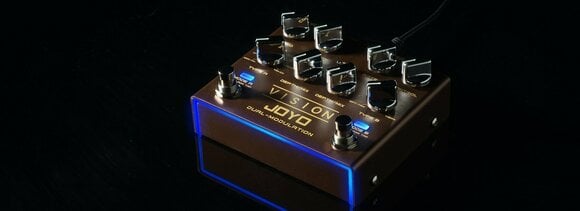
Boss CE-2W
Reviews

Boss CE-2W Waza Craft: Pedal Review

Revisiting a Classic with Depth and Authority The Origin: CE-2 and the Birth of Chorus Pedals To understand the CE-2W, we need to go back to 1979, when Boss released the CE-2 Chorus — itself a refined, pedalboard version of the CE-1, the world’s first chorus pedal and an effect originally built into the legendary Roland JC-120 amp. The CE-2 was more compact, stripped-down to two knobs (Rate and Depth), and voiced with warmth and lush analog texture that became the benchmark for chorus pedals for decades. It wasn’t designed with bassists in mind — and yet, it quickly became a cult favorite across all instruments for its lush, analog modulation that enhanced tone without washing it out. Bass players who did use it discovered that, at subtle settings, it brought out depth, width, and low-end bloom, making lines feel more alive and dimensional. Enter Waza Craft: Reimagining the Legend Boss’s Waza Craft line represents their high-end reissue and re-engineering approach — not just recreating vintage pedals but enhancing them with modern features and improved fidelity while staying true to the original analog designs. The CE-2W, released in 2016, takes the heart of the CE-2 and adds: For bass players, this is a huge deal: it means one pedal can serve as a classic chorus, a vibrato-style modulator, and a widening stereo tool, all in one rugged enclosure — and all fully analog. Why Chorus Works So Well on Bass Chorus is often associated with shimmering guitar sounds, 80s power ballads, and crystalline clean tones. But on bass, it has a different magic — and the CE-2W is one of the best examples of how to do it right. Here’s why it works: Importantly, the CE-2W preserves low frequencies well, especially when used subtly. It’s not a clean blend pedal, but thanks to its analog BBD design, it doesn’t rob your tone of weight — something older chorus pedals often failed at. Controls and Modes: Simple, Yet Deceptively Powerful The CE-2W is elegantly simple, but it hides a surprising amount of flexibility: The stereo output (available in CE-1 modes) is a huge bonus. Running to two amps, or amp + DI, or stereo in a DAW unlocks spaciousness that’s addictive, especially for ambient, post-rock, or synth-influenced bass work. Tone on Bass: Rich, Supportive, Never Overbearing On a passive bass with flatwounds, the CE-2W can evoke classic 80s fretless tones — think Pino Palladino or Mick Karn. On a modern active 5-string, it brings depth and motion to otherwise clinical sounds. It can be subtle enough for studio R&B or bold enough for synthwave or doom-inspired textures. What’s especially impressive is how well it handles drive and fuzz before it. Many modulation pedals get messy or thin out with gain, but the CE-2W handles it gracefully. It works equally well: Pros and Cons Pros: Cons: Conclusion: A Modern Analog Chorus for Serious Players The Boss CE-2W Waza Craft is a beautiful evolution of a legendary pedal, retaining the analog charm of the original while offering modern utility for bass players who demand more from their modulation. For those seeking a chorus that works without thinning your sound, that adds dimension, width, and movement without sacrificing clarity, and that bridges vintage and modern in a seamless package — the CE-2W is a standout. Whether you’re after subtle depth for ballads, full-spectrum chorus for ambient textures, or even slightly warped vibrato tones for experimental playing, this pedal delivers. And unlike some boutique alternatives, it does so reliably, accessibly, and with timeless tone. If you’ve written off chorus on bass, this pedal might just change your mind — or at least, make you want to sit down with it and listen to your tone evolve in real time.
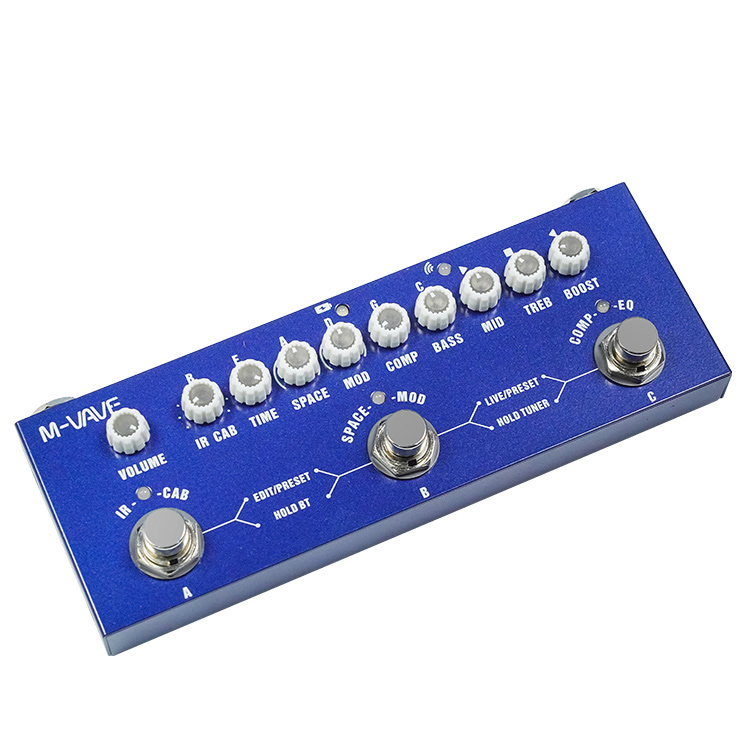
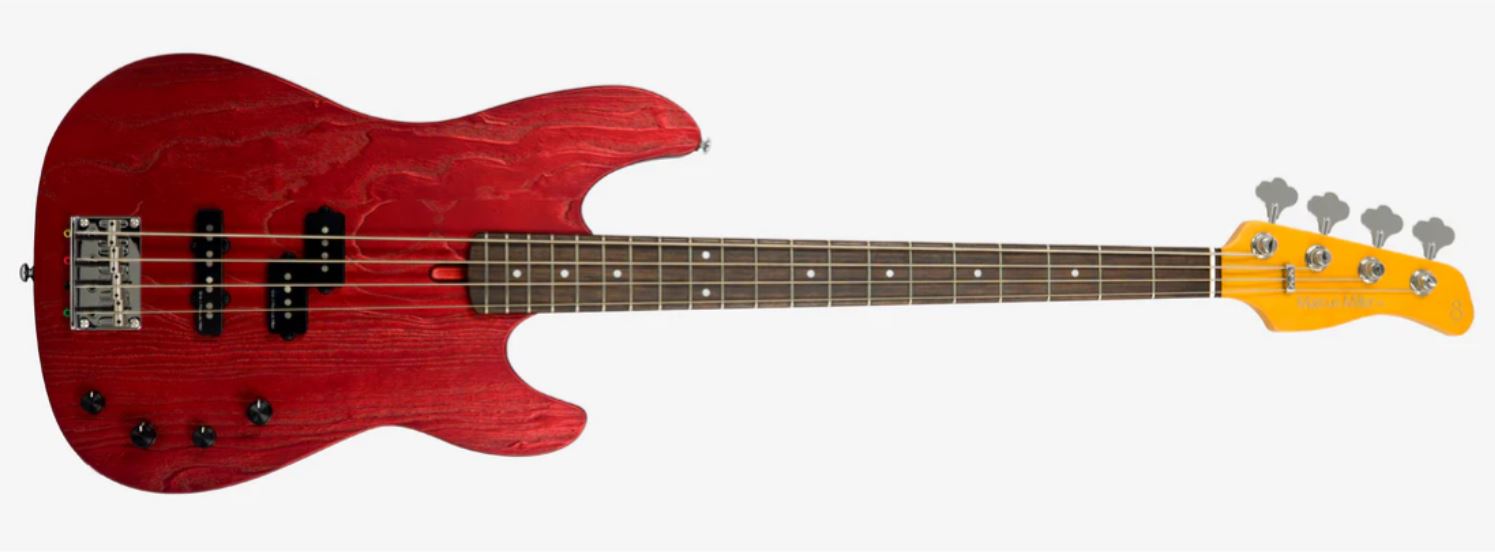
Darkglass b7k
Reviews

Darkglass Microtubes B7K: Pedal Review

A Decade of Defining Modern Bass Tone Few bass pedals in the past 20 years have had the impact and staying power of the Darkglass Microtubes B7K. First released in the early 2010s by Finnish company Darkglass Electronics, the B7K (and its simpler sibling, the B3K) quickly became a cornerstone of modern bass sound, especially in genres like metal, progressive rock, djent, and fusion, but also in session, pop, and electronic music. At its core, the B7K is a preamp/overdrive pedal that blends clear, aggressive distortion with a powerful EQ section, making it equally suited for clean tone shaping and harmonically rich grit. But what really made it a game changer was its ability to maintain articulation and clarity under gain — a feat few bass drives had managed without sacrificing low-end or note definition. A Bit of History: The Rise of Darkglass Founded by Douglas Castro in Helsinki in 2009, Darkglass emerged from a desire to build gear that could keep up with the demands of modern, technically complex music. At the time, most bass drives either lacked definition, lost bottom-end, or felt like adapted guitar circuits. Castro’s designs aimed to change that — and the B7K was the breakout product. The B7K didn’t just offer distortion; it sculpted the tone of modern bass. It became a staple for touring professionals, bedroom producers, and recording engineers alike. Whether it was Nolly Getgood, Adam “Nolly” Getgood of Periphery, or countless players in the extended-range and multi-genre scenes, the B7K became synonymous with tight, mix-ready bass tone. Features and Layout: The Power of Precision The Microtubes B7K is both an overdrive and a preamp, featuring: The clean architecture and modular layout make the B7K extremely adaptable — it works equally well on pedalboards, in DAW environments, or as a preamp driving a power amp or interface. Sound: Clarity Under Fire The core appeal of the B7K lies in its precise and articulate gain structure. Where many bass overdrives mush out or lose clarity, the B7K delivers tight, punchy, mid-forward grit that remains focused even with extended-range basses or fast playing. Key sonic characteristics: While it shines in modern, aggressive settings, many players use it purely as an EQ/preamp, with minimal drive, for shaping live tone or adding sheen to studio DI tracks. Why It Mattered — and Still Does Before the B7K, the bass overdrive landscape was fractured. Players often had to choose between: The B7K solved this by offering studio-level tone sculpting in a pedal format, with enough gain for extreme players but enough transparency and flexibility for clean users. It bridged the gap between DI box, preamp, and distortion, becoming an all-in-one solution that was easy to trust on stage or in the studio. And crucially, it helped usher in a new aesthetic of bass tone — forward, punchy, hi-fi, but with muscle. Applications: More Than Just Metal Though often associated with heavy genres, the B7K is a chameleon: It also integrates seamlessly with compressors, modulation, fuzz, and even IR loaders or amp sims. Pros and Cons Pros: Cons: Conclusion: A Modern Classic, Deservedly So The Darkglass Microtubes B7K has earned its place in the pantheon of essential bass pedals. It’s not a flavor-of-the-month — it’s a true sonic tool, capable of everything from subtle enhancement to outright overdrive savagery, and always with a level of control that few other pedals offer. For players who want to sound tight, modern, mix-ready, and defined, the B7K still reigns as one of the best options available. And for those who appreciate the value of a preamp that doubles as a studio channel strip, it’s arguably unmatched at its price point. It changed the conversation about bass tone — and for many players, it still sets the standard.

Boss Plug-in
News

BOSS Effects Pedals Plug-In Now Available in Your DAW

Roland releases the BOSS Effects Pedals Plug-In Roland has unveiled the BOSS Effects Pedals Plug-In, bringing the iconic sound of BOSS compact pedals to digital audio workstations (DAWs) for the first time. Available exclusively through the Roland Cloud Ultimate membership, this plug-in suite offers musicians and producers a new way to access the legendary tones that have shaped music for decades. Since their debut in 1977, BOSS compact pedals have been a staple on pedalboards worldwide, known for their durability and distinctive sound. The new plug-in faithfully recreates eight of these classic effects, allowing users to integrate them seamlessly into their digital workflows. Included Pedals: Each effect is modeled with precision, capturing the nuances that made the original hardware beloved by musicians across genres. Features Tailored for Modern Production The BOSS Effects Pedals Plug-In is designed with both authenticity and flexibility in mind: Accessing the Plug-In To use the BOSS Effects Pedals Plug-In, users must subscribe to the Roland Cloud Ultimate membership, which offers a 30-day free trial. This subscription not only provides access to the BOSS plug-ins but also to a vast library of Roland’s virtual instruments and effects. Looking Ahead Roland has indicated plans to expand the plug-in’s library, potentially bringing more of their extensive catalog of over 140 BOSS pedals into the digital realm. This move signals a commitment to preserving and evolving the legacy of BOSS effects for future generations of music creators. For more information and to start your free trial, visit the Roland Cloud website.

News

Panda Audio Unveils the Future Impact V4 VIP

Compact Powerhouse for Bass Synth Enthusiasts A new evolution in synthesizer pedal design has arrived. The VIP edition delivers all the powerful features of its larger predecessor in a significantly smaller, pedalboard-friendly format—without compromising performance. Measuring just 125 x 85 x 60 mm and weighing only 330 grams, this compact unit fits seamlessly into any setup while maintaining the full capabilities of a much larger device. Designed with versatility in mind, it covers an impressive sonic range—from classic synth basses, leads, and pads to a wide array of effects including octaver, chorus, flanger, phaser, distortion, envelope filter, wah-wah, tremolo, reverb, and more. With a built-in tuner, it has the potential to replace an entire board of dedicated pedals. This next-generation pedal features a powerful signal processor capable of replicating the architecture of classic synthesizers, including oscillators, filters, amplifiers, and envelope generators. It also includes modern processing blocks such as harmonizers, distortion, chorus, and EQ for ultimate flexibility in sound design. Key enhancements include: This pedal is more than a synthesizer—it’s a complete sound design platform, optimized for musicians seeking power, portability, and creative freedom.

Reviews

Sushi Box Grand Slampegg: Pedal Review

B-15 DNA in a Modern Tube Pedal The Grand Slampegg from Sushi Box FX is a tube-powered preamp pedal designed to capture the spirit, tone, and feel of the iconic Ampeg B-15 Portaflex — the amplifier that defined the sound of recorded bass in the 1960s and beyond. Hand-built in small batches and powered by a real 12AX7 tube, this pedal is part of a growing movement of boutique builders bringing studio-grade tones to the pedalboard world. What sets the Grand Slampegg apart is its targeted mission: not to be a Swiss-army preamp, but rather to emulate the sonic character and response of the B-15, an amp that still stands as one of the most revered tools for bass tone shaping in history. The Ampeg B-15 and Its Lasting Impact Before diving into the pedal, let’s zoom out for a second. The Ampeg B-15 Portaflex, introduced in 1960, was a compact flip-top bass combo amp known for its rich, warm, and punchy tone, thanks to its tube circuitry, simple EQ, and closed-back cabinet with a single 15″ speaker. It became the go-to amp for session players, especially in Motown, Stax, and New York’s studio scene. Names like James Jamerson, Donald “Duck” Dunn, and Chuck Rainey played through B-15s on countless records, and its pillowy low end, smooth midrange, and organic compression became baked into the DNA of modern bass tone. But the B-15 is big, heavy, and expensive. So for today’s bassists — especially those playing live or recording direct — the Grand Slampegg offers a portable, affordable, and musical tribute to that era-defining sound. Design and Features: Simplicity That Speaks Volumes The Grand Slampegg is powered by a genuine 12AX7 preamp tube operating at high voltage (internal boost from a 9V supply), allowing it to behave like a real tube amp rather than a tube-flavored simulator. That’s a crucial difference: it reacts dynamically to your playing and has that slightly compressive, touch-sensitive character that makes tube gear so addictive. The layout is minimal, but deceptively deep: The pedal has both instrument-level and line-level output, making it easy to slot into a pedalboard, run into an amp’s return, or go direct into an interface or FOH system. Tone Plug into the Grand Slampegg and the first thing you’ll notice is the weight of the tone — not in volume, but in density and presence. It fills up space in a mix the way a great amp does, especially with a passive P-style bass or flatwound strings. The key characteristics are all there: Unlike some tube preamps that lean toward modern grit or aggressive drive, the Grand Slampegg prioritizes subtlety, bloom, and tone shaping. That makes it ideal for studio-style applications, warm live rigs, or as a foundational tone shaper on your board. And yes — it breaks up when pushed. But the breakup is velvety and musical, not jagged or compressed. Think Jamerson with the gain halfway up, or a slightly overdriven studio channel strip. Because it’s voiced so naturally and keeps low-end intact, the Grand Slampegg is extremely flexible as a platform. You can use it: It also works well as a recording tool — slotting it into your DI path gives you that elusive “amp in the room” feel with minimal fuss. Pros and Cons Pros: Cons: Conclusion The Sushi Box Grand Slampegg is not trying to reinvent the wheel — it’s trying to preserve one of the most beloved wheels ever made and offer it to a new generation of players in a compact, efficient form. And in that mission, it succeeds beautifully. For bassists chasing that vintage studio tone, especially in settings where a full B-15 isn’t practical or affordable, this pedal is a godsend. It captures the essence of what made that amp great — the musical compression, the EQ shape, the tube warmth — and brings it to your fingertips in a pedal that’s easy to use and hard to turn off. If you’re into Motown grooves, soul lines, dub foundations, or just want your bass to sit deeper and more confidently in a mix, the Grand Slampegg should be on your radar. It’s not flashy, and it’s not aggressive — but it has tone for days, and it feels like a classic.

Dingwall SP1
News

Dingwall Guitars Unveils the SP1

A Modern Classic for the Studio and Stage Dingwall Guitars has officially released the SP1, a bold new addition to their Ready to Play series that merges vintage-inspired tone with cutting-edge design. Available in both 4- and 5-string configurations, the SP1 is poised to become a go-to instrument for session players and live performers alike. A Fresh Take on the PJ Formula At its core, the SP1 is a passive PJ-style bass that offers remarkable tonal flexibility without the need for onboard preamps or batteries. Its pickup configuration features a Dingwall Dual-P split-coil in the neck position and an FD3n humbucker at the bridge. These are controlled via a Quad-Tone rotary selector, which offers four distinct voicings: neck pickup solo, both pickups in series, both in parallel, and bridge pickup solo. This intuitive setup is complemented by master volume and tone controls, allowing players to dial in a wide range of sounds with ease. Multi-Scale Comfort and Precision True to Dingwall’s legacy, the SP1 employs a multi-scale (fanned fret) design, ranging from 32 inches on the treble side to 34.25 inches on the bass side for the 4-string model. This ensures balanced string tension and enhanced clarity across the fretboard. The neck is a one-piece maple bolt-on with an elliptical profile, paired with a rosewood fingerboard featuring 22 banjo-sized frets. Built for Versatility and Style The SP1’s body is crafted from alder and finished in a range of striking colors, including Vintage Burst, Ducati Pearl White, Dark Candy Green, and Metallic Black. A standout visual feature is the transparent pickguard, originally hand-painted by artist Hugh Fisher and now UV-printed to allow the body color to subtly influence its appearance. Hardware includes Dingwall’s minimalist bridge with a custom riser system for easy action adjustments, lightweight open-gear tuners, and black nickel hardware. Hybrid Craftsmanship and Pricing The SP1 is the result of a hybrid manufacturing process, combining precision work from Indonesia with final assembly and quality control in Canada. Pricing starts at $2,499 for 4-string models and $2,599 for 5-string versions. Each bass comes with a padded gig bag, making it ready for the road straight out of the box.

Yamaha Pulser Bass
Reviews

Yamaha Pulser Bass: Bass Review

A P-Style Bass With Japanese Precision In the 1980s, while Fender was navigating shifts in ownership and quality control, Yamaha quietly built some of the most reliable and well-crafted instruments on the planet. One of those was the Pulser Bass, Yamaha’s take on the iconic Precision Bass formula. Made in Japan and sold primarily in the domestic market and select international regions, the Pulser never reached the household name status of its Fender counterpart — but among discerning players, it became a sleeper hit. The Pulser is often seen as part of the Yamaha BB (Broad Bass) family tree, sharing construction ethos and parts design. But what sets the Pulser apart is how faithfully it channels the spirit of a vintage P-Bass, while simultaneously offering Yamaha’s characteristic build precision, durability, and low cost of entry. Whether you’re into flatwounds and dub grooves or need a punchy, clear foundation for funk, punk, or indie, the Pulser earns its name: it’s a bass that thumps and pulses with purpose. A Brief History: The Quiet Counterpart Yamaha launched the Pulser Bass in the late ’70s and early ’80s, alongside their growing family of affordable, performance-focused instruments. At this time, Yamaha was capitalizing on Japan’s increasing global reputation for instrument manufacturing quality — the same wave that brought about Tokai, Fernandes, Greco, and early MIJ Fenders. The Pulser was clearly modeled after the Fender Precision Bass, but it wasn’t a clone. It was a reinterpretation — built with a distinct Yamaha voice: Though Yamaha never pushed the Pulser with the same marketing fervor as its BB-series cousins, it quietly built a reputation among session players, students, and budget-conscious professionals looking for a reliable, no-frills instrument. Build Quality and Feel Where some ’80s Fenders could feel inconsistent or sluggish, the Pulser Bass often surprises with its immediate playability and comfort: Tone: Familiar, but Sharpened At a glance, the Yamaha Pulser sounds like a traditional Precision Bass: strong fundamental, mid-forward bark, slightly rounded highs, and thumpy lows. But there are subtle differences: For flatwound users, the Pulser becomes a machine of smooth punch and bloom. You get that classic thump and lo-mid grunt without losing detail, and without the microphonic behavior some older Fenders exhibit. Comparison to Fender P-Basses of the Era The early-to-mid ’80s was a rocky time for Fender. The transition from CBS ownership to the new era under FMIC (post-1985) marked a period of uneven quality, particularly in U.S.-made instruments. While some 1980s Fenders are excellent, many suffer from heavier bodies, spotty fretwork, and inconsistent electronics. In contrast, the Yamaha Pulser often came off the factory floor cleaner and more consistent. Key comparisons: Feature Yamaha Pulser Fender P-Bass (1980s) Build Consistency High (MIJ standards) Variable (pre-FMIC era) Neck Profile Slim, playable Varies from chunky to wide Tone Clean, punchy, modern Classic, sometimes woolier Weight Moderate and balanced Often heavier Price Today Budget-friendly ($400–800) Vintage pricing ($1,000–2,000+) The Pulser offers a refined alternative: vintage feel without the collector price tag, and enough tonal accuracy to cover traditional P-Bass roles with confidence. Pros and Cons Pros: Cons: Conclusion: A Vintage Bass Without the Vintage Tax The Yamaha Pulser Bass is one of the best-kept secrets in vintage-style instruments. It delivers everything players love about the P-Bass platform — deep, fundamental tone, rock-solid simplicity, and roadworthy build — but sidesteps the inflated pricing and QC variability of more famous brands. For bassists who want a true player’s instrument, especially one that shines with flatwounds or in vintage-styled settings (soul, reggae, post-punk, lo-fi), the Pulser isn’t just a solid choice — it’s a smart investment. You won’t find prestige in the headstock. But you’ll find tone, comfort, and reliability in your hands. And sometimes, that’s the more powerful legacy.

Meris Ottobit Jr
Reviews

Meris Ottobit Jr: Pedal Review

Bitcrushing the Bass The Meris Ottobit Jr. isn’t a distortion box, a traditional synth emulator, or a one-trick glitch pedal. It’s a high-resolution sound manipulator with digital DNA and modular soul — inspired by vintage gaming systems, early digital processors, and rhythmic control schemes that come from the world of analog synthesis. At its core, it’s a bitcrusher — but to stop there would undersell what the Ottobit Jr. really is. It’s also a sequencer, stutter machine, resonant filter, tremolo engine, and a CV-controllable modulation hub. For bass players, that means access to new textures and performance dynamics that aren’t just novel — they’re musically powerful. More than just a lo-fi gimmick, the Ottobit Jr. can completely transform how your bass occupies a mix, or create entire rhythmic frameworks from a single note. Whether you’re laying down robotic funk, chopped ambient pulses, or crushing 8-bit grime, this pedal speaks bass fluently — but with a heavy digital accent. Why Bitcrushing Matters for Bass Bitcrushing isn’t about overdrive or fuzz in the traditional sense — it’s about reducing resolution. That means cutting down bit depth and sample rate, degrading the signal into crunchy, digital artifacts. On bass, this does a few important things: And unlike most bitcrushers, the Ottobit Jr. allows you to dial in musical control, sequencing, and dynamic performance. This is what sets it apart. Core Controls and Features The pedal uses dual-layered control mapping — knobs and secondary functions — and offers stereo output, MIDI, and expression/CV input, making it surprisingly deep for its compact form. Here’s how it all translates for bassists: Bitcrusher & Sample Rate Reduction Sequencer Stutter Filter Modulation Expression / CV Input Sound Character: Digital but Deep The Ottobit Jr. is unapologetically digital — this isn’t analog warmth or tube-style breakup. Its charm is in its cold, artificial precision, which paradoxically makes it one of the most expressive modern pedals you can put on a bass pedalboard. What stands out: Effect Combinations and Signal Chain Integration The Ottobit Jr. is a centerpiece pedal — it wants to be heard. But it also works well in a chain, especially when paired with fuzz, filter, or time-based effects. With Fuzz/Distortion: With Filter: With Delay/Reverb: With Expression Pedal: Usability and Learning Curve This is not a plug-and-play pedal. The interface is deep, and it rewards experimentation. However, it’s not unwieldy — once you grasp the knob functions (and their alt modes), you’ll start hearing new bass roles emerge: Its studio-grade fidelity and musical envelope mean it’s at home in electronic, jazz, industrial, alt-R&B, and post-rock contexts. It’s also a killer secret weapon in sample-based music or layered loops. Pros and Cons Pros: Cons: Conclusion: Precision Mayhem, Beautifully Controlled The Meris Ottobit Jr. doesn’t just color your bass tone — it shatters it and builds something new in its place. It’s rare to find a pedal this capable of both total chaos and tight rhythmic control. For the experimental bassist, it’s a window into glitch-funk, modular-style sequencing, and textural manipulation rarely accessible outside of full synth setups. But even for groove-based players, it adds digital teeth and motion that transform simple phrases into complex, evolving layers. If you’re willing to invest time in learning its controls and embrace its digital dialect, the Ottobit Jr. may become one of the most musically expressive and compositionally inspiring tools on your board.

Earthquaker Devices Hummingbird
Reviews

EarthQuaker Devices Hummingbird – Pedal Review

Where Pulse Meets Power in the Low End The Hummingbird is EarthQuaker Devices’ modern take on the vintage “repeat percussion” tremolo circuit — a choppy, percussive style of amplitude modulation that emphasizes square-wave tremolo, delivering a bold, on/off stutter rather than the smooth ebb of traditional sine or triangle-wave tremolos. Originally derived from the Vox Repeat Percussion, the Hummingbird elevates the concept with a wider rate range, greater control over depth and volume, and excellent signal integrity, especially valuable when applied to bass guitar. For bassists, this pedal can be an unexpected gem — providing pulsing rhythmic motion, synth-like textural effects, and a compelling way to modulate dynamics and groove. Why Tremolo Works (and Shines) on Bass Though often associated with guitar and surf rock, tremolo on bass offers unique advantages: Square-wave tremolo in particular is powerful on bass — not just modulating volume, but shaping how a note breathes, disappears, and re-emerges in the mix. Control Layout: Simple but Powerful The Hummingbird features a minimal but interactive control set, letting you dial in everything from slow pulses to near audio-rate flutter. Depth Rate Mode Switch (Three Speed Ranges) Level Tone and Response on Bass The Hummingbird is surprisingly bass-friendly, retaining low-end integrity and punch even at high Depth or fast Rate settings. Its tonal character is raw and unapologetic — this isn’t a mellow, ambient trem. But with careful tweaking, it can be as much felt as heard, especially in subtle settings or when combined with ambient effects. Effect Pairings: Building Sonic Layers The Hummingbird is a team player on pedalboards — its rhythmic modulation interacts dynamically with nearly every effect type. Fuzz & Overdrive (Before or After): Envelope Filter: Delay/Reverb: Modulation Effects: Parallel Signal Paths: Build Quality and Format While not feature-stuffed, it’s reliable and expressive, with just enough tweakability to tailor to your playing without overwhelming the user. Who It’s For Ideal for bass players who: It’s less suited to players seeking gentle, sine-wave tremolo for classic rock ballads — but perfect for those leaning into character and contour. Pros and Cons Pros: Cons: Conclusion: Rhythmic Texture Meets Low-End Strength The EarthQuaker Devices Hummingbird is a masterclass in how a simple concept — on/off tremolo — can become an expressive and musical force when executed with clarity, character, and nuance. For bass players, it’s a secret weapon — adding motion, pulse, and chopped rhythmic tension without compromising fundamental tone. Whether used subtly to animate long notes or aggressively to strobe through fuzz and delay, the Hummingbird elevates tremolo from novelty to creative staple. It’s not a tremolo for everyone — but for those open to rhythmic exploration, it rewards curiosity with an endless pulse that breathes alongside your playing. Let me know if you’d like a few suggested Hummingbird settings tailored to bass-driven genres or multi-effect setups.

EMpress Bass ParaEQ
News

Empress Effects Releases the Bass ParaEQ

Empress Effects Releases Dedicated EQ Pedal for Bass Instruments Ottawa, ON – May 21, 2025 – Empress Effects is proud to announce the release of the Bass ParaEq, the only bass specific parametric EQ pedal on the market today. Building on the success of their acclaimed ParaEq MKII series, which has already gained popularity with bassists, the Bass ParaEq offers the same studio-grade precision but with features tailored for low-end instruments. The Bass ParaEq follows the success of the Empress Bass Compressor and ParaEq MKII Deluxe, which have become some of the company’s best-reviewed and top-selling products. The Bass Compressor’s popularity confirmed what Empress had long suspected: bassists are eager for tools built with their needs in mind, not just adaptations of guitar gear. The Bass ParaEq retains the line’s powerful 3-band parametric EQ and studio-style features while introducing a bass-optimized frequency layout, a selectable 10MΩ Hi-Z input for piezo- equipped instruments, a dynamically-adjusted low shelf, and automatic balanced output detection—perfect for live and studio use alike. Whether dialing in clarity for a dense mix or compensating for an unfamiliar venue, the Bass ParaEq offers precise tonal control in a compact, road-ready form. With 27V of internal headroom to prevent clipping from even the hottest active pickups, the Bass ParaEq is the ultimate studio-style EQ designed to travel. Key features of the Bass ParaEq include:● Adjustable frequency bands tailored for bass instruments● Selectable 10MΩ Hi-Z input for upright basses and piezo pickups● Auto-detecting balanced output for long cable runs and direct recording● Three sweepable parametric bands with variable Q● High-pass, low-pass, low shelf, and high shelf filters● Transparent analog signal path with 27V of internal headroom The Bass ParaEq is now shipping worldwide. It can be purchased from the Empress Effectswebsite for $374 USD and through authorized Empress dealers globally. About Empress Effects: Founded in 2005 in Ottawa, Canada, Empress Effects designs analogand digital effects for discerning musicians who value tone and creative depth. Known for boththeir studio-grade compressors and EQs, as well as the powerhouse “modular synth in pedal-form” ZOIA, Empress’ unique and vast offerings can be seen in studios and on stages acrossthe world.

Pino Palladino Smothie Flats
News

Ernie Ball Launches the Pino Palladino Smoothie Flats Bass Strings

The Feel of Old String, Straight Out of The Pack! Ernie Ball has officially released the highly anticipated Pino Palladino Smoothie Flats, a new set of flatwound bass strings developed in close collaboration with the legendary session bassist himself. Designed for players chasing a rich, vintage tone with ultra-smooth feel, the Smoothie Flats are crafted using a precision-polished cobalt alloy ribbon. This unique construction gives the strings lower tension and a deep, thumpy low end that flatwound fans—and especially fretless players—will appreciate. Palladino, known for his iconic fretless tone and his work with artists like D’Angelo, John Mayer, and The Who, was deeply involved in the development process. “They feel so good,” he says in Ernie Ball’s demo video. “You don’t get any string noise. They’ve got that real thump and tons of low end. It’s a different approach compared to roundwounds.” String gauge was also key to the final design. The Pino Palladino Smoothie Flats are available in two sets: Whether you’re after classic Motown warmth or a modern, articulate flatwound vibe, these strings are definitely worth a test drive.

Rainbow Machine
Reviews

EarthQuaker Devices Rainbow Machine: Pedal Review

Embracing Chaos, Discovering Beauty The Rainbow Machine is a polyphonic pitch-shifting modulation pedal created by EarthQuaker Devices, a company known for its bold, character-rich stompboxes. Designed by EQD founder Jamie Stillman, this pedal wasn’t built to emulate traditional effects or replicate natural sounds — it was created as an exploration of what pitch, delay, and feedback could become when intentionally bent, stretched, and warped. Released initially in 2011 and later revised in the Rainbow Machine V2, it quickly earned a reputation as a “noise-maker’s dream” and a chaos pedal. But here’s the twist: beneath the strange lies surprising musicality — and when approached with patience and intent, the Rainbow Machine reveals itself as an expressive, sometimes subtle tool, particularly on bass. Why It’s (Surprisingly) Useful for Bass Players While the Rainbow Machine might not be the first pedal that comes to mind for bassists, its lush detuning, shimmering pitch shifts, and dynamic chorus-like movement can add width, movement, and expressive layers to otherwise standard lines. It shines when: In short, it’s not just a “weird pedal” — it’s a textural tool that can range from subtle to surreal. Core Concept: Controlled Unpredictability At its heart, the Rainbow Machine is a pitch-shifter, but not in the clean, sterile sense. It’s grainy, digitally unstable, and proud of it. What makes it different is its approach to pitch: it allows for real-time, continuously modulated pitch shifts, alongside regenerating feedback loops and even self-oscillation. It’s not about precise harmony — it’s about expressive pitch movement, similar to tape warble, circuit-bent toys, or detuned tape echo. For those open to exploration, this pedal becomes less of an effect and more of an instrument. Controls: A Study in Interaction Each knob has a wide range and interacts with the others. Here’s a breakdown: Pitch Primary Secondary Tracking Magic Tone (on V2 only) Activate / Magic Footswitches Using the Rainbow Machine Musically (Not Just for Noise) While the pedal is capable of alien spaceship sounds, with careful settings it offers surprisingly usable tones: 1. Subtle Modulated Harmony 2. Faux Double-Tracking 3. Organ-like Textures 4. Textural Swells 5. Chaos as a Crescendo Where It Sits in a Signal Chain For bass, place it: Build Quality & Power Pros and Cons Pros: Cons: Conclusion: Order in Chaos The Rainbow Machine is a pedal that defies category. It’s not a pitch shifter, a chorus, or a synth — it’s all of those things and none of them, depending on how you use it. For bass players, it offers an unconventional but highly expressive voice: one that can shimmer behind a groove, detune a melody into dreamy dimensions, or explode into tonal hysteria with the stomp of a switch. At its core, the Rainbow Machine is about embracing unpredictability, but with the tools to shape and control it just enough. When balanced correctly, it becomes not a noise generator, but a compositional tool — offering the player a palette of instability, beauty, and tension. It teaches the user to play differently, to listen carefully, and to accept the unexpected. That’s why it continues to inspire, challenge, and reward those bold enough to explore its strange sonic universe.

Flax Pack 2
News

René Flächsenhaar Releases Flax Pack 2

A New Collection of Stunning HX Stomp Presets René Flächsenhaar is back with Flax Pack 2, an inspired new selection of HX Stomp presets designed to elevate your tone. From tight, funky rhythms to expansive ambient soundscapes, this pack offers a versatile palette perfect for both hobbyists and professional musicians. Whether you’re looking to spark creativity or refine your live rig, Flax Pack 2 delivers fresh, expressive tones that stand out in any mix. Get the Flax Pack 2 Here!

DOD FX10 Bi-Fet Preamp
Reviews

DOD FX10 Bi-Fet Preamp: Pedal Review

A Bassist’s Hidden Gem Overview & Origins Originally released in the early 1980s, the DOD FX10 Bi-Fet Preamp was marketed as a general-purpose clean boost and tone shaper. Unlike many drive or EQ pedals of the time, the FX10 wasn’t designed to color your signal with distortion. Instead, it provided clean, hi-fi gain and subtle tone sculpting with the musicality of Bi-FET (bipolar field-effect transistor) circuitry — a design known for warmth, dynamics, and smooth high-frequency handling. Although it was discontinued long ago, the FX10 has seen a resurgence, particularly among bass players who favor classic tones, passive pickups, and flatwound strings. It’s known as a “feel” pedal — not flashy or extreme, but transformative in how it makes your bass sit in the mix and respond to your hands. Why Bass Players Love the FX10 Many modern preamp pedals emphasize heavy EQ shaping or baked-in color. The FX10, on the other hand, is transparent yet enhancing — a true signal conditioner. It doesn’t try to be a DI, amp sim, or overdrive; instead, it subtly tightens the low end, opens up the top, and adds clarity without harshness. This makes it a favorite for: Controls: Simple but Effective The FX10 keeps it basic with only two external knobs, but both are highly interactive and musical. LevelThis is your output gain. It offers up to +20dB of clean boost. Unity gain is around 9 o’clock; anything above starts to push amps or other pedals. It’s great for waking up a dull signal chain, pushing tube amps or overdrive pedals, and evening out passive pickups with lower output. HighThis isn’t a full EQ; it’s a high-frequency boost (around 3–4kHz), but very smooth. Boosting it adds articulation and string definition without hiss or harshness. Cutting it rolls off high-end in a natural, tape-like way. This is especially useful with flatwounds — it helps balance their inherent darkness while retaining their character. Internal Trim Pot (Hidden Feature) Inside the FX10 is a bias trimpot. This adjusts the operating point of the Bi-FET circuit. Turning it up increases headroom and can give a slightly glassier top end. Turning it down makes the sound darker and softer. This is mostly a “set-and-forget” feature but allows some tailoring depending on your instrument or rig. Many users like to tweak this to better match output levels of passive basses or to tame brightness from active electronics. Sound & Application on Bass Despite its humble appearance, the FX10 does something special — especially with flatwound strings and vintage-style pickups. It adds presence and clarity without hyping the midrange or thinning out your tone. Key characteristics include tight low-end response, gently scooped mids, and glassy high frequencies. There’s no compression or distortion — the pedal breathes with your playing dynamics. It pairs well with tube amps (to hit the front harder), overdrive pedals (to shape tone before the dirt), passive Jazz and P-Basses, and flatwounds or tapewounds. It’s also fantastic as an always-on buffer, a tone enhancer after a fuzz, or a sweetener before a DI. Build Quality & Power The FX10 is built like a tank in the classic DOD metal enclosure. Later versions had true bypass, while early models used hardwire bypass. It runs on a 9V battery or standard 9V barrel adapter. There are no frills — just solid, reliable tone enhancement. Pros and Cons Pros: Cons: Conclusion The DOD FX10 Bi-Fet Preamp is the kind of pedal that doesn’t sell itself with flashy features — it simply makes everything sound better. It excels as a transparent buffer, tone sweetener, and dynamic enhancer, particularly for bass players who use flatwounds, vintage gear, or passive pickups. It’s not a modern tone-shaping beast or a multi-function preamp. Instead, it’s more like a tonal magnifying glass — it brings out what’s already good in your bass, your strings, and your playing. For many bass players, especially those chasing a rich, old-school sound with modern clarity, that makes the FX10 a quiet essential.

Way Huge Pork & Pickle
Reviews

Way Huge Pork & Pickle: Pedal Review

The Definitive Bass Overdrive/Fuzz The Way Huge Pork & Pickle is the brainchild of pedal wizard Jeorge Tripps, the founder of Way Huge Electronics and mastermind behind some of the most distinctive effects in modern pedal culture. This unit combines two of Way Huge’s classic effects in one box: Both are revered in the guitar world, but this hybrid was specifically voiced and tweaked for bass, bringing warmth, grit, and massive low-end without sacrificing clarity. Released in 2019, the Pork & Pickle quickly became a favorite among session musicians, touring bassists, and tone nerds due to its ability to cover a wide range of dirt—from subtle drive to full-on woolly fuzz—while preserving low-end punch and articulation. It’s a Favorite Among Bass Players Bass players often struggle to find dirt pedals that add character without ruining low-frequency definition. Many traditional overdrives and fuzzes scoop mids or roll off lows, making the bass sound thin or lost in a mix. The Pork & Pickle solves this by offering: Its tonal flexibility, studio-friendly behavior, and compact form make it a true multitool for working bassists. Front Panel Controls: Explained in Detail Let’s break down each knob and switch on the pedal: 1. Volume 2. Tone 3. Drive 4. Clean Blend 5. OD / Fuzz Switch Internal Controls (Trimpots) Inside the pedal, you’ll find two internal trim pots, which allow for further tone shaping: These internal controls make the Pork & Pickle incredibly versatile — tweak once and forget, or fine-tune to different basses/setups. Sound Profile & Use Cases Overdrive Mode (Pork Loin): Fuzz Mode (Russian Pickle): You can also keep the Blend high and Drive low for a subtle grit or use Blend low and Drive high for full-on fuzz fury. Build Quality & Power Pros and Cons Pros: Cons: Conclusion The Way Huge Pork & Pickle stands out as a rare dual-mode pedal that truly understands what bassists need. It offers warmth, grit, and saturation without sacrificing punch, clarity, or low-end authority. Whether you’re shaping a subtle edge to your clean tone or going full fuzz bomb, the pedal adapts beautifully to any genre or setup. Its combination of analog richness, deep tweakability, and practicality make it one of the most versatile and musical dirt pedals available for bass. It’s no surprise that even bassists who don’t yet own one often count it among their favorites—this pedal makes a lasting impression the moment you plug in.

Digitech Mononeon Whammy
Reviews

Digitech Whammy: MonoNeon Signature: Pedal Review

A Funky take on an Old Classic! The Digitech Whammy has long been a staple in the world of effects pedals, originally released in the early 1990s. Its revolutionary pitch-shifting capabilities, controlled by a foot treadle, opened up a new dimension of expressive possibilities for guitarists. From classic octave dives to wild harmonized bends, the Whammy was immortalized by players like Tom Morello, Steve Vai, and Dimebag Darrell. However, for years, bassists were left to adapt the guitar-focused versions with mixed results. The pitch tracking and tone retention, especially on low frequencies, were inconsistent. That changed in 2014 with the release of the Digitech Bass Whammy, designed specifically for bass guitar, offering improved tracking and frequency response in the lower registers. In 2024, Digitech has collaborated with visionary bassist MonoNeon to release a signature model that brings fresh, funk-infused innovations to the Whammy legacy. Why the Whammy Matters for Bass Players Traditionally, bass players have gravitated toward pedals that maintain low-end clarity, which is why modulation and pitch effects can be risky territory. However, the Whammy, especially in its bass-optimized versions, allows players to add harmonic movement, synth-like sweeps, and envelope-controlled pitch bends without muddying the mix. With the rise of experimental and genre-blending bassists—like MonoNeon himself—the Whammy has become a crucial tool for expanding the sonic role of the bass from rhythm foundation to melodic centerpiece. What Makes the MonoNeon Whammy Different? The MonoNeon Bass Whammy isn’t just a flashy rebranding. It builds upon the 2014 Bass Whammy with notable upgrades: Controls and Features Breakdown The MonoNeon Whammy retains the classic Digitech control layout while introducing new bass-specific functionality. Here’s how it works: Expression Pedal (Treadle Control) Mode Selector Knob Switches between Whammy (pitch shift) and Harmony (dual pitch) modes: Classic/Chords Switch Dry Out / Wet Out MIDI In Bypass & Power Who Would Benefit from the MonoNeon Whammy? Traditionalists or bassists looking for subtle tonal shaping might find it excessive, but for bold creative work, it’s unmatched. Pros and Cons Pros: Cons: Conclusion The Digitech Whammy MonoNeon Bass Edition is more than just a signature pedal—it’s a bold evolution of one of the most iconic effects in music. Tailored specifically for modern bassists who want to experiment with pitch, harmony, and movement, this pedal invites creative risk and rewards it with rich, expressive sound. Whether you’re laying down gritty funk lines or building ambient loops, the MonoNeon Whammy offers the kind of sonic expansion that turns heads and bends expectations. If you’re a bassist who thinks like a producer or soloist, this pedal is a game-changer. If you’re looking to stay in the pocket, it might be too much. But for anyone ready to push boundaries, it’s one of the most powerful tools on the market.

Source Audio Bass Zio
Reviews

Source Audio Bass Zio: Pedal Review

We Take A Look at the Source Audio Bass Zio Analog Preamp + DI In the modern bassist’s toolkit, a solid preamp/DI pedal has become more than a convenience—it’s often a necessity. With players increasingly running direct to front-of-house, recording straight into interfaces, or sculpting their tone beyond what their amp alone can offer, the right pedal can anchor a rig with clarity, punch, and consistency. The landscape is rich with options, from the high-fidelity polish of boutique units to the aggressive edge of more character-driven boxes. Enter the Source Audio ZIO Analog Bass Preamp + DI—a pedal designed from the ground up for bass players, not a guitar design repurposed with a lowered frequency response. Built on an all-analog platform and housed in a rugged, no-nonsense enclosure, the Bass ZIO combines precise tone shaping with smart utility features. With selectable analog preamp voicings, studio-grade output options, and a clean user interface, it promises to serve as the always-on core of any pedalboard or DI rig. Let’s examine its layout, functionality, tonal characteristics, and where it fits in the current market of bass preamps. Disclaimer: This pedal was kindly provided by Source Audio for the purpose of this review. However, this does not influence our opinions or the content of our reviews. We strive to provide honest, unbiased, and accurate assessments to ensure that our readers receive truthful and helpful information. Functional Overview At its core, the ZIO Bass Preamp delivers a streamlined but highly usable control set, balancing flexibility with simplicity. Here’s what it offers: Performance and Tonal Identity The ZIO’s voicing leans toward clean and balanced, with enough shaping options to subtly refine your tone rather than reinvent it. It’s not a character pedal in the way a tube emulator or amp sim might be—but it does bring a studio-like clarity and polish that benefits both live and recorded bass tracks. The low-end response is full but controlled, and the Focus control proves especially useful for carving out unwanted sub frequencies in boomy environments. The Grit circuit adds warmth and slight breakup, but remains tame and musical. It’s more about rounding off transients and adding texture than delivering any real drive aggression. That aligns with the ZIO’s broader design philosophy—it enhances rather than overwhelms your existing tone. Where this pedal really shines is in its versatility. Whether placed at the front of a signal chain as a preamp, used at the end as a final tone sculptor and DI, or dropped into a studio setup as a portable tracking tool, it feels at home. The balanced XLR output provides clean, noise-free signal ideal for live sound engineers and home recording alike, and the headphone amp is clear and powerful enough to serve as a practice solution when amps aren’t an option. Practical Considerations The choice to place the Grit and Scoop functions (especially the Grit) on toggles rather than footswitches limits how performative the pedal can be in dynamic live sets. For some players, this could be a drawback, particularly if they’re used to engaging and disengaging textures on the fly. Similarly, the screwdriver-adjusted Gain trimmer—while fine for studio or rehearsal use—may prove less convenient on dark stages or quick changeovers. On the other hand, this minimalism helps keep the layout clean and intuitive. There’s a sense of purpose here: Source Audio appears to have built this pedal not as a tweak-heavy sound design tool, but as a refined, everyday tone enhancer that stays on and quietly does its job without fuss. Pros and Cons Pros: Cons: Final Verdict The Source Audio ZIO Bass Preamp + DI occupies a thoughtful niche in the increasingly crowded bass preamp market. Rather than chasing amp modeling or saturation-heavy voicings, it focuses on tonal integrity, clarity, and consistency. It’s a “set it and forget it” pedal in the best possible way—ideal for players who want their bass to sound polished, tight, and musical with minimal fuss. It may not be the choice for players looking to radically alter their tone or stomp in and out of drive mid-song, but for those seeking subtle refinement, top-tier DI performance, and a reliable studio/live interface, the ZIO Bass delivers with confidence and class.

IAM La Bella Super Polished Bass Strings
News

La Bella Introduces IAM Signature Super Polished Bass Strings

The legendary brand teamed up with Ian Allison La Bella Strings is proud to unveil the Ian Martin Allison Signature Super Polished Set—a fresh take on our classic stainless steel recipe, tailored for one of today’s most versatile bass players. “When Ian approached us, he was after a feel that blended the punch of stainless round wounds with the buttery smoothness of flats. We kept the essence, then fine-tuned the formula: adjusted gauges, left just a touch more edge on the wrap for clarity, and added Ian’s custom pink and gray silk wraps.” The result? A polished stainless steel round wound set that leans roundwound in tone but delivers the smooth playability Ian needs for both studio and stage. His verdict after months on tour: “Did you guys just build the perfect string?!” Key Features: Available now at select retailers and labella.com.

Darkglass Anagram
Reviews

The Darkglass Anagram

A First Look at the Darkglass Anagram: Pedal Review When innovation meets obsession, the result is something like the Darkglass Anagram—a cutting-edge multi-effects platform purpose-built for bass players who demand more from their tone shaping tools. Designed to push the envelope of what’s possible on both stage and in the studio, the Anagram is more than a pedal—it’s a fully integrated ecosystem where sonic precision meets creative freedom. Total Tone Control, Redefined At its heart, Anagram is a multi-effect powerhouse fueled by a six-core DSP architecture. It’s fast—ultra-low latency fast—and optimized to handle everything from detailed studio tracking to live performances where timing is everything. Its dedicated operating system handles real-time audio with the kind of efficiency you’d expect from a pro-grade rack unit, all in a pedalboard-friendly format. Whether you’re looking to sculpt your ideal tone or dive into experimental soundscapes, Anagram’s extensive customization and seamless integration with the Darkglass Suite make it an unparalleled creative tool. Touchscreen Simplicity, Complex Power The 7-inch high-brightness touchscreen is a standout feature, offering an intuitive interface that makes navigating complex chains and tweaking parameters feel effortless. Add in three programmable footswitches and six endless rotary knobs, and you’ve got total hands-on control whether you’re dialing in tones at home or on stage mid-set. Future-Proof and Flexible Anagram isn’t just powerful now—it’s built to grow. With support for NAM and AIDA-X neural models, cabinet IRs, and an upgradeable architecture, it’s ready for future DSP blocks and third-party content. You can load up to 24 simultaneous effects blocks, arrange complex parallel chains, or run simple, clean setups—all from one sleek device. A Deep Dive Into the DSP Library: Tools That Keep You in the Groove Seamless Darkglass Integration Connect to the Darkglass Suite to upload IRs, manage presets, and explore user-generated tones via the Preset Hub. With USB-C connectivity offering MIDI, audio interface support, and firmware updates, staying in sync with your digital workflow is effortless. Versatile I/O for Any Setup The Bottom Line With the Anagram, Darkglass hasn’t just created a new pedal—they’ve designed an ecosystem where analog soul meets digital muscle. It’s a bass-focused beast engineered to inspire, built to perform, and ready to evolve with you. Whether you’re chasing the perfect tone or pushing sonic boundaries, the Anagram is the new benchmark for what’s possible in bass effects.

AXE I/O
Reviews

IK Multimedia AXE I/O: Interface Review

Feature Rich Interface For Tone Driven Players In a world where guitar interfaces can often feel like more of the same, the IK Multimedia Axe I/O stands out—not just for guitarists and bassists, but for anyone serious about tone. It shares the same philosophy as its smaller sibling, the Axe I/O One, but dials everything up with expanded connectivity, hardware upgrades, and quality-of-life features that really should be standard by now. From its tone-shaping capabilities to its built-in tuner and flexible I/O, the Axe I/O delivers a streamlined yet professional-grade experience at a price that’s still accessible to most serious home recordists. Disclaimer: This pedal was kindly provided by Ik Multimedia for the purpose of this review. However, this does not influence our opinions or the content of our reviews. We strive to provide honest, unbiased, and accurate assessments to ensure that our readers receive truthful and helpful information. Tailored for Guitar & Bass – With Pro Features Much like the Axe I/O One, the Axe I/O is deeply instrument-focused. It’s not just an audio interface—it’s a rig optimizer for guitar and bass players who want to shape their tone before it even touches a plugin. Features like the Z-Tone impedance control, JFET/PURE input switch, and active/passive pickup selector make it a joy to tailor your sound in real time. But the Axe I/O expands on this with dual instrument inputs, 4 audio outputs, and a built-in tuner—a shockingly rare feature that proves how much attention IK Multimedia paid to real-world usage. Core Features at a Glance: Z-Tone and Input Stage Switching Just like with the Axe I/O One, Z-Tone and the JFET/PURE switching offer a wealth of tone control before your signal even hits a plugin. Z-Tone lets you shift your input impedance to tighten or fatten your tone—great for modern players or vintage stylists alike. The JFET input adds analog warmth and subtle harmonic richness, while PURE gives you a clean, uncolored signal ideal for post-recording tone shaping. Reamping, Now Simplified The Amp Out jack is one of the best things about this interface—it allows clean reamping without the need for extra gear. That’s huge for players who want to blend DI and amp tones or revisit takes with different gear. Why the Built-In Tuner Matters One small but seriously useful feature: the hardware tuner. Fast, accurate, and always at your fingertips. It seems like a small touch, but once you’ve used it, you’ll miss it on every other interface. Limitations? Final Thoughts on the Axe I/O The IK Multimedia Axe I/O is a standout piece of gear for guitar and bass players who want a high-quality DI solution with extras that actually make sense. With dual inputs, reamping, and thoughtful touches like a built-in tuner, it’s the kind of tool that makes you wonder why more interfaces don’t do this. Axe I/O vs. Axe I/O One – Which One’s for You? Both of these interfaces are cut from the same cloth, designed with the tone-obsessed player in mind. But they serve slightly different purposes depending on your needs and workflow. What They Share: Which Should You Choose? Conclusion: Both units punch way above their price point, especially for guitar and bass players. The Axe I/O One is compact and affordable without sacrificing tone-shaping power, while the Axe I/O adds the I/O flexibility and studio-ready features many serious players will appreciate. Whichever one you choose, you’re not just getting an interface—you’re getting a tone toolbox.

Axe I/O One
Reviews

IK Multimedia Axe I/O One: Interface Review

Disclaimer: This unit was kindly provided by IK Multimedia for the purpose of this review. However, this does not influence our opinions or the content of our reviews. We strive to provide honest, unbiased, and accurate assessments to ensure that our readers receive truthful and helpful information. A Smart/Small Interface for Bass Players In a market full of nearly identical budget audio interfaces, the IK Multimedia Axe I/O One manages to stand out—especially if you’re a bass player. While it may look like just another compact USB interface, it offers tone-shaping tools, reamping capabilities, and thoughtful design choices that make it far more than meets the eye. Whether you’re tracking demos at home, building a portable setup, or looking for a flexible DI solution, the Axe I/O One is well worth your attention. Effortless SetupGetting up and running with the Axe I/O One is refreshingly simple. After registering the unit on IK Multimedia’s website and downloading their control software (which includes all necessary drivers), it was a matter of plugging it in via USB. The interface was immediately recognized by my DAW (Reaper), and I was recording bass within minutes. From firmware updates to input detection, everything worked smoothly—no troubleshooting or digging through menus. That kind of reliability is especially welcome when inspiration strikes and you just want to hit record. Designed for Instrument PlayersAlthough it’s marketed as a guitar-focused interface, many of the Axe I/O One’s standout features translate beautifully to bass. This is not just a standard 1-in/3-out audio box—it’s a tool for shaping and refining your tone before it even hits your plugins or amp sims. Designed for Instrument Players Although it’s marketed as a guitar-focused interface, many of the Axe I/O One’s standout features translate beautifully to bass. This is not just a standard 1-in/3-out audio box—it’s a tool for shaping and refining your tone before it even hits your plugins or amp sims. Key Features: At this price point, features like Z-Tone and Amp Out are rare—and particularly useful for bass players looking to get the most out of their instrument tone. Z-Tone: Impedance Control with Real Impact One of the most unique features of the Axe I/O One is the Z-Tone knob, which lets you control the input impedance of the instrument channel. This may seem like a minor technical detail, but in practice, it allows you to meaningfully shape the tonal character of your bass. Higher impedance settings (labeled “Sharp”) give your signal a brighter, more articulate tone—ideal for active basses or modern fingerstyle work. Lower settings (“Bold”) round off the top end and emphasize the lows, perfect for vintage-style passive basses or thick, supportive lines. The Z-Tone circuit reacts differently depending on your bass and pickups, offering a subtle but highly musical way to tailor your tone—before you even touch an EQ or amp model. “Z-Tone allows change to impedance from tighter/sharper tone to a thicker/bolder tone all in the same instrument.” JFET vs PURE Input Stages Another standout feature is the ability to switch between two input stages: The tonal difference is not drastic, but it’s enough to influence the feel of your playing and the character of your recorded tone. Especially when paired with Z-Tone and pickup type switching, it makes the interface far more versatile than it first appears. Amp Out & Reamping: Pro-Level Flexibility The Amp Out jack is a feature rarely seen in interfaces at this price level. It allows you to take a clean DI signal you’ve recorded and send it out to a real amp, pedal chain, or reamping box for further tone processing—without latency or level mismatches. What is Reamping? Reamping is the process of recording a clean, direct signal from your instrument, and later sending that signal through amplifiers or pedals to experiment with tone. It’s commonly used in professional studios, allowing engineers to refine or completely change a sound after the performance has been captured. For bassists, this opens up the ability to: This makes the Axe I/O One an excellent choice not only for home setups, but also for players working with studios or engineers who want more tonal control. What’s Missing? No device is perfect, and the Axe I/O One does come with a couple of limitations: Software Included The bundled software adds real value, especially for bass players who might be building their first recording rig: This makes the Axe I/O One a great all-in-one starter package for recording bass without needing to buy extra software or plugins. Final Thoughts: A Smart Buy for Bass Players The IK Multimedia Axe I/O One is more than just a budget interface—it’s a well-designed tool for tone-conscious players who want flexibility without complexity. With features like Z-Tone, PURE/JFET switching, and built-in reamping, it empowers bassists to capture professional-quality tones and adapt them to a wide range of musical contexts. It’s compact, easy to use, and includes everything you need to start recording and shaping your sound. Whether you’re just getting into home recording or need a travel-friendly interface with serious tone tools, the Axe I/O One delivers excellent value. ConclusionThe Axe I/O One is a smart, musician-focused interface that offers meaningful benefits to bass players, especially those working in home studios or mobile environments. If you’re looking for a compact DI solution that does more than just capture a clean signal, this one deserves a serious look.

Broughton Low Pass Filter
Reviews

Broughton Audio Low Pass Filter: Pedal Review

Sculpting the Perfect Bass Tone ​The Broughton Audio Low Pass Filter is a compact, purpose-built pedal designed to give bass players precise control over their high-frequency content. Whether you’re aiming to tame fret buzz, smooth out distortion artifacts, or sculpt a deep dub tone, this pedal offers a straightforward yet powerful solution. Key Features Why Low Pass Filtering Matters for Bass Players Low pass filters (LPFs) are essential tools in both live and studio settings. For bass players, LPFs help in:​ Historically, LPFs have been integral in audio engineering, used to manage frequency content and prevent overlap in mixes. In the context of bass guitar, they allow players to maintain clarity and focus in their low-end frequencies.​ User Feedback Bass players who have incorporated the Broughton Low Pass Filter into their rigs often describe it as an “always-on” pedal. Users report a significant improvement in tone clarity and a reduction in unwanted high-frequency content. The pedal’s simplicity and effectiveness make it a favorite among those looking to refine their sound without adding complexity to their setup.​ Final Thoughts The Broughton Audio Low Pass Filter stands out as a specialized tool that addresses specific tonal challenges faced by bass players. Its straightforward design, combined with its effectiveness, makes it a valuable addition to any pedalboard. Whether you’re performing live, recording in the studio, or practicing at home, this pedal offers a reliable solution for managing high-frequency content and achieving a polished bass tone. This was a new type of review, more casual and relaxed, let me know what you thought of it. Want more content like this here on the page?

Boss SDE-3
News

Boss Releases the SDE-3

BOSS SDE-3 Dual Digital Delay: A Modern Take on a Vintage Classic BOSS has just unveiled the SDE-3 Dual Digital Delay, a compact stompbox that brings the beloved sound of the legendary Roland SDE-3000 rack unit into the modern age. With a design that appeals to tone purists and experimentalists alike, the SDE-3 is more than just a nostalgic nod—it’s a powerful, stereo-capable delay tool fit for today’s versatile musicians. At the heart of the SDE-3 is a faithful recreation of the SDE-3000’s rich and detailed digital delay character. While the original unit was a staple of ’80s racks, the SDE-3 translates its sonic identity into a pedalboard-friendly format. Musicians can now access those sought-after clean, precise repeats without the hassle of bulky gear. The standout feature of the SDE-3 is its dual delay engine. This allows players to stack two separate delay lines and fine-tune them with the Offset knob. Whether you’re going for subtle stereo widening, ambient textures, or rhythmic interplay, the SDE-3 delivers in spades. Want dotted eighths in one channel and quarter notes in the other? No problem. You can achieve everything from tight slapbacks to sprawling soundscapes. Additionally, the pedal features multiple output routing options, including true stereo operation, ensuring it integrates seamlessly into any modern rig. The flexible layout is ideal for both guitarists and bassists, with clear definition and warmth that never muddies the low end. The BOSS SDE-3 is perfect for players who crave high-fidelity delay with a vintage soul. Whether you’re chasing The Edge-style patterns or laying down cinematic ambient washes, this pedal brings creative delay manipulation to your feet. Stay tuned for availability and pricing, but from early looks, the BOSS SDE-3 is shaping up to be one of the most exciting releases in the delay world this year.

Empress Bass Compressor
Reviews

Empress Bass Compressor: Pedal Review

A Compressor That Demands — and Rewards — Your Attention Lately, we’ve been diving deep into the world of bass compression. We’ve explored vintage options like the Boss CS-2, modern heavy-hitters like the Origin Cali76, and even budget picks such as the TC Electronic SpectraComp. But when it comes to modern, studio-grade options in a pedal format, there are only a few standout choices that consistently show up in serious discussions. The Origin Cali76, the Diamond Compressor, and today’s focus: the Empress Bass Compressor. Disclaimer: This pedal was kindly provided by Empress Effects for the purpose of this review. However, this does not influence our opinions or the content of our reviews. We strive to provide honest, unbiased, and accurate assessments to ensure that our readers receive truthful and helpful information. Overview The Empress Bass Compressor is specifically voiced for bass, with a frequency response of 10Hz–20kHz. It features an all-analog signal path, true bypass switching, and detailed multi-segment metering for both input and gain reduction. With a mix knob for parallel compression, an external sidechain input, and a variable high-pass filter, this pedal is easily one of the most feature-rich compressors on the market. Out of the box, it delivers a studio-level feature set, packed into a compact pedal chassis. While many pedal compressors simplify their layout to appeal to casual users, the Empress goes the opposite route: full metering, independent attack and release controls, mix knob, sidechain capabilities, ratio control, and even a two-position Tone + Colour switch that adds subtle tone shaping and harmonic coloration. For those unfamiliar with compression, the included manual does a fantastic job. It covers basic compression theory and offers sample settings to help get you started. This is a big win considering the pedal’s complexity. Let’s take a look at the features one by one. Key Features Explained Input and Gain Reduction Metering Many pedal compressors either skip metering altogether or offer a minimal version. Not the Empress. This pedal provides full metering for both input signal and gain reduction — a huge asset for both live and studio use. Input Control Sets the input level going into the compression circuit. Higher input levels = more compression. Output Control Sets the post-compression output level. This helps balance volume loss from compression, or can be used as a clean boost (fun fact: Empress officially supports bass solos — and so do we at BassGearReviews.com). Attack Controls how quickly the compressor reacts once the signal exceeds the threshold. Release Controls how quickly the compressor stops compressing after the signal drops below the threshold. Mix (Parallel Compression) Blends the dry (uncompressed) and wet (compressed) signals. This is essential for maintaining natural dynamics while gaining sustain — a hallmark of parallel compression. Sidechain High-Pass Filter Filters out low frequencies from the sidechain signal (from 20Hz to 400Hz). This lets you prevent low-end thumps from triggering compression too aggressively — great for slap, pick playing, or sidechaining. Ratio Determines how aggressively the compressor clamps down on peaks. The Empress offers: Tone + Colour Control This flexibility makes the pedal appealing to both camps: those chasing transparency and those looking for a bit of character in their tone. Bypass Switch Standard footswitch for true bypass on/off. Understanding Sidechain Compression Sidechain compression uses an external signal to trigger compression on your main signal (your bass). For example, if you run a kick drum into the sidechain, the bass will duck slightly each time the kick hits — useful for mixing clarity. The Empress includes a 1/8″ sidechain input for this purpose. The incoming sidechain signal doesn’t pass through the pedal’s output — it’s purely used to trigger compression. If no sidechain is connected, the high-pass filter affects how your bass signal triggers the compression. Performance and Use The Empress Bass Compressor is extremely versatile. Whether you’re looking for smooth and transparent compression, dynamic control for fingerstyle, punch for slap, or even brick-wall limiting, this pedal handles it all. However, this is not a plug-and-play pedal. It demands some understanding — or at least curiosity — to get the most out of it. Thankfully, the included manual provides an excellent starting point. Pros Studio-Grade Features in a Pedal FormatUnparalleled control in a stompbox: input/output level, metering, attack/release, parallel compression, sidechain HPF — rare even in rack units. Transparent and Musical CompressionThe 2:1 and 4:1 settings offer clean, musical compression that retains dynamics and preserves your playing style. Tone Shaping FlexibilityWith optional mid scoop/boost and harmonic distortion, the Tone + Colour switch adds useful character without locking you into one sound. Full LED MeteringVisual feedback for both input and gain reduction makes setting levels precise and intuitive. Parallel CompressionBlend dry and compressed signals for a more musical, natural result — especially useful for bass. Sidechain High-Pass FilterProfessional-level sidechain control in a pedal. Great for slap, pick, and studio sidechain mixing. Clear, Helpful ManualDespite the complexity, Empress makes learning accessible with clear diagrams and starter settings. True Bypass + Analog PathKeeps your tone untouched when bypassed, free of digital artifacts. Cons Steep Learning CurveNot ideal for compression beginners or those who want to “set it and forget it.” Limited Ratio OptionsOnly 3 ratio settings. While well-chosen, some might want more granularity (e.g., 6:1 or 8:1). Premium Price PointYou get what you pay for, but this might be out of reach for more casual players. 1/8” Sidechain InputInconvenient for some setups — may require adapters or custom cables. Conclusion: A Compressor That Demands — and Rewards — Your Attention The Empress Bass Compressor isn’t just another pedal — it’s a studio-grade tool packed into a rugged stompbox. It’s easily one of the most powerful and transparent compressors available to bassists, offering detailed control over every aspect of your dynamic range. What sets it apart is its complexity — and that’s intentional. Empress built this for players who want control. If you’re the kind of bassist who likes to tweak, shape, and perfect your tone, this pedal will deliver in spades. But make no

Helix Obsidian distortion
Reviews

Helix Obsidian 7000 Dist: Pedal Review

The Helix Take on Darkglass For modern bass players, few distortion pedals have made as much impact as the Darkglass Microtubes B7K Ultra. Known for its aggressive yet articulate tone, it has become a go-to choice for players seeking clarity, punch, and saturation without sacrificing low-end presence. In the world of amp modeling and digital effects, Line 6 has taken a swing at this classic with the Obsidian 7000 Dist in the Helix ecosystem. But how well does it hold up? And is it a worthy alternative to the real thing? Let’s dive in. The Darkglass Legacy and the Obsidian Interpretation The Darkglass B7K Ultra is a staple for bass players looking for a modern, high-gain drive with a powerful EQ section. It excels at cutting through dense mixes, thanks to its combination of drive, blend, and a 4-band EQ with selectable mids. The B7K Ultra also features attack and grunt switches, allowing for more control over harmonic content and low-end response. The Obsidian 7000 Dist in the Helix is Line 6’s digital interpretation of this beloved pedal. It mimics the B7K Ultra’s core tonal characteristics, offering similar EQ flexibility, blend control, and gain structure. However, being part of the Helix ecosystem means it also benefits from digital convenience, routing flexibility, and total recall—something a standalone analog pedal can’t quite match. How Close Is the Tone? Sonically, the Obsidian 7000 Dist does an impressive job capturing the spirit of the B7K Ultra. The drive characteristics are sharp and articulate, allowing notes to remain defined even under heavy distortion. The blend control is just as essential here as in the original, letting you mix in the clean signal to preserve low-end punch. The EQ section offers a similarly sculpted response, with the selectable mids doing a great job of tailoring the attack and presence. Where the differences start to show is in the feel and responsiveness. The analog circuitry of the B7K Ultra gives it a certain warmth and organic response that digital modeling—while close—doesn’t completely replicate. Some players might find the Helix version slightly more compressed, though in a mix, this is hardly noticeable. Usability and Practical Benefits What the Obsidian 7000 Dist lacks in analog “mojo,” it makes up for in versatility and integration. Since it’s part of the Helix, you can: For touring or session musicians, this level of convenience and recall can outweigh the tonal nuances of the analog counterpart. Final Verdict: Worth Using? If you’re a bass player looking for the B7K Ultra sound within the Helix, the Obsidian 7000 Dist is absolutely worth using. It delivers a convincing modern distortion tone, captures the essence of the Darkglass circuit, and provides Helix-exclusive flexibility that the standalone pedal can’t offer. However, if you’re a purist who values the feel and slight harmonic differences of analog gear, the real B7K Ultra may still be your best bet. That said, for live use, recording, and ease of integration, the Obsidian 7000 Dist is a fantastic tool that proves once again why Helix remains one of the best multi-effects platforms for bassists.

TC Electronic SpectraComp
Reviews

TC Electronic SpectraComp: Pedal Review

Where Simplicity Meets Compression The TC Electronic SpectraComp is a compact, digital multiband compressor designed specifically for bass players. Unlike traditional single-band compressors, it applies compression independently to different frequency ranges, ensuring a more balanced, natural sound. Featuring a one-knob control, it is designed for simplicity, while the TonePrint feature allows for deep customization. But does it deliver? Let’s break it down. One-Knob Control – How It Works While it may seem limiting at first, the one-knob control actually adjusts multiple parameters simultaneously, including: What Happens When You Turn the Knob? Since the pedal is multiband, it compresses lows, mids, and highs separately, preventing unwanted pumping and retaining clarity. This is especially useful for bassists who want even dynamics without squashing their tone. Sound & Performance Transparent & Musical Compression: Unlike heavy-handed compressors that color your sound, SpectraComp remains natural. Enhances Consistency: Levels out dynamics while preserving attack and note articulation. Ideal for Various Playing Styles: Works well for fingerstyle, slap bass, and pick playing. No Muddy Lows or Harsh Highs: The multiband design ensures balance across all frequencies. No Gain Reduction Meter: Makes it hard to see how much compression is applied in real-time. TonePrint Customization The one-knob design is great for simplicity, but if you want more control, the TonePrint app allows you to: Pros & Cons Pros:✅ Compact & sturdy design✅ Multiband compression for a natural, balanced tone✅ Simple one-knob operation✅ TonePrint customization for advanced users✅ Transparent sound that retains dynamics Cons:❌ No onboard controls for detailed tweaking❌ No visual gain reduction meter❌ Digital sound may not appeal to analog purists Conclusion The TC Electronic SpectraComp is one of the best compact bass compressors available today. The one-knob design makes it effortless to use, while the TonePrint feature provides deep editing for those who want more control. Its multiband compression ensures an even, natural sound, making it an excellent choice for bass players of all styles. However, if you prefer onboard controls and visual feedback, an analog compressor might be a better fit. Best for: Bass players who want an easy, high-quality compressor with minimal fuss and maximum flexibility

TC Electronic Ditto2
News

TC Electronic Unveils Ditto 2 Looper

Smarter, Smoother, and More Intuitive TC Electronic has officially launched the Ditto 2 Looper, an evolution of its iconic looping pedal. Designed for seamless performance, the Ditto 2 refines the original’s simplicity while adding powerful new features. Among its standout improvements is a redesigned footswitch with a magnetic mechanism, ensuring precise operation. A toggle switch allows players to choose between the classic Ditto mode or the new User mode, which introduces LoopSnap (intelligent beat tracking) and SingleTap (a streamlined looping mode). A vibrant LED display enhances visual feedback, making it easy to track loop status. Plus, Bluetooth and USB-C connectivity enable smartphone app integration for customization and firmware updates. With a choice between true bypass or buffered bypass, the Ditto 2 Looper delivers an even smoother, more responsive looping experience—perfect for musicians who demand simplicity and precision.

Sushi Box Finally V3
Reviews

Sushi Box Finally V3: Pedal Review

The Ultimate Tube D.I. for Bass Sushi Box Effects has long been known for its high-quality, tube-driven pedals, and the Finally V3 is no exception. The latest evolution of this beloved tube D.I. takes everything that made the previous versions great and refines it even further, making it an essential tool for bassists who demand warmth, clarity, and flexibility in their signal chain. A Legacy of Excellence: Finally V1 & V2 The original Finally was designed as a high-voltage tube D.I., offering rich harmonic saturation and a studio-quality direct output. When Finally V2 was introduced, it improved on the design with refinements to the circuit, making it an even more versatile and musical tool for bass players. With Finally V3, Sushi Box Effects has taken the lessons learned from the previous versions and implemented meaningful upgrades, making it arguably the most refined iteration yet. What Makes Finally V3 Stand Out? Several features set the Finally V3 apart from its predecessors and other tube-driven DI pedals: Why Bass Players Love the Finally V3 The Finally series has always been a favorite among bass players, and the V3 version cements its reputation as one of the best tube D.I. pedals available. Here’s why: Final Verdict The Sushi Box Finally V3 is an amazing choice for any serious bass player looking for superior tone, flexibility, and professional-grade performance. With its tube warmth, enhanced filtering, and independent outputs, it delivers unparalleled control and sound quality—whether you’re playing live or recording in the studio. For bass players who want the best tube-driven D.I. experience, the Finally V3 stands as one of the top contenders on the market today.

Sushi Box Neptunium
News

Sushi Box Effects Unveils Neptunium

A Compact Tube Preamp with XLR D.I. Sushi Box Effects has officially released the Neptunium, a compact yet powerful tube preamp designed for musicians seeking a high-quality direct input solution. The Neptunium takes inspiration from the acclaimed Noble preamp, channeling its signature warmth and clarity into a significantly smaller enclosure. A Miniature Powerhouse At the core of the Neptunium is the design philosophy behind Nobelium, Sushi Box Effects’ previous iteration inspired by the Noble preamp. While the Nobelium incorporated a full preamp with XLR D.I., the Neptunium focuses on refining the XLR output section into a more space-efficient package without sacrificing tonal integrity. The two-band boost-only tonestack, modeled after the classic Fender/Marshall/Vox EQ, offers a simple yet effective way to shape tone. With both controls at zero, users can achieve a flat response, ensuring versatility for various playing styles and instrument types. Key Features Final Thoughts With the release of Neptunium, Sushi Box Effects continues its tradition of crafting high-quality tube-based pedals that cater to gigging musicians and recording artists alike. Whether used as a warmth-enhancing DI box, a tube preamp for pedalboards, or a direct-to-interface solution for home recording, the Neptunium promises to deliver professional-grade tone in a compact footprint. For more information and availability, visit Sushi Box Effects’ official website.

Reviews

HX Regal DI: Pedal Review

The Poor Man’s Noble! The world of bass preamps and DI pedals is full of legendary options, but few have reached the near-mythical status of the Noble Bass Preamp DI. With its warm, rich tones and undeniable studio and stage appeal, the Noble DI has become a must-have for professional bassists. However, with a price tag that hovers around $1,200, it remains out of reach for many players. Enter the Regal Bass DI, a model introduced in Line 6’s Helix 3.70 firmware update. Designed to emulate the beloved Noble DI, the Regal Bass DI aims to provide that coveted tone at a fraction of the cost. But does it live up to the hype? Let’s find out. Features & Controls The Regal Bass DI includes the core tonal controls found in the Noble DI, giving bass players access to a simple yet effective EQ section. Here’s a breakdown of its features: For Helix users, these features make the Regal Bass DI an easy drop-in for direct recording, live performance, and tone shaping within a digital rig. Regal DI vs. Noble DI: A Comparison So how does the Regal Bass DI compare to the Noble DI? While the Regal DI does a fantastic job emulating the tonal characteristics of the Noble, there are some differences to consider. Tone The Noble DI is known for its tube-driven warmth, which naturally compresses and rounds out the tone in a way that solid-state or digital emulations often struggle to fully replicate. The Regal DI, while very close, lacks the physical 12AX7 tube that gives the Noble DI its signature harmonic richness. However, in a live mix or a recording chain, the difference is subtle and can be compensated with slight EQ and compression tweaks. Feel & Dynamics The Noble DI responds incredibly well to playing dynamics, offering a natural “amp-like” feel. The Regal DI gets remarkably close, especially when paired with other Helix effects like the Retro Reel to simulate the warmth and compression of an analog signal path. Portability & Versatility The Regal Bass DI has a clear advantage in terms of portability and flexibility. With the ability to tweak and integrate seamlessly within the Helix ecosystem, it becomes an incredibly versatile tool for players who need multiple tones at their disposal. The Noble DI, on the other hand, is a dedicated preamp DI with a fixed tonal character, making it less adaptable. Price & Value This is the biggest differentiator: $1,200+ vs. $0 (for existing Helix users). If you already own a Helix, HX Stomp, or Helix Native, the Regal DI is a no-brainer—it gives you 90% of the Noble DI sound for free. If you’re an analog purist who values true tube warmth, then the Noble DI might still be worth the investment. Conclusion The Regal Bass DI is a fantastic addition to the Helix family, offering a realistic and versatile alternative to the Noble DI at a fraction of the cost. While it doesn’t quite capture the full tube magic of the Noble, it gets close enough that most bassists—especially in live and mix contexts—will struggle to tell the difference. If you already own a Helix or HX Stomp, the Regal DI is an absolute steal. But if you’re after the true organic tube warmth, the Noble DI remains the undisputed king. Either way, bass players now have more choices than ever when it comes to dialing in that legendary tone!

MXR M81 Bass Compressor
Reviews

MXR M87 Bass Compressor: Pedal Review

A Transparent and Versatile Tool for Precision Tone Control We begin this review with an interesting fact: do you know the difference between the MXR M87 and the M76? Surprisingly, there isn’t one—aside from the name! Guitarists love the sound of the M87 (since it’s based on the classic 1176 compressor), but many dislike that it says “BASS” on the chassis. To accommodate them, MXR created the M76, essentially a rebranded version of the same pedal! First Impressions At first glance, beyond the standard input, output, release, attack, and ratio controls, what immediately stands out is the row of LEDs for metering. Compression can be difficult to hear, so having a visual aid is extremely helpful, especially for those new to using compression. Many compressor pedals lack this feature, making the MXR M87 a standout option right away. Total Control Over Compression We’ve just mentioned the basic controls, but in today’s market, it’s rare to find a pedal that gives you full manual control over all key compression parameters. Many modern compressors have fixed ratios or rely on predefined attack/release algorithms, limiting a player’s ability to fine-tune their sound. The M87, however, offers full control, making it a powerful tool for those who want precise adjustments. Sound and Performance The MXR M87 does not cut highs or lows, ensuring a full-range, balanced sound. It has relatively low noise, though it’s not a completely silent pedal—like most compressors. The tone is clear and dry, not entirely transparent, but very close. Players looking for purely transparent compression will likely be satisfied with the M87. However, those searching for added tonal coloration or “magic” might be disappointed, particularly given the pedal’s 1176 heritage, which is often associated with a more vintage, colored compression. Control Overview Conclusion The MXR M87 Bass Compressor is a high-quality, clean compressor with exceptional control and useful metering features. It offers near-transparent compression without significantly altering your tone. While it might not provide the “mojo” or warmth of vintage compressors, its versatility and precision make it a fantastic option for players who want full control over their compression settings. If you’re after a clean, professional-grade compressor that delivers consistent and reliable performance, the MXR M87 is a top contender.

Boss CS-2 Compressor Sustainer
Reviews

Boss CS-2 Compressor Sustainer

Classic Compression For Modern Players Compression is an essential tool on any bass player’s pedalboard. Today, we have access to incredible options like the Origin Effects Cali76 or the Empress Bass Compressor. But things weren’t always this advanced, and today, I want to talk about one of my favorite compressors of all time—the Boss CS-2 Compressor Sustainer. The Boss CS-2 is not a flashy pedal. It lacks the dedicated fine-tuning controls found in modern compressors. It’s not a compressor/limiter; rather, it’s a compressor/sustainer. A compressor/limiter is designed to prevent peaks from exceeding a set threshold, acting as a hard stop to control volume spikes. It typically has a high ratio (10:1 or more), making it ideal for keeping levels consistent and preventing sudden jumps in volume. A compressor/sustainer, on the other hand, smooths out dynamics without completely limiting peaks. It reduces the difference between loud and soft notes, ensuring a more even output while adding sustain. This type of compression is often used to enhance note clarity and sustain in both guitar and bass setups. My personal Boss CS-2 Understanding the CS-2 Through Its Manual Since I lost the box for my personal CS-2 long ago, I searched the internet for a copy of the original manual. Given that the pedal was released in 1981, I thought it would be interesting to look at what Boss originally said about its design and function. According to the manual: “CS-2 is a low-noise type effect providing long sustain with attack volume. It can adjust picking force widely and provides any drive sounds. As having a wide range of maximum input level and compression, it can be used for any electronic musical instruments. In addition, CS-2 can be used for an ordinary limiter by turning down sustain volume.” Not the clearest explanation, I know! But let’s break it down. How the Boss CS-2 Works The CS-2 compresses louder signals and boosts softer signals, resulting in a more balanced output. At the same time, it extends note sustain, making them ring out longer. When combined, these two functions create a smoother, more controlled sound that enhances a player’s dynamics. CS-2 Controls The CS-2 features a simple three-knob layout: The Sustain control is particularly interesting. The manual states: “The sustain control provides adjustment to the compression range. When set at the full clockwise position, sustain is longest. When turned counterclockwise, compression increases, allowing the unit to limit the output level. This is particularly useful for adding punch to a guitar, bass, or electric piano.” The CS-2 in Action Over the years, bassists like Juan Alderete and Janek Gwizdala have been known to use the CS-2. While it can be somewhat noisy compared to modern compressors, its characteristic warmth and harmonic enhancement make it a favorite among players looking for a smooth yet punchy tone. So, why does the CS-2 sound so unique? Essentially, it rolls off some of the high frequencies, which results in a warmer and smoother tone. This tonal character likely comes from its analog circuitry and specific component choices, as the newer CS-3 does not have the same sonic qualities. The CS-3 is cleaner and more transparent, but many players still prefer the CS-2’s coloration. Conclusion The Boss CS-2 is a true classic that has stood the test of time. Used by bass legends, it’s a go-to pedal for those looking to enhance their tone, add sustain, and smooth out their dynamics. It’s not a transparent compressor—it has a distinct character that adds warmth and thickness to your sound. While it’s not the quietest pedal out there, it shines in rock, funk, and live settings where its punch and sustain truly come alive. If you’re after a compressor that adds musicality rather than simply controlling levels, the CS-2 is a fantastic choice.

Tech 21 Killer Blue Wail Bass
News

Tech 21 Announces the Killer Blue Wail Wah for Bass

Get ready to up your Wah game! Tech 21 has announced the Killer Blue Wail Wah, a bass wah pedal designed to deliver classic vintage tone while solving the common issues of traditional wah pedals. Vintage Tone, Modern Innovation The Killer Blue Wail preserves the tonal integrity of classic wahs without the unwanted noise, scratchy pots, or mechanical failures. Thanks to light sensor technology, this pedal eliminates clunky pops and irritating scratches while providing a smooth, responsive sweep. Built to Last Crafted from solid billet aluminum, the Killer Blue Wail is built like a tank, ready to withstand the demands of touring and studio use alike. Its spring-loaded rocker returns to bypass mode when not engaged, making operation effortless and intuitive. Designed for Bass Unlike typical guitar wahs, the Killer Blue Wail ensures your low-end stays intact while providing a specially designed filter that adjusts both frequency and Q (the sharpness of the filter) dynamically. This means a more natural, musical response tailored for bass. Specs: Availability The Killer Blue Wail Wah is set for release in April/May 2025. Stay tuned for updates and get ready to experience wah like never before!

EHX Bass Micro Synth
Reviews

EHX Bass Micro Synth: Pedal Review

A Legacy of Sonic Exploration The Electro-Harmonix Bass Micro Synth is a legendary pedal that has remained relevant for decades, largely due to its ability to create analog synth sounds without the need for a keyboard or additional gear. Originally introduced in the late 1970s alongside its guitar-focused sibling, the Micro Synth, this pedal was an innovative take on merging guitar effects with the booming world of synthesizers. At a time when bass players were exploring new textures beyond the traditional amp-and-bass setup, the Bass Micro Synth allowed musicians to tap into the massive, synth-driven sounds that were gaining traction in funk, R&B, rock, and eventually gospel. The pedal’s ability to produce Moog-like tones, fuzzed-out leads, and deep, resonant filters made it a unique tool that stood out against traditional bass effects like chorus, overdrive, or envelope filters. Despite the rise of digital multi-effects and synth pedals with modern processing power, the Bass Micro Synth has retained a devoted following. Why? Because it’s one of the few fully analog synth pedals for bass that delivers a truly organic, responsive, and warm sound. Unlike digital synth pedals that rely on tracking and MIDI-style processing, the Bass Micro Synth manipulates the actual bass signal in real time, giving it a raw, unfiltered quality that digital emulations struggle to replicate. Moreover, its hands-on control offers bassists a chance to shape their tone with precision rather than relying on presets. That level of customizability and warmth keeps this pedal relevant, even in the age of advanced DSP-based effects. The Gospel Legacy The gospel music scene has long been known for pushing the boundaries of bass playing, with bassists often serving as melodic, harmonic, and rhythmic anchors all at once. The Bass Micro Synth has found a home in this world because it delivers fat, synthy bass lines reminiscent of classic gospel recordings, where keyboard bass and Moog-style textures played a crucial role. Bassists like Justin Raines, Sharay Reed, and Thaddeus Tribbett have incorporated synth-like tones into their playing, often mimicking keyboard bass or creating massive, soaring lead sounds during high-energy gospel jams. The Bass Micro Synth is particularly useful in modern gospel because: Breaking Down the Controls & Sound Design The Bass Micro Synth has a series of sliders that shape its tone. Unlike other synth pedals with menu diving, it provides a direct and tactile approach to tweaking sounds. Sonic Possibilities The Electro-Harmonix Bass Micro Synth can do a lot more than just create classic synth bass tones. Here’s a breakdown of some of its standout sounds: Final Verdict The Electro-Harmonix Bass Micro Synth is a timeless pedal that continues to be relevant due to its pure analog warmth, hands-on controls, and ability to create massive synth tones without losing the natural feel of bass guitar. Whether you’re a funk player, a gospel bassist, or an experimental musician, this pedal can unlock a world of creative potential. While modern alternatives exist, few capture the raw character and versatility of the original. If you’re looking to add a synth edge to your bass playing while keeping an organic feel, the Bass Micro Synth is still one of the best options out there.

Fender Sparkle Edition
News

Fender Unveils the Player II Sparkle Edition

Iconic Models With a Modern Look Fender has introduced a stunning Limited Edition Player II Series Sparkle Edition, featuring eye-catching Sparkle 3-Color Sunburst finishes on two of their most iconic bass models: the Precision Bass and Jazz Bass. These instruments combine classic Fender tone with a striking new aesthetic, appealing to bassists looking for both style and substance. Precision Bass: Classic Punch with a Modern Look Jazz Bass: Versatile and Expressive Fender’s Player II Series Sparkle Edition offers bass players a rare opportunity to own a custom shop-inspired finish at an accessible price. While sparkle finishes have historically been limited to special editions or high-end models, this release makes them available to a wider audience. These limited-edition basses are perfect for players looking to stand out on stage without compromising on Fender’s signature tone and playability. Whether you’re a P-Bass enthusiast seeking fat, punchy lows or a Jazz Bass player who values clarity and versatility, the Player II Sparkle Edition delivers on all fronts. Availability The Limited Edition Player II Sparkle Precision Bass and Jazz Bass are available now at select Fender dealers. Given the exclusive nature of these models, they are expected to sell quickly, so interested players should act fast to add one to their collection. For more details, visit Fender’s official website or check with your local Fender dealer.

Electro-HArmonix Bass Clone
Reviews

Electro-Harmonix Bass Clone Chorus: Pedal review

A Look at the Electro-Harmonix “Clone” Legacy Electro-Harmonix (EHX) has a long-standing reputation for producing some of the most iconic effects pedals in music history. One of their most famous designs is the Small Clone, an analog chorus pedal that gained widespread recognition, in part due to Kurt Cobain’s use of it with Nirvana. The Clone Theory, another EHX chorus pedal from the 1970s, was also known for its rich modulation and was used by legendary bassists like Peter Hook of Joy Division and New Order. The Bass Clone takes inspiration from this lineage, tailoring the classic EHX chorus sound specifically for bass players. By tweaking the circuitry to maintain clarity and low-end punch, EHX has created a chorus pedal that adds depth and dimension without sacrificing the fundamental bass frequencies. Why Chorus is an Iconic Bass Effect Chorus is one of the most beloved effects in bass history, particularly in post-punk, new wave, and alternative rock. It thickens and widens the sound by modulating the signal and blending it with a slightly delayed and pitch-modulated version. This creates a shimmering, wave-like effect that enhances melodic playing and adds movement to sustained notes. Bassists such as Peter Hook, Duff McKagan, and Juan Alderete have famously used chorus to define their unique tones. Chorus is especially useful in three main contexts: Exploring the Bass Clone’s Controls The Bass Clone is a simple yet powerful pedal, offering a range of tone-shaping options tailored for bassists. Here’s a breakdown of its controls: How It Performs The Bass Clone delivers lush, analog chorus tones that work exceptionally well in a variety of musical settings. It retains the fundamental strength of a bass signal while adding spaciousness and movement. The crossover switch is particularly useful, as it ensures that the effect doesn’t interfere with the essential low-end frequencies. Whether you’re playing intricate melodies, ambient passages, or thick, driving basslines, the Bass Clone enhances your tone without overwhelming it. Final Thoughts For bassists looking to explore chorus without losing low-end clarity, the Electro-Harmonix Bass Clone is an outstanding choice. It combines the legendary EHX chorus sound with modern features tailored for bass, making it a versatile and affordable addition to any pedalboard. Whether you’re aiming for post-punk atmospherics, grunge-inspired modulation, or just a touch of extra warmth in your sound, the Bass Clone is a pedal worth considering.

TC Electronic Plethora X1
Reviews

TC Electronic Plethora X1: Pedal Review

The Evolution of TC Electronic’s TonePrint Technology TC Electronic has been a key player in the world of digital effects, known for its groundbreaking TonePrint technology. Introduced over a decade ago, TonePrint allowed musicians to load signature artist presets into their pedals via USB or smartphone. This innovation gave players access to high-quality, customizable effects without needing to deep-dive into complex programming. Building on this technology, TC Electronic introduced the Plethora X5, a multi-effects pedal that housed five virtual TonePrint pedals in one compact unit. It was a game-changer for guitarists and bassists alike, offering flexibility, deep editing, and a pedalboard-like experience without the clutter of multiple individual pedals. Following the success of the X5, TC Electronic introduced the Plethora X3, a mid-tier option that allows users to run three TonePrint effects simultaneously. The X3 offered a balance between flexibility and size, catering to players who needed more than one effect at a time but didn’t require the full power of the X5. The Plethora X1 is the latest evolution in this line, condensing the power of its predecessors into a single-slot format. While it lacks the multi-pedal capability of the X3 and X5, it offers a more compact and budget-friendly way to access TC’s premium effects, making it an appealing choice for bassists looking to enhance their tone without overcomplicating their setup. Features and Functionality The Plethora X1 is essentially a single digital pedal slot that can be loaded with any TC Electronic’s TonePrint-enabled effects. It retains the high-quality processing and customization that made the X5 and X3 popular but in a more streamlined package. Key Features: Available Effects Plethora X1 functions as a dedicated TonePrint loader, giving bassists access to a wide range of effects, including: Why It’s a Great Choice for Bass Players Many multi-effects pedals cater primarily to guitarists, but the Plethora X1 is versatile enough to benefit bassists in several ways: Final Verdict The Plethora X1 is an excellent option for bassists who want a compact, powerful effects unit with deep customization. While it lacks the multi-slot capability of the Plethora X5 and X3, it makes up for it with affordability, portability, and the ability to swap between any of TC’s top-tier effects at will. Whether you’re looking to add subtle depth with a chorus, tighten up your dynamics with compression, or experiment with ambient delays and reverbs, the X1 is a flexible and valuable tool for any bass player’s rig.

Behringer CHorus Symphony
News

Behringer Releases the Chorus Symphony

A Vintage Legend, Reimagined for Today Behringer has recently released the Chorus Symphony pedal, a faithful recreation of the iconic Boss CE-1 Chorus Ensemble from 1976. The original CE-1 was the first standalone chorus pedal, capturing the lush chorus effect of the Roland Jazz Chorus amplifiers, and was used by artists like Andy Summers, Joe Satriani, and Nirvana. The Chorus Symphony features an all-analog Bucket Brigade Device (BBD) circuit, delivering the warm, multidimensional tones characteristic of the original. It offers both chorus and vibrato modes, with controls for adjusting speed, depth, and intensity. A High/Low input sensitivity switch and Level control allow for added versatility, enabling the pedal to accommodate various instruments and even introduce overdrive when desired. For connectivity, the pedal provides mono input and stereo outputs, creating a wide 3D stereo spread. An internal switch allows users to choose between true bypass and buffered bypass modes. The Chorus Symphony is going to be a very affordable option for those seeking vintage chorus and vibrato effects.

Epiphone Grabber
Reviews

The Epiphone Grabber Reissue: Bass Review

A Modern Take On A Classic Design Very few basses scream “70’s Rock!!!” like the Gibson Grabber! For decades, musicians have asked Gibson to release an affordable version of the Grabber – which commanded prices above 3K in the secondary market. In late 2024, Epiphone, Gibson’s more affordable sub-brand, reintroduced the Grabber, modernizing some aspects while maintaining its vintage aesthetic. The Epiphone Grabber Bass Reissue pays homage to the original Gibson Grabber, a bass that first appeared in 1973 as Gibson’s response to the Fender Precision Bass. Known for its bold design, affordable construction, and distinctive sliding pickup, the Grabber became a go-to instrument for rock and punk musicians throughout the ‘70s and beyond.  Disclaimer: This bass was kindly provided by Gibson for the purpose of this review. However, this does not influence our opinions or the content of our reviews. We strive to provide honest, unbiased, and accurate assessments to ensure that our readers receive truthful and helpful information. A Brief History of the Gibson Grabber During the early 1970s, Gibson sought to develop a cost-effective bass to compete with Fender’s dominant models. The company introduced three basses in quick succession: The Grabber (1973) – Known for its sliding single-coil pickup, which could be positioned closer to the neck for a warmer tone or toward the bridge for a brighter, punchier sound. The G-3 (1975) – A variation with three single-coil pickups wired in a hum-canceling configuration. The Ripper (1973) – A high-end bass with a two-pickup setup, designed with more tonal flexibility. The Grabber quickly gained popularity because of its aggressive midrange growl, affordability, and simple yet effective design. Design and Build The Epiphone Grabber Reissue maintains many design elements of the original but introduces some key changes: Feature Original Gibson Grabber Reissue Epiphone Grabber Body Wood Maple Alder Neck Bolt-on Maple Bolt-on Maple Fingerboard Maple (or Rosewood on some models) Maple Bridge Basic 3-point Adjustable Grabber-style 4-string Bridge Controls 1 Volume, 1 Tone 1 Volume, 1 Tone, Coil-Splitting Switch The Epiphone Grabber features a C profile neck, with a 12.5 inch fingerboard radius, 34 inch scale length and 20 frets. Weighs around 4kg, so it’s a very lightweight bass, thanks to its 3-piece alder body. The biggest tonal difference between the original Gibson Grabber and the Epiphone reissue is due to the pickup system. While the coil-splitting feature adds versatility, it doesn’t fully replicate the tonal shifts of the original sliding pickup. Some players may miss the dynamic range that came from physically moving the pickup. Playability and Performance When I first picked up the Epiphone Grabber, there were a couple of features that stand out: Slim, fast-playing neck – The C-profile maple neck makes navigating up and down the fretboard a breeze. Lightweight alder body – More comfortable than the original maple-bodied version. Good sustain and resonance – The fixed humbucker captures some of the original’s punch but lacks its flexibility. This bass is an absolute joy to play with a pick! I’d even say it’s the closest to a perfect rock bass I’ve played in a long time. However, I also noticed a couple of drawbacks: Neck Dive – Just like the original, the reissue has a long neck and a lightweight body, which can cause the headstock to dip when playing standing up. Limited Tonal Control – Without the sliding pickup, players have fewer ways to fine-tune their sound beyond the coil split. Conclusion The Epiphone Grabber Reissue successfully recaptures the spirit of the original while making some modern adjustments. However, the lack of the sliding pickup is a significant change, not only altering its tonal range compared to the vintage model, but also some of its character and originality. While it may not fully satisfy hardcore Grabber purists, it’s still a solid, stylish bass with a punchy sound, making it a great option for rock, punk, and alternative bass players looking for something different. Summing up: Pros✅ Classic Grabber aesthetics✅ Comfortable neck and lightweight body✅ Coil-splitting feature for some tonal variety✅ Affordable alternative to vintage models Cons❌ No sliding pickup = less tonal flexibility❌ Some neck dive issues❌ May not fully satisfy vintage Grabber fans Would I recommend it? If you’re looking for a vintage-styled rock bass that stands out from the usual Fender P and J basses, then absolutely yes! However, if you’re after the exact sound and mojo of the original Grabber, you might be a bit disappointed.

Dingwall Super J
Reviews

Dingwall Super J: Bass Review

The Ultimate Evolution of the Jazz Bass After reviewing the Dingwall Super P, Super PJ, and the D-Roc Standard it’s time to explore the Super J—Dingwall’s take on the legendary Jazz Bass. Unlike the P-Bass, which is known for its fat, punchy, low-mid-focused tone, the Jazz Bass has always been the choice for players who need articulation, clarity, and versatility. The Super J keeps everything great about the classic J-Bass formula but modernizes it with Dingwall’s signature multi-scale design, advanced pickup technology, and top-tier craftsmanship. For players who have spent their lives playing traditional Fender Jazz Basses, the Super J is a revelation—it feels familiar but offers a level of refinement, balance, and playability that traditional Jazz Basses often struggle to achieve. Introduced in 1960, the Fender Jazz Bass was Leo Fender’s follow-up to the Precision Bass. While the P-Bass was designed to replace the upright bass and provide a thick, fundamental-heavy tone, the Jazz Bass was created with articulation, speed, and tonal flexibility in mind. Key Features of the Jazz Bass Design: Because of its tonal flexibility, the Jazz Bass became a favorite in a wide variety of genres, including funk, jazz, fusion, R&B, rock, and punk. Legendary players like Jaco Pastorius, Geddy Lee, Marcus Miller, and John Paul Jones have all relied on Jazz Basses for their signature sounds. The Dingwall Super J: A Jazz Bass, Refined Dingwall approached the Super J with the same mindset as the Super P—keep the essence of the classic Fender design but improve its weaknesses with modern innovations. The Super J retains the slim body contours, dual-pickup versatility, and iconic Jazz Bass shape, but it enhances playability, tuning stability, and tonal clarity with Dingwall’s multi-scale, fanned-fret design. Multi-Scale Design: Why It Matters for a Jazz Bass One of the biggest issues with traditional Jazz Basses—especially in lower tunings or with extended-range models—is that the E and B strings can feel weak or muddy compared to the higher strings. This is where Dingwall’s fanned-fret system and multi-scale design come into play. What Multi-Scale Does for the Super J: This solves one of the most common Jazz Bass complaints—inconsistent string tension and clarity across the fretboard. With the Super J, every note rings out evenly and clearly, making it an ideal choice for technical players, session musicians, and anyone who values definition in their sound. Who Is the Super J For? If you’re a lifetime Jazz Bass player who loves the classic feel and tone but wants improved performance, the Super J is the best version of a J-Bass you can get. It’s ideal for: Pros and Cons Pros: ✅ Classic Jazz Bass feel with modern refinements✅ Multi-scale design improves string tension, sustain, and note clarity✅ Pickups retain classic J-Bass tone but with better balance and flexibility✅ Noise-free operation in humbucking mode✅ Extremely versatile for multiple genres and playing styles✅ Comfortable, lightweight, and well-balanced Cons: ❌ Fanned frets may take an adjustment period for traditional Jazz Bass players.❌ More expensive than a typical Jazz Bass (but justified by the craftsmanship and performance improvements).❌ Availability can be limited due to high demand. Final Thoughts The Dingwall Super J is the ultimate Jazz Bass evolution—it retains everything players love about the original design while fixing its flaws and inconsistencies. With improved playability, perfect string tension, better pickup balance, and modern versatility, it stands out as a refined, no-compromise instrument for serious musicians. For those who have spent years playing traditional Jazz Basses but always wished for a version with more clarity, better low-end definition, and improved ergonomics, the Super J is the answer. Whether you’re laying down smooth fingerstyle grooves, slapping funk lines, or cutting through a mix with aggressive bridge pickup tones, the Super J delivers every time.

Dingwall D-Roc
Reviews

Dingwall D-Roc Standard: Bass Review

A Modern Take on a Classic Aesthetic The Gibson Thunderbird, introduced in 1963, was designed to be a sleek, powerful rock bass. It was meant to rival Fender’s growing dominance, offering a deep, resonant tone with a striking body shape. However, despite its popularity in rock, punk, and metal circles, the Thunderbird had several well-known flaws: Dingwall’s D-Roc Standard was designed to take everything that worked about the Thunderbird concept—the aggressive tone, the striking looks, the powerful presence—and fix its flaws with modern engineering and ergonomic design. Unlike the Super P and Super PJ, which are refined evolutions of the legendary Precision Bass, the Dingwall D-Roc Standard isn’t tied to any one historical bass design. Instead, it draws inspiration from the radical, offset shapes of vintage Thunderbird-style basses while integrating modern Dingwall innovations to solve some of the issues that have long plagued those classic designs. The result? A bass that delivers massive tone, balanced playability, and futuristic ergonomics—without the drawbacks of its predecessors. What Makes the D-Roc Standard Special? The D-Roc Standard is an offset-body bass with a multi-scale fanned-fret design, using the same principles that make Dingwall’s other basses so precise and tonally balanced. While it shares the aesthetic spirit of the Thunderbird, it is a completely new instrument, built with superior balance, sustain, and articulation. Solving Neck Dive One of the biggest improvements over the Thunderbird is the D-Roc’s balanced design. By strategically redistributing weight in the body and keeping the headstock small, the D-Roc eliminates the dreaded “neck dive”, making it significantly more comfortable to play, even over long sets. Multi-Scale Neck: Improved Low-End Clarity Just like Dingwall’s other models, the D-Roc Standard uses a fanned-fret, multi-scale design, meaning: This means the low end is clearer and more focused, making the D-Roc ideal for downtuned rock and metal, where traditional basses often struggle with definition. Pickups & Configurations: The Heart of the D-Roc’s Sound The D-Roc Standard comes equipped with a set of passive Dingwall FD-3N neodymium pickups. These pickups are a major part of what gives the D-Roc its powerful, punchy, and aggressive tone. FD-3N Pickups: What Do They Offer? Pickup Configurations & Tone Variety The D-Roc Standard is available in the following pickup configurations: 3-Pickup Version Whether you’re looking for deep, thunderous lows or a snarling, aggressive midrange, the D-Roc’s pickups deliver a modern take on vintage rock tones—but with more clarity and flexibility. Who Is the D-Roc Standard For? If you’re looking for a bass that feels and sounds massive, without the downsides of traditional rock bass designs, the D-Roc Standard is an outstanding choice. It’s ideal for: Pros and Cons Pros: ✅ Thunderbird-inspired looks with modern comfort and balance✅ No neck dive—well-balanced, lightweight design✅ Multi-scale fanned frets = better tension, tuning stability, and clarity✅ Neodymium pickups provide high-output, aggressive rock tones✅ Passive electronics, yet full of tonal flexibility Cons: ❌ Not ideal for vintage-style, mellow bass tones—it’s built for power and punch.❌ Fanned frets take a small adjustment period if you’re new to them.❌ Limited availability—Dingwall basses are highly sought after, and stock can be scarce. Final Thoughts The Dingwall D-Roc Standard is one of the best-designed modern rock basses available today. It takes the bold, powerful aesthetic of the Thunderbird, fixes its balance issues, and adds multi-scale precision and high-output neodymium pickups for a bass that sounds as aggressive as it looks. For players in rock, punk, metal, and alternative genres, the D-Roc delivers massive tone, effortless playability, and a modernized approach to the classic “big-body rock bass” formula. If you’ve ever wished for a Thunderbird that actually balances well and plays effortlessly, this is your answer.

Dingwall Super PJ
Reviews

Dingwall Super PJ: Bass Review

The Evolution of a Classic In our previous review of the Dingwall Super P, we explored how Dingwall refined and modernized the Precision Bass while preserving its legendary tone and feel. But what if you love the punch and authority of a P-Bass yet crave the added flexibility of a bridge pickup for extra bite and articulation? That’s where the PJ bass comes in—and Dingwall’s Super PJ takes this concept to the next level. The Origins of the PJ Bass The Precision-Jazz (PJ) bass configuration was born from necessity. While the P-Bass has always been the go-to for deep, powerful low-end, some players wanted more tonal variety without fully committing to a Jazz Bass. By adding a bridge-position single-coil—similar to a Jazz Bass bridge pickup—players could blend in a tighter, brighter sound while still keeping the P-Bass punch intact. Fender first experimented with PJ configurations in the late 1970s, and over time, this setup became a favorite among session players, rock bassists, and those looking for a more versatile tool. Strengths of the PJ Bass: Weaknesses of the PJ Bass: Enter the Dingwall Super PJ—a bass that addresses these concerns while enhancing everything great about the PJ formula. The Dingwall Super PJ: A Modern Solution The Dingwall Super PJ builds on the Super P platform but adds the versatility of a bridge pickup while keeping the multi-scale, fanned-fret design for superior tone, tension, and playability. Unlike some PJ basses that struggle with pickup balance, Dingwall meticulously voices their pickups to ensure seamless blending between the P and J. Multi-Scale Advantage: More Than Just a Gimmick Like the Super P, the Super PJ uses a fanned-fret, multi-scale design, meaning: This solves the main flaw of most PJ basses—the occasional imbalance between pickups and strings. On a standard PJ, the E and B strings can sometimes feel floppy compared to the rest. The Super PJ’s multi-scale approach keeps everything even. Dingwall’s Pickups: A PJ That Actually Blends Well One of the biggest issues with standard PJ basses is that the bridge pickup often gets overpowered by the P pickup. Dingwall tackles this by designing a bridge pickup that naturally complements the P-pickup’s power. This means you can actually use both pickups equally instead of just defaulting to the P pickup. Whether you want deep, vintage tones or a sharper, funkier attack, the Super PJ delivers. Build Quality & Ergonomics Dingwall is known for their top-tier craftsmanship, and the Super PJ is no exception. It’s lightweight, well-balanced, and designed for maximum comfort—something that many traditional PJs lack. The body contours are more refined than a typical Fender, making long playing sessions effortless. Why the Super PJ Might Be the Best PJ You Can Get If you love PJ basses but have been frustrated by their inconsistencies, the Super PJ is an absolute game-changer. Dingwall’s multi-scale design, pickup voicing, and exceptional build quality make this one of the most refined PJ basses available. Where other PJs feel like a compromise, the Super PJ feels like an improvement on both the P and J concepts. It gives you the thickness and punch of a P, the cut and articulation of a J, and modern innovations that solve common issues. For those who need versatility without sacrificing tone, this is easily one of the best PJ basses on the market. Pros and Cons Pros: ✅ Classic PJ versatility with modern refinements✅ Multi-scale design ensures consistent tension and better low-end clarity✅ Dingwall’s pickup design avoids the common PJ balance issues✅ Lightweight, well-balanced, and comfortable✅ High-end craftsmanship with impeccable attention to detail Cons: ❌ Fanned frets may take an adjustment period❌ More expensive than a typical PJ bass❌ Not as easy to find as standard mass-produced PJs Final Thoughts If you love the idea of a PJ bass but have been let down by traditional designs, the Dingwall Super PJ is one of the best versions of this concept. It keeps everything great about the classic P-Bass, enhances it with a well-balanced J pickup, and applies modern innovations that improve playability, clarity, and tone. For those who need flexibility without compromise, this might just be the ultimate PJ bass.

Dingwall Super P
Reviews

Dingwall Super P: Bass Review

A Precision Bass Evolution Since its introduction in 1951, the Fender Precision Bass has defined the sound of electric bass. Designed by Leo Fender, it was the first mass-produced electric bass guitar and quickly became the standard for low-end players across multiple genres. Its simple, solid-body design, split-coil pickup, and unmistakable tone have been heard on countless records, from Motown grooves to punk rock punch and stadium-filling rock anthems. The P-Bass is loved for its thick, focused low end, midrange growl, and playing comfort. Whether played with a pick or fingers, it holds the foundation of a mix like no other. Its presence in rock, blues, funk, reggae, pop, and country is undeniable. But as much as the Precision Bass is revered, it’s not perfect. Limited tonal flexibility, 34” scale constraints, and string tension inconsistencies—particularly on the low B of a five-string—are areas where some players feel room for improvement. Enter the Dingwall Super P, a fresh take on the Precision concept that keeps the essence while addressing its limitations. Dingwall Guitars is known for its fanned-fret, multi-scale designs, offering balanced tension and clarity across all strings. The Super P takes this innovation and applies it to the Precision-style platform, making it a fascinating alternative for P-Bass loyalists. Multi-Scale Advantage One of the biggest weaknesses of traditional 34” scale basses is the way low strings can sound less defined, particularly in drop tunings or extended-range models. The Super P solves this with a fanned-fret design, giving the low B a 36.25” scale length while keeping the G at 32”. This creates: For players used to a P-Bass, the transition is surprisingly smooth. The fanned frets might look intimidating at first, but the ergonomic feel becomes natural almost instantly. Build Quality & Comfort Dingwall is known for its exceptional craftsmanship, and the Super P is no exception. The bass feels lightweight yet solid, with great balance—something that some traditional P-Basses struggle with. The body contours are comfortable, and the neck is sleek without straying too far from the familiar P-Bass feel. Tone: Precision, But More The Super P retains that thick, authoritative Precision-style tone but enhances it in key ways: The extended scale length tightens up the low end, making five-string versions particularly useful for modern players who need a clear, usable low B. Can the Super P Be the Superior Choice? For a die-hard P-Bass user, switching to something new can feel like a betrayal. However, the Super P doesn’t abandon the soul of a Precision—it refines it. If you love the simple, no-nonsense power of a P-Bass, but want better string tension, more defined lows, and top-tier build quality, the Super P makes a compelling case. It’s not a radical departure; it’s an evolution. You get everything you love about a Precision Bass, but with modern upgrades that solve its most common limitations. Pros and Cons Pros: ✅ Classic Precision Bass feel and tone, but refined✅ Multi-scale design improves string tension and clarity✅ Incredible low B response for five-string players✅ Lightweight and well-balanced construction✅ Excellent craftsmanship and attention to detail Cons: ❌ Fanned frets may take some adjustment for die-hard traditionalists❌ Price point is higher than a standard P-Bass❌ Limited availability compared to mass-produced alternatives Final Thoughts The Dingwall Super P is not trying to reinvent the wheel—it’s just making it roll smoother. It keeps everything great about the Precision Bass while fixing its traditional weak points. If you love the power, simplicity, and groove of a P-Bass but wish it had more consistency across all strings, the Super P is worth serious consideration. Would a lifelong P-Bass purist switch entirely? Maybe, maybe not. But once you play a Super P, it’s hard to go back.

Compression for bass players
Reviews

Compression for Bass Players

Understanding Compression: A Deep Dive Understanding Compression for Bass Players: A Deep Dive Compression is one of the most essential tools in a bass player’s arsenal, whether in the studio or on stage. While it often operates subtly, compression can significantly enhance a bassist’s tone, adding consistency, sustain, and punch. This article will explore the history of compression in studio settings, break down its key components, and highlight some of the best compressor pedals used by bassists over the years. A Brief History of Compression in Studio Recording Compression has been a staple in recording studios since the early days of analog technology. Originally, compressors were designed to control the dynamic range of signals, ensuring that audio did not distort or become inaudible. Early tube-based compressors like the Fairchild 670 and the Universal Audio 1176 became legendary in the 1960s, used to shape the sound of countless classic records. For bass recordings, engineers quickly discovered that compression helped maintain an even level, preventing peaks from overpowering the mix and ensuring the lower frequencies remained solid and controlled. By the 1970s and 1980s, compression was a standard part of bass recording techniques, used on records ranging from Motown grooves to rock anthems. As technology progressed, digital compressors and software plugins allowed for even greater precision and flexibility in bass tone shaping. Key Components of Compression To understand how compression affects bass guitar tone, it’s important to break down its main components: 1. Threshold The threshold determines the volume level at which compression begins. If a signal exceeds the set threshold, the compressor engages and reduces the level. For bass players, setting the threshold correctly ensures that only the loudest notes are affected, keeping dynamics intact while smoothing peaks. 2. Ratio The ratio controls how much the signal is reduced once it surpasses the threshold. A 2:1 ratio means that for every 2dB the signal exceeds the threshold, only 1dB will pass through. Higher ratios (such as 10:1 or higher) create a limiting effect, where peaks are heavily compressed. 3. Attack and Release 4. Makeup Gain Since compression reduces peak volume, makeup gain allows the overall level to be restored, ensuring the signal remains audible in the mix without unwanted volume dips. Classic Compressor Pedals for Bass Players While studio compressors have played a key role in recorded bass tones, live players have long relied on compressor pedals to achieve a controlled and polished sound. Here are some of the most well-known compressor pedals that bassists have used over the years: 1. MXR M87 Bass Compressor A favorite among modern bassists, the MXR M87 provides studio-grade compression in a pedal format, with a full range of controls including attack, release, and ratio. Its transparent sound makes it suitable for various genres. 2. Boss CS-2 and CS-3 Compression Sustainer The Boss CS-2 (discontinued) and its successor, the CS-3, have been widely used by bassists who want a simple but effective compressor. While they are more commonly associated with guitarists, they offer a smooth sustain that benefits bass players as well. 3. EBS MultiComp Designed specifically for bass, the EBS MultiComp is a highly regarded pedal with multiple compression modes, including solid-state, tube emulation, and multi-band compression, allowing players to dial in a variety of tones. 4. Diamond Bass Compressor The Diamond Bass Compressor is known for its musicality and simplicity. Unlike many compressors that focus on limiting peaks, the Diamond pedal provides a more natural and warm compression, making it a favorite among tone purists. 5. Origin Effects Cali76 Compact Bass Inspired by the legendary Urei 1176 studio compressor, the Cali76 offers high-quality FET compression with exceptional dynamic control. It’s a high-end pedal that provides studio-grade performance in a compact format. 6. Empress Compressor The Empress Compressor is another versatile option, offering precise control over threshold, ratio, attack, release, and even tone shaping. It’s particularly favored by bassists who require transparency and tweakability. How to Use Compression Effectively for Bass While compression can improve a bassist’s tone, using it improperly can also kill dynamics and make the sound lifeless. Here are a few tips for getting the most out of a compressor: Final Thoughts Compression is an invaluable tool for bassists, whether in the studio or on stage. Understanding its history, components, and how to use it properly can greatly improve your tone and overall playing experience. Whether you’re looking for subtle control, sustain, or a punchier sound, the right compressor pedal can make all the difference. Experiment with different settings and pedals to find what works best for your playing style, and you’ll soon discover why compression is a must-have for bass players of all genres.

Valeton Dapper Mini
News

Introducing the Valeton Dapper Mini

The Ultimate Compact Multi-Effects Pedal Valeton is proud to announce the release of the Dapper Mini, a powerful all-in-one multi-effects pedal designed for bass players who demand high-quality tone in a compact and portable unit. Whether you’re practicing, recording, or performing live, the Dapper Mini has everything you need to shape your sound effortlessly. Packed with Essential Modules: TUNER – A fast and accurate tuner ensures you’re always in perfect tune. BOOST COMP – A powerful booster and compressor combo that adds punch and sustain to your sound. BASS AMP – Delivers versatile bass tones with an intuitive EQ, ensuring deep and dynamic sounds for any genre. CHORUS – A warm and lush chorus effect that enhances your tone, adding depth and dimension. XLR OUTPUT – A balanced XLR output for direct connection to audio interfaces and mixers, perfect for recording and live gigs. AUX IN & PHONES – Connect your phone or MP3 player for jamming along with your favorite tracks, and use the headphone jack for silent practice. Key Features: The Valeton Dapper Mini is your go-to solution for a streamlined, high-performance rig. Compact, rugged, and packed with essential tools, this pedalboard strip is ready to elevate your playing experience. Available now at select retailers!

The Zon Hyperbass
Reviews

The Zon Hyperbass: Bass Review

A Deep Dive into Michael Manring’s Revolutionary Instrument Introduction The world of bass guitars is filled with incredible innovations, but few instruments have pushed the boundaries of what a bass can be like the Zon Hyperbass. Designed in collaboration with virtuoso bassist Michael Manring, the Hyperbass is a one-of-a-kind instrument that challenges traditional bass playing in ways few others can match. This review is written from the perspective of a long-time admirer of the instrument. Though I have never played one myself, my fascination with its capabilities and years of following Manring’s work have given me deep insights into what makes the Hyperbass such a groundbreaking instrument. This article explores its history, unique features, and why it remains an unparalleled rarity in the world of bass guitars. Origins: A Collaboration Between Visionary Minds The Zon Hyperbass was not simply an evolution of existing bass guitars—it was a radical reimagining of what a bass could do. Michael Manring, known for his expressive and highly technical playing style, wanted an instrument that could facilitate his explorations in altered tunings, extended range, and harmonics. He teamed up with Joe Zon, the founder of Zon Guitars, to bring his vision to life. The result was an instrument with an almost futuristic level of adaptability. It introduced a combination of structural and electronic innovations that made it possible for Manring to shift between multiple tunings mid-performance with ease. This wasn’t just a bass guitar—it was an evolutionary leap in instrument design. What Makes the Hyperbass Unique? The Zon Hyperbass is defined by several key innovations that set it apart from traditional bass guitars: 1. Radical Tuning Flexibility One of the most astonishing features of the Hyperbass is its independent detuning levers. Each string has its own adjustable detuner, allowing for instant retuning without stopping the performance. In addition to these, the Hyperbass also features a custom bridge detuner, a proprietary and extremely difficult-to-reproduce mechanism that further expands its tuning possibilities. This means that the player can shift into entirely new tunings on the fly—a feature that completely redefines what’s possible on a bass guitar. Michael Manring takes full advantage of this capability in his performances, seamlessly shifting between different tunings within a single piece. This allows for an expressive range and harmonic depth that is impossible on standard basses. 2. Extended Fretless Range and Harmonics Unlike a conventional fretless bass, the Hyperbass was built specifically to facilitate Manring’s signature melodic and harmonic techniques. The fingerboard is extended beyond what most fretless basses offer, featuring a three-octave fretless neck that gives the player greater freedom to explore microtonal nuances and harmonics. The fretless design, combined with the instrument’s unique shape and lightweight body, allows for an exceptional level of expressiveness, with smooth glissandos, natural harmonics, and even percussive effects. 3. Custom Electronics and Pickups Zon’s proprietary Bartolini electronics further enhance the Hyperbass’s ability to produce a wide range of tones. The bass is designed to maintain clarity and precision even when using extreme tuning shifts. The electronics allow for deep, resonant lows, bell-like harmonics, and everything in between, making it one of the most sonically versatile bass guitars ever created. 4. A Unique and Elegant Aesthetic The Hyperbass is visually striking. Its body shape is sleek and ergonomic, contributing to its lightweight feel and allowing easy access to the entire fingerboard. The absence of traditional tuning pegs and its streamlined design give it a modern, almost futuristic look. Every detail of the instrument reflects its intention: to be an extension of the player’s creative vision. The Hyperbass in Action For those who have never heard Michael Manring perform with the Hyperbass, the first listen is often a mind-blowing experience. His pieces often sound as though multiple instruments are being played simultaneously, thanks to the dynamic range of tones and rapid tuning shifts. Some of Manring’s most famous performances featuring the Hyperbass include: These performances highlight how the Hyperbass enables a level of musical storytelling and technical brilliance rarely seen in bass playing. Why Is the Hyperbass So Rare? Despite its revolutionary design, the Zon Hyperbass remains an exceptionally rare instrument. There are several reasons for this: 1. Complexity and Custom Build Each Hyperbass is a highly specialized, hand-built instrument. The level of craftsmanship involved means that they are not mass-produced like typical bass guitars. Every component is carefully designed to accommodate the extreme flexibility the instrument requires. 2. A Niche Market While bass players worldwide admire the Hyperbass, its features cater to a specific type of musician—those deeply invested in extended techniques and alternate tunings. This, combined with its high price point, limits its accessibility to a select group of professionals and dedicated enthusiasts. 3. The Influence of Michael Manring The Hyperbass is so closely associated with Michael Manring that few other musicians have fully explored its capabilities. His mastery of the instrument is so profound that it can be intimidating for other bassists to adopt, despite its revolutionary potential. Conclusion: A Bass Like No Other The Zon Hyperbass is more than just an instrument—it’s a statement about what’s possible when innovation meets artistry. Even though I have never had the chance to play one myself, years of following its history and Michael Manring’s performances have solidified my appreciation for its unparalleled design and musical potential. For those who love bass guitars, the Hyperbass represents the pinnacle of creative expression, breaking free from traditional limitations and opening up new sonic frontiers. It remains a rare and remarkable testament to what happens when an instrument is designed not just for playing music, but for redefining it entirely.

Xvive A58
Reviews

XVIVE A58 Wireless System: Review

The Evolution of Wireless Systems for Bass Players Wireless systems for guitarists have been around for decades, but for bass players, the adoption has been much slower. Early systems struggled with low-frequency signal loss, latency issues, and interference, making them impractical for bass players who rely on a full, punchy tone and immediate response. However, advancements in wireless technology—particularly in frequency response, signal stability, and latency reduction—have made wireless systems a viable and even essential tool for modern bassists. With the demands of live performance evolving, bassists are increasingly looking for mobility without sacrificing tone. Enter the Xvive A58 Wireless System, a compact and affordable solution that promises to deliver a seamless, cable-free experience without compromising low-end clarity. Design & Build QualityThe Xvive A58 features a sleek and compact design, consisting of a transmitter and receiver that plug directly into your bass and amp (or pedalboard). The build quality is solid, with a durable plastic chassis that keeps the unit lightweight yet sturdy. Improved Design – Compared to its predecessor (the U2), the A58 is designed to better fit recessed and angled input jacks, making it a more versatile option for different bass types.Portability – Its small footprint makes it easy to transport, perfect for gigging musicians who want a clutter-free setup. Performance for Bass PlayersThe most important aspect of any wireless system for bassists is how well it preserves the full depth of bass frequencies. Here’s how the A58 delivers: Technical Specifications✔ Frequency Band: 5.8 GHz✔ Audio Quality: 24-bit / 48kHz resolution✔ Latency: <5ms✔ Dynamic Range: 110 dB✔ Frequency Response: 20 Hz – 20 kHz✔ Battery Life: Up to 5 hours✔ Charging: USB-C (Full charge in 2.5 hours) Active vs. Passive Bass CompatibilityFor bassists using active electronics, some wireless systems struggle with hotter output levels, leading to distortion or compression. The A58 handles both active and passive basses exceptionally well, delivering clean, uncolored tone with no unwanted clipping. Battery Life & Charging– 5-hour battery life – Enough for most gigs and rehearsals, though some competitors offer longer playtimes.– USB-C charging – Convenient and widely used, making it easy to recharge on the go.– Full recharge in 2.5 hours, so you can top up quickly between sets if needed. Pros & Cons for Bass Players✔ Pros:✅ Retains full bass frequency response, avoiding the dreaded thin wireless tone.✅ Minimal latency, making it perfect for fast playing styles.✅ No signal dropouts or interference, even in crowded wireless environments.✅ Works flawlessly with both active and passive basses.✅ Compact and lightweight, compatible with most bass input jack styles. ✖ Cons:⏳ Battery life is good but not industry-leading—some competitors offer 8+ hours.🎸 The transmitter might stick out slightly on basses with side jacks.📡 Limited to six channels, which could be a concern in large bands with multiple wireless devices. ConclusionThe Xvive A58 Wireless System is an excellent option for bass players looking to go wireless without sacrificing tone. It delivers a full, deep low end, eliminates latency concerns, and maintains a stable signal, making it a great choice for both gigging and rehearsing. While the battery life could be longer, its affordable price, sound quality, and ease of use make it one of the best wireless systems available for bassists today.

Neural DSP Nano Cortex
Reviews

A First View into the Nano Cortex

A first look at the Nano Cortex for bass players The Neural DSP Nano Cortex has arrived, offering bass players a compact yet powerful solution for amp modeling, effects processing, and tone capturing. Designed as a more portable alternative to the highly acclaimed Quad Cortex, the Nano Cortex retains much of the power of its predecessor while streamlining its functionality for ease of use. In this first look, we’ll break down its key features, controls, and unique seven-slot signal chain that make it a real weapon any bass player’s setup. Key Features Neural Capture Technology One of the standout features of the Nano Cortex is its ability to replicate the sound of amplifiers, drive pedals, and cabinets with remarkable accuracy. The Neural Capture process takes about five minutes and allows bassists to bring their favorite gear tones anywhere without the need for bulky equipment. Preloaded Content & Built-In Effects The Nano Cortex comes preloaded with 25 high-quality amp models and 300 impulse responses (IRs), ensuring a broad spectrum of tones. Additionally, the device includes essential effects like chorus, delay, and reverb, allowing users to shape their sound without relying on external pedals. Portability & User-Friendly Interface Weighing in at approximately 620 grams, the Nano Cortex is designed for easy integration into pedalboards and live setups. Though it lacks a built-in screen, the companion app provides a seamless interface for tweaking settings, managing captures, and accessing an extensive library of presets. Controls Overview The Nano Cortex features an intuitive set of controls, allowing for quick tone adjustments: Seven-Slot Device Signal Chain The Nano Cortex employs a structured seven-slot signal chain, offering flexibility and a logical approach to processing bass tones. Each slot can be customized and bypassed, ensuring a tailored sound for any musical style. Conclusion For bass players seeking a high-quality, compact solution for amp modeling and effects, the Nano Cortex is an exciting new option. Its advanced Neural Capture technology, easy-to-use controls, and structured signal chain provide both versatility and convenience. Whether for live performances, recording sessions, or home practice, this pedal has the potential to become an essential tool for bass players looking to refine their sound. Stay tuned for a deeper dive into the Nano Cortex as we explore its real-world applications in upcoming reviews!

Walrus Canvas Clock
News

Walrus Introduces the Canvas Clock

The Ultimate Tempo Solution Sync your entire rig, seamlessly navigate setlists, and simplify tempo matching with the Canvas Clock—a versatile, all-in-one tempo solution. Designed for MIDI and analog setups, it ensures precision timing with deep customization options. Seamless Sync & Control Connect via MIDI (⅛ in or 5-pin) or analog (¼ in) to keep all time-based devices locked in. Adjust tempo on the fly and recall settings instantly via the Canvas Clock Editor at walrusaudio.io. Custom Outputs & Footswitches Advanced Sync & Metronome Features Effortless Song & Setlist Management Canvas Clock Editor Edit settings, organize setlists, and update firmware via USB-C. With unmatched versatility, the Canvas Clock keeps your rig perfectly in sync. Available now at walrusaudio.io.

Darkglass Kaamos
News

The Darkglass Kaamos: Price and Availability

The new “Beast” from Darkglass is coming The Darkglass Kaamos, a collaboration with renowned bassist and producer Amos Heller, is set to make waves in the bass community. This innovative pedal combines aggressive distortion with deep octave-down effects, offering bassists a versatile tool to reshape their sound. Priced between €480 and €525 (approximately $520 to $570), the Kaamos is expected to hit stores by mid-March. Its fusion of rich distortion and seismic octave effects promises to redefine bass tones, making it a highly anticipated addition to any bassist’s arsenal. Stay tuned for its release and be ready to elevate your sound with the Darkglass Kaamos. For more information on the Darkglass Kaamos, check our early impressions article here.

Boss ODB-3
Reviews

Boss ODB-3 Bass Overdrive: Pedal Review

A Hidden Gem in the Boss Roster With the release of our reviews on the Boss VB-2W and Boss TU-3, our community has been asking for more Boss pedal reviews. Boss is a brand that can be found everywhere around the globe—it has saved touring musicians countless times when airlines have lost or broken gear. Knowing your Boss gear can make or break your tours and recording dates. Today, we’re focusing on a hidden gem in the Boss roster. A pedal that everyone knows but many overlook—the ODB-3 Bass Overdrive. The Overdrive That Defined a Generation of Bassists The ODB-3 has been around since 1994, and while it may not have the boutique status of modern drive pedals, it has quietly earned its place as a go-to bass distortion for players across many genres. Unlike typical overdrive pedals that are designed for guitar and later adapted for bass, the ODB-3 was built from the ground up for low frequencies. It offers a full-range overdrive that retains low-end definition, making it an excellent choice for rock, metal, and punk bassists who need aggression without sacrificing clarity. Features & Controls The Boss ODB-3 is housed in the classic Boss compact pedal format, built like a tank—a reliable workhorse that will withstand years of stomping, touring, and studio use. Its control layout is simple yet effective: The Balance control is what separates the ODB-3 from standard distortion pedals—many bass players want distortion but still need the fundamental clarity and punch of their clean signal. This pedal delivers both, making it highly versatile. Tone & Performance The ODB-3 is aggressive—it’s not a subtle overdrive meant for light breakup. Instead, it excels in delivering powerful, driven tones that cut through dense mixes. One of the biggest advantages of the ODB-3 is how well it handles active and passive basses. Thanks to its high-input impedance, it doesn’t clip or overload active bass signals, making it a great option for modern bassists. Another key strength is its ability to retain articulation—even at high-gain settings, the notes remain clear and distinct, something many distortion pedals struggle with when used on bass. How It Stands Against Other Overdrive Pedals While the ODB-3 is an excellent standalone overdrive, it has stiff competition in today’s market. Many modern bass drive pedals offer more sophisticated EQ options or cab simulation, features that the ODB-3 lacks. However, what keeps this pedal relevant is its simplicity, affordability, and reliability. If you’re looking for a no-nonsense, hard-hitting bass overdrive that you can rely on night after night, the Boss ODB-3 is still one of the best choices available. Conclusion: A Workhorse Distortion with Unmatched Reliability The Boss ODB-3 might not be the flashiest or trendiest overdrive pedal, but it works—and it works exceptionally well for bassists looking for a dependable, aggressive drive. Its ability to blend clean and dirty tones, its full-range overdrive, and its built-like-a-tank durability make it a staple on pedalboards worldwide. While boutique distortion pedals may come and go, the ODB-3 remains a reliable choice, proving once again why Boss pedals are found in every corner of the bass-playing world.

Boss TU-3
Reviews

The Boss TU-3: Pedal Review – Are We Really Reviewing This?

The Most Essential, Yet Overlooked, Pedal on Your Board Let’s be honest—if you’re reading a review about the Boss TU-3, something strange is happening. You probably already own one, have used one, or have at least seen one a thousand times on pedalboards everywhere. This isn’t a boutique overdrive or a rare modulation effect—it’s a tuner. But not just any tuner—THE tuner. The Boss TU-3 is the industry standard, the golden benchmark, the tank that refuses to die. If you’ve ever played a gig and relied on a pedal tuner, chances are high that this little white box was the one keeping your bass (or guitar, we don’t discriminate) in check. Today, we’re diving deep into a review that absolutely no one expected—but one that the Boss TU-3 absolutely deserves. Why Review a Tuner? Because This One is Legendary. Tuners rarely get the spotlight. They sit quietly on your board, never demanding attention, yet they hold your entire performance together. A bad fuzz tone? You can roll with it. An out-of-tune bass? Absolute chaos. The TU-3 takes its job very, very seriously. Here’s what makes it the King of Tuners: TU-3 vs. TU-3S: The Compact Cousin If you thought the TU-3 was too big (first of all, why?), Boss offers an alternative: the TU-3S. It’s essentially the same pedal, minus the footswitch. That’s right—it’s always on, making it perfect for rigs with switchers or players who want constant tuning reference. Key Differences Between the TU-3 and TU-3S: Feature TU-3 TU-3S Footswitch Yes Nope (Always On) Size Standard Boss Pedal Smaller, No Footswitch Ideal For Standard Pedalboards Looper/Switcher-Based Rigs If you love tap-dancing on your pedals, get the TU-3. If you want tuning at all times, the TU-3S is your silent workhorse. Conclusion – The Pedalboard MVP Sure, reviewing a tuner may seem unnecessary, but let’s give credit where credit is due: the Boss TU-3 is the reason your band doesn’t sound like a mess. It’s reliable, indestructible, and does its job flawlessly. If you don’t have one, get one. If you already have one, never let it go. Because at the end of the day, you can’t solo your way out of being out of tune.

Boss VB-2W
Reviews

Boss VB-2W Waza Craft Vibrato: Pedal Review

A Classic Reborn with Modern Enhancements Few modulation pedals have achieved the legendary status of the Boss VB-2 Vibrato. Originally released in the 1980s, the VB-2 was ahead of its time, offering a unique pitch modulation effect that provided a lush, warbling vibrato unlike anything else on the market. However, its short production run led to it becoming one of the most sought-after pedals in Boss’ history, with vintage units commanding high prices on the used market. With the VB-2W Waza Craft, Boss has faithfully recreated this classic pedal while introducing modern enhancements that expand its tonal capabilities. Retaining the all-analog bucket brigade circuit of the original, the VB-2W delivers the same expressive and organic vibrato effect while offering additional control and flexibility. Classic and Custom: Two Modes of Vibrato One of the most exciting aspects of the VB-2W is its dual operation modes: This added functionality allows musicians to tailor the vibrato effect to their personal taste, making it suitable for everything from subtle pitch modulation to deep, seasick warbles. A Perfect Match for Fretless Bass While many guitarists have praised the VB-2W, bass players—particularly those who play fretless—can unlock its full potential. The pedal’s ability to produce smooth, undulating pitch shifts complements the natural singing quality of fretless bass, allowing for expressive, almost vocal-like phrasing. By carefully adjusting the depth and rate controls, fretless players can enhance their gliding lines and melodic movement, achieving a unique sonic identity. Legendary bassist Juan Alderete, known for his work with The Mars Volta, has been one of the most vocal proponents of the VB-2. His innovative use of the pedal has demonstrated how it can transform a bass player’s tone, adding an extra layer of movement and emotion to the sound. Pedal Controls and Features The VB-2W offers intuitive yet powerful controls that make shaping the vibrato effect simple: Additionally, an expression pedal input allows for real-time control of vibrato depth, making it even more versatile for live performance. As expected from Boss’ Waza Craft series, the VB-2W is built to last, featuring the brand’s signature tank-like construction. The pedal comes equipped with: Conclusion The Boss VB-2W Waza Craft Vibrato is more than just a reissue—it’s an evolution of a cult classic. By maintaining the magic of the original while adding enhanced tonal options, improved circuitry, and increased flexibility, Boss has made the VB-2W an essential tool for bass players. For bass players, the organic pitch modulation, expressive controls, and beautifully smooth vibrato make this pedal an outstanding choice—especially for fretless bassists looking to add extra character to their playing. Whether you’re chasing vintage vibrato tones or exploring new sonic landscapes, the VB-2W stands as one of the best vibrato pedals ever made.

News

The Behringer B-TRON III Envelope Filter

Behringer Revives the Funk! Behringer has just unveiled the B-TRON III Envelope Filter, a vintage-inspired pedal that brings back the iconic sounds of the ‘70s. Modeled after the legendary Mu-Tron III, a pedal that shaped the tones of artists like Jerry Garcia, Stevie Wonder, and Bootsy Collins, the B-TRON III delivers that signature “auto-wah” effect with style. Three filter modes—low-, band-, and high-pass—allow for deep vowel-like sweeps or crisp high-end bite, perfect for guitar, bass, and keyboards alike. The Range switch toggles between rich, deep tones and bright, overtone-heavy textures, while the Drive switch offers classic upward-sweeping wah or a unique “cocked” effect for a different take on funk expression. With Behringer’s track record of affordable recreations, the B-TRON III is set to make the classic envelope filter sound accessible to a whole new generation.

Bananana Effects Matryoshka
Reviews

 Bananana Effects Matryoshka Bass Synth: Pedal Review

Small in Size, BIG in Sound! The world of bass synth pedals is filled with options ranging from classic analog-inspired designs to modern digital powerhouses. Today, we’re taking an in-depth look at the Matryoshka Synth Pedal by Bananana Effects, a boutique pedal company from Kyoto, Japan. Known for their innovative and compact designs, Bananana Effects has developed a reputation for crafting pedals that break the mold of traditional effects, including the Abracadabra Shimmer Reverb, Aurora Pitch Shift Delay, Mandala Glitch Pedal, and, of course, the Matryoshka Bass Synth. Unlike many conventional bass synth pedals, the Matryoshka isn’t just an emulation of vintage synthesizers—it introduces new ways of sculpting bass synth sounds, offering a broad range of possibilities for experimental and conventional applications alike. In this review, we’ll explore its features, usability, and how it fits within the broader history of synth pedals. Disclaimer: This pedal was kindly provided by Bananana Effects for the purpose of this review. However, this does not influence our opinions or the content of our reviews. We strive to provide honest, unbiased, and accurate assessments to ensure that our readers receive truthful and helpful information. Bass synth pedals have been around for decades, tracing back to the Electro-Harmonix Bass Micro Synth, which was among the first to offer a true analog synthesizer experience in pedal form. Later, digital advancements brought us options like the Boss SYB-5, Source Audio C4, and EHX Synth9, which expanded the realm of synth sounds for bass and guitar players alike.The Matryoshka takes inspiration from these predecessors but distinguishes itself in key ways. While older pedals often focused on imitating classic analog synths or generating simple waveforms, the Matryoshka introduces a blend-centric approach, allowing users to mix clean bass tones with multiple synthesized layers for a hybrid analog-digital experience. It also incorporates sampling techniques, arpeggiation, and bit-crushing, which are features not commonly found in compact bass synth pedals. Overview Despite its incredibly small footprint (52 x 93 x 49mm, 200g), the Matryoshka is a powerful and versatile synth pedal that lets bassists tap into a wide variety of electronic textures. Whether you’re looking for subtle tonal shifts, gritty synth bass lines, or full-fledged experimental chaos, this pedal delivers. With 8 different synth modes, a 3-channel mixing system, and a comprehensive set of control knobs, the Matryoshka is an excellent tool for those looking to push their bass sound beyond traditional boundaries. Controls and Features The Matryoshka is packed with eight tiny but effective controls: A Mode LED indicator changes color to reflect the selected mode, making it easy to navigate even in dark environments. Synth Modes and Their Applications The Matryoshka’s eight synth engines each offer a unique way of processing bass signals: Practical uses for the Matryoshka? Performance and Sound Tracking is one of the most crucial aspects of a synth pedal, and the Matryoshka performs exceptionally well in this area. Unlike some synth pedals that struggle to track lower frequencies or fast playing, the Matryoshka maintains accuracy as long as clean, single notes are played. Its ability to blend multiple layers of sound gives musicians a level of control often reserved for high-end synthesizers. Sound-wise, the filter section is particularly expressive, and the distortion and bit-crushing effects are aggressive yet usable. The LFO, vibrato, and arpeggiator modes create cinematic, evolving textures, making it much more than just a standard synth pedal—it’s a creative tool that rewards experimentation. Pros and Cons Pros: ✔ Exceptional tracking for a synth pedal of this size. ✔ Wide range of sonic possibilities, from subtle to extreme. ✔ Compact and highly portable. ✔ Blending control allows for integration with traditional bass tones. ✔ LED Mode Indicator simplifies navigation. Cons: ✘ Small knobs make on-the-fly adjustments tricky. ✘ Limited polyphony – does not handle complex chords well. (How do you like the emojis on this section?) Conclusion The Bananana Effects Matryoshka is an innovative, powerful, and surprisingly versatile synth pedal for bassists looking to push their sonic boundaries. While its small size and tiny knobs may require some getting used to, the depth of control and sheer variety of tones it offers make it a must-have for experimental musicians. It stands out in the crowded synth pedal market by offering creative layering options, unique effects, and high-quality tracking. Whether you’re a session bass player, a live performer, or a producer looking for fresh textures, the Matryoshka has something valuable to offer. If you’re interested in futuristic bass synth tones with deep customization, this pedal is well worth exploring. For more information on Bananana Effects, visit their official webpage here!

News

The Source Audio Artifakt Lo-Fi Elements

A World of Hazy, Scratchy, Wobbly and Broken Tones The Artifakt is the latest creation of Source Audio, and it is a crazy, out of the box tone machine! “The Artifakt Lo-fi Elements is the first pedal of its kind, a comprehensive collection of all the hazy, scratchy, wobbly, and broken tones that epitomize the term ‘lo-fi’.” Like a mega-delay or mega-reverb, Artifakt is a “one-stop shop” for all the most sought-after lo-fi effects including old vinyl replications, tape modulation and saturation, bit crushing, sample rate reduction, dark reverb and echo, filtering, compression, glitch, and more.” Artifakt isn’t just a pedal; it’s a one-stop shop for every lo-fi effect you could ever need. Whether you’re looking to replicate the vintage warmth of old vinyl, experiment with tape modulation, or add gritty bit crushing and sample rate reduction, the Artifakt delivers all these and more. It offers a variety of highly sought-after lo-fi effects, including: Artifakt is designed to be a creative powerhouse, offering a wealth of experimental possibilities in one compact and intuitive unit. Whether you’re crafting lo-fi beats, experimenting with ambient soundscapes, or adding a touch of vintage warmth to your tone, the Artifakt delivers in spades. Source Audio has ensured that the Artifakt is not only versatile but also user-friendly, with a sleek design that makes it easy to dial in the perfect sound. The pedal is fully equipped with deep editing capabilities, offering control over each effect’s parameters via Source Audio’s Neuro App (for iOS/Android). The app allows users to fine-tune their tones to an unprecedented degree, unlocking even more creative potential. The Artifakt Lo-fi Elements is a must-have for musicians looking to explore the darker side of sound, combining a vast array of lo-fi effects in one powerful pedal. Key Features: With the Artifakt Lo-fi Elements, Source Audio continues to innovate and inspire musicians to experiment with new sounds. Whether you’re looking for rich, atmospheric textures or gritty, broken tones, the Artifakt is your ultimate lo-fi destination. For more information, check the Source Audio Artifakt Lo-Fi Elements official homepage.

The Ampero Mini: Pedal Review
Reviews

The Hotone Ampero Mini: Pedal Review

A versatile, all-in-one amp modeler and effects processor for bass players on the go! In recent years, the trend of bass players scaling down their rigs has become more prominent. As air travel for gigs becomes increasingly common, musicians are seeking compact, durable, and high-quality gear that can meet their needs without taking up too much space. The Hotone Ampero Mini is one such piece of gear that addresses this demand. This amp modeler and effects processor manages to deliver impressive features in a portable package, making it an excellent option for bassists who need both power and portability. Disclaimer: This pedal was kindly provided by Hotone for the purpose of this review. However, this does not influence our opinions or the content of our reviews. We strive to provide honest, unbiased, and accurate assessments to ensure that our readers receive truthful and helpful information. A Tiny PowerhouseAt just 134mm x 120mm x 49mm and weighing only 529g, the Ampero Mini is incredibly compact, making it easy to transport and use in any setting. Despite its size, this device offers a broad range of capabilities. The control interface consists of two footswitches and a 4-inch touchscreen, and it also supports a companion app for PC and Mac users, ideal for those who prefer working with a larger display. Key Features and Performance CapabilitiesThe Ampero Mini is equipped with dual DSP chips, operating at 24-bit resolution, allowing for nine simultaneous effect blocks to be processed without compromising sound quality. This power enables 52 amp models, 50 cabinet simulations, and a massive selection of 199 effects, making it highly versatile for bass players who enjoy experimenting with their sound. Additionally, the device allows you to tweak the sound further with mic placement options or load your own impulse responses (IRs), offering an additional layer of customization. In addition to amp modeling and effects, the Ampero Mini includes a 100-second mono looper (or 50 seconds in stereo) and a drum machine with 100 built-in patterns, adding an extra dimension to both live performances and practice sessions. Connectivity: Full Functionality in a Small PackageThough it’s compact, the Ampero Mini doesn’t skimp on connectivity. It features: Tailored for Bass PlayersOne of the standout aspects of the Ampero Mini is its ability to meet the unique needs of bassists. Upon booting up, it provides nine preset patches specifically designed for bass, ranging from classic tones like an Ampeg-style rig with an 8×10 cab to a more niche slap preset with a fast compressor and 4×10 cab. Whether you’re chasing the warmth of a classic B15 or something more aggressive, the Ampero Mini provides plenty of options right out of the box. For bass players who like to dial in their own sounds, the unit excels with its extensive selection of distortion, octaver, and filter effects. The distortion section, in particular, is worth noting for its ability to retain the low-end while adding grit—critical for bass players. Other effects like chorus, vibrato, and bit crusher also offer plenty of creative possibilities, making it easy to experiment with different sound textures. Operational Overview: Limitations and StrengthsWhile the Ampero Mini offers an impressive range of features, there are a few constraints worth noting. One limitation is the restriction to nine simultaneous effect blocks, which include: 3 Effects (modulation, distortion, filters, etc.)1 Amp model (with five dedicated bass amps)1 Noise Gate1 Cabinet simulation1 EQ1 Delay1 Reverb While this setup allows for a wide variety of sounds, it is not as flexible as larger devices that can handle more simultaneous blocks. For example, the fuzz options are limited to just three models, and the delay and reverb effects, while decent, may not satisfy users who need extensive control over these parameters. Additionally, the pitch effects can sometimes produce digital artifacts, especially when pushed to extreme settings. Nonetheless, the Ampero Mini excels as a multi-purpose device. It can easily function as a practice tool, a live gigging solution, or a recording interface without requiring any additional gear. For those in need of a compact, portable setup, this versatility is a major selling point. Pros and Cons: An Objective Look Pros:– Compact and Tough: The small size and robust build make the Ampero Mini a great option for musicians who are always on the move.– All-in-One Functionality: This device serves multiple purposes, from practice sessions to live performances, without requiring additional equipment.– Bass-Centric: The inclusion of bass-specific presets and amp models makes the Ampero Mini a great choice for bass players looking for tailored sounds.– High-Quality Sound: Thanks to its dual DSP chips and 24-bit resolution, the Ampero Mini delivers clear and precise audio with little to no noticeable distortion. Cons:– Touchscreen Reliance: While the touchscreen interface is functional, it may not be intuitive for all users, especially those who prefer physical knobs and buttons. The companion app can help, but it requires a PC or Mac.– Limited Footswitches: With only two footswitches, controlling this unit in stompbox mode can feel restrictive, although it works well in preset mode for quick changes.– No Power Switch: The Ampero Mini powers on automatically when plugged in, which can be an inconvenience for users who want to control when the unit turns on or off. Final Thoughts: A Compact Solution for Bass PlayersFor bass players who need a reliable, high-quality, and portable piece of gear, the Hotone Ampero Mini offers an excellent solution. Its compact size doesn’t mean it skimps on performance, delivering robust amp modeling, effects, and additional features like a looper and drum machine. While it has some limitations, particularly with DSP and the touchscreen interface, its versatility makes it a strong contender for any bassist looking to simplify their rig without sacrificing quality. Whether you’re on tour or just need a practice solution, the Ampero Mini is worth considering.

Reviews

Darkglass NSG: Noise Gate: Pedal Review

Precision Silence for the Modern Musician In the realm of high-gain amplification, unwanted noise can often plague musicians, disrupting the clarity of their performance. Addressing this challenge, Darkglass Electronics introduces the NSG Noise Gate, a pedal meticulously crafted to eliminate extraneous sounds while preserving the integrity of your tone. This addition to Darkglass’s lineup, akin to the Microtubes B1K Overdrive and Duality DFZ Fuzz, offers a specialized solution for both bassists and guitarists seeking refined control over their soundscapes. Design and Functionality The NSG boasts a minimalist yet functional design, featuring a prominent Threshold knob that allows users to set the level at which the gate engages. A simple press of this knob toggles between ‘Soft‘ and ‘Hard‘ gating modes, providing flexibility in noise suppression intensity. This straightforward interface ensures that musicians can quickly and effectively dial in their desired settings without navigating complex controls. Build Quality and Dimensions Built with Darkglass’s signature durability, the NSG is housed in a compact yet sturdy enclosure, designed to withstand rigorous use while saving valuable pedalboard space. It measures 50 mm (2 inches) wide, 36.5 mm (1.5 inches) long, and 100 mm (4 inches) high, with a weight of 205 g (0.45 lbs). Despite its small size, it feels solid and reliable, ensuring it can handle live performances and studio sessions alike. Performance and Application Designed for versatility, the NSG effectively reduces unwanted hums, hisses, and interference across various instruments and signal chains. Its adjustable threshold allows for precise control, ensuring that only the intended audio passes through while unwanted noise is suppressed. This makes it an invaluable tool for musicians who require a clean and controlled output, particularly in high-gain or effects-laden environments. Conclusion While the NSG is positioned at a higher price point within the noise gate market, its performance and build quality justify the investment. Musicians seeking a reliable and effective solution for noise suppression will find the NSG to be a worthy addition to their rig, offering both simplicity and efficiency in a single package. The Darkglass NSG Noise Gate stands as a testament to the brand’s commitment to addressing the nuanced needs of modern musicians. Its blend of straightforward design, robust construction, and effective noise suppression makes it a valuable asset for those aiming to maintain tonal purity in their performances. As with the Microtubes B1K and Duality DFZ, the NSG exemplifies Darkglass’s dedication to delivering specialized tools that enhance the musician’s experience. We reviewed all 3 pedals in the Darkglass Spot series. For more information on them, check the links below: Darkglass Microtubes B1K Darkglass DFZ: Duality Fuzz

News

The Digitech Whammy: MonoNeon Signature

Digitech just released the signature MonoNeon Whammy Pedal MonoNeon is a trailblazing bassist known for his innovative and unconventional playing style. Renowned for pushing musical boundaries, he has now teamed up with DigiTech to create a one-of-a-kind effects pedal: the MonoNeon Signature Whammy. Inspired by DigiTech’s Whammy V, this pedal introduces groundbreaking features, including a brand-new Octave Blend, an enhanced Detune effect, and the show-stopping Hypersonic Mode, capable of shifting pitch up to three full octaves. Designed for both guitar and bass, this pedal expands sonic possibilities like never before. Sporting MonoNeon’s signature Neon Yellow and Neon Orange color scheme, the pedal stands out visually as much as it does sonically. The Expression Pedal controls pitch bending, while the Classic/Chords Switch toggles between Classic Whammy and Modern Whammy DT Chord settings. The Selector Knob offers access to Whammy, Octaver, Harmony, and Detune effects, with 10 Whammy settings optimized for both instruments. The all-new Hypersonic Mode pushes pitch shifting into uncharted territory, while the Detune effect blends just the right amount of detune with the dry signal. The Octaver function enhances chord playing by adding octaves above or below the original note, and the Harmony effect lets users blend pitch-shifted signals for rich, layered sounds. Equipped with instrument input and output, full MIDI control, and an included power supply, the DigiTech MonoNeon Signature Whammy ensures easy integration into any setup. Plus, it comes with a MonoNeon Customizing Kit, featuring Neon Yellow and Neon Orange Gaffer’s Tape, so players can personalize their pedalboard in true MonoNeon style. Whether for bass or guitar, the MonoNeon Signature Whammy redefines pitch-shifting and unlocks limitless creative potential. For more information check out the Digitech MonoNeon Whammy Pedal homepage.

Reviews

Darkglass Duality Fuzz: Pedal Review

Compact Yet Mighty Fuzz The Darkglass Duality DFZ is a powerful fuzz pedal that brings the brand’s signature grit in a sleek, pedalboard-friendly form. Like its siblings, the Microtubes B1K Overdrive, and the NSG noise gate, the DFZ is part of Darkglass’s more understated lineup—pedals that may not get as much attention as their flagship models but still deliver serious tonal firepower. Designed for bassplayers who crave versatility, the DFZ offers a unique dual-fuzz circuit capable of producing everything from tight, gated distortion to thick, aggressive fuzz. Build and Controls At first glance, the DFZ keeps things simple, sporting a clean design with a single dual-knob layout. The Level knob controls overall output, while the Duality knob blends between two distinct fuzz textures: a cutting, gated saw-tooth wave and a high-gain, saturated fuzz. Hidden inside the pedal are two additional controls—Blend, which allows you to mix your clean and fuzzed signals, and Filter, which tweaks the high-frequency content for further tone shaping. These extra options provide more flexibility while keeping the pedal’s exterior clutter-free. Size and Weight Darkglass has kept the DFZ compact and lightweight, making it a perfect fit for crowded pedalboards. The unit measures approximately 10 cm (4 inches) high, 5 cm (2 inches) wide, and 4.5 cm (1.75 inches) deep, weighing in at 0.205 kg (0.45 lbs). Despite its small footprint, it still feels solid and well-built, maintaining the high-quality craftsmanship Darkglass is known for. Tone and Performance The DFZ stands out due to its blendable fuzz circuits, allowing players to fine-tune their distortion character. The gated saw-tooth fuzz delivers a percussive, synth-like attack, while the high-gain circuit provides a thicker, more sustained growl. By mixing between these two voices, bassists can achieve a broad spectrum of fuzz tones, from tight and controlled to chaotic and crushing. This makes the DFZ highly adaptable, whether you need a subtle dirt boost for rock or full-on sonic destruction for metal. Pricing and Accessibility For bassists looking to explore Darkglass’s premium fuzz sounds without spending a fortune, the DFZ offers an excellent balance of affordability and quality. Priced around €149, it remains within reach of players who want boutique tones without the boutique price tag. The compact design further enhances its appeal, ensuring that even those with limited pedalboard space can incorporate its versatile fuzz tones into their setup. Final Thoughts The Darkglass Duality DFZ is a small yet incredibly flexible fuzz pedal that delivers rich, customizable distortion in a streamlined package. Its dual fuzz circuits, internal tone-shaping options, and rugged build make it a solid choice for bassists who want a high-quality fuzz without overwhelming complexity. For those already interested in pedals like the Darkglass Microtubes B1K (which offers a more overdrive-focused sound), the DFZ serves as a complementary option that covers the heavier, fuzzier end of the spectrum. We reviewed all 3 pedals in the Darkglass Spot series. For more information on them, check the links below: Darkglass Microtubes B1K Darkglass NGS: Noise Gate

Reviews

Darkglass Microtubes B1K: Pedal review

Compact Powerhouse for Bass Overdrive The Darkglass Microtubes B1K is a compact bass overdrive pedal that delivers the renowned Darkglass distortion in a simplified, pedalboard-friendly format. While Darkglass is well known for its high-end bass preamps and drive pedals, the B1K is part of a line of lesser-known, lesser-talked-about options that still pack a serious punch. Despite its small size, the B1K offers a powerful and articulate overdrive suitable for various playing styles. Design and Controls The B1K features a minimalist design with a single concentric knob on the front, allowing users to adjust both the Level and Drive parameters. This straightforward interface makes it easy to dial in the desired amount of saturation and output volume. Additionally, the pedal includes internal controls for Blend and Tone, enabling further customization of the overdriven sound. The Blend control mixes the clean input signal with the overdriven signal, while the Tone control adjusts the high-frequency content. Two internal switches, Grunt and MBoost, provide a low-end boost and a mid-frequency boost, respectively, allowing players to tailor the pedal’s response to their preferences. Dimensions and Weight Measuring 10 cm (4 inches) in height, 5 cm (2 inches) in width, and 4.5 cm (1.75 inches) in depth, the B1K is designed to fit comfortably on any pedalboard. It weighs approximately 0.205 kg (0.45 lbs), making it both compact and lightweight. Sound Quality Users have praised the B1K for its clear and articulate overdrive, which enhances the bass tone without sacrificing clarity. The pedal’s CMOS-based circuitry contributes to its distinctive sound, offering a “clear” clipping that is both aggressive and defined. This makes the B1K suitable for a range of genres, from rock to metal, where a pronounced bass presence is desired. Value and Accessibility One of the standout features of the B1K is its affordability compared to other Darkglass pedals. Priced at approximately €120, it provides an accessible entry point for bass players seeking the Darkglass sound without a significant financial investment. Its compact size also makes it an excellent choice for players with limited pedalboard space. Considerations While the internal controls offer additional tonal shaping options, some users may find the need to open the pedal for adjustments less convenient, especially during live performances. However, for players who prefer a set-and-forget approach, this design choice contributes to the pedal’s streamlined exterior and ease of use. Conclusion The Darkglass Microtubes B1K is a well-crafted, compact overdrive pedal that delivers the signature Darkglass distortion in an affordable and user-friendly package. Its combination of simplicity and tonal versatility makes it a valuable addition to any bass player’s setup, particularly for those seeking high-quality overdrive without the complexity or cost of larger units. We reviewed all 3 pedals in the Darkglass Spot series. For more information on them, check the links below: Darkglass DFZ Duality Fuzz Darkglass NSG: Noise Gate

News

Reverend Releases the Triad 5 Bass

Reverend Guitars Unveils the Triad 5-String Bass Reverend Guitars is excited to introduce the highly anticipated 5-string version of their renowned Triad bass. The Triad 5 combines cutting-edge design, versatility, and outstanding playability, taking your sound to the next level. Built for players who crave flexibility, the Triad 5 features three of Reverend’s signature Jazz Bomb pickups. These high-output pickups deliver a wide range of tones, from punchy and focused to smooth and mellow, giving musicians complete tonal control. Paired with a 5-way selector switch, the Triad 5 allows easy access to five distinct sounds, making it an ideal instrument for a variety of genres and playing styles. The Triad 5’s sleek and stylish design is highlighted by its elegant block inlays, adding a touch of sophistication to the instrument. The smooth finish and meticulous craftsmanship ensure that this bass not only performs flawlessly but looks stunning as well. Designed with the modern bass player in mind, the Triad 5 offers improved playability with its comfortable neck profile and a contoured body that sits comfortably against the player. Whether you’re playing on stage, in the studio, or jamming with friends, the Triad 5 guarantees a superior experience. For bassists seeking a highly versatile 5-string instrument that blends premium tone, innovative features, and top-tier craftsmanship, the Triad 5 is the perfect choice. Available now at Reverend Guitars retailers and online. About Reverend GuitarsFounded in 1997, Reverend Guitars has built a reputation for creating high-quality, performance-driven instruments. Combining innovative designs with premium materials, Reverend guitars and basses have earned a loyal following among musicians across genres. The company remains committed to producing instruments that offer exceptional sound, style, and reliability for players of all levels. For more information, please visit www.reverendguitars.com.

Reviews

Source Audio C4: Pedal Review/Deep Dive

We go deep into the possibilities of the C4 The Source Audio C4 Bass Synth pedal is a cutting-edge, highly versatile tool that offers a treasure trove of sonic possibilities for bass players and guitarists alike. Whether you’re exploring massive synth textures, aggressive distortions, or deeply modulated tones, this pedal’s comprehensive suite of features and controls will undoubtedly elevate your sound. In this deep dive, we’ll explore everything from its basic functionality to its most advanced capabilities, showcasing why the C4 is not just another effects pedal, but an entire sonic landscape waiting to be discovered. –> Check the price on Amazon! Disclaimer: This pedal was kindly provided by Source Audio for the purpose of this review. However, this does not influence our opinions or the content of our reviews. We strive to provide honest, unbiased, and accurate assessments to ensure that our readers receive truthful and helpful information. Unboxing and First Impressions Out of the box, the Source Audio C4 Bass Synth is ready to rock, packaged with everything you need to get started. You’ll find the pedal itself, all necessary cables, a 9V power supply, a quick reference card, and even some swag! At first glance, the pedal feels incredibly sturdy, encased in a solid metal chassis that promises durability and longevity. This pedal is designed to take the rigors of live performance and studio sessions without skipping a beat. Controls and Features: What You See is Only the Beginning The C4’s user-friendly design immediately stands out, featuring four main knobs and a few key buttons: At the top of the pedal, you’ll find the ALT Control Button. By pressing this, you enter “ALT mode,” which changes the function of the Input and Mix knobs: The 3-way switch in ALT mode now lets you select between presets #4, #5, and #6. The pedal automatically exits ALT mode after five seconds, bringing you back to the original controls. The footswitch allows you to engage or disengage the pedal, with an LED indicator showing its status. The C4 is powered by a 9V power supply, with both mono and stereo input/output options to accommodate a wide variety of setups. The Default Presets: A Taste of What’s Possible Out of the box, the Source Audio C4 comes with six default presets: These presets are a fantastic starting point, showcasing the range of sounds the C4 can create, from vintage analog textures to more modern, cutting-edge synth tones. Each preset explores different waveforms, pitch shifting, LFO controls, and more, allowing you to get a taste of the pedal’s extensive capabilities right away. However, these six presets are just the beginning. The true power of the Source Audio C4 reveals itself when you dive into the Neuro App, a free preset-sharing and editing software that unlocks the full potential of the pedal. Unleashing the Power of the Neuro App While the default presets are impressive on their own, the real magic of the C4 lies in its ability to connect to the Neuro App. This app not only allows you to download and share presets from a growing library of over 10,000 community-created and Source Audio-designed sounds but also enables you to create your own custom presets and update the pedal’s firmware. For many, simply accessing the preset library may be enough to explore the pedal’s vast capabilities. However, for those who want to truly push the limits, the editing functionality in the Neuro App is where the magic happens. A Four-Voice Synth: Sculpting Your Sound At the heart of the C4 is its four-voice synthesizer, which gives you immense flexibility in crafting your sound. Each of these voices can run its own waveform, modulation, and effects, allowing for intricate and complex sound design. Before even touching the synth waveforms, the C4 allows you to route your dry bass signal through a range of distortion, filter, and LFO effects. This means you can use the pedal purely as a distortion or filter unit, providing the same dynamic and cutting-edge options you’d find in Source Audio’s other pedals like the Aftershock (for distortion) and Spectrum (for filters). You can apply multiple types of distortion—from light overdrive to aggressive fuzz—and pair them with filters, like low-pass or envelope filters, for tones that evolve and interact with the intensity of your playing. Each voice can be modulated independently with LFOs, further expanding your sound palette. The result is a truly versatile unit that can function as everything from a high-end distortion pedal to an advanced filter or modulation unit, all before you even dive into the more complex synth features. This gives you the ability to generate anything from gritty, driven tones to smooth, evolving textures—all routed through the same pedal, with control over each voice’s modulation. The flexibility to use these blocks in creative ways is one of the major strengths of the C4, offering endless possibilities for sound exploration. Once you start exploring the synth side of the pedal, the true potential of the C4 begins to unfold. Advanced Modulation and Synthesis Capabilities Each voice on the C4 can be independently modulated, including your dry signal. Thanks to the dual LFOs, you can control speed, waveform, and depth, adding incredible movement to your sound. This modulation capability is especially useful for creating evolving textures, classic tremolo effects, and the dynamic shifts that are a staple of modern EDM and synth-based genres. The synthesis capabilities of the C4 extend far beyond basic waveforms. Each voice can be assigned one of several types of synthesis: With the combination of pitch-shifting, modulation, and waveform manipulation, the C4 allows you to create sounds reminiscent of classic Moog synths, modular setups, or even cutting-edge digital synths. Whether you’re after deep, throbbing bass tones or shimmering, ethereal leads, the C4 has you covered. FM Synthesis: A New Dimension of Sound One of the standout features of the C4 is its ability to perform FM synthesis, which adds an entirely new dimension to the pedal. By modulating the frequency of

News

Aguilar Announces the DB316 Mid EQ Micro Pedal

Precision Midrange Control in a Compact Design New York, NY – Aguilar Amplification, renowned for its premium bass gear, introduces the DB316 Mid EQ Pedal, a powerful yet compact solution for sculpting the perfect midrange tone. Designed for bass players seeking greater control over their sound, this micro pedal is ideal for refining mid frequencies with precision and ease. Drawing inspiration from Aguilar’s acclaimed Tone Hammer preamp, the DB316 offers exceptional tonal flexibility, making it a must-have for players using passive basses or two-band EQ instruments where midrange shaping is essential. With its intuitive design, this pedal provides effortless tonal adjustments, allowing bass players to dial in a punchy presence or cut through a dense mix with clarity. Housed in a compact, pedalboard-friendly enclosure, the DB316 is designed for versatility. Whether used as an always-on tone enhancer or as a quick-access tool for switching between sonic profiles, this pedal offers seamless integration into any rig. From subtle tonal refinements to more pronounced frequency shaping, the DB316 delivers Aguilar’s signature quality in a streamlined, user-friendly package. With its rugged construction and studio-grade sound, the DB316 is built to meet the demands of both stage and studio applications. For bass players looking to fine-tune their midrange with precision, Aguilar’s latest innovation is a game-changer. For more information, visit www.aguilaramp.com.

Reviews

The Darkglass Kaamos: First Impressions

Here’s all the information we gathered from NAMM At NAMM, the global hub for musical innovation, Darkglass Electronics unveiled their latest game-changer: the Kaamos Bass Pedal. Designed in collaboration with Amos Heller, the touring bassist for Taylor Swift, this pedal is a powerful fusion of an octave divider and drive, offering bass players unparalleled flexibility and sonic depth. With its thoughtful design and robust features, the Kaamos pedal is more than a piece of gear—it’s a creative tool for both live performances and studio sessions. Let’s dive into the features, the design process, and why this pedal deserves a spot on every bass player’s pedalboard. A Collaboration Rooted in Trust Amos Heller’s partnership with Darkglass Electronics began during the pandemic when he started a YouTube channel to review and showcase bass gear. Darkglass supported him by sending him nearly their entire product catalog. Through these hands-on experiences, Amos gained a deep appreciation for their attention to detail and bass-first philosophy. “Their build quality is fantastic, and they really think about the bass player first,” Amos shared. “When we decided to work together, it was an absolute no-brainer.” The result of this collaboration is the Kaamos, a pedal that seamlessly combines a powerful octave divider with Darkglass’s signature distortion circuits. It offers endless possibilities for shaping tone, making it a versatile addition for any bassist’s setup. Core Features of the Kaamos Pedal 1. Octave Control The right side of the Kaamos pedal is dedicated to its octave capabilities. It features three distinct octave voices that cater to a variety of playing styles and genres: The octave filter adds another layer of control, letting you fine-tune the higher frequencies to suit your preferences. Whether you want a subtle sub-layer or a dominant low-end presence, the Kaamos adapts to your needs. 2. Distortion Control The left side of the pedal focuses on Darkglass’s signature drive. Players can adjust the blend, drive level, and overall tone to dial in the perfect amount of grit or fuzz. The standout feature here is the Drive Mod Knob, which allows for a seamless transition between bright, sparkly distortion and rowdy, fuzz-laden tones. “This knob is huge,” Amos emphasized, explaining how it makes the pedal adaptable to different basses and musical contexts. 3. Series and Parallel Modes One of the most innovative features of the Kaamos is its ability to configure the octave and distortion sections in series or parallel. The mode can be toggled by pressing the Octave Level Knob, with LEDs indicating the selected mode. 4. Flexible Effects Loop The Kaamos features a highly customizable effects loop, giving players the freedom to position it at three different points in the signal chain: The position is selected by pressing the Blend Knob, with LEDs indicating the current configuration. Even better, the loop automatically detects if nothing is plugged in, removing itself from the signal chain to ensure seamless operation. Additional Features Technical Specifications The Kaamos pedal is built for durability and portability, with dimensions and weight that make it ideal for both stage and studio use: Why the Kaamos Stands Out Integrated Design for Maximum Versatility One of the most common challenges for bass players is getting octave and drive pedals to interact seamlessly. With the Kaamos, Darkglass has eliminated this issue by integrating the two effects in a way that’s both intuitive and powerful. “When you buy separate octave and distortion pedals, you’re always guessing how they’ll interact,” Amos explained. “With the Kaamos, they’re already in the same sauce. They’re designed to complement each other perfectly.” Tailored for Bass Players From its bass-focused circuitry to its flexible routing options, the Kaamos is designed with bass players in mind. Whether you’re playing funk, rock, pop, or any other genre, the pedal adapts to your playing style and gear setup. Final Thoughts The Darkglass Kaamos Pedal is more than just a piece of gear—it’s a creative weapon for bass players looking to explore new sonic territories. With its rich octave capabilities, customizable drive, and innovative routing options, it offers endless possibilities for crafting unique tones. Whether you’re in the studio or on stage, the Kaamos delivers reliable performance and unmatched versatility. As Amos Heller puts it, “It’s two great tastes that taste great together.” For bass players seeking a pedal that combines power, flexibility, and ease of use, the Kaamos is an essential addition to the rig.

News

Darkglass announces the Kaamos

An Octave Divider/Drive done in collaboration with Taylor Swift bass player Amos Heller Announced by the artist himself in his Instagram account, here’s what he had to say about the pedal: The KAAMOS pedal is out! Bassists who have discovered the seismic power of an octave divider into a drive have a flexible, highly customizable solution in a single pedal. The KAAMOS has deep levels of control over octave character, Darkglass’s iconic passion for bass-focused drive and the option to keep the sub signal clean of distortion for a dynamic, three dimensional sound. I also wanted to include an effects loop and some inventive switching to let you move the loop to different points in the signal chain. Fade your subs in with a volume pedal for a sidechain effect. Your distorted signal can have a long reverb tail while your sub stays precise. Add a chorus and completely separate drive to your clean signal. And if you don’t want to fuss with all that, you’ve got a crushing octave + drive that will command the room. We did a first impressions on the Kaamos article that you can check here! For more information you can check the offical Kaamos page in the Darkglass official website!

Reviews

Joyo DC-15B Portable Rechargeable Amp: Amp review

A Compact, Feature-Packed Bass Amp That Lets You Play Anywhere Portable bass amplifiers have a commodity tool for modern musicians, offering the flexibility to practice, jam, or perform without being tethered to power outlets. The Joyo DC-15B Digital Rechargeable Bluetooth Bass Amp is a standout in this category, delivering an impressive suite of features in a compact, affordable package. Designed for players who value versatility, portability, and innovative tools for creativity, the DC-15B sets itself apart from the competition. Verdict – Joyo DC-15B Bass Amp Check Price on Amazon –> Disclaimer: This amp was kindly provided by Joyo for the purpose of this review. However, this does not influence our opinion or the content of our review. We strive to provide honest, unbiased, and accurate assessments to ensure that our readers receive truthful and helpful information. Specifications and Build With its lightweight design and manageable size, the DC-15B is perfect for musicians on the move. It features a durable construction with a sturdy handle, making it easy to transport for outdoor jams, rehearsals, or practice sessions. Despite its portability, the amp feels solid and well-built, ensuring it can handle the rigors of regular use. Key Features and Controls Comprehensive Top Panel Layout The DC-15B offers a robust array of controls, allowing players to shape their sound with ease: Built-In Effects The integrated effects section is a major highlight, offering tools for experimentation and sonic exploration: While these effects aren’t studio-grade, they are highly usable and provide an excellent introduction to sound shaping for beginners or a quick-and-easy solution for seasoned players. Looper and Drum Machine Both features can be controlled directly on the amp or via the included footswitch, providing seamless operation during live play or practice. Bluetooth and Connectivity Options Performance and Sound Quality The 15-watt output provides ample volume for personal practice, small jam sessions, or busking in quieter environments. The tone is surprisingly rich for an amp of its size, with the built-in effects and amp models adding significant versatility. While it won’t replace a dedicated rig for full-band performances, it excels in more intimate settings. The compressor shines as a standout feature, offering tight control over dynamics for punchy fingerstyle or consistent slap tones. The amp models provide a solid tonal foundation, and while purists might miss the depth of dedicated analog gear, the DC-15B offers more than enough variety for everyday practice and creative exploration. Portability and Practicality Portability is where the DC-15B truly excels. The rechargeable battery delivers up to 8 hours of continuous play, making it ideal for off-grid sessions or street performances. The inclusion of an auto power-saving feature maximizes battery efficiency, shutting the amp off after 10 minutes of inactivity. The lightweight design and compact form factor ensure the amp can be carried effortlessly to outdoor jams, rehearsals, or even vacations. Combined with a wireless instrument receiver, you can create an entirely untethered setup—perfect for practicing freely without the constraints of cables. Pros and Cons Pros: Cons: FAQs Q: How long does the DC-15B battery last?A: Up to 6–8 hours of continuous use on a full charge. Q: Can I connect my phone or tablet via Bluetooth?A: Yes, Bluetooth connectivity allows wireless audio streaming. Q: Is this suitable for small gigs?A: It works well for practice, jam sessions, or very small performances, but not for large venues. Conclusion: An amazing Practice Tool for Bass Players The Joyo DC-15B Digital Rechargeable Bluetooth Bass Amp redefines what a practice amp can be. With its compact size, wealth of features, and portability, it offers bassists the ultimate freedom to practice and play anywhere. Whether you’re jamming in the park, recording a quick idea, or experimenting with tones at home, this amp provides a creative and reliable solution. While it may not have the power for large gigs, its value lies in being a versatile, portable, and feature-packed practice tool. Add a wireless receiver, and you’ve got a completely untethered setup that inspires you to play wherever creativity strikes. For musicians seeking a budget-friendly yet innovative amp, the Joyo DC-15B is an undeniable winner. For more details, visit joyoaudio.com. Get the Joyo DC-15B Bass Amp here → Other Joyo Gear You Might Like If you enjoyed checking out this Joyo amplifier, here are more Joyo products worth exploring — all tested and reviewed here on BassGearReviews:

Reviews

Ibanez Talman TMB420B and TMB425B: Bass Review

Classic Elegance Meets Modern Versatility The Ibanez Talman series continues to impress with the release of the TMB420B (4-string) and TMB425B (5-string) bass guitars. These models combine vintage-inspired aesthetics with modern functionality, making them accessible to both beginners and experienced bassists. Check the TMB420B on Amazon –> Check the TMB425B (5 String) on Amazon –> Design and Build Both the TMB420B and TMB425B feature an Okoume body, known for its lightweight and resonant properties. The sleek Black Flat finish adds a bold, minimalist aesthetic. While matte finishes can develop a glossy patina over time, this aging process lends character to the instrument, reflecting its use. The roasted maple neck enhances stability and resistance to environmental changes, such as temperature and humidity fluctuations. Paired with an Ebonol fretboard—a synthetic material designed to mimic ebony—the neck offers a smooth playing experience with a bright and articulate tonal response. This combination ensures durability while maintaining a classic look and feel. Both models sport a bolt-on design with 20 medium frets, providing comfortable playability and easy access across the fretboard. Electronics and Hardware The standout feature of these models is their Dynamix P (neck) and J (bridge) passive pickups. This versatile pickup configuration allows for a wide range of tones: the P-style neck pickup delivers a deep, punchy sound ideal for rock and funk, while the J-style bridge pickup adds clarity and definition for more intricate playing styles. On its own, the bridge pickup may feel slightly thinner, but the Ibanez Custom Electronics 2-band EQ enables precise adjustments, letting players enhance the low end and sculpt their tone to suit various genres. The TMB420B features a B10 bridge with 19mm string spacing, offering enough room for dynamic fingerstyle playing and slapping techniques without feeling cramped. Meanwhile, the TMB425B’s B15W bridge with 18mm spacing is tailored to 5-string players, providing a balanced feel across all strings while maintaining the necessary string-to-string clarity. Performance and Playability Despite being marketed as budget-friendly options, the TMB420B and TMB425B deliver a playing experience that rivals higher-end instruments. The neck profile feels comfortable in hand, making extended practice sessions enjoyable. The build quality is solid, with attention to detail that ensures reliability on stage or in the studio. The active EQ system is a standout feature, allowing for quick and effective tonal shaping. Whether you’re dialing in a warm, vintage-inspired tone or a modern, punchy sound, these basses excel in providing flexibility. Final Thoughts The Ibanez Talman TMB420B and TMB425B are impressive additions to the Talman lineup. Their combination of classic design, innovative materials like Ebonol, and versatile electronics make them suitable for players of all levels. The slight quirks, such as the evolving finish and the thinner bridge pickup sound, are easily outweighed by their overall performance and value. Whether you’re a beginner looking for your first bass or an experienced player seeking a reliable workhorse, these models offer style, substance, and an impressive tonal range at an accessible price point. Check the TMB420B on Amazon –> Check the TMB425B (5 String) on Amazon –>

News

Ibanez Releases the Talman TMB420B/TMB425B

Vintage Style Meets Modern Performance Ibanez has introduced two exciting new additions to its Talman series: the 4-string TMB420B and the 5-string TMB425B bass guitars. These models combine vintage-inspired design with modern enhancements, making them a versatile choice for bassists across genres. Key Features Design and Build: Both models feature an Okoume body paired with a roasted maple neck and an Ebonol fretboard. This combination delivers a bright, solid tone while offering durability and stability against environmental changes. Electronics: Equipped with Dynamix P (neck) and J (bridge) passive pickups, the basses provide a wide tonal range suitable for diverse musical styles. The Ibanez Custom Electronics 2-band EQ adds flexibility, allowing players to fine-tune their sound. Hardware: The TMB420B boasts a B10 bridge with 19mm string spacing, while the TMB425B is fitted with a B15W bridge with 18mm spacing, tailored for 5-string players. Both models feature medium frets, black hardware, and a sleek Black Flat finish. Versatility and Performance With their classic aesthetics and modern performance features, the TMB420B and TMB425B are designed for players seeking reliability and versatility. The roasted maple neck enhances moisture resistance and stability, while the Ebonol fretboard contributes to a bright and articulate sound. If you’re looking for a detailed review of both models, we’ve got you covered, just follow this link! These new Talman bass models are now available through Ibanez’s official dealers. For detailed specifications, visit ibanez.com. Whether you’re a seasoned professional or an aspiring bassist, the TMB420B and TMB425B promise to deliver both style and substance.

News

Mayones Introduces ORI

A Bold New Series Inspired by Origami Mayones Guitars & Basses has unveiled their latest bass series, ORI, a stunning fusion of modern design and artistic inspiration. Taking its name from the Japanese word “Origami,” meaning folded paper, ORI captures the precision and elegance of the ancient craft, translating it into sleek lines, sharp angles, and a minimalist aesthetic. This innovative series aims to push the boundaries of instrument design, blending visual sophistication with outstanding performance. The ORI basses also feature several cutting-edge elements to enhance playability and durability. Highlights include durable narrow stainless steel frets, GraphTech® Ratio® Tuners for unmatched tuning precision, and a double-action truss rod with graphite reinforcement for enhanced stability. Completing the modern look is a new “M” logo, symbolizing a fresh chapter for the Mayones brand. With ORI, Mayones reaffirms their commitment to crafting instruments that are as visually striking as they are sonically powerful—a true sculpture that sings. For more information, check the ORI Series official homepage here.

Reviews

ToneX One – Compact Amp Modeler + Interface: Pedal Review

Redefining Compact Power for Bass Players Bass players are perpetually on the lookout for gear that combines impeccable sound quality with portability. As our setups evolve, especially with the trend toward ampless rigs, tools that pack power and versatility into compact designs have become more crucial than ever. The IK Multimedia Tonex One pedal is a striking example of this ethos. This pint-sized powerhouse offers amp modeling, onboard EQ, and practice features, all tailored to meet the diverse needs of today’s bass players. Let’s explore how the Tonex One stands out, with a focus on its strengths for bass players, its role in modern setups, and its potential to revolutionize your tone. Check Price on Amazon –> Disclaimer: This pedal was kindly provided by IK Multimedia for the purpose of this review. However, this does not influence our opinion or the content of our review. We strive to provide honest, unbiased, and accurate assessments to ensure that our readers receive truthful and helpful information. Specifications and Features The Tonex One leverages IK Multimedia’s proprietary AI Machine Modeling™ technology, a cutting-edge feature that allows the pedal to mimic iconic amps, cabs, and pedals with stunning precision. Here’s what you can expect: In addition to its core functionalities, the pedal’s small footprint (just 12 x 9 x 5 cm) and durable metal chassis make it ideal for gigging bass players and studio musicians alike. Bass Models Available The Tonex One ships with a rich array of pre-loaded presets, including emulations of legendary bass amplifiers that have shaped the sound of generations. A few highlights include: These models provide a tonal palette that spans vintage warmth to contemporary clarity, ensuring versatility across genres. Design and Usability The Tonex One is designed with both simplicity and functionality in mind. While its compact size may initially seem limiting, its intelligent control layout and alternate knob modes maximize utility. Although some controls require memorizing combinations, the learning curve is manageable and rewards users with remarkable flexibility. Ampless Setup Superstar The Tonex One is a natural fit for ampless setups. Its DI and USB audio interface capabilities allow it to integrate seamlessly with PA systems, in-ear monitors, and DAWs. Combined with its headphone out, it serves as an all-in-one solution for live, studio, and practice scenarios. Here’s why it excels in an ampless rig: Whether you’re traveling light for a gig or need a direct recording option, the Tonex One has you covered. Performance and Sound Quality The Tonex One delivers where it matters most: tone. IK Multimedia’s AI Machine Modeling ensures nuanced, dynamic sound with bass models that are particularly impressive. In practice, the pedal excels in preserving the character of your bass while enhancing its tonal possibilities. Whether you’re laying down silky jazz lines or slapping through funk grooves, the Tonex One responds with clarity and precision. With all this information in mind, let’s wrap it up! Pros and Cons Pros: Cons: FAQs Conclusion The IK Multimedia Tonex One is a triumph of engineering and design, bringing the power of amp modeling to bassists in a compact, versatile package. While the initial setup process may test your patience, the payoff is worth it: incredible sound quality, practical features, and the ability to streamline your rig. For bass players seeking a tool that excels in ampless setups, recording, and live performance, the Tonex One is an amazing addition to any pedalboard. It’s proof that great things can come in small packages. Grab the IK Multimedia ToneX One here → Other IK Multimedia Gear You Might Like If you enjoyed checking out this IK Multimedia pedal, here are more IK Multimedia products worth exploring — all tested and reviewed here on BassGearReviews: – IK Multimedia Tonex Pedal – Amp and Pedal Modeler and Interface – IK Multimedia Axe I/O One – Portable Interface – IK Multimedia Axe I/O – Feature Rich Interface

Reviews

The Origin Effects Cali76 Bass Compressor

The successor to the Compact Bass – What Changed? In 2024, Origin Effects introduced the Cali76 Bass Compressor, the next iteration of the renowned Cali76 Compact Bass. While both pedals share the same essential FET compression circuitry and control layout, the Bass Compressor brings significant updates that enhance its functionality and usability. So let’s have a look at what changed. Size: A standout feature of the new Bass Compressor is its more pedalboard-friendly size. It’s smaller than the original, with dimensions of 124 x 64 x 58 mm, as opposed to the Cali76 Compact Bass, which measures 143 x 66 x 65 mm. This reduction in size means it fits more comfortably on smaller pedalboards, like the Pedaltrain Nano, where the original model would stick out, occupying more space vertically. Players with limited pedalboard real estate will appreciate this change. Weight: The Cali76 Bass Compressor also weighs in at 553g, down from the original 620g. Though it’s lighter, the pedal still retains its rugged metal construction, ensuring it can withstand the wear and tear of the road. The lighter weight makes it even more portable and convenient without sacrificing durability. Metering: One of the most notable improvements in the Bass Compressor is the multi-segment LED meter, a big upgrade from the single LED gain reduction meter found in the Compact Bass. The new system offers more precise feedback, showing both gain reduction and signal levels. This added granularity helps players monitor how the compression is behaving in real-time, providing greater insight into the dynamics of their tone. The more detailed metering makes it easier to adjust the compression to fit your exact needs, a feature that many players had been asking for. Controls: The control layout remains consistent between both models, with input gain, output level, dry blend, Att/Rel, Ratio and a high-pass filter (HPF). These controls provide bassists with the ability to fine-tune their compression, whether they want a subtle dynamic smoothing or a more pronounced effect. The HPF is particularly useful for maintaining clarity by letting players roll off excessive low-end before it hits the compressor, keeping the bass tone tight and focused. In terms of sound, while both pedals use the same FET circuit, the Bass Compressor has been optimized with bass-specific frequency response adjustments. This ensures that it handles low-end frequencies more smoothly, providing a more balanced, cohesive compression across the entire range of your instrument. Conclusion The Cali76 Bass Compressor brings enhanced features that cater to bass players looking for greater precision and usability. The upgraded metering system, with its multi-segment LED display, allows for more detailed monitoring of your compression. These updates make the Bass Compressor a highly adaptable tool, perfect for bassists who need more insight into their dynamics and tonal shaping. On the other hand, the Cali76 Compact Bass remains a fantastic choice for those who prefer simplicity and straightforward performance. It still offers exceptional compression with a minimalistic design that’s easy to use, making it perfect for players who want a high-quality compressor without unnecessary complexity. Its compact and durable design makes it a great choice for musicians on the go who need a no-fuss compression solution. We did a great deep dive into the Cali76 Compact Bass here! Both pedals are excellent in their own right. The Bass Compressor offers more modern functionality and feedback, while the Compact Bass retains its charm as a straightforward, plug-and-play solution. No matter which one you choose, you’ll be adding professional-grade compression and reliability to your bass rig.

Reviews

Rene Flächsenhaar’s HX Stomp Presets Review

We review the Flax Pack from Rene Flächsenhaar If you’re a fan of incredible bass playing, you probably know Rene Flächsenhaar from his jaw-dropping performances on the BassTheWorld.com YouTube channel. But beyond his presence in those iconic videos, Rene is one of Berlin’s most in-demand bassists, a versatile and seasoned musician who’s played across Germany with renowned artists like Udo Lindenberg, Lou Bega, Katja Riemann, Nevio, and Marteria, among others. Rene’s immense talent spans virtually every genre, from funk to drum & bass, to pop and beyond. So, when we learned that he had released a set of HX Stomp presets for bass, we couldn’t wait to dive in and explore. What Makes These Presets Unique? Rene’s presets are not your typical “plug-and-play” rock or funk sounds. You won’t find a standard “SVT + Cab + Distortion” preset here—though the included compressor, amp, and cab settings are exceptionally well-crafted. Instead, these presets are tailored for players seeking something unique: atmospheric textures for intros and interludes, and heavy, synth-driven bass tones perfect for drum & bass, trap, drill, and other groove-heavy genres. Inside the Pack The preset pack includes five distinctive sounds, each thoughtfully designed and full of creative possibilities: Who Are These Presets For? Rene’s HX Stomp presets are perfect for bassists looking to expand their tonal palette. Whether you’re searching for inspiration, curious about how a pro player builds their sounds, or simply in need of some brutal synth tones, there’s something here for everyone. The presets are intuitive, versatile, and immediately usable in a wide range of musical contexts. Final Thoughts What makes this pack stand out is the creativity and versatility baked into each preset. Rene doesn’t just deliver sounds—he offers a glimpse into his innovative approach to tone and sound design. If you’re a bassist with an HX Stomp, this pack is a treasure trove of ideas that will spark your imagination and elevate your playing. This preset pack is available for purchase here!
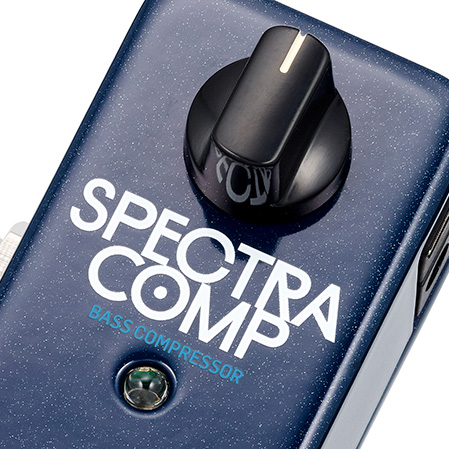
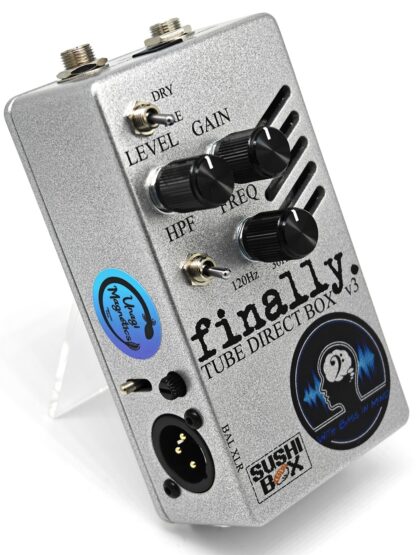
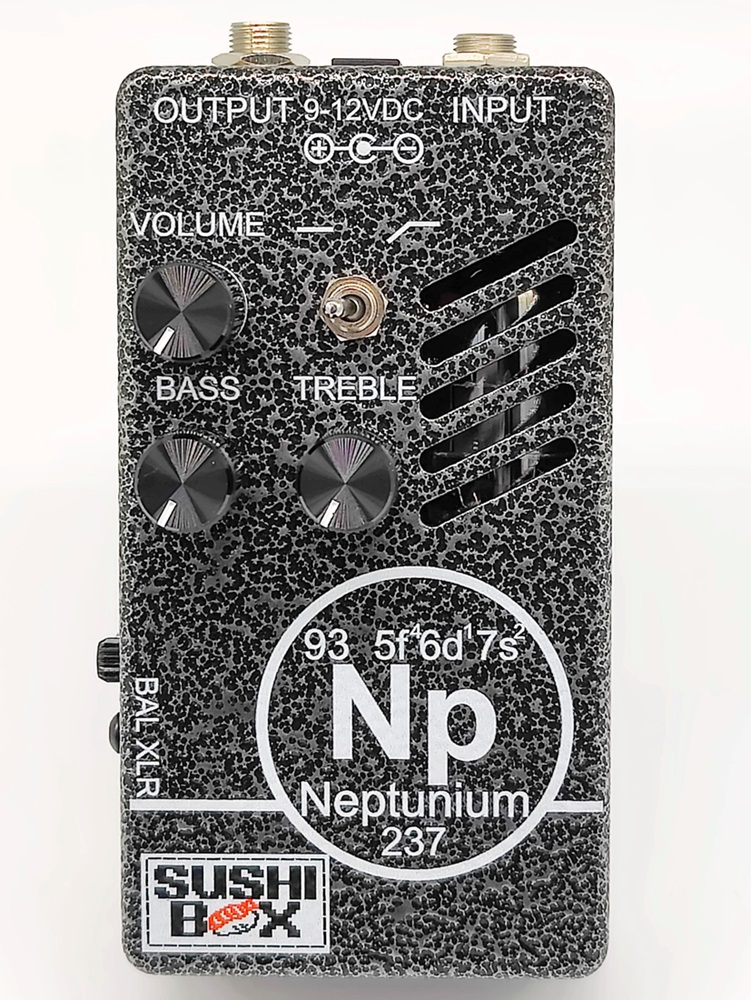
Reviews

Joyo Monomyth Preamp – Huge Tone, Small Price: Pedal Review (2025)

A Modern Solution for Versatile Bass Tone In an era where ampless setups are becoming the norm for gigging musicians and studio artists alike, the Joyo Monomyth Bass Preamp emerges as a powerful tool for bass players. Designed with modern versatility in mind, this preamp combines an expansive feature set—independent EQ and overdrive channels, DI output, cab simulation, and more—into a compact, affordable package. From pristine clean tones to face-melting fuzz, the Monomyth aims to be a one-stop solution for players who demand flexibility without compromise. Verdict – Joyo Monomyth Bass Preamp Pedal Check Price on Amazon –> Disclaimer: This pedal was kindly provided by Joyo for the purpose of this review. However, this does not influence our opinion or the content of our review. We strive to provide honest, unbiased, and accurate assessments to ensure that our readers receive truthful and helpful information. Amplifying the Ampless Trend The rise of ampless setups—where musicians bypass traditional amplifiers in favor of DI (direct input) solutions or modeling technology—has reshaped live performance and recording workflows. For bass players, achieving consistent, powerful tone without lugging heavy equipment is a game-changer. Here’s what an ampless setup typically requires: The Joyo Monomyth delivers on all fronts. Its DI output, cab sim feature, and headphone out make it a stellar centerpiece for an ampless rig, while the dual-channel design ensures tonal adaptability for any style or situation. Features That Define Modern Bass Tone The Monomyth’s comprehensive control set makes it a standout in the bass preamp market. Key features include: Performance: The Quintessential Modern Bass Preamp The Joyo Monomyth excels at balancing traditional and contemporary bass needs. The 6-band EQ delivers precision control over frequencies, from sub-bass to cutting highs, while the overdrive channel offers everything from subtle warmth to aggressive fuzz. The blend and voice controls allow for nuanced shaping, ensuring that your tone retains clarity even at higher gain levels. For ampless setups, the Monomyth’s DI output and cab sim provide a polished, stage-ready sound that eliminates the need for heavy amplifiers. The versatile connectivity options make it equally effective in studio environments, allowing for direct recording with minimal fuss. Pros Cons FAQs Q: Does the Joyo Monomyth work with both active and passive basses?A: Yes, it handles both well, though you may need to tweak gain levels for active pickups. Q: Can it replace a full bass amp for live use?A: Yes, but you might want to have some sort of in-ear solution for monitoring. Q: Does it require an external power supply?A: Yes, it runs on a standard 9V DC supply (not included). Conclusion: Modern Versatility at Its Finest The Joyo Monomyth Bass Preamp is a definitive choice for bass players navigating the demands of contemporary music-making. Its dual-channel design, flexible controls, and robust output options make it an essential tool for players seeking ampless solutions without sacrificing tonal quality. Whether you’re crafting intricate studio lines or commanding the stage, the Monomyth delivers professional-grade sound in a portable and affordable package. If you want to know more about the Joyo Monomyth, check the official homepage here! ✅ See the latest Monomyth price on Amazon before you buy. Other Joyo Gear You Might Like If you enjoyed checking out this Joyo pedal, here are more Joyo products worth exploring — all tested and reviewed here on BassGearReviews: Click any product name to read the full review.

News

Music Man Unveils Tim Commerford Artist Series Bass

A Tribute to an Icon Music Man has announced the release of the Tim Commerford Artist Series Bass, a tribute to one of the most influential bassists of our time. Known for his pivotal role in Rage Against the Machine and Audioslave, Tim Commerford’s signature sound has inspired countless musicians. This new series combines Music Man’s craftsmanship with Tim’s personal refinements to create an instrument worthy of his legacy. A Bass Tailored for Precision and Power The Tim Commerford Artist Series includes both full-scale and short-scale models, offering players the flexibility to reproduce the iconic tones that have defined Tim’s career. The collection pays homage to Commerford’s earliest pawnshop instruments while incorporating cutting-edge features to meet modern performance demands. Highlights of the series include: A Nod to a Legend Music Man has meticulously crafted these basses to reflect Commerford’s relentless pursuit of tone and precision. The design of the Artist Series is not just a testament to technical innovation but also a heartfelt homage to Tim’s contributions to music. The natural Stingray finish, coupled with his personalized adjustments, bridges the gap between tradition and modernity, making this bass a standout addition to any player’s arsenal. A Celebration of Musical Heritage The Tim Commerford Artist Series Bass is more than just an instrument—it’s a celebration of musical history. Whether you’re a fan of Commerford’s work or seeking a versatile and finely-tuned bass, this collection embodies the spirit of one of music’s most dynamic performers. The bass is now available through select retailers. Embrace the sound of an icon and elevate your playing with the Tim Commerford Artist Series.

Reviews

Joyo Double Thruster – High-Gain Bass Overdrive: Pedal Review (2025)

Affordable Versatility: Unlocking Iconic Bass Distortion with the Joyo Double Thruster Distortion is one of the most transformative effects in a bass player’s toolkit. From the gritty growl of Lemmy Kilmister to the fuzzy depths of Chris Wolstenholme’s tones, distortion has been pivotal in creating some of the most iconic bass sounds in music history. Yet, achieving a distortion tone that complements the bass’s foundational role while standing out in the mix is a challenge. Enter the Joyo Double Thruster: an affordable, feature-packed bass distortion pedal designed to meet the needs of modern bassists without compromising the essential low end. Verdict – Joyo Double Thruster Pedal Check the Price on Amazon –> Disclaimer: This pedal was kindly provided by Joyo for the purpose of this review. However, this does not influence our opinion or the content of our review. We strive to provide honest, unbiased, and accurate assessments to ensure that our readers receive truthful and helpful information. The Role of Distortion in Bass History Bass distortion isn’t just about adding grit; it’s about adding energy, texture, and dynamics to a performance. The use of overdriven tones became a defining feature in rock and metal genres, with pioneers like John Entwistle and Geezer Butler shaping their sounds through innovative use of distorted amps and effects. Modern players like Tim Commerford and Justin Chancellor have taken this foundation further, using distortion to carve out sonic space in dense mixes and add expressive character to their playing. With its range of tonal options and budget-friendly design, the Joyo Double Thruster aims to honor this tradition while delivering the versatility demanded by today’s bassists. Features and Specs Compact yet rugged, the Joyo Double Thruster is built to handle both the stage and studio. Its comprehensive controls allow bass players to sculpt their tone with precision. Specifications: Control Layout: Performance The Double Thruster excels in providing a diverse palette of distortion tones. Whether you’re looking for a gentle growl to add harmonic richness or an aggressive fuzz to push the boundaries of heavy music, this pedal delivers. Why Bass Players Need Distortion Distortion isn’t just for the guitarists hogging the spotlight. For bass players, distortion adds dimension to their role as both a rhythmic and melodic foundation. It can: Pros and Cons Pros: Cons: FAQs Q: Is the Double Thruster suitable for slap bass?A: It works best for overdriven tones; slap bass may need tone adjustments to maintain clarity. Q: Does it preserve low-end frequencies?A: Yes, it’s specially designed to keep punchy lows intact while delivering sharp mids and highs. Q: Can it be used with both active and passive basses?A: Absolutely, though slight gain adjustments may be necessary to match pickup output. Final Thoughts The Joyo Double Thruster is more than just a budget-friendly bass distortion pedal; it’s a gateway to exploring the sonic possibilities that distortion offers. With its thoughtful design, excellent low-end retention, and versatility, it’s a tool that honors the legacy of bass distortion while meeting the needs of modern players. If you want to know more about the Joyo Double Thruster, check the official homepage here! Grab the Joyo Double Thruster here → Other Joyo Gear You Might Like If you enjoyed checking out this Joyo pedal, here are more Joyo products worth exploring — all tested and reviewed here on BassGearReviews:

Reviews

Origin Effects Cali76 Compact Bass: Pedal Review

Classic Studio Compression Meets Modern Bass Innovation Compression is one of the most vital tools in a bass player’s arsenal, shaping dynamics, enhancing sustain, and adding tonal character. The Origin Effects Cali76 Compact Bass Compressor has emerged as a standout offering in this domain, inspired by the iconic Urei 1176 studio compressor. By combining the heritage of studio-grade FET compression with features tailored specifically for bassists, the Cali76 Compact Bass seeks to deliver professional-quality compression in a pedalboard-friendly format. Let’s explore its origins, features, and what sets it apart from the competition. The Legacy of the 1176 The Urei 1176 is one of the most celebrated compressors in recording history, lauded for its lightning-fast attack, musical release, and rich tonal coloration. Developed in the late 1960s by Bill Putnam, it became a staple in studios for its ability to enhance vocals, drums, and bass with unparalleled precision and character. For bass players, the 1176’s ability to control transients while imparting warmth and thickness made it a go-to tool for recording. The Cali76 Compact Bass takes this legendary circuit and adapts it for the needs of live performance and modern pedalboard setups. By distilling the essence of the 1176 into a compact enclosure, Origin Effects has made this classic sound accessible to bassists everywhere. Features and Controls The Cali76 Compact Bass Compressor boasts an array of controls designed to provide precision and flexibility: Additionally, a single LED serves as both an on/off indicator and a gain reduction meter, glowing in varying intensities and colors to represent the compression level. Pros of the Cali76 Compact Bass Cons of the Cali76 Compact Bass Practical Applications The Cali76 Compact Bass excels in a variety of scenarios: Conclusion The Origin Effects Cali76 Compact Bass Compressor pays homage to the iconic 1176 while introducing innovations tailored for bassists. With its impeccable build quality, rich tonal character, and thoughtful features like parallel compression and an HPF, it’s a powerful tool for shaping bass tone. While the pedal may demand a higher investment of both money and learning time, the payoff is a professional-grade compression experience that elevates any performance or recording. For bass players who prioritize tonal excellence and versatility, the Cali76 Compact Bass is a worthy addition to the pedalboard—not just a piece of gear, but a gateway to refined and inspired bass playing.

Reviews

Joyo Tidal Wave – Vintage & Modern Tones: Pedal Review (2025)

A Modern Homage to Iconic 90s Bass Tones The Joyo Tidal Wave Preamp stands out in a crowded market of bass preamp/DI pedals, offering an enticing blend of vintage tone emulation and modern functionality. Drawing direct inspiration from the legendary tech21 SansAmp—a pedal that defined the 90s bass sound—the Tidal Wave builds on this iconic lineage with enhanced controls, thoughtful design, and features that cater to contemporary bassists. This review explores the pedal’s history, features, and performance, emphasizing its relevance as a versatile and budget-friendly tool for both stage and studio applications. Verdict – Joyo Tidal Wave Bass Preamp Pedal Check Price on Amazon –> Disclaimer: This pedal was kindly provided by Joyo for the purpose of this review. However, this does not influence our opinion or the content of our review. We strive to provide honest, unbiased, and accurate assessments to ensure that our readers receive truthful and helpful information. The Legacy of the tech21 SansAmp To fully appreciate the Joyo Tidal Wave, it’s essential to understand its roots. The tech21 SansAmp, released in the late 1980s, revolutionized bass tone by offering a portable solution for achieving amp-like sounds without an amplifier. With its analog circuitry and intuitive controls, the SansAmp became a favorite among bassists seeking the warm, driven tones of tube amps in a DI format. Its cab simulation, EQ, and drive capabilities made it a staple for recording and live performance, particularly in genres like rock, punk, and grunge. The Joyo Tidal Wave acknowledges this heritage but takes it a step further. While the SansAmp was groundbreaking for its time, the Tidal Wave integrates additional features and refinements to meet the demands of modern players. From expanded EQ options to added outputs and customization capabilities, the Tidal Wave represents a thoughtful evolution of the classic preamp concept. Specifications and Features Specifications: Key Features: The Tidal Wave’s comprehensive control set is designed to provide unparalleled tonal flexibility: Signal Controls: EQ Section: Utility Features: Performance and Sound A Sonic Step Forward The Joyo Tidal Wave excels in emulating the classic rock tones associated with the SansAmp, while offering modern enhancements that elevate its utility. The pedal’s analog circuitry captures the warmth and character of vintage tube amps, delivering everything from pristine cleans to low-gain distortion with remarkable clarity. EQ Versatility The 3-band EQ, coupled with the Middle and Bass Shift switches, provides a level of tonal precision that surpasses many of its competitors. Whether you’re dialing in a scooped tone for slap bass or boosting mids for a punchy rock presence, the Tidal Wave’s EQ is intuitive and responsive. Cab Simulation and DI Output The cab simulation on the XLR DI output is a standout feature, allowing bassists to achieve amp-like tones in ampless setups. This makes the Tidal Wave an excellent choice for direct recording, live sound reinforcement, and even in-ear monitoring systems. However, the cab simulation is limited to the XLR output, which may require additional routing for those seeking consistent cab-simulated tones across all outputs. Blend Control: The Key to Integration The Blend control is particularly noteworthy, as it allows players to retain the clarity and definition of their dry signal while adding the warmth and grit of the pedal’s processing. This feature is invaluable for maintaining low-end integrity, especially in live settings where bass frequencies must remain articulate. Modern Utility Meets Vintage Character The Joyo Tidal Wave’s headphone output and compact design make it an attractive option for practice and travel, while its rugged construction ensures reliability on stage. The addition of features like the Ground Lift and LED light control demonstrates Joyo’s attention to practical details that enhance the user experience. Why the Joyo Tidal Wave Matters While the tech21 SansAmp laid the groundwork for preamp/DI pedals, the Tidal Wave builds upon this legacy with modern conveniences and expanded tonal options. By combining vintage-inspired analog warmth with features tailored to today’s bassists, the Tidal Wave proves that homage doesn’t have to mean stagnation. It’s a step forward, providing a more versatile and accessible solution for bass players at all levels. Pros and Cons Pros: Cons: FAQs Q: Does the Joyo Tidal Wave have a built-in DI?A: Yes, it includes a balanced XLR output with cabinet simulation, making it suitable for direct connection to PA systems or audio interfaces. Q: Can I use this pedal for silent practice?A: Absolutely. The Tidal Wave features a headphone output, allowing for quiet practice sessions without the need for an amplifier. Q: Is this pedal suitable for modern bass tones?A: While it excels at vintage ’90s tones, its versatile EQ controls allow for a range of modern bass sounds as well. Conclusion The Joyo Tidal Wave Preamp is more than a tribute to the tech21 SansAmp; it’s an evolution that blends vintage charm with modern functionality. Its comprehensive control set, robust build, and professional-grade outputs make it a compelling choice for bassists seeking to emulate classic tones or craft new sonic landscapes. Whether you’re recording, performing, or practicing, the Tidal Wave delivers reliable, inspiring performance that honors its roots while looking toward the future. If you want to know more about the Joyo Tidal Wave, check out their official homepage here. Shop the Tidal Wave pedal on Amazon → Other Joyo Gear You Might Like If you enjoyed checking out this Joyo pedal, here are more Joyo products worth exploring — all tested and reviewed here on BassGearReviews:

Reviews

Joyo Gloam – Dark & Gritty Bass Octave Drive: Pedal Review (2025)

Sub-Octave Fuzz Pedal for Bass Players The Joyo Gloam represents a bold entry into the world of bass effects, specifically targeting players seeking the rich textures of fuzz combined with the deep power of sub-octave synthesis. This review delves into the pedal’s features, performance, and its unique place in the lineage of bass pedals, examining why combining fuzz and sub-octave effects in one unit is a game-changer for many bass players. Verdict – Joyo Gloam Pedal Check the price on Amazon –> Disclaimer: This pedal was kindly provided by Joyo for the purpose of this review. However, this does not influence our opinion or the content of our review. We strive to provide honest, unbiased, and accurate assessments to ensure that our readers receive truthful and helpful information. A Brief History: Sub-Octave Pedals in Bass Guitar Sub-octave effects have long been a staple for bassists looking to expand their sonic range. Pioneered by pedals like the Boss OC-2 and later refined by models such as the EHX POG series, sub-octave effects create a lower-pitched signal that complements the original tone. These pedals found their niche in everything from funk and R&B to experimental and synth-heavy genres, offering bassists the ability to emulate keyboard bass or create earth-shaking lows. Fuzz, on the other hand, has been a cornerstone of rock and metal bass tones, from the raw aggression of the Big Muff to boutique offerings catering to modern players. Combining fuzz and sub-octave effects isn’t a new concept—pedals like the EHX Bass Microsynth and Darkglass Duality explored this territory—but the Joyo Gloam’s implementation brings a fresh approach at an accessible price point. Specifications and Controls Specifications: Control Layout: The Gloam features a dual-circuit design, offering extensive control over both fuzz and sub-octave channels: Sub-Octave Section: Fuzz Section: Performance and Sound Dual Circuits: Synergy and Limitations The Joyo Gloam’s standout feature is its dual-circuit design, allowing independent control over the sub-octave and fuzz channels. This flexibility opens a vast range of sonic possibilities, from subtle harmonic enhancement to all-out synth-inspired chaos. However, the pedal’s design includes a notable limitation: the sub-octave circuit cannot be engaged independently of the fuzz circuit. While you can effectively “solo” the sub-octave by turning down the fuzz controls, it would have been preferable to allow completely separate operation. Despite this, the integration of these effects in one unit simplifies pedalboard setups and provides a cohesive tonal synergy that’s difficult to achieve with separate pedals. Sub-Octave Circuit The sub-octave channel excels in delivering deep, balanced tones that blend well with both clean and fuzz signals. The inclusion of a dry tone frequency switch offers added flexibility, enabling players to emphasize different frequency ranges for the clean signal. This can be particularly useful in live settings where articulation and clarity are paramount. The sub-octave sound itself is reminiscent of classic analog octavers but with a slightly more modern, polished edge—perfect for bassists who want a versatile and reliable low-end boost. Fuzz Circuit The fuzz circuit provides a dynamic and rich tonal palette. The two-band EQ (bass and treble) is particularly effective, allowing you to sculpt the fuzz’s tonal character to sit perfectly in a mix. The Gain and Fuzz Intensity controls offer a wide range of distortion, from subtle overdrive to searing, aggressive fuzz. However, not everything is perfect; one of the two fuzz modes feels less practical and somewhat uninspired compared to the other, which delivers a thick, satisfying tone suitable for a variety of genres. Combined Effect: Synth-Like Textures When used together, the sub-octave and fuzz circuits unlock the Gloam’s full potential. The sub-octave’s precision and the fuzz’s raw power combine to create textures that evoke classic analog synths, reminiscent of Moog basslines. This makes the Gloam an ideal choice for bassists in electronic, experimental, or progressive genres, as well as those looking to push the boundaries of traditional bass tones. Why Combine Sub-Octave and Fuzz? For bassists, combining sub-octave and fuzz effects is more than a gimmick—it’s a practical solution for achieving massive, layered tones. Sub-octave effects add weight and depth, ensuring the bass remains grounded even in dense mixes, while fuzz introduces harmonic richness and aggressive overtones. Together, they create a sound that’s larger than life, allowing bass players to command the sonic space traditionally reserved for multiple instruments. In addition, having both effects in one pedal simplifies signal chains, reduces setup complexity, and minimizes potential compatibility issues between separate pedals. The Joyo Gloam’s thoughtful integration of these two effects makes it a valuable tool for both live performance and studio work. Pros and Cons Pros: Cons: FAQs Q: Is the Joyo Gloam pedal true bypass?A: Yes, it’s true bypass, meaning no tone coloration when turned off. Q: Will it work for guitar as well as bass?A: Yes, but it’s voiced for bass frequencies—guitar tones will be darker. Q: Can it run on batteries?A: No, it requires a standard 9V DC power supply. Conclusion The Joyo Gloam sub-octave fuzz pedal is a standout choice for bassists looking to explore new sonic territory. While it has some limitations, its combination of rich fuzz tones and deep sub-octave effects delivers a compelling range of sounds that can transform a bassist’s role in any musical context. Its sturdy construction and affordable price point further cement its appeal, making it a worthy addition to any pedalboard. For bassists seeking a versatile, modern take on classic effects, the Joyo Gloam is a pedal that delivers both inspiration and practical value—all without breaking the bank. If you want to know more about the Joyo Gloam, check their official page. 🔥 Snag the Gloam from Amazon now – dark bass tone at a bright price. Other Joyo Gear You Might Like If you enjoyed checking out this Joyo pedal, here are more Joyo products worth exploring — all tested and reviewed here on BassGearReviews: 💡 Click any product name to read the full review.

News

Electro-Harmonix Unveils the 360+ Looper

Compact Power Redefined Electro-Harmonix is thrilled to announce the release of the 360+ Looper, the next evolution of the beloved Nano Looper 360. With a decade of proven success as a go-to looper for musicians worldwide, the Nano Looper 360 has set the standard for affordability and simplicity. Now, the 360+ Looper elevates that legacy with a refined feature set and an even smaller Pico-sized footprint. Compact Design, Expanded Functionality Building on the intuitive, single-footswitch design of the Nano Looper 360, the 360+ Looper introduces powerful upgrades for musicians seeking greater creative control: Features That Inspire Creativity The 360+ Looper retains the core elements that made the Nano Looper 360 a best-seller while introducing fresh capabilities that enhance usability: Designed for Every Musician Whether you’re a solo artist, a band member, or a studio producer, the 360+ Looper delivers the tools you need to elevate your performance. Its compact size fits seamlessly into any pedalboard setup, while its powerful features provide versatility for both practice and live performances. For more information, visit Electro-Harmonix 360 Pico Looper webpage. About Electro-HarmonixFor decades, Electro-Harmonix has been a pioneer in designing innovative and accessible effects pedals for musicians across the globe. The 360+ Looper continues this tradition, empowering players to create, explore, and perform like never before.

News

TC Electronic launches the Plethora X1 – TonePrint loader

14 effects, one compact stompbox TC Electronic is excited to announce the PLETHORA X1, a compact multi-effects pedal designed for musicians who demand versatility and portability. While its wide array of effects makes it a game-changer for guitarists, bass players will find it an invaluable tool for exploring new dimensions of tone. With its ability to adapt to any position on your pedalboard, the PLETHORA X1 delivers the tools you need to elevate your sound. Unlock the Perfect Tone for Any Style Whether you’re locking in tight grooves or exploring melodic bass lines, the PLETHORA X1 is ready to inspire. Bassists can tap into effects that enhance the low end without compromising clarity, including: These effects—alongside 14 other TonePrint-enabled options—make the PLETHORA X1 a versatile addition to any pedalboard, offering the flexibility to adapt to your needs as a bass player while keeping the door open for other sonic adventures. Compact Control, Endless Flexibility The PLETHORA X1’s single footswitch offers five modes of operation: Your Go-To Pedal for Every Gig The PLETHORA X1 is not just a pedal; it’s a solution. Whether you’re looking for subtle enhancements to your tone or dramatic, show-stopping effects, the PLETHORA X1 provides the tools you need to make your bass stand out. For Every Musician’s Journey Although designed with all players in mind, bassists will especially appreciate how the PLETHORA X1 enhances low-end frequencies without sacrificing definition or clarity. From its flexible design to its impressive range of effects, this pedal is perfect for both foundational grooves and experimental textures. For more details and to order, visit: Plethora official website The PLETHORA X1—designed for all musicians but packed with features bass players will love.

Reviews

Joyo Scylla Bass Compressor – Tight, Punchy Tone: Pedal Review (2025)

A Budget-Friendly Tool With Pro-Level Features Disclaimer: This pedal was kindly provided by Joyo for the purpose of this review. However, this does not influence our opinion or the content of our review. We strive to provide honest, unbiased, and accurate assessments to ensure that our readers receive truthful and helpful information. Verdict: Joyo Scylla Compressor Pedal In the vast and often overwhelming world of effects pedals for bass guitar, compressors hold a unique place. They act as a silent hero—subtly enhancing your tone, controlling dynamics, and providing a polished, professional sound. However, finding a compressor that balances performance and affordability without cutting corners can feel like searching for a needle in a haystack. Enter the Joyo Scylla Compressor—a pedal that punches well above its price point, offering an impressive suite of features and controls typically reserved for far more expensive units. Designed for the modern bassist who demands flexibility, tone shaping, and quality compression, the Scylla blends form, function, and affordability into one compact box. Let’s explore why this little gem has earned its place on so many pedalboards. Build and Specs: Compact, Portable, and Efficient The Scylla Compressor measures 109 mm x 72 mm x 48 mm and weighs just 234 grams. Its compact size makes it perfect for even the most cramped pedalboards—ideal for gigging musicians or studio setups where space is at a premium. Despite its small footprint, the pedal feels sturdy and well-built, thanks to its solid metal casing that ensures durability on the road. Powering the unit is simple: it requires a 9V DC power supply with a low current draw of just 100 mA, making it easy to integrate into any existing pedal power system. Understanding Compression and Controls At its core, a compressor evens out your signal, controlling volume peaks while boosting quieter parts. This process ensures your bass remains consistent in a mix, adds sustain, and enhances your overall tone. The Joyo Scylla stands out due to its highly detailed six-knob control layout, providing professional-grade sound sculpting capabilities: Input Gain:The Input Gain knob controls the level of your incoming signal before it reaches the compression circuit. Increasing this setting pushes the compressor harder, resulting in a more pronounced compression effect. This is particularly useful for bassists switching between active and passive basses, as it allows you to fine-tune the signal strength entering the pedal. Output Volume (Makeup Gain):Compression naturally reduces the overall signal volume. The Output Volume knob compensates for this loss by boosting the level of your compressed signal. This ensures your bass remains prominent and sits well in the mix, no matter how much compression is applied. Compression Ratio:The Compression Ratio determines how much the signal is reduced once it crosses the compressor’s threshold. Unlike simpler pedals that provide fixed ratio presets, the Scylla offers continuous ratio control. This allows for everything from gentle leveling at lower settings (e.g., 2:1) to heavy limiting for slap bass or aggressive playing styles (e.g., 10:1 or more). Attack:Attack determines how quickly the compressor reacts to your playing after a note is struck. A faster attack clamps down immediately, providing a tight, punchy sound—perfect for slap bass and fast, percussive playing. A slower attack allows the initial transients to pass through untouched, giving a more natural and dynamic feel. Release:Release controls how quickly the compression effect stops after the signal drops below the threshold. Faster settings allow the compressor to reset quickly, which suits fast-playing styles, while slower settings produce a more natural sustain that’s perfect for long, legato notes. Output Tone Control:The Output Tone knob is a unique addition rarely seen in budget compressors. It adjusts the EQ coloration of the compressed signal, allowing you to dial in a touch of brightness or warmth. This feature is especially valuable for bassists who want to tweak their tone after compression without relying on an external EQ pedal. Performance: Transparent Compression That Enhances Your Playing On the performance front, the Joyo Scylla excels by delivering transparent, musical compression that enhances your playing without squashing your tone. Whether smoothing dynamics for fingerstyle, adding sustain for ballads, or tightening peaks for slap and pick playing, the Scylla handles it all effortlessly. The Scylla also impresses with its low noise floor, meaning it won’t introduce unwanted hiss or hum into your signal chain—an essential quality for bassists relying on clean, articulate tones. Pros and Cons: A Quick Look Pros: Cons: FAQs Q: Does the Joyo Scylla work with both active and passive basses?A: Yes, the Input Gain knob allows you to adjust the signal level, accommodating both active and passive pickups. Q: Can I use this pedal for slap bass techniques?A: Absolutely. The fast attack setting provides tight, punchy compression ideal for slap bass. Q: Is the Joyo Scylla suitable for live performances?A: Yes, its compact size and durable metal casing make it a reliable choice for gigging musicians. Conclusion: A Compressor That Outperforms Its Price The Joyo Scylla Compressor is a testament to how far budget pedals have come. Offering a detailed control set, transparent compression, and thoughtful features like the tone control, the Scylla allows bassists to craft their sound with precision and confidence. While it may lack some bells and whistles, such as visual metering, its overall performance and versatility more than make up for these minor omissions. For bassists looking to add smooth, controlled dynamics and a touch of tone shaping to their setup without breaking the bank, the Scylla Compressor is an absolute standout. From its compact size to its ability to handle a wide range of playing styles, the Joyo Scylla proves that high-quality compression doesn’t need a premium price tag. Whether you’re a gigging professional or an aspiring bassist building your first pedalboard, this pedal deserves serious consideration. For more details, visit joyoaudio.com. Get the Joyo Scylla on Amazon today → Other Joyo Gear You Might Like If you enjoyed checking out this Joyo pedal, here are more Joyo products worth exploring — all tested and reviewed here on BassGearReviews:

News

Fender Unveils new line of Bass Pedals

The Fender Bassman is the new line of pedals released exclusively for Bass Players Fender has just unveiled their new line of Bassman pedals, which draw inspiration from the original bass tube amp line from years ago. The Bassman pedal line hosts a collection of meticulously crafted analog and digital circuits to really nail down whatever bass tone you’re after. Each pedal in the Bassman lineup offers intuitive three-knob controls alongside two switches for precise tone shaping. The Bassman pedals are available now for $119 each.

Welcome to Bass Gear Reviews!

Welcome to Bass Gear Reviews: Your New Go-To for Bass News and Reviews Hello, and welcome to Bass Gear Reviews! Whether you’re an experienced bass player, a budding enthusiast, or simply someone passionate about music gear, we’re thrilled to have you here. Who We Are Bass Gear Reviews is a brand-new platform dedicated to all things bass gear. Founded by Cláudio Ribeiro—a bass player and writer from Portugal—this website is built on a love for music, a deep respect for the bass community, and a commitment to helping fellow musicians make informed decisions about their gear. As a musician myself, I know how important it is to find the right equipment to express your unique sound. That’s why I created Bass Gear Reviews—to be your trusted guide in navigating the ever-evolving world of bass gear. What We Do At Bass Gear Reviews, we focus on two key areas: NewsStay updated with the latest happenings in the bass gear world. From new product launches to updates from top manufacturers, we bring you the news that matters most to bass players. Gear ReviewsOur reviews are detailed, honest, and straightforward. Whether it’s bass guitars, amplifiers, pedals, or accessories, we dig deep into the features, performance, and value of each product. Our goal is to give you all the insights you need to choose gear that matches your style and needs. While our focus is currently on news and reviews, we’re just getting started. As we grow, expect even more content designed to support and inspire bass players everywhere. What You Can Expect Here’s what you can look forward to when visiting Bass Gear Reviews: Join Us on This Journey Bass Gear Reviews is more than a website; it’s a passion project created for the bass-playing community. Whether you’re on the hunt for your next piece of gear or just curious about the latest trends, we aim to be your reliable resource. We’re just getting started, and we’re excited to grow with your support. If you have any questions, suggestions, or even just want to say hello, feel free to reach out via our the links in our Contact page. Let’s dive into the world of bass gear together. Welcome to Bass Gear Reviews!

Vavada vavada4casino

Vavada vavada4casino лучшие игры и удобный интерфейс Vavada vavada4casino Ищете площадку с настольными забавами и слотами, где каждый клик приносит удовольствие? Обратите внимание на это казино, которое предлагает разнообразные возможности для ставок и выигрышей. Простота навигации позволит вам сосредоточиться на процессе, не отвлекаясь на лишние детали. Благодаря разнообразию провайдеров, вы насладитесь захватывающими сюжетами и увлекательным геймплеем. Входите в акции и получайте заманчивые бонусы, которые увеличат ваши шансы на успех. Каждую неделю проводятся турниры, приносящие отличные призы и возможность проявить себя. Не упустите момент и погрузитесь в мир ярких эмоций. Присоединяйтесь к сообществу любителей удачи и наслаждайтесь качественным сервисом, отзывчивой поддержкой и множеством увлекательных моментов! Каждый игрок найдет здесь что-то для себя, будь то опытные беттеры или новички. Vavada vavada4casino: лучшие игры и удобный интерфейс Выбирайте слоты с высокой отдачей для максимума выигрышей. Оптимально исследуйте разделы с новинками и популярными предложениями, чтобы не пропустить интересные сессии. Группировка по темам и жанрам упрощает поиск. Вам доступны: Классические автоматы с фруктами Современные видеослоты с эффектной графикой Игры с прогрессивными джекпотами для внушительных выигрышей Посмотрите на меню: оно интуитивно понятное, что позволяет быстро переключаться между категориями, а фильтры помогают найти нужное за секунды. Не забывайте про удобные опции поиска по названию. Разнообразие ставок удовлетворит как новичков, так и опытных игроков. Этот аспект способствует комфортной игре и возможности попробовать себя в разных стратегиях. Кроме того, бонусные предложения добавляют интерес к процессу – воспользуйтесь ими для увеличения шансов на успех. На сайте также много тематических турниров. Участвуйте, чтобы поучаствовать в борьбе за призы и испытать новые эмоции от игрового процесса. Всегда публикуются актуальные события, так что следите за обновлениями. Со всеми этими функциями вы сможете получить незабываемые впечатления и повысить свои шансы на удачу. Не упустите возможность насладиться игрой на совершенно новом уровне. Как выбрать лучшие игры на Vavada для максимального удовольствия? Начните с изучения отзывов других пользователей. Реальные мнения о платформе помогут понять, что нравится людям, а что нет. Проверьте специальные форумы и социальные сети. Обратите внимание на категории развлечений. Например, если предпочитаете слоты, смотрите на популярные и высоко оцененные модели. Часто производители выпускают новинки, которые могут вас заинтересовать. Не забудьте про демо-версии. Играя бесплатно, вы сможете оценить механики и графику, прежде чем делать ставку реальными средствами. Это отличный способ понять, что вызывает у вас интерес. Следите за специальными предложениями и акциями. Часто на площадках бывают турниры или бонусы, которые могут существенно увеличить шансы на выигрыш или дать возможность протестировать новинки. Определите свои предпочтения по ставкам. Если вы новичок, выбирайте развлечения с низкими ставками, чтобы постепенно освоиться. Перебор с высокими рисками может испортить впечатление. Сравните RTP (возврат игроку) и волатильность. Эти параметры помогут оценить, сколько можно вернуть в среднем и как часто происходят выигрыши. Чем выше RTP и низкая волатильность, тем больше шансов на успех. Выбирайте проверенные провайдеры. Качество графики и звука, а также надежность механик играют значительную роль. Известные разработчики имеют хорошую репутацию и стабильный уровень продукции. Не забывайте о мобильной версии. Убедитесь, что платформа удобна для игры на телефоне или планшете, если хотите наслаждаться развлечениями на ходу. Уделяйте время изучению правил. Понимание механик не только увеличит шансы на выигрыш, но и сделает процесс более увлекательным. Какие особенности интерфейса Vavada делают игру комфортной? Система фильтрации и поиска позволяет находить любимые развлечения без лишних усилий. Вы можете настроить параметры по жанрам, популярности и новизне, что экономит время. Адаптивный дизайн делает платформу доступной на любых устройствах, от настольных ПК до мобильных телефонов. Это означает, что вы можете играть в любое время и в любом месте без потери качества. Яркая графика и простота выбора делают процесс развлечения еще более увлекательным. Все кнопки и элементы управления находятся на виду, что исключает запутанность. Дополнительная функция – быстрый доступ к истории ставок и любимым развлечениям. Это позволяет оставаться в курсе своих действий и быстро возвращаться к интересующим вам опциям. Также стоит отметить потоковое вещание, которое предоставляет возможность наблюдать за играми в реальном времени, что добавляет остроту моментам и вовлеченность. Если вы ищете актуальное зеркало, можно воспользоваться vavada зеркало на сегодня, чтобы иметь доступ к прежнему функционалу без ограничений. Где найти самые актуальные акции и бонусы для пользователей Vavada? Посетите раздел “Акции” на официальном сайте. Там регулярно публикуются обновления с привлекательными предложениями и акциями. Вам также стоит подписаться на рассылку новостей, чтобы получать свежую информацию о бонусах и акциях прямо на электронную почту. Следите за социальными сетями платформы. Иногда в социальных медиа проводятся специальные акции и конкурсы с уникальными предложениями, о которых не упоминают на сайте. Форумы и сообщества игроков – отличное место для обмена опытом. Участники часто делятся своими находками и предлагают советы по максимально эффективному использованию бонусов и акций. Обратите внимание на праздничные события. Как правило, в такие дни запускаются дополнительные акции и вознаграждения, так что не упустите возможность. Некоторые сайты-агрегаторы также предоставляют списки активных бонусов и акций для различных платформ. Это позволит вам сравнить предложения и выбрать наиболее выгодные для себя.