Disclaimer: This pedal was kindly provided by Donner for the purpose of this review. However, this does not influence our opinions or the content of our reviews. We strive to provide honest, unbiased, and accurate assessments to ensure that our readers receive truthful and helpful information.
Overview
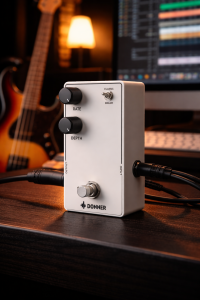
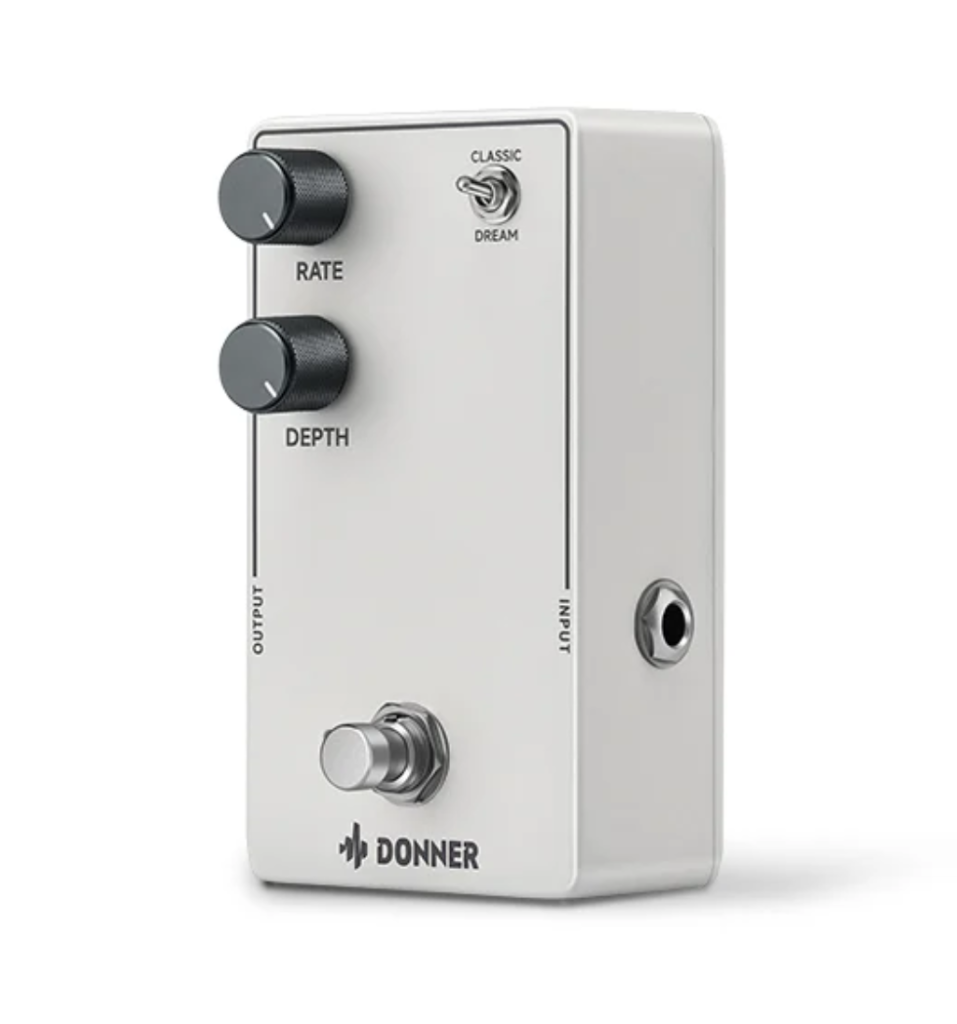
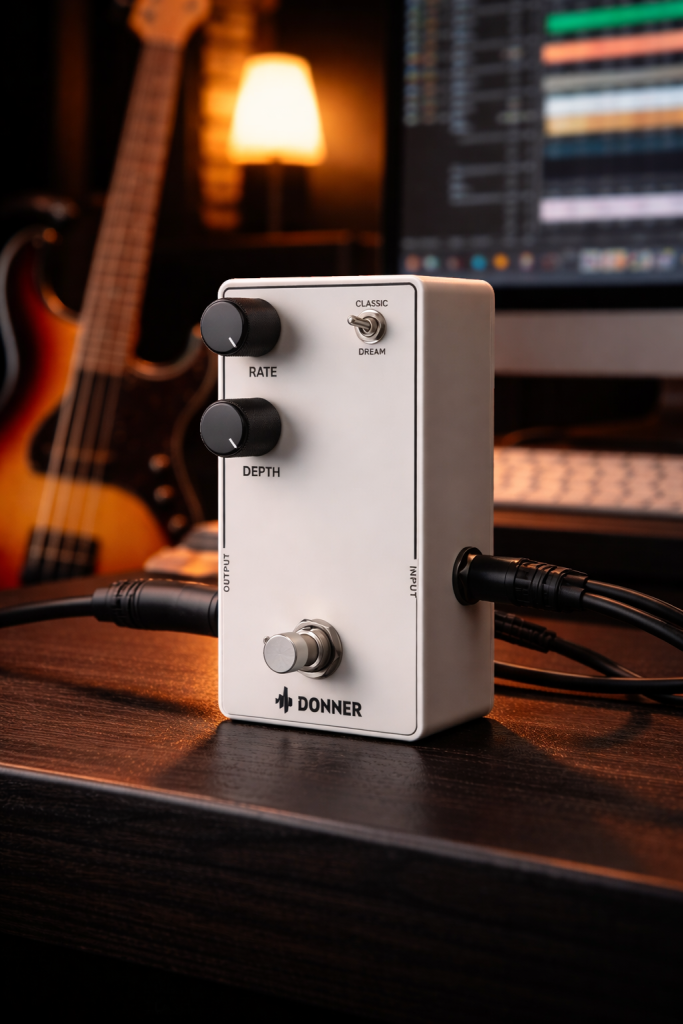
The CELESTIA Chorus is a dual-voice modulation pedal from Donner, developed in collaboration with Ruben Wan, a guitarist and producer known for ambient and modern modulation-focused tones.
It features two selectable voicings—Classic and Dream—alongside a simplified Rate/Depth control layout. The design centers on immediate access to two distinct chorus textures rather than offering a highly adjustable modulation platform.
From a bass perspective, the key consideration is not flexibility, but how the pedal manages low-frequency content under modulation.
Core Tone on Bass
The CELESTIA applies a voiced modulation layer that blends into the dry signal rather than sitting distinctly on top of it.
On bass, the chorus effect tends toward smooth integration. The modulation is rounded rather than sharply defined, with a slight emphasis in the upper mids of the wet signal. The result is a chorus that thickens the note body more than it separates it. The effect feels cohesive, but not highly articulated.
Low-End Retention
Low-frequency handling is central to how this pedal performs on bass.
The CELESTIA preserves the fundamental frequency but introduces low-mid diffusion as modulation depth increases. It does not isolate low frequencies from the effected signal.
In practice, the low end remains audible and present, but becomes less tightly focused under heavier settings. There is no crossover or clean blend control to maintain a completely unaffected fundamental, so clarity is progressively reduced as more modulation is applied.
Modes
Classic mode is the more controlled and mix-compatible voice. On bass, it adds width without excessive smear and maintains note center reasonably well. It works effectively for both fingerstyle and pick playing, behaving as a supporting modulation layer rather than a dominant effect. This makes it suitable for subtle movement in clean passages or light enhancement in ensemble settings.
Dream mode expands the modulation field significantly. On bass, it produces a wider and more immersive spread, with increased top-end presence. At the same time, it reduces note edge definition, particularly on sustained notes. At moderate settings, it can be effective for ambient or textural playing. At higher depth levels, the low-mid region becomes increasingly diffuse and bass lines lose precision in a mix. It is better suited to sparse arrangements or melodic work than to rhythmically dense playing.
Controls
The two controls define the practical usability of the pedal on bass.
The Rate control covers a usable range for musical modulation and avoids extreme or overly fast settings that would be less applicable in a bass context.
The Depth control has the greatest impact on low-end clarity. Lower settings retain usable definition, while higher settings introduce noticeable smearing in the low mids. Because there is no blend or EQ control, Depth effectively determines how much the chorus interferes with the fundamental.
Signal Structure & Mix Placement
The CELESTIA operates with a fixed internal wet/dry mix.
For bass players, this means the dry signal remains present, preserving the core of the tone, while the modulation layer cannot be independently reduced. At lower settings, the effect sits behind the note and adds width. At higher settings, it pushes the bass further back in the mix and reduces immediacy.
As a result, the pedal is more effective as a subtle enhancement tool than as a dominant modulation voice.
Dynamic Response
The pedal responds consistently across different playing dynamics. There are no significant compression artifacts, and the modulation remains stable regardless of input level. Transients are slightly softened, which contributes to a smoother overall response.
This can help even out fingerstyle playing and create a more polished modulation sound, but it reduces percussive attack clarity, particularly for slap or aggressive techniques.
Practical Bass Applications
The CELESTIA performs well in clean bass passages that require added width and movement, as well as in chordal or melodic playing. Dream mode, used conservatively, can provide useful ambient textures.
Its limitations become more apparent in tight, fast passages where precise low-end articulation is required, in slap contexts where transient clarity is critical, and in dense mixes where the bass must remain forward and clearly defined.
Limitations
The pedal does not provide control over low-frequency isolation and lacks wet/dry blend adjustment. As modulation depth increases, low-end definition is progressively reduced. These limitations are inherent to the design and define its usable range in a bass rig.
Conclusion
The CELESTIA Chorus functions as a fixed-architecture modulation device that prioritizes cohesion over separation.
For bass players, it maintains fundamental presence while introducing controlled low-mid diffusion as modulation increases. It performs most effectively at subtle to moderate settings, where it enhances width without significantly compromising clarity.
Classic mode offers the most consistent integration into a bass signal, while Dream mode provides a more expansive texture with corresponding trade-offs in definition.
For bass players specifically, the appeal lies in how the pedal adds width and movement without fully undermining the core low end. It works best as a supportive modulation layer—something that enhances the space around your tone rather than redefining it—making it a practical choice for players who want chorus as an extension of their sound rather than the focal point.
If you liked this gear, make sure to also check:
- Joyo Scylla Compressor – Smooth compression for consistent, punchy bass tone.
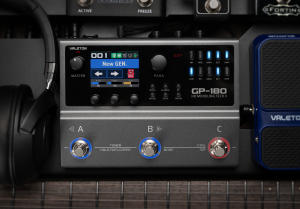
- Valeton GP-5 Multi Effects – Surprisingly powerful mini multi effects pedal.
- Joyo Tidal Wave – Vintage preamp based on the Sansamp circuit.
- Joyo Monomyth Bass Preamp – Versatile preamp with EQ shaping and DI output.
- Valeton GP-50 Multi Effects – Evolution of the powerful GP-5.
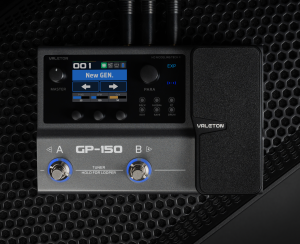
- Valeton GP-150 Multi Effects – The GP series option for expression pedal lovers.