A Review From a Bass Player’s Perspective
Disclaimer: This pedal was kindly provided by Donner for the purpose of this review. However, this does not influence our opinions or the content of our reviews. We strive to provide honest, unbiased, and accurate assessments to ensure that our readers receive truthful and helpful information.
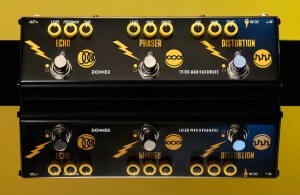
When a pedal comes out with Jack White’s name attached to it, you can usually expect something a little unconventional. The Donner Triple Threat Pedal definitely fits that description. It’s a compact, affordable box that combines distortion, phaser, and delay into one unit — clearly aimed at guitar players, but intriguing enough that a lot of bassists have started asking: is this thing actually usable on bass?
TL;DR
If you just want the short version: the Triple Threat is a fun, compact, and affordable multi-effects pedal that can work on bass, especially for delay and light modulation. The distortion is usable but limited, and the lack of a blend control means it won’t suit players who need to preserve a strong low end. Think of it as a creative add-on rather than the core of your sound.
First impressions and design
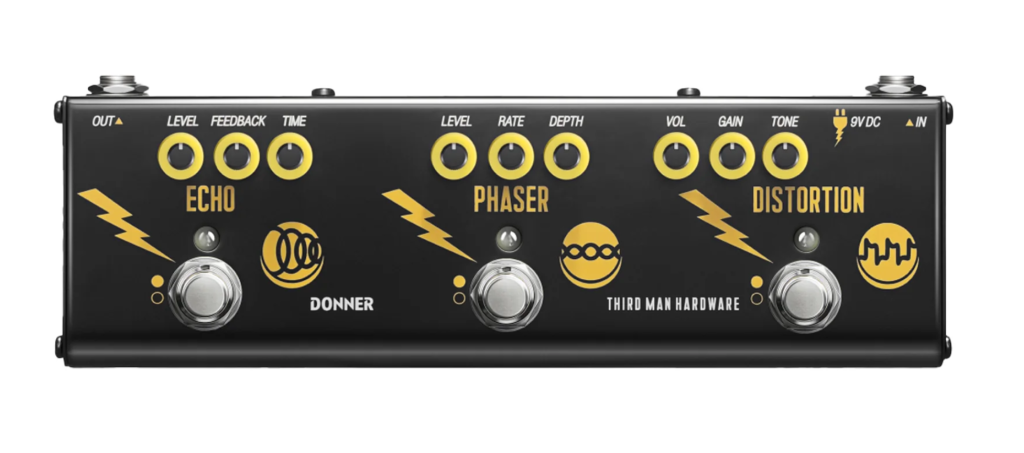
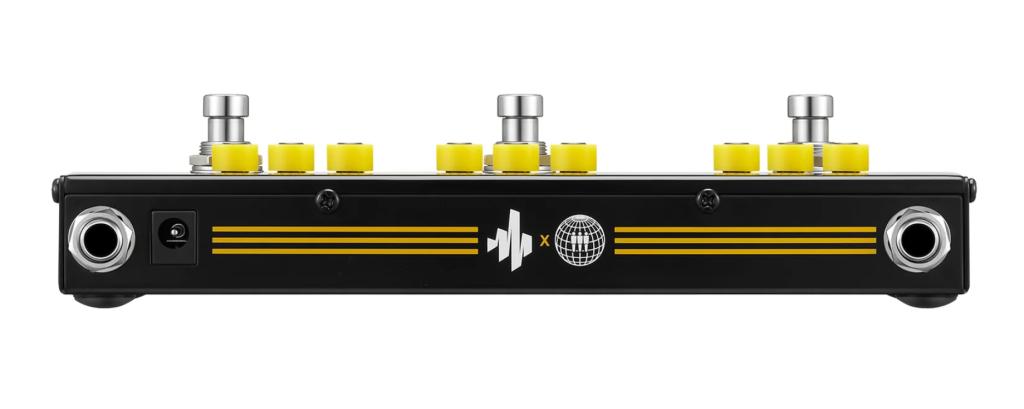
The Triple Threat feels like it was designed with a very specific mindset: keep things simple, keep things fun, and don’t overcomplicate anything. You get three effects, each with its own footswitch, and a straightforward set of controls. No menus, no presets, no hidden features.
From a bass player’s perspective, that simplicity is actually refreshing. You can throw it on a small board (or even go without a board entirely), plug in, and immediately start experimenting. It’s very much a “plug in and make noise” kind of pedal, which fits the whole Third Man aesthetic.
That said, the compact format does come with a tradeoff. The knobs are quite small, and if you’re someone who likes to tweak settings on the fly during a gig, it might feel a bit cramped.
How it actually sounds on bass
This is where things get interesting. Even though the pedal isn’t designed specifically for bass, parts of it translate surprisingly well.
The distortion section is probably the most divisive. It has a gritty, garage-rock character that sounds great in the right context, but it’s clearly voiced for guitar. Push the gain too far and you’ll notice your low end starting to thin out. Since there’s no clean blend control, you can’t easily mix your dry signal back in — something many bass players rely on to keep their fundamental intact.
Used more conservatively, though, it can add a nice layer of bite and attitude, especially for indie, garage, or lo-fi styles.
The phaser is easier to get along with. If you keep the rate slow and the depth under control, it adds movement without stepping all over your low frequencies. It’s not an effect most bassists use all the time, but when you want that subtle swirl, it does the job nicely.
The real standout here is the delay. The echo circuit has that warm, slightly dark analog character that sits behind your dry signal instead of competing with it. For ambient parts, dub-inspired lines, or just adding space to a sparse arrangement, it works remarkably well on bass.
Where it shows up in real rigs
Part of the buzz around this pedal comes from the fact that it’s been spotted on the board of Dominic John Davis, who plays bass for Jack White. That naturally raises expectations a bit.
Looking at his broader setup, though, gives some useful context. He typically runs a mix of pedals like the Boss TU-3 Chromatic Tuner, MXR M108 Ten Band Graphic EQ, and boutique effects such as the Mantic Effects Vitriol and Mantic Effects Isaiah Delay.
In that kind of rig, the Triple Threat isn’t the foundation of his tone. It’s more like a utility piece — something that can be kicked on for a specific texture or moment. That’s an important distinction, and it lines up pretty well with how most bass players will end up using it.
Q&A
Is the Triple Threat a good primary pedal for bass?
Not really. It works better as a secondary or “color” pedal rather than the foundation of your tone.
Which effect is most useful for bass?
The delay, easily. It sits well in the mix and adds space without muddying your low end.
Can the distortion work in a band setting?
Yes, but you’ll want to keep the gain in check. Too much and you risk losing low-frequency presence.
Does it replace a bass-specific pedalboard?
No. It’s more of a compact, creative tool than a full solution for shaping your bass tone.
Why would a pro like Dominic Davis use it?
Most likely for convenience and specific textures. In a larger rig, it’s a flexible extra rather than a main component.
Final thoughts
The Donner Triple Threat Pedal isn’t trying to be the ultimate bass effects unit, and it doesn’t need to be. What it offers instead is a straightforward, characterful set of sounds that invite experimentation.
For bass players who like to keep things minimal, or who want a single pedal that can add a bit of grit, movement, and space, it’s a surprisingly compelling option. Just don’t expect it to replace your core tone tools. Treat it as a creative companion, and it starts to make a lot more sense.
Make sure to get yours on Amazon Now!
If you liked this gear, make sure to also check:
- Joyo Scylla Compressor – Smooth compression for consistent, punchy bass tone.
- Valeton GP-5 Multi Effects – Surprisingly powerful mini multi effects pedal.
- Joyo Tidal Wave – Vintage preamp based on the Sansamp circuit.
- Joyo Monomyth Bass Preamp – Versatile preamp with EQ shaping and DI output.
- Valeton GP-50 Multi Effects – Evolution of the powerful GP-5.
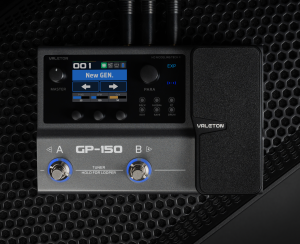
- Valeton GP-150 Multi Effects – The GP series option for expression pedal lovers.