A studio-grade tone shaping tool for bass players
EQ pedals are among the most overlooked tools on a bass pedalboard. Many players rely entirely on the EQ built into their amplifier or instrument, which usually provides only broad tonal shaping. While that works in many situations, it lacks the precision needed to solve common bass problems such as muddiness, feedback, or lack of definition in a dense mix.
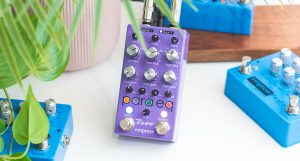
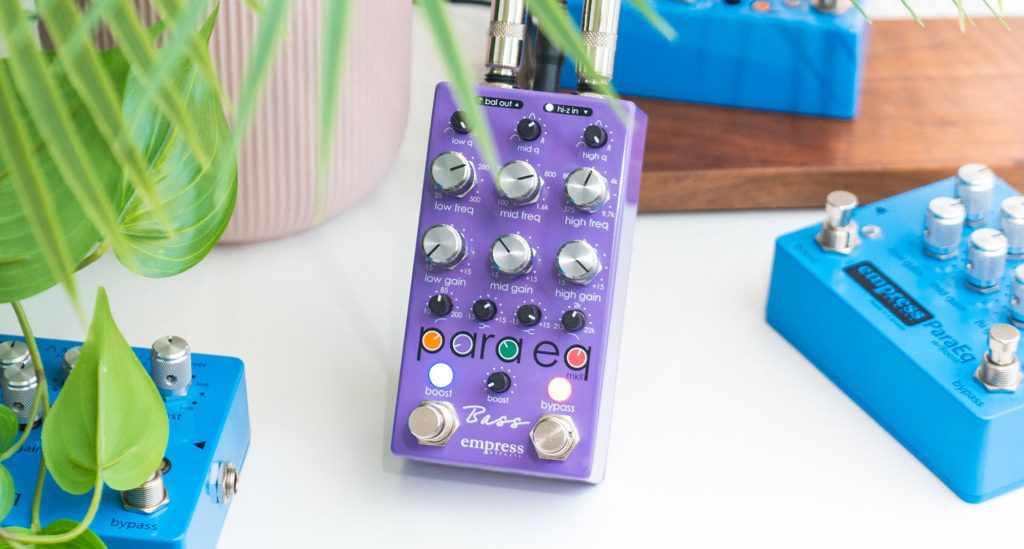
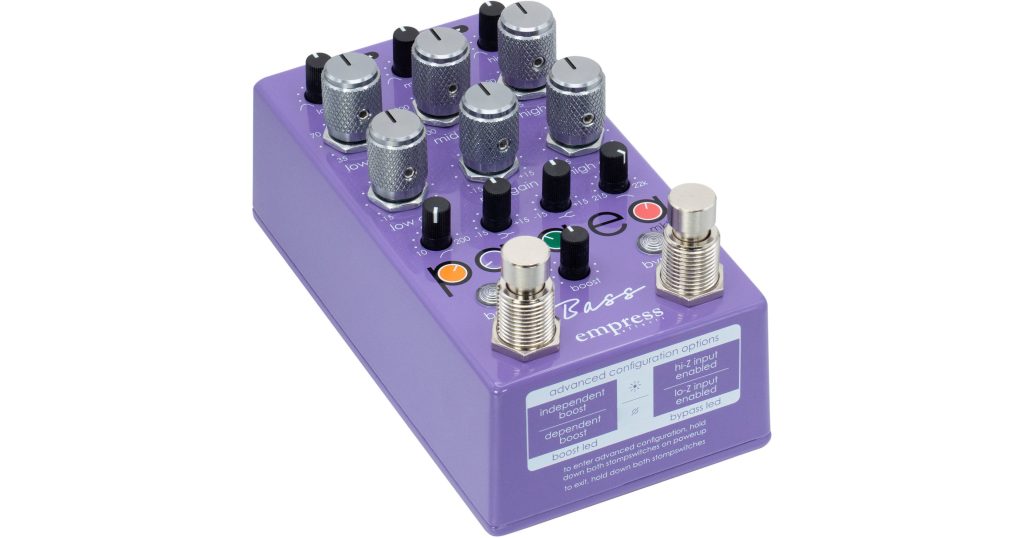
The Empress Effects Bass ParaEQ was designed to solve exactly those problems. Based on the company’s highly respected ParaEQ MKII Deluxe, the Bass ParaEQ adapts the design specifically for bass instruments. The result is a pedal that offers the kind of precise, studio-style tone shaping normally found in rack gear or mixing consoles, but in a compact stompbox format.
The pedal combines three fully parametric EQ bands, shelving filters, and high-pass and low-pass filters, giving bass players and producers an exceptional control over their sound. More importantly, those controls are tailored specifically to bass frequencies, which makes the pedal far more intuitive in real-world playing situations.
Disclaimer: This pedal was kindly provided by Empress Effects for the purpose of this review. However, this does not influence our opinions or the content of our reviews. We strive to provide honest, unbiased, and accurate assessments to ensure that our readers receive truthful and helpful information.
Designed specifically for bass
According to Empress Effects, the Bass ParaEQ grew out of conversations with bass players who were already using the company’s ParaEQ MKII Deluxe. That pedal had become popular among musicians who needed powerful tone shaping both on stage and in the studio. However, bass players pointed out that the original design could be refined further to better suit low-frequency instruments.
The Bass ParaEQ keeps the core architecture of the original pedal but adds several features that specifically benefit bass players. The frequency ranges of the parametric bands were optimized for bass, allowing the pedal to target common tonal problem areas more effectively. The pedal also includes a high-impedance input option for piezo pickups, which is especially useful for upright bass players, and an auto-detecting balanced output for improved signal compatibility.
One of the most important design choices is the pedal’s 27-volt internal operation. Even though the pedal runs from a standard 9-volt power supply, the internal circuitry boosts the operating voltage to 27 volts. This dramatically increases headroom, allowing the pedal to handle large EQ boosts without distorting the signal. In practice, this means the Bass ParaEQ remains clean, dynamic, and noise-free even when making aggressive tone adjustments.
The philosophy behind the pedal is simple: it should make your bass sound like itself—only bigger, clearer, and more defined.
Understanding parametric EQ
Parametric EQ is not something that everyone knows about, but to appreciate what makes the Bass ParaEQ so powerful, it helps to understand how it differs from the tone controls found on most bass amps. Traditional EQ sections typically provide fixed bands such as bass, mid, and treble. These controls adjust predetermined frequency ranges, which makes them easy to use but somewhat limited.
A parametric EQ adds two additional layers of control. Instead of adjusting a fixed frequency band, each EQ section lets you choose the exact frequency you want to boost or cut, as well as the bandwidth of that adjustment. This allows the user to perform both broad tone shaping and extremely precise corrective EQ.
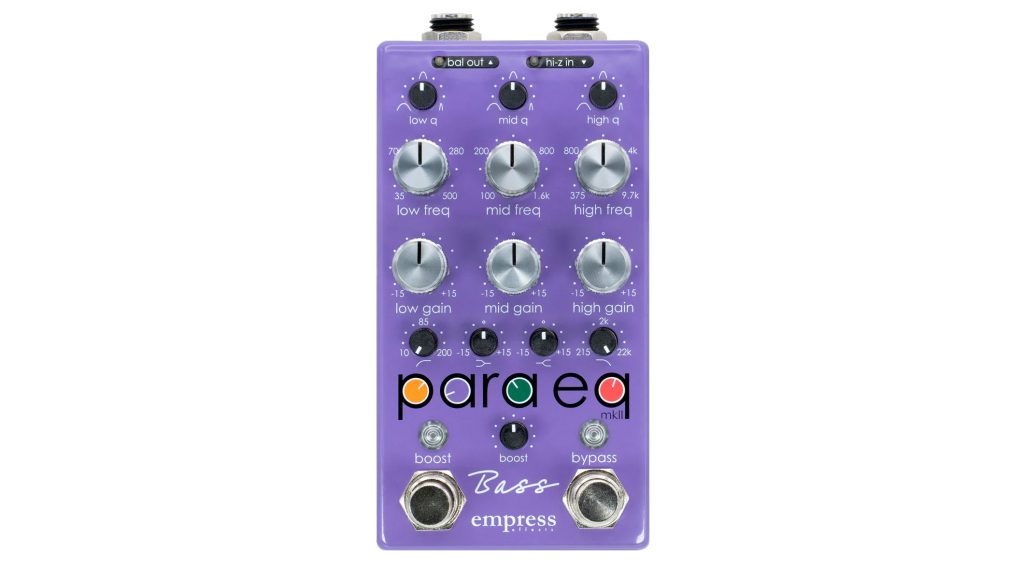
The Bass ParaEQ includes three parametric bands, each capable of boosting or cutting frequencies by up to 15 dB. In addition to selecting the frequency and gain, each band includes a Q control, which determines how wide or narrow the adjustment is.
A narrow Q setting focuses the EQ on a very small range of frequencies. This is particularly useful when trying to eliminate specific problem areas, such as feedback or resonant notes that jump out in certain rooms. A wider Q setting affects a larger portion of the spectrum and tends to sound more natural, making it ideal for general tone shaping. Many players will find that medium or wide Q settings are perfect for sculpting their overall sound, while narrow Q becomes useful for surgical fixes.
Filters that shape the extremes
While the parametric bands provide detailed control over specific frequencies, the Bass ParaEQ also includes high-pass and low-pass filters that help shape the extremes of the frequency spectrum.
The high-pass filter removes frequencies below a selected cutoff point, with a range from 10 Hz to 200 Hz and a slope of 12 dB per octave. Although bass players sometimes hesitate to remove low frequencies, extremely deep sub-bass often contributes more rumble than usable tone. Rolling off these frequencies can clean up the sound dramatically, especially in live settings where uncontrolled low end can overwhelm a mix.
At the other end of the spectrum, the low-pass filter attenuates frequencies above the cutoff point, which can be adjusted between 215 Hz and 22 kHz. This filter is useful for smoothing harsh high-frequency content such as string noise or aggressive pick attack. It can also be used creatively to create darker or more vintage-style tones by gently rolling off the upper harmonics.
Together, these filters allow the Bass ParaEQ to function not only as a corrective EQ but also as a powerful tone-shaping tool.
Musical shelving filters
In addition to the parametric bands and filters, the Bass ParaEQ incorporates Baxandall shelving filters for shaping the overall low and high end of the instrument. Baxandall circuits are widely respected in audio design because of their smooth, musical response curves, which tend to sound more natural than aggressive parametric boosts.
The low shelf in the Bass ParaEQ uses a modified Baxandall design that behaves somewhat differently from traditional shelving EQs. Instead of operating at a fixed break frequency, the transition point shifts dynamically depending on how much boost or cut is applied. Smaller adjustments affect a narrower range of frequencies, while larger boosts extend further up the low-mid spectrum. For example, moderate boosts primarily target frequencies below roughly 75 Hz, while more extreme boosts can extend as high as 400 Hz. This approach allows bassists to add low-end weight without introducing unwanted muddiness.
The high shelf functions more like a traditional shelving EQ, boosting or cutting frequencies above approximately 1 kHz. Like the rest of the pedal’s EQ stages, it can apply up to 15 dB of boost or attenuation. This makes it useful for adding brightness and harmonic detail or for taming overly aggressive high frequencies.
How bass frequencies actually behave
One of the most useful parts of the Bass ParaEQ documentation is its description of how different frequency ranges affect bass tone. Understanding these ranges can help players make more intentional EQ decisions.
At the very bottom of the spectrum, frequencies below about 40 Hz mostly contribute sub-bass rumble rather than musical tone. These frequencies often benefit from being rolled off with a high-pass filter, which can tighten the sound and prevent excessive low-end buildup.
The 40 Hz to 80 Hz range contains the fundamental weight of the bass. Boosting here adds warmth and fullness, while cutting can help prevent boominess and create space for the kick drum in a mix.
Moving up the spectrum, the 250 Hz to 500 Hz range is often referred to as the muddy region for electric bass. While boosting this area can add warmth, too much energy here can make the instrument sound thick and indistinct. A small cut in this range is one of the most common EQ moves engineers make when mixing bass.
Between 500 Hz and 800 Hz, upright bass players often find the frequencies that contribute to the instrument’s woody articulation. Electric bass players may also use this area to add definition, though excessive boost can introduce a boxy quality.
The region from 800 Hz to 1 kHz is sometimes described as the “honk” range. Boosting here can add growl and help bass lines stand out in a mix, while cutting can reduce nasal characteristics.
Higher still, the 1 kHz to 3 kHz region contains important overtones that contribute to presence and clarity. Boosting here can help bass cut through dense arrangements, especially on smaller speakers.
The 3 kHz to 5 kHz range emphasizes attack, including finger noise and pick articulation. A slight boost can increase clarity, while cutting this area can soften percussive playing styles.
Finally, frequencies above 5 kHz contribute air and harmonic sparkle. These frequencies can make the bass sound more open, but rolling them off with a low-pass filter can also create smoother, more vintage tones.
Technical specifications
From a technical perspective, the Bass ParaEQ operates well within professional audio standards. The pedal offers a frequency response from 14 Hz to 22 kHz, ensuring that it captures the full range of the bass instrument. Its noise floor sits below –107 dBu, and total harmonic distortion remains under 0.1 percent, both of which contribute to its extremely clean sound.
The internal 27-volt architecture allows the pedal to achieve +30 dBu of headroom, a figure more commonly associated with studio equipment than with stompboxes. Input impedance can be set to either 1 MΩ or 10 MΩ, while the output impedance sits at 100 ohms, allowing the pedal to drive long cable runs without signal loss. Despite this sophisticated internal design, the pedal runs from a standard 9-volt DC power supply, drawing about 300 mA of current.
Using the Bass ParaEQ in real-world situations
All of the technical features of the Empress Bass ParaEQ are impressive on paper, but the pedal really proves its value once it’s placed in a real playing situation. In practice, the ParaEQ functions less like a traditional stompbox and more like a precision tone management tool that can solve problems quickly on stage or in the studio.
One of the most useful aspects of the pedal in live environments is how easily it allows you to adapt to changing instruments, rooms, or band mixes. Bass players often bring more than one instrument to a gig, and switching between them can create significant tonal differences. Active basses may sound bright and aggressive, while passive instruments—especially those with flatwound strings—can be much darker and smoother.
During one recent gig, for example, I used the Bass ParaEQ while switching between an active Jazz bass and a passive bass strung with flatwounds. The active bass had a fairly aggressive top end that tended to jump out in the mix. With the ParaEQ, I was able to gently tame some of that harshness by cutting a small amount in the upper-midrange while slightly rolling off the extreme highs with the low-pass filter. The passive bass, on the other hand, benefited from a subtle boost in the presence range to help it cut through the band more clearly. Instead of adjusting the amp between songs, the ParaEQ allowed those changes to happen instantly.
Another feature that becomes particularly valuable in performance situations is the pedal’s foot-switchable boost. The Bass ParaEQ can add up to 30 dB of clean boost, which effectively turns the pedal into a flexible level control as well as an EQ. Because the pedal operates internally at 27 volts, this boost remains exceptionally clean and free of unwanted distortion.
The boost can be used in several ways. Some players treat it as a solo boost, helping bass lines step forward in the mix when needed. Others use it as a way to compensate for level differences between instruments. If one bass has significantly lower output than another, the boost can bring them into balance without touching the amplifier. It can also serve as a subtle gain stage to push the front end of an amp or another pedal slightly harder.
Beyond these practical uses, the Bass ParaEQ excels as a general tone-shaping tool. A quick cut in the muddy low-mid region can tighten up a bass sound instantly, while a small boost in the presence range can help notes speak more clearly in a dense band mix. The high-pass filter can clean up excessive sub-bass that might otherwise overwhelm a room, and the shelving filters make it easy to add weight or brightness without dramatically altering the character of the instrument.
In other words, while the Bass ParaEQ is capable of very precise corrective EQ, it is just as useful as a creative tone-shaping pedal. Whether the goal is solving specific tonal problems or simply refining the sound of a great instrument, the pedal provides a level of control that most bassists simply don’t get from standard amplifier EQ sections.
A studio EQ on your pedalboard
In practice, the Bass ParaEQ functions less like a typical stompbox and more like a compact studio equalizer designed specifically for bass players. The combination of parametric bands, shelving filters, and adjustable high-pass and low-pass filtering gives players the ability to address nearly any tonal challenge.
Whether the goal is eliminating problem frequencies in a live venue, tightening the low end for recording, controlling feedback on an upright bass, or simply dialing in a more articulate tone, the Bass ParaEQ offers the precision needed to do it effectively.
For bass players who want more than the basic tone controls found on most amps, the Empress Bass ParaEQ represents one of the most powerful and flexible EQ pedals currently available.
Other Empress Effects Gear You Might Like
If you enjoyed checking out this Empress Effects pedal, here are more products worth exploring — all tested and reviewed here on BassGearReviews:
– Empress Effects Bass Compressor – A Compressor That Demands – And Rewards Your Attention