Blog

Donner Triple Threat
Reviews

Donner Triple Threat: Pedal Review

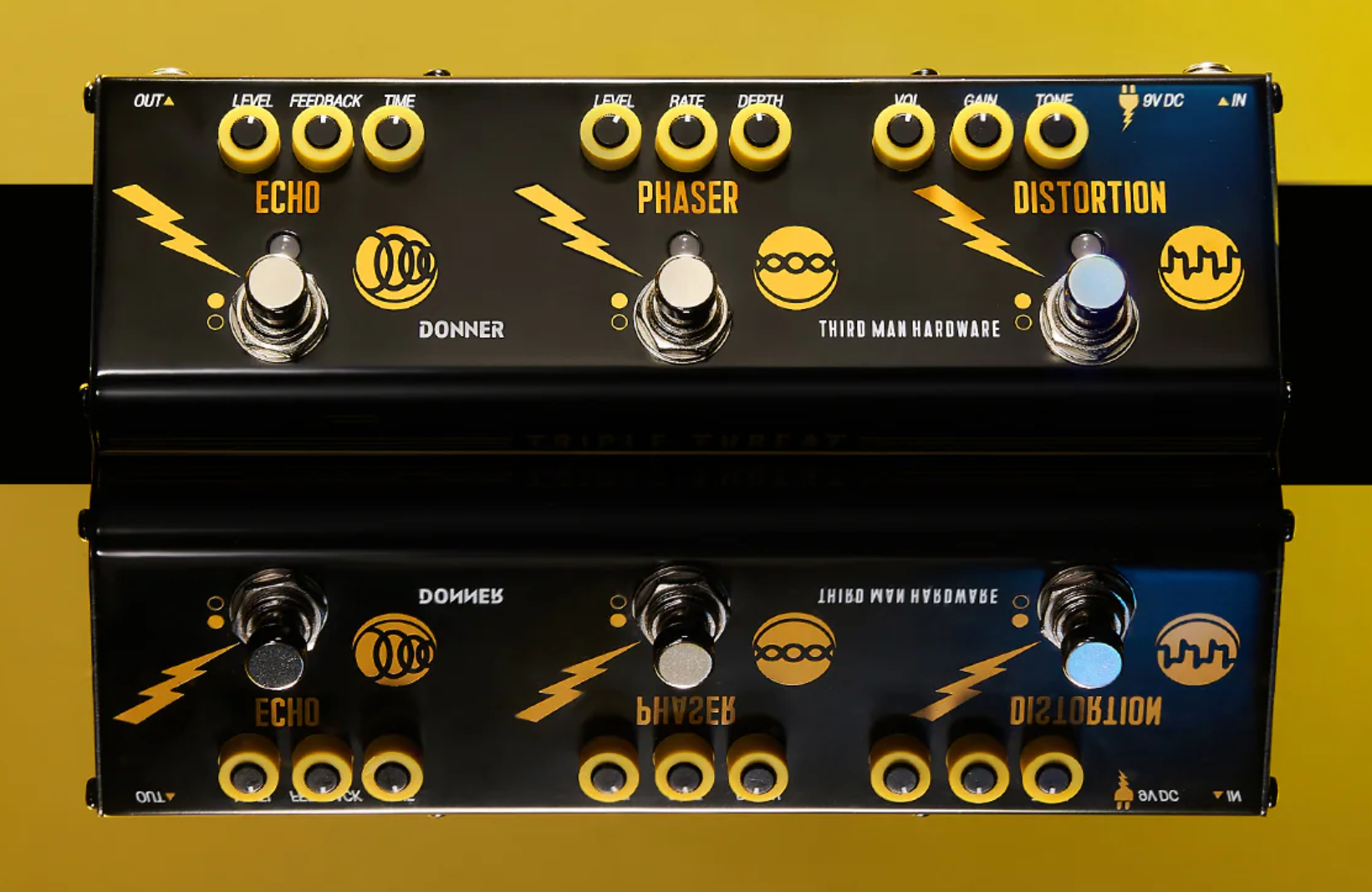
A Review From a Bass Player’s Perspective Disclaimer: This pedal was kindly provided by Donner for the purpose of this review. However, this does not influence our opinions or the content of our reviews. We strive to provide honest, unbiased, and accurate assessments to ensure that our readers receive truthful and helpful information. When a pedal comes out with Jack White’s name attached to it, you can usually expect something a little unconventional. The Donner Triple Threat Pedal definitely fits that description. It’s a compact, affordable box that combines distortion, phaser, and delay into one unit — clearly aimed at guitar players, but intriguing enough that a lot of bassists have started asking: is this thing actually usable on bass? TL;DR If you just want the short version: the Triple Threat is a fun, compact, and affordable multi-effects pedal that can work on bass, especially for delay and light modulation. The distortion is usable but limited, and the lack of a blend control means it won’t suit players who need to preserve a strong low end. Think of it as a creative add-on rather than the core of your sound. Check the price on Amazon –> First impressions and design The Triple Threat feels like it was designed with a very specific mindset: keep things simple, keep things fun, and don’t overcomplicate anything. You get three effects, each with its own footswitch, and a straightforward set of controls. No menus, no presets, no hidden features. From a bass player’s perspective, that simplicity is actually refreshing. You can throw it on a small board (or even go without a board entirely), plug in, and immediately start experimenting. It’s very much a “plug in and make noise” kind of pedal, which fits the whole Third Man aesthetic. That said, the compact format does come with a tradeoff. The knobs are quite small, and if you’re someone who likes to tweak settings on the fly during a gig, it might feel a bit cramped. How it actually sounds on bass This is where things get interesting. Even though the pedal isn’t designed specifically for bass, parts of it translate surprisingly well. The distortion section is probably the most divisive. It has a gritty, garage-rock character that sounds great in the right context, but it’s clearly voiced for guitar. Push the gain too far and you’ll notice your low end starting to thin out. Since there’s no clean blend control, you can’t easily mix your dry signal back in — something many bass players rely on to keep their fundamental intact. Used more conservatively, though, it can add a nice layer of bite and attitude, especially for indie, garage, or lo-fi styles. The phaser is easier to get along with. If you keep the rate slow and the depth under control, it adds movement without stepping all over your low frequencies. It’s not an effect most bassists use all the time, but when you want that subtle swirl, it does the job nicely. The real standout here is the delay. The echo circuit has that warm, slightly dark analog character that sits behind your dry signal instead of competing with it. For ambient parts, dub-inspired lines, or just adding space to a sparse arrangement, it works remarkably well on bass. Where it shows up in real rigs Part of the buzz around this pedal comes from the fact that it’s been spotted on the board of Dominic John Davis, who plays bass for Jack White. That naturally raises expectations a bit. Looking at his broader setup, though, gives some useful context. He typically runs a mix of pedals like the Boss TU-3 Chromatic Tuner, MXR M108 Ten Band Graphic EQ, and boutique effects such as the Mantic Effects Vitriol and Mantic Effects Isaiah Delay. In that kind of rig, the Triple Threat isn’t the foundation of his tone. It’s more like a utility piece — something that can be kicked on for a specific texture or moment. That’s an important distinction, and it lines up pretty well with how most bass players will end up using it. Q&A Is the Triple Threat a good primary pedal for bass?Not really. It works better as a secondary or “color” pedal rather than the foundation of your tone. Which effect is most useful for bass?The delay, easily. It sits well in the mix and adds space without muddying your low end. Can the distortion work in a band setting?Yes, but you’ll want to keep the gain in check. Too much and you risk losing low-frequency presence. Does it replace a bass-specific pedalboard?No. It’s more of a compact, creative tool than a full solution for shaping your bass tone. Why would a pro like Dominic Davis use it?Most likely for convenience and specific textures. In a larger rig, it’s a flexible extra rather than a main component. Final thoughts The Donner Triple Threat Pedal isn’t trying to be the ultimate bass effects unit, and it doesn’t need to be. What it offers instead is a straightforward, characterful set of sounds that invite experimentation. For bass players who like to keep things minimal, or who want a single pedal that can add a bit of grit, movement, and space, it’s a surprisingly compelling option. Just don’t expect it to replace your core tone tools. Treat it as a creative companion, and it starts to make a lot more sense. Make sure to get yours on Amazon Now! If you liked this gear, make sure to also check:
Valeton GP-180
Reviews

Valeton GP-180 Multi-Effects: Pedal Review

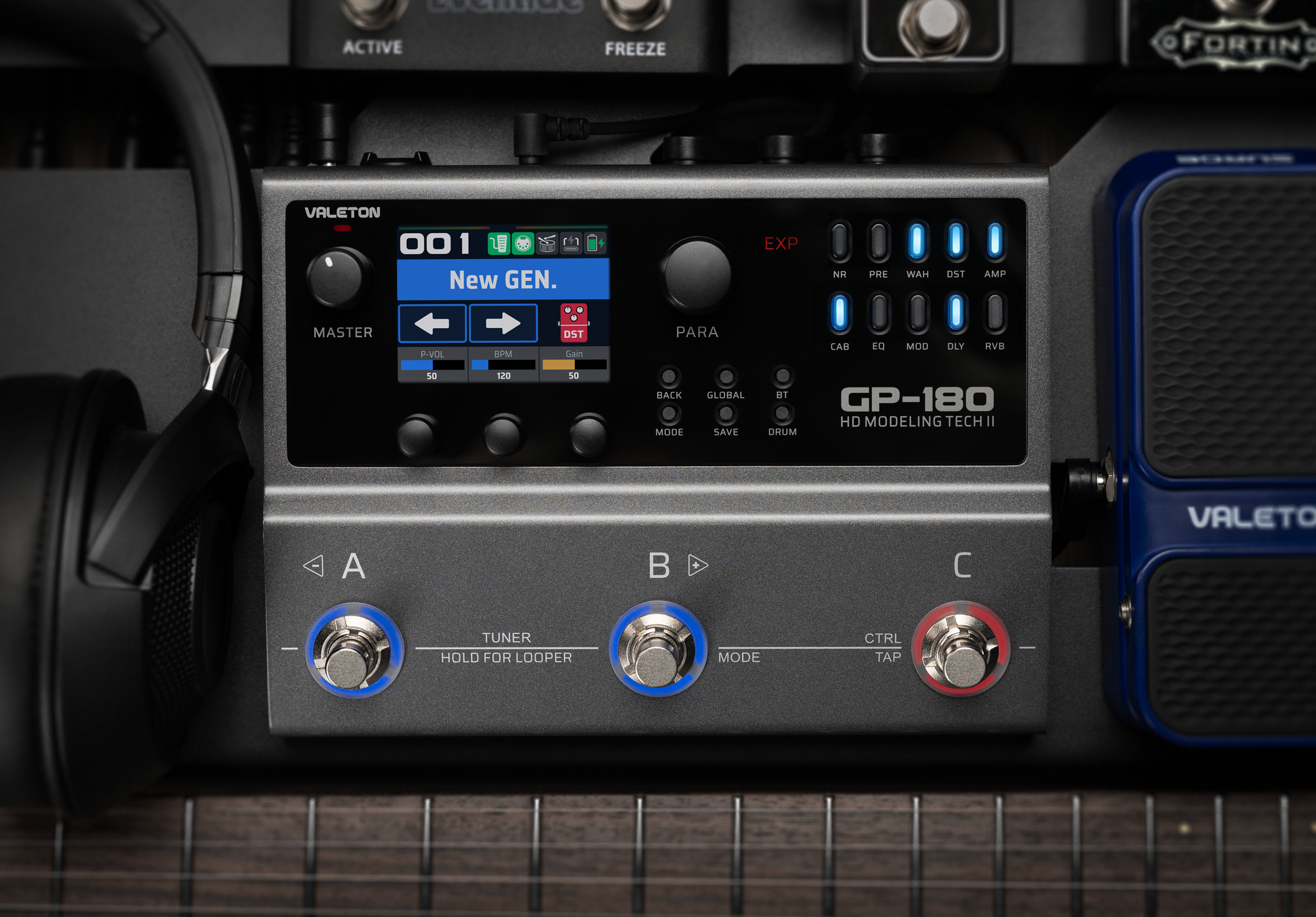
The GP Platform Fully Realized Disclaimer: This pedal was kindly provided by Valeton for the purpose of this review. However, this does not influence our opinions or the content of our reviews. We strive to provide honest, unbiased, and accurate assessments to ensure that our readers receive truthful and helpful information. By the time you get to the GP-180, the question isn’t really about sound anymore. That part was already solved with the earlier models. Instead, what Valeton has been refining with each release is something less obvious—but arguably more important: how you interact with the pedal when you’re actually playing. The GP-180 feels like the point where everything clicks into place. TL;DRThe Valeton GP-180 takes everything introduced in the GP-50 and GP-150 and refines it into a more performance-ready experience. With an additional footswitch and dedicated buttons for individual effect blocks, it offers a far more immediate and hands-on workflow, making it feel less like a compact unit and more like a complete, stage-ready processor. From GP-150 to GP-180: What Changes in PracticeOn paper, the GP-150 and GP-180 are very similar. Same sound engine, same effects, same routing flexibility, same NAM support. But in practice, the GP-180 feels noticeably different—and that comes down to control. The addition of a third footswitch already makes navigation more natural. But the real shift comes from the dedicated effect block buttons. You’re no longer just navigating presets—you’re interacting directly with your signal chain. Interface & WorkflowThe GP-180 keeps the same core layout as the GP-150—rotary controls, function buttons, and a color display—but adds a layer of immediacy that changes how you use it. You get 10 dedicated buttons corresponding to individual effect blocks. These light up when active and act as instant on/off switches. So instead of assigning a footswitch or diving into menus, you can simply tap a button to turn off distortion, bring in delay, toggle modulation, or add reverb on the fly. It makes the pedal feel less like a preset machine and more like a hands-on pedalboard. Tone & EffectsLike the GP-150, the GP-180 doesn’t change the core sound—but it does refine parts of it. There are more effects available overall, which adds flexibility when building patches. The octave effects are improved, particularly on the lower end. Tracking is tighter and much more usable, especially for bass players. Higher octaves are still a bit rough, but the improvement where it matters most is clear. NAM compatibility and flexible routing remain key strengths. Performance WorkflowThis is really what the GP-180 is about. Between three footswitches, dedicated effect buttons, and assignable controls, you’re no longer working around limitations—you’re choosing how to interact with the pedal. You can use footswitches for presets, buttons for effect toggling, and combine both for a flexible, natural workflow. Connectivity & IntegrationThe GP-180 integrates easily into modern setups, whether you’re running direct, recording via USB, or using it as part of a larger rig. Full MIDI In/Out/Thru support makes it especially useful in more complex setups. Design & PortabilityDespite the added control, the GP-180 remains compact and even slightly lighter than the GP-150. It strikes a strong balance between portability and usability. Built-In ToolsThe GP-180 includes a looper, drum machine, audio interface functionality, and battery operation. The key difference isn’t the features—it’s how easy they are to use in real time. Q&A Are the effect block buttons actually useful?Yes. They’re one of the biggest workflow improvements, making real-time control faster and more intuitive. Is this better for live use than the GP-150?Definitely. The added footswitch and direct control make it much more stage-friendly. Should you choose this over the GP-150?If you value smoother live control and less compromise underfoot, it’s an easy choice. ConclusionThe Valeton GP-180 doesn’t just refine the GP platform—it redefines how you interact with it. By adding dedicated effect block controls alongside expanded footswitch functionality, it bridges the gap between a multi-FX unit and a traditional pedalboard. The sound remains strong and familiar, but the experience is far more immediate and engaging. If the GP-150 is about capability, the GP-180 is about control—the feeling that your rig responds exactly the way you want, in real time. If you’ve enjoyed this review, make sure to check out other Valeton releases here on BassGearReviews.com

Valeton GP150
Reviews

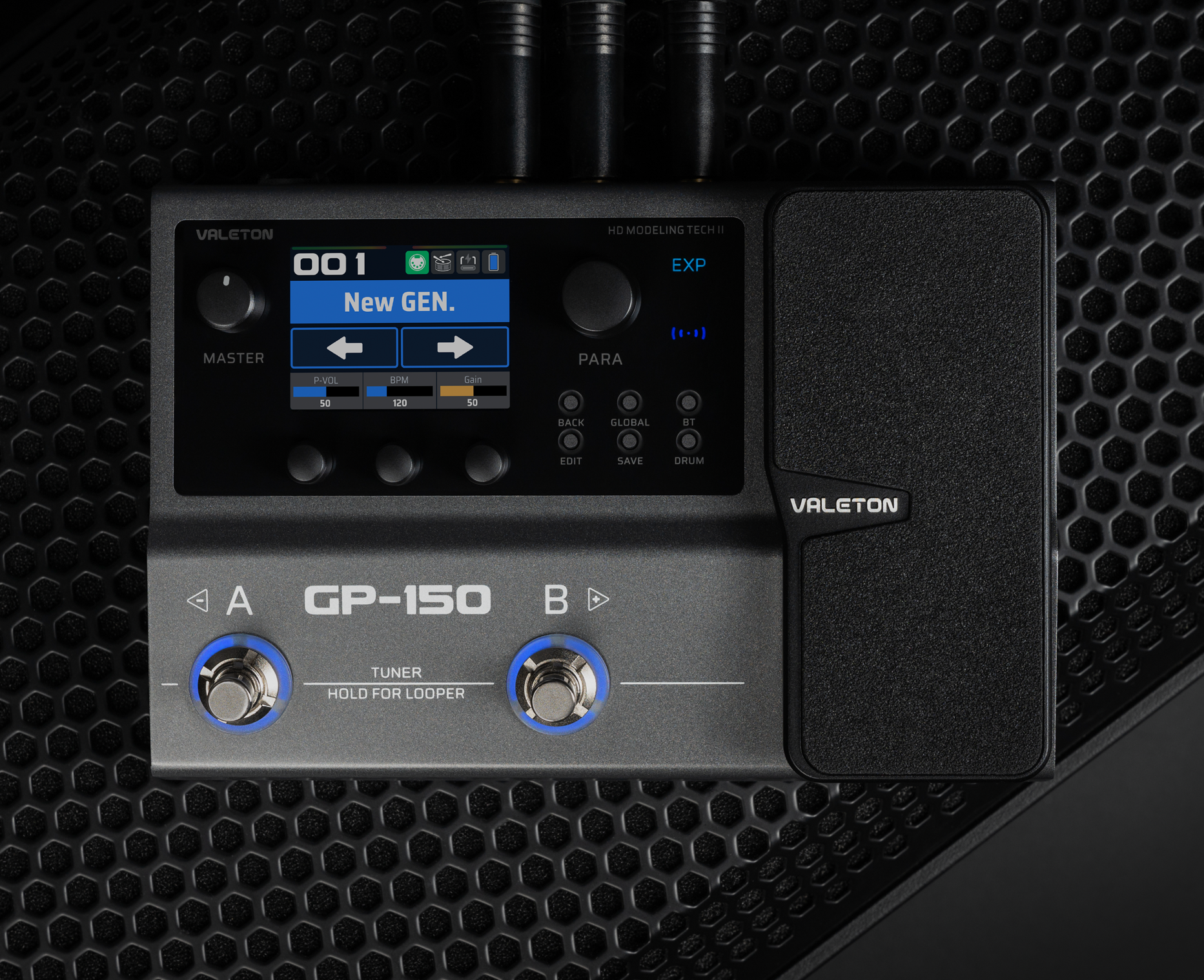
Valeton GP-150 Multi-Effects: Pedal Review

A Smarter Workflow in a Still-Compact Format Disclaimer: This pedal was kindly provided by Valeton for the purpose of this review. However, this does not influence our opinions or the content of our reviews. We strive to provide honest, unbiased, and accurate assessments to ensure that our readers receive truthful and helpful information. Valeton’s GP series has evolved in a very deliberate way over time. The GP-5 introduced the core sound engine but relied heavily on the app. The GP-50 removed that limitation by adding onboard editing, dual footswitches, and a more complete control layout. The GP-150 continues that progression—but in a slightly different direction. While it naturally builds on the workflow improvements introduced in the GP-50, it’s important to note that the GP-150 is technically positioned as an evolution of the GP-100 platform. In other words, it’s less about extending the compact GP-50 concept and more about bringing that improved usability into a more fully featured, floorboard-style unit. Where the GP-50 gave you independence, the GP-150 gives you depth, flexibility—and physical control. TL;DRThe Valeton GP-150 builds on the usability improvements introduced in earlier GP units while expanding into a more powerful, floorboard-style format derived from the GP-100 platform. With deeper routing, NAM support, and a built-in expression pedal, it offers a more flexible and performance-oriented workflow while maintaining the strong core tones of the series. From GP-50 to GP-150: What Actually ChangedThe GP-50 established a solid control system: three rotary knobs for parameter control, a main encoder for navigation, two footswitches, and a small set of function buttons. That made onboard editing viable—but still somewhat limited when dealing with deeper signal chains or real-time control. The GP-150 builds on that idea, but expands it into something more capable. It adds more dedicated buttons, a clearer 2.4″ color display, and most importantly, a built-in expression pedal. At the same time, it inherits the broader scope of the GP-100 platform—meaning more processing flexibility, deeper routing, and a more complete feature set overall. The result is a unit that feels less like a compact multi-FX and more like a streamlined floorboard. Interface & WorkflowThe GP-150 is where the GP series starts to feel like a fully self-contained rig. With support for up to 12 modules in any order, the pedal allows for complex and highly customizable signal chains. What makes that usable is the improved workflow—navigation is smoother, editing is clearer, and switching between tasks feels more immediate. Bluetooth editing is still available, but like previous models, it’s optional. You can comfortably build and tweak sounds directly on the unit without needing external devices. Expression Control: A Major UpgradeThe built-in expression pedal is one of the most important additions to the GP-150. On smaller GP units, real-time control often required external gear. Here, it’s fully integrated into the design. You can control volume, wah, or assign it to multiple parameters and effects. More importantly, it changes how you interact with the pedal. You’re no longer just selecting presets—you’re actively shaping your sound while playing. That added layer of expression makes a significant difference in both practice and live scenarios. Tone & EffectsThe core sound remains consistent with the rest of the lineup—but there are some meaningful refinements. There are more effects available overall, which makes the platform feel more complete when building patches. One of the most noticeable improvements—especially for bass players—is the octave tracking. Lower octave sounds are significantly tighter and more usable, making them far more reliable in a mix. That’s a big deal for anyone using sub-octave tones for layering or synth-style sounds. Higher octaves are still a bit clunky. They work, but they haven’t reached the same level of polish as the lower range. The addition of NAM (Neural Amp Modeler) support is another major step forward, opening the door to more realistic amp captures and a broader tonal palette. One small (and slightly confusing) detail: there’s at least one bass preset that seems to completely lack low end. Maybe it’s intentional. Maybe it’s a creative choice 🙂 (Or maybe I’ve already contacted Valeton and they’re on it!) Performance ControlWith dual footswitches and the built-in expression pedal, the GP-150 strikes a very practical balance. You have enough foot control for switching and toggling, while the expression pedal handles continuous parameters. It’s still compact, but far more capable without needing additional controllers. Features & Practical ToolsThe GP-150 includes a 180-second looper, a drum machine with over 100 patterns, 200 preset slots, a 6-in/4-out USB audio interface, Bluetooth connectivity, and a built-in 3000 mAh battery with over 6 hours of use. It functions as a genuinely self-contained unit for practice, recording, and live performance. Design & PortabilityDespite the expanded feature set, the GP-150 remains portable. It’s compact, under 1 kg, and integrates the expression pedal without becoming bulky. It still fits easily into a gig bag, but replaces significantly more gear. Q&A Is the expression pedal a big deal?Yes. It adds a level of real-time control that fundamentally changes how the pedal feels to use. Is this a replacement for the GP-50?Not directly. It sits in a different category, but if you want more control and flexibility, it’s a clear step up. Is it good for live use?Yes—especially for players who want expression control and deeper routing in a compact format. ConclusionThe Valeton GP-150 represents a shift from compact convenience to compact performance. By combining the improved usability introduced in earlier GP units with the broader capabilities of the GP-100 platform, it delivers a more complete and flexible experience. The addition of the built-in expression pedal further enhances its real-time control, making it feel closer to a full rig than a compact multi-FX. For players who want portability without giving up depth or flexibility, the GP-150 is a strong and well-balanced option. If you’ve enjoyed this review, make sure to check out other Valeton releases here on BassGearReviews.com

News

Trace Elliot Announces Dual Band Compressor

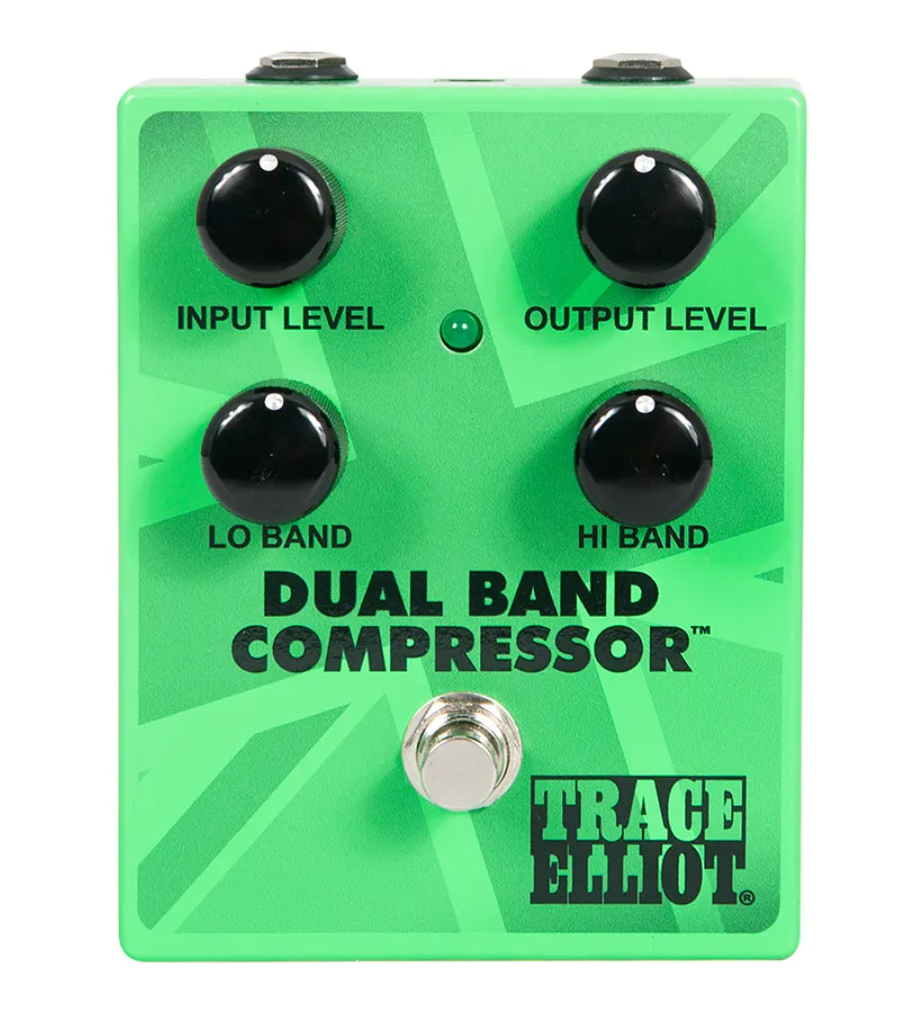
Trace Elliot Launches Dual Band Compressor Pedal for Bassists Trace Elliot has officially introduced the Dual Band Compressor, a new compact pedal designed to give bass players greater control over their dynamics in both live and studio settings. Built around a classic dual-band compression design, the pedal features independent controls for low and high frequencies, allowing users to fine-tune how their bass sits in the mix. This approach helps balance low-end weight with clarity and definition across the full frequency range. The Dual Band Compressor also includes input and output level controls for flexible gain staging, making it suitable for passive and active instruments as well as line-level signals. An integrated make-up gain stage ensures consistent output after compression is applied. Housed in a rugged die-cast enclosure with true bypass operation, the pedal is built for reliability on stage. It also utilizes a bipolar 18V internal power supply, derived from a standard 9V source, to maintain wide dynamic range and headroom. Key Features The Trace Elliot Dual Band Compressor is aimed at bassists looking for a straightforward, flexible compression solution in a pedalboard-friendly format. Availability and pricing details are expected to be announced soon.

Reviews

Empress Effects Bass ParaEQ Deep Dive: Pedal Review

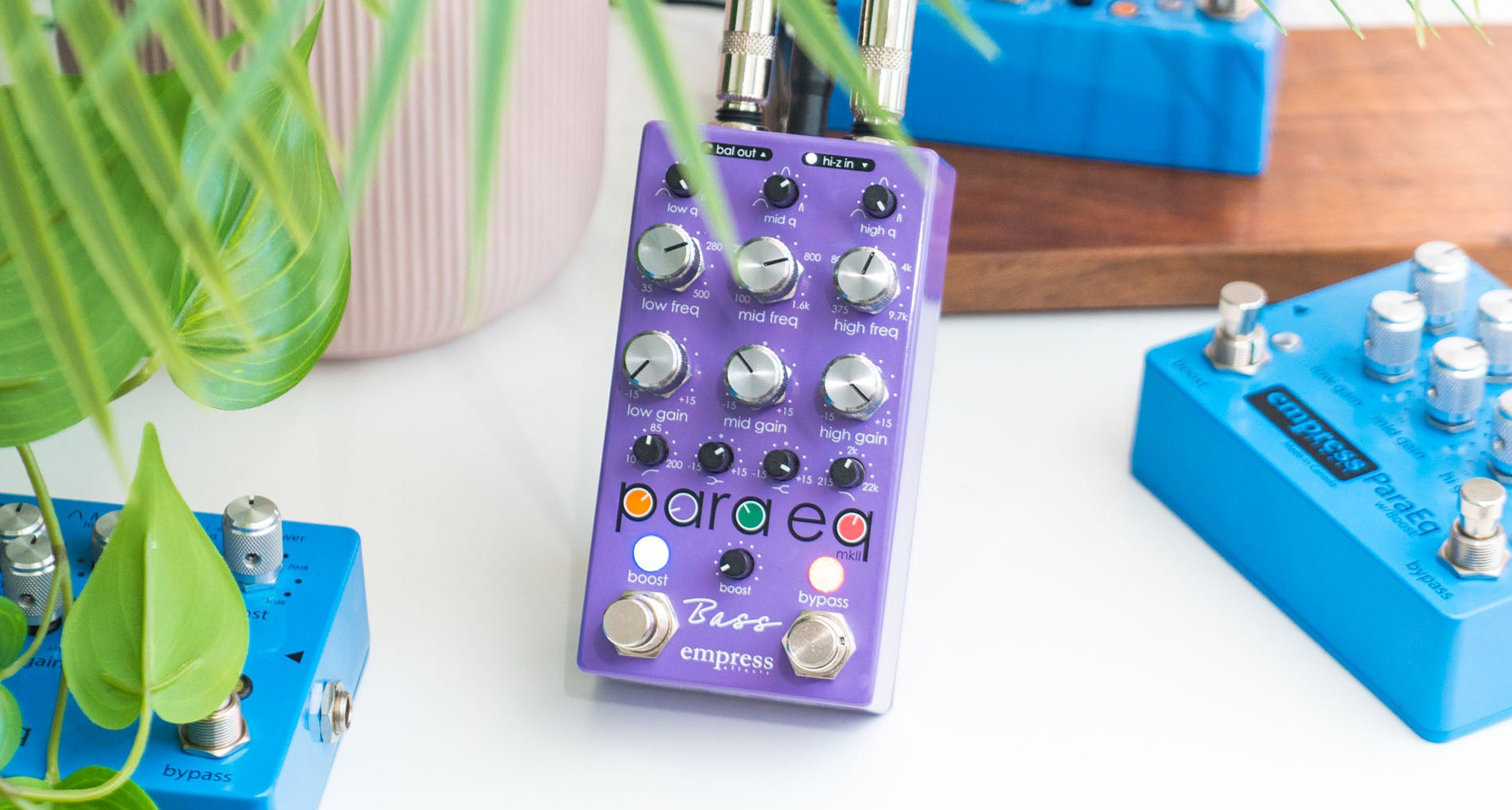
A studio-grade tone shaping tool for bass players EQ pedals are among the most overlooked tools on a bass pedalboard. Many players rely entirely on the EQ built into their amplifier or instrument, which usually provides only broad tonal shaping. While that works in many situations, it lacks the precision needed to solve common bass problems such as muddiness, feedback, or lack of definition in a dense mix. The Empress Effects Bass ParaEQ was designed to solve exactly those problems. Based on the company’s highly respected ParaEQ MKII Deluxe, the Bass ParaEQ adapts the design specifically for bass instruments. The result is a pedal that offers the kind of precise, studio-style tone shaping normally found in rack gear or mixing consoles, but in a compact stompbox format. The pedal combines three fully parametric EQ bands, shelving filters, and high-pass and low-pass filters, giving bass players and producers an exceptional control over their sound. More importantly, those controls are tailored specifically to bass frequencies, which makes the pedal far more intuitive in real-world playing situations. Disclaimer: This pedal was kindly provided by Empress Effects for the purpose of this review. However, this does not influence our opinions or the content of our reviews. We strive to provide honest, unbiased, and accurate assessments to ensure that our readers receive truthful and helpful information. Designed specifically for bass According to Empress Effects, the Bass ParaEQ grew out of conversations with bass players who were already using the company’s ParaEQ MKII Deluxe. That pedal had become popular among musicians who needed powerful tone shaping both on stage and in the studio. However, bass players pointed out that the original design could be refined further to better suit low-frequency instruments. The Bass ParaEQ keeps the core architecture of the original pedal but adds several features that specifically benefit bass players. The frequency ranges of the parametric bands were optimized for bass, allowing the pedal to target common tonal problem areas more effectively. The pedal also includes a high-impedance input option for piezo pickups, which is especially useful for upright bass players, and an auto-detecting balanced output for improved signal compatibility. One of the most important design choices is the pedal’s 27-volt internal operation. Even though the pedal runs from a standard 9-volt power supply, the internal circuitry boosts the operating voltage to 27 volts. This dramatically increases headroom, allowing the pedal to handle large EQ boosts without distorting the signal. In practice, this means the Bass ParaEQ remains clean, dynamic, and noise-free even when making aggressive tone adjustments. The philosophy behind the pedal is simple: it should make your bass sound like itself—only bigger, clearer, and more defined. Understanding parametric EQ Parametric EQ is not something that everyone knows about, but to appreciate what makes the Bass ParaEQ so powerful, it helps to understand how it differs from the tone controls found on most bass amps. Traditional EQ sections typically provide fixed bands such as bass, mid, and treble. These controls adjust predetermined frequency ranges, which makes them easy to use but somewhat limited. A parametric EQ adds two additional layers of control. Instead of adjusting a fixed frequency band, each EQ section lets you choose the exact frequency you want to boost or cut, as well as the bandwidth of that adjustment. This allows the user to perform both broad tone shaping and extremely precise corrective EQ. The Bass ParaEQ includes three parametric bands, each capable of boosting or cutting frequencies by up to 15 dB. In addition to selecting the frequency and gain, each band includes a Q control, which determines how wide or narrow the adjustment is. A narrow Q setting focuses the EQ on a very small range of frequencies. This is particularly useful when trying to eliminate specific problem areas, such as feedback or resonant notes that jump out in certain rooms. A wider Q setting affects a larger portion of the spectrum and tends to sound more natural, making it ideal for general tone shaping. Many players will find that medium or wide Q settings are perfect for sculpting their overall sound, while narrow Q becomes useful for surgical fixes. Filters that shape the extremes While the parametric bands provide detailed control over specific frequencies, the Bass ParaEQ also includes high-pass and low-pass filters that help shape the extremes of the frequency spectrum. The high-pass filter removes frequencies below a selected cutoff point, with a range from 10 Hz to 200 Hz and a slope of 12 dB per octave. Although bass players sometimes hesitate to remove low frequencies, extremely deep sub-bass often contributes more rumble than usable tone. Rolling off these frequencies can clean up the sound dramatically, especially in live settings where uncontrolled low end can overwhelm a mix. At the other end of the spectrum, the low-pass filter attenuates frequencies above the cutoff point, which can be adjusted between 215 Hz and 22 kHz. This filter is useful for smoothing harsh high-frequency content such as string noise or aggressive pick attack. It can also be used creatively to create darker or more vintage-style tones by gently rolling off the upper harmonics. Together, these filters allow the Bass ParaEQ to function not only as a corrective EQ but also as a powerful tone-shaping tool. Musical shelving filters In addition to the parametric bands and filters, the Bass ParaEQ incorporates Baxandall shelving filters for shaping the overall low and high end of the instrument. Baxandall circuits are widely respected in audio design because of their smooth, musical response curves, which tend to sound more natural than aggressive parametric boosts. The low shelf in the Bass ParaEQ uses a modified Baxandall design that behaves somewhat differently from traditional shelving EQs. Instead of operating at a fixed break frequency, the transition point shifts dynamically depending on how much boost or cut is applied. Smaller adjustments affect a narrower range of frequencies, while larger boosts extend further up the low-mid spectrum. For example, moderate boosts primarily target frequencies below roughly 75 Hz, while