Blog

Reviews

Empress Effects Bass ParaEQ Deep Dive: Pedal Review

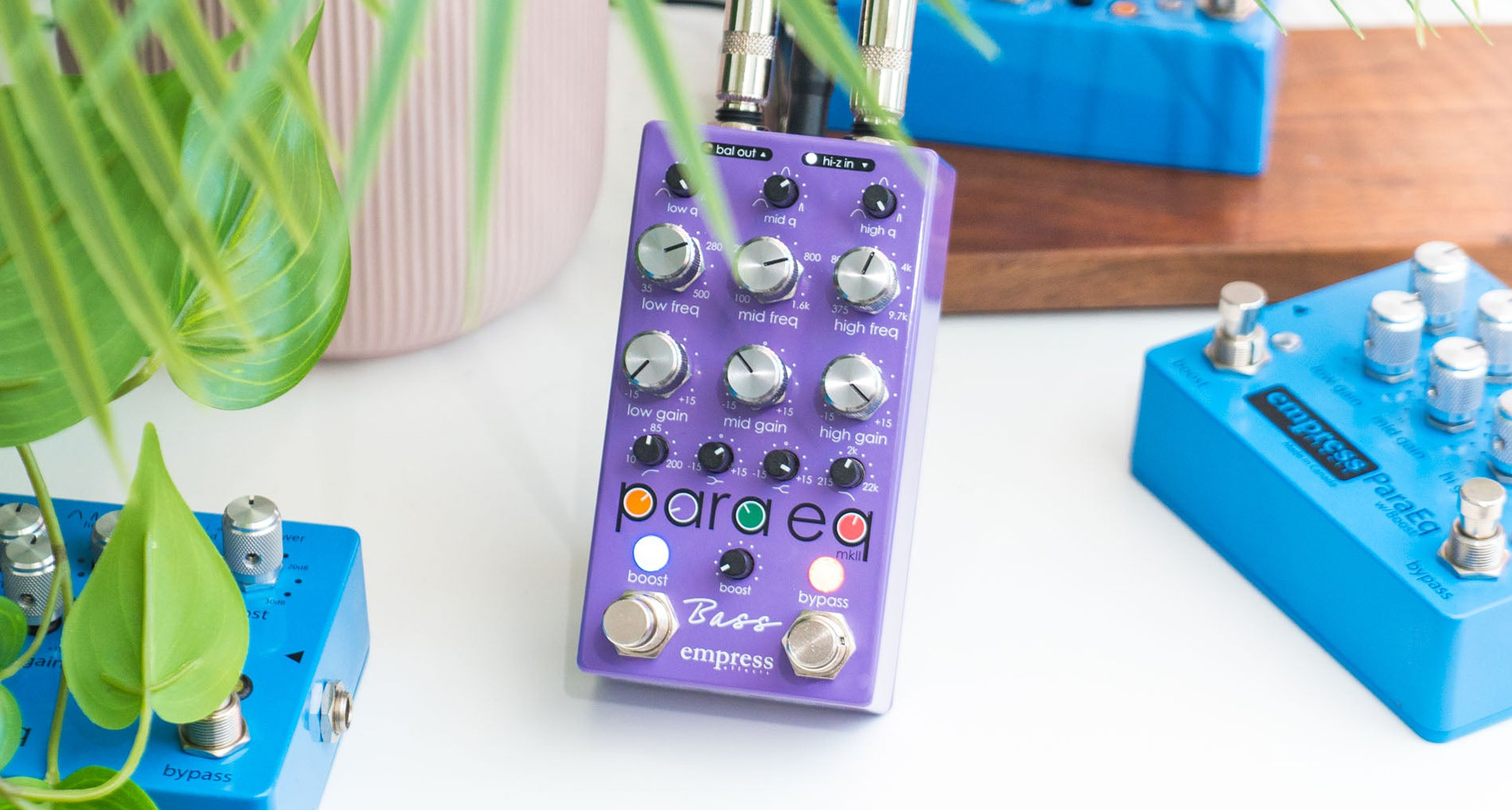
A studio-grade tone shaping tool for bass players EQ pedals are among the most overlooked tools on a bass pedalboard. Many players rely entirely on the EQ built into their amplifier or instrument, which usually provides only broad tonal shaping. While that works in many situations, it lacks the precision needed to solve common bass problems such as muddiness, feedback, or lack of definition in a dense mix. The Empress Effects Bass ParaEQ was designed to solve exactly those problems. Based on the company’s highly respected ParaEQ MKII Deluxe, the Bass ParaEQ adapts the design specifically for bass instruments. The result is a pedal that offers the kind of precise, studio-style tone shaping normally found in rack gear or mixing consoles, but in a compact stompbox format. The pedal combines three fully parametric EQ bands, shelving filters, and high-pass and low-pass filters, giving bass players and producers an exceptional control over their sound. More importantly, those controls are tailored specifically to bass frequencies, which makes the pedal far more intuitive in real-world playing situations. Disclaimer: This pedal was kindly provided by Empress Effects for the purpose of this review. However, this does not influence our opinions or the content of our reviews. We strive to provide honest, unbiased, and accurate assessments to ensure that our readers receive truthful and helpful information. Designed specifically for bass According to Empress Effects, the Bass ParaEQ grew out of conversations with bass players who were already using the company’s ParaEQ MKII Deluxe. That pedal had become popular among musicians who needed powerful tone shaping both on stage and in the studio. However, bass players pointed out that the original design could be refined further to better suit low-frequency instruments. The Bass ParaEQ keeps the core architecture of the original pedal but adds several features that specifically benefit bass players. The frequency ranges of the parametric bands were optimized for bass, allowing the pedal to target common tonal problem areas more effectively. The pedal also includes a high-impedance input option for piezo pickups, which is especially useful for upright bass players, and an auto-detecting balanced output for improved signal compatibility. One of the most important design choices is the pedal’s 27-volt internal operation. Even though the pedal runs from a standard 9-volt power supply, the internal circuitry boosts the operating voltage to 27 volts. This dramatically increases headroom, allowing the pedal to handle large EQ boosts without distorting the signal. In practice, this means the Bass ParaEQ remains clean, dynamic, and noise-free even when making aggressive tone adjustments. The philosophy behind the pedal is simple: it should make your bass sound like itself—only bigger, clearer, and more defined. Understanding parametric EQ Parametric EQ is not something that everyone knows about, but to appreciate what makes the Bass ParaEQ so powerful, it helps to understand how it differs from the tone controls found on most bass amps. Traditional EQ sections typically provide fixed bands such as bass, mid, and treble. These controls adjust predetermined frequency ranges, which makes them easy to use but somewhat limited. A parametric EQ adds two additional layers of control. Instead of adjusting a fixed frequency band, each EQ section lets you choose the exact frequency you want to boost or cut, as well as the bandwidth of that adjustment. This allows the user to perform both broad tone shaping and extremely precise corrective EQ. The Bass ParaEQ includes three parametric bands, each capable of boosting or cutting frequencies by up to 15 dB. In addition to selecting the frequency and gain, each band includes a Q control, which determines how wide or narrow the adjustment is. A narrow Q setting focuses the EQ on a very small range of frequencies. This is particularly useful when trying to eliminate specific problem areas, such as feedback or resonant notes that jump out in certain rooms. A wider Q setting affects a larger portion of the spectrum and tends to sound more natural, making it ideal for general tone shaping. Many players will find that medium or wide Q settings are perfect for sculpting their overall sound, while narrow Q becomes useful for surgical fixes. Filters that shape the extremes While the parametric bands provide detailed control over specific frequencies, the Bass ParaEQ also includes high-pass and low-pass filters that help shape the extremes of the frequency spectrum. The high-pass filter removes frequencies below a selected cutoff point, with a range from 10 Hz to 200 Hz and a slope of 12 dB per octave. Although bass players sometimes hesitate to remove low frequencies, extremely deep sub-bass often contributes more rumble than usable tone. Rolling off these frequencies can clean up the sound dramatically, especially in live settings where uncontrolled low end can overwhelm a mix. At the other end of the spectrum, the low-pass filter attenuates frequencies above the cutoff point, which can be adjusted between 215 Hz and 22 kHz. This filter is useful for smoothing harsh high-frequency content such as string noise or aggressive pick attack. It can also be used creatively to create darker or more vintage-style tones by gently rolling off the upper harmonics. Together, these filters allow the Bass ParaEQ to function not only as a corrective EQ but also as a powerful tone-shaping tool. Musical shelving filters In addition to the parametric bands and filters, the Bass ParaEQ incorporates Baxandall shelving filters for shaping the overall low and high end of the instrument. Baxandall circuits are widely respected in audio design because of their smooth, musical response curves, which tend to sound more natural than aggressive parametric boosts. The low shelf in the Bass ParaEQ uses a modified Baxandall design that behaves somewhat differently from traditional shelving EQs. Instead of operating at a fixed break frequency, the transition point shifts dynamically depending on how much boost or cut is applied. Smaller adjustments affect a narrower range of frequencies, while larger boosts extend further up the low-mid spectrum. For example, moderate boosts primarily target frequencies below roughly 75 Hz, while
News

EarthQuaker Devices Introduces Towers

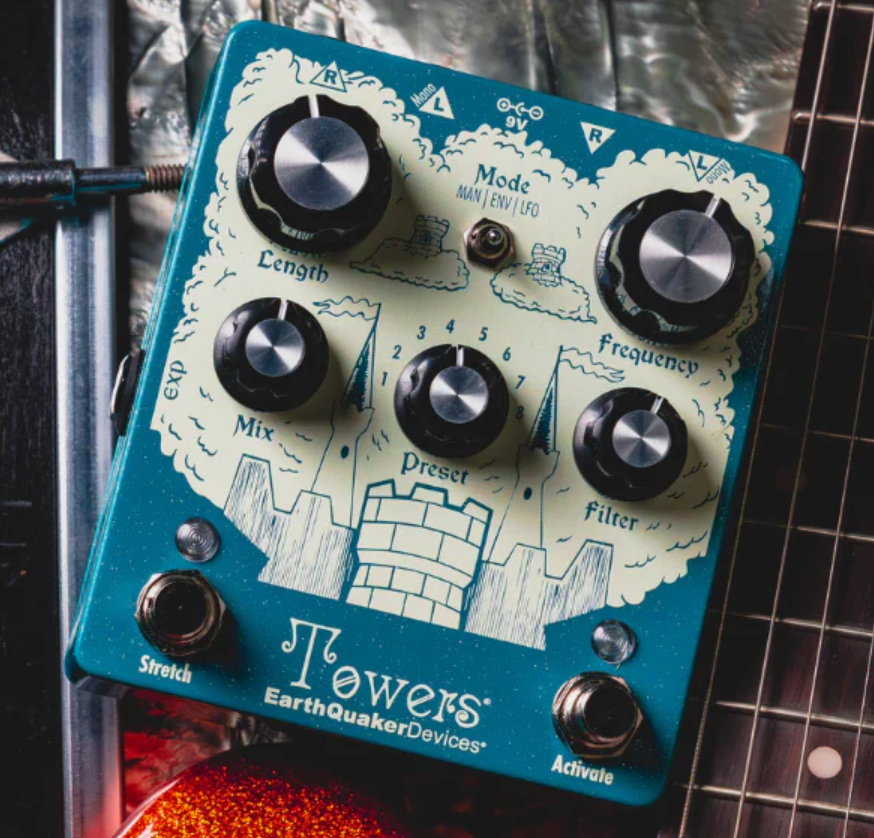
EarthQuaker Devices Introduces Towers Stereo Reverberant Filter EarthQuaker Devices has unveiled the Towers Stereo Reverberant Filter, a new ambient soundscape generator that blends expansive reverb textures with dynamic filtering and stereo movement. Designed to create evolving atmospheres rather than traditional reverb spaces, Towers offers players a powerful platform for shaping immersive sonic environments. At the heart of Towers is a unique signal architecture that routes the incoming signal through a network of regenerating micro-echoes feeding a massive reverb engine. This system is paired with a resonant low-pass filter that interacts with the reflections, allowing players to sculpt shifting harmonic textures within the reverb tail. The result ranges from subtle ambient depth to cavernous, otherworldly soundscapes. A three-position Mode switch changes how the filter behaves. In Manual Mode, players directly control the filter frequency for precise tonal shaping across the stereo field. Envelope Mode uses playing dynamics to trigger filter movement, allowing the effect to react organically to picking intensity. LFO Mode introduces slow modulation that sweeps the filter frequencies, creating evolving movement and stereo motion. The pedal’s control set includes Length, Frequency, Filter, and Mix, enabling detailed shaping of the reverb’s size, tonal character, and wet/dry balance. A dedicated Stretch footswitch further expands the pedal’s creative potential by slowing the internal processing, doubling the reverb length and introducing lo-fi pitch-bending artifacts that morph the sound into warped ambient textures. Towers also includes eight user-savable presets, allowing players to store and instantly recall complex sound designs. An assignable expression input provides real-time control over parameters such as filter frequency, reverb length, mix, or filter intensity. With full stereo inputs and outputs, Towers integrates easily into mono, mono-to-stereo, or fully stereo rigs, making it equally suited to pedalboards, studio environments, and modern stereo amplifier setups. Key Features The EarthQuaker Devices Towers Stereo Reverberant Filter is available now through authorized dealers.

News

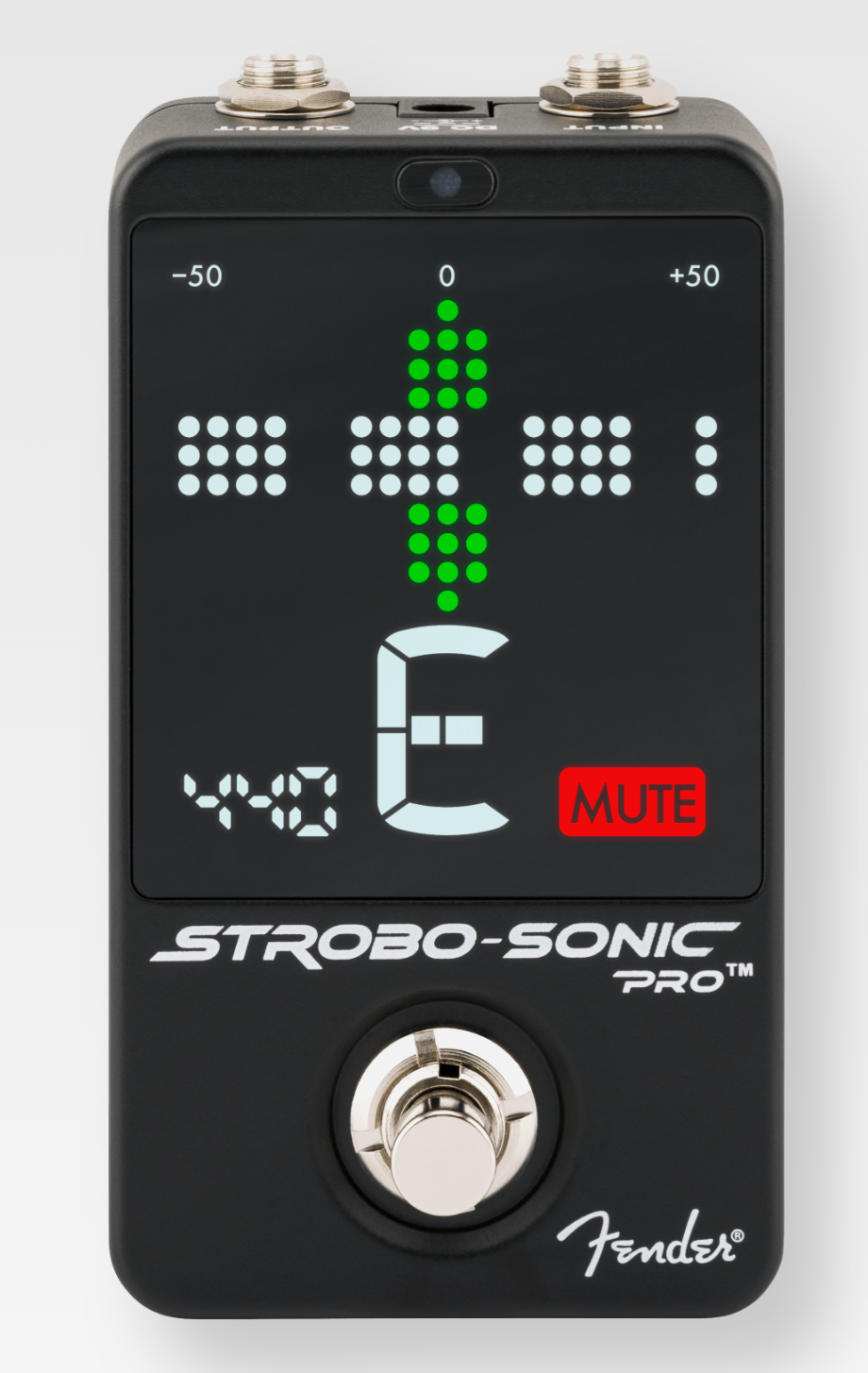
Fender Releases Strobo-Sonic Pro Strobe Tuner Pedal

Fender Releases Strobo-Sonic Pro Ultra-Precise Strobe Tuner Pedal Fender has introduced the Strobo-Sonic Pro™, a new pedalboard-friendly strobe tuner designed for ultra-precise tuning in live and studio environments. The new tuner delivers an impressive ±0.01 cent tuning accuracy, positioning it among the most precise pedal tuners currently available while remaining accessible for everyday players. Built with stage use in mind, the Strobo-Sonic Pro features a large, high-visibility LED display with automatic brightness dimming for changing lighting conditions. Players can choose between two display modes: a hyper-sensitive strobe mode for maximum precision and a needle mode that offers a more familiar tuning experience. The dual-mode design allows the tuner to suit both quick stage adjustments and detailed setup work. Additional controls are accessed via side switches, allowing users to adjust reference pitch and select between three bypass options: true bypass, buffered bypass, and buffered always-on modes. This flexibility allows the pedal to integrate easily into a variety of signal chain setups depending on player preference. The Fender Strobo-Sonic Pro strobe tuner pedal is available now through authorized Fender dealers and the company’s official website.

News

Ernie Ball Introduces New Tapewound Bass Strings

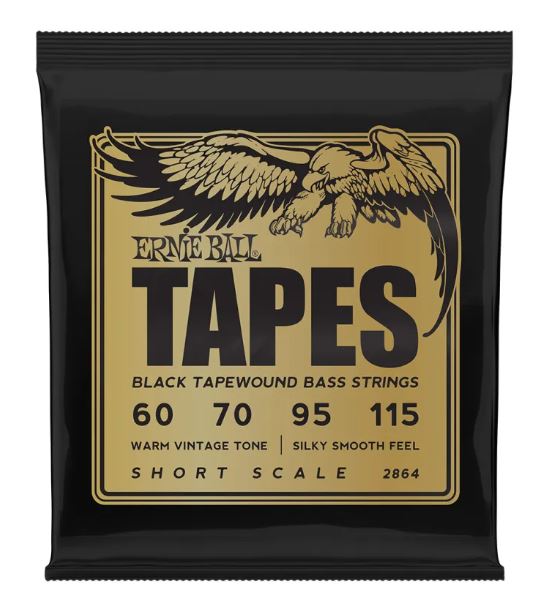
Ernie Ball has announced the release of its new Tapewound Bass Strings, expanding its bass lineup with a set aimed squarely at players chasing warmth, thump, and a smoother feel under the fingers. Designed for both 34″ long scale and 30–30.5″ short scale basses, the new tapewounds target everything from vintage-inspired electric tones to upright-style textures in modern rigs. The strings feature a tin-plated steel hex core, wrapped with nickel-plated steel, and finished with a polished black nylon tape outer layer. The construction is intended to deliver a dark, rounded voice with reduced finger noise and a notably soft, silky playing feel. According to the company, the tonal profile leans toward a warm, mellow response that nods to classic upright bass character while remaining stable and consistent for electric bass applications. Ernie Ball states that the new Tapewound Bass Strings are scheduled to begin shipping this summer. Pricing has not yet been announced. Players can expect availability through authorized Ernie Ball dealers and the company’s official website as the rollout begins.

Double Dragon
News

JHS Pedals Releases Double Dragon Lo-Fi Octave Device

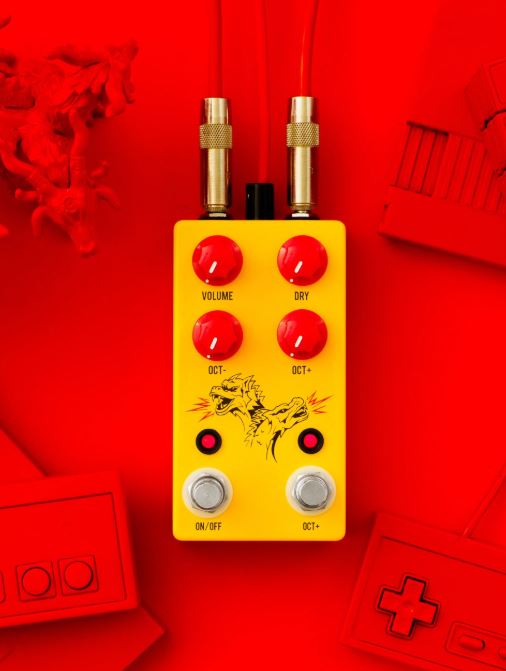
JHS Introduces the All-Analog Double Dragon Octave Pedal JHS Pedals has officially released the Double Dragon Lo-Fi Octave Device, a new all-analog octave pedal built around vintage octave-divider technology. Drawing inspiration from classic circuits like the Boss OC-2, MXR Blue Box, and DOD Octoplus, the Double Dragon intentionally looks backward rather than embracing modern DSP precision. The result is a monophonic octave effect designed to deliver the warmth, quirks, and organic response that defined early analog octave designs. The Double Dragon features both an octave-down (OCT−) and a switchable octave-up distortion (OCT+). The lower octave provides thick, vintage-inspired sub tones, while the upper octave circuit adds a gritty, mid-forward distortion texture. Controls include Volume (with additional boost available), Dry blend, OCT− level, and OCT+ level, with dual footswitches for main on/off and octave-up engagement. The pedal also offers top-mounted jacks, silent buffered bypass switching, and operates on standard 9VDC center-negative power. According to JHS, the Double Dragon marks the company’s first dedicated octave device, expanding its lineup into classic analog octave territory. The pedal is aimed at players seeking lo-fi character and dynamic interaction rather than digital precision, and is equally positioned for guitar and bass applications. The JHS Double Dragon Lo-Fi Octave Device is available now through authorized JHS Pedals dealers worldwide and directly from the company’s official website. Enjoyed this JHS content? Make sure you check other JHS reviews in the links below: – JHS Colour Box V2 – Neve Style Preamp Pedal – JHS 424 Gain Stage – preamp/fuzz pedal that recreates the TASCAM® Portastudio® 424