Blog

Aguilar Octamizer DLX
News

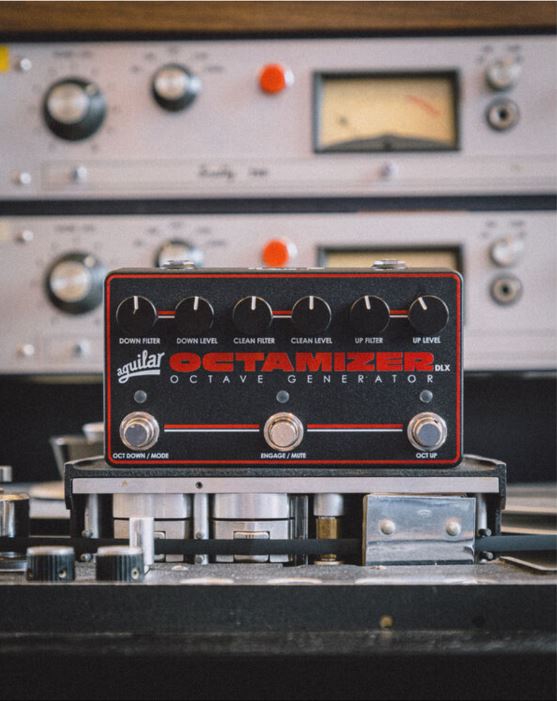
Best Of NAMM 2026: Aguilar Octamizer DLX

Best of NAMM 2026: Bass Pedals That Defined the Show Every January, the NAMM Show brings together manufacturers, artists, retailers, and media from around the world for the largest and most influential music industry trade event. For gear companies, NAMM is the ideal stage to unveil new products, gather real-time feedback from players, and set the tone for the year ahead. New releases debuting at NAMM often reflect where technology, design, and player demand are heading, making the show a reliable snapshot of the future of music gear. Our Best of NAMM 2026 series highlights the most noteworthy bass pedals launched at this year’s event—tools that stood out for innovation, tone, and real-world usefulness for working bassists. Aguilar expanded one of its most popular pedals with the introduction of the Octamizer DLX, a deluxe octave effect built specifically for bass performance. Known for its tight tracking and organic sound, the Octamizer platform now adds increased flexibility and expanded voicing options. The DLX version introduces both octave-down and octave-up voices, allowing players to blend massive sub-octave foundation with harmonic content for more complex textures. Independent footswitches provide immediate access to each voice, making it easy to stack or isolate sounds during live performance. With improved filtering options and refined tracking across the full range of the instrument, the Octamizer DLX is designed to handle everything from classic funk lines to modern synth-inspired bass tones. It is a clear evolution of a trusted design, offering bassists more control without added complexity.

Valeton GP-50
Reviews

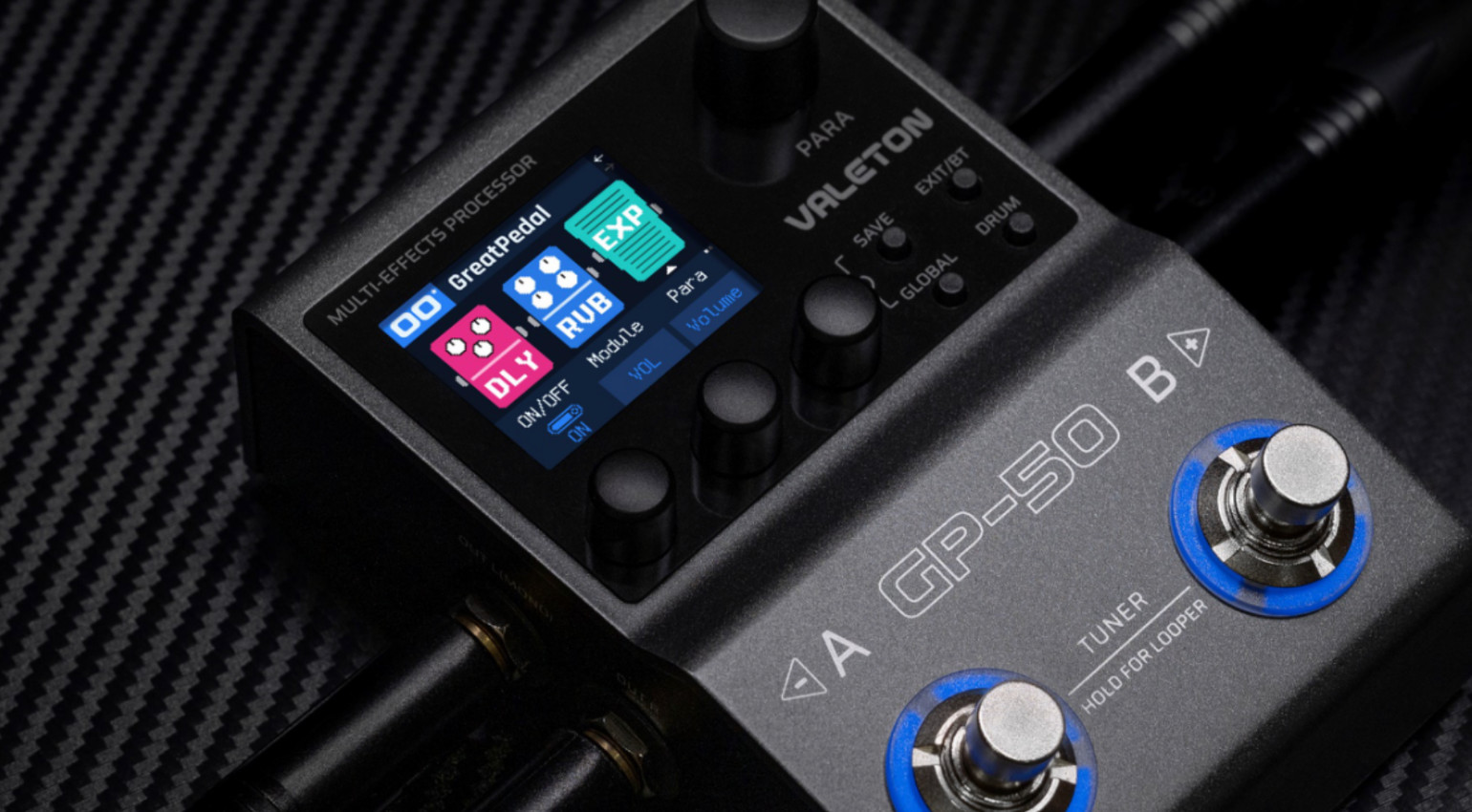
Valeton GP-50 Multi-Effects: Pedal Review

A Compact Multi-FX That Finally Breaks Free Disclaimer: This pedal was kindly provided by Valeton for the purpose of this review. However, this does not influence our opinions or the content of our reviews. We strive to provide honest, unbiased, and accurate assessments to ensure that our readers receive truthful and helpful information. Valeton has steadily refined its compact multi-effects lineup, and the GP-50 represents the most mature expression of that philosophy so far. Where the GP-5 proved that serious tone could live in an ultra-small, app-driven pedal, the GP-50 takes that foundation and removes many of the practical limitations that came with extreme minimalism. Rather than reinventing the platform, Valeton focused on expanding control, connectivity, and independence from external devices. The result is a pedal that still feels portable and modern, but far more capable as a standalone unit—especially for players who want flexibility without committing to a full-sized floorboard. TL;DR The Valeton GP-50 is a refined evolution of the GP-5, offering onboard editing, dual footswitch control, expanded I/O, and a rechargeable internal battery. It maintains the strong modeling and IR support Valeton is known for, while dramatically improving usability for rehearsal and live performance. While still compact, it feels far less constrained than its predecessor and works equally well with or without the companion app. For players who liked the GP-5’s sound but wanted more hands-on control, the GP-50 delivers exactly that. Check Price on Amazon –> Design & Portability The GP-50 retains Valeton’s compact design language but feels noticeably more “stage-ready” than the GP-5. The metal chassis is solid and confidence-inspiring, and despite the added controls and connections, the pedal remains lightweight and easy to transport. One of the biggest upgrades is the internal rechargeable battery, which preserves the grab-and-go appeal of the GP-5 while supporting longer sessions and more demanding use cases. Whether you’re practicing, rehearsing, or running a small fly-rig, the GP-50 can operate completely untethered from external power if needed. It still slips easily into a gig bag—but now it feels like something you could rely on as your primary rig, not just a backup or practice tool. Interface & Editing This is where the GP-50 most clearly separates itself from the GP-5. Unlike its predecessor, the GP-50 allows full onboard editing directly from the pedal. Amp parameters, effects, signal chain adjustments, and general patch tweaks can all be handled without reaching for a phone or tablet. The screen and control layout make navigation intuitive, and the editing experience feels fast and practical rather than compromised. The Valeton app is still available and remains useful for deeper organization and visual editing, but it’s no longer mandatory. This change alone dramatically improves the GP-50’s usability for live settings, rehearsals, and quick adjustments on the fly. In short: the GP-50 finally feels self-contained. Tone & Effects Sonically, the GP-50 builds on the same strengths established by the GP-5. Amp models are responsive and musical, drives feel natural, and modulation, delay, and reverb effects all perform at a high level for a compact multi-FX unit. IR loading is once again a standout feature, allowing players to fine-tune cabinet response and tailor the pedal for both guitar and bass applications. With good IRs, the GP-50 delivers polished, mix-ready tones that easily exceed expectations for its size. Overall, the sound quality remains consistent with Valeton’s recent offerings—impressive, flexible, and entirely usable in real-world scenarios. Dual Footswitch Control The addition of a second footswitch fundamentally changes how the GP-50 feels underfoot. Where the GP-5 often required MIDI expansion to unlock its full potential, the GP-50 is far more capable on its own. The dual switches allow for preset navigation, effect toggling, tap tempo, and other assignable functions directly from the pedal. This makes it significantly more practical for live use without any external controllers. MIDI support is still present for players who want even more control, but crucially, it’s no longer a necessity. The GP-50 feels complete right out of the box. Input / Output Options Another major leap forward is connectivity. The GP-50 offers expanded input and output options, making it far more adaptable to different rigs and recording setups. Whether you’re running into an amp, an audio interface, FRFR speakers, or directly to a PA, the GP-50 integrates cleanly and easily. USB audio functionality allows it to double as a recording interface, and combined with IR support, it works well for silent practice and direct recording without additional gear. This flexibility makes the GP-50 suitable for bedroom players, gigging musicians, and content creators alike. Built-In Tools The GP-50 includes a reliable tuner, USB audio interface capabilities, IR loading, and practice-friendly features that round out the package nicely. The internal battery further enhances its usefulness as a self-contained practice and travel solution. While it doesn’t try to replace a full workstation-style processor, the GP-50 strikes a strong balance between compact design and practical feature depth. Q&A Is the GP-50 viable for live use?Yes. The dual footswitches, onboard editing, and expanded I/O make it far more stage-friendly than the GP-5, even without external MIDI controllers. Do I still need the app?No. The app is optional. All essential sound creation and editing can be done directly on the pedal. How does it compare to the GP-5?The GP-50 keeps the GP-5’s tone quality but removes many of its limitations. It offers better control, more connectivity, and greater independence, making it a clear step forward. Conclusion The Valeton GP-50 feels like the pedal the GP-5 was always leading toward. By adding onboard editing, dual footswitches, expanded I/O, and a rechargeable battery, Valeton transformed an excellent compact multi-FX into a genuinely versatile performance tool. It maintains the portability and strong tones that made the GP-5 appealing, while significantly improving usability for rehearsals and live gigs. For players who loved the GP-5 but wanted more control—and for anyone seeking a compact yet capable all-in-one solution—the GP-50 stands out as a smart, well-executed evolution. Get Yours On Amazon Now!!! If you liked this gear, make
Jad Freer Luce
News

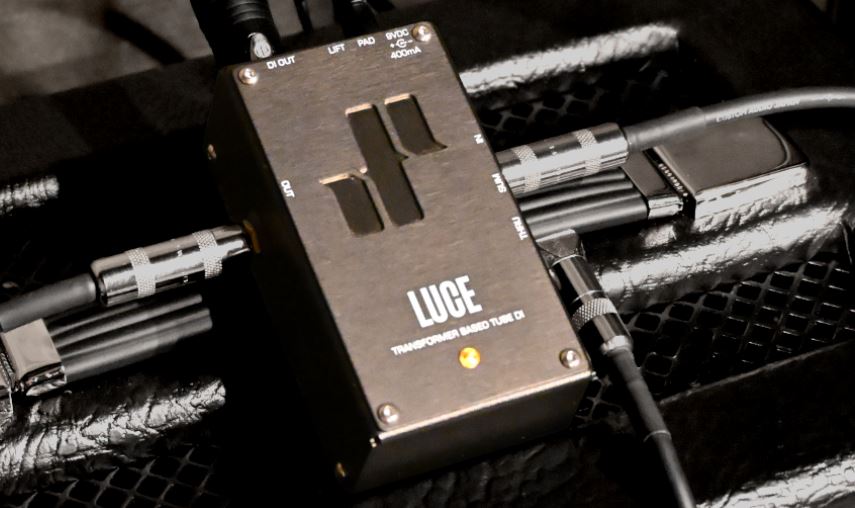
Best Of NAMM 2026: Jad Freer Audio LUCE DI

Best of NAMM 2026: Bass Pedals That Defined the Show Every January, the NAMM Show brings together manufacturers, artists, retailers, and media from around the world for the largest and most influential music industry trade event. For gear companies, NAMM is the ideal stage to unveil new products, gather real-time feedback from players, and set the tone for the year ahead. New releases debuting at NAMM often reflect where technology, design, and player demand are heading, making the show a reliable snapshot of the future of music gear. Our Best of NAMM 2026 series highlights the most noteworthy bass pedals launched at this year’s event—tools that stood out for innovation, tone, and real-world usefulness for working bassists. The Jad Freer Audio LUCE brings true tube character to the bass DI world with a compact yet uncompromising design. Built around a single ECC88/6922 tube and a high-quality audio transformer, the LUCE delivers warm harmonic content and natural compression while maintaining exceptional clarity and low noise. Unlike many tube-based devices that emphasize coloration, the LUCE is designed for unity gain operation, enhancing the instrument’s tone rather than reshaping it. The result is a DI that adds depth and dimensionality without obscuring articulation or transient response. Additional features such as active summing allow two instruments to be connected simultaneously, making it a practical choice for studio sessions as well as live performance. For bassists seeking authentic tube feel and transformer richness in a pedalboard format, the LUCE stands out as a refined and musical option at NAMM 2026.

Walrus Mantle
News

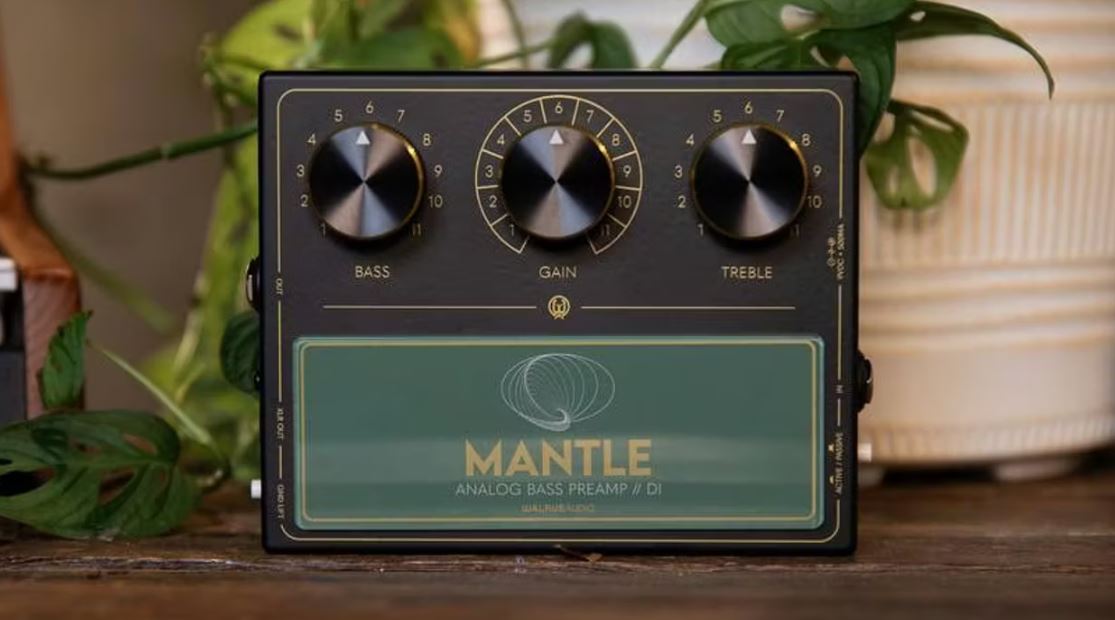
Best Of NAMM 2026: Walrus Mantle Analog Preamp DI

Best of NAMM 2026: Bass Pedals That Defined the Show Every January, the NAMM Show brings together manufacturers, artists, retailers, and media from around the world for the largest and most influential music industry trade event. For gear companies, NAMM is the ideal stage to unveil new products, gather real-time feedback from players, and set the tone for the year ahead. New releases debuting at NAMM often reflect where technology, design, and player demand are heading, making the show a reliable snapshot of the future of music gear. Our Best of NAMM 2026 series highlights the most noteworthy bass pedals launched at this year’s event—tools that stood out for innovation, tone, and real-world usefulness for working bassists. Walrus Audio made a strong statement at NAMM 2026 with the Mantle, a premium analog bass preamp and DI designed to deliver studio-quality tone in a pedalboard-friendly format. Developed in collaboration with bassist and educator Ian Martin Allison, the Mantle is built around custom-wound Sapphire transformers that deliver a bold low end, articulate mids, and a refined high end without sacrificing feel or dynamics. A high-impedance JFET input ensures clarity and touch sensitivity, while an internal high-voltage design provides substantial headroom for active basses and modern signal chains. The Bass and Treble controls feature dual-function behavior, allowing players to move from broad shelving to more focused filtering, making the Mantle equally useful as a subtle tone enhancer or a more deliberate tone-shaping tool. With a transformer-balanced XLR output and a clean, musical voicing, the Mantle positions itself as a high-end solution for bassists looking for consistency, depth, and polish in both live and studio environments.

Reviews

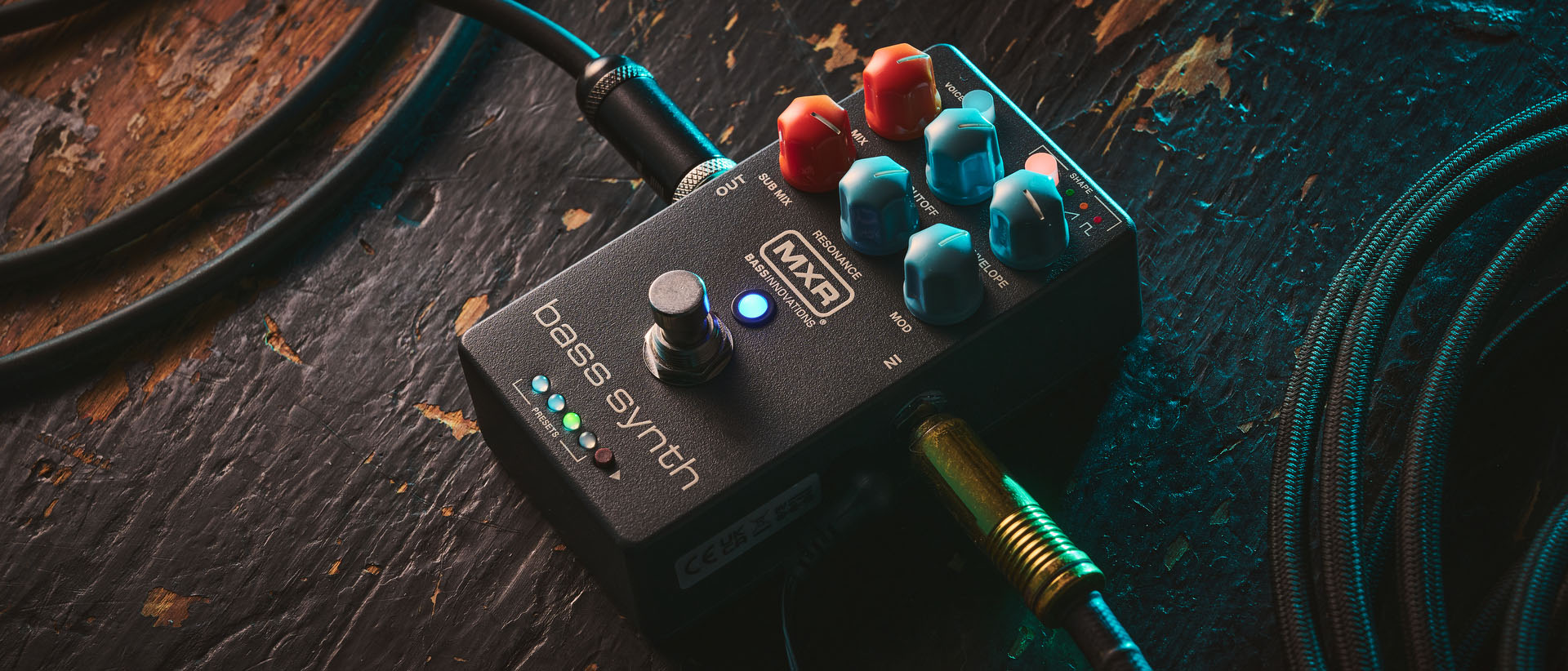
MXR Bass Synth: Pedal Review

A Deep Dive from the Perspective of a Bass Player Bass synth pedals sit in an awkward space between effects and instruments. Too shallow, and they sound like novelty filters strapped onto a bass signal. Too complex, and they demand a keyboardist’s mindset that many bass players don’t want to adopt mid-set. The MXR Bass Synth lives squarely in the middle of that tension. It is not a “synth-flavored” bass pedal, nor is it a full replacement for a dedicated synthesizer. Instead, it is a compact, monophonic synth engine designed to be controlled entirely by a bassist’s hands, dynamics, and note choice. This pedal rewards curiosity and punishes impatience. A quick glance at the control layout might suggest familiar territory—mix knobs, filters, modulation—but the MXR Bass Synth behaves more like a traditional subtractive synthesizer than a typical stompbox. Understanding how its controls interact is essential if you want to move beyond presets and into sounds that feel intentional, musical, and reliable in real-world playing situations. Check the Price on Amazon –> What follows is a true deep dive: not just what each control does in isolation, but how the pedal behaves as a system, how it reacts to bass technique, and how to program it so it serves the role of a bass player rather than fighting against it. Understanding the Signal Flow At its core, the MXR Bass Synth converts your bass into a control signal. Your note is analyzed for pitch and dynamics, which then drives internal oscillators. Those oscillators pass through a filter section, are shaped by envelope and modulation controls, and are finally blended with your clean bass signal before reaching the output. This is important because it explains why the pedal feels sensitive. Your bass is not merely being processed; it is actively controlling a synthesizer. Clean playing, consistent dynamics, and good muting are not optional—they directly affect how the synth behaves. Oscillator Architecture: Voice and Shape The Voice control determines the internal oscillator configuration. Each voice changes how many oscillators are active, which octaves they occupy, and how harmonically dense the sound is. Some voices are lean and focused, ideal for classic synth bass lines. Others layer multiple oscillators or emphasize sub-octave content for massive, modern low-end. From a bassist’s perspective, Voice selection is the first and most important decision. If the pedal feels unstable, too thick, or hard to control, the problem is often the voice choice rather than the knob settings that follow. The Shape control defines the oscillator waveform. Triangle waves are smooth and rounded, emphasizing fundamental and low frequencies. Sawtooth waves are aggressive and harmonically rich, cutting through dense mixes. Square waves offer a hollow, vintage character associated with classic funk and early synth bass lines. Waveform choice dramatically affects how the filter behaves later. Brighter waveforms exaggerate filter sweeps and resonance peaks, while smoother waves produce subtler movement. Mixing the Synth with Your Bass The Dry control blends your unaffected bass signal back in after the synth engine. This is not an afterthought; it is a crucial part of making the pedal usable in a band context. Leaving some dry signal preserves attack, note definition, and low-frequency consistency. The Synth control sets the level of the main oscillator output. It determines how dominant the synth voice is relative to your clean bass, but it does not increase distortion or saturation. The Sub control adds a dedicated synthesized sub-octave voice. This is not a standard octave pedal—it is a low-frequency oscillator designed to reinforce the fundamental. Used sparingly, it adds authority and weight. Used carelessly, it can overwhelm a mix or cause low-end chaos, especially in live settings. For most practical applications, the sweet spot is a balanced relationship between Dry, Synth, and Sub, rather than maxing out any one of them. Filter Section: Cutoff, Resonance, and Envelope The filter is where the MXR Bass Synth truly earns its name. Cutoff sets the frequency threshold for the low-pass filter. Lower settings produce dark, muted tones; higher settings allow brightness and harmonic content through. On its own, Cutoff feels static. Its musical value comes from how it interacts with Envelope and Resonance. Resonance emphasizes frequencies around the cutoff point. Low resonance produces smooth, understated movement. Higher resonance introduces vocal-like peaks and classic acid-style squelch. While tempting, high resonance can make levels unpredictable and can be difficult to manage in a full mix. The Envelope control determines how strongly your playing dynamics affect the filter sweep. This is not an attack or decay time control; it defines the depth of the dynamic response. Harder playing opens the filter more, softer playing keeps it closed. Envelope response is influenced by your technique, your bass’s output, compression before the pedal, waveform choice, and resonance settings. This interconnectedness is why the pedal can feel inconsistent until it is dialed in around the player. Modulation and Movement The Mod control introduces low-frequency modulation to the synth, adding motion to pitch or filter behavior depending on the selected voice. At low settings, modulation adds subtle animation that keeps the sound from feeling static. At higher settings, it ventures into vibrato, pulsing, and sci-fi territory. Most bassists will use modulation sparingly, but it becomes invaluable for electronic, ambient, or experimental styles. Expression Pedal Integration The MXR Bass Synth includes an expression pedal input, and this is one of its most powerful yet overlooked features. Depending on the mode and internal assignment, expression can be used to control parameters such as filter cutoff or modulation depth. In practice, filter cutoff is the most musically useful assignment. With an expression pedal, the Bass Synth becomes a foot-controlled filter instrument, enabling manual sweeps, build-ups, drops, and dub-style movements that feel intentional rather than automated. This transforms the pedal from a set-and-forget effect into a performance tool. Tracking, Technique, and Limitations The pedal is strictly monophonic. It tracks one note at a time and expects clean note separation. Sloppy muting, chords, double stops, and inconsistent attack can confuse the pitch detection.