Blog

News

Darkglass Delivers the Final Gift of 2025 for Anagram Users

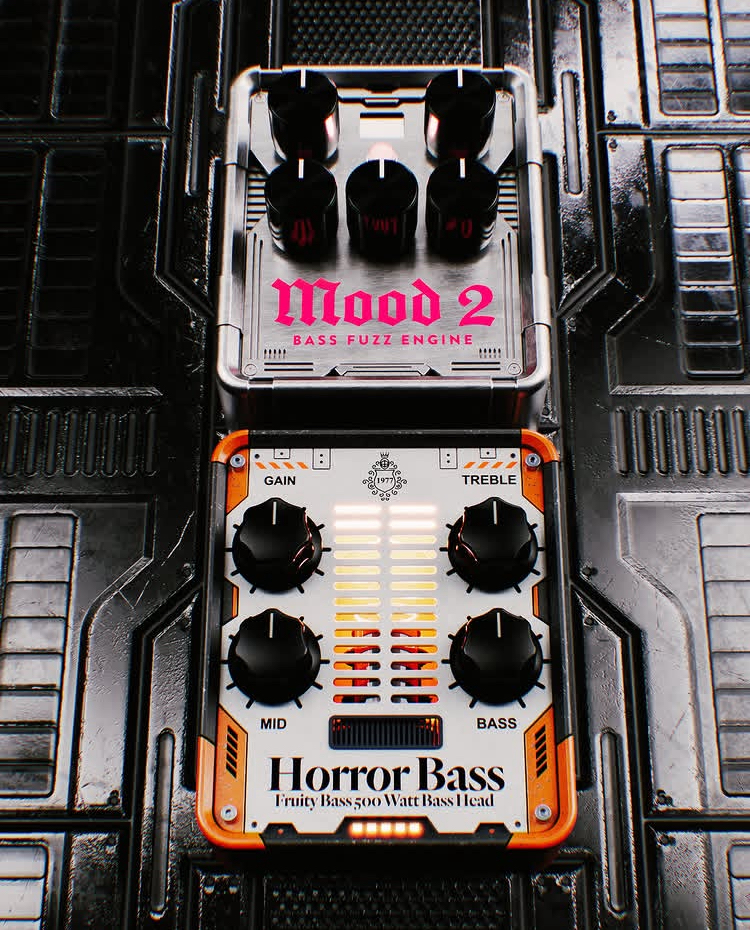
As 2025 draws to a close, Darkglass is wrapping up the year with one final gift for Anagram players: a fresh pair of Blocks that bring both raw power and iconic character to the platform. This last release of the year introduces one amplifier and one fuzz pedal, each inspired by beloved staples of the bass world. Fruity Horror Bass 500 – Amplifier Block The Fruity Horror Bass 500 is a new amplifier Block inspired by the unmistakable attitude of the Orange Terror series. Known for its aggressive midrange, thick low end, and unmistakably bold voicing, this amp brings a snarling, vintage-meets-modern character to Anagram. From punchy driven tones to full-on gritty saturation, the Fruity Horror Bass 500 excels at cutting through dense mixes while retaining weight and clarity—making it a perfect choice for rock, metal, and beyond. Mood 2 Fuzz – Fuzz Pedal Block Completing the release is the Mood 2 Fuzz, a faithful recreation of the legendary 3Leaf Audio Doom 2 fuzz pedal. A modern classic, the Doom 2 is revered for its massive, synth-like fuzz tones that stay articulate and responsive even at extreme settings. The Mood 2 Fuzz Block captures that signature sound, delivering thick saturation, rich harmonics, and expressive dynamics that integrate seamlessly into the Anagram signal chain. With the addition of the Fruity Horror Bass 500 and Mood 2 Fuzz, Darkglass closes out 2025 by giving Anagram users both a distinctive new amp voice and a cult-favorite fuzz pedal. It’s a fitting final release—one that celebrates tone, inspiration, and the continuing evolution of the Anagram platform.

News

🎅 Christmas Gift Guide for Bass Players (Best Presents of the Year)

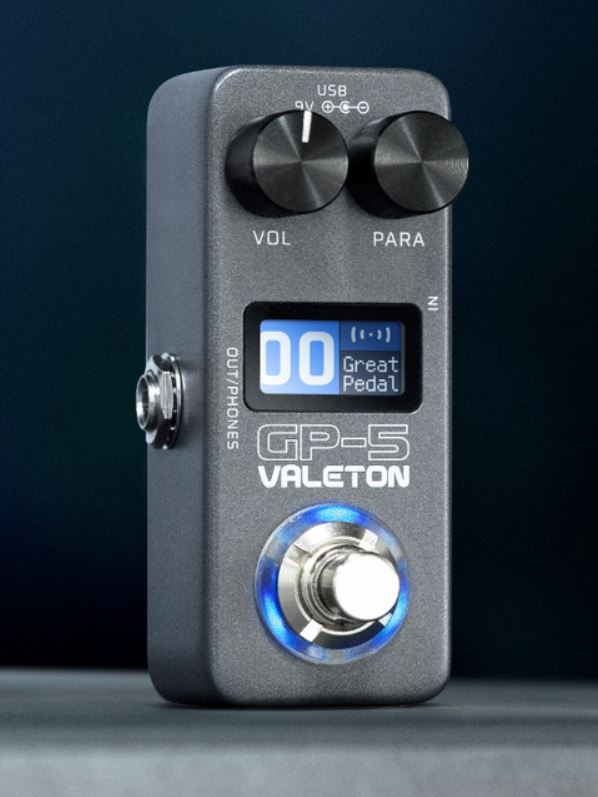
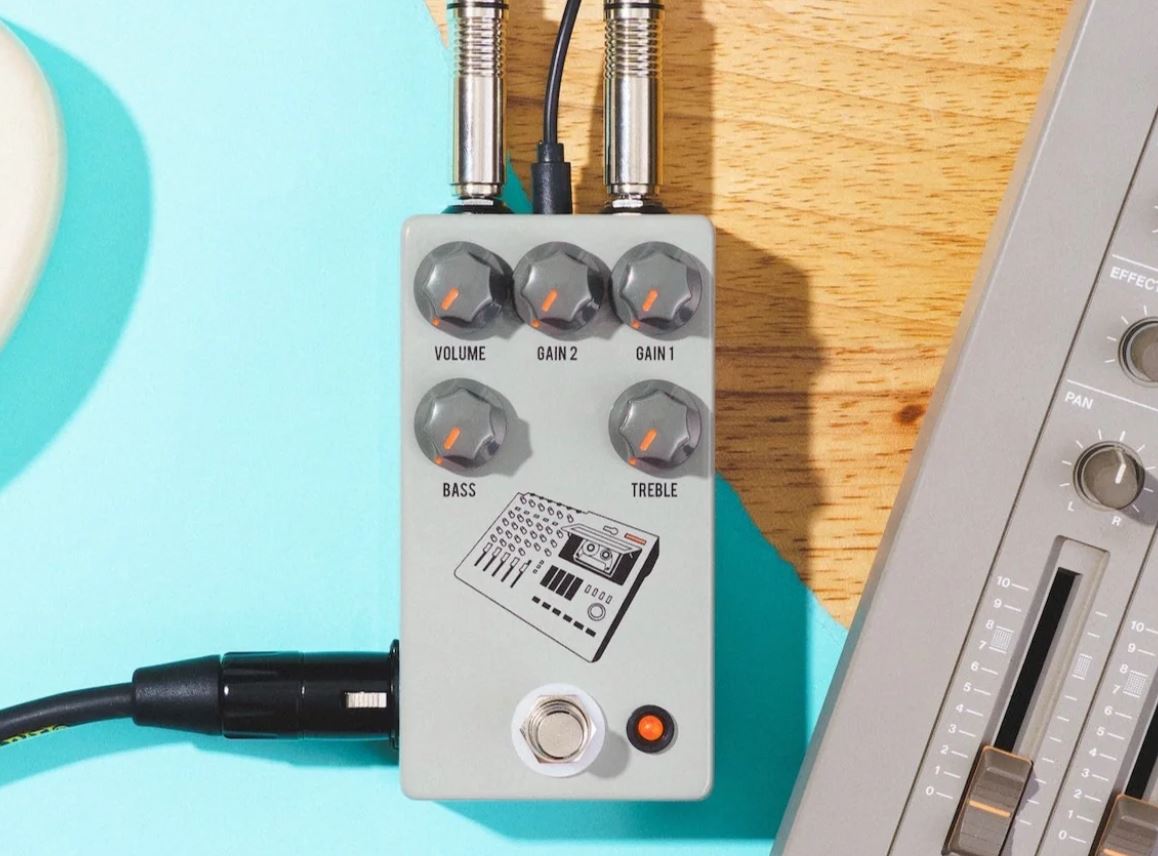
Looking for the perfect Christmas present for your favourite bass player? This year brought a fantastic mix of compact digital tools, boutique pedals, wireless solutions, and great-value instruments — many of which we’ve already reviewed here on BassGearReviews. Below is a curated gift guide covering multiple price points, different types of bass gear, and standout releases from this year, with direct links to our in-depth reviews so you can dig deeper before buying. 🎄 Valeton GP-5 — Ultra‑Compact Multi‑FX & Practice Rig The Valeton GP-5 is one of the most impressive value releases of the year. This tiny multi‑effects unit packs amp modeling, IR loading, modulation, delay, reverb, a drum machine, USB audio interface functionality, and a rechargeable battery — all in a pedal that fits easily in a gig bag. It works brilliantly as a practice tool, travel rig, or even a backup DI solution for gigs. For live use, we strongly recommend pairing it with an external MIDI controller like the M‑Vave Chocolate, which unlocks proper preset switching, tap tempo, and hands‑free control. 🔗 Read the full review here Price range: Budget / excellent value 🎄 JHS 424 Gain Stage — Characterful Preamp & Saturation Pedal Inspired by the iconic Tascam Portastudio 424, the JHS 424 Gain Stage delivers lo‑fi warmth, tape‑style saturation, and flexible gain staging that works surprisingly well on bass. Whether used as a subtle tone thickener, a gritty preamp, or a full‑on fuzz‑adjacent texture tool, this pedal shines for players who want character over cleanliness. It’s especially effective in recording setups and creative pedalboards. 🔗 Read the full review here Price range: Mid 🕯️ Xvive P58 — Wireless System with Pedal Receiver & Tuner The Xvive P58 combines a rock‑solid 5.8 GHz wireless system with a pedal‑format receiver that includes a built‑in tuner — making it an excellent choice for gigging bass players who want to ditch cables without cluttering their board. If you’re already familiar with Xvive’s popular A58 transmitters, the P58 system feels like a natural evolution, offering low latency, reliable connection, and stage‑friendly ergonomics. Price range: Mid 🎄 Sire Marcus Miller V6 & P6 — Pro‑Level Basses at Accessible Prices Sire continues to set the benchmark for value‑for‑money bass guitars, and this year’s V6 and P6 models are no exception. Either instrument makes a fantastic “big” Christmas gift — suitable for beginners upgrading their first bass or seasoned players looking for a reliable main instrument. 🔗 Read the reviews:V6 Review HereP6 Review Here Price range: Instrument / premium value ❄️ Origin Effects BASSRIG Fifteen — Classic B‑15 Tone in a Pedal The Origin Effects BASSRIG Fifteen is a lovingly crafted, all‑analogue tribute to the legendary Ampeg B‑15. Designed to capture the feel, response, and tonal depth of the classic studio bass amp, it excels as a recording preamp, DI solution, or centerpiece of a minimalist rig. This is a dream gift for bassists who chase vintage tone and appreciate premium build quality. 🔗 Read more Here Price range: Mid to premium 🎅 Sushi Box Effects Grand Slampegg — Boutique Tube Preamp Pedal For players who want real tube tone under their feet, the Sushi Box Effects Grand Slampegg delivers. Featuring a genuine 12AX7 tube, this pedal provides authentic warmth, natural compression, and touch‑responsive dynamics reminiscent of classic Ampeg‑style circuits. Hand‑built and unapologetically boutique, this is the kind of pedal bassists keep for life. 🔗 Read the full feature here. A full deep dive on this pedal is coming really soon, stay tuned! Price range: Premium / boutique 🎄 Quick Gift Guide by Budget 🎅 Final Thoughts Whether you’re shopping for a beginner, a gigging pro, or a studio tone obsessive, these bass‑focused releases from this year offer something genuinely special. Every product on this list stood out enough to earn coverage here at BassGearReviews, making them safe bets for Christmas morning smiles. Happy holidays — and happy low‑end!

Valeton GP5
Reviews

Valeton GP-5 Review For Bass (2025)

A Surprisingly Powerful Mini Multi-FX Disclaimer: This pedal was kindly provided by Valeton for the purpose of this review. However, this does not influence our opinions or the content of our reviews. We strive to provide honest, unbiased, and accurate assessments to ensure that our readers receive truthful and helpful information. Valeton has spent the last few years refining its approach to compact effects and modeling units, focusing on usability, modern workflows, and accessible pricing. As their lineup has evolved, bass players have increasingly found value in these designs—especially when portability and flexibility are priorities. Today we tackle the GP-5, a pedal that fits squarely within that direction. The GP-5 is one of those rare compact pedals that feels immediately useful. Its size, weight, and battery-powered design make it a perfect companion for musicians who need portability without sacrificing tone quality. It may not have the onboard editing depth of larger units, but it compensates with clever design choices that keep the workflow accessible and the sound quality impressive. TL;DR The Valeton GP-5 is an excellent ultra-portable multi-effects pedal with strong amp modeling, IR support, great tones, and a rechargeable internal battery. It does, however, require the Valeton app for creating and editing sounds, and its single footswitch benefits greatly from MIDI expansion with a controller like the M-Vave Chocolate. Most effects sound very good, though the octave leaves something to be desired for bassists. Overall, it’s a highly capable mini-rig with a few manageable limitations. Check the GP-5 Price on Amazon Now! Design & Portability Portability is the GP-5’s strongest feature. Built into a sturdy metal chassis and weighing almost nothing, it’s ideal for players who are constantly moving. The internal rechargeable battery makes it even more practical; you can practice, rehearse, or record without searching for outlets or carrying extra power supplies. This is a pedal you can toss into a gig bag and trust to be ready whenever you need it. Interface & Editing The GP-5 keeps its physical controls minimal. This keeps the pedal compact and simple but also means that deep editing is not available on the unit itself. Valeton intentionally designed the GP-5 to rely on the official app for tone creation and detailed patch management. Through the app, the GP-5 becomes significantly more powerful. You can reorganize the signal chain, adjust all amp and cabinet settings, load IRs, fine-tune effects, and access the built-in drum machine. Editing is fast, visual, and intuitive, and once your patches are set up, the GP-5 is extremely easy to use day-to-day. Tone & Effects The GP-5’s sound engine is the biggest surprise. Its amp models feel lively and responsive, its drives are musical, and its modulation, delay, and reverb options are all solid. The addition of IR loading brings another level of realism and makes the unit capable of producing very polished tones. There is one clear weak point: the octave effect. For bass players especially, the tracking can feel unstable, and the low-end response isn’t as full as you’d want for precise or rhythmic playing. Most of the other effects, however, perform well above what you typically expect from a unit this size. MIDI Expansion The GP-5 comes with a single footswitch, which keeps the hardware clean but limits flexibility. Fortunately, Bluetooth MIDI changes everything. Pairing the unit with a controller like the M-Vave Chocolate unlocks multiple foot-controlled functions such as preset navigation, effect toggling, tap tempo, and drum machine control. This effectively turns the GP-5 into a much more capable performance unit without compromising its ultra-portable design. It’s a worthwhile addition for anyone planning to use the GP-5 beyond bedroom practice. Built-In Tools The pedal includes a stable tuner, reliable USB audio interface functionality, and IR loading for cabinet simulation. The drum machine is available through the app and works well for practice sessions. While there’s no onboard looper, the available features still make the GP-5 a well-rounded compact system. Q&A Is the GP-5 viable for live use?Yes, especially when paired with a MIDI controller. The core tones and IR support are good enough for real-world performance, and MIDI solves the footswitch limitations. Do I need the app to create sounds?Yes. The GP-5 cannot build patches on its own. All custom tones require the Valeton app, which provides full control and editing capability. How good is it for bass players?Overall, it performs well, especially with good IRs. The only notable limitation is the octave effect, which doesn’t track as cleanly or as strongly as many bassists would prefer. Conclusion The Valeton GP-5 stands out as a genuinely impressive mini multi-effects pedal. It combines strong modeling, IR support, practical features, and excellent portability into a compact, reliable package. While it does rely heavily on the app for editing and the octave effect isn’t ideal for bassists, the overall experience is overwhelmingly positive. Paired with the app and a Bluetooth MIDI controller, the GP-5 transforms into a capable, great-sounding, highly flexible mini-rig. For musicians seeking a lightweight, travel-ready solution with real tonal quality, the GP-5 remains one of the strongest options available in its category. Get your Valeton GP-5 On Amazon! If you liked this gear, make sure to also check:

Valeton GP-50
News

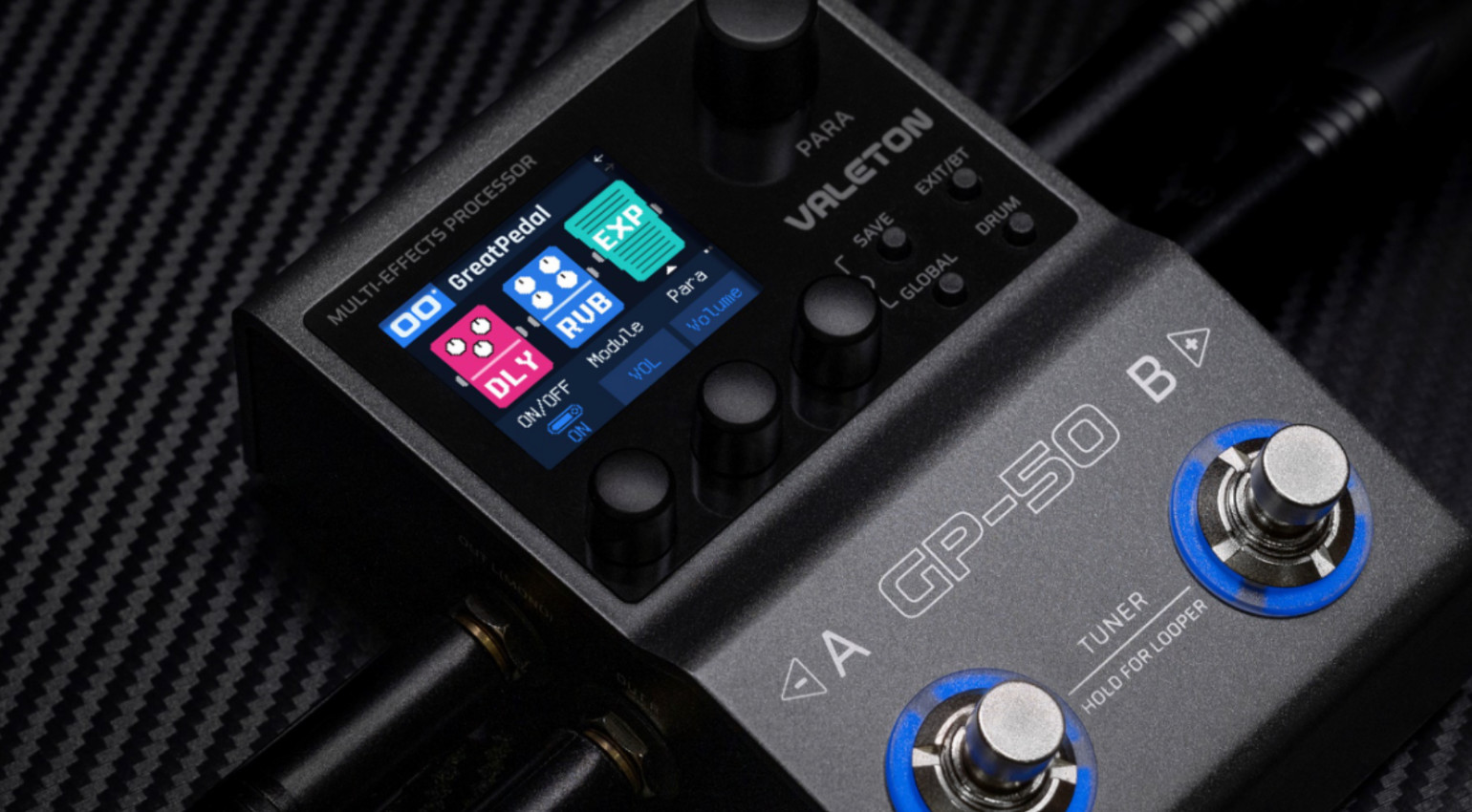
Valeton Unveils the GP-50

A Compact Powerhouse for Modern Players Finding the perfect balance between tone, portability, and real-world flexibility has always been a challenge for gigging and recording musicians. With the launch of the new Valeton GP-50, Valeton steps confidently into that space, expanding on everything players loved about the acclaimed GP-5 while pushing the boundaries of what a compact multi-effects unit can do. Bigger Potential, Still Pocket-Ready The GP-5 proved that small can be mighty — and the GP-50 takes that philosophy even further. Valeton has embraced a slightly larger footprint to unlock a significant boost in capability. Even so, the unit remains extremely lightweight at just 430 grams, housed in a rugged metal chassis, and still compact enough to fit in the palm of your hand. Whether you’re heading to a studio session, rehearsal space, or live gig, the 1450 mAh internal rechargeable battery and multi-power options (DC, USB, or battery) make the GP-50 a true go-anywhere device. Check Price on Amazon Now! A Refined Interface With Hands-On Control One of the first things returning GP-series users will notice is the redesigned layout. The GP-50 features: This thoughtful redesign dramatically increases the level of hands-on control. Players can switch up to six effect modules on and off, tap tempos, sync parameters, and even record loops—all right from the unit. Additional footswitch and expression pedal inputs extend its flexibility even further, making it ready for pedalboards or standalone use. Full Signal Chain Power in a Stompbox-Sized Unit Don’t let the compact form factor fool you. The GP-50 is a full-featured multi-effects processor capable of handling nearly any playing scenario. It boasts: This means players can either jump right in with pro-level tones or carve out their own unique soundscapes. A Creative Tool Beyond Effects Valeton has also equipped the GP-50 with a suite of modern musician essentials: For players who love shaping their tone with third-party tools, the GP-50 doubles as an IR loader that stores up to 20 cabinet IRs. SnapTone: Next-Generation Amp Modeling One of the standout upgrades is support for Valeton’s new SnapTone technology. With SnapTone, players can convert and load up to 80 Neural Amp Models, giving the GP-50 a massive library of realistic amp tones. To help users hit the ground running, the unit ships with 50 SnapTone files preloaded. Built for Today’s Musicians Whether used as an all-in-one travel rig, pedalboard expansion tool, practice companion, or recording interface, the GP-50 is built for players who demand versatility without sacrificing portability. The upgrades all reflect Valeton’s commitment to listening closely to musicians’ needs and delivering solutions that inspire creativity.

Reviews

JHS 424 Gain Stage – Bringing Classic 424 Analog Mojo: Pedal Review

Saturation, Fuzz, Warmth, and Retro Vibe in One Compact Pedal Disclaimer: This pedal was kindly provided by JHS Pedals for the purpose of this review. However, this does not influence our opinions or the content of our reviews. We strive to provide honest, unbiased, and accurate assessments to ensure that our readers receive truthful and helpful information. For many players, the Tascam PortaStudio 424 was the gateway into home recording—a tactile, imperfect, and undeniably musical piece of gear that shaped countless demos and early projects. Its charm wasn’t just the ability to layer tracks; it was the sound. The hiss, the saturation, the preamp grit, the way it made bass and drums feel bigger than the room they were recorded in. JHS clearly identified this emotional attachment when designing the 424 Gain Stage, a pedal built to capture the entire signal path of a 424 MKI channel and repurpose it as a compact, bass-friendly tone tool. While a tape-inspired pedal might sound like a novelty at first glance, the 424 Gain Stage is far from a gimmick. Modern bass rigs often demand clarity and power, but they also benefit from personality—and this pedal offers both. Whether used live, in the studio, or on pedal-heavy synth-bass setups, the 424 blends warmth, saturation, and controlled distortion in a way that feels classic without being outdated. It behaves like a piece of analog gear, because in many ways, it is one—just without the tape. TL;DR The JHS 424 Gain Stage is a multi-stage gain pedal based on the Tascam PortaStudio 424 MKI channel strip. On bass, it functions as a warm preamp, subtle saturator, synth-friendly sub enhancer, vintage fuzz, and gated distortion unit. Its retro character won’t suit players seeking modern high-gain voices, but for those craving analog warmth and unique texture, it’s extremely versatile and surprisingly practical. Check Price on Amazon –> Build & Layout The control scheme mirrors the 424’s original workflow: It’s a straightforward layout that makes dialing tones fast, even in a live setting. Performance Used as a clean gain stage, the pedal adds noticeable harmonic enrichment without forcing distortion. Notes feel rounder and more present, similar to subtle tape saturation. With vintage basses—especially passive instruments—it brings out warmth and touch sensitivity that can easily enhance a mix. Increasing Gain 1 introduces the distinctive preamp coloration of the PortaStudio. It thickens the midrange, adds weight to transients, and creates a musical, old-school breakup character. This mode pairs remarkably well with octave and synth pedals because of the pedal’s warm but controlled distortion behavior. Pushing Gain 2 into the upper ranges produces a gated, aggressive fuzz. It’s tight and focused, making it suitable for riff-heavy rock or applications where a pronounced attack is desirable. EQ Functionality The Treble control works effectively to counteract the inherent warmth and density introduced by the gain stages. This makes the 424 easier to integrate into complex pedal chains, as it can restore clarity for downstream effects. The Bass knob provides enough range to adapt to different rooms or rigs without overwhelming the low end. Use Cases The 424 Gain Stage serves well as: It won’t replace modern distortion units centered on mid-forward aggression, but that’s not its role. Instead, it excels at providing a unique tonal signature inspired by the PortaStudio’s analog imperfections. Pros & Cons Pros Cons Q&A Section Q: Is the JHS 424 a “lo-fi only” pedal? A: Not at all. It can do lo-fi extremely well, but it’s also a warm preamp, subtle saturator, and legitimate fuzz pedal. Q: Does it work with active basses? A: Yes, though the gain stages react more dramatically. Active basses may hit the saturation earlier, which some players will enjoy. Q: How does it compare to the JHS Colour Box? A: The Colour Box offers far more tone-shaping options and flexibility, but at a higher cost and complexity. The 424 delivers similar vibe with fewer controls and a smaller footprint. Q: Can it handle modern metal or aggressive high-gain distortion? A: That’s not its strength. The 424 leans vintage, warm, and character-driven rather than sharp or mid-forward. Q: Is it good for recording? A: Yes—its subtle saturation modes make it a great tracking tool for adding analog feel to DI bass. Conclusion The JHS 424 Gain Stage is more than a nostalgia piece—it’s a practical and expressive tool for bass players who value analog warmth and musical imperfection. While its roots lie in the PortaStudio 424’s channel strip, the pedal feels entirely at home on a modern bass board. Its ability to move seamlessly from gentle tape-like saturation to thick overdrive and into gated fuzz gives it a unique versatility that’s hard to find in a single unit. It won’t satisfy players hunting for ultra-modern distortion, but that’s precisely the point: the 424 isn’t trying to be everything for everyone. Instead, it offers a focused palette of tones with a strong identity. Whether used as a primary preamp, a character enhancer, or a creative fuzz tool, the 424 Gain Stage brings something special—and unmistakably analog—to the table. If you want a compact, affordable pedal that captures the soul of retro recording gear while still delivering practical, gig-ready bass tones, the JHS 424 Gain Stage is absolutely worth your attention. Grab the JHS 424 Gain Stage here –> If you enjoyed checking out this JHS pedal, here are more JHS products worth exploring — all tested and reviewed here on BassGearReviews: – JHS Colour Box V2 – Neve Style Preamp Pedal