Blog

Boss TU-3
Reviews

The Boss TU-3: Pedal Review – Are We Really Reviewing This?

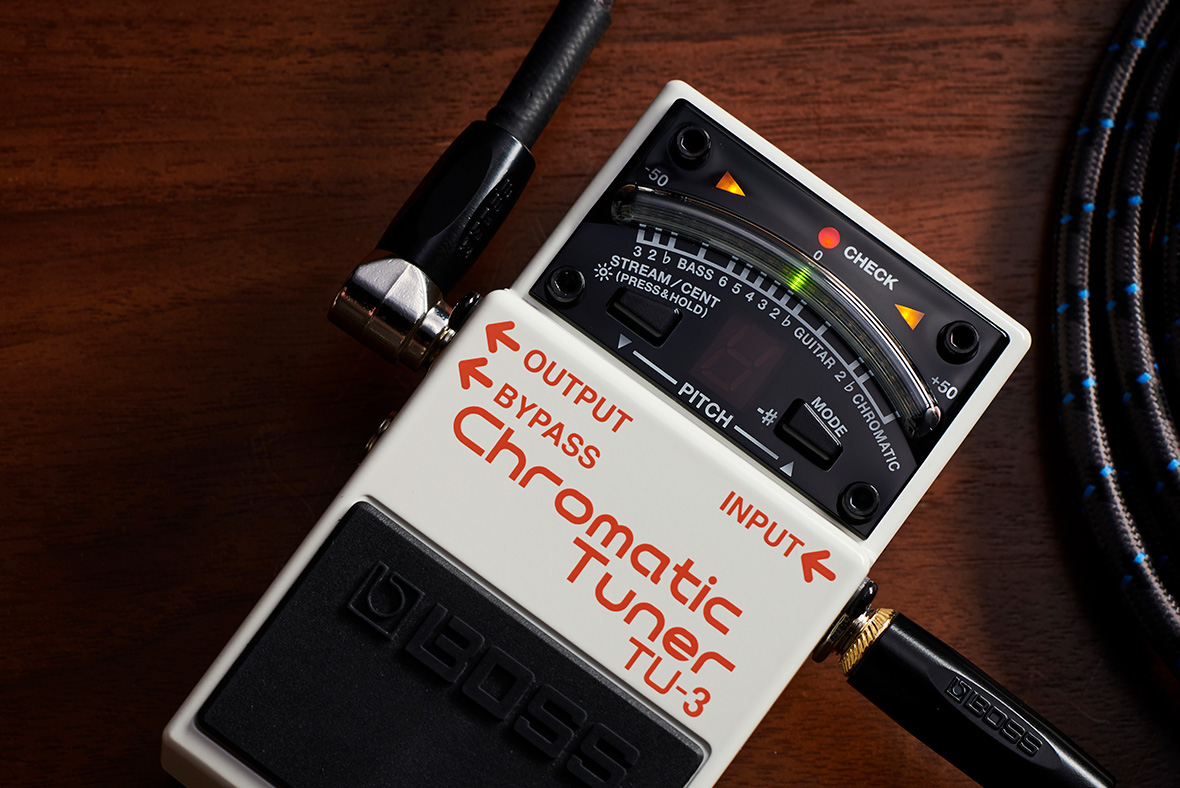
The Most Essential, Yet Overlooked, Pedal on Your Board Let’s be honest—if you’re reading a review about the Boss TU-3, something strange is happening. You probably already own one, have used one, or have at least seen one a thousand times on pedalboards everywhere. This isn’t a boutique overdrive or a rare modulation effect—it’s a tuner. But not just any tuner—THE tuner. The Boss TU-3 is the industry standard, the golden benchmark, the tank that refuses to die. If you’ve ever played a gig and relied on a pedal tuner, chances are high that this little white box was the one keeping your bass (or guitar, we don’t discriminate) in check. Today, we’re diving deep into a review that absolutely no one expected—but one that the Boss TU-3 absolutely deserves. Why Review a Tuner? Because This One is Legendary. Tuners rarely get the spotlight. They sit quietly on your board, never demanding attention, yet they hold your entire performance together. A bad fuzz tone? You can roll with it. An out-of-tune bass? Absolute chaos. The TU-3 takes its job very, very seriously. Here’s what makes it the King of Tuners: TU-3 vs. TU-3S: The Compact Cousin If you thought the TU-3 was too big (first of all, why?), Boss offers an alternative: the TU-3S. It’s essentially the same pedal, minus the footswitch. That’s right—it’s always on, making it perfect for rigs with switchers or players who want constant tuning reference. Key Differences Between the TU-3 and TU-3S: Feature TU-3 TU-3S Footswitch Yes Nope (Always On) Size Standard Boss Pedal Smaller, No Footswitch Ideal For Standard Pedalboards Looper/Switcher-Based Rigs If you love tap-dancing on your pedals, get the TU-3. If you want tuning at all times, the TU-3S is your silent workhorse. Conclusion – The Pedalboard MVP Sure, reviewing a tuner may seem unnecessary, but let’s give credit where credit is due: the Boss TU-3 is the reason your band doesn’t sound like a mess. It’s reliable, indestructible, and does its job flawlessly. If you don’t have one, get one. If you already have one, never let it go. Because at the end of the day, you can’t solo your way out of being out of tune.

Boss VB-2W
Reviews

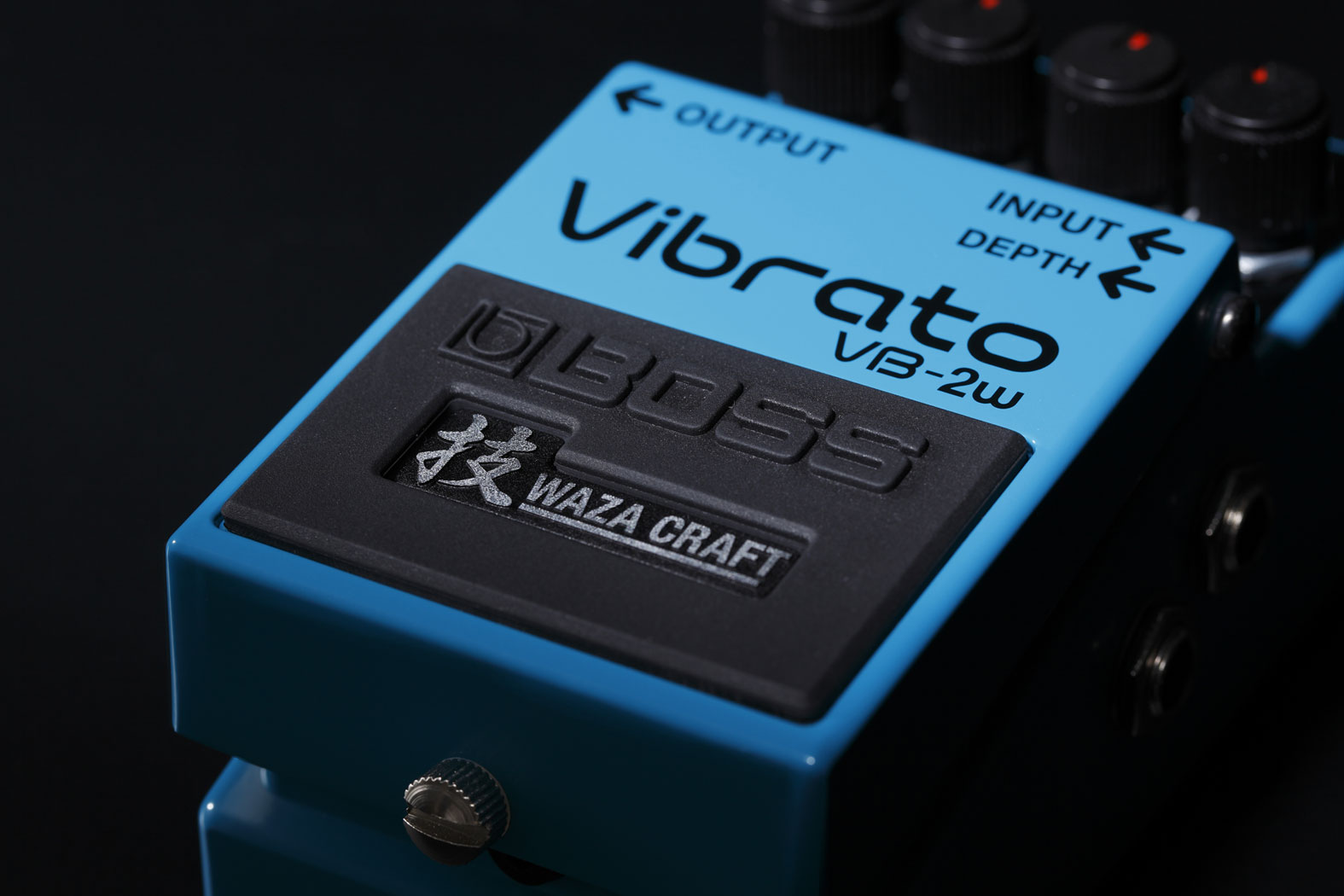
Boss VB-2W Waza Craft Vibrato: Pedal Review

A Classic Reborn with Modern Enhancements Few modulation pedals have achieved the legendary status of the Boss VB-2 Vibrato. Originally released in the 1980s, the VB-2 was ahead of its time, offering a unique pitch modulation effect that provided a lush, warbling vibrato unlike anything else on the market. However, its short production run led to it becoming one of the most sought-after pedals in Boss’ history, with vintage units commanding high prices on the used market. With the VB-2W Waza Craft, Boss has faithfully recreated this classic pedal while introducing modern enhancements that expand its tonal capabilities. Retaining the all-analog bucket brigade circuit of the original, the VB-2W delivers the same expressive and organic vibrato effect while offering additional control and flexibility. Classic and Custom: Two Modes of Vibrato One of the most exciting aspects of the VB-2W is its dual operation modes: This added functionality allows musicians to tailor the vibrato effect to their personal taste, making it suitable for everything from subtle pitch modulation to deep, seasick warbles. A Perfect Match for Fretless Bass While many guitarists have praised the VB-2W, bass players—particularly those who play fretless—can unlock its full potential. The pedal’s ability to produce smooth, undulating pitch shifts complements the natural singing quality of fretless bass, allowing for expressive, almost vocal-like phrasing. By carefully adjusting the depth and rate controls, fretless players can enhance their gliding lines and melodic movement, achieving a unique sonic identity. Legendary bassist Juan Alderete, known for his work with The Mars Volta, has been one of the most vocal proponents of the VB-2. His innovative use of the pedal has demonstrated how it can transform a bass player’s tone, adding an extra layer of movement and emotion to the sound. Pedal Controls and Features The VB-2W offers intuitive yet powerful controls that make shaping the vibrato effect simple: Additionally, an expression pedal input allows for real-time control of vibrato depth, making it even more versatile for live performance. As expected from Boss’ Waza Craft series, the VB-2W is built to last, featuring the brand’s signature tank-like construction. The pedal comes equipped with: Conclusion The Boss VB-2W Waza Craft Vibrato is more than just a reissue—it’s an evolution of a cult classic. By maintaining the magic of the original while adding enhanced tonal options, improved circuitry, and increased flexibility, Boss has made the VB-2W an essential tool for bass players. For bass players, the organic pitch modulation, expressive controls, and beautifully smooth vibrato make this pedal an outstanding choice—especially for fretless bassists looking to add extra character to their playing. Whether you’re chasing vintage vibrato tones or exploring new sonic landscapes, the VB-2W stands as one of the best vibrato pedals ever made.

News

The Behringer B-TRON III Envelope Filter

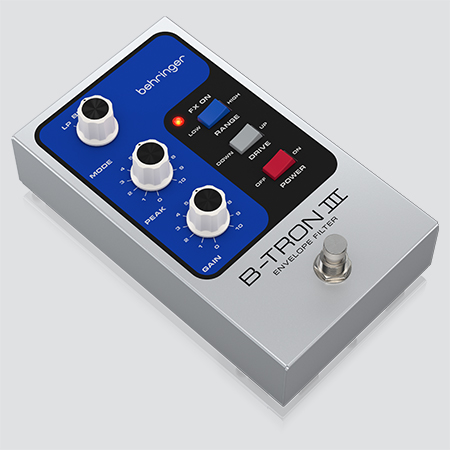
Behringer Revives the Funk! Behringer has just unveiled the B-TRON III Envelope Filter, a vintage-inspired pedal that brings back the iconic sounds of the ‘70s. Modeled after the legendary Mu-Tron III, a pedal that shaped the tones of artists like Jerry Garcia, Stevie Wonder, and Bootsy Collins, the B-TRON III delivers that signature “auto-wah” effect with style. Three filter modes—low-, band-, and high-pass—allow for deep vowel-like sweeps or crisp high-end bite, perfect for guitar, bass, and keyboards alike. The Range switch toggles between rich, deep tones and bright, overtone-heavy textures, while the Drive switch offers classic upward-sweeping wah or a unique “cocked” effect for a different take on funk expression. With Behringer’s track record of affordable recreations, the B-TRON III is set to make the classic envelope filter sound accessible to a whole new generation.

Bananana Effects Matryoshka
Reviews

 Bananana Effects Matryoshka Bass Synth: Pedal Review

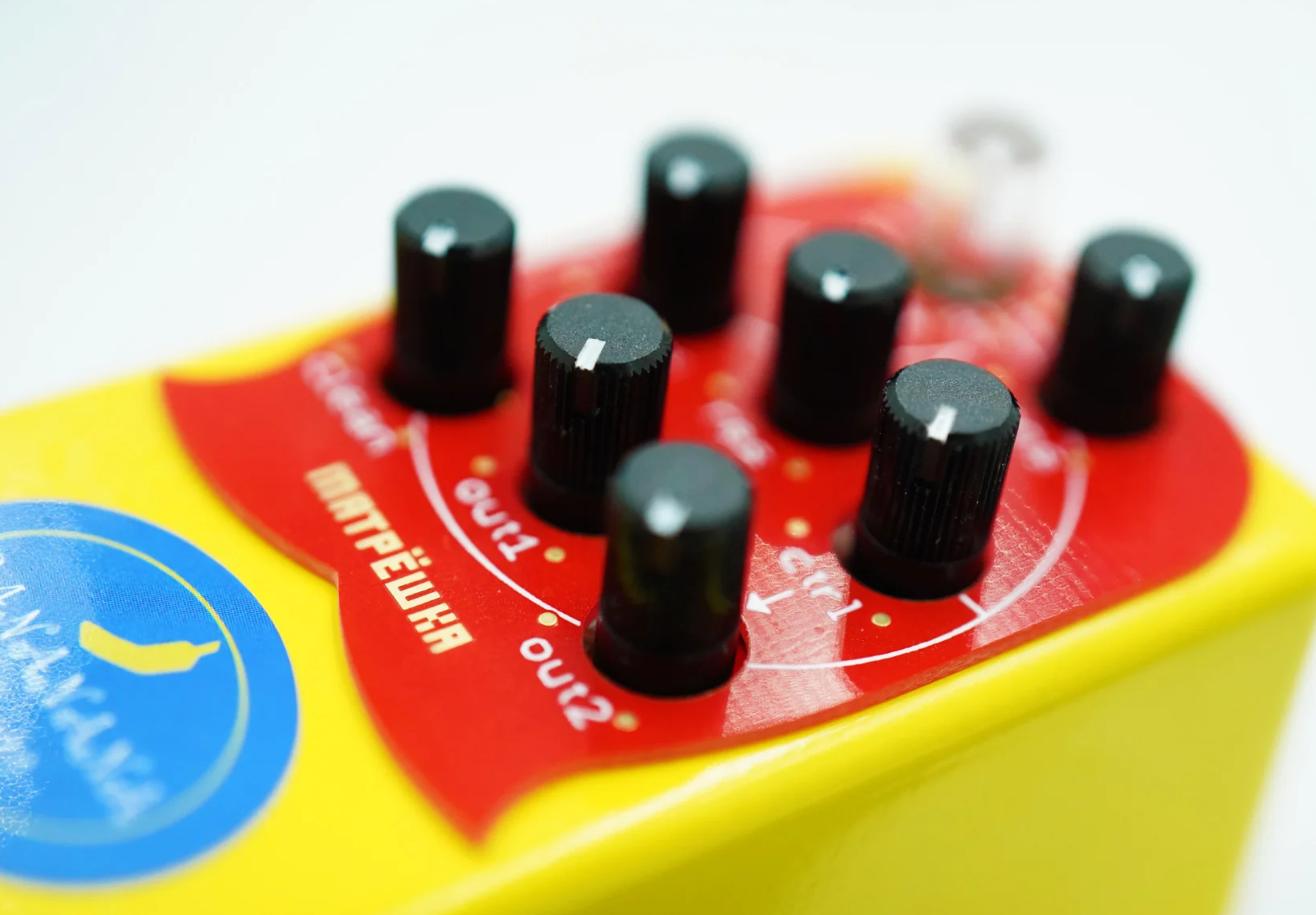
Small in Size, BIG in Sound! The world of bass synth pedals is filled with options ranging from classic analog-inspired designs to modern digital powerhouses. Today, we’re taking an in-depth look at the Matryoshka Synth Pedal by Bananana Effects, a boutique pedal company from Kyoto, Japan. Known for their innovative and compact designs, Bananana Effects has developed a reputation for crafting pedals that break the mold of traditional effects, including the Abracadabra Shimmer Reverb, Aurora Pitch Shift Delay, Mandala Glitch Pedal, and, of course, the Matryoshka Bass Synth. Unlike many conventional bass synth pedals, the Matryoshka isn’t just an emulation of vintage synthesizers—it introduces new ways of sculpting bass synth sounds, offering a broad range of possibilities for experimental and conventional applications alike. In this review, we’ll explore its features, usability, and how it fits within the broader history of synth pedals. Disclaimer: This pedal was kindly provided by Bananana Effects for the purpose of this review. However, this does not influence our opinions or the content of our reviews. We strive to provide honest, unbiased, and accurate assessments to ensure that our readers receive truthful and helpful information. Bass synth pedals have been around for decades, tracing back to the Electro-Harmonix Bass Micro Synth, which was among the first to offer a true analog synthesizer experience in pedal form. Later, digital advancements brought us options like the Boss SYB-5, Source Audio C4, and EHX Synth9, which expanded the realm of synth sounds for bass and guitar players alike.The Matryoshka takes inspiration from these predecessors but distinguishes itself in key ways. While older pedals often focused on imitating classic analog synths or generating simple waveforms, the Matryoshka introduces a blend-centric approach, allowing users to mix clean bass tones with multiple synthesized layers for a hybrid analog-digital experience. It also incorporates sampling techniques, arpeggiation, and bit-crushing, which are features not commonly found in compact bass synth pedals. Overview Despite its incredibly small footprint (52 x 93 x 49mm, 200g), the Matryoshka is a powerful and versatile synth pedal that lets bassists tap into a wide variety of electronic textures. Whether you’re looking for subtle tonal shifts, gritty synth bass lines, or full-fledged experimental chaos, this pedal delivers. With 8 different synth modes, a 3-channel mixing system, and a comprehensive set of control knobs, the Matryoshka is an excellent tool for those looking to push their bass sound beyond traditional boundaries. Controls and Features The Matryoshka is packed with eight tiny but effective controls: A Mode LED indicator changes color to reflect the selected mode, making it easy to navigate even in dark environments. Synth Modes and Their Applications The Matryoshka’s eight synth engines each offer a unique way of processing bass signals: Practical uses for the Matryoshka? Performance and Sound Tracking is one of the most crucial aspects of a synth pedal, and the Matryoshka performs exceptionally well in this area. Unlike some synth pedals that struggle to track lower frequencies or fast playing, the Matryoshka maintains accuracy as long as clean, single notes are played. Its ability to blend multiple layers of sound gives musicians a level of control often reserved for high-end synthesizers. Sound-wise, the filter section is particularly expressive, and the distortion and bit-crushing effects are aggressive yet usable. The LFO, vibrato, and arpeggiator modes create cinematic, evolving textures, making it much more than just a standard synth pedal—it’s a creative tool that rewards experimentation. Pros and Cons Pros: ✔ Exceptional tracking for a synth pedal of this size. ✔ Wide range of sonic possibilities, from subtle to extreme. ✔ Compact and highly portable. ✔ Blending control allows for integration with traditional bass tones. ✔ LED Mode Indicator simplifies navigation. Cons: ✘ Small knobs make on-the-fly adjustments tricky. ✘ Limited polyphony – does not handle complex chords well. (How do you like the emojis on this section?) Conclusion The Bananana Effects Matryoshka is an innovative, powerful, and surprisingly versatile synth pedal for bassists looking to push their sonic boundaries. While its small size and tiny knobs may require some getting used to, the depth of control and sheer variety of tones it offers make it a must-have for experimental musicians. It stands out in the crowded synth pedal market by offering creative layering options, unique effects, and high-quality tracking. Whether you’re a session bass player, a live performer, or a producer looking for fresh textures, the Matryoshka has something valuable to offer. If you’re interested in futuristic bass synth tones with deep customization, this pedal is well worth exploring. Curious if the Bananana Effects Matryoshka is the right synth pedal for your setup? Check out the latest price and availability on Amazon. For more information on Bananana Effects, visit their official webpage here!
News

The Source Audio Artifakt Lo-Fi Elements

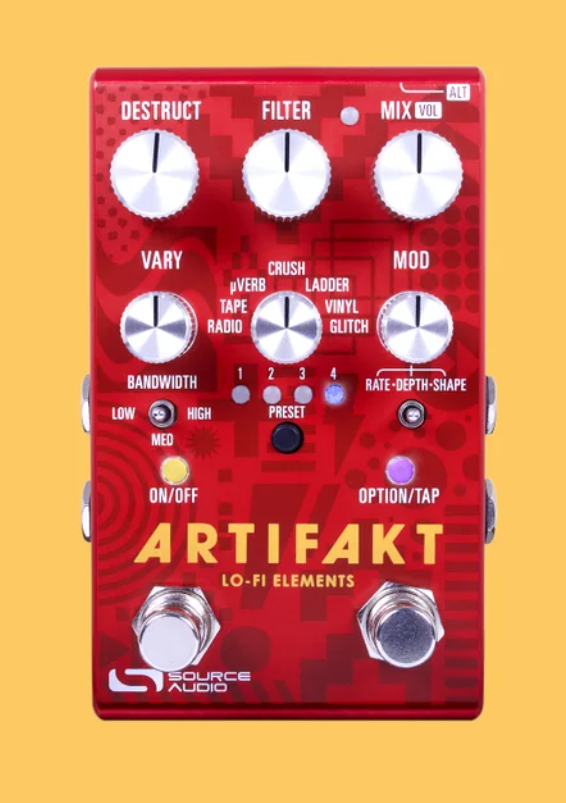
A World of Hazy, Scratchy, Wobbly and Broken Tones The Artifakt is the latest creation of Source Audio, and it is a crazy, out of the box tone machine! “The Artifakt Lo-fi Elements is the first pedal of its kind, a comprehensive collection of all the hazy, scratchy, wobbly, and broken tones that epitomize the term ‘lo-fi’.” Like a mega-delay or mega-reverb, Artifakt is a “one-stop shop” for all the most sought-after lo-fi effects including old vinyl replications, tape modulation and saturation, bit crushing, sample rate reduction, dark reverb and echo, filtering, compression, glitch, and more.” Artifakt isn’t just a pedal; it’s a one-stop shop for every lo-fi effect you could ever need. Whether you’re looking to replicate the vintage warmth of old vinyl, experiment with tape modulation, or add gritty bit crushing and sample rate reduction, the Artifakt delivers all these and more. It offers a variety of highly sought-after lo-fi effects, including: Artifakt is designed to be a creative powerhouse, offering a wealth of experimental possibilities in one compact and intuitive unit. Whether you’re crafting lo-fi beats, experimenting with ambient soundscapes, or adding a touch of vintage warmth to your tone, the Artifakt delivers in spades. Source Audio has ensured that the Artifakt is not only versatile but also user-friendly, with a sleek design that makes it easy to dial in the perfect sound. The pedal is fully equipped with deep editing capabilities, offering control over each effect’s parameters via Source Audio’s Neuro App (for iOS/Android). The app allows users to fine-tune their tones to an unprecedented degree, unlocking even more creative potential. The Artifakt Lo-fi Elements is a must-have for musicians looking to explore the darker side of sound, combining a vast array of lo-fi effects in one powerful pedal. Key Features: With the Artifakt Lo-fi Elements, Source Audio continues to innovate and inspire musicians to experiment with new sounds. Whether you’re looking for rich, atmospheric textures or gritty, broken tones, the Artifakt is your ultimate lo-fi destination. For more information, check the Source Audio Artifakt Lo-Fi Elements official homepage.