An Instrument of Discipline, Not Decoration
There are basses we admire.
There are basses we enjoy.
And then there are basses that quietly rewire the way we think about playing.
For me, the Ibanez GWB is in that last category.
Those who know me know that Gary Willis has been my reference and mentor for a long time — not only musically, but conceptually. His approach to articulation, right-hand economy, and tonal intention reshaped how I understand the instrument. So writing about the GWB is not simply writing about a signature model.
It is writing about a philosophy made tangible.
But admiration should never cloud clarity. The GWB deserves a deep look — not as a fan piece, but as an honest examination of one of the most coherent signature instruments ever produced.
The Origin: A Bass Built from the Inside Out
When Ibanez introduced the original GWB1 in 1999, it wasn’t responding to a trend. It was responding to a system.
Gary Willis had already refined his floating thumb technique and right-hand mechanics over decades. He didn’t want a bass that simply sounded good. He wanted an instrument that reinforced the discipline of his touch.
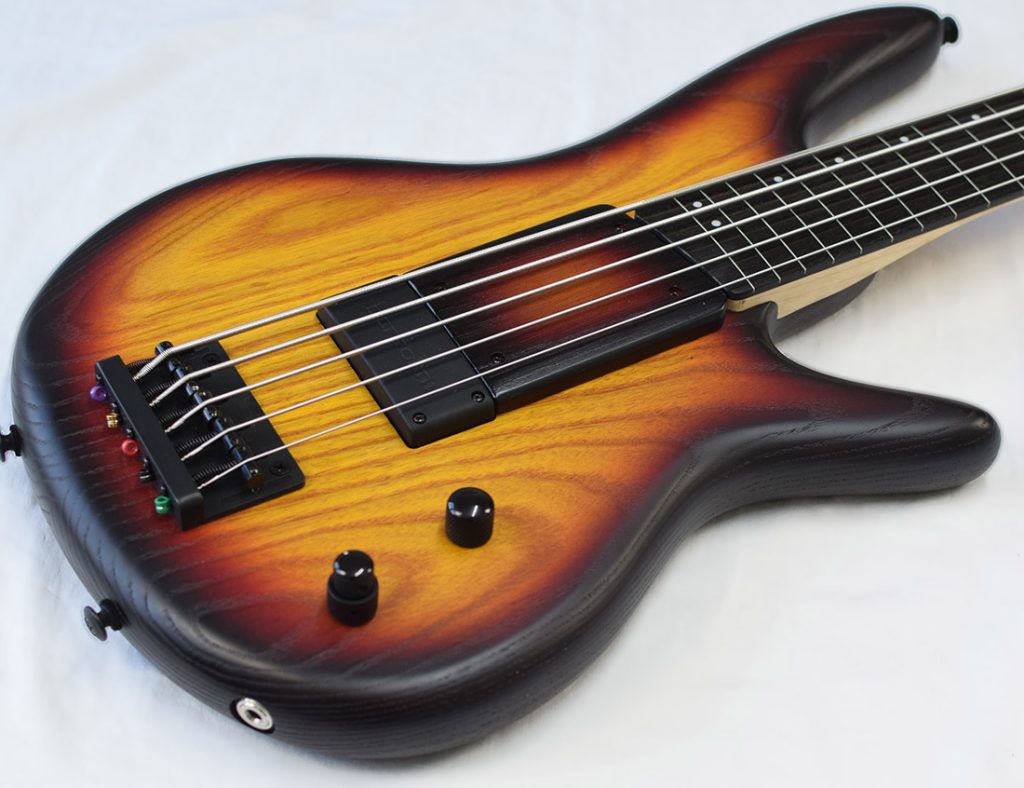
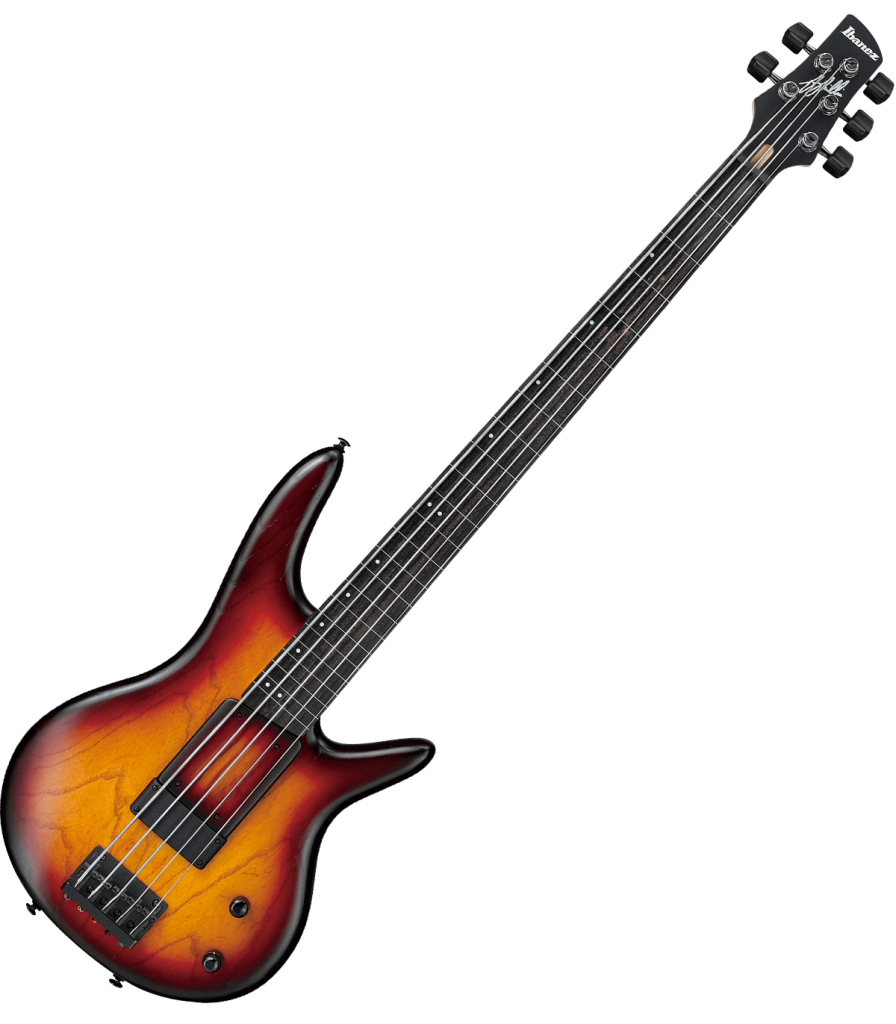
The GWB1 — built in Japan — established the template:
- Swamp ash body
- Ebony fretless fingerboard
- Custom Bartolini electronics
- Compact, ergonomic body
- And most radically: the removable wooden finger ramp
That first generation wasn’t flashy. It was deliberate.
And what’s remarkable is how little the core philosophy has changed since.
Evolution
After the original Japanese-built models (GWB1 and later GWB1005), Ibanez expanded the line to make the concept more accessible. The GWB35, introduced in the early 2000s, became the long-running production model that brought the ramp-and-fretless philosophy to a broader audience.
Later, the GWB205 refined the formula further, sitting between affordability and premium build quality, maintaining the ebony board, Bartolini pickup, and ramp system while modernizing aesthetics and construction.
Anniversary editions — the GWB20th (2019) and GWB25th (2024) — didn’t reinvent the instrument. They honored it. Upgraded electronics, special finishes, subtle refinements — but always preserving the essential idea: this bass exists to serve a disciplined right hand and an expressive fretless voice.
Across more than two decades, the silhouette, the ramp, the fretless identity — all remained intact.
That consistency is not accidental.
It reflects a rare clarity of design.
First Thing First: The Ramp
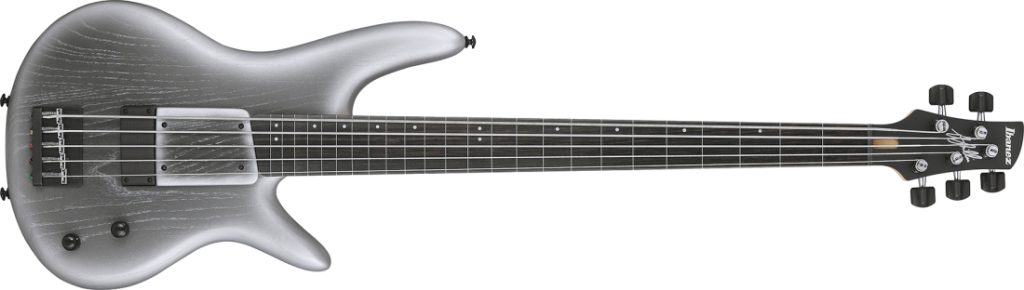
The ramp is still the most controversial feature — and the most honest.
It limits finger depth, reduces wasted motion, and forces efficiency. It rewards light touch. It punishes heavy-handed playing.
When I first spent serious time with a ramp-equipped bass, it revealed every inefficiency in my right hand. It became clear how much excess movement I had normalized.
The GWB does not let you hide behind aggression.
It asks for control.
And that’s the central theme of the entire instrument.
Fretless as Commitment
The GWB is not a “versatile” instrument in the commercial sense.
It commits to fretless.
The ebony fingerboard, subtle position markers, and smooth articulation invite nuance rather than theatrics. This is not a bass built for exaggerated “mwah” or fretless gimmicks. It is built for micro-adjustments of pitch, subtle vibrato, vocal phrasing.
But this commitment defines its audience.
If you are not willing to invest in intonation discipline, the GWB will not flatter you.
Electronics
The Bartolini pickup and active EQ system across most generations reflect the same tonal philosophy as the ramp: control over spectacle.
The low B integrates naturally. The midrange stays articulate. Fast passages remain defined.
In a fusion or jazz context, this balance is invaluable. In a high-gain rock mix, it may feel restrained.
Where the GWB Excels
- Precision articulation
- Dynamic nuance
- Even five-string balance
- Long-session ergonomics
- Technical right-hand development
- Fusion and modern jazz contexts
More than anything, it excels at consistency.
Where It Falls Short
- Not ideal for aggressive rock or metal
- Not a slap-forward design
- Limited tonal variation due to single-pickup format (on most models)
- Demands technical adaptation
These are not design failures.
They are boundaries.
My Personal Take
Because this instrument is tied to someone who has shaped my musical path, it would be easy to romanticize it.
But what I respect most about the GWB is that it does not romanticize anything.
It is disciplined. It is focused. It does not try to win everyone.
Playing it feels less like borrowing Gary Willis’s voice and more like stepping into the framework that shaped it. And that framework demands honesty. It shows you exactly how controlled — or uncontrolled — your touch truly is.
In that sense, it functions almost like a teacher. Which feels appropriate!
Final Reflection
Over more than twenty-five years — from the original GWB1 to the modern GWB205 and the 25th Anniversary edition — the Ibanez GWB has remained conceptually intact.
Few signature instruments can say that.
It is not driven by nostalgia.
It is not driven by market trends.
It is driven by a system.
For those aligned with that system, it can feel like home. For those who aren’t, it may feel foreign.
But perhaps that is the greatest compliment one can give an instrument:
It knows exactly what it is. And it refuses to be anything else!
If this instrument speaks to your approach as much as it has shaped mine, you can explore the current Ibanez GWB models here.