A Smarter Workflow in a Still-Compact Format
Disclaimer: This pedal was kindly provided by Valeton for the purpose of this review. However, this does not influence our opinions or the content of our reviews. We strive to provide honest, unbiased, and accurate assessments to ensure that our readers receive truthful and helpful information.
Valeton’s GP series has evolved in a very deliberate way over time. The GP-5 introduced the core sound engine but relied heavily on the app. The GP-50 removed that limitation by adding onboard editing, dual footswitches, and a more complete control layout.
The GP-150 continues that progression—but in a slightly different direction.
While it naturally builds on the workflow improvements introduced in the GP-50, it’s important to note that the GP-150 is technically positioned as an evolution of the GP-100 platform. In other words, it’s less about extending the compact GP-50 concept and more about bringing that improved usability into a more fully featured, floorboard-style unit.
Where the GP-50 gave you independence, the GP-150 gives you depth, flexibility—and physical control.
TL;DR
The Valeton GP-150 builds on the usability improvements introduced in earlier GP units while expanding into a more powerful, floorboard-style format derived from the GP-100 platform. With deeper routing, NAM support, and a built-in expression pedal, it offers a more flexible and performance-oriented workflow while maintaining the strong core tones of the series.
From GP-50 to GP-150: What Actually Changed
The GP-50 established a solid control system: three rotary knobs for parameter control, a main encoder for navigation, two footswitches, and a small set of function buttons. That made onboard editing viable—but still somewhat limited when dealing with deeper signal chains or real-time control.
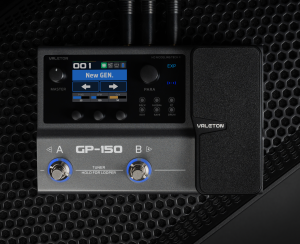
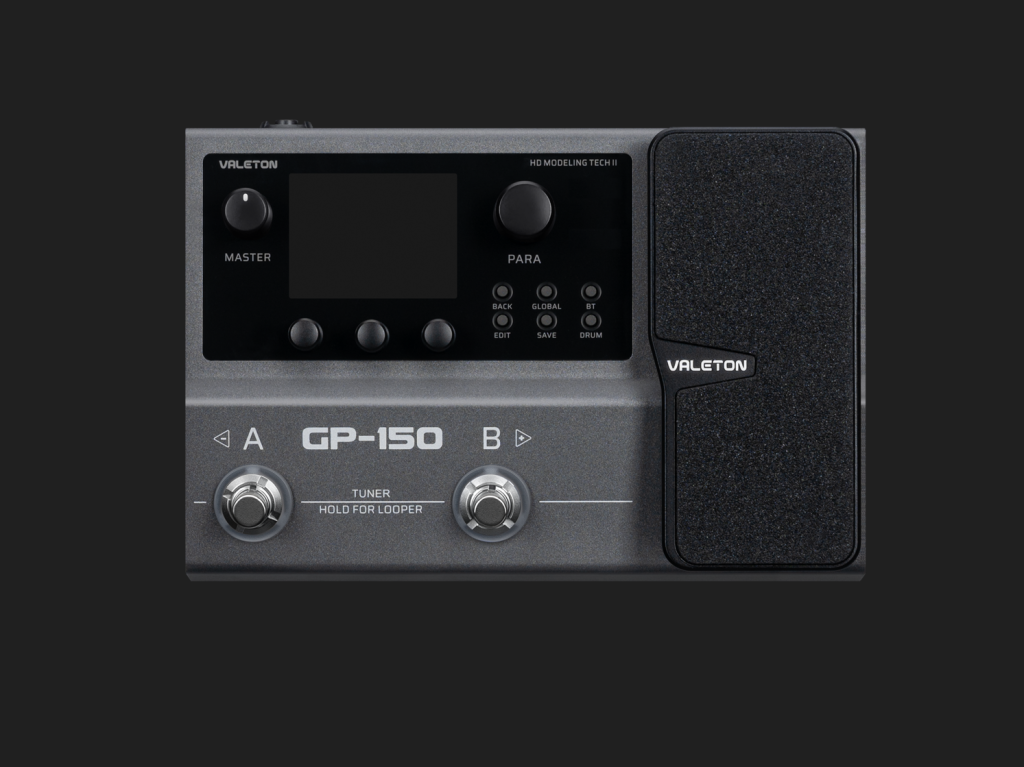
The GP-150 builds on that idea, but expands it into something more capable. It adds more dedicated buttons, a clearer 2.4″ color display, and most importantly, a built-in expression pedal.
At the same time, it inherits the broader scope of the GP-100 platform—meaning more processing flexibility, deeper routing, and a more complete feature set overall.
The result is a unit that feels less like a compact multi-FX and more like a streamlined floorboard.
Interface & Workflow
The GP-150 is where the GP series starts to feel like a fully self-contained rig.
With support for up to 12 modules in any order, the pedal allows for complex and highly customizable signal chains. What makes that usable is the improved workflow—navigation is smoother, editing is clearer, and switching between tasks feels more immediate.
Bluetooth editing is still available, but like previous models, it’s optional. You can comfortably build and tweak sounds directly on the unit without needing external devices.
Expression Control: A Major Upgrade
The built-in expression pedal is one of the most important additions to the GP-150.
On smaller GP units, real-time control often required external gear. Here, it’s fully integrated into the design. You can control volume, wah, or assign it to multiple parameters and effects.
More importantly, it changes how you interact with the pedal. You’re no longer just selecting presets—you’re actively shaping your sound while playing. That added layer of expression makes a significant difference in both practice and live scenarios.
Tone & Effects
The core sound remains consistent with the rest of the lineup—but there are some meaningful refinements.
There are more effects available overall, which makes the platform feel more complete when building patches.
One of the most noticeable improvements—especially for bass players—is the octave tracking. Lower octave sounds are significantly tighter and more usable, making them far more reliable in a mix. That’s a big deal for anyone using sub-octave tones for layering or synth-style sounds.
Higher octaves are still a bit clunky. They work, but they haven’t reached the same level of polish as the lower range.
The addition of NAM (Neural Amp Modeler) support is another major step forward, opening the door to more realistic amp captures and a broader tonal palette.
One small (and slightly confusing) detail: there’s at least one bass preset that seems to completely lack low end.
Maybe it’s intentional. Maybe it’s a creative choice 🙂 (Or maybe I’ve already contacted Valeton and they’re on it!)
Performance Control
With dual footswitches and the built-in expression pedal, the GP-150 strikes a very practical balance.
You have enough foot control for switching and toggling, while the expression pedal handles continuous parameters. It’s still compact, but far more capable without needing additional controllers.
Features & Practical Tools
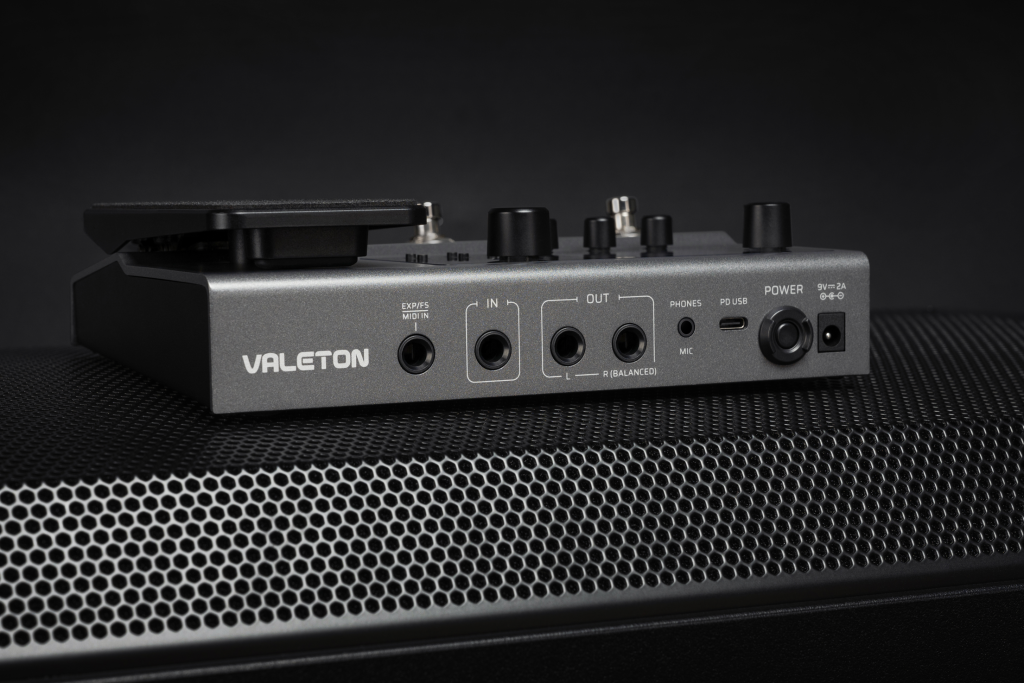
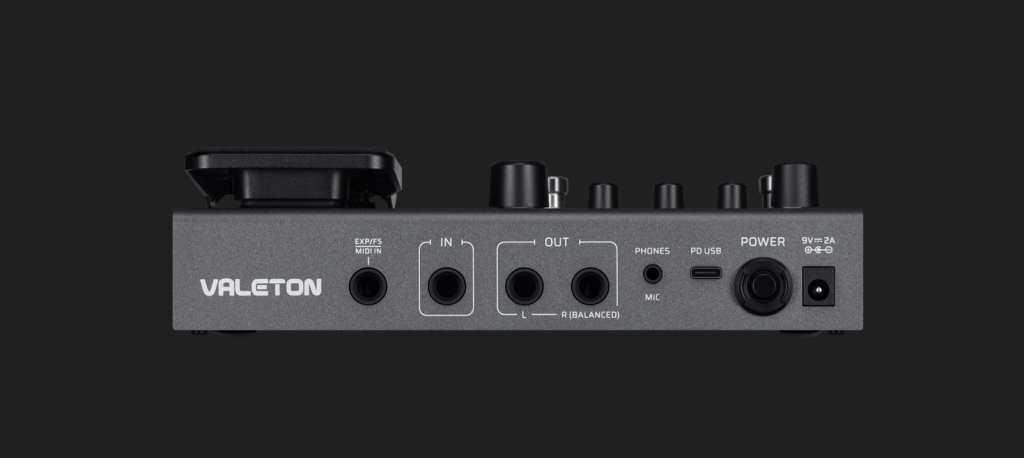
The GP-150 includes a 180-second looper, a drum machine with over 100 patterns, 200 preset slots, a 6-in/4-out USB audio interface, Bluetooth connectivity, and a built-in 3000 mAh battery with over 6 hours of use.
It functions as a genuinely self-contained unit for practice, recording, and live performance.
Design & Portability
Despite the expanded feature set, the GP-150 remains portable. It’s compact, under 1 kg, and integrates the expression pedal without becoming bulky.
It still fits easily into a gig bag, but replaces significantly more gear.
Q&A
Is the expression pedal a big deal?
Yes. It adds a level of real-time control that fundamentally changes how the pedal feels to use.
Is this a replacement for the GP-50?
Not directly. It sits in a different category, but if you want more control and flexibility, it’s a clear step up.
Is it good for live use?
Yes—especially for players who want expression control and deeper routing in a compact format.
Conclusion
The Valeton GP-150 represents a shift from compact convenience to compact performance.
By combining the improved usability introduced in earlier GP units with the broader capabilities of the GP-100 platform, it delivers a more complete and flexible experience. The addition of the built-in expression pedal further enhances its real-time control, making it feel closer to a full rig than a compact multi-FX.
For players who want portability without giving up depth or flexibility, the GP-150 is a strong and well-balanced option.
If you’ve enjoyed this review, make sure to check out other Valeton releases here on BassGearReviews.com
- Valeton GP-5 Multi Effects – Surprisingly powerful mini multi effects pedal.
- Valeton GP-50 Multi Effects – Evolution of the powerful GP-5.
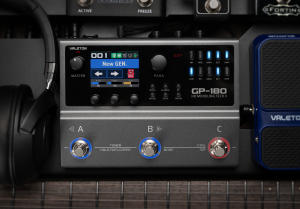
- Valeton GP-180 Multi Effects – The final evolution of the GP series.