The GP Platform Fully Realized
Disclaimer: This pedal was kindly provided by Valeton for the purpose of this review. However, this does not influence our opinions or the content of our reviews. We strive to provide honest, unbiased, and accurate assessments to ensure that our readers receive truthful and helpful information.
By the time you get to the GP-180, the question isn’t really about sound anymore.
That part was already solved with the earlier models.
Instead, what Valeton has been refining with each release is something less obvious—but arguably more important: how you interact with the pedal when you’re actually playing.
The GP-180 feels like the point where everything clicks into place.
TL;DR
The Valeton GP-180 takes everything introduced in the GP-50 and GP-150 and refines it into a more performance-ready experience. With an additional footswitch and dedicated buttons for individual effect blocks, it offers a far more immediate and hands-on workflow, making it feel less like a compact unit and more like a complete, stage-ready processor.
From GP-150 to GP-180: What Changes in Practice
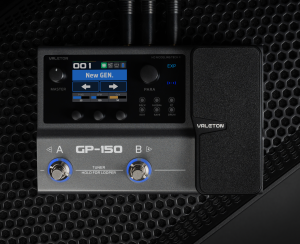
On paper, the GP-150 and GP-180 are very similar. Same sound engine, same effects, same routing flexibility, same NAM support.
But in practice, the GP-180 feels noticeably different—and that comes down to control.
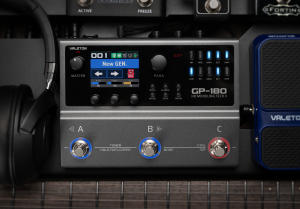
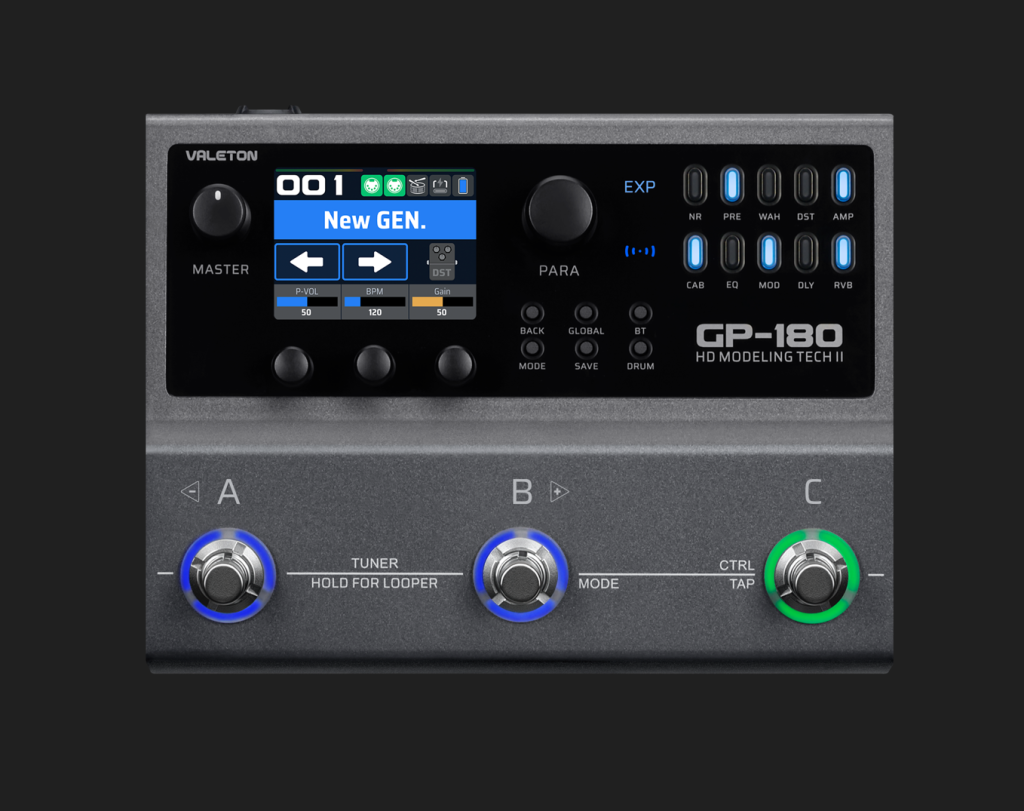
The addition of a third footswitch already makes navigation more natural. But the real shift comes from the dedicated effect block buttons.
You’re no longer just navigating presets—you’re interacting directly with your signal chain.
Interface & Workflow
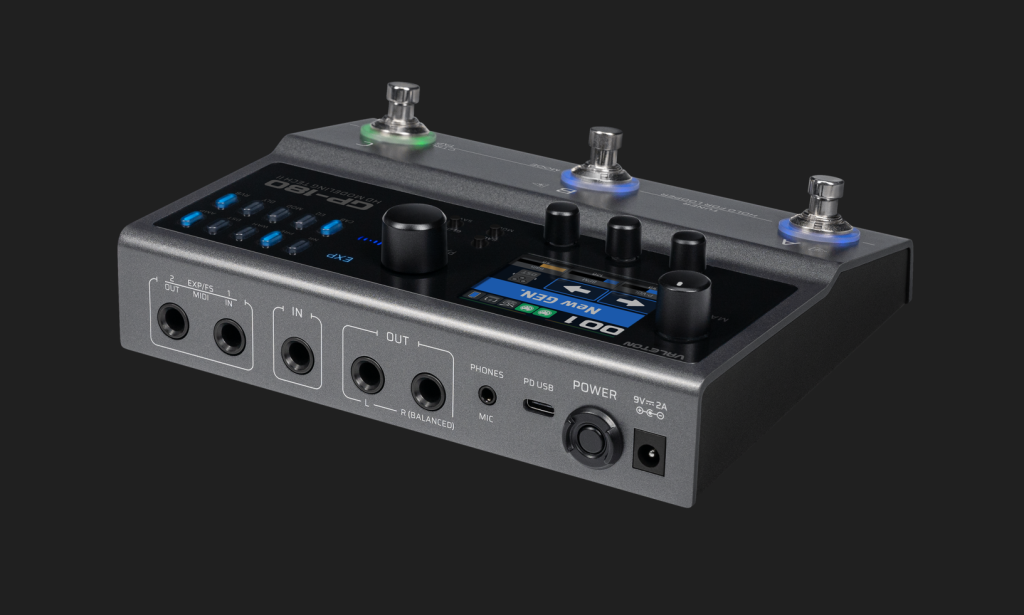
The GP-180 keeps the same core layout as the GP-150—rotary controls, function buttons, and a color display—but adds a layer of immediacy that changes how you use it.
You get 10 dedicated buttons corresponding to individual effect blocks. These light up when active and act as instant on/off switches.
So instead of assigning a footswitch or diving into menus, you can simply tap a button to turn off distortion, bring in delay, toggle modulation, or add reverb on the fly.
It makes the pedal feel less like a preset machine and more like a hands-on pedalboard.
Tone & Effects
Like the GP-150, the GP-180 doesn’t change the core sound—but it does refine parts of it.
There are more effects available overall, which adds flexibility when building patches.
The octave effects are improved, particularly on the lower end. Tracking is tighter and much more usable, especially for bass players. Higher octaves are still a bit rough, but the improvement where it matters most is clear.
NAM compatibility and flexible routing remain key strengths.
Performance Workflow
This is really what the GP-180 is about.
Between three footswitches, dedicated effect buttons, and assignable controls, you’re no longer working around limitations—you’re choosing how to interact with the pedal.
You can use footswitches for presets, buttons for effect toggling, and combine both for a flexible, natural workflow.
Connectivity & Integration
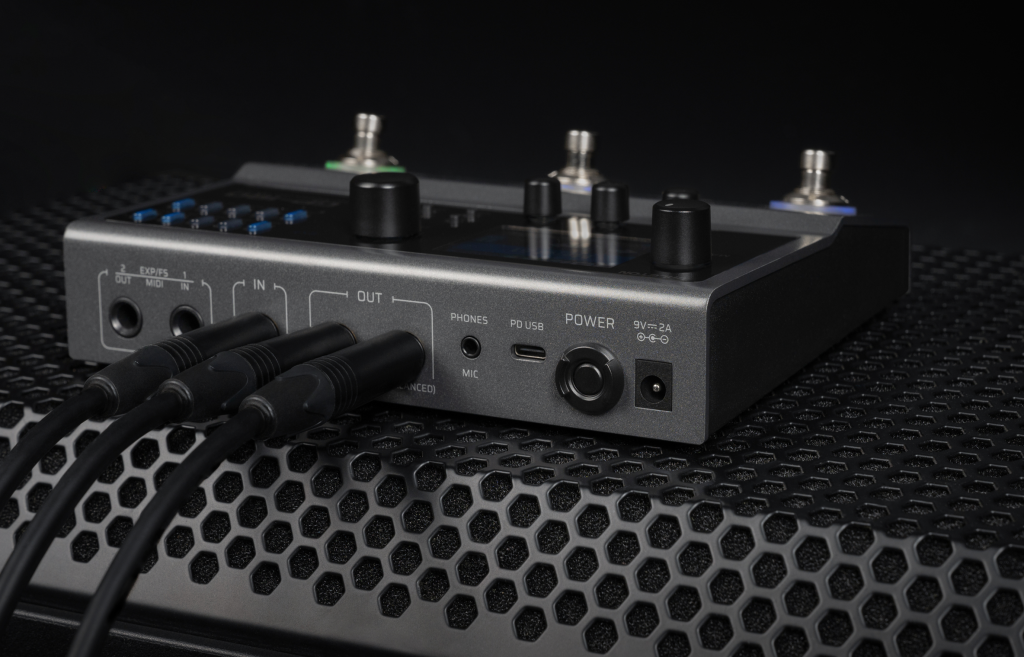
The GP-180 integrates easily into modern setups, whether you’re running direct, recording via USB, or using it as part of a larger rig.
Full MIDI In/Out/Thru support makes it especially useful in more complex setups.
Design & Portability
Despite the added control, the GP-180 remains compact and even slightly lighter than the GP-150.
It strikes a strong balance between portability and usability.
Built-In Tools
The GP-180 includes a looper, drum machine, audio interface functionality, and battery operation.
The key difference isn’t the features—it’s how easy they are to use in real time.
Q&A
Are the effect block buttons actually useful?
Yes. They’re one of the biggest workflow improvements, making real-time control faster and more intuitive.
Is this better for live use than the GP-150?
Definitely. The added footswitch and direct control make it much more stage-friendly.
Should you choose this over the GP-150?
If you value smoother live control and less compromise underfoot, it’s an easy choice.
Conclusion
The Valeton GP-180 doesn’t just refine the GP platform—it redefines how you interact with it.
By adding dedicated effect block controls alongside expanded footswitch functionality, it bridges the gap between a multi-FX unit and a traditional pedalboard. The sound remains strong and familiar, but the experience is far more immediate and engaging.
If the GP-150 is about capability, the GP-180 is about control—the feeling that your rig responds exactly the way you want, in real time.
If you’ve enjoyed this review, make sure to check out other Valeton releases here on BassGearReviews.com
- Valeton GP-5 Multi Effects – Surprisingly powerful mini multi effects pedal.
- Valeton GP-50 Multi Effects – Evolution of the powerful GP-5.
- Valeton GP-150 Multi Effects – The GP series option for expression pedal lovers.