Blog

Category: News

Double Dragon
News

JHS Pedals Releases Double Dragon Lo-Fi Octave Device

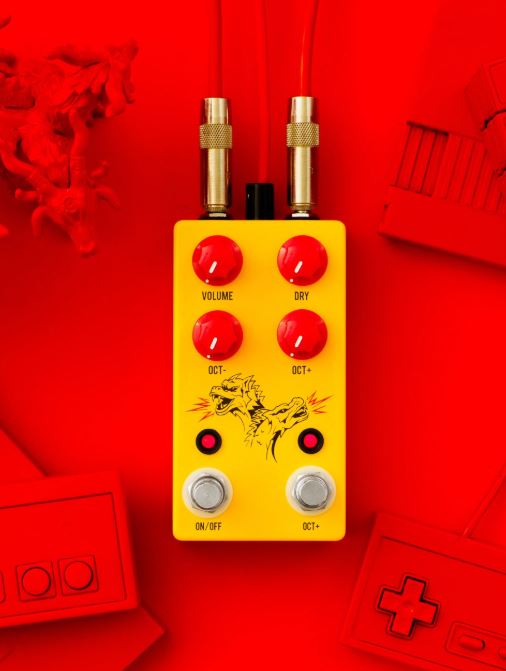
JHS Introduces the All-Analog Double Dragon Octave Pedal JHS Pedals has officially released the Double Dragon Lo-Fi Octave Device, a new all-analog octave pedal built around vintage octave-divider technology. Drawing inspiration from classic circuits like the Boss OC-2, MXR Blue Box, and DOD Octoplus, the Double Dragon intentionally looks backward rather than embracing modern DSP precision. The result is a monophonic octave effect designed to deliver the warmth, quirks, and organic response that defined early analog octave designs. The Double Dragon features both an octave-down (OCT−) and a switchable octave-up distortion (OCT+). The lower octave provides thick, vintage-inspired sub tones, while the upper octave circuit adds a gritty, mid-forward distortion texture. Controls include Volume (with additional boost available), Dry blend, OCT− level, and OCT+ level, with dual footswitches for main on/off and octave-up engagement. The pedal also offers top-mounted jacks, silent buffered bypass switching, and operates on standard 9VDC center-negative power. According to JHS, the Double Dragon marks the company’s first dedicated octave device, expanding its lineup into classic analog octave territory. The pedal is aimed at players seeking lo-fi character and dynamic interaction rather than digital precision, and is equally positioned for guitar and bass applications. The JHS Double Dragon Lo-Fi Octave Device is available now through authorized JHS Pedals dealers worldwide and directly from the company’s official website. Enjoyed this JHS content? Make sure you check other JHS reviews in the links below: – JHS Colour Box V2 – Neve Style Preamp Pedal – JHS 424 Gain Stage – preamp/fuzz pedal that recreates the TASCAM® Portastudio® 424 
News

Fender Launches Ultra Core Bass Strings

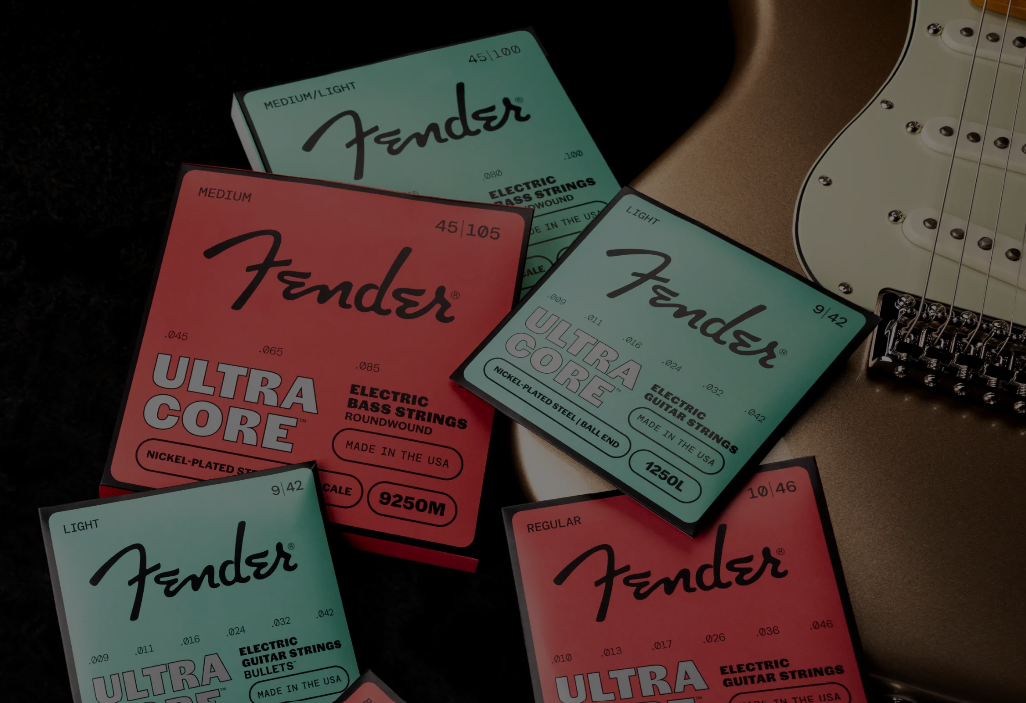
Fender Introduces Ultra Core Bass Strings with Enhanced Stability and Clarity Fender has announced the release of its new Ultra Core Strings, introducing a freshly engineered string line designed to meet the demands of today’s bass players. The Ultra Core Bass Strings feature a redesigned core-to-wrap ratio intended to enhance tuning stability, improve intonation accuracy, and deliver a more consistent feel across the fretboard. According to Fender, the updated construction promotes stronger energy transfer from string to instrument, resulting in clear note definition and balanced response in both live and studio settings. The Ultra Core bass sets are offered in both nickel-plated steel and stainless steel configurations, giving players the option to tailor their tone. Nickel-plated steel models are designed to provide a warm yet articulate voice suited to a wide range of genres, while stainless steel versions offer increased brightness and attack for players seeking added clarity and presence. Both options are built with durability in mind to support the demands of regular performance and touring use. With the launch of Ultra Core Bass Strings, Fender continues to expand its accessory portfolio with products aimed specifically at modern musicians. The new bass string sets are available now through authorized Fender dealers and select retailers worldwide.

News

Is Darkglass Electronics Entering a New Era of Bass Technology?

Taking a look at one of the most influential brand of the last years Over the past year, Darkglass has quietly shifted from its reputation as a boutique distortion brand into a broader, more ambitious tone-shaping innovator — and the ripple effects are already visible across bass pedalboards and studios alike. From Classic Drive to Modern Workstation For years, Darkglass Electronics built its identity on aggressive, modern bass drive tones. The B7K and Alpha Omega series helped define the sound of contemporary metal and progressive bass. But recently, the company has taken a much larger step forward. The launch of the Anagram Bass Workstation marked a turning point. Rather than releasing another distortion pedal, Darkglass introduced a fully-fledged multi-effects and amp-modeling platform designed specifically for bass players. With a large touchscreen interface, deep DSP processing, and flexible routing options, Anagram feels less like a pedal and more like a complete tone ecosystem. Its block-based architecture allows extensive signal chain customization, blending parallel paths, dynamic processing, modulation, and amp modeling in ways that would normally require an elaborate pedalboard setup. Instead of focusing purely on drive, Darkglass is now competing in the broader digital modeling space — while still maintaining a bass-first philosophy. From Pedals to Platform What’s most interesting isn’t just the hardware — it’s the strategy. Darkglass appears to be moving toward a platform model. Rather than a one-and-done product release, the workstation concept allows for expansion, updates, and new tone blocks over time. That shift mirrors trends in the guitar world, where players increasingly expect their gear to evolve through firmware updates and modular content. For a brand that built its name on analog distortion circuits, this is a significant evolution. It signals long-term thinking — and possibly a deeper commitment to digital development moving forward. Amplification Still Matters Despite the push into DSP territory, Darkglass hasn’t abandoned its roots in high-powered amplification. Their Microtubes amp series continues to bridge analog grit with modern convenience, offering features like onboard compression, cab simulation, and extensive connectivity options. Rather than replacing traditional rigs, Darkglass seems to be building tools that integrate seamlessly into both analog and digital setups. That hybrid flexibility may be the key to their longevity. The Bigger Picture If there’s a theme emerging for Darkglass in 2026, it’s evolution. The question now isn’t whether Darkglass can build great drive pedals — that’s already established. The real question is whether they’re positioning themselves to become one of the dominant bass technology companies of the next decade. If Anagram and the broader platform strategy succeed, we may look back on this period as the moment Darkglass moved from cult favorite to industry cornerstone. And for bass players, that shift could mean more flexibility, more innovation — and a future where bass gear development finally moves at the same pace as the guitar world.

News

Valeton Releases the New GP-150 and GP-180

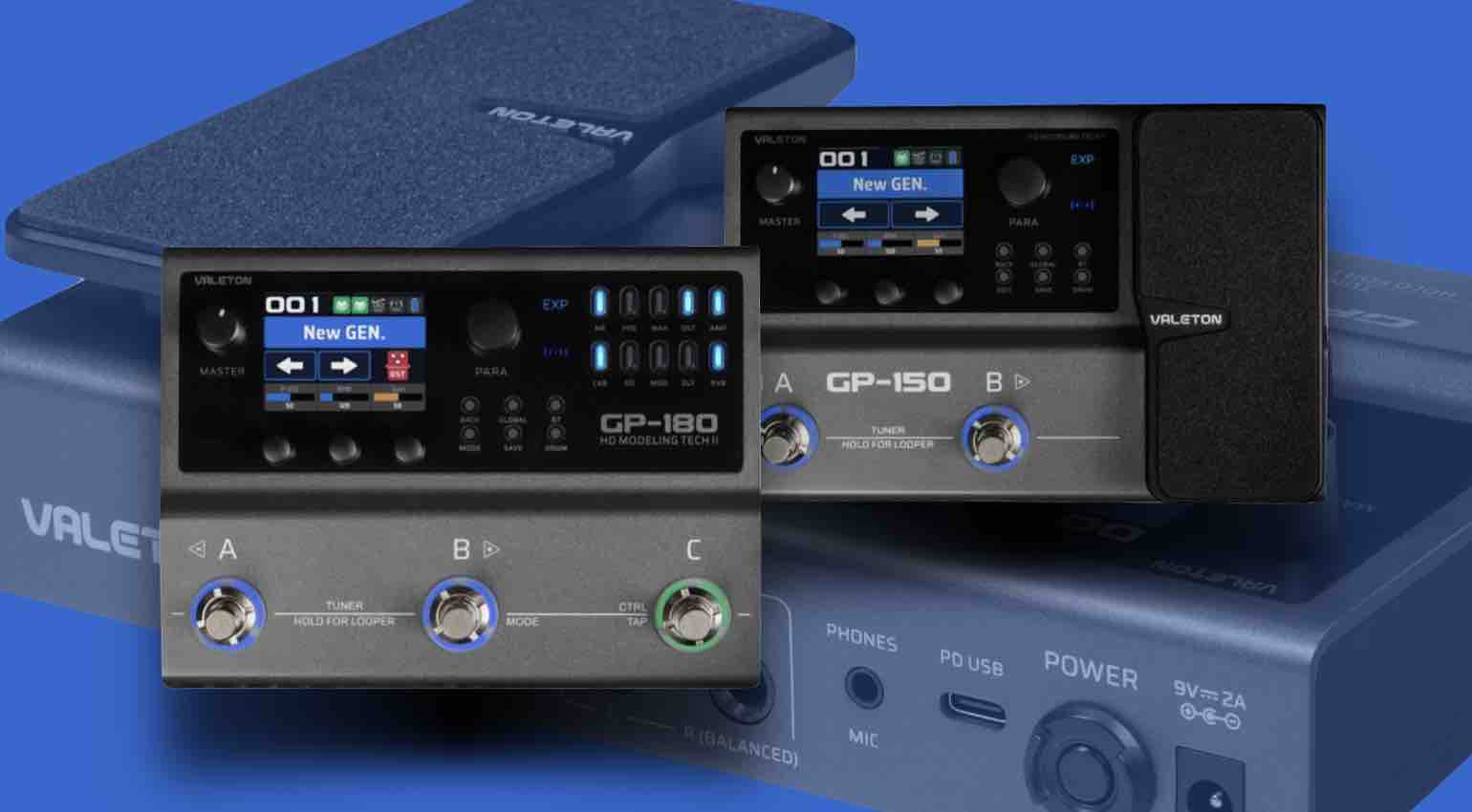
Valeton Expands the GP Series with the New GP-150 and GP-180 Valeton has announced two new additions to its GP multi-effects lineup: the GP-150 and GP-180. Designed as next-generation tone workstations, both units combine advanced HD modeling, flexible routing, and modern connectivity in performance-ready floorboard formats. At the core of both processors is Valeton’s updated second-generation HD digital modeling engine, delivering 24-bit/48kHz audio performance and a broad range of detailed amp and effects models. Players can run up to 12 simultaneous effect modules with freely adjustable signal chains, drawing from a library of more than 200 built-in effects covering amp simulations, drives, modulation, delays, reverbs, pitch effects, filters, and more. A major highlight is the integration of SnapTone technology, which supports NAM (Neural Amp Modeler) files. This allows users to import highly detailed amp and pedal captures for ultra-realistic tones. Each unit comes loaded with 50 SnapTone presets and supports up to 100 in total, giving players access to boutique-style sounds and custom profiles within a compact processor. Both models support third-party cabinet impulse responses, with space for up to 20 user IRs, alongside a 200-patch memory system that includes 100 factory presets. Built-in practice and creative tools include a drum machine with over 100 rhythm patterns and a looper offering up to 180 seconds of recording time, making the units equally suited for songwriting, rehearsal, and live use. Connectivity is comprehensive. The GP-150 and GP-180 function as 6-in/4-out USB-C audio interfaces compatible with Windows, macOS, iOS, and Android devices for direct recording and streaming. Bluetooth capability enables wireless editing and preset management, while multiple outputs, headphone connectivity, and expression/footswitch inputs allow flexible routing for stage or studio environments. GP-150: Portable Power The GP-150 delivers the full feature set in a streamlined chassis equipped with two footswitches and an onboard expression pedal. A 2.4-inch color LCD provides clear navigation, and a built-in 3,000mAh rechargeable battery offers over six hours of operation per charge, making it ideal for mobile setups, rehearsals, and on-the-go sessions. GP-180: Expanded Performance Control The GP-180 builds on the same core platform but adds an extra footswitch and expanded front-panel controls for greater real-time command during live performance. Dual TRS jacks allow connection of additional expression pedals or external footswitches, and MIDI compatibility ensures seamless integration into more complex rigs. With the GP-150 and GP-180, Valeton continues to push accessible modeling technology forward, delivering deep customization, modern features, and stage-ready reliability in two versatile formats. Make sure to check out other Valeton releases here on BassGearReview.com

Big Muff Pi 2
News

Electro-Harmonix Launches the Bass Big Muff Pi 2

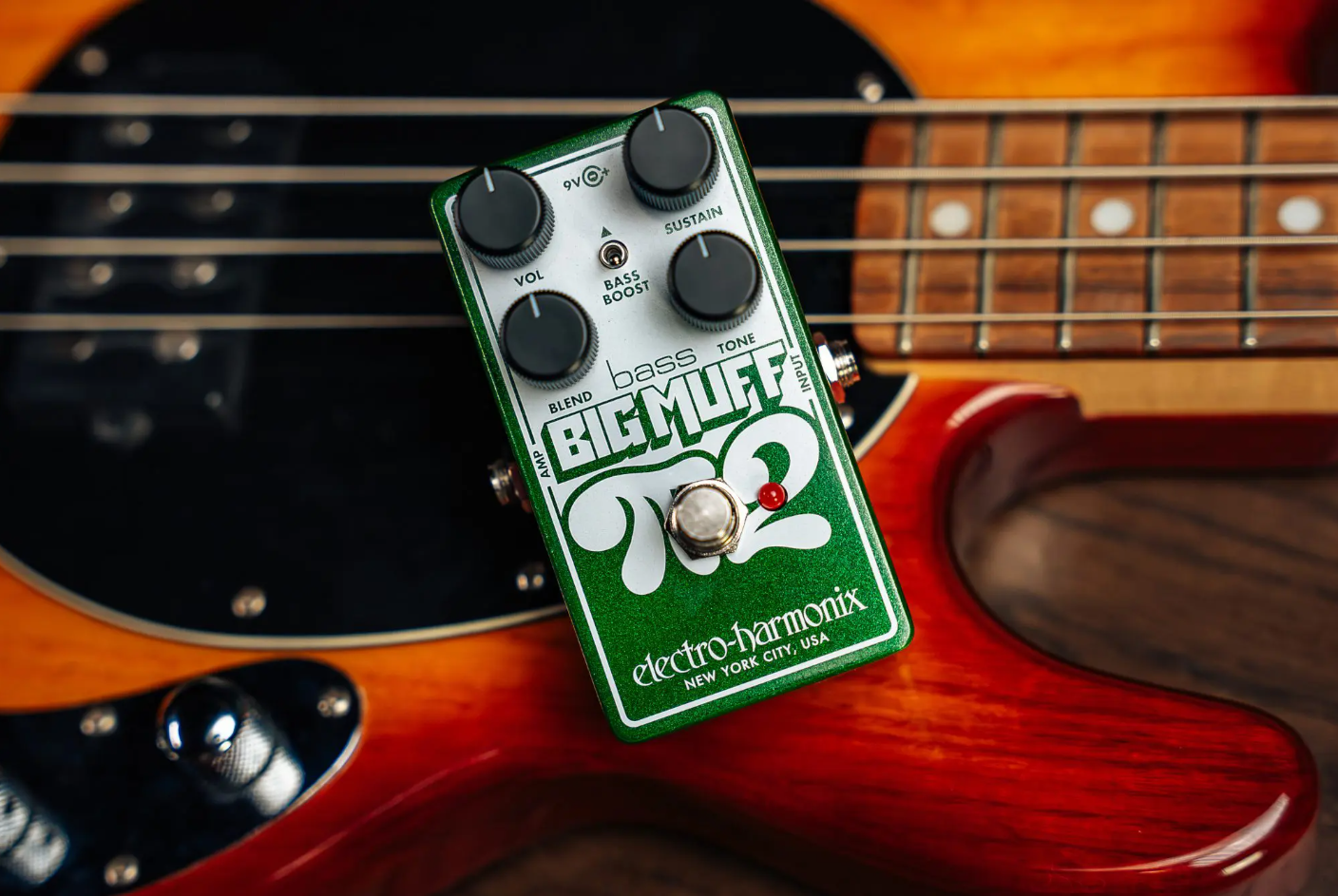
Electro-Harmonix has unveiled the Bass Big Muff Pi 2, a new low-end-focused evolution of one of the most recognizable fuzz circuits ever created. Built on the legacy of the classic Big Muff while drawing inspiration from the elusive Op-Amp variant of the 1970s, this latest release delivers a fresh voice tailored specifically for bass players. The Big Muff has long held a place on pedalboards across genres, prized for its singing sustain and aggressive midrange character. The Bass Big Muff Pi 2 expands on that heritage with a circuit design built around dual op-amps, offering a distinct tonal profile that blends vintage grind with modern clarity. The result is a fuzz that cuts through dense mixes while preserving the depth and authority bassists rely on. Designed to maintain low-end integrity, the pedal introduces two key features aimed squarely at bass performance: a BLEND control and a BASS BOOST switch. The BLEND knob allows players to mix their dry signal with the fuzz effect, keeping articulation and punch intact even under heavy saturation. Engaging the BASS BOOST switch reinforces the fundamental frequencies, delivering added weight — especially useful when dialing in brighter tones via the TONE control. The familiar VOL, TONE, and SUSTAIN controls remain at the core of the layout, providing the wide tonal sweep and near-endless sustain synonymous with the Big Muff name. Whether set for subtle grit or full fuzz assault, the Bass Big Muff Pi 2 offers a versatile range of textures suited for rock, alternative, doom, punk, and experimental styles. Performance flexibility extends to the footswitch, which features true bypass operation with both latching and momentary functionality. A standard click engages the effect in traditional on/off fashion, while pressing and holding the switch unleashes a temporary burst of fuzz — ideal for accents, transitions, and dynamic live moments. The pedal uses a mechanical relay true bypass system housed beneath a soft-touch footswitch for reliable operation. Power options include an included 9V battery, with compatibility for an optional 9V adapter. With the Bass Big Muff Pi 2, Electro-Harmonix refines a legendary fuzz platform into a bass-optimized powerhouse — delivering massive sustain, crushing grind, and uncompromised low-frequency impact in a compact, performance-ready design.