Blog

Category: Reviews

Reviews

The Clawthorn Drive Reviewed: Effect Review

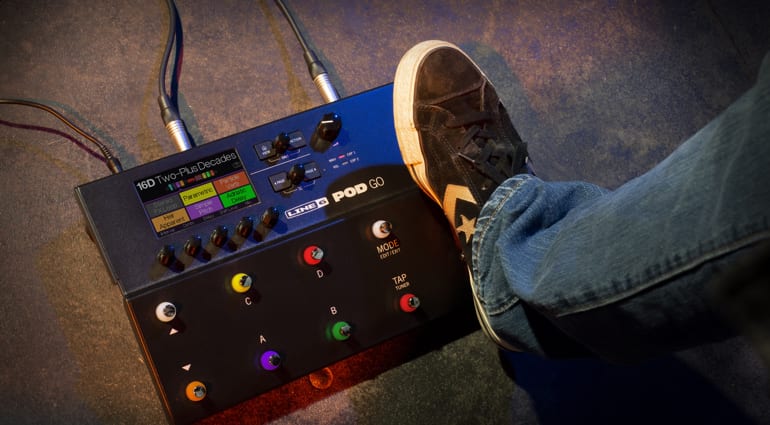
Line 6’s Take on the Battering Ram For bassists seeking aggressive tones that balance control with chaos, the Wounded Paw Battering Ram has carved a niche as a uniquely flexible drive/fuzz hybrid. With its parallel routing of overdrive and fuzz circuits, and the ability to dial in everything from subtle breakup to unhinged fuzz madness, it became a cult favorite among experimental and heavy-music bass players alike. In the HX Stomp/Helix world, Line 6 brings their take on this Canadian beast with the Clawthorn Drive—a highly tweakable distortion block designed to capture that same dual-engine mayhem. But does it hold up in tone, flexibility, and real-world use? The Battering Ram Legacy and Line 6’s Interpretation The Wounded Paw Battering Ram (especially in its later versions like the V2.6 and Q2) is known for offering two distinct but blendable voices: a tight, controlled overdrive and a wooly, sometimes chaotic fuzz, each with its own set of controls. Add to that optional octave fuzz and a four-band EQ in some models, and you get a serious tone-shaping machine. Line 6’s Clawthorn Drive mirrors this structure well in the Helix ecosystem. It provides individual gain, tone, and level controls for both Overdrive and Fuzz sections, plus a Low Boost switch and a Fuzz Octave toggle to kick the fuzz into nastier territory. Here’s a breakdown of the block’s parameters: This layout makes it easy to dial in anything from subtle warmth and growl to buzzy, synth-like textures or a thick wall of filth—and do it all in parallel. How It Sounds: Dual Engine, Dual Personality The real strength of Clawthorn Drive is in its blendability. The overdrive section can provide just a touch of breakup or be pushed into a more aggressive growl, perfect for rock, punk, or adding definition to sludgy riffs. The tone control lets you shape the character from dark and rounded to bright and biting. The fuzz side is where things get interesting. With the Fuzz Oct engaged, it leans into synth territory—great for drone, doom, or modern experimental tones. Without it, the fuzz is thick and chewy, but with surprising articulation when dialed in carefully. The Fuzz Gain and Tone knobs offer a wide spectrum, from velcro-rip textures to smoother, more musical fuzz. Engaging both sections together—especially with the Low Boost on—yields massive, layered tones. The overdrive can add punch and clarity, while the fuzz delivers girth and grit. This is particularly effective for bassists who want to retain note definition in the low end while still sounding enormous in a band mix. Tweaker’s Paradise, Performer’s Tool Thanks to the Helix architecture, Clawthorn Drive isn’t just a flexible tone machine—it’s a programmable one. You can: For bassists who frequently shift between styles—say, post-rock cleans, doom metal fuzz, and alt-rock drive—all in one set, Clawthorn provides enough range to replace multiple pedals. Final Verdict: Should Bass Players Use It? The Clawthorn Drive is one of the more underappreciated gems in the Helix lineup, particularly for bass. It doesn’t chase the modern, polished aggression of a Darkglass-style drive—instead, it offers unusual texture, tonal variety, and chaos control, making it ideal for: It might not be the right fit for players seeking surgical, mix-ready distortion straight out of the box—but for those who want to sculpt their sound, Clawthorn is a powerful, flexible option. Whether you use it subtly to thicken your tone or go full noise-wall, Clawthorn Drive delivers. For HX users looking to move beyond the usual suspects, this is absolutely worth a deep dive.
Darkglass Alpha Omega Ultra
Reviews

Darkglass Alpha·Omega Ultra: Pedal Review

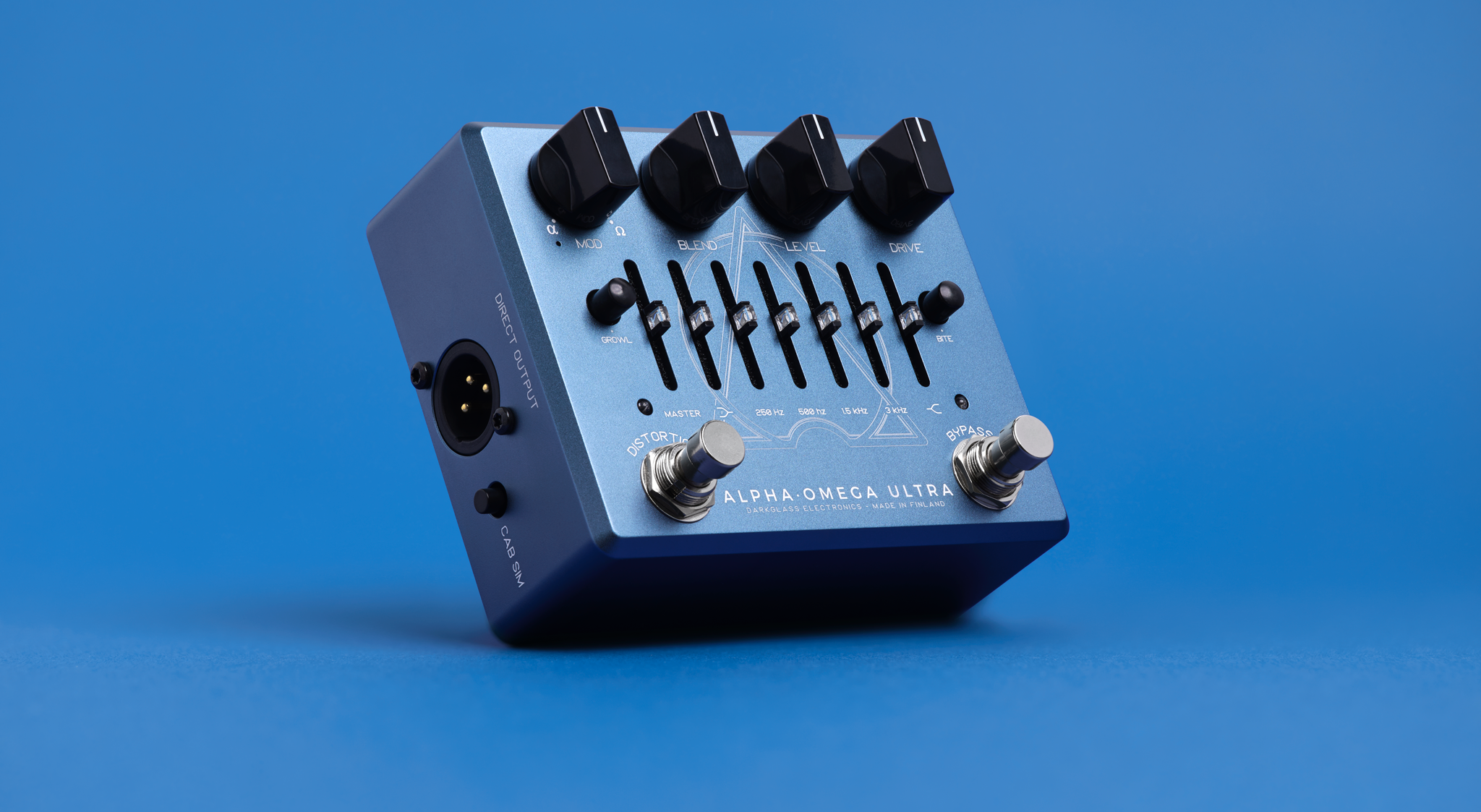
The Dual-Voiced Powerhouse of Modern Bass Distortion Before the Alpha·Omega Ultra, Darkglass had already cemented its reputation as the go-to brand for forward-thinking bass distortion. The Microtubes B3K and B7K brought clarity and aggression to the bass world, redefining what overdrive could mean for low frequencies. But by 2017, founder Douglas Castro and his team set their sights on expanding beyond that “tight and glassy” Microtubes character. They envisioned a new kind of drive — fatter, rawer, and darker, but still articulate. Enter Jon Stockman of Karnivool, whose input helped shape the original Alpha·Omega pedal. Designed with two blendable distortion paths — Alpha (aggressive and punchy) and Omega (raw and brutal) — the pedal introduced a more saturated, muscular take on Darkglass’s aesthetic. It wasn’t just about clarity anymore — it was about force, depth, and sonic authority. The Alpha·Omega Ultra builds on this, incorporating a six-band graphic EQ, impulse response (IR) cabinet simulation, headphone out and USB connectivity, expanded routing options, and a refined, rack-quality preamp section. It’s not just a distortion pedal — it’s a full-featured tone hub. The Core Sound: Two Distortion Engines, One Vision At the heart of the Alpha·Omega Ultra is its dual-path distortion engine: Alpha engine: Tight, mid-forward, slightly compressed. Great for articulation, pick-style playing, and cutting through dense mixes.Omega engine: Fatter, darker, and gnarlier — perfect for huge, wooly tones and down-tuned basses. You blend between these two characters using the Mod knob, which is not just a gimmick — it lets you fine-tune the nature of the drive to match your instrument and musical style. It’s a spectrum, not a switch, which means you can live in-between: Alpha for the edge, Omega for the weight. Add to that: These features alone make it extremely powerful, but what elevates the Ultra model is what lies beneath. The “Ultra” Difference: Studio-Grade Control and Connectivity Six-Band Graphic EQ The onboard graphic EQ lets you precisely sculpt your tone with center frequencies at 80 Hz, 250 Hz, 500 Hz, 1.5 kHz, 3 kHz, and 5 kHz. This is not a simple tone knob or a basic 3-band layout — it’s surgical. You can scoop, push, or flatten your mids and highs to fit whatever room, mix, or rig you’re playing through. This EQ is post-drive, meaning it shapes the final sound you’re sending to your cab, DI, or front-of-house — and that makes it incredibly practical on stage or in a studio setting. Cab Sim and IR Loader One of the defining features of the Ultra series is IR-based cabinet simulation. The Alpha·Omega Ultra allows you to: This makes it a perfect standalone DI box — no amp required, no compromise. Whether you’re recording direct at home, running into an in-ear monitor setup, or flying to a gig where you need to go straight to FOH, it’s plug-and-play. USB and Software Integration Through USB, you can: It’s not a deep editor like some modelers, but it’s a user-friendly interface for quick personalization. On Bass: Brutality with Definition Plug a 5-string into the Alpha·Omega Ultra, and you immediately understand the appeal. This is modern distortion for modern bass — aggressive but not messy, huge but controllable. Key tonal identities include: Crucially, the pedal always respects your playing technique. It doesn’t flatten or obscure your dynamics, which is a big reason why it appeals to such a wide range of players — even those who don’t consider themselves distortion-heavy artists. It also plays well with compressors, modulation, and fuzz, especially when placed early in the chain. Pros and Cons Pros: Cons: Conclusion: The Alpha·Omega Ultra is a Full Bass Rig in a Box For players who want a distortion preamp with real-world versatility, the Darkglass Alpha·Omega Ultra delivers in every respect. It can be your amp substitute, studio channel, pedalboard anchor, or just your favorite distortion — and in all cases, it will do the job with authority and definition. What separates this from many other options isn’t just tone — it’s control and flexibility. With cab sim, EQ, DI, headphone monitoring, and drive shaping, this is a pedal that can live at the center of your rig and adapt to whatever situation you throw at it. It represents the next step in Darkglass’s evolution of modern bass tone — a pedal built not just for one sound, but for the complex and varied needs of contemporary bassists. Whether you’re on stage, in the studio, or practicing at home, the Alpha·Omega Ultra is an intelligent, aggressive, and refined companion.

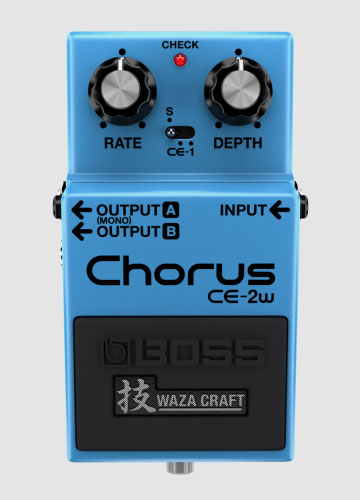
Boss CE-2W
Reviews

Boss CE-2W Waza Craft: Pedal Review

Revisiting a Classic with Depth and Authority The Origin: CE-2 and the Birth of Chorus Pedals To understand the CE-2W, we need to go back to 1979, when Boss released the CE-2 Chorus — itself a refined, pedalboard version of the CE-1, the world’s first chorus pedal and an effect originally built into the legendary Roland JC-120 amp. The CE-2 was more compact, stripped-down to two knobs (Rate and Depth), and voiced with warmth and lush analog texture that became the benchmark for chorus pedals for decades. It wasn’t designed with bassists in mind — and yet, it quickly became a cult favorite across all instruments for its lush, analog modulation that enhanced tone without washing it out. Bass players who did use it discovered that, at subtle settings, it brought out depth, width, and low-end bloom, making lines feel more alive and dimensional. Enter Waza Craft: Reimagining the Legend Boss’s Waza Craft line represents their high-end reissue and re-engineering approach — not just recreating vintage pedals but enhancing them with modern features and improved fidelity while staying true to the original analog designs. The CE-2W, released in 2016, takes the heart of the CE-2 and adds: For bass players, this is a huge deal: it means one pedal can serve as a classic chorus, a vibrato-style modulator, and a widening stereo tool, all in one rugged enclosure — and all fully analog. Why Chorus Works So Well on Bass Chorus is often associated with shimmering guitar sounds, 80s power ballads, and crystalline clean tones. But on bass, it has a different magic — and the CE-2W is one of the best examples of how to do it right. Here’s why it works: Importantly, the CE-2W preserves low frequencies well, especially when used subtly. It’s not a clean blend pedal, but thanks to its analog BBD design, it doesn’t rob your tone of weight — something older chorus pedals often failed at. Controls and Modes: Simple, Yet Deceptively Powerful The CE-2W is elegantly simple, but it hides a surprising amount of flexibility: The stereo output (available in CE-1 modes) is a huge bonus. Running to two amps, or amp + DI, or stereo in a DAW unlocks spaciousness that’s addictive, especially for ambient, post-rock, or synth-influenced bass work. Tone on Bass: Rich, Supportive, Never Overbearing On a passive bass with flatwounds, the CE-2W can evoke classic 80s fretless tones — think Pino Palladino or Mick Karn. On a modern active 5-string, it brings depth and motion to otherwise clinical sounds. It can be subtle enough for studio R&B or bold enough for synthwave or doom-inspired textures. What’s especially impressive is how well it handles drive and fuzz before it. Many modulation pedals get messy or thin out with gain, but the CE-2W handles it gracefully. It works equally well: Pros and Cons Pros: Cons: Conclusion: A Modern Analog Chorus for Serious Players The Boss CE-2W Waza Craft is a beautiful evolution of a legendary pedal, retaining the analog charm of the original while offering modern utility for bass players who demand more from their modulation. For those seeking a chorus that works without thinning your sound, that adds dimension, width, and movement without sacrificing clarity, and that bridges vintage and modern in a seamless package — the CE-2W is a standout. Whether you’re after subtle depth for ballads, full-spectrum chorus for ambient textures, or even slightly warped vibrato tones for experimental playing, this pedal delivers. And unlike some boutique alternatives, it does so reliably, accessibly, and with timeless tone. If you’ve written off chorus on bass, this pedal might just change your mind — or at least, make you want to sit down with it and listen to your tone evolve in real time.

Darkglass b7k
Reviews

Darkglass Microtubes B7K: Pedal Review

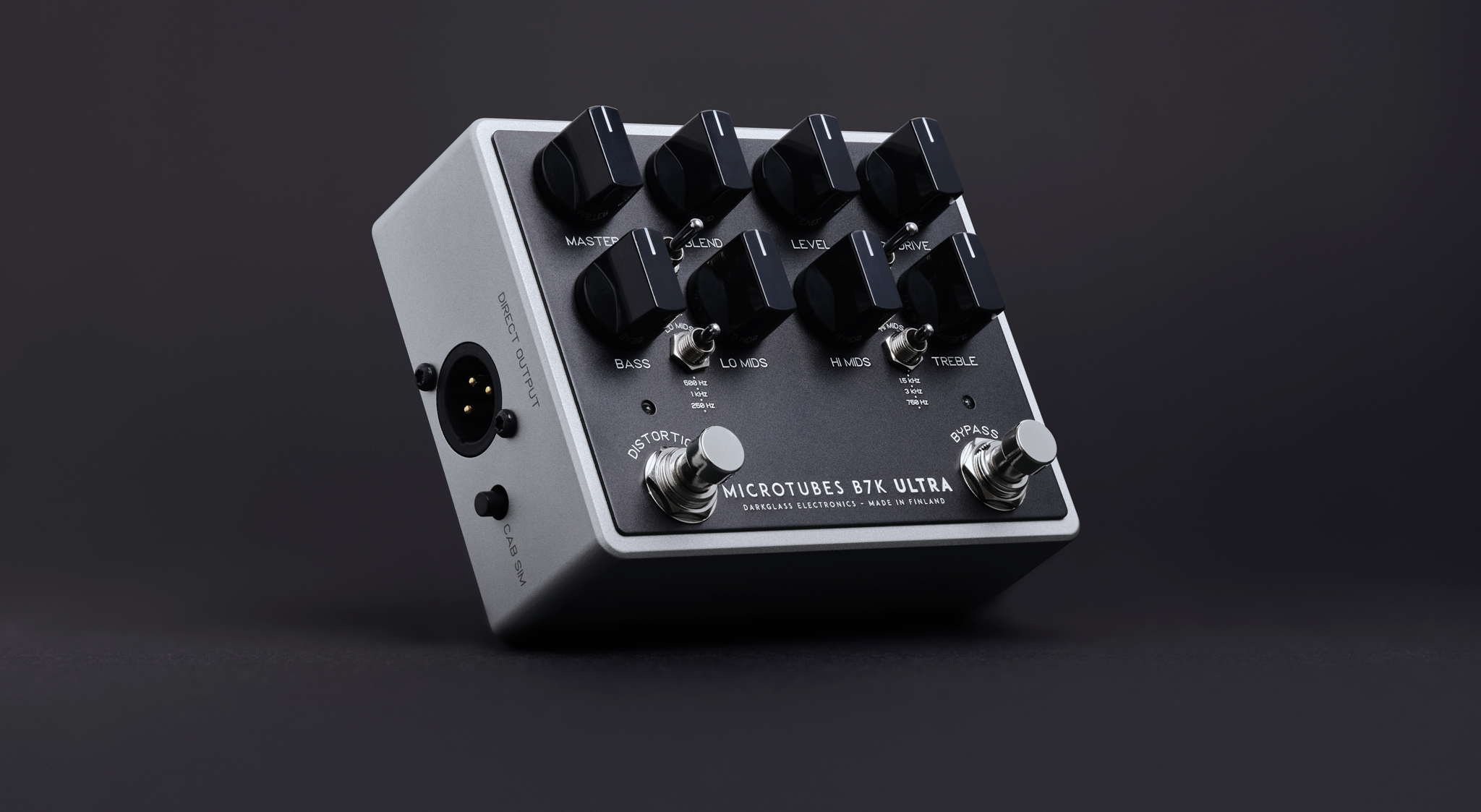
A Decade of Defining Modern Bass Tone Few bass pedals in the past 20 years have had the impact and staying power of the Darkglass Microtubes B7K. First released in the early 2010s by Finnish company Darkglass Electronics, the B7K (and its simpler sibling, the B3K) quickly became a cornerstone of modern bass sound, especially in genres like metal, progressive rock, djent, and fusion, but also in session, pop, and electronic music. At its core, the B7K is a preamp/overdrive pedal that blends clear, aggressive distortion with a powerful EQ section, making it equally suited for clean tone shaping and harmonically rich grit. But what really made it a game changer was its ability to maintain articulation and clarity under gain — a feat few bass drives had managed without sacrificing low-end or note definition. A Bit of History: The Rise of Darkglass Founded by Douglas Castro in Helsinki in 2009, Darkglass emerged from a desire to build gear that could keep up with the demands of modern, technically complex music. At the time, most bass drives either lacked definition, lost bottom-end, or felt like adapted guitar circuits. Castro’s designs aimed to change that — and the B7K was the breakout product. The B7K didn’t just offer distortion; it sculpted the tone of modern bass. It became a staple for touring professionals, bedroom producers, and recording engineers alike. Whether it was Nolly Getgood, Adam “Nolly” Getgood of Periphery, or countless players in the extended-range and multi-genre scenes, the B7K became synonymous with tight, mix-ready bass tone. Features and Layout: The Power of Precision The Microtubes B7K is both an overdrive and a preamp, featuring: The clean architecture and modular layout make the B7K extremely adaptable — it works equally well on pedalboards, in DAW environments, or as a preamp driving a power amp or interface. Sound: Clarity Under Fire The core appeal of the B7K lies in its precise and articulate gain structure. Where many bass overdrives mush out or lose clarity, the B7K delivers tight, punchy, mid-forward grit that remains focused even with extended-range basses or fast playing. Key sonic characteristics: While it shines in modern, aggressive settings, many players use it purely as an EQ/preamp, with minimal drive, for shaping live tone or adding sheen to studio DI tracks. Why It Mattered — and Still Does Before the B7K, the bass overdrive landscape was fractured. Players often had to choose between: The B7K solved this by offering studio-level tone sculpting in a pedal format, with enough gain for extreme players but enough transparency and flexibility for clean users. It bridged the gap between DI box, preamp, and distortion, becoming an all-in-one solution that was easy to trust on stage or in the studio. And crucially, it helped usher in a new aesthetic of bass tone — forward, punchy, hi-fi, but with muscle. Applications: More Than Just Metal Though often associated with heavy genres, the B7K is a chameleon: It also integrates seamlessly with compressors, modulation, fuzz, and even IR loaders or amp sims. Pros and Cons Pros: Cons: Conclusion: A Modern Classic, Deservedly So The Darkglass Microtubes B7K has earned its place in the pantheon of essential bass pedals. It’s not a flavor-of-the-month — it’s a true sonic tool, capable of everything from subtle enhancement to outright overdrive savagery, and always with a level of control that few other pedals offer. For players who want to sound tight, modern, mix-ready, and defined, the B7K still reigns as one of the best options available. And for those who appreciate the value of a preamp that doubles as a studio channel strip, it’s arguably unmatched at its price point. It changed the conversation about bass tone — and for many players, it still sets the standard.

Reviews

Sushi Box Grand Slampegg: Pedal Review

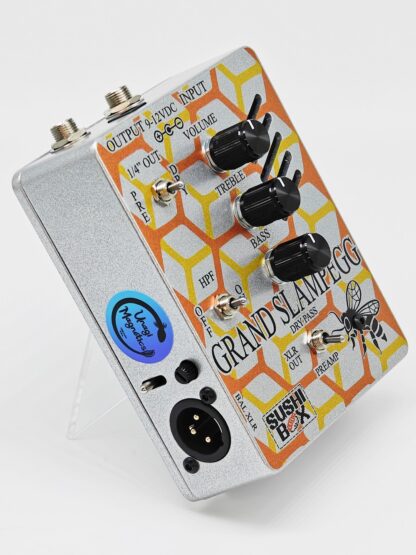
B-15 DNA in a Modern Tube Pedal The Grand Slampegg from Sushi Box FX is a tube-powered preamp pedal designed to capture the spirit, tone, and feel of the iconic Ampeg B-15 Portaflex — the amplifier that defined the sound of recorded bass in the 1960s and beyond. Hand-built in small batches and powered by a real 12AX7 tube, this pedal is part of a growing movement of boutique builders bringing studio-grade tones to the pedalboard world. What sets the Grand Slampegg apart is its targeted mission: not to be a Swiss-army preamp, but rather to emulate the sonic character and response of the B-15, an amp that still stands as one of the most revered tools for bass tone shaping in history. The Ampeg B-15 and Its Lasting Impact Before diving into the pedal, let’s zoom out for a second. The Ampeg B-15 Portaflex, introduced in 1960, was a compact flip-top bass combo amp known for its rich, warm, and punchy tone, thanks to its tube circuitry, simple EQ, and closed-back cabinet with a single 15″ speaker. It became the go-to amp for session players, especially in Motown, Stax, and New York’s studio scene. Names like James Jamerson, Donald “Duck” Dunn, and Chuck Rainey played through B-15s on countless records, and its pillowy low end, smooth midrange, and organic compression became baked into the DNA of modern bass tone. But the B-15 is big, heavy, and expensive. So for today’s bassists — especially those playing live or recording direct — the Grand Slampegg offers a portable, affordable, and musical tribute to that era-defining sound. Design and Features: Simplicity That Speaks Volumes The Grand Slampegg is powered by a genuine 12AX7 preamp tube operating at high voltage (internal boost from a 9V supply), allowing it to behave like a real tube amp rather than a tube-flavored simulator. That’s a crucial difference: it reacts dynamically to your playing and has that slightly compressive, touch-sensitive character that makes tube gear so addictive. The layout is minimal, but deceptively deep: The pedal has both instrument-level and line-level output, making it easy to slot into a pedalboard, run into an amp’s return, or go direct into an interface or FOH system. Tone Plug into the Grand Slampegg and the first thing you’ll notice is the weight of the tone — not in volume, but in density and presence. It fills up space in a mix the way a great amp does, especially with a passive P-style bass or flatwound strings. The key characteristics are all there: Unlike some tube preamps that lean toward modern grit or aggressive drive, the Grand Slampegg prioritizes subtlety, bloom, and tone shaping. That makes it ideal for studio-style applications, warm live rigs, or as a foundational tone shaper on your board. And yes — it breaks up when pushed. But the breakup is velvety and musical, not jagged or compressed. Think Jamerson with the gain halfway up, or a slightly overdriven studio channel strip. Because it’s voiced so naturally and keeps low-end intact, the Grand Slampegg is extremely flexible as a platform. You can use it: It also works well as a recording tool — slotting it into your DI path gives you that elusive “amp in the room” feel with minimal fuss. Pros and Cons Pros: Cons: Conclusion The Sushi Box Grand Slampegg is not trying to reinvent the wheel — it’s trying to preserve one of the most beloved wheels ever made and offer it to a new generation of players in a compact, efficient form. And in that mission, it succeeds beautifully. For bassists chasing that vintage studio tone, especially in settings where a full B-15 isn’t practical or affordable, this pedal is a godsend. It captures the essence of what made that amp great — the musical compression, the EQ shape, the tube warmth — and brings it to your fingertips in a pedal that’s easy to use and hard to turn off. If you’re into Motown grooves, soul lines, dub foundations, or just want your bass to sit deeper and more confidently in a mix, the Grand Slampegg should be on your radar. It’s not flashy, and it’s not aggressive — but it has tone for days, and it feels like a classic.