Blog

Category: Reviews

Way Huge Pork & Pickle
Reviews

Way Huge Pork & Pickle: Pedal Review

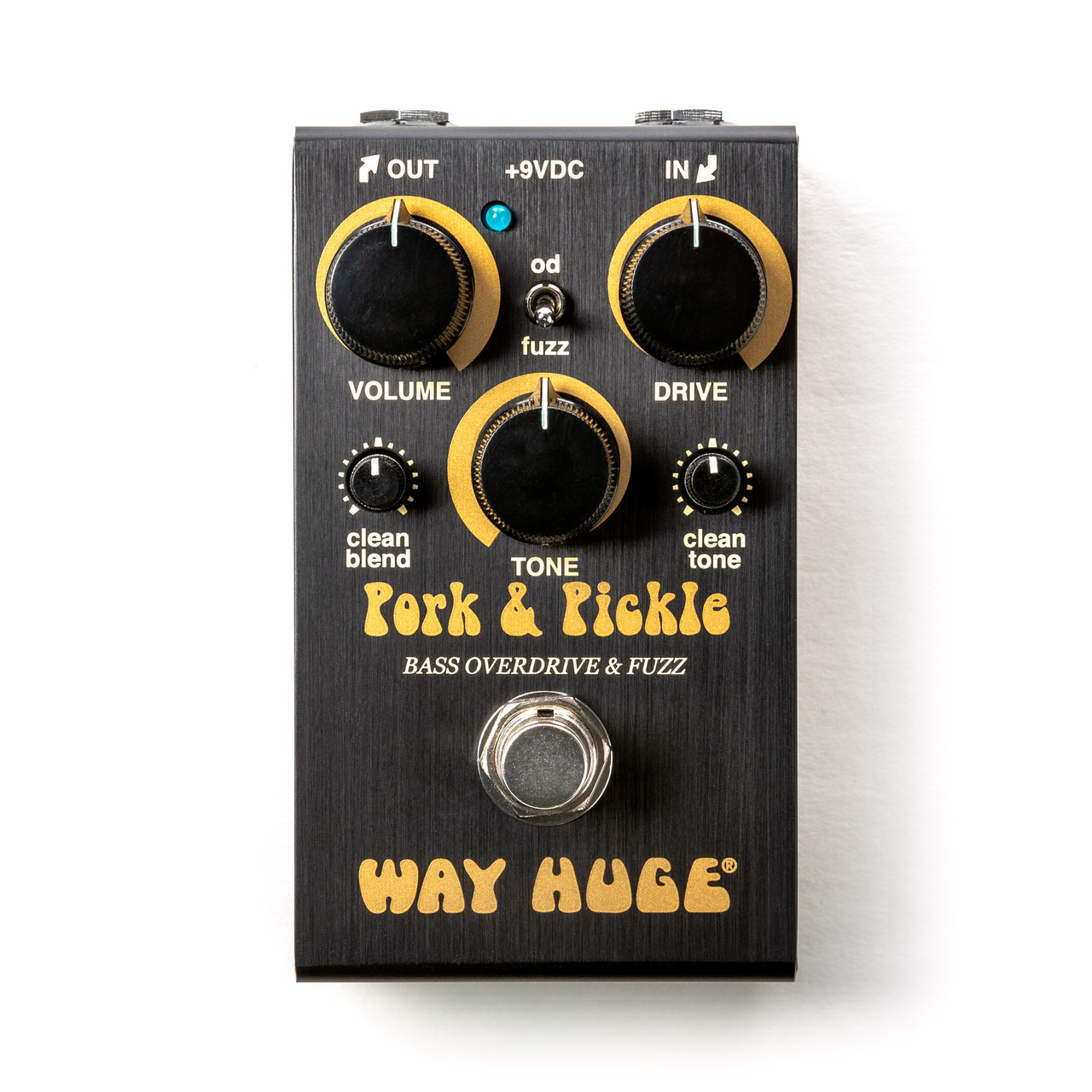
The Definitive Bass Overdrive/Fuzz The Way Huge Pork & Pickle is the brainchild of pedal wizard Jeorge Tripps, the founder of Way Huge Electronics and mastermind behind some of the most distinctive effects in modern pedal culture. This unit combines two of Way Huge’s classic effects in one box: Both are revered in the guitar world, but this hybrid was specifically voiced and tweaked for bass, bringing warmth, grit, and massive low-end without sacrificing clarity. Released in 2019, the Pork & Pickle quickly became a favorite among session musicians, touring bassists, and tone nerds due to its ability to cover a wide range of dirt—from subtle drive to full-on woolly fuzz—while preserving low-end punch and articulation. It’s a Favorite Among Bass Players Bass players often struggle to find dirt pedals that add character without ruining low-frequency definition. Many traditional overdrives and fuzzes scoop mids or roll off lows, making the bass sound thin or lost in a mix. The Pork & Pickle solves this by offering: Its tonal flexibility, studio-friendly behavior, and compact form make it a true multitool for working bassists. Front Panel Controls: Explained in Detail Let’s break down each knob and switch on the pedal: 1. Volume 2. Tone 3. Drive 4. Clean Blend 5. OD / Fuzz Switch Internal Controls (Trimpots) Inside the pedal, you’ll find two internal trim pots, which allow for further tone shaping: These internal controls make the Pork & Pickle incredibly versatile — tweak once and forget, or fine-tune to different basses/setups. Sound Profile & Use Cases Overdrive Mode (Pork Loin): Fuzz Mode (Russian Pickle): You can also keep the Blend high and Drive low for a subtle grit or use Blend low and Drive high for full-on fuzz fury. Build Quality & Power Pros and Cons Pros: Cons: Conclusion The Way Huge Pork & Pickle stands out as a rare dual-mode pedal that truly understands what bassists need. It offers warmth, grit, and saturation without sacrificing punch, clarity, or low-end authority. Whether you’re shaping a subtle edge to your clean tone or going full fuzz bomb, the pedal adapts beautifully to any genre or setup. Its combination of analog richness, deep tweakability, and practicality make it one of the most versatile and musical dirt pedals available for bass. It’s no surprise that even bassists who don’t yet own one often count it among their favorites—this pedal makes a lasting impression the moment you plug in.
Digitech Mononeon Whammy
Reviews

Digitech Whammy: MonoNeon Signature: Pedal Review

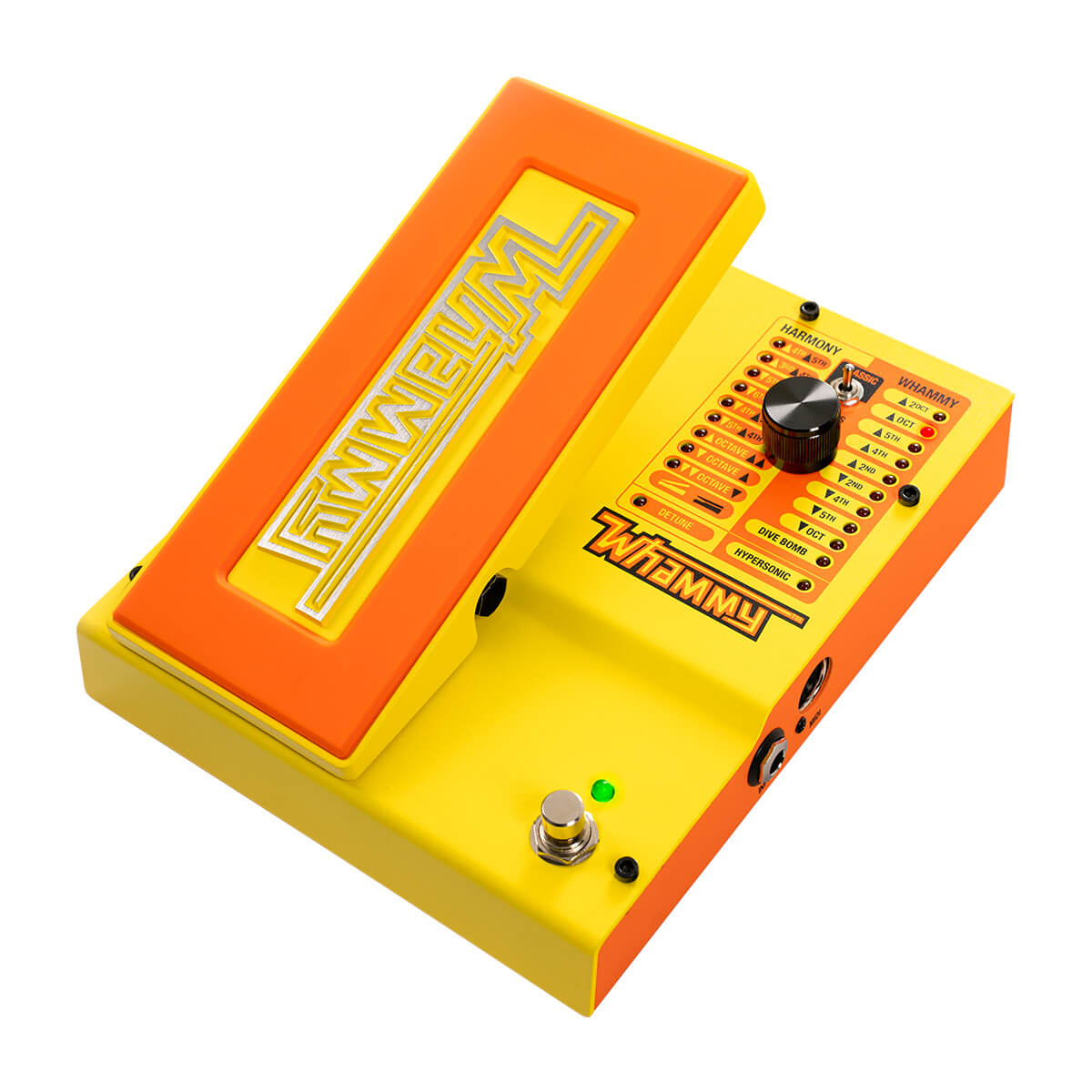
A Funky take on an Old Classic! The Digitech Whammy has long been a staple in the world of effects pedals, originally released in the early 1990s. Its revolutionary pitch-shifting capabilities, controlled by a foot treadle, opened up a new dimension of expressive possibilities for guitarists. From classic octave dives to wild harmonized bends, the Whammy was immortalized by players like Tom Morello, Steve Vai, and Dimebag Darrell. However, for years, bassists were left to adapt the guitar-focused versions with mixed results. The pitch tracking and tone retention, especially on low frequencies, were inconsistent. That changed in 2014 with the release of the Digitech Bass Whammy, designed specifically for bass guitar, offering improved tracking and frequency response in the lower registers. In 2024, Digitech has collaborated with visionary bassist MonoNeon to release a signature model that brings fresh, funk-infused innovations to the Whammy legacy. Why the Whammy Matters for Bass Players Traditionally, bass players have gravitated toward pedals that maintain low-end clarity, which is why modulation and pitch effects can be risky territory. However, the Whammy, especially in its bass-optimized versions, allows players to add harmonic movement, synth-like sweeps, and envelope-controlled pitch bends without muddying the mix. With the rise of experimental and genre-blending bassists—like MonoNeon himself—the Whammy has become a crucial tool for expanding the sonic role of the bass from rhythm foundation to melodic centerpiece. What Makes the MonoNeon Whammy Different? The MonoNeon Bass Whammy isn’t just a flashy rebranding. It builds upon the 2014 Bass Whammy with notable upgrades: Controls and Features Breakdown The MonoNeon Whammy retains the classic Digitech control layout while introducing new bass-specific functionality. Here’s how it works: Expression Pedal (Treadle Control) Mode Selector Knob Switches between Whammy (pitch shift) and Harmony (dual pitch) modes: Classic/Chords Switch Dry Out / Wet Out MIDI In Bypass & Power Who Would Benefit from the MonoNeon Whammy? Traditionalists or bassists looking for subtle tonal shaping might find it excessive, but for bold creative work, it’s unmatched. Pros and Cons Pros: Cons: Conclusion The Digitech Whammy MonoNeon Bass Edition is more than just a signature pedal—it’s a bold evolution of one of the most iconic effects in music. Tailored specifically for modern bassists who want to experiment with pitch, harmony, and movement, this pedal invites creative risk and rewards it with rich, expressive sound. Whether you’re laying down gritty funk lines or building ambient loops, the MonoNeon Whammy offers the kind of sonic expansion that turns heads and bends expectations. If you’re a bassist who thinks like a producer or soloist, this pedal is a game-changer. If you’re looking to stay in the pocket, it might be too much. But for anyone ready to push boundaries, it’s one of the most powerful tools on the market.

Source Audio Bass Zio
Reviews

Source Audio Bass Zio: Pedal Review

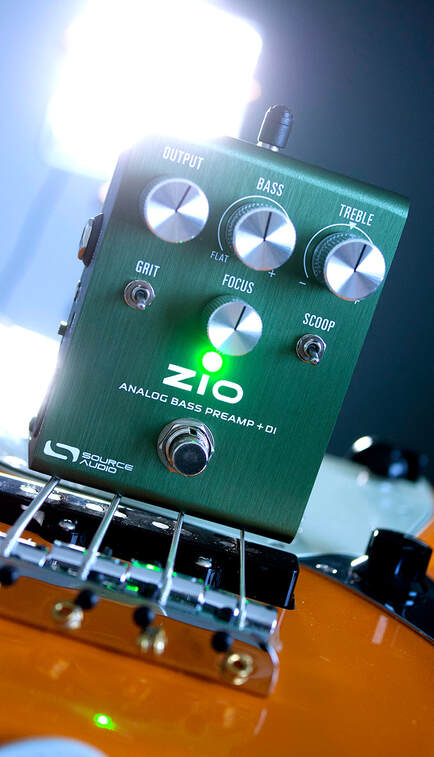
We Take A Look at the Source Audio Bass Zio Analog Preamp + DI In the modern bassist’s toolkit, a solid preamp/DI pedal has become more than a convenience—it’s often a necessity. With players increasingly running direct to front-of-house, recording straight into interfaces, or sculpting their tone beyond what their amp alone can offer, the right pedal can anchor a rig with clarity, punch, and consistency. The landscape is rich with options, from the high-fidelity polish of boutique units to the aggressive edge of more character-driven boxes. Enter the Source Audio ZIO Analog Bass Preamp + DI—a pedal designed from the ground up for bass players, not a guitar design repurposed with a lowered frequency response. Built on an all-analog platform and housed in a rugged, no-nonsense enclosure, the Bass ZIO combines precise tone shaping with smart utility features. With selectable analog preamp voicings, studio-grade output options, and a clean user interface, it promises to serve as the always-on core of any pedalboard or DI rig. Let’s examine its layout, functionality, tonal characteristics, and where it fits in the current market of bass preamps. Disclaimer: This pedal was kindly provided by Source Audio for the purpose of this review. However, this does not influence our opinions or the content of our reviews. We strive to provide honest, unbiased, and accurate assessments to ensure that our readers receive truthful and helpful information. Functional Overview At its core, the ZIO Bass Preamp delivers a streamlined but highly usable control set, balancing flexibility with simplicity. Here’s what it offers: Performance and Tonal Identity The ZIO’s voicing leans toward clean and balanced, with enough shaping options to subtly refine your tone rather than reinvent it. It’s not a character pedal in the way a tube emulator or amp sim might be—but it does bring a studio-like clarity and polish that benefits both live and recorded bass tracks. The low-end response is full but controlled, and the Focus control proves especially useful for carving out unwanted sub frequencies in boomy environments. The Grit circuit adds warmth and slight breakup, but remains tame and musical. It’s more about rounding off transients and adding texture than delivering any real drive aggression. That aligns with the ZIO’s broader design philosophy—it enhances rather than overwhelms your existing tone. Where this pedal really shines is in its versatility. Whether placed at the front of a signal chain as a preamp, used at the end as a final tone sculptor and DI, or dropped into a studio setup as a portable tracking tool, it feels at home. The balanced XLR output provides clean, noise-free signal ideal for live sound engineers and home recording alike, and the headphone amp is clear and powerful enough to serve as a practice solution when amps aren’t an option. Practical Considerations The choice to place the Grit and Scoop functions (especially the Grit) on toggles rather than footswitches limits how performative the pedal can be in dynamic live sets. For some players, this could be a drawback, particularly if they’re used to engaging and disengaging textures on the fly. Similarly, the screwdriver-adjusted Gain trimmer—while fine for studio or rehearsal use—may prove less convenient on dark stages or quick changeovers. On the other hand, this minimalism helps keep the layout clean and intuitive. There’s a sense of purpose here: Source Audio appears to have built this pedal not as a tweak-heavy sound design tool, but as a refined, everyday tone enhancer that stays on and quietly does its job without fuss. Pros and Cons Pros: Cons: Final Verdict The Source Audio ZIO Bass Preamp + DI occupies a thoughtful niche in the increasingly crowded bass preamp market. Rather than chasing amp modeling or saturation-heavy voicings, it focuses on tonal integrity, clarity, and consistency. It’s a “set it and forget it” pedal in the best possible way—ideal for players who want their bass to sound polished, tight, and musical with minimal fuss. It may not be the choice for players looking to radically alter their tone or stomp in and out of drive mid-song, but for those seeking subtle refinement, top-tier DI performance, and a reliable studio/live interface, the ZIO Bass delivers with confidence and class.

Darkglass Anagram
Reviews

The Darkglass Anagram

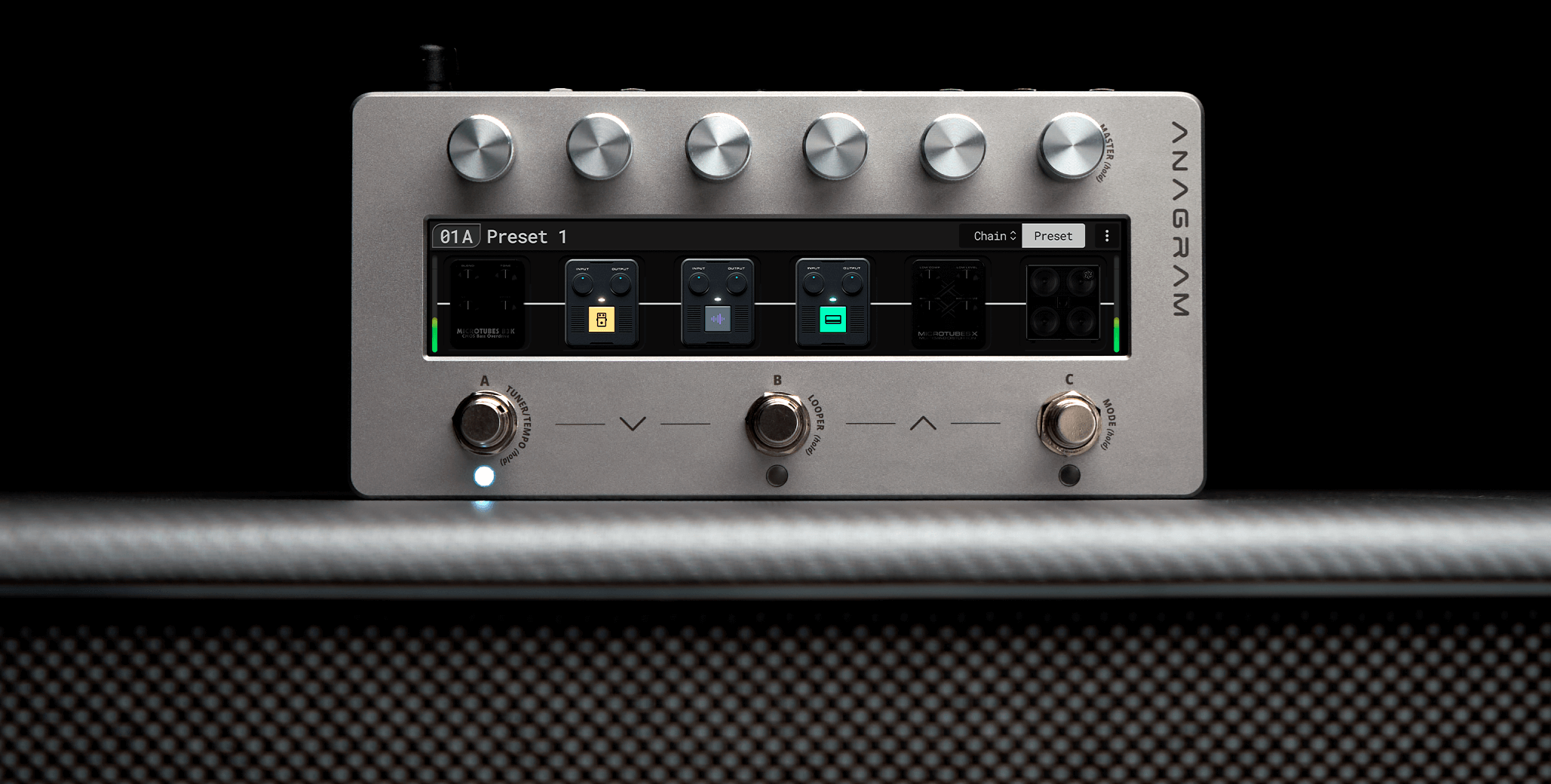
A First Look at the Darkglass Anagram: Pedal Review When innovation meets obsession, the result is something like the Darkglass Anagram—a cutting-edge multi-effects platform purpose-built for bass players who demand more from their tone shaping tools. Designed to push the envelope of what’s possible on both stage and in the studio, the Anagram is more than a pedal—it’s a fully integrated ecosystem where sonic precision meets creative freedom. Total Tone Control, Redefined At its heart, Anagram is a multi-effect powerhouse fueled by a six-core DSP architecture. It’s fast—ultra-low latency fast—and optimized to handle everything from detailed studio tracking to live performances where timing is everything. Its dedicated operating system handles real-time audio with the kind of efficiency you’d expect from a pro-grade rack unit, all in a pedalboard-friendly format. Whether you’re looking to sculpt your ideal tone or dive into experimental soundscapes, Anagram’s extensive customization and seamless integration with the Darkglass Suite make it an unparalleled creative tool. Touchscreen Simplicity, Complex Power The 7-inch high-brightness touchscreen is a standout feature, offering an intuitive interface that makes navigating complex chains and tweaking parameters feel effortless. Add in three programmable footswitches and six endless rotary knobs, and you’ve got total hands-on control whether you’re dialing in tones at home or on stage mid-set. Future-Proof and Flexible Anagram isn’t just powerful now—it’s built to grow. With support for NAM and AIDA-X neural models, cabinet IRs, and an upgradeable architecture, it’s ready for future DSP blocks and third-party content. You can load up to 24 simultaneous effects blocks, arrange complex parallel chains, or run simple, clean setups—all from one sleek device. A Deep Dive Into the DSP Library: Tools That Keep You in the Groove Seamless Darkglass Integration Connect to the Darkglass Suite to upload IRs, manage presets, and explore user-generated tones via the Preset Hub. With USB-C connectivity offering MIDI, audio interface support, and firmware updates, staying in sync with your digital workflow is effortless. Versatile I/O for Any Setup The Bottom Line With the Anagram, Darkglass hasn’t just created a new pedal—they’ve designed an ecosystem where analog soul meets digital muscle. It’s a bass-focused beast engineered to inspire, built to perform, and ready to evolve with you. Whether you’re chasing the perfect tone or pushing sonic boundaries, the Anagram is the new benchmark for what’s possible in bass effects.

AXE I/O
Reviews

IK Multimedia AXE I/O: Interface Review

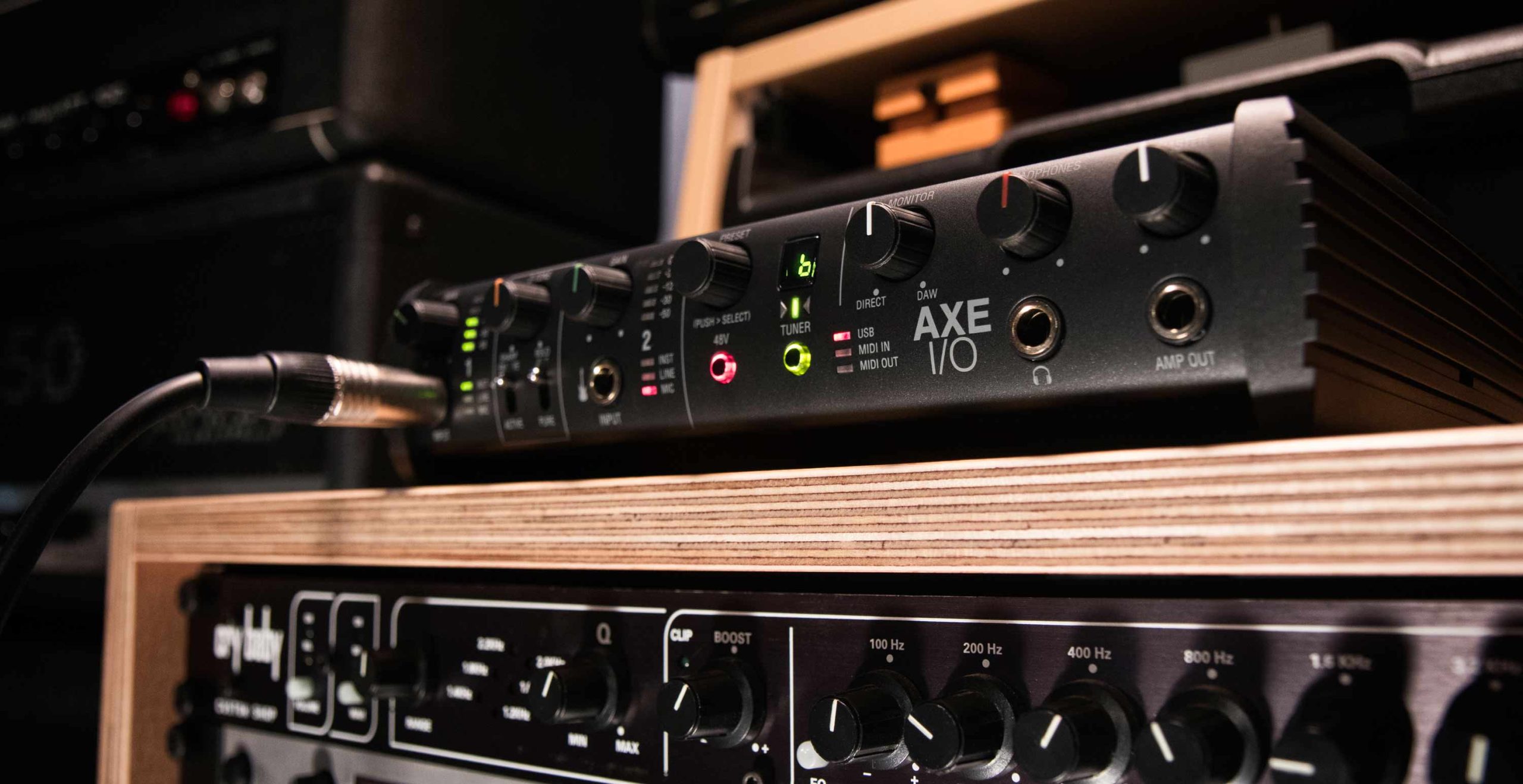
Feature Rich Interface For Tone Driven Players In a world where guitar interfaces can often feel like more of the same, the IK Multimedia Axe I/O stands out—not just for guitarists and bassists, but for anyone serious about tone. It shares the same philosophy as its smaller sibling, the Axe I/O One, but dials everything up with expanded connectivity, hardware upgrades, and quality-of-life features that really should be standard by now. From its tone-shaping capabilities to its built-in tuner and flexible I/O, the Axe I/O delivers a streamlined yet professional-grade experience at a price that’s still accessible to most serious home recordists. Disclaimer: This pedal was kindly provided by Ik Multimedia for the purpose of this review. However, this does not influence our opinions or the content of our reviews. We strive to provide honest, unbiased, and accurate assessments to ensure that our readers receive truthful and helpful information. Tailored for Guitar & Bass – With Pro Features Much like the Axe I/O One, the Axe I/O is deeply instrument-focused. It’s not just an audio interface—it’s a rig optimizer for guitar and bass players who want to shape their tone before it even touches a plugin. Features like the Z-Tone impedance control, JFET/PURE input switch, and active/passive pickup selector make it a joy to tailor your sound in real time. But the Axe I/O expands on this with dual instrument inputs, 4 audio outputs, and a built-in tuner—a shockingly rare feature that proves how much attention IK Multimedia paid to real-world usage. Core Features at a Glance: Z-Tone and Input Stage Switching Just like with the Axe I/O One, Z-Tone and the JFET/PURE switching offer a wealth of tone control before your signal even hits a plugin. Z-Tone lets you shift your input impedance to tighten or fatten your tone—great for modern players or vintage stylists alike. The JFET input adds analog warmth and subtle harmonic richness, while PURE gives you a clean, uncolored signal ideal for post-recording tone shaping. Reamping, Now Simplified The Amp Out jack is one of the best things about this interface—it allows clean reamping without the need for extra gear. That’s huge for players who want to blend DI and amp tones or revisit takes with different gear. Why the Built-In Tuner Matters One small but seriously useful feature: the hardware tuner. Fast, accurate, and always at your fingertips. It seems like a small touch, but once you’ve used it, you’ll miss it on every other interface. Limitations? Final Thoughts on the Axe I/O The IK Multimedia Axe I/O is a standout piece of gear for guitar and bass players who want a high-quality DI solution with extras that actually make sense. With dual inputs, reamping, and thoughtful touches like a built-in tuner, it’s the kind of tool that makes you wonder why more interfaces don’t do this. Axe I/O vs. Axe I/O One – Which One’s for You? Both of these interfaces are cut from the same cloth, designed with the tone-obsessed player in mind. But they serve slightly different purposes depending on your needs and workflow. What They Share: Which Should You Choose? Conclusion: Both units punch way above their price point, especially for guitar and bass players. The Axe I/O One is compact and affordable without sacrificing tone-shaping power, while the Axe I/O adds the I/O flexibility and studio-ready features many serious players will appreciate. Whichever one you choose, you’re not just getting an interface—you’re getting a tone toolbox.