Blog

Category: Reviews

Darkglass b7k
Reviews

Darkglass Microtubes B7K: Pedal Review

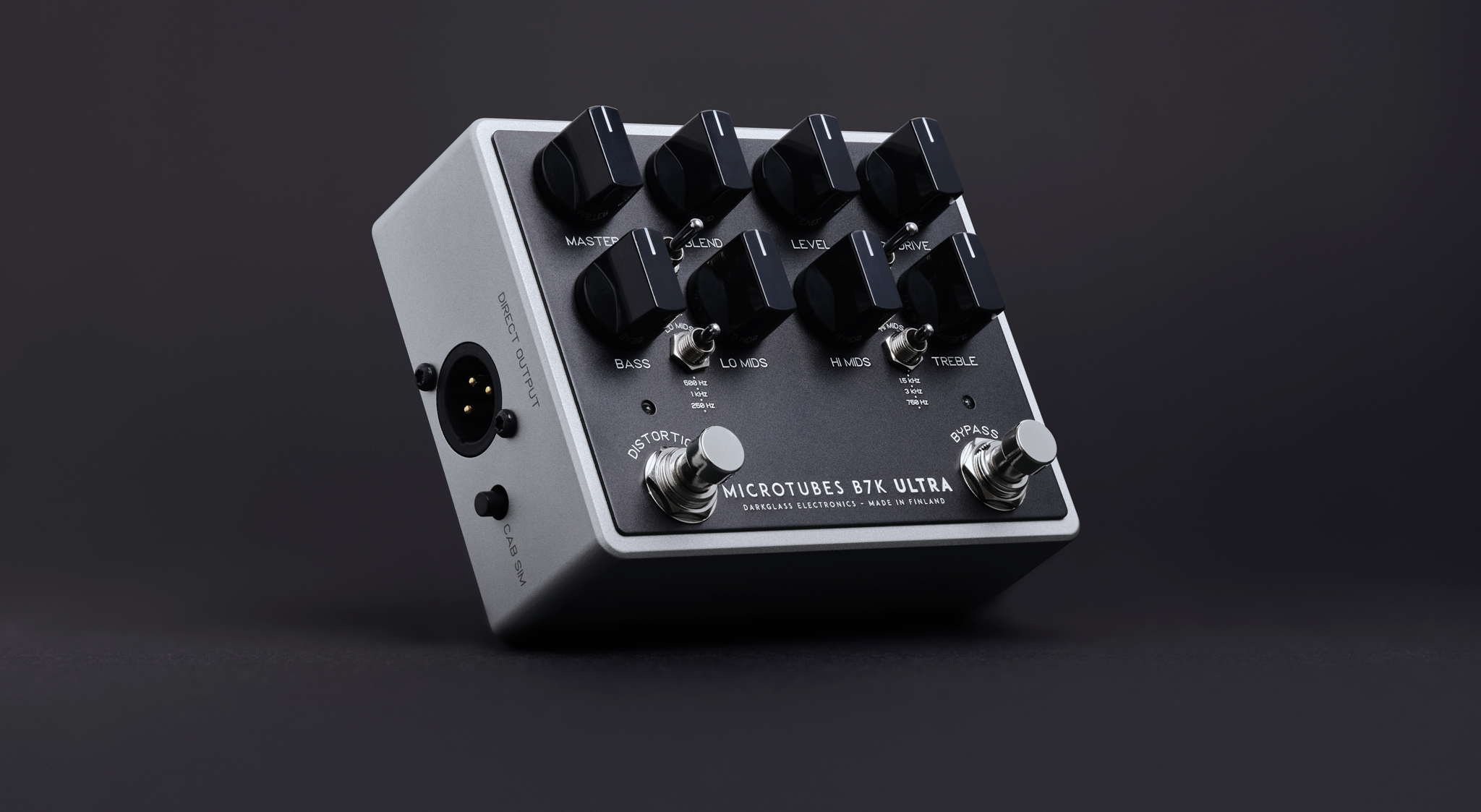
A Decade of Defining Modern Bass Tone Few bass pedals in the past 20 years have had the impact and staying power of the Darkglass Microtubes B7K. First released in the early 2010s by Finnish company Darkglass Electronics, the B7K (and its simpler sibling, the B3K) quickly became a cornerstone of modern bass sound, especially in genres like metal, progressive rock, djent, and fusion, but also in session, pop, and electronic music. At its core, the B7K is a preamp/overdrive pedal that blends clear, aggressive distortion with a powerful EQ section, making it equally suited for clean tone shaping and harmonically rich grit. But what really made it a game changer was its ability to maintain articulation and clarity under gain — a feat few bass drives had managed without sacrificing low-end or note definition. A Bit of History: The Rise of Darkglass Founded by Douglas Castro in Helsinki in 2009, Darkglass emerged from a desire to build gear that could keep up with the demands of modern, technically complex music. At the time, most bass drives either lacked definition, lost bottom-end, or felt like adapted guitar circuits. Castro’s designs aimed to change that — and the B7K was the breakout product. The B7K didn’t just offer distortion; it sculpted the tone of modern bass. It became a staple for touring professionals, bedroom producers, and recording engineers alike. Whether it was Nolly Getgood, Adam “Nolly” Getgood of Periphery, or countless players in the extended-range and multi-genre scenes, the B7K became synonymous with tight, mix-ready bass tone. Features and Layout: The Power of Precision The Microtubes B7K is both an overdrive and a preamp, featuring: The clean architecture and modular layout make the B7K extremely adaptable — it works equally well on pedalboards, in DAW environments, or as a preamp driving a power amp or interface. Sound: Clarity Under Fire The core appeal of the B7K lies in its precise and articulate gain structure. Where many bass overdrives mush out or lose clarity, the B7K delivers tight, punchy, mid-forward grit that remains focused even with extended-range basses or fast playing. Key sonic characteristics: While it shines in modern, aggressive settings, many players use it purely as an EQ/preamp, with minimal drive, for shaping live tone or adding sheen to studio DI tracks. Why It Mattered — and Still Does Before the B7K, the bass overdrive landscape was fractured. Players often had to choose between: The B7K solved this by offering studio-level tone sculpting in a pedal format, with enough gain for extreme players but enough transparency and flexibility for clean users. It bridged the gap between DI box, preamp, and distortion, becoming an all-in-one solution that was easy to trust on stage or in the studio. And crucially, it helped usher in a new aesthetic of bass tone — forward, punchy, hi-fi, but with muscle. Applications: More Than Just Metal Though often associated with heavy genres, the B7K is a chameleon: It also integrates seamlessly with compressors, modulation, fuzz, and even IR loaders or amp sims. Pros and Cons Pros: Cons: Conclusion: A Modern Classic, Deservedly So The Darkglass Microtubes B7K has earned its place in the pantheon of essential bass pedals. It’s not a flavor-of-the-month — it’s a true sonic tool, capable of everything from subtle enhancement to outright overdrive savagery, and always with a level of control that few other pedals offer. For players who want to sound tight, modern, mix-ready, and defined, the B7K still reigns as one of the best options available. And for those who appreciate the value of a preamp that doubles as a studio channel strip, it’s arguably unmatched at its price point. It changed the conversation about bass tone — and for many players, it still sets the standard.
Reviews

Sushi Box Grand Slampegg: Pedal Review

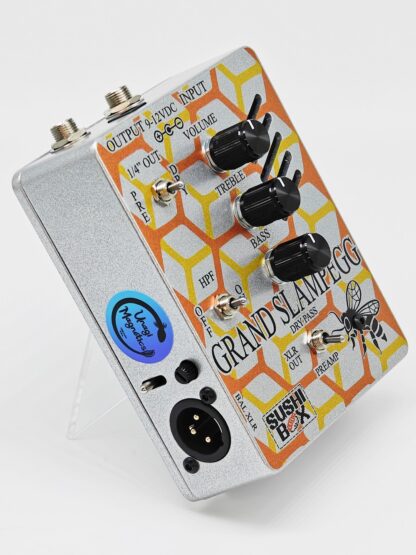
B-15 DNA in a Modern Tube Pedal The Grand Slampegg from Sushi Box FX is a tube-powered preamp pedal designed to capture the spirit, tone, and feel of the iconic Ampeg B-15 Portaflex — the amplifier that defined the sound of recorded bass in the 1960s and beyond. Hand-built in small batches and powered by a real 12AX7 tube, this pedal is part of a growing movement of boutique builders bringing studio-grade tones to the pedalboard world. What sets the Grand Slampegg apart is its targeted mission: not to be a Swiss-army preamp, but rather to emulate the sonic character and response of the B-15, an amp that still stands as one of the most revered tools for bass tone shaping in history. The Ampeg B-15 and Its Lasting Impact Before diving into the pedal, let’s zoom out for a second. The Ampeg B-15 Portaflex, introduced in 1960, was a compact flip-top bass combo amp known for its rich, warm, and punchy tone, thanks to its tube circuitry, simple EQ, and closed-back cabinet with a single 15″ speaker. It became the go-to amp for session players, especially in Motown, Stax, and New York’s studio scene. Names like James Jamerson, Donald “Duck” Dunn, and Chuck Rainey played through B-15s on countless records, and its pillowy low end, smooth midrange, and organic compression became baked into the DNA of modern bass tone. But the B-15 is big, heavy, and expensive. So for today’s bassists — especially those playing live or recording direct — the Grand Slampegg offers a portable, affordable, and musical tribute to that era-defining sound. Design and Features: Simplicity That Speaks Volumes The Grand Slampegg is powered by a genuine 12AX7 preamp tube operating at high voltage (internal boost from a 9V supply), allowing it to behave like a real tube amp rather than a tube-flavored simulator. That’s a crucial difference: it reacts dynamically to your playing and has that slightly compressive, touch-sensitive character that makes tube gear so addictive. The layout is minimal, but deceptively deep: The pedal has both instrument-level and line-level output, making it easy to slot into a pedalboard, run into an amp’s return, or go direct into an interface or FOH system. Tone Plug into the Grand Slampegg and the first thing you’ll notice is the weight of the tone — not in volume, but in density and presence. It fills up space in a mix the way a great amp does, especially with a passive P-style bass or flatwound strings. The key characteristics are all there: Unlike some tube preamps that lean toward modern grit or aggressive drive, the Grand Slampegg prioritizes subtlety, bloom, and tone shaping. That makes it ideal for studio-style applications, warm live rigs, or as a foundational tone shaper on your board. And yes — it breaks up when pushed. But the breakup is velvety and musical, not jagged or compressed. Think Jamerson with the gain halfway up, or a slightly overdriven studio channel strip. Because it’s voiced so naturally and keeps low-end intact, the Grand Slampegg is extremely flexible as a platform. You can use it: It also works well as a recording tool — slotting it into your DI path gives you that elusive “amp in the room” feel with minimal fuss. Pros and Cons Pros: Cons: Conclusion The Sushi Box Grand Slampegg is not trying to reinvent the wheel — it’s trying to preserve one of the most beloved wheels ever made and offer it to a new generation of players in a compact, efficient form. And in that mission, it succeeds beautifully. For bassists chasing that vintage studio tone, especially in settings where a full B-15 isn’t practical or affordable, this pedal is a godsend. It captures the essence of what made that amp great — the musical compression, the EQ shape, the tube warmth — and brings it to your fingertips in a pedal that’s easy to use and hard to turn off. If you’re into Motown grooves, soul lines, dub foundations, or just want your bass to sit deeper and more confidently in a mix, the Grand Slampegg should be on your radar. It’s not flashy, and it’s not aggressive — but it has tone for days, and it feels like a classic.

Yamaha Pulser Bass
Reviews

Yamaha Pulser Bass: Bass Review

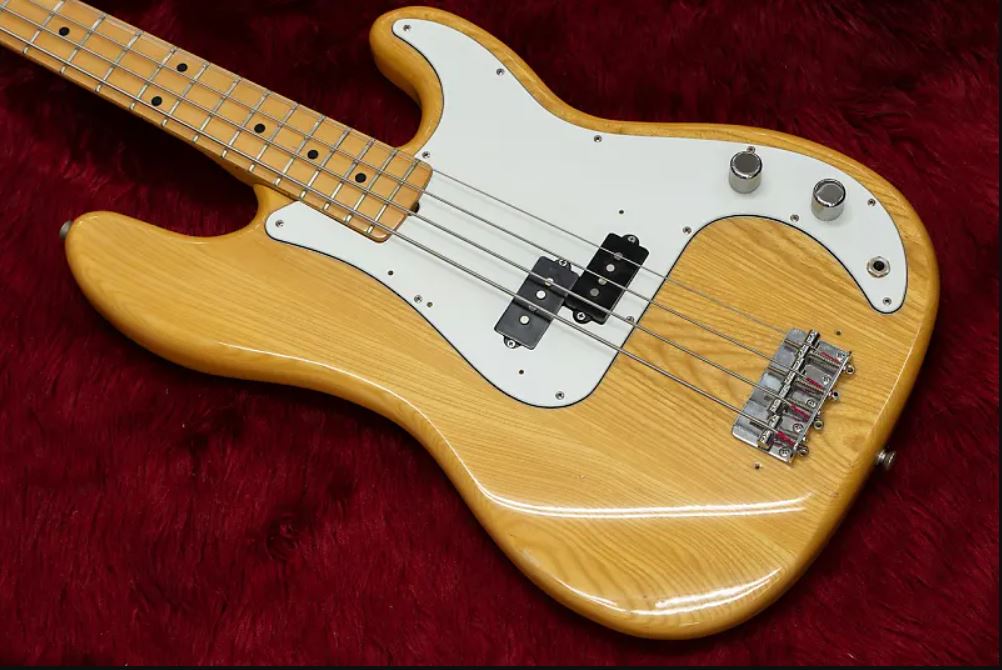
A P-Style Bass With Japanese Precision In the 1980s, while Fender was navigating shifts in ownership and quality control, Yamaha quietly built some of the most reliable and well-crafted instruments on the planet. One of those was the Pulser Bass, Yamaha’s take on the iconic Precision Bass formula. Made in Japan and sold primarily in the domestic market and select international regions, the Pulser never reached the household name status of its Fender counterpart — but among discerning players, it became a sleeper hit. The Pulser is often seen as part of the Yamaha BB (Broad Bass) family tree, sharing construction ethos and parts design. But what sets the Pulser apart is how faithfully it channels the spirit of a vintage P-Bass, while simultaneously offering Yamaha’s characteristic build precision, durability, and low cost of entry. Whether you’re into flatwounds and dub grooves or need a punchy, clear foundation for funk, punk, or indie, the Pulser earns its name: it’s a bass that thumps and pulses with purpose. A Brief History: The Quiet Counterpart Yamaha launched the Pulser Bass in the late ’70s and early ’80s, alongside their growing family of affordable, performance-focused instruments. At this time, Yamaha was capitalizing on Japan’s increasing global reputation for instrument manufacturing quality — the same wave that brought about Tokai, Fernandes, Greco, and early MIJ Fenders. The Pulser was clearly modeled after the Fender Precision Bass, but it wasn’t a clone. It was a reinterpretation — built with a distinct Yamaha voice: Though Yamaha never pushed the Pulser with the same marketing fervor as its BB-series cousins, it quietly built a reputation among session players, students, and budget-conscious professionals looking for a reliable, no-frills instrument. Build Quality and Feel Where some ’80s Fenders could feel inconsistent or sluggish, the Pulser Bass often surprises with its immediate playability and comfort: Tone: Familiar, but Sharpened At a glance, the Yamaha Pulser sounds like a traditional Precision Bass: strong fundamental, mid-forward bark, slightly rounded highs, and thumpy lows. But there are subtle differences: For flatwound users, the Pulser becomes a machine of smooth punch and bloom. You get that classic thump and lo-mid grunt without losing detail, and without the microphonic behavior some older Fenders exhibit. Comparison to Fender P-Basses of the Era The early-to-mid ’80s was a rocky time for Fender. The transition from CBS ownership to the new era under FMIC (post-1985) marked a period of uneven quality, particularly in U.S.-made instruments. While some 1980s Fenders are excellent, many suffer from heavier bodies, spotty fretwork, and inconsistent electronics. In contrast, the Yamaha Pulser often came off the factory floor cleaner and more consistent. Key comparisons: Feature Yamaha Pulser Fender P-Bass (1980s) Build Consistency High (MIJ standards) Variable (pre-FMIC era) Neck Profile Slim, playable Varies from chunky to wide Tone Clean, punchy, modern Classic, sometimes woolier Weight Moderate and balanced Often heavier Price Today Budget-friendly ($400–800) Vintage pricing ($1,000–2,000+) The Pulser offers a refined alternative: vintage feel without the collector price tag, and enough tonal accuracy to cover traditional P-Bass roles with confidence. Pros and Cons Pros: Cons: Conclusion: A Vintage Bass Without the Vintage Tax The Yamaha Pulser Bass is one of the best-kept secrets in vintage-style instruments. It delivers everything players love about the P-Bass platform — deep, fundamental tone, rock-solid simplicity, and roadworthy build — but sidesteps the inflated pricing and QC variability of more famous brands. For bassists who want a true player’s instrument, especially one that shines with flatwounds or in vintage-styled settings (soul, reggae, post-punk, lo-fi), the Pulser isn’t just a solid choice — it’s a smart investment. You won’t find prestige in the headstock. But you’ll find tone, comfort, and reliability in your hands. And sometimes, that’s the more powerful legacy.

Meris Ottobit Jr
Reviews

Meris Ottobit Jr: Pedal Review

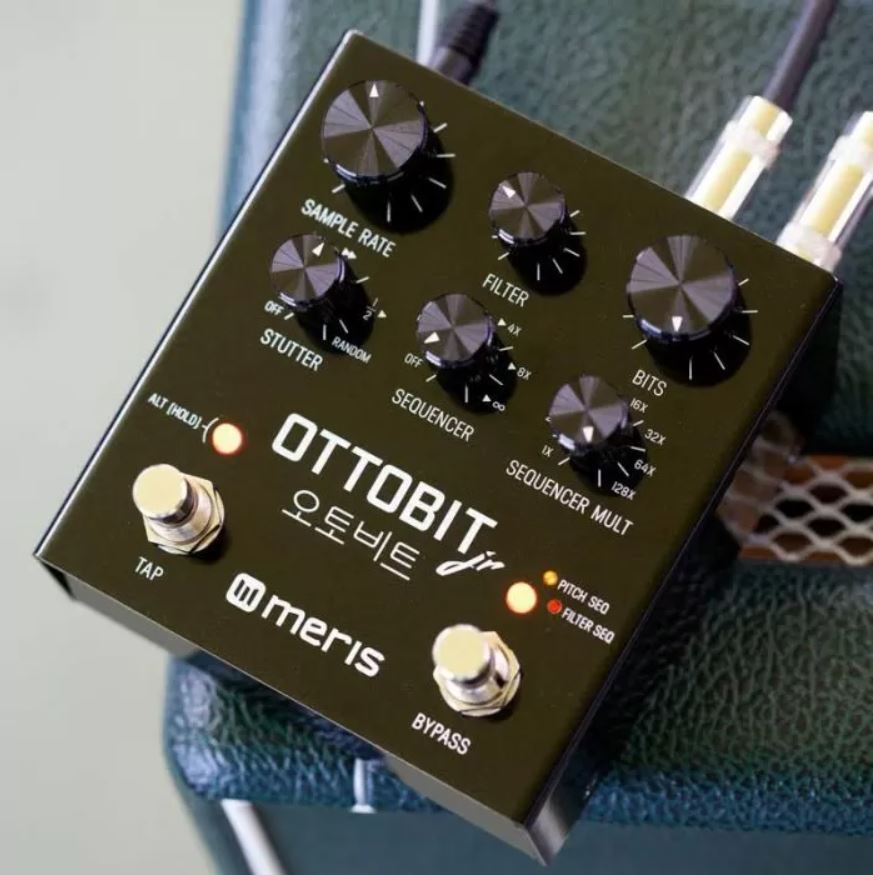
Bitcrushing the Bass The Meris Ottobit Jr. isn’t a distortion box, a traditional synth emulator, or a one-trick glitch pedal. It’s a high-resolution sound manipulator with digital DNA and modular soul — inspired by vintage gaming systems, early digital processors, and rhythmic control schemes that come from the world of analog synthesis. At its core, it’s a bitcrusher — but to stop there would undersell what the Ottobit Jr. really is. It’s also a sequencer, stutter machine, resonant filter, tremolo engine, and a CV-controllable modulation hub. For bass players, that means access to new textures and performance dynamics that aren’t just novel — they’re musically powerful. More than just a lo-fi gimmick, the Ottobit Jr. can completely transform how your bass occupies a mix, or create entire rhythmic frameworks from a single note. Whether you’re laying down robotic funk, chopped ambient pulses, or crushing 8-bit grime, this pedal speaks bass fluently — but with a heavy digital accent. Why Bitcrushing Matters for Bass Bitcrushing isn’t about overdrive or fuzz in the traditional sense — it’s about reducing resolution. That means cutting down bit depth and sample rate, degrading the signal into crunchy, digital artifacts. On bass, this does a few important things: And unlike most bitcrushers, the Ottobit Jr. allows you to dial in musical control, sequencing, and dynamic performance. This is what sets it apart. Core Controls and Features The pedal uses dual-layered control mapping — knobs and secondary functions — and offers stereo output, MIDI, and expression/CV input, making it surprisingly deep for its compact form. Here’s how it all translates for bassists: Bitcrusher & Sample Rate Reduction Sequencer Stutter Filter Modulation Expression / CV Input Sound Character: Digital but Deep The Ottobit Jr. is unapologetically digital — this isn’t analog warmth or tube-style breakup. Its charm is in its cold, artificial precision, which paradoxically makes it one of the most expressive modern pedals you can put on a bass pedalboard. What stands out: Effect Combinations and Signal Chain Integration The Ottobit Jr. is a centerpiece pedal — it wants to be heard. But it also works well in a chain, especially when paired with fuzz, filter, or time-based effects. With Fuzz/Distortion: With Filter: With Delay/Reverb: With Expression Pedal: Usability and Learning Curve This is not a plug-and-play pedal. The interface is deep, and it rewards experimentation. However, it’s not unwieldy — once you grasp the knob functions (and their alt modes), you’ll start hearing new bass roles emerge: Its studio-grade fidelity and musical envelope mean it’s at home in electronic, jazz, industrial, alt-R&B, and post-rock contexts. It’s also a killer secret weapon in sample-based music or layered loops. Pros and Cons Pros: Cons: Conclusion: Precision Mayhem, Beautifully Controlled The Meris Ottobit Jr. doesn’t just color your bass tone — it shatters it and builds something new in its place. It’s rare to find a pedal this capable of both total chaos and tight rhythmic control. For the experimental bassist, it’s a window into glitch-funk, modular-style sequencing, and textural manipulation rarely accessible outside of full synth setups. But even for groove-based players, it adds digital teeth and motion that transform simple phrases into complex, evolving layers. If you’re willing to invest time in learning its controls and embrace its digital dialect, the Ottobit Jr. may become one of the most musically expressive and compositionally inspiring tools on your board.

Earthquaker Devices Hummingbird
Reviews

EarthQuaker Devices Hummingbird – Pedal Review

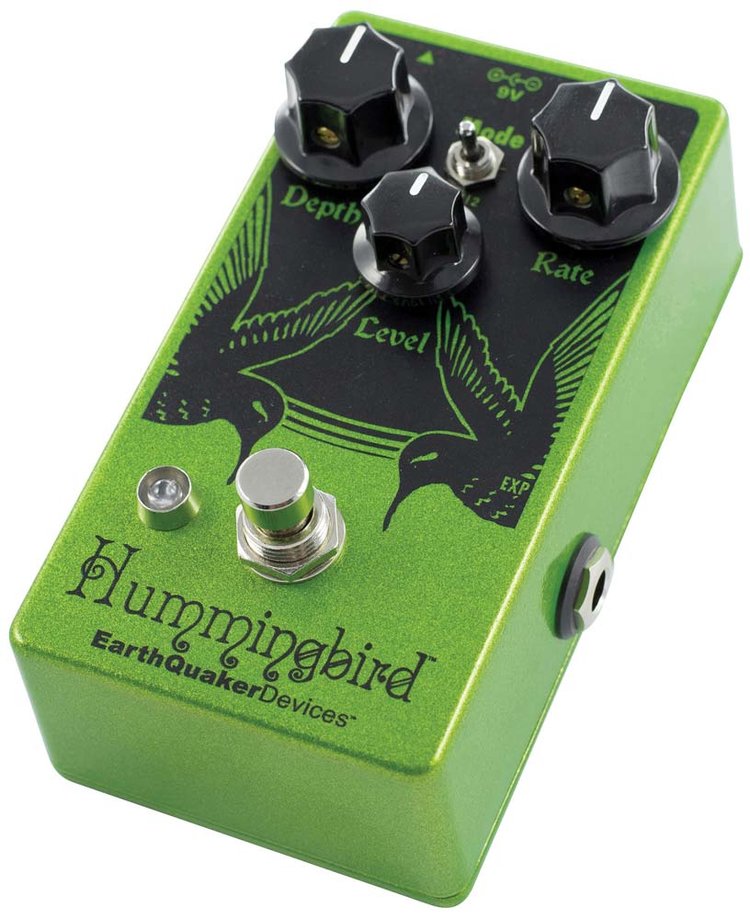
Where Pulse Meets Power in the Low End The Hummingbird is EarthQuaker Devices’ modern take on the vintage “repeat percussion” tremolo circuit — a choppy, percussive style of amplitude modulation that emphasizes square-wave tremolo, delivering a bold, on/off stutter rather than the smooth ebb of traditional sine or triangle-wave tremolos. Originally derived from the Vox Repeat Percussion, the Hummingbird elevates the concept with a wider rate range, greater control over depth and volume, and excellent signal integrity, especially valuable when applied to bass guitar. For bassists, this pedal can be an unexpected gem — providing pulsing rhythmic motion, synth-like textural effects, and a compelling way to modulate dynamics and groove. Why Tremolo Works (and Shines) on Bass Though often associated with guitar and surf rock, tremolo on bass offers unique advantages: Square-wave tremolo in particular is powerful on bass — not just modulating volume, but shaping how a note breathes, disappears, and re-emerges in the mix. Control Layout: Simple but Powerful The Hummingbird features a minimal but interactive control set, letting you dial in everything from slow pulses to near audio-rate flutter. Depth Rate Mode Switch (Three Speed Ranges) Level Tone and Response on Bass The Hummingbird is surprisingly bass-friendly, retaining low-end integrity and punch even at high Depth or fast Rate settings. Its tonal character is raw and unapologetic — this isn’t a mellow, ambient trem. But with careful tweaking, it can be as much felt as heard, especially in subtle settings or when combined with ambient effects. Effect Pairings: Building Sonic Layers The Hummingbird is a team player on pedalboards — its rhythmic modulation interacts dynamically with nearly every effect type. Fuzz & Overdrive (Before or After): Envelope Filter: Delay/Reverb: Modulation Effects: Parallel Signal Paths: Build Quality and Format While not feature-stuffed, it’s reliable and expressive, with just enough tweakability to tailor to your playing without overwhelming the user. Who It’s For Ideal for bass players who: It’s less suited to players seeking gentle, sine-wave tremolo for classic rock ballads — but perfect for those leaning into character and contour. Pros and Cons Pros: Cons: Conclusion: Rhythmic Texture Meets Low-End Strength The EarthQuaker Devices Hummingbird is a masterclass in how a simple concept — on/off tremolo — can become an expressive and musical force when executed with clarity, character, and nuance. For bass players, it’s a secret weapon — adding motion, pulse, and chopped rhythmic tension without compromising fundamental tone. Whether used subtly to animate long notes or aggressively to strobe through fuzz and delay, the Hummingbird elevates tremolo from novelty to creative staple. It’s not a tremolo for everyone — but for those open to rhythmic exploration, it rewards curiosity with an endless pulse that breathes alongside your playing. Let me know if you’d like a few suggested Hummingbird settings tailored to bass-driven genres or multi-effect setups.