Blog

Category: Reviews

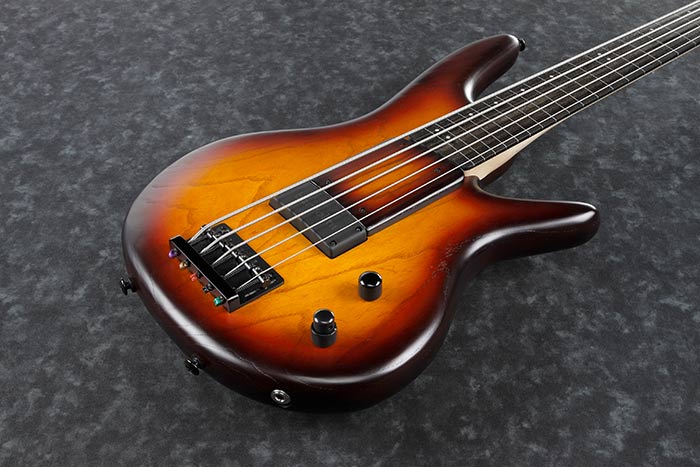
Ibanez GWB205
Reviews

The Ibanez GWB Series: Bass Review

An Instrument of Discipline, Not Decoration There are basses we admire. There are basses we enjoy. And then there are basses that quietly rewire the way we think about playing. For me, the Ibanez GWB is in that last category. Those who know me know that Gary Willis has been my reference and mentor for a long time — not only musically, but conceptually. His approach to articulation, right-hand economy, and tonal intention reshaped how I understand the instrument. So writing about the GWB is not simply writing about a signature model. It is writing about a philosophy made tangible. But admiration should never cloud clarity. The GWB deserves a deep look — not as a fan piece, but as an honest examination of one of the most coherent signature instruments ever produced. The Origin: A Bass Built from the Inside Out When Ibanez introduced the original GWB1 in 1999, it wasn’t responding to a trend. It was responding to a system. Gary Willis had already refined his floating thumb technique and right-hand mechanics over decades. He didn’t want a bass that simply sounded good. He wanted an instrument that reinforced the discipline of his touch. The GWB1 — built in Japan — established the template: That first generation wasn’t flashy. It was deliberate. And what’s remarkable is how little the core philosophy has changed since. Evolution After the original Japanese-built models (GWB1 and later GWB1005), Ibanez expanded the line to make the concept more accessible. The GWB35, introduced in the early 2000s, became the long-running production model that brought the ramp-and-fretless philosophy to a broader audience. Later, the GWB205 refined the formula further, sitting between affordability and premium build quality, maintaining the ebony board, Bartolini pickup, and ramp system while modernizing aesthetics and construction. Anniversary editions — the GWB20th (2019) and GWB25th (2024) — didn’t reinvent the instrument. They honored it. Upgraded electronics, special finishes, subtle refinements — but always preserving the essential idea: this bass exists to serve a disciplined right hand and an expressive fretless voice. Across more than two decades, the silhouette, the ramp, the fretless identity — all remained intact. That consistency is not accidental. It reflects a rare clarity of design. First Thing First: The Ramp The ramp is still the most controversial feature — and the most honest. It limits finger depth, reduces wasted motion, and forces efficiency. It rewards light touch. It punishes heavy-handed playing. When I first spent serious time with a ramp-equipped bass, it revealed every inefficiency in my right hand. It became clear how much excess movement I had normalized. The GWB does not let you hide behind aggression. It asks for control. And that’s the central theme of the entire instrument. Fretless as Commitment The GWB is not a “versatile” instrument in the commercial sense. It commits to fretless. The ebony fingerboard, subtle position markers, and smooth articulation invite nuance rather than theatrics. This is not a bass built for exaggerated “mwah” or fretless gimmicks. It is built for micro-adjustments of pitch, subtle vibrato, vocal phrasing. But this commitment defines its audience. If you are not willing to invest in intonation discipline, the GWB will not flatter you. Electronics The Bartolini pickup and active EQ system across most generations reflect the same tonal philosophy as the ramp: control over spectacle. The low B integrates naturally. The midrange stays articulate. Fast passages remain defined. In a fusion or jazz context, this balance is invaluable. In a high-gain rock mix, it may feel restrained. Where the GWB Excels More than anything, it excels at consistency. Where It Falls Short These are not design failures. They are boundaries. My Personal Take Because this instrument is tied to someone who has shaped my musical path, it would be easy to romanticize it. But what I respect most about the GWB is that it does not romanticize anything. It is disciplined. It is focused. It does not try to win everyone. Playing it feels less like borrowing Gary Willis’s voice and more like stepping into the framework that shaped it. And that framework demands honesty. It shows you exactly how controlled — or uncontrolled — your touch truly is. In that sense, it functions almost like a teacher. Which feels appropriate! Final Reflection Over more than twenty-five years — from the original GWB1 to the modern GWB205 and the 25th Anniversary edition — the Ibanez GWB has remained conceptually intact. Few signature instruments can say that. It is not driven by nostalgia.It is not driven by market trends.It is driven by a system. For those aligned with that system, it can feel like home. For those who aren’t, it may feel foreign. But perhaps that is the greatest compliment one can give an instrument: It knows exactly what it is. And it refuses to be anything else! If this instrument speaks to your approach as much as it has shaped mine, you can explore the current Ibanez GWB models here.
Aguilar TLC
Reviews

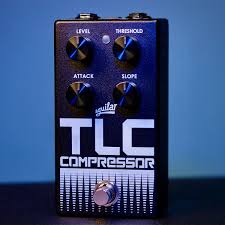
Aguilar TLC Compressor – Pedal Review

Transparent Compression Built for Bass Aguilar’s TLC Compressor has earned a strong reputation among bass players for delivering clean, musical compression without compromising low-end integrity. Designed to provide practical dynamic control rather than heavy coloration, the TLC focuses on consistency, clarity, and reliability in real-world playing situations. It remains a popular choice for bassists who want straightforward, professional compression with enough control to fine-tune their response. With the recent release of the Aguilar TLC DLX, we take a look at the classic TLC design, that’s been a staple for bass players all around the world. Check the Aguilar TLC Compressor on Amazon! Design & Build Quality The TLC Compressor is housed in Aguilar’s familiar compact metal enclosure and built to handle regular gigging and pedalboard use. The layout is clean and intuitive, with a single footswitch and clearly labeled controls that make adjustments easy both on stage and in the studio. True bypass switching preserves the instrument’s signal when the pedal is disengaged, and overall construction reflects Aguilar’s emphasis on durability. Controls & Functionality The TLC features a streamlined but effective control set tailored specifically for bass. Threshold determines the level at which compression begins, allowing players to set how aggressively the pedal responds to their playing dynamics. Slope controls the compression ratio, shaping how strongly the signal is compressed once it crosses the threshold. This makes it possible to dial in anything from subtle leveling to more assertive dynamic control. The Attack control adjusts how quickly the compressor reacts to incoming notes, influencing how much initial transient is preserved. Finally, the Level control sets the output volume, allowing for precise gain matching or a slight clean boost. While the TLC does not include a release control, its fixed release time is well chosen and works musically across a wide range of playing styles. Compression Character & Performance The defining characteristic of the TLC Compressor is transparency. When set for moderate compression, it smooths out peaks while preserving the natural tone and feel of the instrument. Low frequencies remain solid and full, even under heavier compression settings. The pedal responds consistently across different playing techniques, maintaining clarity and punch whether using fingers, pick, or slap. Tone & Musical Application The TLC excels as an always-on compressor for bassists who want even dynamics without noticeable coloration. It works well in funk, rock, pop, jazz, and worship settings, adapting easily to different instruments and rigs. Because it does not impose a strong tonal character, the TLC integrates seamlessly with other pedals, particularly drives, octave pedals, and envelope filters. Live & Studio Use In live environments, the TLC delivers predictable, repeatable results and requires minimal adjustment once dialed in. Its straightforward control layout makes it easy to tweak quickly if needed. In the studio, the pedal provides clean, controlled compression that tightens performances without sounding processed. Its low noise floor further enhances its suitability for recording. Final Thoughts The Aguilar TLC Compressor remains a strong option for bass players seeking transparent, reliable dynamic control. Its simple but effective control set, musical response, and durable construction have helped it remain relevant despite the crowded compressor market. For bassists who value clarity, consistency, and hands-on control over added features or coloration, the Aguilar TLC Compressor continues to be a dependable choice. Get your Aguilar TLC Compressor on Amazon now! If you enjoyed this product from Aguilar, you’ll like other articles on Aguilar: – Aguilar Plugin Suite: All the classic Aguilar sounds, now on your DAW. – Aguilar Octamizer: Organic Bass Octave

Aguilar Octamizer
Reviews

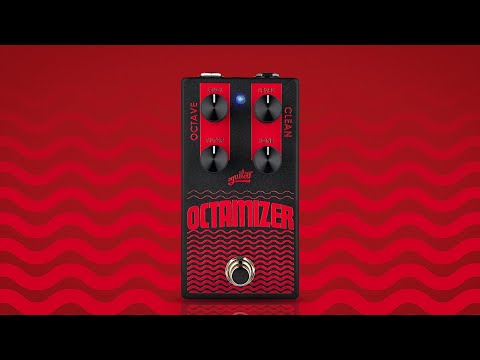
Aguilar Octamizer – Organic Octave: Pedal Review

A Modern Classic in Analog Bass Octave Aguilar has long been associated with high-quality bass gear that prioritizes musicality, reliability, and real-world usability. Among its pedal lineup, the original Octamizer has earned a reputation as one of the most dependable analog octave pedals available for bass. Rather than chasing extreme synth textures or overly processed sounds, the Octamizer focuses on delivering a solid, musical octave-down voice that integrates naturally into a bass rig. Years after its release—and now alongside the new Octamizer DLX—the original Octamizer remains a relevant and highly effective tool for bass players. Check the Aguilar Octamizer On Amazon –> Design & Build Quality The Octamizer is housed in Aguilar’s familiar compact enclosure, built to withstand consistent gigging and pedalboard use. The layout is clean and intuitive, with clearly labeled controls and a single footswitch that makes operation straightforward in live situations. True bypass switching preserves signal integrity, and overall construction reflects Aguilar’s emphasis on durability and long-term reliability. Controls & Functionality The Octamizer features a focused but highly musical control set designed specifically for bass. Clean Level and Octave Level controls allow precise blending of the dry and effected signals, making it easy to reinforce the low end or push the octave voice forward as needed. Crucially, the pedal provides separate tone shaping for each signal path. The Clean Tone control adjusts the brightness of the dry signal, allowing players to preserve clarity or roll off highs to better match the octave voice. The Octave Filter shapes only the octave-down signal, moving from deep, smooth sub tones to brighter, more defined textures that cut through a mix. This separation gives the Octamizer more flexibility than many analog octave pedals while keeping the interface simple and intuitive. Tracking & Performance Tracking is one of the Octamizer’s strongest attributes. Across most of the bass register, the pedal responds quickly and predictably, with stable performance on lower notes and clean articulation in the mid range. When played with solid technique, the octave-down voice feels tightly connected to the original note rather than detached or synthetic. As expected from an analog design, clean input and controlled playing yield the best results, but the Octamizer consistently rewards players with reliable, musical tracking. Tone & Musical Application Tonally, the Octamizer leans organic and supportive rather than overtly synth-like. The octave-down sound is thick and authoritative, making it well suited for funk, rock, soul, worship, and pop contexts where low-end reinforcement is essential. The interaction between the Clean Tone and Octave Filter controls allows the pedal to sit naturally in a variety of mixes. Darker octave settings provide classic sub weight, while brighter filter settings add definition for more complex lines or denser arrangements. While the Octamizer does not include octave-up voices or multiple modes, its focused design is also its strength—it delivers a high-quality octave-down sound without unnecessary complexity. Live & Studio Use In live situations, the Octamizer is easy to integrate and dependable under foot. The single-switch operation makes it ideal for players who need immediate access without menu diving or preset management. In the studio, its consistent tracking and natural voicing make it an excellent choice for reinforcing bass lines without overpowering the original tone. The pedal also stacks well with compressors, filters, and drive pedals, expanding its usefulness across different signal chains. Final Thoughts The original Aguilar Octamizer remains one of the most musically satisfying analog octave pedals available for bass. Its strong tracking, organic tone, and intelligently separated tone controls have helped it stand the test of time, even as newer and more complex octave pedals enter the market. With the release of the Octamizer DLX, Aguilar has expanded the platform’s capabilities—but the original Octamizer still holds its place as a straightforward, professional-grade octave pedal that delivers exactly what many bass players need. For those seeking a reliable, great-sounding octave-down effect with no excess complexity, the Aguilar Octamizer continues to be a benchmark in its category. Get your Aguilar Octamizer on Amazon Now! If you enjoyed this product from Aguilar, you’ll like other articles on Aguilar: – Aguilar Plugin Suite: All the classic Aguilar sounds, now on your DAW.

JHS Plugin Suite Review
Reviews

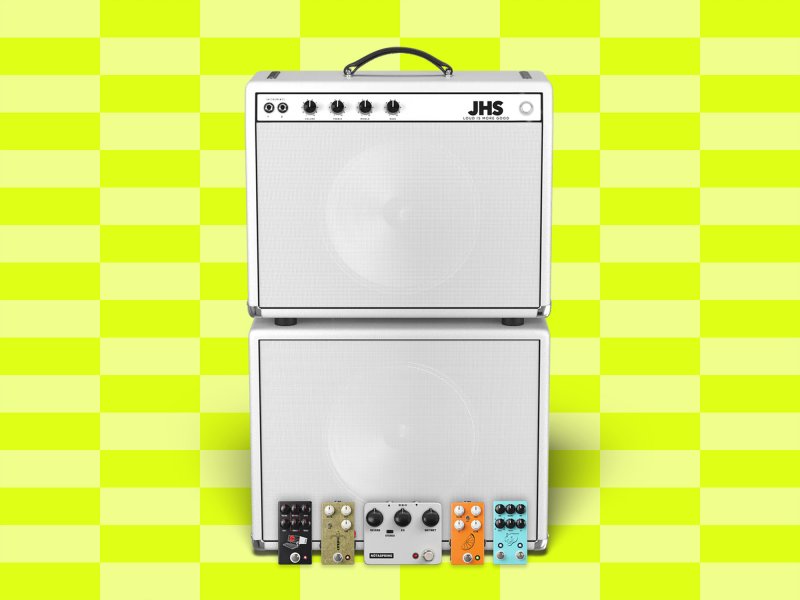
JHS Loud Is More Good Collection: Plugin review

JHS Plugin Suite on Bass: A Practical Review The JHS Loud Is More Good Collection brings some of JHS’s most recognizable pedal designs, along with an amplifier model, into the digital realm for use in DAWs or standalone environments. The suite includes overdrive, distortion, compression, delay, reverb, and amp simulation, all modeled to capture the behavior and character of their analog counterparts. As a bass player who regularly tracks and shapes bass tones in the box, I spent time using these plugins with real bass performances in practical recording and production scenarios. This review reflects hands-on use with direct-in bass tracks, parallel processing, and creative sound design, with a focus on how well these tools translate to bass despite their guitar-centric origins. TL;DR The JHS Plugin Suite offers musical, character-driven effects that can work very well on bass when used thoughtfully. It excels at adding grit, compression, depth, and ambience, but it is not a bass-specific plugin collection. Preserving low-end fundamentals often requires careful gain staging, EQ, or parallel blending. As a creative tone-shaping toolkit rather than a complete bass solution, it performs admirably. The Review: A Bass Player’s Perspective What’s Included The Loud Is More Good Collection includes the following plugins: Together, these plugins represent a full signal chain that mirrors a traditional pedalboard plus amplifier setup, now adapted for modern production workflows. Bass Compatibility and Signal Shaping None of the plugins are marketed as bass-specific, and there are no dedicated low-frequency compensation controls. Because of this, successful bass use depends on intentional signal routing and, in many cases, parallel processing. When approached this way, the plugins can complement bass tracks rather than compromise them. Compression and Clean Tone Shaping The Pulp ’N’ Peel compressor stands out as one of the most immediately useful tools for bass. In practice, it provides smooth dynamic control and a subtle sense of glue that works well on DI tracks. It adds presence without flattening the instrument’s natural dynamics and responds musically to variations in playing style. Used either directly on a track or blended in parallel, it helps bass parts sit more confidently in a mix. Overdrive and Distortion The Morning Glory and Hard Drive plugins offer two very different flavors of drive. Morning Glory is more transparent, adding harmonic richness and edge while largely preserving the core bass tone. It works well for subtle grit, especially in rock, indie, and pop contexts. Hard Drive is more aggressive and better suited to heavier tones. It can generate dense harmonic content that helps bass cut through a mix, but it requires more careful dialing to avoid masking low-end fundamentals. In my experience, blending it in parallel with a clean signal yields the most usable results. Delay and Time-Based Effects: Panther Cub The Panther Cub delay brings analog-style bucket brigade delay into the suite, complete with tempo sync, modulation, and tone shaping controls. On bass, subtle delay settings add depth and rhythmic interest without cluttering the low end. Used sparingly or on an auxiliary track, Panther Cub creates movement and space behind the fundamental rather than competing with it. More extreme settings open the door to creative and ambient bass textures, particularly useful in experimental, ambient, or post-rock contexts. The modulation controls help the repeats feel organic rather than static, which suits bass particularly well when used for texture rather than clarity. Reverb and Space: NÖTASPRING The NÖTASPRING reverb emulates classic spring reverb behavior while offering modern control over tone and mix. For bass, it is best used with restraint. Low wet/dry settings or parallel routing allow the bass to retain definition while gaining a sense of depth and space. NÖTASPRING works especially well for atmospheric passages, dub-inspired lines, or sparse arrangements where bass occupies more sonic real estate. It is less about subtle room ambience and more about character and texture. Amp and Cabinet Modeling The Loud Is More Good Amp provides amp and cabinet modeling with mic placement options. While clearly modeled after a guitar amplifier, it can still be used creatively on bass. Gentle settings add color and midrange presence, while heavier drive settings function better as effect tones than as primary bass amp replacements. As with the drive pedals, using this amp model in parallel with a clean DI track helps retain low-end solidity while benefiting from the amp’s character. Workflow and Integration The suite integrates smoothly into standard DAW workflows and can also be used in standalone mode. Signal chain order is flexible, tempo-based effects sync easily to sessions, and the interface design encourages experimentation. For bass players working primarily in the box, the plugins feel responsive and musically engaging rather than clinical. Pros Cons FAQs Can the JHS Plugin Suite be used effectively on bass?Yes. While not bass-specific, the plugins can be very effective when used intentionally, particularly with parallel processing. Which plugins are most useful for bass?Pulp ’N’ Peel is immediately useful for compression and tone shaping, while Morning Glory, Panther Cub, and NÖTASPRING excel at adding character and space. Do these plugins replace dedicated bass amp sims?Not entirely. They work best as creative tools alongside clean DI tracks or bass-focused amp simulations. Are these plugins suitable for modern production styles?Yes. They lend themselves well to rock, indie, experimental, ambient, and pop bass tones, especially where character is valued over pristine cleanliness. Conclusion The JHS Plugin Suite is not a purpose-built bass toolkit, but it doesn’t need to be to earn a place in a bassist’s plugin arsenal. When approached with intention, it offers rich character, musical response, and creative flexibility that translate well to bass recording and production. With careful routing and a respect for low-end fundamentals, these plugins can add personality and depth that goes beyond clean DI tones, making them a valuable complement to more bass-focused tools. If you enjoyed checking out this JHS product, here are more JHS products worth exploring — all tested and reviewed here on BassGearReviews: – JHS Colour Box V2 – Neve Style Preamp Pedal – JHS 424 Gain Stage – preamp/fuzz pedal

Valeton GP-50
Reviews

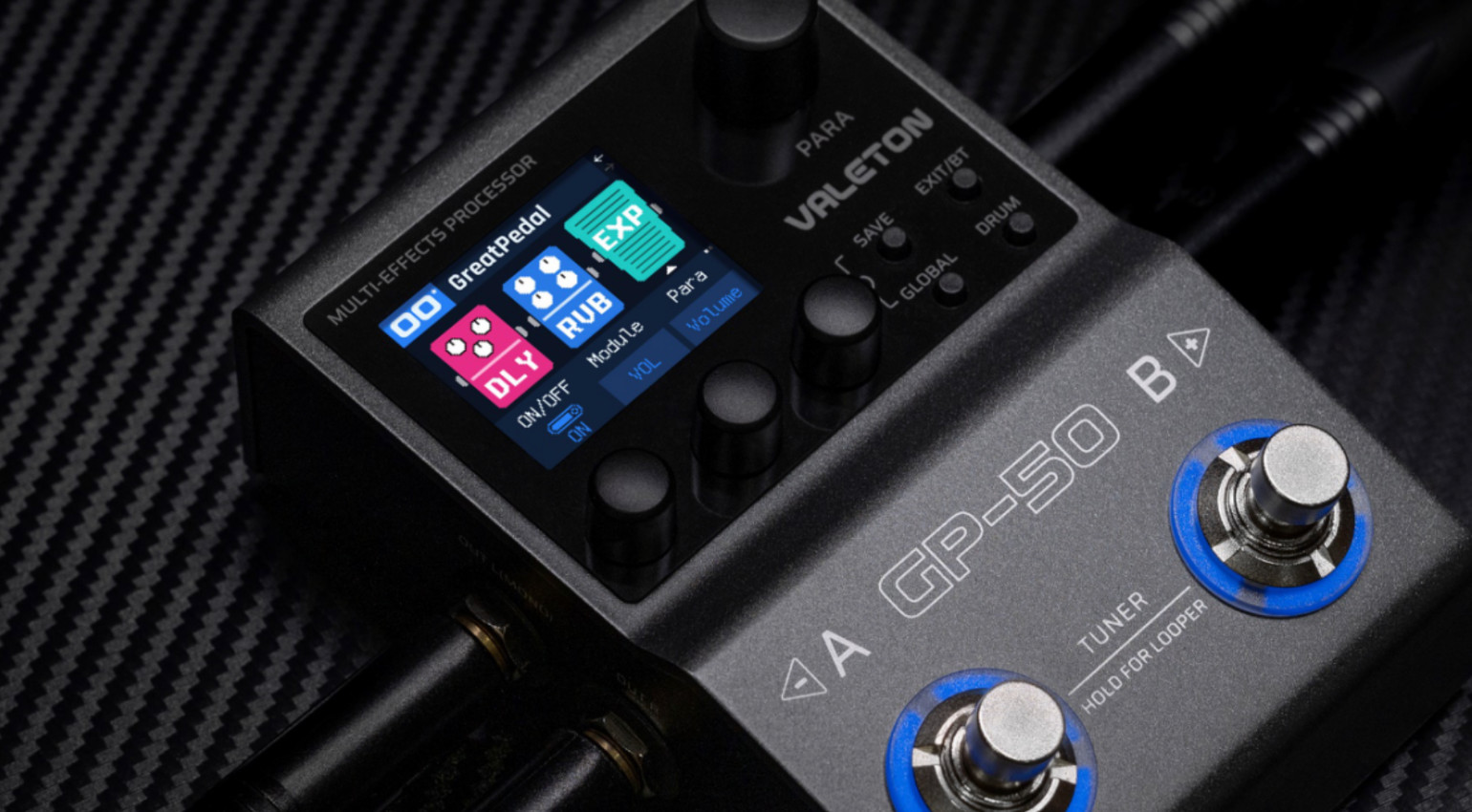
Valeton GP-50 Multi-Effects: Pedal Review

A Compact Multi-FX That Finally Breaks Free Disclaimer: This pedal was kindly provided by Valeton for the purpose of this review. However, this does not influence our opinions or the content of our reviews. We strive to provide honest, unbiased, and accurate assessments to ensure that our readers receive truthful and helpful information. Valeton has steadily refined its compact multi-effects lineup, and the GP-50 represents the most mature expression of that philosophy so far. Where the GP-5 proved that serious tone could live in an ultra-small, app-driven pedal, the GP-50 takes that foundation and removes many of the practical limitations that came with extreme minimalism. Rather than reinventing the platform, Valeton focused on expanding control, connectivity, and independence from external devices. The result is a pedal that still feels portable and modern, but far more capable as a standalone unit—especially for players who want flexibility without committing to a full-sized floorboard. TL;DR The Valeton GP-50 is a refined evolution of the GP-5, offering onboard editing, dual footswitch control, expanded I/O, and a rechargeable internal battery. It maintains the strong modeling and IR support Valeton is known for, while dramatically improving usability for rehearsal and live performance. While still compact, it feels far less constrained than its predecessor and works equally well with or without the companion app. For players who liked the GP-5’s sound but wanted more hands-on control, the GP-50 delivers exactly that. Check Price on Amazon –> Design & Portability The GP-50 retains Valeton’s compact design language but feels noticeably more “stage-ready” than the GP-5. The metal chassis is solid and confidence-inspiring, and despite the added controls and connections, the pedal remains lightweight and easy to transport. One of the biggest upgrades is the internal rechargeable battery, which preserves the grab-and-go appeal of the GP-5 while supporting longer sessions and more demanding use cases. Whether you’re practicing, rehearsing, or running a small fly-rig, the GP-50 can operate completely untethered from external power if needed. It still slips easily into a gig bag—but now it feels like something you could rely on as your primary rig, not just a backup or practice tool. Interface & Editing This is where the GP-50 most clearly separates itself from the GP-5. Unlike its predecessor, the GP-50 allows full onboard editing directly from the pedal. Amp parameters, effects, signal chain adjustments, and general patch tweaks can all be handled without reaching for a phone or tablet. The screen and control layout make navigation intuitive, and the editing experience feels fast and practical rather than compromised. The Valeton app is still available and remains useful for deeper organization and visual editing, but it’s no longer mandatory. This change alone dramatically improves the GP-50’s usability for live settings, rehearsals, and quick adjustments on the fly. In short: the GP-50 finally feels self-contained. Tone & Effects Sonically, the GP-50 builds on the same strengths established by the GP-5. Amp models are responsive and musical, drives feel natural, and modulation, delay, and reverb effects all perform at a high level for a compact multi-FX unit. IR loading is once again a standout feature, allowing players to fine-tune cabinet response and tailor the pedal for both guitar and bass applications. With good IRs, the GP-50 delivers polished, mix-ready tones that easily exceed expectations for its size. Overall, the sound quality remains consistent with Valeton’s recent offerings—impressive, flexible, and entirely usable in real-world scenarios. Dual Footswitch Control The addition of a second footswitch fundamentally changes how the GP-50 feels underfoot. Where the GP-5 often required MIDI expansion to unlock its full potential, the GP-50 is far more capable on its own. The dual switches allow for preset navigation, effect toggling, tap tempo, and other assignable functions directly from the pedal. This makes it significantly more practical for live use without any external controllers. MIDI support is still present for players who want even more control, but crucially, it’s no longer a necessity. The GP-50 feels complete right out of the box. Input / Output Options Another major leap forward is connectivity. The GP-50 offers expanded input and output options, making it far more adaptable to different rigs and recording setups. Whether you’re running into an amp, an audio interface, FRFR speakers, or directly to a PA, the GP-50 integrates cleanly and easily. USB audio functionality allows it to double as a recording interface, and combined with IR support, it works well for silent practice and direct recording without additional gear. This flexibility makes the GP-50 suitable for bedroom players, gigging musicians, and content creators alike. Built-In Tools The GP-50 includes a reliable tuner, USB audio interface capabilities, IR loading, and practice-friendly features that round out the package nicely. The internal battery further enhances its usefulness as a self-contained practice and travel solution. While it doesn’t try to replace a full workstation-style processor, the GP-50 strikes a strong balance between compact design and practical feature depth. Q&A Is the GP-50 viable for live use?Yes. The dual footswitches, onboard editing, and expanded I/O make it far more stage-friendly than the GP-5, even without external MIDI controllers. Do I still need the app?No. The app is optional. All essential sound creation and editing can be done directly on the pedal. How does it compare to the GP-5?The GP-50 keeps the GP-5’s tone quality but removes many of its limitations. It offers better control, more connectivity, and greater independence, making it a clear step forward. Conclusion The Valeton GP-50 feels like the pedal the GP-5 was always leading toward. By adding onboard editing, dual footswitches, expanded I/O, and a rechargeable battery, Valeton transformed an excellent compact multi-FX into a genuinely versatile performance tool. It maintains the portability and strong tones that made the GP-5 appealing, while significantly improving usability for rehearsals and live gigs. For players who loved the GP-5 but wanted more control—and for anyone seeking a compact yet capable all-in-one solution—the GP-50 stands out as a smart, well-executed evolution. Get Yours On Amazon Now!!! If you liked this gear, make