A review dedicated to Bass Players
Disclaimer: This wireless equipment was kindly provided by Swiff Audio for the purpose of this review. However, this does not influence our opinions or the content of our reviews. We strive to provide honest, unbiased, and accurate assessments to ensure that our readers receive truthful and helpful information.
For a long time, wireless systems and bass players didn’t really get along.
Guitar players could usually tolerate the compromises — a bit of softened top end, a touch of compression, slightly rounded transients. But bass is less forgiving. The moment a system starts shaving off low-end authority or messing with attack definition, it becomes obvious immediately. Your instrument feels smaller, less responsive, and disconnected from your hands.
That’s why budget wireless systems have historically been a hard sell for bass players.
The Swiff Audio WT09a, however, is part of a newer generation that’s trying to change that conversation.
First impressions & packaging
Before you even plug it in, the WT09a already feels different from most budget wireless systems.
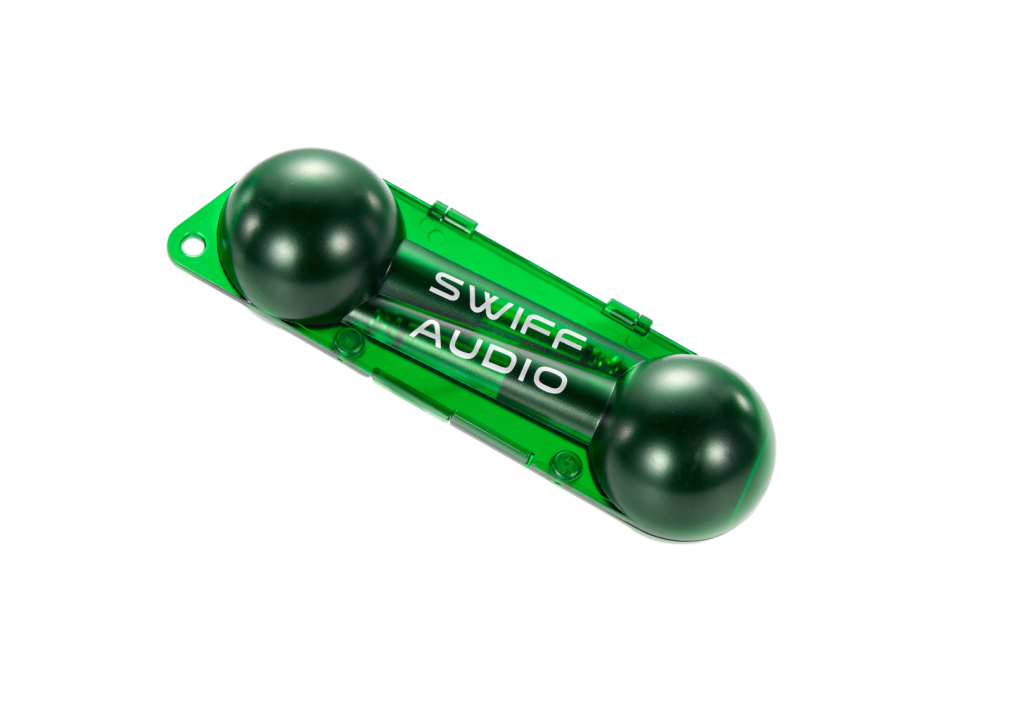
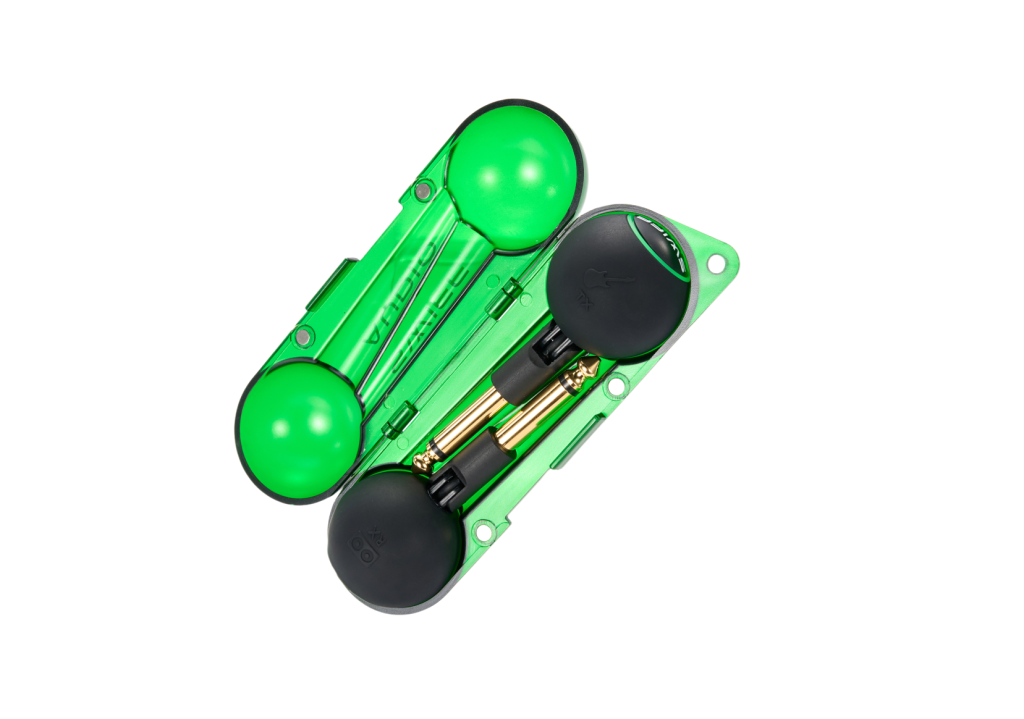
Swiff has clearly paid attention to the user experience here. The system arrives in a solid magnetic hard case, which immediately elevates the perception of the product. It’s a small thing, but for gigging musicians it matters more than it should. Wireless systems are exactly the kind of gear that usually ends up rattling around in gig bags, tangled with patch cables, adapters, and spare strings. Having a dedicated, secure, magnetic case makes it feel like a proper piece of professional gear rather than an afterthought.
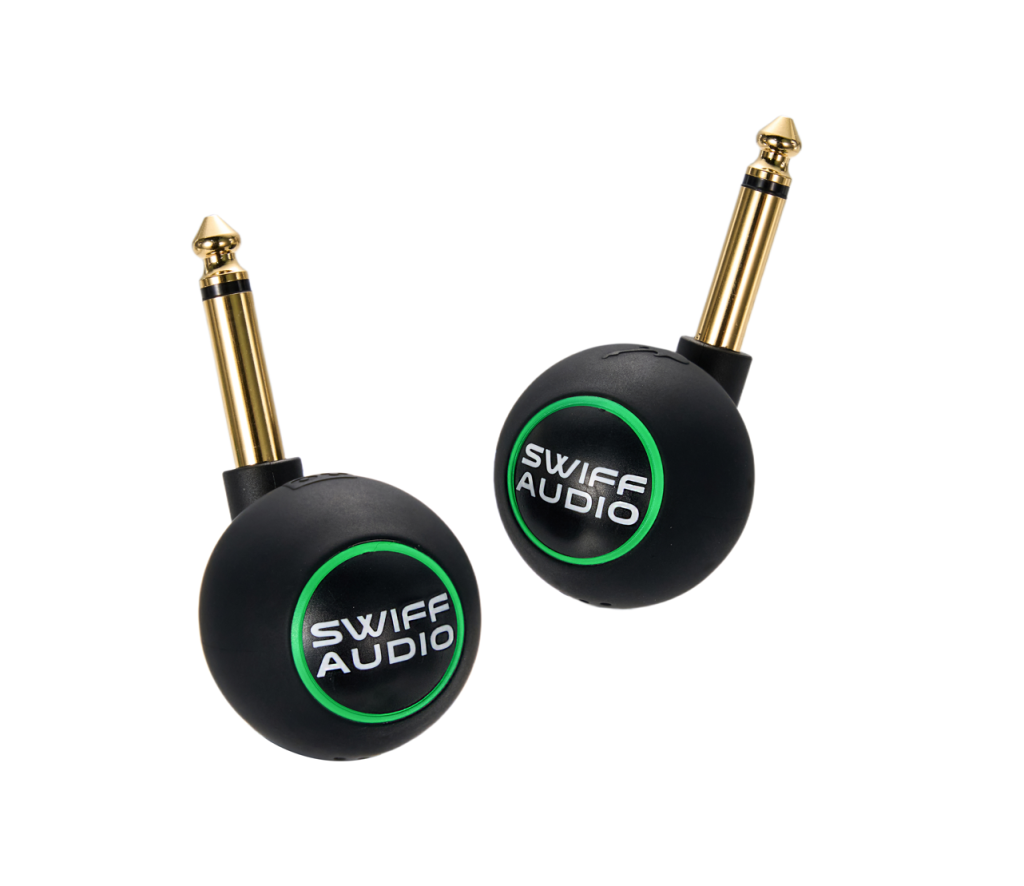
The units themselves also feel well put together. There’s a simplicity to the design that works in its favour. Nothing feels overly fragile or toy-like, and the large green LED indicator is a genuinely useful touch once you’re on stage. In low-light environments, it’s immediately visible — no squinting, no guessing. You know instantly whether you’re connected and powered.
That usability detail becomes more valuable the more you play live.
Why bass players are harder to convince
Bass is one of the most revealing instruments when it comes to signal chain compromises.
Most of the instrument’s fundamental energy sits in the low-frequency range — roughly from 40 Hz upward on a standard four-string, and even lower on five-strings. But the character of the sound isn’t just in the lows. The definition lives much higher, in the upper mids and transient range.
That balance is what makes wireless systems tricky.
If a system struggles, it usually shows up in one of three ways:
- the low end loses weight,
- the attack becomes softened or smeared,
- or the dynamic response feels compressed.
And bass players notice all three immediately.
Frequency response and tone
On paper, the WT09a covers the full 20 Hz–20 kHz range, and in practice it does a respectable job of preserving the full bandwidth of the instrument.
The important part isn’t just whether the lows are technically present — it’s whether they still feel authoritative. With the WT09a, the low end remains surprisingly intact. A low E still has weight, and a low B doesn’t collapse or thin out in any obvious way.
Where things get more interesting is in the midrange and upper mids.
This is where bass tone actually “speaks” in a mix. The growl of fingerstyle, the bark of a pick attack, and the snap of slap technique all live in this zone. The WT09a doesn’t destroy that information, but it does slightly smooth it. The edges are a little less sharp compared to a high-quality cable.
The result is a sound that is very slightly rounded, but still musical and usable.
In a full band mix, that subtle smoothing can actually work in your favour. It tends to sit bass in the pocket a little more gently, without pushing harsh frequencies forward.
Latency and playing feel
Latency is where many budget wireless systems fall apart for bass players.
Even small delays can affect groove perception, especially for players who rely heavily on physical timing and tactile response.
The WT09a feels immediate.
Swiff claims sub-4 ms latency, and while real-world perception is more important than spec sheets, the practical experience is that the system responds fast enough to disappear under your fingers. Fingerstyle feels locked in. Ghost notes remain tight. Slap playing retains its rhythmic punch without feeling detached from the instrument.
Once you’ve played for a few minutes, you stop thinking about latency entirely — which is exactly what you want.
Passive vs active basses
This is where the WT09a shows a bit of character.
With passive basses, the system feels at its best. Fender-style instruments, vintage pickups, and moderate-output signals all translate very naturally. The tone stays full, responsive, and predictable.
Active basses are a little more variable.
Hot onboard preamps or aggressive EQ boosts can push the input harder, and in some cases this introduces a slightly compressed or constrained feel. It’s not dramatic, but it is noticeable if you’re used to a very open signal path.
In practical terms, passive bass players will likely have a smoother experience overall, while active bass players should test it with their specific instrument and gain settings.
Real-world gig performance
This is not a touring-grade wireless system, and it doesn’t pretend to be.
But within its category, it performs confidently.
For rehearsals, club gigs, church services, pub stages, wedding bands, and small-to-mid venue work, it holds up well. Setup is quick, connection is stable under normal conditions, and the compact form factor makes it easy to integrate into a pedalboard-based rig.
Like all 2.4 GHz systems, it can still be affected by crowded wireless environments, but that’s a limitation of the format itself rather than something unique to this unit.
Battery life is solid enough for typical gigs, though not exceptional for extended multi-set situations.
The bigger picture: why this matters for bass players
What’s interesting about the WT09a isn’t that it revolutionises wireless technology. It doesn’t.
What it represents is something more practical — the point where affordable wireless systems finally become usable for bass without feeling like a compromise that constantly demands attention.
Older generations of wireless gear forced bass players to make a trade-off: convenience or tone. With systems like this, that gap is shrinking.
You still get a slightly different feel compared to a cable, but it’s no longer a disruptive difference. It becomes a preference, not a limitation.
Final verdict
The Swiff Audio WT09a sits in a very usable middle ground.
It won’t replace high-end touring wireless systems, and it won’t match a top-tier cable for absolute transparency. But it does something arguably more important for a lot of players: it makes wireless feel practical, reliable, and musically invisible enough to stop thinking about it.
For passive bass players especially, it’s an easy recommendation in its price range. For active bass users, it’s still a strong option, but one worth testing with your specific setup.
Either way, it marks another step in the direction of wireless becoming a normal part of the bass world rather than a compromise-heavy alternative.
If you’re looking for alternatives here on BassGearReviews.com check the following reviews:
– XVIVE A58 Wireless System: The evolution of wireless systems.