Disclaimer: This bass was kindly provided by Hartwood Guitars for the purpose of this review. However, this does not influence our opinions or the content of our reviews. We strive to provide honest, unbiased, and accurate assessments to ensure that our readers receive truthful and helpful information.
When I first heard of Hartwood, I was intrigued. Budget basses that don’t conform to the usual rules are exciting almost by default. The affordable end of the market is saturated with instruments that are essentially the same three designs copied endlessly with slightly different logos attached. So when Hartwood offered to send us the Hartwood Satellite bass for review, the answer was a pretty resounding yes.
Because immediately, this thing looked different.
Not “different for the sake of it,” either. The Satellite feels like somebody actually sat down and tried to design a bass with a coherent vintage-inspired identity instead of simply making yet another bargain-bin Precision clone. And honestly, that alone gives it a head start over a huge amount of the competition.
Check the price of the Hartwood Satellite here!
First Impressions
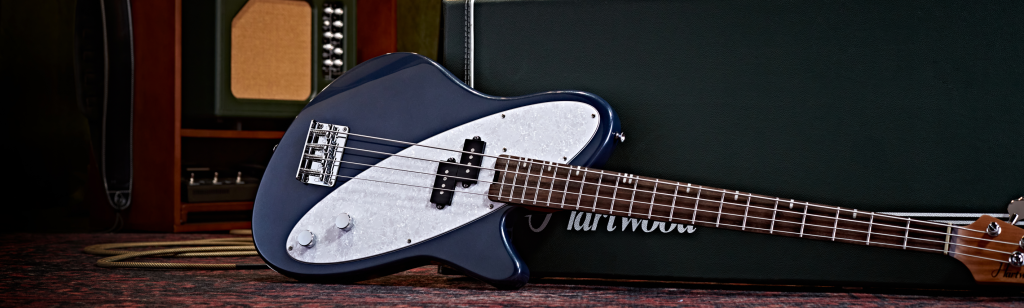
One of the biggest wins of the Satellite is the fact that it is unapologetically original. Instead of competing directly with a thousand indistinguishable P-Bass copies, it carves out its own niche with a distinctive retro-futuristic aesthetic that feels genuinely intentional.
That matters more than people sometimes realise. Budget instruments are often treated almost like commodities: same factory templates, same hardware, same layouts, same compromises. The Satellite doesn’t feel like that. It feels like someone actually cared about the visual concept and wanted it to stand apart.
And then you pick it up.
The Neck
The roasted maple neck is the real headline feature here.
Not because roasted maple itself is rare anymore, but because so many inexpensive instruments use it as little more than a marketing buzzword. Sometimes it feels like the wood has merely been shown a picture of a toaster and sent out the door.
Here, though, the neck is genuinely excellent.
It has that smooth, slightly dry, “already played in” feel that you normally associate with much more expensive instruments. Stability feels solid, the finish is comfortable without being sticky, and the overall impression is frankly kind of ridiculous for the money.
The wheel-style truss rod adjustment at the base of the neck is another touch you simply don’t expect at this price point. It’s one of those practical quality-of-life features that instantly makes setup work easier and makes you wonder why more manufacturers don’t do it.
Fretwork & Fingerboard
This is another area where the Satellite punches above its class.
The fretwork on this instrument is genuinely impressive for a budget bass. No sharp fret ends, no sprout, no nasty surprises anywhere along the neck. Everything feels neat, level, and properly finished.
The laurel fingerboard also deserves credit. Laurel often ends up looking dull or obviously “budget,” but Hartwood has done a surprisingly good job here. It presents nicely, complements the roasted maple neck well, and contributes to the overall premium feel of the instrument.
There’s also some nice attention to detail in the fret markers and finishing work that helps the whole thing feel more cohesive than you’d normally expect in this price bracket.
Body & Hardware
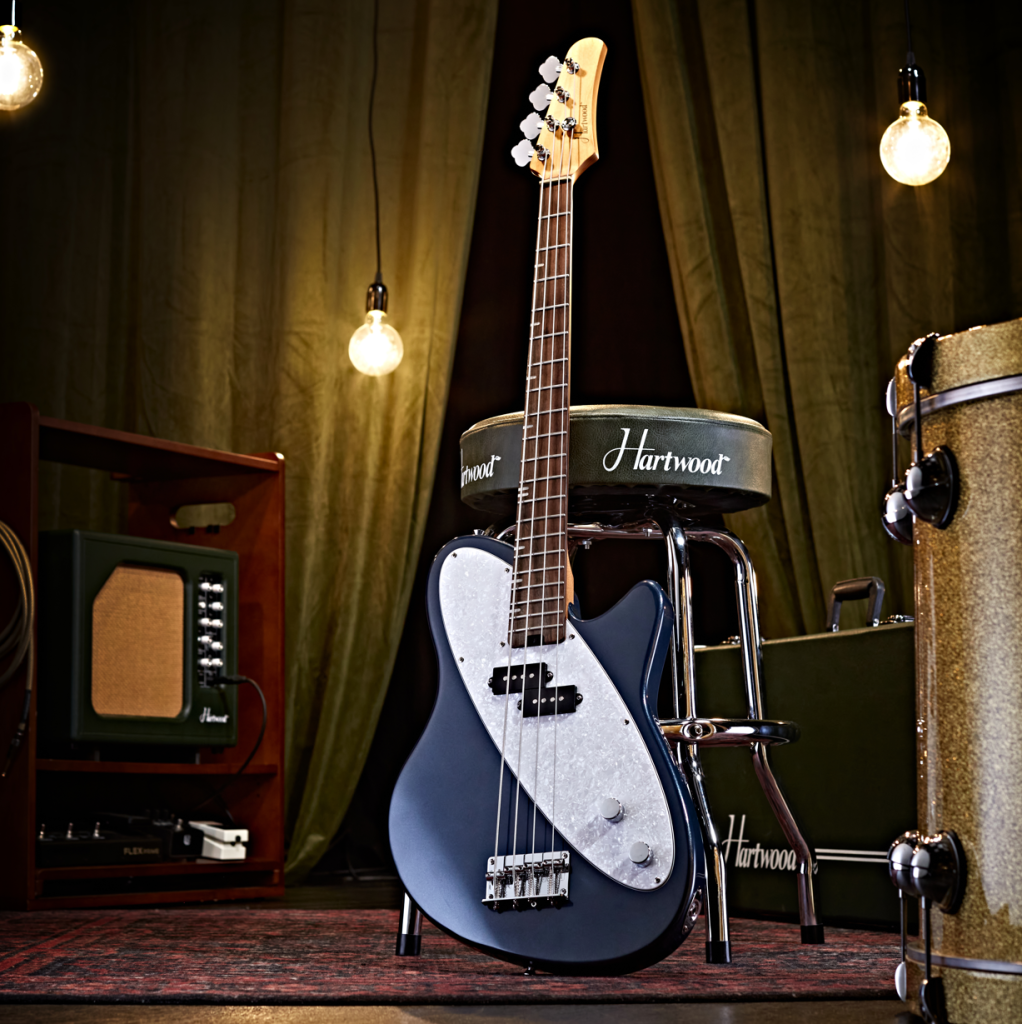
The body is basswood, which is hardly unusual at this level, but importantly it avoids that ultra-soft, “spongy” feel cheaper basswood instruments sometimes suffer from. The Satellite still feels reassuringly solid and balanced.
The hardware is a mixed bag, though there are pleasant surprises.
The knobs, for example, are actually really nice. They’re proper alloy knobs with grub screws instead of cheap push-on plastic affairs, and little details like that genuinely affect how an instrument feels in the hands. They also make future upgrades easier if you decide to swap electronics later down the line.
Fit and finish overall are surprisingly strong. The neck pocket is tight, everything feels well aligned, and electrically the bass behaves itself very well indeed.
On the amp, there were no pops, crackles, grounding issues or unexpected buzzing even while moving the bass around aggressively. Again, that’s not always guaranteed at this price.
Sound
The pickup configuration is interesting because although it uses a split-coil P-style pickup, it isn’t positioned exactly where a traditional Precision pickup would be.
The result is a tone that’s less boomy than you might expect and noticeably more mid-focused. There’s still warmth there, but it avoids getting muddy, and it actually sits in a mix surprisingly well.
Importantly, it doesn’t sound like a failed attempt at recreating a Fender Precision. It sounds like its own thing, which suits the whole philosophy of the instrument rather nicely.
Even the stock strings were unexpectedly decent. Most players will probably replace them eventually out of habit more than necessity, but unlike many budget instruments, the Satellite doesn’t arrive sounding like it’s wearing recycled fencing wire.
The Weak Spot
If there’s one area where the budget nature of the instrument really shows, it’s the tuners.
Even after restringing properly and setting witness points carefully, tuning stability still wasn’t particularly impressive. It’s not catastrophic, and fortunately replacement tuners are neither expensive nor difficult to fit, but this is definitely the weakest component on the bass.
The upside is that the problem is very fixable. A modest tuner upgrade would probably transform the overall experience entirely.
Modding Potential
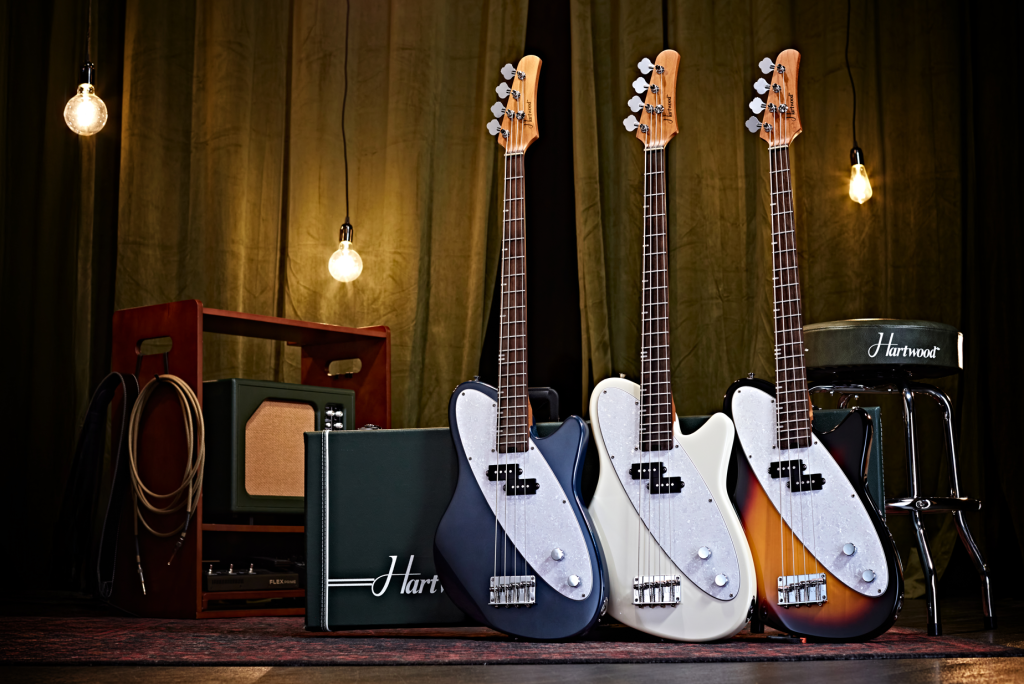
And that brings us neatly to one of the Satellite’s biggest strengths: it’s an absolutely fantastic modding platform.
The important thing is that the core of the instrument is already strong. The neck is excellent, the fretwork is solid, the body construction is good, and the electronics are surprisingly competent.
That means upgrades feel like enhancements rather than repairs.
Swap the tuners, maybe experiment with pickups or wiring later on, and you’ve suddenly got something that could comfortably punch far above its original price category.
That’s the difference between a cheap instrument and a thoughtfully designed affordable instrument.
Final Thoughts
The Hartwood Satellite bass succeeds because it avoids the biggest trap facing most budget basses: anonymity.
It doesn’t feel like a reluctant imitation of something more famous. It feels like a company trying to make something distinctive while still keeping it accessible, and honestly, that’s refreshing.
Yes, there are compromises. But the things that are difficult and expensive to get right — neck feel, fretwork, overall design identity — are exactly the areas where the Satellite performs best.
And in a market overflowing with forgettable clones, that originality alone makes it worth paying attention to.
If you’re interested in exploring more instruments in this range, you may also want to check out our detailed reviews of the Sire Marcus Miller lineup, including the versatile P6 4-string and the modern, feature-rich V6 5-string. Both instruments take a similarly forward-thinking approach to design and playability, while offering distinct voices and performance characteristics that may appeal to different playing styles.
Get your Hartwood Satellite bass from Gear4Music Today!
You can read the full reviews here: