The Chorus Pedal That Quietly Gets the Job Done
When people start talking about bass chorus pedals, the conversation usually heads straight towards boutique offerings or whatever the latest multi-effects unit happens to be. Meanwhile, the humble Boss CEB-3 just keeps turning up on pedalboards, surviving decades of changing trends without making much of a fuss.
I’ve spent plenty of time with the CEB-3 over the years, and it’s one of those pedals that reminds you not every effect has to shout to earn its place.
Built Like… Well, a Boss Pedal
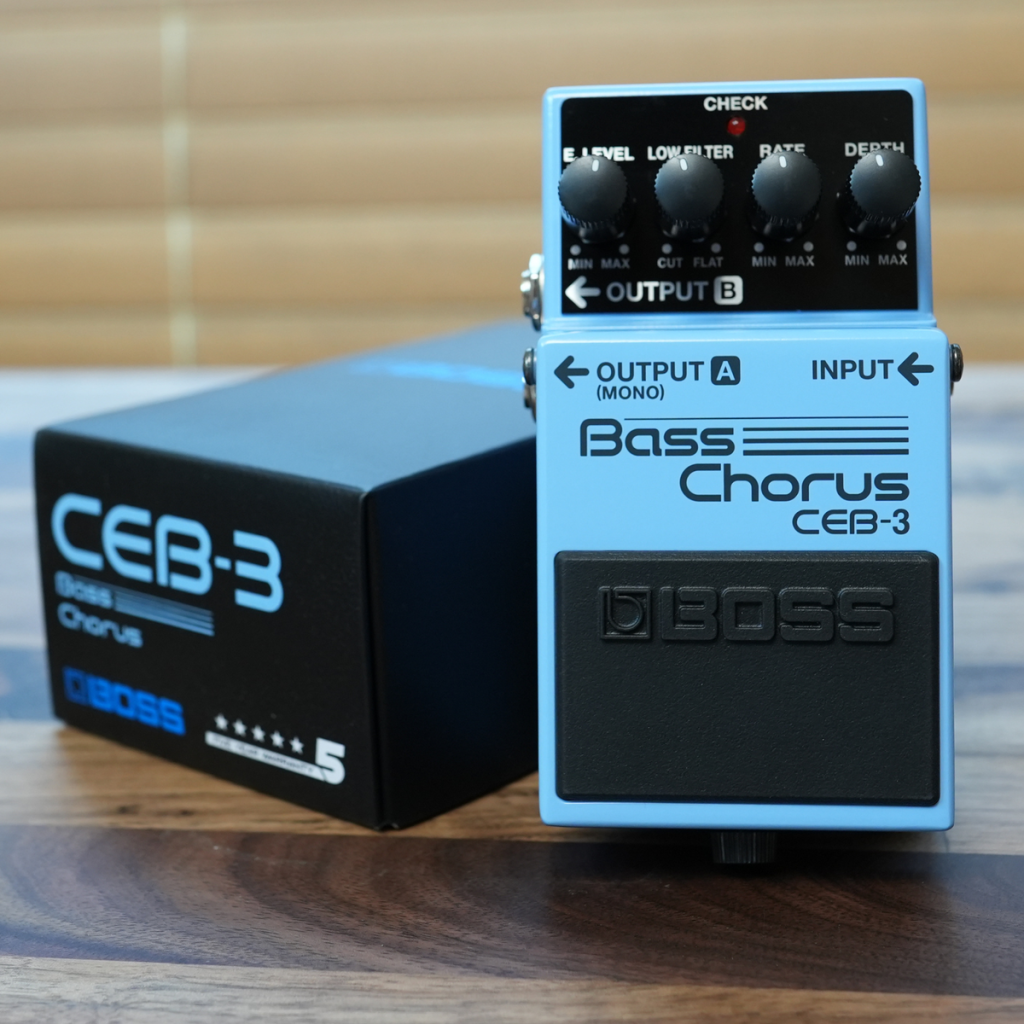
There’s not a lot to say here that hasn’t already been said. It’s a Boss compact pedal, so you already know what you’re getting.
Metal enclosure? Check.
Rock-solid footswitch? Check.
Battery compartment that’s somehow impossible to access? Also check.
I’ve seen Boss pedals survive years of gigs, rehearsals and being thrown into gig bags without complaint. The CEB-3 is no different.
The Controls
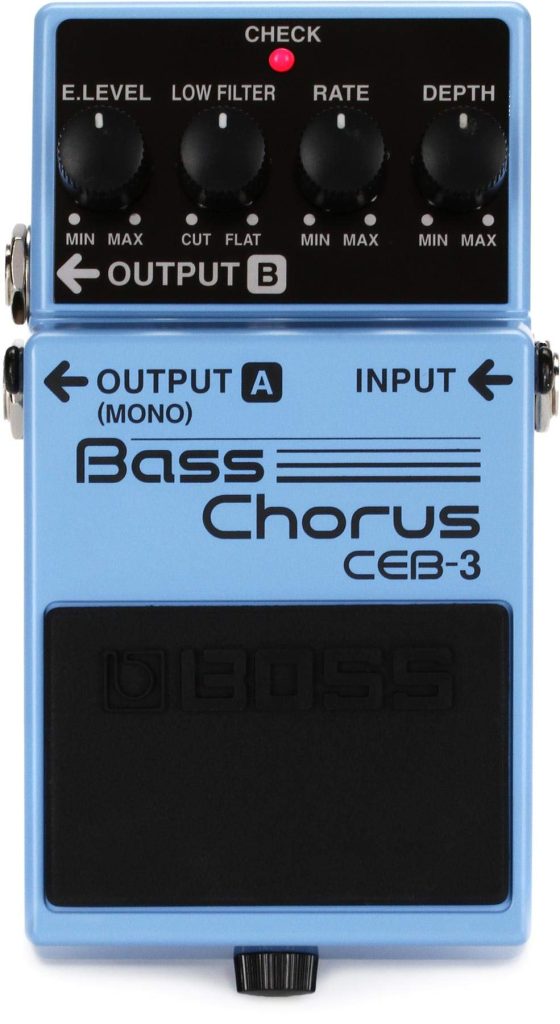
Boss has kept things refreshingly simple:
- Effect Level
- Low Filter
- Rate
- Depth
The interesting control is the Low Filter. Rather than acting like a traditional tone control, it determines how much of your low-frequency signal remains clean while the higher frequencies receive the chorus treatment.
It’s a clever design because bass players generally don’t want their entire sound wobbling around. We need the bottom end to stay anchored, and the Low Filter lets you dial in exactly how much of that solid foundation stays untouched.
So… How Does It Sound?
This isn’t the lush, over-the-top chorus that instantly screams “1980s.”
Instead, it’s subtle.
Sometimes very subtle.
At lower settings, you almost forget it’s on—until you switch it off. Suddenly your bass feels a little flatter and less spacious. That’s probably the CEB-3’s greatest strength. It adds movement without getting in the way.
Push the Depth and Rate controls further and it becomes much more obvious, although I’d argue its sweet spot is somewhere in the middle. This is a pedal that rewards restraint.
Fingerstyle playing benefits particularly well. Chords gain a little width, melodic passages become more atmospheric, and fretless bass sounds wonderfully smooth.
Slap players may find themselves wanting something more dramatic, but for general bass duties, the CEB-3 sits nicely in the mix without demanding attention.
What I Like
The biggest compliment I can give the CEB-3 is that it sounds like it was designed by people who actually play bass.
Keeping the lowest frequencies largely unaffected means your tone doesn’t suddenly disappear when the chorus is engaged. That’s something older guitar chorus pedals often struggled with when pressed into bass service.
It’s also remarkably quiet. Even after all these years, Boss still knows how to build dependable analogue pedals.
Anything I Don’t Like?
If you’re chasing huge, swirling chorus sounds, this probably isn’t your pedal.
Some players even dismiss it as being “too polite.”
I understand the criticism, but I think that’s missing the point. The CEB-3 was never trying to compete with enormous ambient chorus units. It’s designed to enhance your bass tone rather than completely transform it.
That said, the Low Filter control can take a little experimentation before it really clicks. Once you understand what it’s doing, though, it becomes one of the pedal’s most useful features.
Is It Still Worth Buying?
Absolutely.
In an era where many pedals seem determined to include Bluetooth, presets, companion apps and enough flashing LEDs to guide aircraft, there’s something rather refreshing about plugging in a CEB-3, turning four knobs and immediately getting a usable sound.
You can usually find them second-hand for sensible money too, which makes them one of the better-value chorus pedals available.
No, it’s not flashy. No, it won’t become the centrepiece of your pedalboard.
But if you’re after a dependable chorus that keeps your low end intact and simply makes your bass sound a little bigger and more interesting, the Boss CEB-3 still deserves its reputation.
Final Thoughts
The Boss CEB-3 has never been the loudest voice in the room, and perhaps that’s exactly why it’s endured. It does its job with minimal fuss, leaves your core tone intact, and delivers exactly the kind of tasteful chorus that works in real bands rather than just bedroom demos.
Not every pedal needs to reinvent the wheel. Sometimes it just needs to make you smile when you step on it.