Compact size, serious routing power, and one of the most underrated bass rigs on the market.
Disclaimer: This pedal was kindly provided by Hotone for the purpose of this review. However, this does not influence our opinions or the content of our reviews. We strive to provide honest, unbiased, and accurate assessments to ensure that our readers receive truthful and helpful information.
There’s a very specific type of bass player the Hotone Ampero II Stomp immediately makes sense for: the player who is tired of hauling a heavy pedalboard and amp to every rehearsal, the player who wants a reliable direct solution without sacrificing feel, or the player who needs modern routing flexibility without spending flagship-modeler money. After spending serious time with the Ampero II Stomp from a bass perspective, it genuinely feels like Hotone has built one of the strongest value-for-money compact modelers currently available.
Most reviews approach this unit from a guitar-first perspective, which honestly misses where the Ampero II Stomp becomes most interesting. For bass players, especially those using modern signal chains, parallel processing, IRs, and direct-to-FOH rigs, the platform offers far more than its size or price initially suggests.
First Impressions
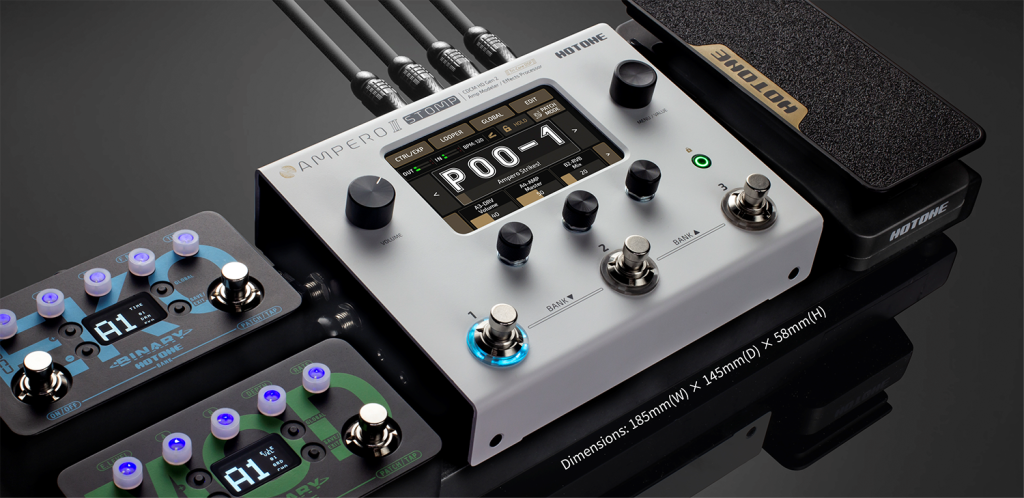
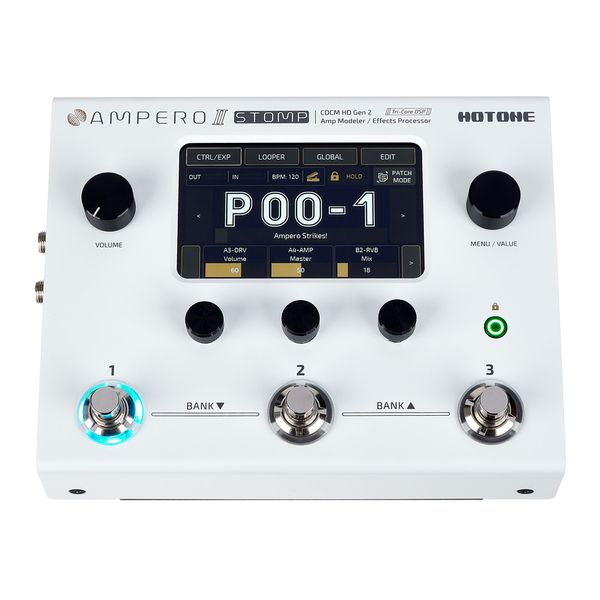
The first thing that stands out is the size. The Ampero II Stomp is compact enough to fit on almost any pedalboard, but unlike many small-format modelers, it doesn’t feel compromised. The aluminum chassis feels solid, the touchscreen is responsive, and the layout feels intentionally designed for live musicians rather than simply shrinking down a larger desktop interface.
That matters more than people sometimes realize. A lot of compact modelers sound excellent in demos but become frustrating during actual rehearsals or gigs because of tiny screens, awkward menu structures, or routing systems that slow everything down. The Ampero II Stomp avoids most of those issues. Within a short amount of time, editing patches starts feeling natural instead of technical, which is one of the reasons this unit works surprisingly well for bass players.
Core Features
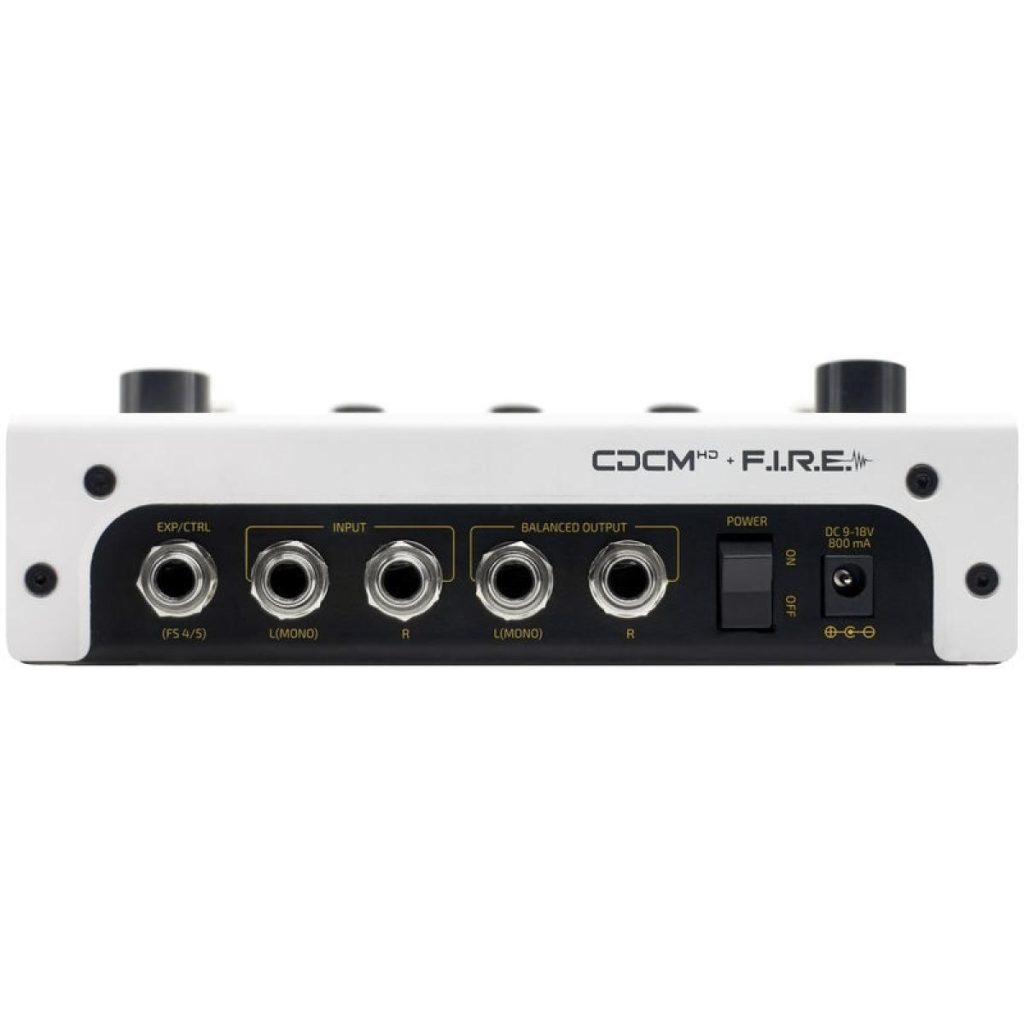
The Ampero II Stomp is built around Hotone’s CDCM HD and F.I.R.E. modeling platform, running on a tri-core DSP architecture with ESS Sabre converters. In practical use, that translates into solid dynamic response, low noise operation, convincing amp feel, and cabinet simulations that sound far more polished than earlier generations of budget modelers.
Hotone includes 87 amp models, 68 cabinet models, over 100 pedal models, and more than 400 effects overall. The unit supports up to 12 simultaneous effect slots alongside stereo operation, parallel and serial routing, third-party IR loading, USB audio functionality, MIDI support, a stereo effects loop, and 300 onboard presets. On paper, that already makes it competitive in the compact-modeler category, but for bass players specifically, the routing flexibility is where the unit becomes genuinely compelling.
The Bass Experience
The obvious question is whether the Ampero II Stomp actually works well for bass. The answer is yes, although perhaps not in the exact way some players expect.
If you are looking for an ecosystem with dozens of dedicated bass amp models, ultra-deep parameter editing, and an enormous community-built preset library, the Ampero II Stomp does not fully compete with other similar ecosystems. The bass-specific content is smaller, and some of the stock presets clearly lean more toward guitar applications.
However, what Hotone has built is a platform flexible enough to create excellent bass tones if you understand how modern bass rigs function. Once you stop thinking about the unit as a preset machine and start approaching it as a routing and processing platform, the Ampero II Stomp becomes significantly more impressive.
Parallel Routing Is the Real Story
For bass players, the real strength of the Ampero II Stomp is the routing architecture. Most experienced bass players eventually discover that distortion and heavy processing sound dramatically better when the low end remains intact. Parallel routing solves that problem, and the Ampero II Stomp makes those setups unusually easy to build.
You can split clean and distorted paths, run compressed clean lows underneath aggressive drive tones, blend multiple amp models together, integrate external pedals through the effects loop, or build wet/dry ambient rigs while preserving low-frequency punch. These are the kinds of workflows that traditionally require expensive switching systems or large pedalboards, yet the Ampero II Stomp handles them internally with surprisingly little friction.
What makes the experience particularly strong is the touchscreen interface. Routing feels visual and immediate instead of technical. Dragging effects around the chain, splitting paths, and adjusting blends becomes intuitive very quickly, and that ease of use gives the unit a major advantage over some menu-heavy competitors.
Amp Models for Bass
The bass amp selection itself is not enormous, but the core sounds are absolutely usable. The Ampeg-style models are the obvious starting point and deliver the familiar low-mid authority most players expect. Cleaner amp models also work especially well once paired with quality third-party bass IRs.
That last point is important because while the stock cabinet simulations are decent, the Ampero II Stomp improves noticeably with external IRs. Once you load good bass cabinet IRs, the overall realism, depth, and mix placement improve dramatically, particularly through studio monitors or in-ear systems.
The platform supports third-party IRs with up to 2048 sampling points, which helps bass cabinets retain more low-frequency realism and detail than older-generation loaders. At that point, the Ampero II Stomp starts sounding significantly more expensive than it actually is.
The Effects
The effects section is where the experience becomes slightly more mixed, although still largely positive from a bass perspective. The compressors are solid and completely giggable, even if they do not quite reach the feel or refinement of premium standalone units. EQ options are flexible and especially valuable for direct rigs, where precise control over low mids and high-end presence becomes critical.
The modulation and ambient effects are surprisingly strong. Chorus, delays, reverbs, and synth-adjacent textures work extremely well for modern bass applications, especially for worship, progressive, or cinematic styles. The Cloud reverb in particular sounds more musical and spacious than expected at this price point.
The drives are somewhat inconsistent. Some sound genuinely excellent, while others feel more guitar-oriented and require careful EQ management to avoid losing low-end clarity. Again, this is where the routing flexibility becomes essential because parallel clean blending solves many of those issues immediately.
Workflow and User Interface
This is probably the Ampero II Stomp’s strongest overall category. Hotone clearly understood that modern players do not want to spend hours buried inside manuals and submenus. The touchscreen is not merely good for a pedalboard unit; it is legitimately excellent and behaves more like a modern tablet interface than traditional multi-effects hardware.
Editing patches feels fast, routing is visual, and effect placement becomes second nature after very little practice. Even advanced parallel setups remain approachable, which is a major advantage for bass players experimenting with crossover concepts, wet/dry rigs, or multi-amp configurations.
Many compact modelers sound fantastic but become exhausting because the workflow slows creativity. The Ampero II Stomp succeeds because it encourages experimentation rather than interrupting it.
Live Performance Use
The Ampero II Stomp works extremely well as an ampless rig, a backup rig, a silent-stage solution, or the centerpiece of a compact touring board. The balanced outputs, stereo routing, and direct-to-FOH capability make it easy to integrate into professional live environments.
Because the unit is compact and lightweight, it also feels genuinely practical for working musicians. This is not one of those systems that requires an entire dedicated board and oversized flight case. You can realistically build a complete touring bass setup around it while still keeping your rig portable.
The onboard footswitch system is straightforward and functional, although players heavily dependent on advanced scene or snapshot workflows may still prefer larger Line 6 or Fractal systems. For most bass players, however, the Ampero II Stomp already offers more flexibility than they are likely to use during a live set.
Recording and USB Audio
The built-in USB interface is another major strength. The Ampero II Stomp functions as an 8-in/8-out USB audio interface, which dramatically simplifies home recording and mobile production setups.
You can record direct bass tracks, monitor processed signals, re-amp performances, or build complete demo sessions without needing additional hardware. For bass players producing content online or working remotely, that flexibility becomes extremely valuable.
Importantly, the converters themselves are respectable. The overall recorded sound feels clean, modern, and open rather than harsh or compressed, which is not always guaranteed in compact multi-effects units.
DSP and Performance Limitations
The Ampero II Stomp is powerful for its size, but it still has practical limits. Complex patches involving multiple amps, high-resolution IRs, pitch effects, and large ambient chains can eventually push the available DSP.
Bass players using advanced parallel processing with octave effects, synth-style modulation, or dual-amp configurations may encounter those limitations faster than guitar players. That is one of the tradeoffs compared to larger flagship systems.
Additionally, while the overall effects quality is strong, some bass-specific algorithms and pitch-based effects still lag behind higher-end competitors in refinement and realism. Still, for realistic gigging and recording scenarios, the available processing power is generally more than sufficient.
Real-World Applications
The Ampero II Stomp arguably makes the most sense for modern bass workflows. Metal bass players will immediately appreciate the parallel distortion possibilities, clean low-end preservation, aggressive EQ shaping, and direct FOH functionality. The platform naturally supports the kind of split-band processing commonly used in modern heavy music.
It also performs extremely well for worship and ambient bass applications thanks to its spacious stereo effects and polished modulation algorithms. Session musicians and traveling players will likely appreciate the portability and flexibility even more because the unit can realistically replace a large portion of a traditional rig while remaining easy to transport.
Things That Could Be Better
No review should pretend the Ampero II Stomp is flawless. The bass ecosystem surrounding the platform is still relatively small compared to similar products, meaning there are fewer bass-focused presets, fewer community-created patches, and less educational content specifically aimed at bass players.
Some effects also still feel guitar-centric in their default voicing and require more tweaking than ideal. The three onboard footswitches are functional but somewhat limiting for players who need extensive live control, which means some users will eventually want external MIDI controllers.
Finally, while Hotone continues improving the platform through firmware updates, the overall ecosystem still feels younger than more established competitors. For players heavily invested in long-term expansion and community support, that may still matter.
The Important Part: Feel
One area that spec sheets rarely explain properly is whether a piece of gear is actually enjoyable to use. The Ampero II Stomp absolutely is.
The touchscreen is responsive, the routing is immediate, and tones come together quickly. More importantly, the unit encourages experimentation. You start building patches and suddenly find yourself testing dual cabs, split-band distortion setups, modulation layers, and ambient signal chains simply because the workflow makes it easy.
A lot of digital gear sounds impressive but still feels clinical. The Ampero II Stomp feels creative, and that difference matters far more in long-term use than most players initially expect.
Conclusion
The Hotone Ampero II Stomp is one of the most underrated compact modelers currently available for bass players. Not because it outperforms every flagship unit on the market, but because it delivers an enormous amount of real-world functionality in a compact, affordable, and genuinely usable format.
For bass players willing to build their own tones instead of relying entirely on presets, the Ampero II Stomp becomes an extremely powerful platform. Once you start taking advantage of the parallel routing, third-party bass IRs, split-band processing, hybrid pedalboard integration, and direct-to-FOH workflows, the unit reveals just how flexible it actually is.
The result is a rig that can realistically replace a traditional amp, a large pedalboard, a recording interface, a backup setup, and even a travel rig inside a single compact enclosure.
That alone makes it very impressive!
Get Your Hotone Ampero II Stomp on Amazon Now!
If you’ve enjoyed this review, make sure to check out other similar product reviews here on BassGearReviews.com
- Valeton GP-5 Multi Effects – Surprisingly powerful mini multi effects pedal.
- Valeton GP-50 Multi Effects – Evolution of the powerful GP-5.
- Valeton GP-150 Multi Effects – The GP series option for expression pedal lovers.