The Modern Bass Front End
If the LUCE is Jad Freer Audio’s exercise in restraint, the CAPO is the company’s statement piece.
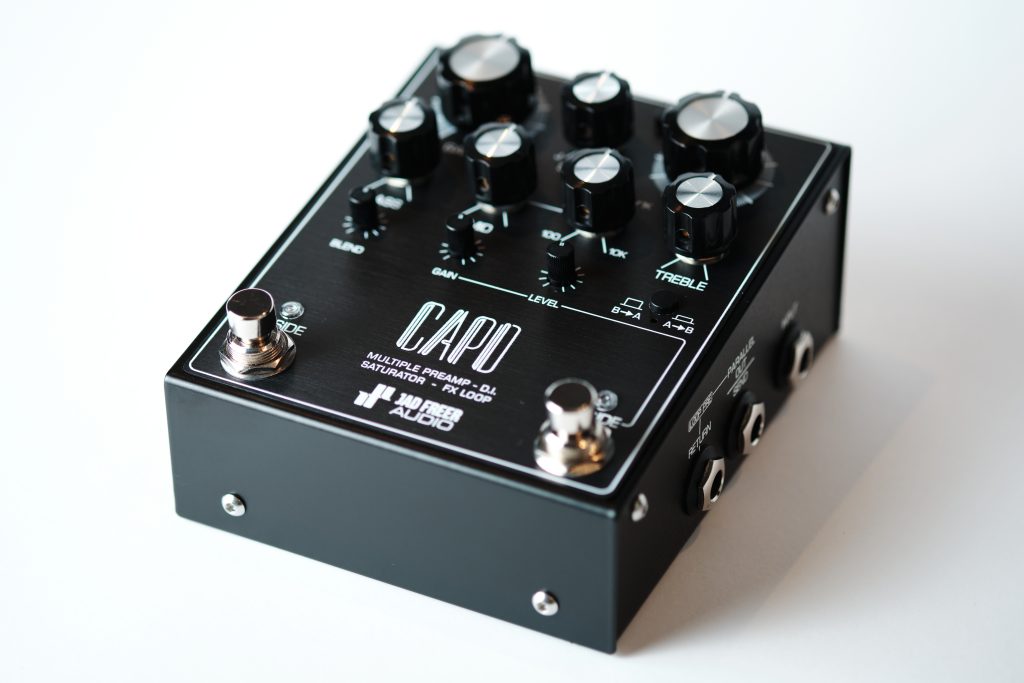
At first glance, the two products almost seem to come from different design philosophies. The LUCE focuses on refinement, taking an already good signal and elevating it through a carefully designed tube and transformer circuit. The CAPO, on the other hand, is unapologetically ambitious. It presents the player with multiple gain stages, extensive routing possibilities, studio-grade EQ controls, saturation circuits, parallel processing options, and a level of flexibility that can initially seem almost excessive.
But after spending time with it, you begin to realize that the CAPO’s complexity isn’t there for the sake of complexity. Every control exists because Jad Freer is trying to solve a very specific modern problem.
For decades, bass players built their sound around amplifiers. The amp was the heart of the rig. It shaped the feel, the response, the dynamics, and the way the instrument sat in a mix. A DI box was often little more than a practical necessity—a way to get a signal to the front-of-house engineer.
Today’s reality is very different.
Many players perform on silent stages. Others rely on in-ear monitoring systems, record directly into interfaces, or move between different backline amplifiers every night. Consistency has become more important than ever, and the center of the bass rig has gradually shifted away from the amplifier and toward the pedalboard.
The CAPO feels like a product designed specifically for that world.
It isn’t simply a bass preamp. It isn’t just a DI box. It isn’t merely an overdrive pedal with some extra features attached. The easiest way to understand it is as a complete bass front end—a device designed to take responsibility for everything that happens between your instrument and the rest of the audio chain.
That distinction is important because it explains almost every design decision inside the pedal.
More Than a Preamp
One of the first misconceptions people have about the CAPO is that it’s supposed to provide a particular sound.
Many bass preamps are built around exactly that idea. You buy them because they deliver a recognizable tonal character. Whether it’s a vintage tube-inspired warmth, a modern hi-fi voice, or a particular overdriven texture, the product’s identity is tied directly to its sound.
The CAPO approaches the problem differently.
Instead of presenting a single tonal signature, it gives the player an enormous amount of control over how the signal behaves.
That may sound like a subtle distinction, but in practice it changes everything.
When musicians talk about a bass feeling “alive,” “responsive,” or “amp-like,” they’re often describing the way harmonics, dynamics, and transient response interact. These qualities don’t come from EQ alone. They emerge from the way gain stages react to the signal and how different parts of the audio chain influence one another.
This is where the CAPO begins to separate itself from many other preamps on the market.
Internally, it behaves less like a single preamp and more like multiple gain structures working together. Rather than simply boosting or cutting frequencies, the pedal allows the player to shape the harmonic architecture of the signal itself.
That sounds like something only an engineer would care about, but the effect is immediately noticeable beneath your fingers.
Notes feel denser without becoming compressed. Harmonics become richer without turning into obvious distortion. The attack remains articulate, yet the instrument develops a sense of weight and authority that can be difficult to achieve with conventional EQ alone.
It’s a design philosophy rooted far more in studio engineering than traditional pedal design.
Understanding the Saturation Philosophy
Perhaps the best way to understand the CAPO is to stop thinking about distortion and start thinking about saturation.
The two concepts are related, but they aren’t the same thing.
Many overdrive pedals create their character by introducing clipping. As gain increases, the signal becomes increasingly compressed and distorted. This can be effective, but it often comes at the expense of dynamic response and low-frequency clarity.
The CAPO takes a more nuanced approach.
Its gain stages feel closer to what happens when a great studio preamp, a recording console, or a tube amplifier begins to work harder. Harmonics emerge gradually. Compression increases naturally. The signal thickens and develops complexity, but the instrument never loses its sense of touch sensitivity.
This is one of the reasons so many players describe the CAPO as feeling “amp-like.”
When you dig into the strings, the pedal responds. When you back off, it cleans up naturally. The relationship between the player’s hands and the signal remains intact.
That responsiveness becomes especially apparent during long playing sessions. Rather than sounding like an effect layered on top of your bass, the saturation becomes part of the instrument’s behavior.
The result is a signal that feels larger, richer, and more dimensional without sounding obviously processed.
The J and F Personalities
A large part of the CAPO’s flexibility comes from its different saturation voices.
Rather than offering a single drive character, the pedal provides distinct personalities that allow players to emphasize different aspects of their sound.
The J voicing tends to feel expansive and modern. The low end extends effortlessly, the overall presentation feels broad and open, and there is a certain smoothness through the midrange that gives the bass a sense of scale.
The F voicing approaches things from a different angle.
Where the J side feels wide and relaxed, the F side feels focused and assertive. Midrange information moves forward, articulation becomes more pronounced, and the bass occupies space in a mix with greater authority.
Neither approach is inherently better than the other. They simply emphasize different priorities.
What makes the CAPO particularly compelling is that it doesn’t force players to commit exclusively to one philosophy. The interaction between these voices allows for a remarkable range of textures, from pristine studio cleanliness to harmonically rich drive tones that remain articulate and controlled.
Rather than behaving like preset EQ curves, these voices feel more like different amplifier personalities that can be blended and explored.
The more time you spend with the pedal, the more you begin to appreciate just how much tonal territory exists between those extremes.
A Studio EQ in Pedal Form
The EQ section further reinforces the idea that the CAPO was designed by people who spend a great deal of time thinking about recorded sound.
Many bass preamps offer EQ controls that produce dramatic results with minimal effort. A slight adjustment can immediately transform the character of the instrument.
The CAPO takes a more deliberate approach.
Its EQ feels less like a special effect and more like a precision tool.
The semi-parametric midrange section is particularly revealing. Rather than locking the player into fixed frequencies, it allows careful shaping of the areas that matter most in a mix. Muddy low mids can be cleaned up, articulation can be enhanced, and problem frequencies can be addressed without fundamentally altering the identity of the instrument.
The deep and bright controls follow a similar philosophy.
Deep doesn’t simply add more bass. It adds weight and foundation while preserving clarity. Bright doesn’t create artificial sheen or harshness. Instead, it introduces presence and detail in a way that remains musical and controlled.
These may seem like small distinctions, but they become increasingly important as volume levels rise or recording sessions become more demanding.
The CAPO rarely feels like it’s fighting the source material.
Instead, it feels like it’s helping the source material reveal its best qualities.
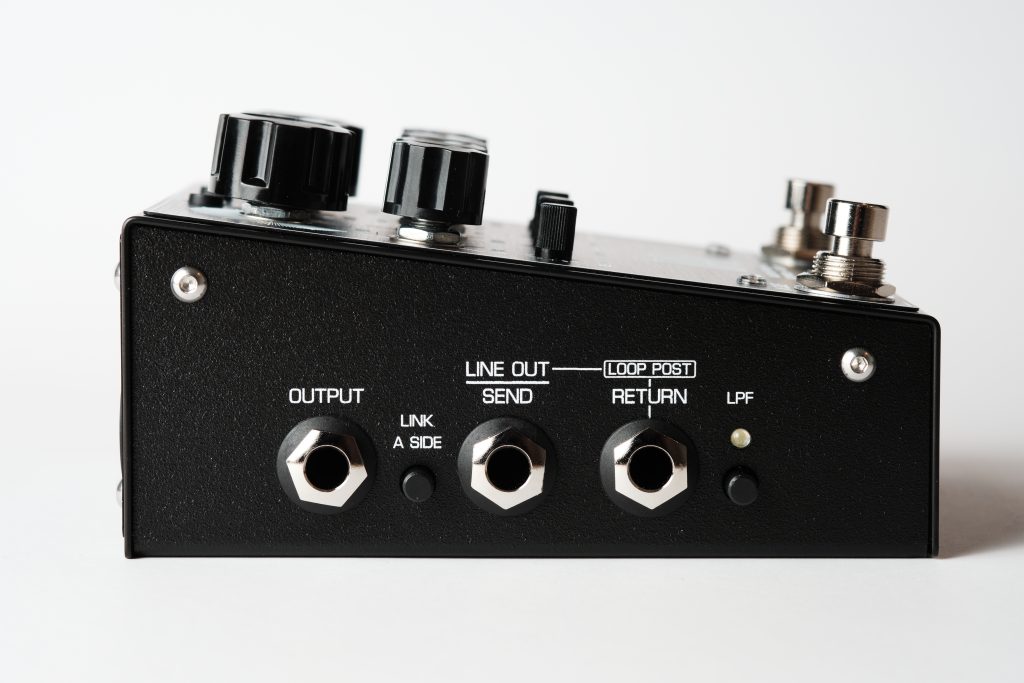
Why the Routing Matters
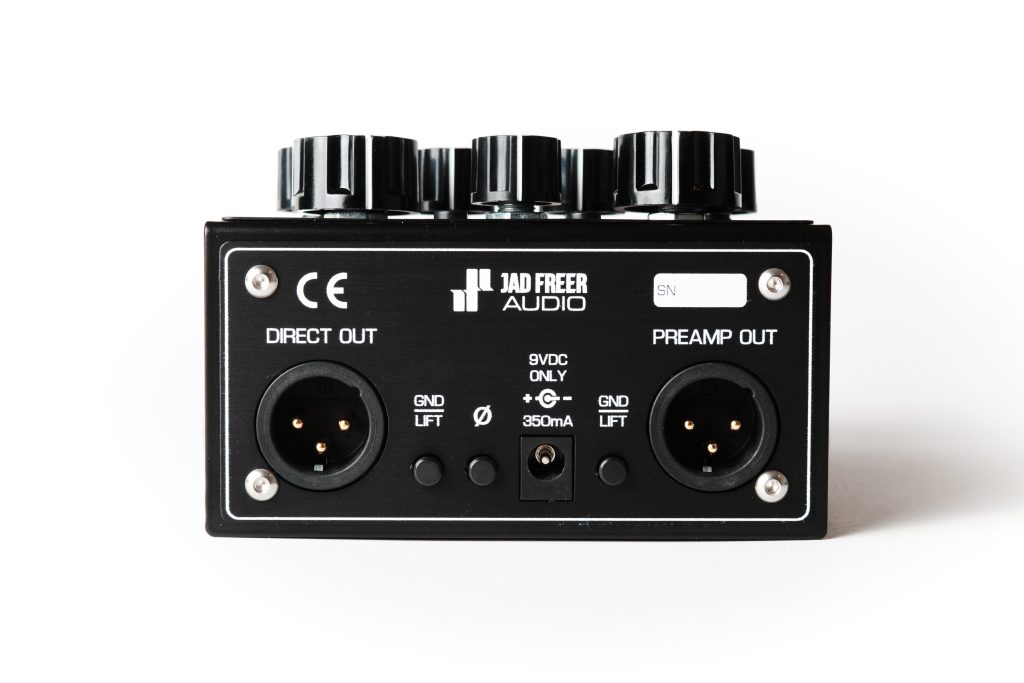
If there is one aspect of the CAPO that initially intimidates players, it is probably the routing flexibility.
At first glance, the various signal paths, loops, outputs, and configuration options can appear daunting.
The temptation is to view them as advanced features that only matter to studio engineers or professional touring musicians.
In reality, they reveal one of the pedal’s greatest strengths.
Most bass pedals assume a fixed signal path. Your sound enters the pedal, gets processed, and exits the other side.
The CAPO views signal flow as part of the creative process.
The ability to run clean and saturated signals simultaneously, maintain low-end integrity while introducing harmonic complexity, isolate effects to specific portions of the signal chain, or send different outputs to different destinations opens up possibilities that simply don’t exist on many conventional bass preamps.
For players running modern rigs, these options can be transformative.
A pristine signal can be sent directly to front of house while a separate processed output feeds an amplifier. Effects can be inserted without compromising clarity. Parallel processing can be achieved without requiring multiple additional devices.
What initially appears complicated gradually begins to feel logical.
The pedal isn’t demanding that you use every available option. It simply ensures that the options exist when your rig grows sophisticated enough to need them.
Living With the CAPO
The most interesting thing about the CAPO isn’t any individual feature.
Many pedals impress immediately. They deliver a dramatic tonal change, create an obvious effect, and leave a strong first impression.
The CAPO’s strengths often reveal themselves more gradually.
The bass starts sitting better in mixes. Engineers need less corrective EQ. Recorded tracks require less processing. Live sound becomes more consistent. The instrument feels more responsive beneath the fingers. You begin noticing that settings which sounded almost subtle in isolation are making significant contributions once the bass exists alongside drums, guitars, keyboards, and vocals.
This is where the pedal’s studio heritage becomes impossible to ignore.
It wasn’t designed to create impressive solo demonstrations. It was designed to make bass work exceptionally well in real musical environments. And in that regard, it succeeds remarkably well.
On Stage and In the Studio
Although the CAPO performs exceptionally in live situations, its strengths become even more apparent in recording environments.
The harmonic richness generated by the saturation stages translates beautifully when captured directly. Tracks feel more complete before any processing has been applied. The low end remains controlled, the midrange stays articulate, and the overall signal carries a sense of polish that often reduces the need for corrective work later in the mixing process.
This doesn’t mean the pedal belongs exclusively in studios.
On stage, it functions as an incredibly capable command center. It provides consistency from venue to venue, delivers a high-quality signal to front of house, and gives players confidence that their core sound remains intact regardless of the backline situation.
The fact that it excels in both environments is part of what makes it so unusual.
The CAPO somehow manages to feel equally at home on a festival stage, in a professional studio, or on a carefully constructed pedalboard in a home recording setup.
Who Is It Really For?
The CAPO occupies a very specific place in the bass world.
It isn’t aimed at beginners looking for their first preamp, nor is it designed for players who simply want a quick way to add overdrive or basic EQ shaping.
Instead, it appeals to musicians who already have a clear sense of their sound and want deeper control over how that sound is presented.
It rewards curiosity. It rewards experimentation. Most importantly, it rewards players who care about the relationship between tone, dynamics, and feel.
For those players, the learning curve quickly transforms into one of the pedal’s greatest strengths.
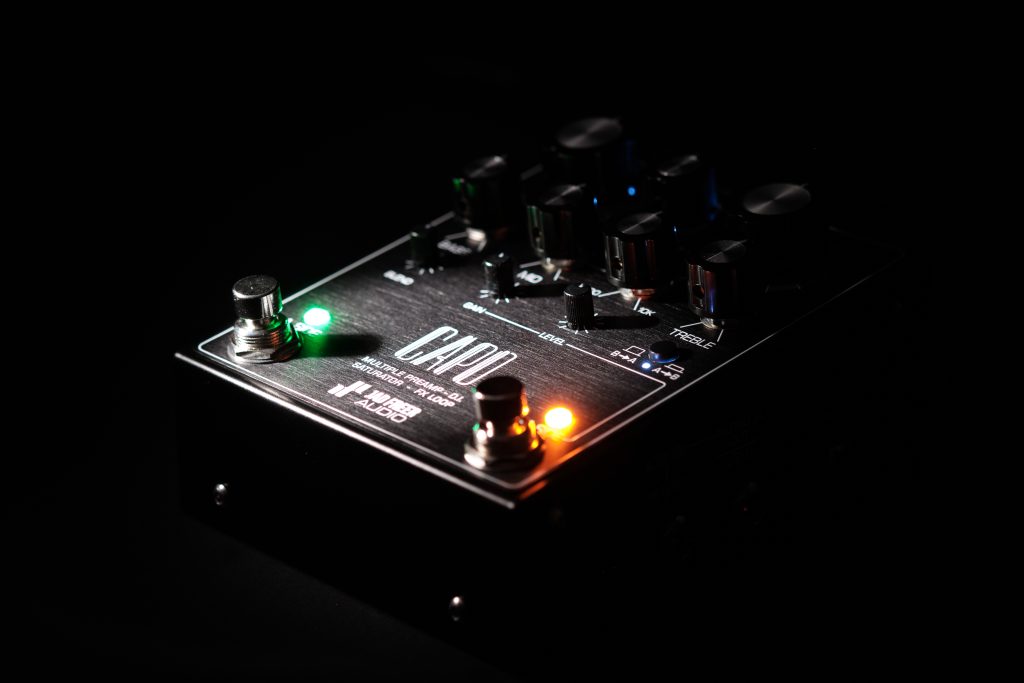
Final Thoughts
The Jad Freer CAPO is one of the most ambitious bass preamps currently available. Not because it contains more features than its competitors, although it certainly does. And not because it offers more routing flexibility, although that is also true. What makes it special is that every aspect of the design serves a coherent philosophy.
The pedal is built around the idea that a bass signal should not merely be amplified or processed. It should be shaped, refined, and prepared to exist within a professional musical environment.
That philosophy influences everything from the gain architecture to the saturation circuits, from the EQ section to the routing options.
The result is a device that feels less like a pedal and more like a complete signal-management system for bass.
For some players, that level of depth will be unnecessary. For others, it will become impossible to live without. And that may be the clearest indication of what Jad Freer set out to create.
The CAPO isn’t trying to be another bass preamp. It’s trying to be the last one you need!
If you enjoyed this Jad Freer CAPO review, make sure you check the following reviews:
– Jad Freer LUCE DI – Studio Light In a Pedalboard World