Blog

Reviews

EarthQuaker Devices Scrolls Bass Odyssey

A First Look Into EQD One Stop Solution For Bass Players An all-analog bass preamp that aims to replace an entire rig in a single pedal! EarthQuaker Devices has a long history of building unconventional, forward-thinking effects, but the Scrolls Bass Odyssey pushes into more ambitious territory than most of its previous releases. Rather than focusing on a single effect type, it presents itself as a complete bass signal hub—combining preamp tone shaping, overdrive, routing flexibility, and DI functionality in one compact unit. At its core, Scrolls is designed around a simple but demanding idea: a bassist should be able to plug into any system and immediately sound consistent, regardless of venue, backline, or recording environment. A collaboration driven by real-world touring needs The Scrolls Bass Odyssey was developed in collaboration with Japanese bassist Kentaro Nakao (Number Girl, Crypt City), whose experience performing in varied live environments helped shape the pedal’s focus on adaptability and reliability. Rather than chasing a single “signature tone,” the design emphasizes portability and consistency, making it especially attractive to touring musicians who frequently encounter unpredictable stage setups. Dual-channel design: EQ and drive working together The Scrolls is built around two fully independent but interactive sections: a comprehensive EQ/preamp stage and a flexible drive circuit. – EQ / Preamp Section The EQ side functions more like a studio-grade tone-shaping tool than a traditional pedal tone stack. It includes: This section is designed not just for enhancement, but for complete tonal reconstruction when needed—from subtle refinement to dramatic reshaping. – Drive Section The distortion side of the Scrolls is tailored specifically for bass, focusing on maintaining low-end clarity even at higher gain levels. It features: The standout feature here is the bandwidth control, which allows the drive circuit to behave differently depending on frequency focus—ranging from subtle harmonic enhancement to aggressive mid-focused distortion. Flexible routing and DI integration One of the most powerful aspects of the Scrolls Bass Odyssey is its routing architecture. It is designed to function not just as an effect, but as a central signal distribution tool. Key features include: This flexibility allows players to split clean and processed signals, integrate external pedals at different stages of the chain, or run direct-to-PA setups without additional hardware. Tone philosophy: from vintage warmth to modern aggression EarthQuaker describes the Scrolls Bass Odyssey as a tonal journey that spans multiple eras of bass sound, from classic foundational tones to modern high-gain textures. In practice, the design supports a wide range of styles, including: Rather than locking players into a single aesthetic, the pedal is built to move quickly between tonal identities, making it suitable for multi-genre performers. First impressions: more than just a pedal Early impressions suggest that the Scrolls Bass Odyssey behaves less like a traditional stompbox and more like a compact bass front-end system. Its combination of EQ flexibility, drive shaping, and routing options places it closer to rack-style preamp workflows than typical pedalboard effects. This makes it particularly relevant for: Conclusion The EarthQuaker Devices Scrolls Bass Odyssey is not a subtle addition to the bass effects world. It is designed as a central command unit for bass tone, combining multiple roles into a single, highly configurable platform. Rather than replacing one pedal category, it effectively merges several: preamp, EQ, drive, DI, and routing hub. For players looking to consolidate their setup without sacrificing control, it represents one of EarthQuaker’s most ambitious bass-focused designs to date.
Reviews

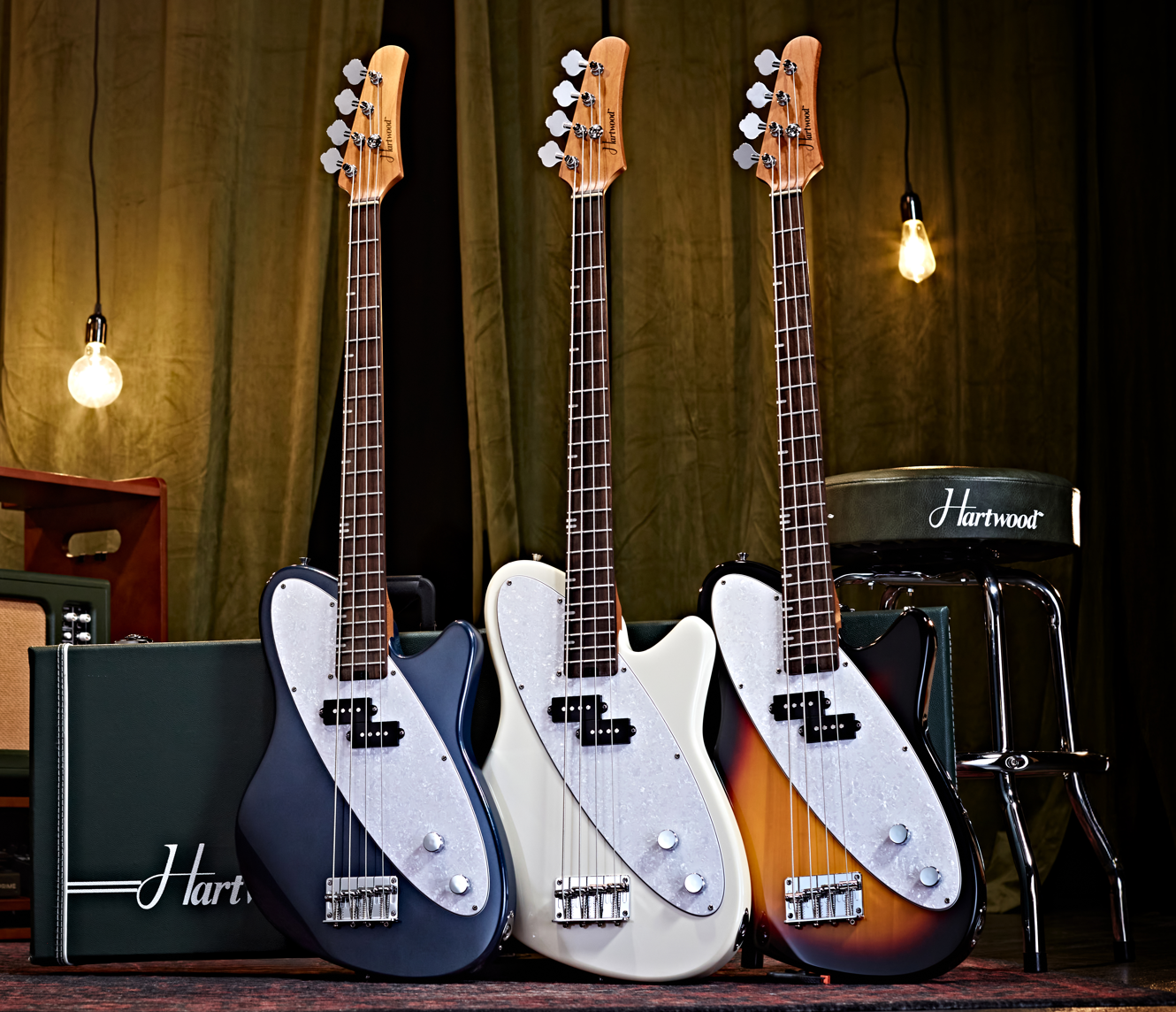
The Hartwood Satellite Bass: Bass Review

Disclaimer: This bass was kindly provided by Hartwood Guitars for the purpose of this review. However, this does not influence our opinions or the content of our reviews. We strive to provide honest, unbiased, and accurate assessments to ensure that our readers receive truthful and helpful information.  When I first heard of Hartwood, I was intrigued. Budget basses that don’t conform to the usual rules are exciting almost by default. The affordable end of the market is saturated with instruments that are essentially the same three designs copied endlessly with slightly different logos attached. So when Hartwood offered to send us the Hartwood Satellite bass for review, the answer was a pretty resounding yes. Because immediately, this thing looked different. Not “different for the sake of it,” either. The Satellite feels like somebody actually sat down and tried to design a bass with a coherent vintage-inspired identity instead of simply making yet another bargain-bin Precision clone. And honestly, that alone gives it a head start over a huge amount of the competition. Check the price of the Hartwood Satellite here! First Impressions One of the biggest wins of the Satellite is the fact that it is unapologetically original. Instead of competing directly with a thousand indistinguishable P-Bass copies, it carves out its own niche with a distinctive retro-futuristic aesthetic that feels genuinely intentional. That matters more than people sometimes realise. Budget instruments are often treated almost like commodities: same factory templates, same hardware, same layouts, same compromises. The Satellite doesn’t feel like that. It feels like someone actually cared about the visual concept and wanted it to stand apart. And then you pick it up. The Neck The roasted maple neck is the real headline feature here. Not because roasted maple itself is rare anymore, but because so many inexpensive instruments use it as little more than a marketing buzzword. Sometimes it feels like the wood has merely been shown a picture of a toaster and sent out the door. Here, though, the neck is genuinely excellent. It has that smooth, slightly dry, “already played in” feel that you normally associate with much more expensive instruments. Stability feels solid, the finish is comfortable without being sticky, and the overall impression is frankly kind of ridiculous for the money. The wheel-style truss rod adjustment at the base of the neck is another touch you simply don’t expect at this price point. It’s one of those practical quality-of-life features that instantly makes setup work easier and makes you wonder why more manufacturers don’t do it. Fretwork & Fingerboard This is another area where the Satellite punches above its class. The fretwork on this instrument is genuinely impressive for a budget bass. No sharp fret ends, no sprout, no nasty surprises anywhere along the neck. Everything feels neat, level, and properly finished. The laurel fingerboard also deserves credit. Laurel often ends up looking dull or obviously “budget,” but Hartwood has done a surprisingly good job here. It presents nicely, complements the roasted maple neck well, and contributes to the overall premium feel of the instrument. There’s also some nice attention to detail in the fret markers and finishing work that helps the whole thing feel more cohesive than you’d normally expect in this price bracket. Body & Hardware The body is basswood, which is hardly unusual at this level, but importantly it avoids that ultra-soft, “spongy” feel cheaper basswood instruments sometimes suffer from. The Satellite still feels reassuringly solid and balanced. The hardware is a mixed bag, though there are pleasant surprises. The knobs, for example, are actually really nice. They’re proper alloy knobs with grub screws instead of cheap push-on plastic affairs, and little details like that genuinely affect how an instrument feels in the hands. They also make future upgrades easier if you decide to swap electronics later down the line. Fit and finish overall are surprisingly strong. The neck pocket is tight, everything feels well aligned, and electrically the bass behaves itself very well indeed. On the amp, there were no pops, crackles, grounding issues or unexpected buzzing even while moving the bass around aggressively. Again, that’s not always guaranteed at this price. Sound The pickup configuration is interesting because although it uses a split-coil P-style pickup, it isn’t positioned exactly where a traditional Precision pickup would be. The result is a tone that’s less boomy than you might expect and noticeably more mid-focused. There’s still warmth there, but it avoids getting muddy, and it actually sits in a mix surprisingly well. Importantly, it doesn’t sound like a failed attempt at recreating a Fender Precision. It sounds like its own thing, which suits the whole philosophy of the instrument rather nicely. Even the stock strings were unexpectedly decent. Most players will probably replace them eventually out of habit more than necessity, but unlike many budget instruments, the Satellite doesn’t arrive sounding like it’s wearing recycled fencing wire. The Weak Spot If there’s one area where the budget nature of the instrument really shows, it’s the tuners. Even after restringing properly and setting witness points carefully, tuning stability still wasn’t particularly impressive. It’s not catastrophic, and fortunately replacement tuners are neither expensive nor difficult to fit, but this is definitely the weakest component on the bass. The upside is that the problem is very fixable. A modest tuner upgrade would probably transform the overall experience entirely. Modding Potential And that brings us neatly to one of the Satellite’s biggest strengths: it’s an absolutely fantastic modding platform. The important thing is that the core of the instrument is already strong. The neck is excellent, the fretwork is solid, the body construction is good, and the electronics are surprisingly competent. That means upgrades feel like enhancements rather than repairs. Swap the tuners, maybe experiment with pickups or wiring later on, and you’ve suddenly got something that could comfortably punch far above its original price category. That’s the difference between a cheap instrument and a thoughtfully designed affordable instrument. Final Thoughts The Hartwood

Reviews

Swiff Audio WT09a Wireless System Review

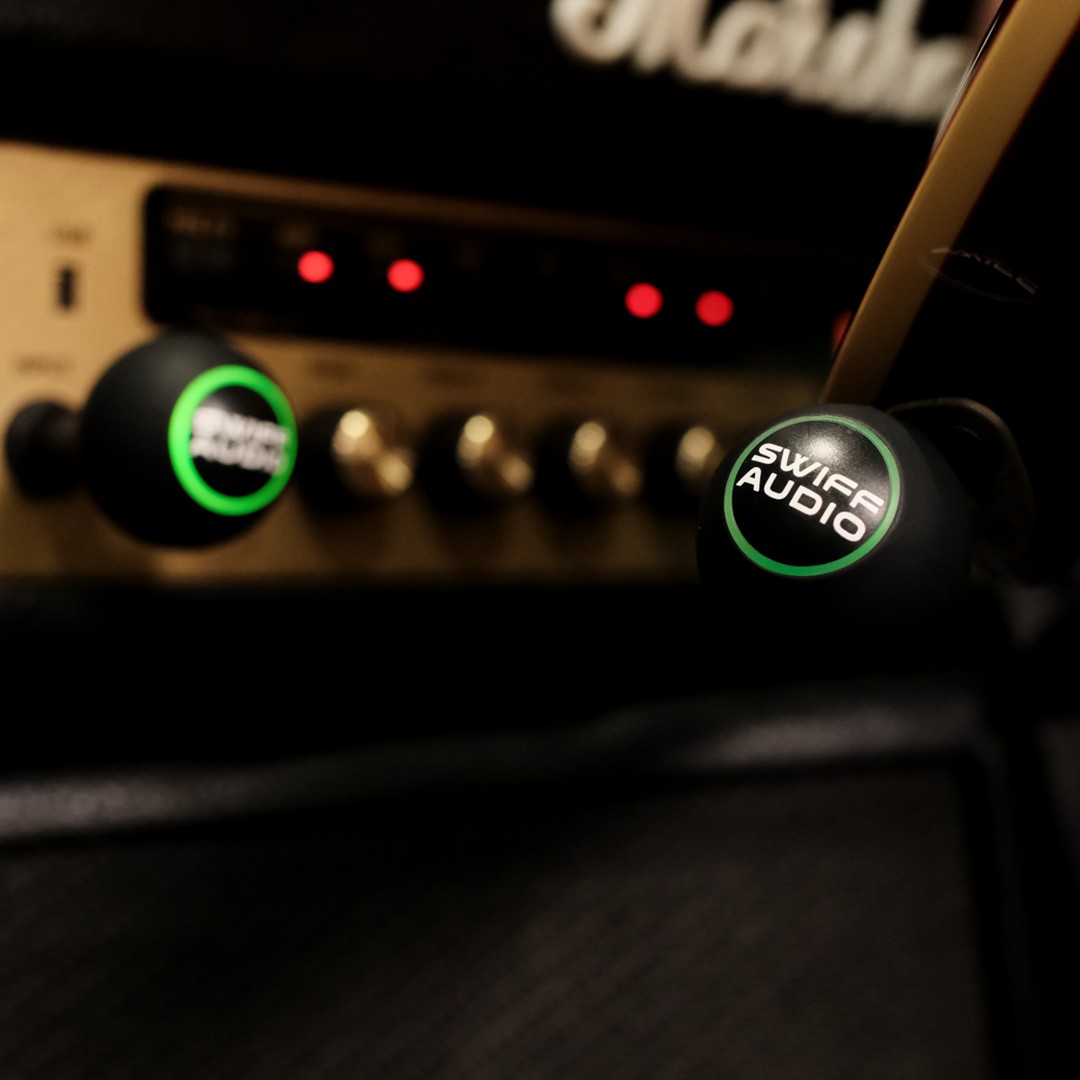
A review dedicated to Bass Players Disclaimer: This wireless equipment was kindly provided by Swiff Audio for the purpose of this review. However, this does not influence our opinions or the content of our reviews. We strive to provide honest, unbiased, and accurate assessments to ensure that our readers receive truthful and helpful information. For a long time, wireless systems and bass players didn’t really get along. Guitar players could usually tolerate the compromises — a bit of softened top end, a touch of compression, slightly rounded transients. But bass is less forgiving. The moment a system starts shaving off low-end authority or messing with attack definition, it becomes obvious immediately. Your instrument feels smaller, less responsive, and disconnected from your hands. That’s why budget wireless systems have historically been a hard sell for bass players. The Swiff Audio WT09a, however, is part of a newer generation that’s trying to change that conversation. First impressions & packaging Before you even plug it in, the WT09a already feels different from most budget wireless systems. Swiff has clearly paid attention to the user experience here. The system arrives in a solid magnetic hard case, which immediately elevates the perception of the product. It’s a small thing, but for gigging musicians it matters more than it should. Wireless systems are exactly the kind of gear that usually ends up rattling around in gig bags, tangled with patch cables, adapters, and spare strings. Having a dedicated, secure, magnetic case makes it feel like a proper piece of professional gear rather than an afterthought. The units themselves also feel well put together. There’s a simplicity to the design that works in its favour. Nothing feels overly fragile or toy-like, and the large green LED indicator is a genuinely useful touch once you’re on stage. In low-light environments, it’s immediately visible — no squinting, no guessing. You know instantly whether you’re connected and powered. That usability detail becomes more valuable the more you play live. Check the price on Amazon –> Why bass players are harder to convince Bass is one of the most revealing instruments when it comes to signal chain compromises. Most of the instrument’s fundamental energy sits in the low-frequency range — roughly from 40 Hz upward on a standard four-string, and even lower on five-strings. But the character of the sound isn’t just in the lows. The definition lives much higher, in the upper mids and transient range. That balance is what makes wireless systems tricky. If a system struggles, it usually shows up in one of three ways: And bass players notice all three immediately. Frequency response and tone On paper, the WT09a covers the full 20 Hz–20 kHz range, and in practice it does a respectable job of preserving the full bandwidth of the instrument. The important part isn’t just whether the lows are technically present — it’s whether they still feel authoritative. With the WT09a, the low end remains surprisingly intact. A low E still has weight, and a low B doesn’t collapse or thin out in any obvious way. Where things get more interesting is in the midrange and upper mids. This is where bass tone actually “speaks” in a mix. The growl of fingerstyle, the bark of a pick attack, and the snap of slap technique all live in this zone. The WT09a doesn’t destroy that information, but it does slightly smooth it. The edges are a little less sharp compared to a high-quality cable. The result is a sound that is very slightly rounded, but still musical and usable. In a full band mix, that subtle smoothing can actually work in your favour. It tends to sit bass in the pocket a little more gently, without pushing harsh frequencies forward. Latency and playing feel Latency is where many budget wireless systems fall apart for bass players. Even small delays can affect groove perception, especially for players who rely heavily on physical timing and tactile response. The WT09a feels immediate. Swiff claims sub-4 ms latency, and while real-world perception is more important than spec sheets, the practical experience is that the system responds fast enough to disappear under your fingers. Fingerstyle feels locked in. Ghost notes remain tight. Slap playing retains its rhythmic punch without feeling detached from the instrument. Once you’ve played for a few minutes, you stop thinking about latency entirely — which is exactly what you want. Passive vs active basses This is where the WT09a shows a bit of character. With passive basses, the system feels at its best. Fender-style instruments, vintage pickups, and moderate-output signals all translate very naturally. The tone stays full, responsive, and predictable. Active basses are a little more variable. Hot onboard preamps or aggressive EQ boosts can push the input harder, and in some cases this introduces a slightly compressed or constrained feel. It’s not dramatic, but it is noticeable if you’re used to a very open signal path. In practical terms, passive bass players will likely have a smoother experience overall, while active bass players should test it with their specific instrument and gain settings. Real-world gig performance This is not a touring-grade wireless system, and it doesn’t pretend to be. But within its category, it performs confidently. For rehearsals, club gigs, church services, pub stages, wedding bands, and small-to-mid venue work, it holds up well. Setup is quick, connection is stable under normal conditions, and the compact form factor makes it easy to integrate into a pedalboard-based rig. Like all 2.4 GHz systems, it can still be affected by crowded wireless environments, but that’s a limitation of the format itself rather than something unique to this unit. Battery life is solid enough for typical gigs, though not exceptional for extended multi-set situations. The bigger picture: why this matters for bass players What’s interesting about the WT09a isn’t that it revolutionises wireless technology. It doesn’t. What it represents is something more practical — the point where affordable wireless systems finally become usable for bass without feeling like

Reviews

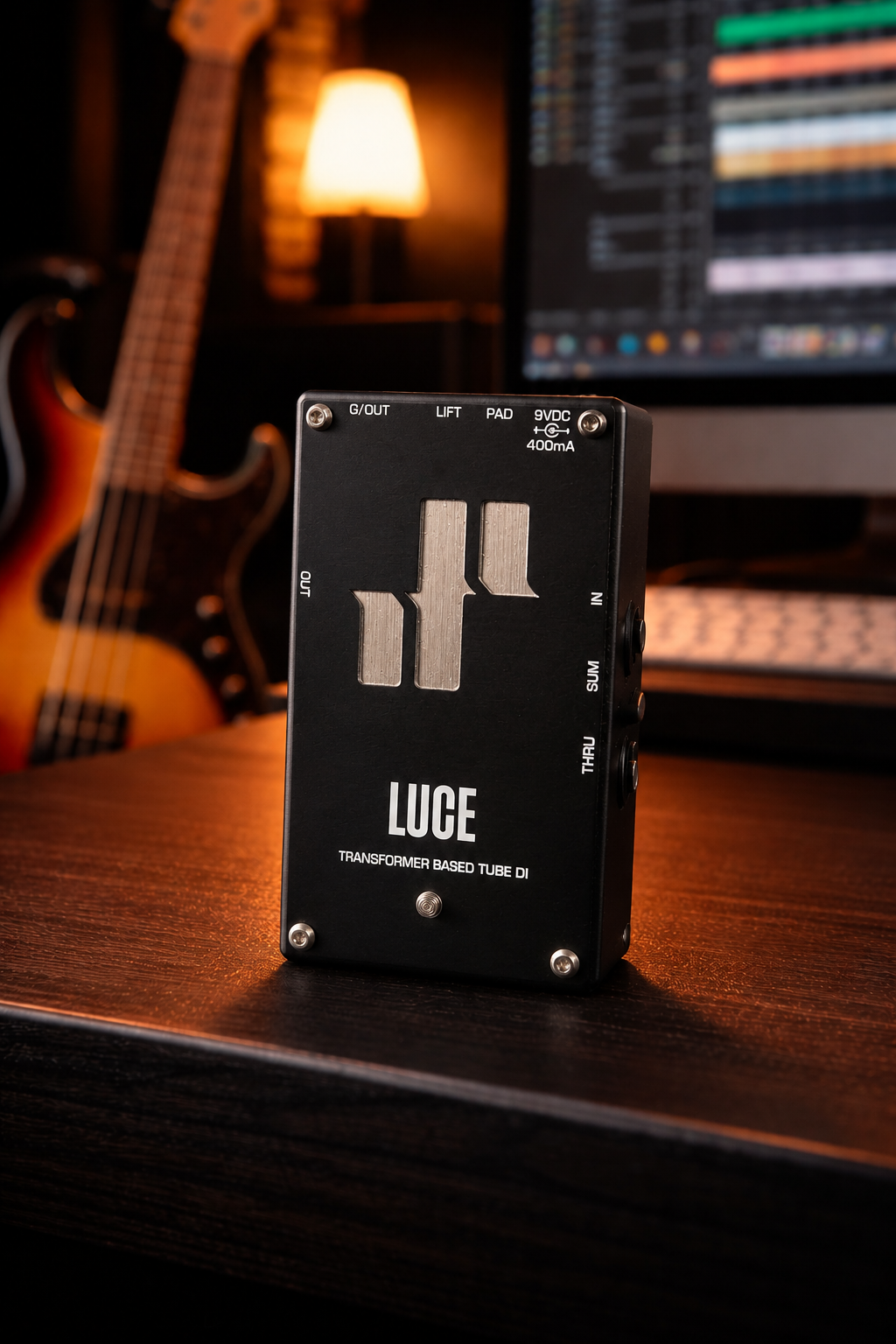
Jad Freer LUCE DI Review

Studio Light in a Pedalboard World Jad Freer Audio didn’t appear out of nowhere. The brand first really came into the spotlight through the Capo DI, a unit that quickly gained traction in the bass community and was pushed into wider visibility by bass players like Tim Lefebvre, Sean Hurley or Chris Chaney. The Capo became known as a kind of “all-in-one modern bass front end”: a highly flexible preamp/DI with serious tone-shaping power, blending clean headroom, drive, EQ, and studio-ready output into a single, carefully designed box. For many players, it represented a new standard in what a pedalboard-friendly studio front end could do—deep, versatile, and unapologetically high-end in both sound and engineering. Disclaimer: This pedal was kindly provided by Jad Freer Audio for the purpose of this review. However, this does not influence our opinions or the content of our reviews. We strive to provide honest, unbiased, and accurate assessments to ensure that our readers receive truthful and helpful information. The LUCE is the latest release from Jad Freer Audio, but it takes a very different philosophical approach. Unlike the Capo, the LUCE is not trying to be an all-in-one solution. It doesn’t offer EQ sections, drive circuits, or complex routing options. Instead, it focuses on one specific job—and does it exceptionally well. You could think of it less as a multi-tool and more as a precision studio instrument: minimal in concept, but deeply refined in execution. And that distinction is important, because everything about the LUCE is built around restraint. It doesn’t try to reshape your sound—it tries to elevate what’s already there. “Luce — light in Italian — is a studio-quality, transformer-based tube DI (Direct Injection) box: a unity gain (1:1) tube preamplifier and active summing unit.” First of all, let’s clear out what all these things actually mean—because this one sentence pretty much tells you everything about what the LUCE is trying to be, even if the terminology isn’t immediately obvious. What is a transformer-based tube DI? Let’s break that into two parts: DI box and transformer + tube. A DI (Direct Injection) box is what lets you send your bass signal straight to a mixing console or audio interface. Instead of relying on a mic’d amp, you’re giving the sound engineer a clean, controlled version of your tone. Now, not all DIs are created equal. The transformer part A transformer is an old-school piece of analog circuitry used in classic studio gear. In practice, for bass players, it does a few subtle but important things: It’s one of those things you don’t hear as an effect—you feel it as authority in your tone. The tube part The LUCE uses a real vacuum tube (not a digital emulation), which introduces: Importantly, this isn’t distortion—it’s the kind of enhancement you associate with high-end studio recordings. Put together, “transformer-based tube DI” basically means:A DI that makes your bass sound like it’s already been through expensive studio gear. Understanding the LUCE’s Unity Gain Design One of the most misunderstood — yet most important — aspects of the Jad Freer Audio LUCE is the fact that it operates at unity gain. On paper, that can sound almost counterintuitive. Most players see the word “preamp” and immediately assume it is there to add volume, push the front of an amp harder, or dramatically reshape the sound. The LUCE approaches the idea differently. Rather than boosting or coloring the signal aggressively, the LUCE is designed to preserve the natural level of your bass while improving the quality and feel of the signal itself. That distinction is important because the pedal is less about imposing a new identity onto your tone and more about refining what is already there. In practice, the effect feels subtle at first, but very noticeable once you spend time with it. Notes become clearer and more dimensional. The low end stays controlled, but feels richer and more connected. Dynamics respond more naturally under the fingers, and there is a sense of consistency across the instrument that can make the entire rig feel more polished without sounding processed. That is ultimately what the LUCE does so well. It does not try to overwhelm your core tone with heavy EQ curves or exaggerated coloration. Instead, it enhances the integrity of the signal in a way that feels organic and musical. If your bass already sounds good, the LUCE tends to make it sound more complete rather than fundamentally different. The Role of the Tube Preamplifier The tube stage is a major part of why the pedal feels the way it does. At its core, a preamplifier is simply the first stage your signal encounters before reaching the rest of the chain — whether that is an amplifier, recording interface, or front-of-house console. In the LUCE, that stage is driven by a tube circuit, and that choice has a very real impact on the playing experience. Unlike many sterile or ultra-clinical solid-state designs, the tube reacts dynamically to touch and articulation. When you dig in harder, the response softens slightly in a pleasing way, creating a subtle compression effect that feels natural rather than obvious. Harmonics become more present, but never harsh, and the attack develops a smoother, more musical character. For bass players, that translates into an instrument that feels more alive beneath the hands. Notes carry a little more depth and dimension, while remaining articulate and controlled. Fingerstyle passages gain warmth and detail, while pick playing retains aggression without becoming brittle. The difference is not necessarily dramatic in the way a distortion pedal or EQ sweep would be. Instead, it is the kind of enhancement that changes the overall feel of the instrument and encourages you to play differently. The signal stops feeling flat or purely functional and starts responding with a sense of movement and elasticity that many players associate with high-end studio gear or vintage tube amplifiers. What is an active summing unit? This is the most technical-sounding part, but it’s actually pretty straightforward. Active summing

Reviews

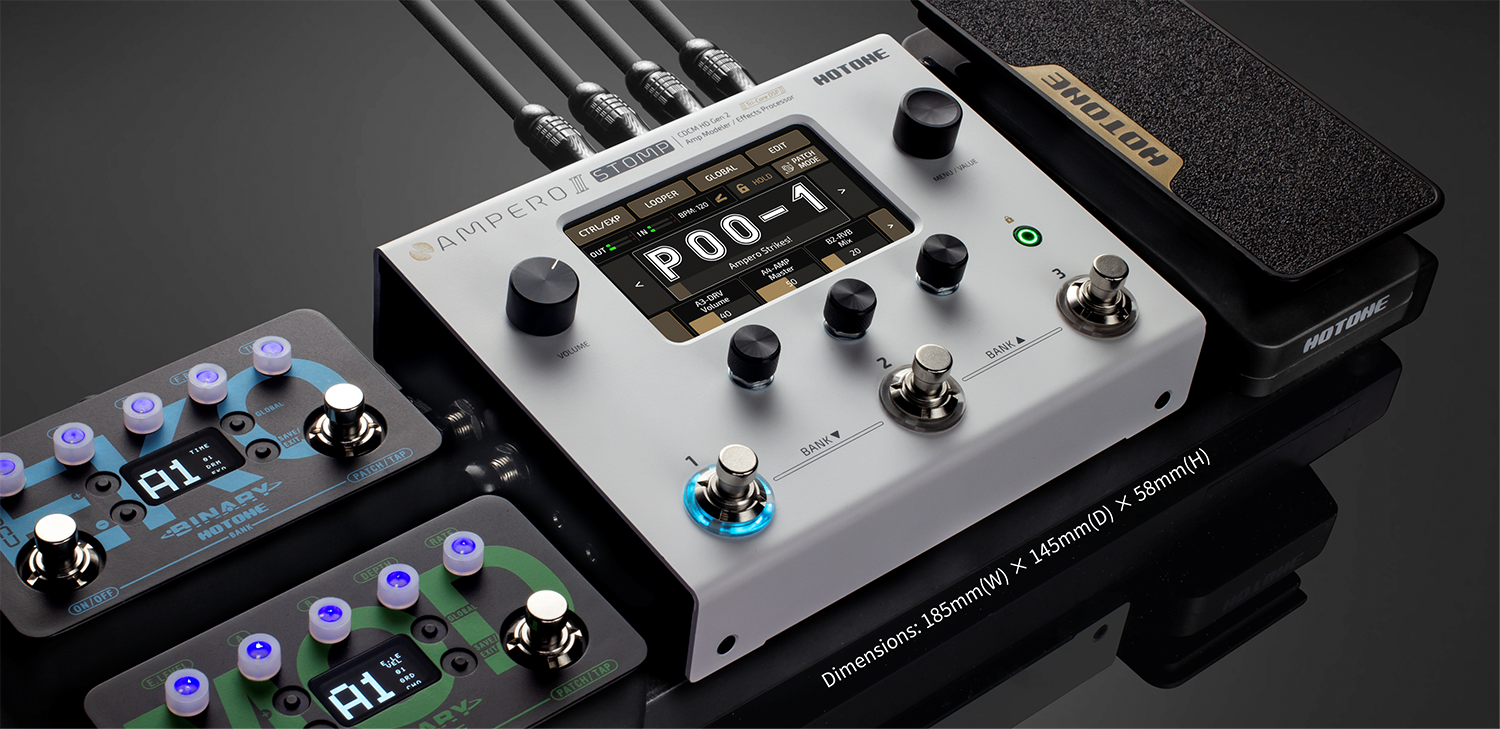
Hotone Ampero II Stomp Review

Compact size, serious routing power, and one of the most underrated bass rigs on the market. Disclaimer: This pedal was kindly provided by Hotone for the purpose of this review. However, this does not influence our opinions or the content of our reviews. We strive to provide honest, unbiased, and accurate assessments to ensure that our readers receive truthful and helpful information. There’s a very specific type of bass player the Hotone Ampero II Stomp immediately makes sense for: the player who is tired of hauling a heavy pedalboard and amp to every rehearsal, the player who wants a reliable direct solution without sacrificing feel, or the player who needs modern routing flexibility without spending flagship-modeler money. After spending serious time with the Ampero II Stomp from a bass perspective, it genuinely feels like Hotone has built one of the strongest value-for-money compact modelers currently available. Most reviews approach this unit from a guitar-first perspective, which honestly misses where the Ampero II Stomp becomes most interesting. For bass players, especially those using modern signal chains, parallel processing, IRs, and direct-to-FOH rigs, the platform offers far more than its size or price initially suggests. First Impressions The first thing that stands out is the size. The Ampero II Stomp is compact enough to fit on almost any pedalboard, but unlike many small-format modelers, it doesn’t feel compromised. The aluminum chassis feels solid, the touchscreen is responsive, and the layout feels intentionally designed for live musicians rather than simply shrinking down a larger desktop interface. That matters more than people sometimes realize. A lot of compact modelers sound excellent in demos but become frustrating during actual rehearsals or gigs because of tiny screens, awkward menu structures, or routing systems that slow everything down. The Ampero II Stomp avoids most of those issues. Within a short amount of time, editing patches starts feeling natural instead of technical, which is one of the reasons this unit works surprisingly well for bass players. Core Features The Ampero II Stomp is built around Hotone’s CDCM HD and F.I.R.E. modeling platform, running on a tri-core DSP architecture with ESS Sabre converters. In practical use, that translates into solid dynamic response, low noise operation, convincing amp feel, and cabinet simulations that sound far more polished than earlier generations of budget modelers. Hotone includes 87 amp models, 68 cabinet models, over 100 pedal models, and more than 400 effects overall. The unit supports up to 12 simultaneous effect slots alongside stereo operation, parallel and serial routing, third-party IR loading, USB audio functionality, MIDI support, a stereo effects loop, and 300 onboard presets. On paper, that already makes it competitive in the compact-modeler category, but for bass players specifically, the routing flexibility is where the unit becomes genuinely compelling. The Bass Experience The obvious question is whether the Ampero II Stomp actually works well for bass. The answer is yes, although perhaps not in the exact way some players expect. If you are looking for an ecosystem with dozens of dedicated bass amp models, ultra-deep parameter editing, and an enormous community-built preset library, the Ampero II Stomp does not fully compete with other similar ecosystems. The bass-specific content is smaller, and some of the stock presets clearly lean more toward guitar applications. However, what Hotone has built is a platform flexible enough to create excellent bass tones if you understand how modern bass rigs function. Once you stop thinking about the unit as a preset machine and start approaching it as a routing and processing platform, the Ampero II Stomp becomes significantly more impressive. Parallel Routing Is the Real Story For bass players, the real strength of the Ampero II Stomp is the routing architecture. Most experienced bass players eventually discover that distortion and heavy processing sound dramatically better when the low end remains intact. Parallel routing solves that problem, and the Ampero II Stomp makes those setups unusually easy to build. You can split clean and distorted paths, run compressed clean lows underneath aggressive drive tones, blend multiple amp models together, integrate external pedals through the effects loop, or build wet/dry ambient rigs while preserving low-frequency punch. These are the kinds of workflows that traditionally require expensive switching systems or large pedalboards, yet the Ampero II Stomp handles them internally with surprisingly little friction. What makes the experience particularly strong is the touchscreen interface. Routing feels visual and immediate instead of technical. Dragging effects around the chain, splitting paths, and adjusting blends becomes intuitive very quickly, and that ease of use gives the unit a major advantage over some menu-heavy competitors. Amp Models for Bass The bass amp selection itself is not enormous, but the core sounds are absolutely usable. The Ampeg-style models are the obvious starting point and deliver the familiar low-mid authority most players expect. Cleaner amp models also work especially well once paired with quality third-party bass IRs. That last point is important because while the stock cabinet simulations are decent, the Ampero II Stomp improves noticeably with external IRs. Once you load good bass cabinet IRs, the overall realism, depth, and mix placement improve dramatically, particularly through studio monitors or in-ear systems. The platform supports third-party IRs with up to 2048 sampling points, which helps bass cabinets retain more low-frequency realism and detail than older-generation loaders. At that point, the Ampero II Stomp starts sounding significantly more expensive than it actually is. Check Price on Amazon –> The Effects The effects section is where the experience becomes slightly more mixed, although still largely positive from a bass perspective. The compressors are solid and completely giggable, even if they do not quite reach the feel or refinement of premium standalone units. EQ options are flexible and especially valuable for direct rigs, where precise control over low mids and high-end presence becomes critical. The modulation and ambient effects are surprisingly strong. Chorus, delays, reverbs, and synth-adjacent textures work extremely well for modern bass applications, especially for worship, progressive, or cinematic styles. The Cloud reverb in particular